BREAKING
Advertisement

Recent Category Articles

Latest Category News

Missiles Hit Kyiv After Russia Agrees to US Call to Resume Ukraine Peace Talks
111
War PK Live News 😔 Negative
Missiles Hit Kyiv After Russia Agrees to US Call to Resume Ukraine Peace Talks
Developed, Researched & Published by PK-News.com PK-News Digital News & Research Desk Missile Attack Raises Questions About Peace Prospects Ukraine’s capital, Kyiv, has come under a new missile attack just hours after Russia signalled that it was willing in principle to resume peace talks with Ukraine and the United States. The developments highlight the continuing gap between diplomatic efforts to end the war and the fighting still affecting Ukrainian cities. According to reporting published on October 22, several houses in Kyiv were hit during an overnight attack, with six people injured, according to Kyiv Mayor Vitaliy Klitschko. The attack came amid renewed diplomatic efforts led by US President Donald Trump’s envoys to bring Moscow and Kyiv back to negotiations. The latest incident underscores the difficulty of securing a ceasefire while Russian and Ukrainian forces continue military operations. Russia Signals Willingness to Resume Negotiations Russian President Vladimir Putin met US special envoy Steve Witkoff in St Petersburg on October 21. Following the meeting, Kremlin aide Yuri Ushakov said Russia was willing in principle to resume trilateral negotiations involving Russia, Ukraine and the United States. The talks could take place in November, potentially around November 10 in Abu Dhabi, the capital of the United Arab Emirates. However, a final date and detailed agenda have not been confirmed. According to Reuters reporting, the proposed discussions would focus on arrangements for security in Russia and Ukraine after the conflict ends. Previous rounds of three-way negotiations were paused in February, leaving major disagreements unresolved. US officials have continued efforts to bring both sides toward a settlement. Witkoff described the latest discussions as constructive, while Jared Kushner, who participated remotely, said significant work remained before a lasting agreement could be reached. Kyiv Calls for an End to the Fighting Ukrainian President Volodymyr Zelensky has indicated that Ukraine would accept a ceasefire that freezes the fighting along the current front line as an initial step toward ending the war. He has also stressed the importance of security guarantees for Ukraine. Kyiv has repeatedly argued that any settlement must prevent another Russian invasion and protect the country's sovereignty. Moscow, meanwhile, has emphasised its own security demands and its position on territories it currently controls. Russia launched its full-scale invasion of Ukraine in February 2022. Nearly five years later, the conflict continues to cause civilian casualties, damage infrastructure and place pressure on both countries’ economies. The differences between the two sides remain substantial, and renewed talks alone do not guarantee that a political settlement is close. Military Attacks Continue Amid Diplomatic Efforts The latest attack follows a series of major Russian missile and drone assaults across Ukraine. Reuters reported on October 19 that Russia launched 16 ballistic missiles at Kyiv and the surrounding region, along with more than 200 drones across the country. Ukrainian officials said the attacks damaged energy facilities and other infrastructure, while air-defence systems intercepted many incoming weapons. The strikes also contributed to electricity disruptions affecting households and businesses. Russia has said its military operations target defence-related facilities and infrastructure supporting Ukraine’s war effort. Ukrainian authorities have reported damage to residential buildings and essential civilian services. The continued attacks have raised concerns about the safety of civilians and the prospects for a sustained ceasefire, particularly as winter approaches and Ukraine faces ongoing pressure on its energy infrastructure. US Diplomatic Efforts Face Difficult Challenges The Trump administration has sought to restart negotiations and bring the war to an end. Witkoff's recent meetings with Zelensky and Putin are part of that effort, but the sides have yet to agree on the core terms of a settlement. Issues including territorial control, security guarantees, military arrangements and the future relationship between Ukraine and NATO remain central obstacles. The proposed November talks could provide another opportunity to address these disagreements. However, their success will depend on whether Moscow and Kyiv are prepared to make compromises and whether any agreed arrangements can be implemented and maintained. What Happens Next? The coming weeks may prove important for diplomatic efforts to resume formal negotiations. A meeting involving Russian, Ukrainian and US representatives could establish a framework for further discussions, but there is no confirmed agreement to end hostilities. For now, the situation remains uncertain: Russia has expressed conditional willingness to return to talks, Ukraine continues to call for a ceasefire and security guarantees, and missile and drone attacks remain a serious threat. PK-News.com will continue to monitor developments in Kyiv, the proposed US-mediated negotiations and the wider impact of the Russia-Ukraine war.
Oct 22, 2026 at 8:14 AM
Developed, Researched & Published by PK-News.com PK-News Digital News & Research Desk Missile Attack Raises Questions About Peace Prospects Ukraine’s capital, Kyiv, has come under a new missile attack just hours after Russia signalled that it was willing in principle to resume peace talks with Ukraine and the United States. The developments highlight the continuing gap between diplomatic efforts to end the war and the fighting still affecting Ukrainian cities. According to reporting published on October 22, several houses in Kyiv were hit during an overnight attack, with six people injured, according to Kyiv Mayor Vitaliy Klitschko. The attack came amid renewed diplomatic efforts led by US President Donald Trump’s envoys to bring Moscow and Kyiv back to negotiations. The latest incident underscores the difficulty of securing a ceasefire while Russian and Ukrainian forces continue military operations. Russia Signals Willingness to Resume Negotiations Russian President Vladimir Putin met US special envoy Steve Witkoff in St Petersburg on October 21. Following the meeting, Kremlin aide Yuri Ushakov said Russia was willing in principle to resume trilateral negotiations involving Russia, Ukraine and the United States. The talks could take place in November, potentially around November 10 in Abu Dhabi, the capital of the United Arab Emirates. However, a final date and detailed agenda have not been confirmed. According to Reuters reporting, the proposed discussions would focus on arrangements for security in Russia and Ukraine after the conflict ends. Previous rounds of three-way negotiations were paused in February, leaving major disagreements unresolved. US officials have continued efforts to bring both sides toward a settlement. Witkoff described the latest discussions as constructive, while Jared Kushner, who participated remotely, said significant work remained before a lasting agreement could be reached. Kyiv Calls for an End to the Fighting Ukrainian President Volodymyr Zelensky has indicated that Ukraine would accept a ceasefire that freezes the fighting along the current front line as an initial step toward ending the war. He has also stressed the importance of security guarantees for Ukraine. Kyiv has repeatedly argued that any settlement must prevent another Russian invasion and protect the country's sovereignty. Moscow, meanwhile, has emphasised its own security demands and its position on territories it currently controls. Russia launched its full-scale invasion of Ukraine in February 2022. Nearly five years later, the conflict continues to cause civilian casualties, damage infrastructure and place pressure on both countries’ economies. The differences between the two sides remain substantial, and renewed talks alone do not guarantee that a political settlement is close. Military Attacks Continue Amid Diplomatic Efforts The latest attack follows a series of major Russian missile and drone assaults across Ukraine. Reuters reported on October 19 that Russia launched 16 ballistic missiles at Kyiv and the surrounding region, along with more than 200 drones across the country. Ukrainian officials said the attacks damaged energy facilities and other infrastructure, while air-defence systems intercepted many incoming weapons. The strikes also contributed to electricity disruptions affecting households and businesses. Russia has said its military operations target defence-related facilities and infrastructure supporting Ukraine’s war effort. Ukrainian authorities have reported damage to residential buildings and essential civilian services. The continued attacks have raised concerns about the safety of civilians and the prospects for a sustained ceasefire, particularly as winter approaches and Ukraine faces ongoing pressure on its energy infrastructure. US Diplomatic Efforts Face Difficult Challenges The Trump administration has sought to restart negotiations and bring the war to an end. Witkoff's recent meetings with Zelensky and Putin are part of that effort, but the sides have yet to agree on the core terms of a settlement. Issues including territorial control, security guarantees, military arrangements and the future relationship between Ukraine and NATO remain central obstacles. The proposed November talks could provide another opportunity to address these disagreements. However, their success will depend on whether Moscow and Kyiv are prepared to make compromises and whether any agreed arrangements can be implemented and maintained. What Happens Next? The coming weeks may prove important for diplomatic efforts to resume formal negotiations. A meeting involving Russian, Ukrainian and US representatives could establish a framework for further discussions, but there is no confirmed agreement to end hostilities. For now, the situation remains uncertain: Russia has expressed conditional willingness to return to talks, Ukraine continues to call for a ceasefire and security guarantees, and missile and drone attacks remain a serious threat. PK-News.com will continue to monitor developments in Kyiv, the proposed US-mediated negotiations and the wider impact of the Russia-Ukraine war.
Ship Hit by Unknown Projectile Near UAE Coast, Fire Reported Onboard
21
War PK Live News 😐 Neutral
Ship Hit by Unknown Projectile Near UAE Coast, Fire Reported Onboard
Maritime Authorities Investigate Incident as Security Risks Rise Across Gulf Shipping Routes Developed, Researched & Published by PK-News.com PK-News Digital News & Research Desk UNITED ARAB EMIRATES — October 10, 2026: A vessel was struck by an unknown projectile near the coast of the United Arab Emirates on Friday, October 9, triggering a fire onboard and raising fresh concerns about the safety of commercial shipping in the Gulf region. According to the United Kingdom Maritime Trade Operations (UKMTO), the incident occurred approximately 13 nautical miles west of Al Jazeera in the UAE. The agency said it received reports from multiple sources that the vessel had been hit by an unidentified projectile. The fire was subsequently extinguished. However, at the time of the initial reports, the condition of the crew, the extent of damage to the vessel and any potential environmental impact remained unknown. Authorities were investigating the incident. Vessel Reportedly Identified as GEM NO.2 Although UKMTO did not officially name the vessel in its initial advisory, maritime security sources identified it as GEM NO.2, a Panama-flagged crude oil supertanker. According to reporting by Reuters, the tanker was carrying a full load of oil and was last reported anchored off the UAE coast. The vessel's operator was not immediately available for comment. The identification of the ship came from maritime security sources and should be distinguished from the official UKMTO advisory, which referred to the vessel without naming it. Shipping Security Concerns Grow The incident comes amid heightened security concerns for commercial vessels operating across the Gulf and surrounding waters. In recent days, other ships have also reportedly been struck in the region, including a tanker attacked north of Qatar earlier in the week. The latest incident is significant because it occurred outside the immediate Strait of Hormuz area. The strategic waterway connects the Persian Gulf with the Gulf of Oman and is a major route for international oil and energy shipments. Repeated incidents involving commercial vessels can increase insurance costs, complicate shipping schedules and force operators to reconsider routes and security procedures. Any prolonged disruption could also affect energy transportation and international trade. Authorities Urge Vessels to Exercise Caution Following the incident, vessels operating in the area were advised to proceed with caution and report suspicious activity. Maritime authorities and security organisations continue to monitor developments as investigations seek to establish what happened and who, if anyone, was responsible. No confirmed claim of responsibility was reported in the initial accounts. The identity of the projectile and the circumstances surrounding the strike also remained unclear. It is therefore too early to attribute the incident to a particular country or organisation. Investigators will need to establish the source of the attack and assess the damage before drawing conclusions. Potential Impact on Oil Transportation The Gulf region remains central to global energy transportation, with large tankers carrying crude oil and other petroleum products through its shipping lanes. Incidents involving fully loaded tankers can raise concerns about crew safety, vessel damage, possible pollution and interruptions to oil deliveries. The impact of this particular incident will depend on the final damage assessment, the condition of the vessel and whether authorities identify further risks to nearby shipping. For now, the reported fire has been extinguished, but important details remain unconfirmed. Further official updates are expected to clarify the condition of the crew, the extent of the damage and the findings of the investigation. PK-News.com will continue to follow verified developments in the UAE maritime incident and regional shipping security.
Oct 10, 2026 at 12:37 AM
Maritime Authorities Investigate Incident as Security Risks Rise Across Gulf Shipping Routes Developed, Researched & Published by PK-News.com PK-News Digital News & Research Desk UNITED ARAB EMIRATES — October 10, 2026: A vessel was struck by an unknown projectile near the coast of the United Arab Emirates on Friday, October 9, triggering a fire onboard and raising fresh concerns about the safety of commercial shipping in the Gulf region. According to the United Kingdom Maritime Trade Operations (UKMTO), the incident occurred approximately 13 nautical miles west of Al Jazeera in the UAE. The agency said it received reports from multiple sources that the vessel had been hit by an unidentified projectile. The fire was subsequently extinguished. However, at the time of the initial reports, the condition of the crew, the extent of damage to the vessel and any potential environmental impact remained unknown. Authorities were investigating the incident. Vessel Reportedly Identified as GEM NO.2 Although UKMTO did not officially name the vessel in its initial advisory, maritime security sources identified it as GEM NO.2, a Panama-flagged crude oil supertanker. According to reporting by Reuters, the tanker was carrying a full load of oil and was last reported anchored off the UAE coast. The vessel's operator was not immediately available for comment. The identification of the ship came from maritime security sources and should be distinguished from the official UKMTO advisory, which referred to the vessel without naming it. Shipping Security Concerns Grow The incident comes amid heightened security concerns for commercial vessels operating across the Gulf and surrounding waters. In recent days, other ships have also reportedly been struck in the region, including a tanker attacked north of Qatar earlier in the week. The latest incident is significant because it occurred outside the immediate Strait of Hormuz area. The strategic waterway connects the Persian Gulf with the Gulf of Oman and is a major route for international oil and energy shipments. Repeated incidents involving commercial vessels can increase insurance costs, complicate shipping schedules and force operators to reconsider routes and security procedures. Any prolonged disruption could also affect energy transportation and international trade. Authorities Urge Vessels to Exercise Caution Following the incident, vessels operating in the area were advised to proceed with caution and report suspicious activity. Maritime authorities and security organisations continue to monitor developments as investigations seek to establish what happened and who, if anyone, was responsible. No confirmed claim of responsibility was reported in the initial accounts. The identity of the projectile and the circumstances surrounding the strike also remained unclear. It is therefore too early to attribute the incident to a particular country or organisation. Investigators will need to establish the source of the attack and assess the damage before drawing conclusions. Potential Impact on Oil Transportation The Gulf region remains central to global energy transportation, with large tankers carrying crude oil and other petroleum products through its shipping lanes. Incidents involving fully loaded tankers can raise concerns about crew safety, vessel damage, possible pollution and interruptions to oil deliveries. The impact of this particular incident will depend on the final damage assessment, the condition of the vessel and whether authorities identify further risks to nearby shipping. For now, the reported fire has been extinguished, but important details remain unconfirmed. Further official updates are expected to clarify the condition of the crew, the extent of the damage and the findings of the investigation. PK-News.com will continue to follow verified developments in the UAE maritime incident and regional shipping security.
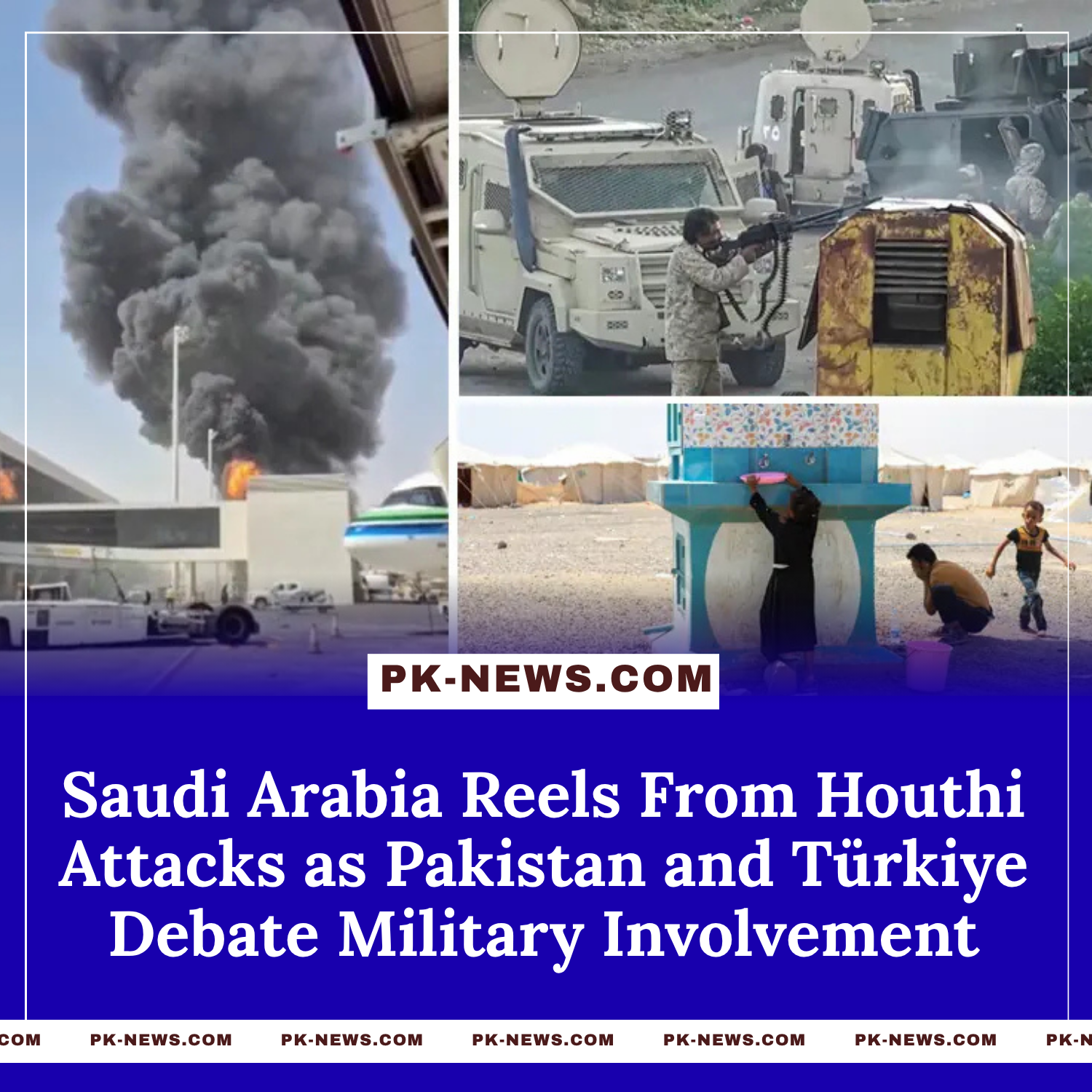
Saudi Arabia Reels From Houthi Attacks as Pakistan and Türkiye Debate Military Involvement
9
War PK Live News 😔 Negative
Saudi Arabia Reels From Houthi Attacks as Pakistan and Türkiye Debate Military Involvement
Missile Strikes Disrupt Riyadh Flights as the Makkah Defence Pact Faces Its First Major Test RIYADH, SAUDI ARABIA — October 9, 2026: Saudi Arabia is facing mounting security challenges following a new wave of missile attacks claimed by Yemen’s Houthi movement, as regional allies debate how far they should go in supporting the kingdom under a mutual defence agreement. The attacks on Thursday disrupted air travel, damaged civilian infrastructure and heightened concerns about the security of Saudi Arabia’s capital and energy facilities. Meanwhile, differences have emerged among Pakistan, Türkiye and other regional partners over whether their assistance should remain defensive or extend to direct military involvement in Yemen. The developments have placed the Makkah Joint Defence Agreement, signed by Saudi Arabia, Pakistan and Türkiye in August, under renewed scrutiny as the conflict threatens to spread further across the region. Source: Dawn Houthi Attacks Disrupt Riyadh Yemen’s Houthi movement claimed responsibility for missile attacks targeting King Khalid International Airport in Riyadh and other Saudi military facilities. Saudi authorities reported intercepting missiles aimed at the capital and Khamis Mushait. Debris from intercepted projectiles reportedly caused material damage to a kindergarten and a medical clinic complex in Riyadh, although the initial civil defence announcement did not specify whether anyone had been injured. Videos verified by international news organisations showed smoke and flames rising from the airport area after a commercial aircraft caught fire while stationary. The incident added to concerns about the safety of civilian aviation as the attacks continued. The Houthis also renewed threats against Saudi oil facilities, raising concerns about the potential impact on energy production and exports. International Airlines Suspend Flights The security situation has disrupted commercial aviation, with airlines reassessing the risks of operating flights to the Saudi capital. Lufthansa and Air India announced suspensions of their Riyadh services amid the escalating attacks. Aviation data cited by Dawn indicated that approximately 49.7 per cent of departures from Riyadh airport had been cancelled by 1500 GMT on Thursday. Travellers have been advised to check directly with airlines for the latest information about flight schedules and airport operations. The disruptions illustrate how regional military escalation can affect international travel, business operations and the movement of passengers well beyond the immediate conflict zone. Saudi Arabia Seeks Support From Its Allies Saudi Arabia is seeking greater assistance from partner countries as it responds to Houthi advances and attacks on its territory. The kingdom's immediate concerns include protecting cities, military installations, energy infrastructure and strategic maritime routes around the Red Sea. An emergency meeting of countries associated with the Makkah defence agreement has focused attention on how the pact could be implemented in practice. The agreement is intended to strengthen collective deterrence by treating an armed attack against one signatory as a threat to all three members. However, the latest crisis has exposed differences over what that commitment means operationally. Pakistan Says Direct Involvement Is Not Ruled Out Pakistan's Defence Minister Khawaja Asif said the agreement did not contain a provision preventing member states from becoming directly involved if one of them faced a threat. Speaking to ARY News, Asif said the other members would be expected to help defend an attacked partner as though they were defending themselves. His comments have fuelled discussion about the possible extent of Pakistan's role should the conflict escalate further. However, his remarks do not, by themselves, establish that Pakistan has decided to launch combat operations against the Houthis in Yemen. Pakistan's Ministry of Information has separately rejected reports alleging that Pakistani Air Force aircraft were being used in operations against the Houthis, describing one such report as false and fabricated. The ministry has also cautioned international media against speculative reporting about military deployments under the agreement. The distinction between a mutual defence commitment and a confirmed operational deployment remains important as the situation develops. Türkiye Emphasises a Defensive Role Türkiye has adopted a more explicit public position against participating in offensive operations inside Yemen. Turkish Foreign Minister Hakan Fidan said the Makkah agreement was defensive in nature and ruled out sending Turkish troops into another country's territory to conduct attacks. Ankara has nevertheless indicated that it is considering ways to assist Saudi Arabia, particularly through air defence, technical capabilities and other defensive support. Türkiye's position highlights the challenge facing the alliance: its members may agree on the need to protect Saudi territory while differing over whether that obligation extends to offensive military action against Houthi forces. Syria Also Considers Its Options Syria has reportedly been examining possible forms of assistance to Saudi Arabia, according to officials cited in international reporting. Options under consideration include defensive support and military cooperation, although the precise nature of any potential contribution remains uncertain. Syrian officials have stressed that any cooperation would take place through official channels and under existing bilateral arrangements. Whether Syria will participate in a broader response remains unclear. The Makkah Defence Agreement Faces a Critical Test The agreement between Saudi Arabia, Pakistan and Türkiye was signed to strengthen security cooperation and collective deterrence. Its first major test has raised practical questions about command arrangements, military coordination, the deployment of capabilities and the circumstances under which member states could participate in combat. A commitment to collective defence does not automatically settle every operational question. Governments must still determine what assistance is required, what actions are authorised and how those actions fit within their national laws and security policies. For Saudi Arabia, the challenge is to secure meaningful assistance without triggering a wider regional confrontation. For Pakistan and Türkiye, the challenge is to fulfil their commitments while managing the risks associated with becoming directly involved in the Yemen conflict. Yemen's Conflict and the Red Sea The latest attacks are unfolding alongside intensified fighting in Yemen, where Houthi forces and Saudi-backed opponents remain locked in a struggle for territory and strategic influence. The Red Sea and the Bab al-Mandeb Strait are especially important because they form part of a major international shipping corridor linking the Indian Ocean with the Mediterranean through the Suez Canal. Any sustained disruption could affect commercial shipping, insurance costs, energy transportation and international supply chains. Saudi Arabia and its partners therefore face a challenge that extends beyond the defence of individual cities or installations. They must also consider the security of maritime routes and the economic consequences of prolonged instability. Oil Prices Rise Amid Regional Uncertainty Financial markets have responded to the growing uncertainty with renewed attention to oil supplies and shipping risks. Dawn reported that Brent crude futures rose by more than five per cent during Thursday's trading before paring some gains. By 1641 GMT, Brent was trading at $103.73 a barrel, while US West Texas Intermediate crude stood at $91 a barrel. Oil prices can rise when traders anticipate supply disruptions, damage to energy infrastructure or increased risks to tanker movements. However, price movements also reflect broader market conditions, including production expectations, inventories and diplomatic developments. A prolonged escalation could add further pressure to energy markets and increase costs for countries that depend heavily on imported oil. Washington's Position Adds Another Dimension The attacks are taking place amid wider regional tensions involving Iran, the United States and Iran-aligned groups. US President Donald Trump said Washington would not launch an attack on Iran before the November congressional midterm elections, according to the reporting cited by Dawn. The statement came as regional governments weighed their responses to the attacks on Saudi Arabia. The wider confrontation creates a difficult diplomatic environment. Actions intended to strengthen deterrence could also increase the risk of further retaliation if the conflict expands. Regional governments must therefore weigh immediate security requirements against the potential costs of a broader war. Civilian Safety Remains a Concern The reported damage to a kindergarten and a medical facility in Riyadh highlights the risks facing civilians as missile attacks continue. Airports, schools, healthcare facilities and energy infrastructure are essential to civilian life, making their protection a major concern during periods of armed conflict. Authorities must assess damage, investigate possible casualties and maintain effective emergency procedures while ensuring that public information remains accurate. The disruption to flights and instructions for some employees to work remotely also demonstrate how security incidents can affect ordinary life even when people are not directly injured. What Happens Next? The next phase will depend on the scale of further Houthi attacks, Saudi Arabia's military response and the practical decisions taken by its allies. Key questions include whether Pakistan and Türkiye will provide additional defensive capabilities, whether the Makkah agreement will lead to any confirmed deployments and whether the conflict will expand into a wider regional confrontation. At present, public statements from the agreement's members show a shared interest in Saudi security but differing interpretations of the limits of military involvement. Any confirmed deployment or change in operational policy will be important in assessing the agreement's practical effect. Conclusion: Allies Face Difficult Decisions Saudi Arabia's latest security challenges have placed its regional partnerships under significant pressure. The Houthi attacks have disrupted aviation, raised concerns about civilian infrastructure and contributed to uncertainty in energy markets. At the same time, the response has exposed differences among allied governments over how to translate collective-defence commitments into military action. Pakistan has indicated that direct involvement is not expressly ruled out by the agreement, while Türkiye has publicly emphasised a defensive role and rejected sending troops to conduct offensive operations in Yemen. The coming days will show whether the partners can coordinate an effective response while avoiding a wider escalation. For now, the Makkah defence agreement faces a defining practical test as Saudi Arabia seeks to protect its territory amid continuing regional conflict. PK-News.com International News Desk This article has been developed and researched by the PK-News.com Digital News & Research Desk, based on reporting published by Dawn and other international news organisations. Developed, Researched & Published by PK-News.com Muhammad Ibraheem — Founder & Lead Architect Website: PK-News.com Pakistan & World News • Breaking News • Live TV • Blogs • Products • Digital Technology
Oct 9, 2026 at 8:18 AM
Missile Strikes Disrupt Riyadh Flights as the Makkah Defence Pact Faces Its First Major Test RIYADH, SAUDI ARABIA — October 9, 2026: Saudi Arabia is facing mounting security challenges following a new wave of missile attacks claimed by Yemen’s Houthi movement, as regional allies debate how far they should go in supporting the kingdom under a mutual defence agreement. The attacks on Thursday disrupted air travel, damaged civilian infrastructure and heightened concerns about the security of Saudi Arabia’s capital and energy facilities. Meanwhile, differences have emerged among Pakistan, Türkiye and other regional partners over whether their assistance should remain defensive or extend to direct military involvement in Yemen. The developments have placed the Makkah Joint Defence Agreement, signed by Saudi Arabia, Pakistan and Türkiye in August, under renewed scrutiny as the conflict threatens to spread further across the region. Source: Dawn Houthi Attacks Disrupt Riyadh Yemen’s Houthi movement claimed responsibility for missile attacks targeting King Khalid International Airport in Riyadh and other Saudi military facilities. Saudi authorities reported intercepting missiles aimed at the capital and Khamis Mushait. Debris from intercepted projectiles reportedly caused material damage to a kindergarten and a medical clinic complex in Riyadh, although the initial civil defence announcement did not specify whether anyone had been injured. Videos verified by international news organisations showed smoke and flames rising from the airport area after a commercial aircraft caught fire while stationary. The incident added to concerns about the safety of civilian aviation as the attacks continued. The Houthis also renewed threats against Saudi oil facilities, raising concerns about the potential impact on energy production and exports. International Airlines Suspend Flights The security situation has disrupted commercial aviation, with airlines reassessing the risks of operating flights to the Saudi capital. Lufthansa and Air India announced suspensions of their Riyadh services amid the escalating attacks. Aviation data cited by Dawn indicated that approximately 49.7 per cent of departures from Riyadh airport had been cancelled by 1500 GMT on Thursday. Travellers have been advised to check directly with airlines for the latest information about flight schedules and airport operations. The disruptions illustrate how regional military escalation can affect international travel, business operations and the movement of passengers well beyond the immediate conflict zone. Saudi Arabia Seeks Support From Its Allies Saudi Arabia is seeking greater assistance from partner countries as it responds to Houthi advances and attacks on its territory. The kingdom's immediate concerns include protecting cities, military installations, energy infrastructure and strategic maritime routes around the Red Sea. An emergency meeting of countries associated with the Makkah defence agreement has focused attention on how the pact could be implemented in practice. The agreement is intended to strengthen collective deterrence by treating an armed attack against one signatory as a threat to all three members. However, the latest crisis has exposed differences over what that commitment means operationally. Pakistan Says Direct Involvement Is Not Ruled Out Pakistan's Defence Minister Khawaja Asif said the agreement did not contain a provision preventing member states from becoming directly involved if one of them faced a threat. Speaking to ARY News, Asif said the other members would be expected to help defend an attacked partner as though they were defending themselves. His comments have fuelled discussion about the possible extent of Pakistan's role should the conflict escalate further. However, his remarks do not, by themselves, establish that Pakistan has decided to launch combat operations against the Houthis in Yemen. Pakistan's Ministry of Information has separately rejected reports alleging that Pakistani Air Force aircraft were being used in operations against the Houthis, describing one such report as false and fabricated. The ministry has also cautioned international media against speculative reporting about military deployments under the agreement. The distinction between a mutual defence commitment and a confirmed operational deployment remains important as the situation develops. Türkiye Emphasises a Defensive Role Türkiye has adopted a more explicit public position against participating in offensive operations inside Yemen. Turkish Foreign Minister Hakan Fidan said the Makkah agreement was defensive in nature and ruled out sending Turkish troops into another country's territory to conduct attacks. Ankara has nevertheless indicated that it is considering ways to assist Saudi Arabia, particularly through air defence, technical capabilities and other defensive support. Türkiye's position highlights the challenge facing the alliance: its members may agree on the need to protect Saudi territory while differing over whether that obligation extends to offensive military action against Houthi forces. Syria Also Considers Its Options Syria has reportedly been examining possible forms of assistance to Saudi Arabia, according to officials cited in international reporting. Options under consideration include defensive support and military cooperation, although the precise nature of any potential contribution remains uncertain. Syrian officials have stressed that any cooperation would take place through official channels and under existing bilateral arrangements. Whether Syria will participate in a broader response remains unclear. The Makkah Defence Agreement Faces a Critical Test The agreement between Saudi Arabia, Pakistan and Türkiye was signed to strengthen security cooperation and collective deterrence. Its first major test has raised practical questions about command arrangements, military coordination, the deployment of capabilities and the circumstances under which member states could participate in combat. A commitment to collective defence does not automatically settle every operational question. Governments must still determine what assistance is required, what actions are authorised and how those actions fit within their national laws and security policies. For Saudi Arabia, the challenge is to secure meaningful assistance without triggering a wider regional confrontation. For Pakistan and Türkiye, the challenge is to fulfil their commitments while managing the risks associated with becoming directly involved in the Yemen conflict. Yemen's Conflict and the Red Sea The latest attacks are unfolding alongside intensified fighting in Yemen, where Houthi forces and Saudi-backed opponents remain locked in a struggle for territory and strategic influence. The Red Sea and the Bab al-Mandeb Strait are especially important because they form part of a major international shipping corridor linking the Indian Ocean with the Mediterranean through the Suez Canal. Any sustained disruption could affect commercial shipping, insurance costs, energy transportation and international supply chains. Saudi Arabia and its partners therefore face a challenge that extends beyond the defence of individual cities or installations. They must also consider the security of maritime routes and the economic consequences of prolonged instability. Oil Prices Rise Amid Regional Uncertainty Financial markets have responded to the growing uncertainty with renewed attention to oil supplies and shipping risks. Dawn reported that Brent crude futures rose by more than five per cent during Thursday's trading before paring some gains. By 1641 GMT, Brent was trading at $103.73 a barrel, while US West Texas Intermediate crude stood at $91 a barrel. Oil prices can rise when traders anticipate supply disruptions, damage to energy infrastructure or increased risks to tanker movements. However, price movements also reflect broader market conditions, including production expectations, inventories and diplomatic developments. A prolonged escalation could add further pressure to energy markets and increase costs for countries that depend heavily on imported oil. Washington's Position Adds Another Dimension The attacks are taking place amid wider regional tensions involving Iran, the United States and Iran-aligned groups. US President Donald Trump said Washington would not launch an attack on Iran before the November congressional midterm elections, according to the reporting cited by Dawn. The statement came as regional governments weighed their responses to the attacks on Saudi Arabia. The wider confrontation creates a difficult diplomatic environment. Actions intended to strengthen deterrence could also increase the risk of further retaliation if the conflict expands. Regional governments must therefore weigh immediate security requirements against the potential costs of a broader war. Civilian Safety Remains a Concern The reported damage to a kindergarten and a medical facility in Riyadh highlights the risks facing civilians as missile attacks continue. Airports, schools, healthcare facilities and energy infrastructure are essential to civilian life, making their protection a major concern during periods of armed conflict. Authorities must assess damage, investigate possible casualties and maintain effective emergency procedures while ensuring that public information remains accurate. The disruption to flights and instructions for some employees to work remotely also demonstrate how security incidents can affect ordinary life even when people are not directly injured. What Happens Next? The next phase will depend on the scale of further Houthi attacks, Saudi Arabia's military response and the practical decisions taken by its allies. Key questions include whether Pakistan and Türkiye will provide additional defensive capabilities, whether the Makkah agreement will lead to any confirmed deployments and whether the conflict will expand into a wider regional confrontation. At present, public statements from the agreement's members show a shared interest in Saudi security but differing interpretations of the limits of military involvement. Any confirmed deployment or change in operational policy will be important in assessing the agreement's practical effect. Conclusion: Allies Face Difficult Decisions Saudi Arabia's latest security challenges have placed its regional partnerships under significant pressure. The Houthi attacks have disrupted aviation, raised concerns about civilian infrastructure and contributed to uncertainty in energy markets. At the same time, the response has exposed differences among allied governments over how to translate collective-defence commitments into military action. Pakistan has indicated that direct involvement is not expressly ruled out by the agreement, while Türkiye has publicly emphasised a defensive role and rejected sending troops to conduct offensive operations in Yemen. The coming days will show whether the partners can coordinate an effective response while avoiding a wider escalation. For now, the Makkah defence agreement faces a defining practical test as Saudi Arabia seeks to protect its territory amid continuing regional conflict. PK-News.com International News Desk This article has been developed and researched by the PK-News.com Digital News & Research Desk, based on reporting published by Dawn and other international news organisations. Developed, Researched & Published by PK-News.com Muhammad Ibraheem — Founder & Lead Architect Website: PK-News.com Pakistan & World News • Breaking News • Live TV • Blogs • Products • Digital Technology
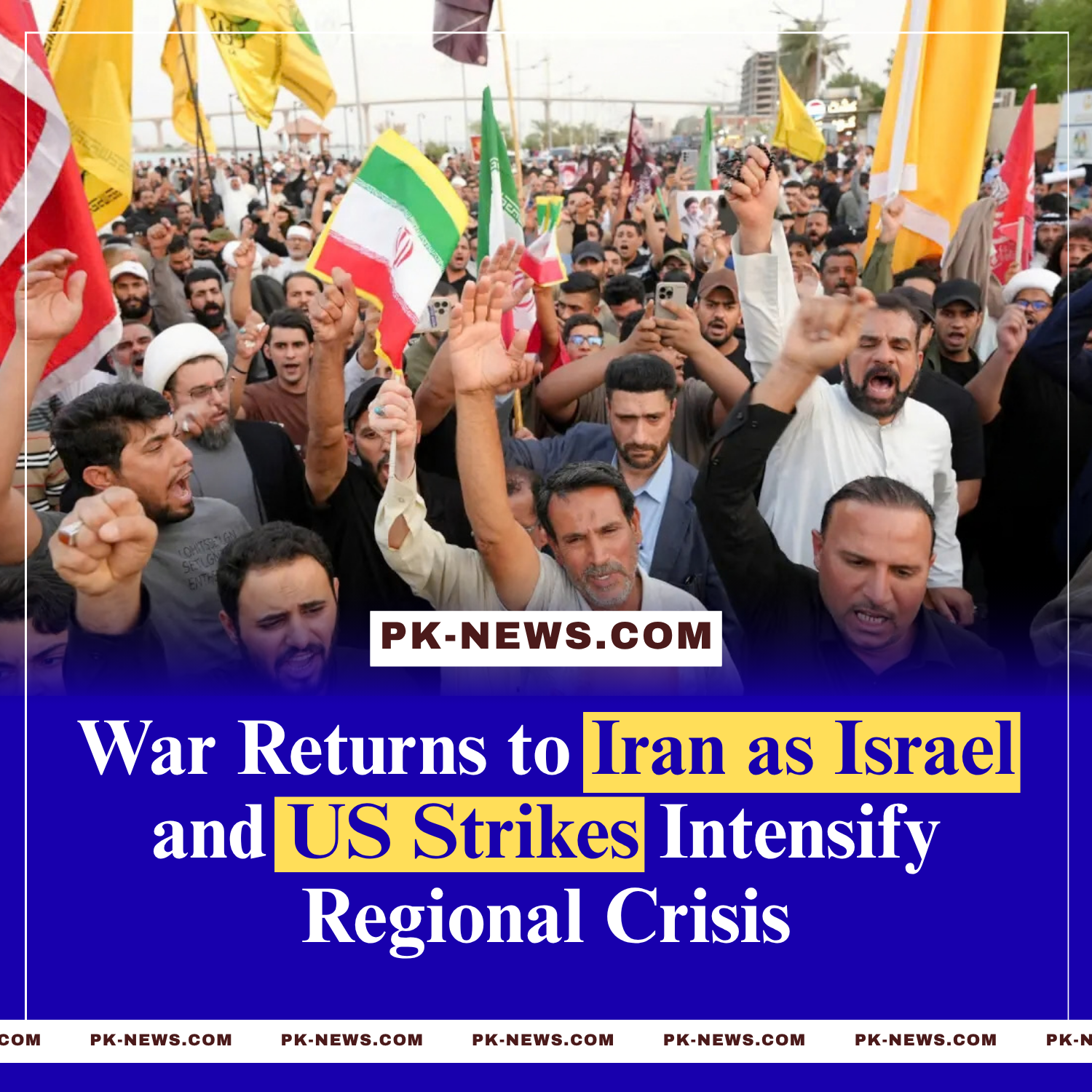
War Returns to Iran as Israel and US Strikes Intensify Regional Crisis
10
War PK Live News 😔 Negative
War Returns to Iran as Israel and US Strikes Intensify Regional Crisis
US and Israel Launch Major Strikes on Iran TEHRAN — The conflict between Iran, Israel and the United States has entered another dangerous phase as fighting continues across the region, with Iranian officials warning of a stronger response to any renewed US or Israeli military action. The current crisis follows the major US-Israeli strikes launched against Iran on February 28, 2026, which Washington and Tel Aviv described as pre-emptive military operations. The conflict has since gone through periods of intense fighting, a ceasefire and renewed hostilities. Iran Warns of a Crushing Response Iranian Army Chief Major General Amir Hatami warned on October 5 that Iran's military would deliver a strong response if the country faced another attack. Hatami said Iran's armed forces remained vigilant and warned that the US-Israeli war had not ended. His comments came amid continuing military and political tensions between Tehran, Washington and Tel Aviv. Tehran Warns Conflict Could Spread Iran's armed forces chief, Major General Ali Abdollahi, also warned that another act of aggression against Iran could have consequences for countries hosting US forces in the region. According to Iranian state media, Abdollahi said continued American military presence in West Asia was a major source of insecurity and warned that any further US action against Iran, whether directly or through Israel, would trigger an immediate response from Iranian forces. Iran Continues Diplomatic Efforts Despite the military confrontation, Tehran says it continues to use diplomatic channels to protect its interests. Iranian Foreign Minister Abbas Araghchi said Tehran would use all available diplomatic capabilities to protect the country's national interests and strengthen its international position and security. The statement indicates that Iran is attempting to keep diplomatic options open while simultaneously preparing for possible further military confrontation. US-Iran Peace Efforts Face Serious Obstacles Diplomatic efforts between Washington and Tehran have struggled to produce a lasting settlement. Iran has previously presented conditions for ending hostilities, including reopening the Strait of Hormuz and removing sanctions. US President Donald Trump has rejected proposals he considered insufficient, while Iranian officials have expressed skepticism about the prospects for a successful agreement. Strait of Hormuz Remains Under Pressure The Strait of Hormuz has become one of the most important flashpoints in the conflict because of its importance to global energy supplies. On October 5, a tanker reportedly turned around after being hailed by Iran's Islamic Revolutionary Guard Corps and instructed to leave the waterway or face the possibility of being targeted. The incident highlights the continuing risks facing commercial shipping in the region. Oil Markets Remain Highly Sensitive The military confrontation has had a direct effect on international energy markets. Oil prices have remained elevated as traders assess the possibility of further disruptions to Middle Eastern energy infrastructure and shipping. However, increased crude exports from the region and planned releases from strategic reserves have recently provided some relief to global markets. Saudi Aramco Chief Executive Amin Nasser has warned that rebuilding global oil inventories could take up to two years if the Strait of Hormuz does not fully reopen and confidence in regional shipping does not return. US Military Presence Remains Significant The United States continues to maintain a substantial military presence in the Middle East as tensions with Iran remain high. US Secretary of State Marco Rubio said Washington remains confident in the security of its military bases following recent attacks and regional developments. The United States has also continued adjusting the deployment of military assets in response to changing security conditions. Iranian Drone Attack Raises Questions The conflict has also resulted in casualties among US personnel. According to reporting cited by the Associated Press, six US soldiers were killed in a drone attack on a US base in Kuwait, making it the deadliest known attack on American troops since the beginning of the US-Israeli war against Iran on February 28. Families of the soldiers have subsequently raised questions about warnings and preparations surrounding the attack. Yemen Adds Another Front The wider regional conflict is also affecting Yemen. Yemeni government forces have launched a major campaign against the Iran-backed Houthi movement, while Saudi Arabia has carried out operations in support of the internationally recognised Yemeni government. The developing situation around Yemen adds another potential front to an already complicated regional security environment. Lebanon Also Remains a Conflict Zone Israeli military activity has continued in southern Lebanon as the wider regional crisis develops. Reports on October 4 said Israeli aircraft struck areas including Haddatha and other locations in southern Lebanon. The developments underline the possibility that the Iran-related conflict could continue affecting several countries and armed groups across the Middle East. Iran Appoints Acting Oil Minister Iran is also dealing with significant domestic pressures caused by the conflict. Iranian President Masoud Pezeshkian accepted the resignation of Oil Minister Mohsen Paknejad and appointed Hamid Bovard, chief executive of the National Iranian Oil Company, as acting oil minister. The change came as Iran faced fuel-supply pressures and long queues at petrol stations amid the wider war and disruptions affecting the country's energy sector. Iran Prepares for Possible Wider War Iranian officials have repeatedly warned that any renewed large-scale American attack could produce a broader military response. Reuters reported that Iranian commanders have been reviewing plans for potential retaliation against US-linked assets and countries supporting American military operations. The report said Tehran was preparing for a stronger response while still pursuing diplomatic options. Regional Security Risks Increase The continuing confrontation has created risks well beyond Iran and Israel. Military bases, commercial shipping, oil facilities and airspace across the region remain vulnerable to developments linked to the conflict. Any major escalation could affect international aviation, energy markets, maritime trade and regional economies. The possibility of attacks involving allied groups in Yemen, Lebanon and Iraq further complicates efforts to contain the conflict. Pakistan Closely Watches Regional Developments Pakistan is closely watching the continuing crisis because of its geographical proximity to Iran and its wider economic and security interests in the Middle East. Any prolonged disruption to Gulf shipping or a major increase in global oil prices could affect Pakistan's fuel-import costs, inflation and foreign-exchange requirements. Islamabad also has an interest in preventing the conflict from spreading further across the region. What Happens Next? The immediate direction of the conflict will depend on whether Washington and Tehran can revive meaningful diplomatic negotiations or whether military escalation continues. Iran has warned that another major attack would trigger a strong response, while the United States and Israel continue to maintain military capabilities in the region. At the same time, the security situation around the Strait of Hormuz remains a major concern for global markets. PK-News.com Analysis The Iran conflict has entered a highly sensitive phase in which military confrontation and diplomacy are continuing simultaneously. Iran is warning of a stronger response to further attacks, while its foreign ministry says diplomatic channels remain active. The situation is no longer limited to Iran and Israel. Developments in the Strait of Hormuz, Yemen, Lebanon, Iraq and Gulf energy infrastructure demonstrate how quickly the conflict can affect the wider Middle East. For the international community, the biggest concern remains preventing further escalation while protecting commercial shipping, energy supplies and civilian populations. PK-News.com Update The US-Israeli war against Iran continues to shape security and economic developments across the Middle East. Iranian commanders have issued fresh warnings of retaliation, while Tehran says it remains committed to using diplomatic channels to protect its national interests. At the same time, tanker movements through the Strait of Hormuz remain disrupted, oil markets remain volatile and fighting involving regional actors continues in Yemen and Lebanon. This article was developed and researched by PK-News.com based on reports and statements available on October 5, 2026. Key Points Conflict: US-Israel-Iran war Major escalation began: February 28, 2026 Iranian warning: Strong response to further attacks Key flashpoint: Strait of Hormuz Oil market: Remains highly sensitive to the conflict Regional fronts: Iran, Israel, Lebanon, Yemen and Gulf waters Diplomacy: Iran says diplomatic channels remain open Major concern: Further regional escalation
Oct 5, 2026 at 11:24 PM
US and Israel Launch Major Strikes on Iran TEHRAN — The conflict between Iran, Israel and the United States has entered another dangerous phase as fighting continues across the region, with Iranian officials warning of a stronger response to any renewed US or Israeli military action. The current crisis follows the major US-Israeli strikes launched against Iran on February 28, 2026, which Washington and Tel Aviv described as pre-emptive military operations. The conflict has since gone through periods of intense fighting, a ceasefire and renewed hostilities. Iran Warns of a Crushing Response Iranian Army Chief Major General Amir Hatami warned on October 5 that Iran's military would deliver a strong response if the country faced another attack. Hatami said Iran's armed forces remained vigilant and warned that the US-Israeli war had not ended. His comments came amid continuing military and political tensions between Tehran, Washington and Tel Aviv. Tehran Warns Conflict Could Spread Iran's armed forces chief, Major General Ali Abdollahi, also warned that another act of aggression against Iran could have consequences for countries hosting US forces in the region. According to Iranian state media, Abdollahi said continued American military presence in West Asia was a major source of insecurity and warned that any further US action against Iran, whether directly or through Israel, would trigger an immediate response from Iranian forces. Iran Continues Diplomatic Efforts Despite the military confrontation, Tehran says it continues to use diplomatic channels to protect its interests. Iranian Foreign Minister Abbas Araghchi said Tehran would use all available diplomatic capabilities to protect the country's national interests and strengthen its international position and security. The statement indicates that Iran is attempting to keep diplomatic options open while simultaneously preparing for possible further military confrontation. US-Iran Peace Efforts Face Serious Obstacles Diplomatic efforts between Washington and Tehran have struggled to produce a lasting settlement. Iran has previously presented conditions for ending hostilities, including reopening the Strait of Hormuz and removing sanctions. US President Donald Trump has rejected proposals he considered insufficient, while Iranian officials have expressed skepticism about the prospects for a successful agreement. Strait of Hormuz Remains Under Pressure The Strait of Hormuz has become one of the most important flashpoints in the conflict because of its importance to global energy supplies. On October 5, a tanker reportedly turned around after being hailed by Iran's Islamic Revolutionary Guard Corps and instructed to leave the waterway or face the possibility of being targeted. The incident highlights the continuing risks facing commercial shipping in the region. Oil Markets Remain Highly Sensitive The military confrontation has had a direct effect on international energy markets. Oil prices have remained elevated as traders assess the possibility of further disruptions to Middle Eastern energy infrastructure and shipping. However, increased crude exports from the region and planned releases from strategic reserves have recently provided some relief to global markets. Saudi Aramco Chief Executive Amin Nasser has warned that rebuilding global oil inventories could take up to two years if the Strait of Hormuz does not fully reopen and confidence in regional shipping does not return. US Military Presence Remains Significant The United States continues to maintain a substantial military presence in the Middle East as tensions with Iran remain high. US Secretary of State Marco Rubio said Washington remains confident in the security of its military bases following recent attacks and regional developments. The United States has also continued adjusting the deployment of military assets in response to changing security conditions. Iranian Drone Attack Raises Questions The conflict has also resulted in casualties among US personnel. According to reporting cited by the Associated Press, six US soldiers were killed in a drone attack on a US base in Kuwait, making it the deadliest known attack on American troops since the beginning of the US-Israeli war against Iran on February 28. Families of the soldiers have subsequently raised questions about warnings and preparations surrounding the attack. Yemen Adds Another Front The wider regional conflict is also affecting Yemen. Yemeni government forces have launched a major campaign against the Iran-backed Houthi movement, while Saudi Arabia has carried out operations in support of the internationally recognised Yemeni government. The developing situation around Yemen adds another potential front to an already complicated regional security environment. Lebanon Also Remains a Conflict Zone Israeli military activity has continued in southern Lebanon as the wider regional crisis develops. Reports on October 4 said Israeli aircraft struck areas including Haddatha and other locations in southern Lebanon. The developments underline the possibility that the Iran-related conflict could continue affecting several countries and armed groups across the Middle East. Iran Appoints Acting Oil Minister Iran is also dealing with significant domestic pressures caused by the conflict. Iranian President Masoud Pezeshkian accepted the resignation of Oil Minister Mohsen Paknejad and appointed Hamid Bovard, chief executive of the National Iranian Oil Company, as acting oil minister. The change came as Iran faced fuel-supply pressures and long queues at petrol stations amid the wider war and disruptions affecting the country's energy sector. Iran Prepares for Possible Wider War Iranian officials have repeatedly warned that any renewed large-scale American attack could produce a broader military response. Reuters reported that Iranian commanders have been reviewing plans for potential retaliation against US-linked assets and countries supporting American military operations. The report said Tehran was preparing for a stronger response while still pursuing diplomatic options. Regional Security Risks Increase The continuing confrontation has created risks well beyond Iran and Israel. Military bases, commercial shipping, oil facilities and airspace across the region remain vulnerable to developments linked to the conflict. Any major escalation could affect international aviation, energy markets, maritime trade and regional economies. The possibility of attacks involving allied groups in Yemen, Lebanon and Iraq further complicates efforts to contain the conflict. Pakistan Closely Watches Regional Developments Pakistan is closely watching the continuing crisis because of its geographical proximity to Iran and its wider economic and security interests in the Middle East. Any prolonged disruption to Gulf shipping or a major increase in global oil prices could affect Pakistan's fuel-import costs, inflation and foreign-exchange requirements. Islamabad also has an interest in preventing the conflict from spreading further across the region. What Happens Next? The immediate direction of the conflict will depend on whether Washington and Tehran can revive meaningful diplomatic negotiations or whether military escalation continues. Iran has warned that another major attack would trigger a strong response, while the United States and Israel continue to maintain military capabilities in the region. At the same time, the security situation around the Strait of Hormuz remains a major concern for global markets. PK-News.com Analysis The Iran conflict has entered a highly sensitive phase in which military confrontation and diplomacy are continuing simultaneously. Iran is warning of a stronger response to further attacks, while its foreign ministry says diplomatic channels remain active. The situation is no longer limited to Iran and Israel. Developments in the Strait of Hormuz, Yemen, Lebanon, Iraq and Gulf energy infrastructure demonstrate how quickly the conflict can affect the wider Middle East. For the international community, the biggest concern remains preventing further escalation while protecting commercial shipping, energy supplies and civilian populations. PK-News.com Update The US-Israeli war against Iran continues to shape security and economic developments across the Middle East. Iranian commanders have issued fresh warnings of retaliation, while Tehran says it remains committed to using diplomatic channels to protect its national interests. At the same time, tanker movements through the Strait of Hormuz remain disrupted, oil markets remain volatile and fighting involving regional actors continues in Yemen and Lebanon. This article was developed and researched by PK-News.com based on reports and statements available on October 5, 2026. Key Points Conflict: US-Israel-Iran war Major escalation began: February 28, 2026 Iranian warning: Strong response to further attacks Key flashpoint: Strait of Hormuz Oil market: Remains highly sensitive to the conflict Regional fronts: Iran, Israel, Lebanon, Yemen and Gulf waters Diplomacy: Iran says diplomatic channels remain open Major concern: Further regional escalation
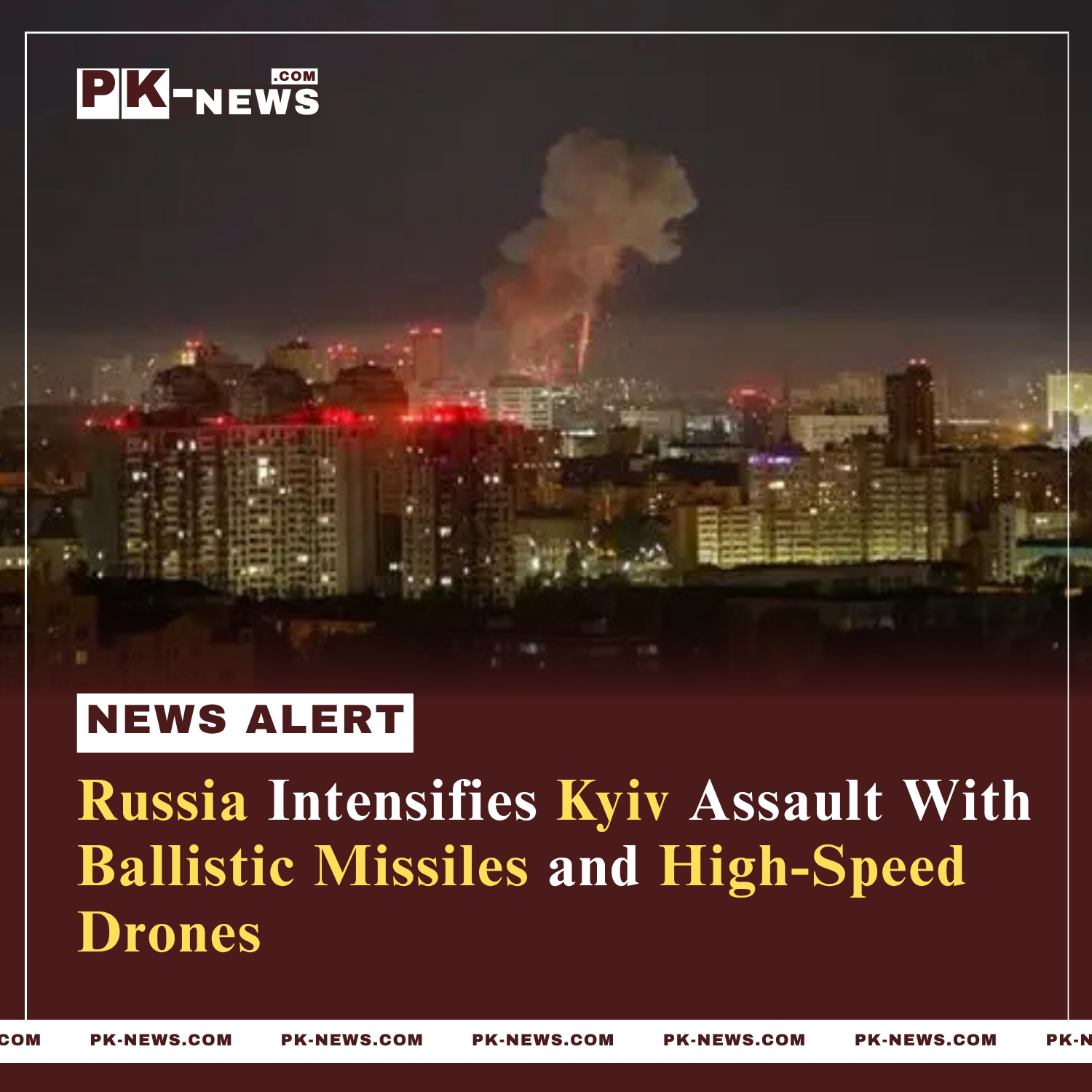
Russia Intensifies Kyiv Assault With Ballistic Missiles and High-Speed Drones
28
War PK Live News 😔 Negative
Russia Intensifies Kyiv Assault With Ballistic Missiles and High-Speed Drones
Russia has intensified its aerial attacks on Ukraine, launching ballistic missiles and dozens of high-speed, jet-powered drones toward Kyiv and other Ukrainian cities in a major overnight barrage. The latest assault has placed additional pressure on Ukraine's air-defence network as the country enters the colder months, when attacks on energy infrastructure could have a particularly serious impact on civilians. Ukraine's Air Force reported that Russia used ballistic missiles alongside a large number of attack drones during the latest assault. Ukrainian authorities said air-defence forces intercepted a significant number of incoming targets, while explosions and damage were reported in Kyiv and other locations. Kyiv Faces New Wave of Attacks Kyiv was placed under air-raid alerts as Russian missiles and drones approached the Ukrainian capital. The latest attacks included new jet-powered drones that travel at higher speeds and altitudes than many of the drones previously used by Russia. According to the Associated Press, these drones are creating a new challenge for Ukrainian air-defence forces because some existing ground-based systems struggle to intercept them effectively. Ukrainian authorities have been working to develop faster interceptor drones capable of engaging the new threat. The development highlights how rapidly drone warfare is changing during the conflict. Ballistic Missiles Add to the Threat The latest Russian assault was not limited to drones. Ballistic missiles were also fired toward Ukraine, creating a separate challenge for Ukrainian air-defence forces. Ukraine has relied heavily on U.S.-supplied Patriot missile systems to defend against ballistic threats. However, Ukrainian officials say supplies of Patriot interceptors remain under pressure. The AP reported that Ukraine said its air defences intercepted two ballistic missiles during the latest overnight attack, suggesting that additional Patriot interceptors may have recently become available. The combination of ballistic missiles and high-speed drones can complicate the task of air-defence operators because different weapons require different interception capabilities. More Than 150 Drones Reported Ukraine's Air Force reported that the overnight assault included 152 drones, including 82 jet-powered drones, along with ballistic missiles and another missile described in its report as a Zircon/Oniks-type anti-ship missile. Ukrainian air-defence forces said they neutralised 109 aerial targets, including 106 drones and three missiles. The Ukrainian report also said impacts were recorded at multiple locations and that the attack was still continuing when the initial assessment was issued. These figures are Ukrainian military claims and have not been independently verified by PK-News.com. Civilian Areas Also Hit Ukrainian officials reported damage to civilian infrastructure during the attacks. In Kyiv, missile debris fell near a residential building, while another non-residential structure caught fire, according to Kyiv Mayor Vitali Klitschko. The latest attacks followed a separate wave of Russian drone strikes on Monday that Ukrainian President Volodymyr Zelensky said killed nine people and injured more than 80 across the country. In Odesa, local officials reported injuries and damage to residential and civilian infrastructure. Other Ukrainian regions also reported damage following the latest Russian strikes. National Academy of Sciences Damaged The latest attacks also damaged the National Academy of Sciences in central Kyiv. The building is located in a historic part of the Ukrainian capital, close to several important cultural and diplomatic sites. Reports said a high-speed drone struck the area, causing an explosion and fire. The attack caused further concern because of the location's proximity to important national institutions. Ukraine Develops Faster Interceptor Drones Ukraine is responding to the changing threat by accelerating development of its own interceptor drones. These systems are designed specifically to chase and destroy incoming drones. Ukrainian officials say some new systems are already being tested and deployed with military units. The goal is to create a cheaper and faster method of defending against large numbers of Russian attack drones. The latest battlefield developments demonstrate how both sides are rapidly adapting their weapons and tactics. Patriot Shortage Creates Additional Pressure Ukraine's shortage of Patriot interceptor missiles has become another major concern. Patriot systems are among the few systems capable of reliably defending against Russia's ballistic missile attacks. The shortage has become more serious as Ukraine faces increasingly frequent missile and drone attacks. The AP reported that Patriot stocks have been affected in part by the wider conflict involving Iran, which has increased demand for the same type of interceptor missiles. Ukraine has continued asking its Western partners for additional air-defence support. Attacks Increasing Ahead of Winter The latest escalation comes as Ukraine approaches another winter during the ongoing war. In previous winters, Russian forces have repeatedly targeted Ukraine's electricity and energy infrastructure. Damage to power systems can affect heating, water supplies and other essential services. Ukrainian officials are therefore particularly concerned about maintaining sufficient air-defence coverage before the coldest months arrive. Kyiv has already experienced hundreds of air-raid alerts in recent weeks, according to Ukrainian officials cited by AP. Schools and Daily Life Disrupted The continuing attacks are also affecting ordinary life in Kyiv. The National University of Kyiv has decided to move classes online for several weeks because of concerns about the safety of students and staff. Repeated air-raid alerts have disrupted transportation, education and normal business activity across the capital. Residents are being forced to spend increasing amounts of time in shelters or other protected locations during periods of intense attacks. Russia Says It Is Targeting Military Facilities Russia's Defence Ministry has said its strikes are aimed at military-related infrastructure. According to the Russian ministry, targets included facilities associated with drones, cruise missiles and data-processing infrastructure. Moscow has also claimed that some of the targeted facilities support Ukraine's military operations. Ukrainian authorities, meanwhile, have repeatedly accused Russia of attacking civilian areas and infrastructure. The competing claims could not all be independently verified. Peace Efforts Continue The latest escalation is occurring alongside continuing diplomatic efforts to end the war. U.S. and Russian officials have continued discussions about a possible settlement. A Kremlin negotiator was in Washington for talks with U.S. officials concerning the war and potential future economic cooperation, according to an American official cited by AP. However, major disagreements remain over the conditions for ending the conflict. The latest attacks therefore come at a time when diplomatic efforts and military escalation are occurring simultaneously. What Comes Next? The immediate concern for Ukraine is maintaining sufficient air-defence capabilities as Russia continues to develop and deploy new weapons. The emergence of faster jet-powered drones could force Ukraine to expand its interceptor-drone programme while seeking additional missile-defence systems from international partners. For Russia, the continuing attacks demonstrate an effort to maintain pressure on Kyiv and Ukrainian infrastructure. The conflict remains highly active, with both sides developing new technologies while diplomatic efforts continue. PK-News.com will continue monitoring the Russia-Ukraine conflict and provide updates as verified information becomes available. Developed by PK-News.com
Sep 29, 2026 at 7:32 PM
Russia has intensified its aerial attacks on Ukraine, launching ballistic missiles and dozens of high-speed, jet-powered drones toward Kyiv and other Ukrainian cities in a major overnight barrage. The latest assault has placed additional pressure on Ukraine's air-defence network as the country enters the colder months, when attacks on energy infrastructure could have a particularly serious impact on civilians. Ukraine's Air Force reported that Russia used ballistic missiles alongside a large number of attack drones during the latest assault. Ukrainian authorities said air-defence forces intercepted a significant number of incoming targets, while explosions and damage were reported in Kyiv and other locations. Kyiv Faces New Wave of Attacks Kyiv was placed under air-raid alerts as Russian missiles and drones approached the Ukrainian capital. The latest attacks included new jet-powered drones that travel at higher speeds and altitudes than many of the drones previously used by Russia. According to the Associated Press, these drones are creating a new challenge for Ukrainian air-defence forces because some existing ground-based systems struggle to intercept them effectively. Ukrainian authorities have been working to develop faster interceptor drones capable of engaging the new threat. The development highlights how rapidly drone warfare is changing during the conflict. Ballistic Missiles Add to the Threat The latest Russian assault was not limited to drones. Ballistic missiles were also fired toward Ukraine, creating a separate challenge for Ukrainian air-defence forces. Ukraine has relied heavily on U.S.-supplied Patriot missile systems to defend against ballistic threats. However, Ukrainian officials say supplies of Patriot interceptors remain under pressure. The AP reported that Ukraine said its air defences intercepted two ballistic missiles during the latest overnight attack, suggesting that additional Patriot interceptors may have recently become available. The combination of ballistic missiles and high-speed drones can complicate the task of air-defence operators because different weapons require different interception capabilities. More Than 150 Drones Reported Ukraine's Air Force reported that the overnight assault included 152 drones, including 82 jet-powered drones, along with ballistic missiles and another missile described in its report as a Zircon/Oniks-type anti-ship missile. Ukrainian air-defence forces said they neutralised 109 aerial targets, including 106 drones and three missiles. The Ukrainian report also said impacts were recorded at multiple locations and that the attack was still continuing when the initial assessment was issued. These figures are Ukrainian military claims and have not been independently verified by PK-News.com. Civilian Areas Also Hit Ukrainian officials reported damage to civilian infrastructure during the attacks. In Kyiv, missile debris fell near a residential building, while another non-residential structure caught fire, according to Kyiv Mayor Vitali Klitschko. The latest attacks followed a separate wave of Russian drone strikes on Monday that Ukrainian President Volodymyr Zelensky said killed nine people and injured more than 80 across the country. In Odesa, local officials reported injuries and damage to residential and civilian infrastructure. Other Ukrainian regions also reported damage following the latest Russian strikes. National Academy of Sciences Damaged The latest attacks also damaged the National Academy of Sciences in central Kyiv. The building is located in a historic part of the Ukrainian capital, close to several important cultural and diplomatic sites. Reports said a high-speed drone struck the area, causing an explosion and fire. The attack caused further concern because of the location's proximity to important national institutions. Ukraine Develops Faster Interceptor Drones Ukraine is responding to the changing threat by accelerating development of its own interceptor drones. These systems are designed specifically to chase and destroy incoming drones. Ukrainian officials say some new systems are already being tested and deployed with military units. The goal is to create a cheaper and faster method of defending against large numbers of Russian attack drones. The latest battlefield developments demonstrate how both sides are rapidly adapting their weapons and tactics. Patriot Shortage Creates Additional Pressure Ukraine's shortage of Patriot interceptor missiles has become another major concern. Patriot systems are among the few systems capable of reliably defending against Russia's ballistic missile attacks. The shortage has become more serious as Ukraine faces increasingly frequent missile and drone attacks. The AP reported that Patriot stocks have been affected in part by the wider conflict involving Iran, which has increased demand for the same type of interceptor missiles. Ukraine has continued asking its Western partners for additional air-defence support. Attacks Increasing Ahead of Winter The latest escalation comes as Ukraine approaches another winter during the ongoing war. In previous winters, Russian forces have repeatedly targeted Ukraine's electricity and energy infrastructure. Damage to power systems can affect heating, water supplies and other essential services. Ukrainian officials are therefore particularly concerned about maintaining sufficient air-defence coverage before the coldest months arrive. Kyiv has already experienced hundreds of air-raid alerts in recent weeks, according to Ukrainian officials cited by AP. Schools and Daily Life Disrupted The continuing attacks are also affecting ordinary life in Kyiv. The National University of Kyiv has decided to move classes online for several weeks because of concerns about the safety of students and staff. Repeated air-raid alerts have disrupted transportation, education and normal business activity across the capital. Residents are being forced to spend increasing amounts of time in shelters or other protected locations during periods of intense attacks. Russia Says It Is Targeting Military Facilities Russia's Defence Ministry has said its strikes are aimed at military-related infrastructure. According to the Russian ministry, targets included facilities associated with drones, cruise missiles and data-processing infrastructure. Moscow has also claimed that some of the targeted facilities support Ukraine's military operations. Ukrainian authorities, meanwhile, have repeatedly accused Russia of attacking civilian areas and infrastructure. The competing claims could not all be independently verified. Peace Efforts Continue The latest escalation is occurring alongside continuing diplomatic efforts to end the war. U.S. and Russian officials have continued discussions about a possible settlement. A Kremlin negotiator was in Washington for talks with U.S. officials concerning the war and potential future economic cooperation, according to an American official cited by AP. However, major disagreements remain over the conditions for ending the conflict. The latest attacks therefore come at a time when diplomatic efforts and military escalation are occurring simultaneously. What Comes Next? The immediate concern for Ukraine is maintaining sufficient air-defence capabilities as Russia continues to develop and deploy new weapons. The emergence of faster jet-powered drones could force Ukraine to expand its interceptor-drone programme while seeking additional missile-defence systems from international partners. For Russia, the continuing attacks demonstrate an effort to maintain pressure on Kyiv and Ukrainian infrastructure. The conflict remains highly active, with both sides developing new technologies while diplomatic efforts continue. PK-News.com will continue monitoring the Russia-Ukraine conflict and provide updates as verified information becomes available. Developed by PK-News.com
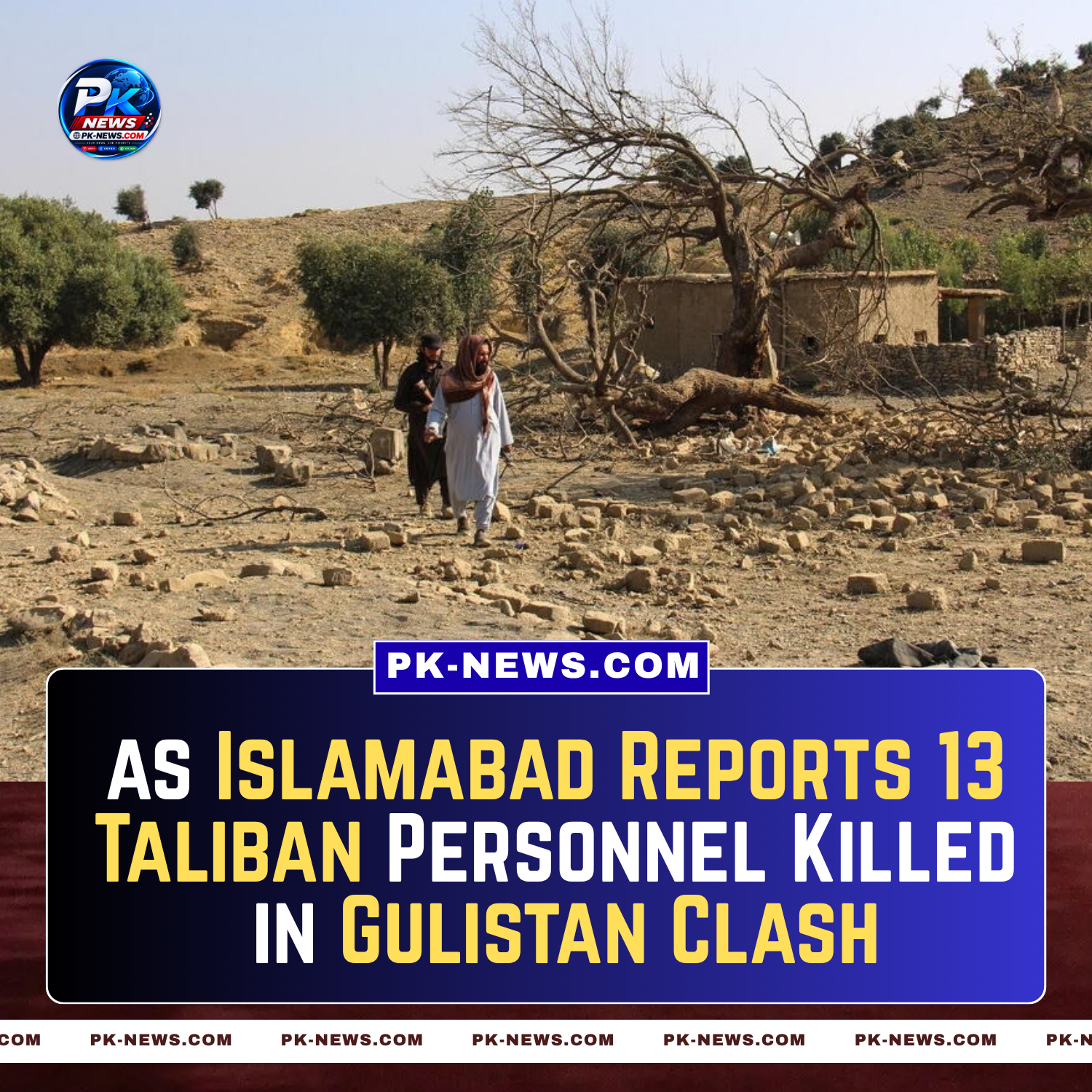
Pakistan-Afghanistan Border Tensions Surge as Islamabad Reports 13 Taliban Personnel Killed in Gulistan Clash
19
War PK Live News 😔 Negative
Pakistan-Afghanistan Border Tensions Surge as Islamabad Reports 13 Taliban Personnel Killed in Gulistan Clash
Tensions between Pakistan and Afghanistan have sharply escalated following overnight fighting in the Gulistan sector of Balochistan. Pakistan says its forces repelled an attempted Afghan incursion and that at least 13 Afghan Taliban personnel were killed, while Kabul has rejected Islamabad's account and said its forces destroyed a Pakistani border post without suffering casualties. The competing claims come after Pakistani air and drone strikes inside Afghanistan and a series of alleged drone incursions, raising fresh concerns about further escalation along the border. Pakistan reports major overnight border clash Pakistan-Afghanistan relations have entered another tense phase after Islamabad reported an overnight confrontation in the Gulistan sector along the southwestern border. Pakistan's Ministry of Information and Broadcasting said Pakistani forces thwarted what it described as an attempted Afghan aggression during the night of September 24–25. According to the ministry, fighting subsequently continued around opposing Taliban positions, with Pakistan claiming that at least 13 Afghan Taliban personnel were killed and several others injured. The ministry also rejected Afghanistan's version of events, describing Kabul's claim that a Pakistani border post had been destroyed as "fake and fabricated." The incident represents another significant escalation between the two neighbours after several months of relative calm. Afghanistan disputes Pakistan's account Afghanistan's Taliban authorities have presented a fundamentally different account of the confrontation. According to reports, Afghanistan claimed that its forces destroyed a Pakistani military post near the Spin Boldak area and said Afghan forces suffered no casualties. Pakistan rejected those claims and maintained that its forces had successfully repelled an attempted attack. The competing statements have not been independently verified, meaning the exact scale of damage and casualties remains difficult to establish from outside sources. The Associated Press also reported that Afghanistan denied Pakistan's claim that 13 Taliban personnel were killed. This difference in accounts is particularly important because the latest confrontation follows several other incidents involving military strikes, drones and cross-border attacks. Fighting follows Pakistani airstrikes inside Afghanistan The latest border clash came only one day after Pakistan said it carried out air and drone strikes against 10 locations inside Afghanistan. Pakistan said the targets included militant infrastructure as well as locations used to launch and store drones. Information Minister Attaullah Tarar said the operation followed what Pakistan described as deliberate drone incursions into its territory. Pakistani officials said eight drones had entered Pakistani airspace from Afghanistan and were subsequently intercepted. According to Pakistani security officials, four drones were shot down near Torkham while four others were brought down in mountainous areas around Kohat. Pakistan has argued that the strikes were part of its response to threats originating from across the border. Afghanistan has denied responsibility for launching drones against Pakistan. Afghan provinces reportedly targeted Afghan officials said the Pakistani strikes affected several areas. Afghan government spokesperson Zabihullah Mujahid said the September 24 strikes hit areas in Kandahar, Paktia and Khost provinces. Afghan authorities also reported civilian casualties. The Associated Press reported that Afghanistan said four civilians were killed in the strikes. This followed an earlier Pakistani operation on September 21, after which Afghan officials reported civilian deaths and the United Nations confirmed civilian casualties. Pakistan, however, has maintained that its operations were directed against militant infrastructure rather than civilians. These conflicting accounts remain central to the wider dispute. Why Pakistan says it is taking military action Islamabad has repeatedly accused militant groups operating from Afghan territory of carrying out attacks inside Pakistan. The most prominent group involved in Pakistan's allegations is the Tehrik-e-Taliban Pakistan (TTP). Pakistan says Afghan territory is being used by militant groups to plan and support attacks against Pakistani security forces and civilians. The Taliban government in Kabul rejects the accusation and says it does not permit its territory to be used against other countries. The disagreement over militant activity has become one of the most difficult issues between Islamabad and Kabul. Recent attacks have increased pressure on Islamabad Pakistan's latest military actions come after a series of serious security incidents. Earlier this week, Pakistan said it conducted airstrikes against militant locations in Afghanistan following a deadly attack in Kohat. Pakistan said the operation killed 28 militants, while Afghan authorities reported civilian casualties. The United Nations subsequently confirmed civilian deaths from the earlier strikes. The Kohat attack had itself intensified pressure on Pakistan's security authorities. According to the Associated Press, a coordinated assault on a police compound in Kohat killed 23 people, including 17 police officers and six civilians, while eight attackers were killed during the subsequent operation. Islamabad has linked the broader security threat to militants allegedly operating from Afghan territory, although Kabul disputes Pakistan's accusations. Border remains on high alert Following the latest clash, Pakistani security forces remain on high alert in the affected border areas. Pakistani security sources told international media that intermittent firing had continued during the confrontation. The reported fighting around Gulistan and Spin Boldak is particularly significant because the area connects southwestern Pakistan with southern Afghanistan and has previously experienced cross-border tensions. Any prolonged confrontation could affect border movement, trade and civilian life in communities on both sides. Competing claims make the situation difficult to verify One of the major challenges surrounding the latest incident is the lack of independent verification. Pakistan says it successfully prevented an Afghan incursion and inflicted casualties on Taliban personnel. Afghanistan says its forces destroyed a Pakistani position and suffered no casualties. The two sides therefore provide almost completely different accounts. Al Jazeera reported that Pakistani security sources said several Taliban members were killed but noted that there was no immediate independent confirmation from either side regarding the full details of the confrontation. For news organisations, this makes attribution particularly important. PK-News.com should therefore describe the casualty figure as Pakistan's reported figure, rather than presenting 13 deaths as independently confirmed. Regional mediation faces another challenge The renewed violence also threatens diplomatic efforts aimed at reducing tensions between Pakistan and Afghanistan. Countries including China, Türkiye, Qatar and Saudi Arabia have previously been involved in efforts to encourage dialogue between Islamabad and Kabul. Al Jazeera reported that the latest escalation could complicate those mediation efforts. Diplomatic engagement is particularly important because neither country benefits from prolonged instability along a border stretching more than 2,000 kilometres. A sustained confrontation could also affect regional security and trade routes. What happens next? The coming days will be important. Pakistan is likely to closely monitor the border for further attempted crossings, attacks or drone activity. Afghan authorities may also respond to the latest Pakistani military operations through diplomatic statements or other measures. The most important questions now include whether the border fighting stops, whether additional military operations are conducted and whether regional countries can persuade both sides to return to negotiations. Another major issue will be whether Pakistan receives further security assurances concerning militant activity originating from Afghan territory. Risk of further escalation The latest clash is part of a much broader deterioration in Pakistan-Afghanistan relations. The sequence of events is notable: Pakistan reported militant attacks inside the country. Islamabad carried out strikes inside Afghanistan. Pakistan reported drone incursions from Afghanistan. Pakistani forces conducted additional air and drone strikes. Overnight fighting then erupted in the Gulistan sector. Pakistan reported 13 Taliban personnel killed. Afghanistan rejected Pakistan's account. Each development has increased pressure on the other side. If further incidents occur, the situation could become significantly more difficult to control. At the same time, the competing claims demonstrate why independent verification and diplomatic communication remain important. A critical moment for Pakistan and Afghanistan The reported deaths of 13 Afghan Taliban personnel, if confirmed, would represent a significant development in the latest border confrontation. For now, however, the figure remains a Pakistani government claim disputed by Afghanistan. What is clear is that relations between Islamabad and Kabul have deteriorated sharply in recent days. Pakistan says it is responding to cross-border security threats and attacks. Afghanistan rejects those accusations and has condemned Pakistani military operations inside its territory. With both sides maintaining opposing positions, the next few days could prove crucial. Any additional drone incursions, border attacks or airstrikes could further intensify the crisis, while successful diplomatic engagement could potentially prevent the confrontation from developing into a wider conflict. PK-News.com will continue monitoring official statements from Islamabad and Kabul, developments along the Gulistan–Spin Boldak border, and any new military or diplomatic moves.
Sep 26, 2026 at 8:58 AM
Tensions between Pakistan and Afghanistan have sharply escalated following overnight fighting in the Gulistan sector of Balochistan. Pakistan says its forces repelled an attempted Afghan incursion and that at least 13 Afghan Taliban personnel were killed, while Kabul has rejected Islamabad's account and said its forces destroyed a Pakistani border post without suffering casualties. The competing claims come after Pakistani air and drone strikes inside Afghanistan and a series of alleged drone incursions, raising fresh concerns about further escalation along the border. Pakistan reports major overnight border clash Pakistan-Afghanistan relations have entered another tense phase after Islamabad reported an overnight confrontation in the Gulistan sector along the southwestern border. Pakistan's Ministry of Information and Broadcasting said Pakistani forces thwarted what it described as an attempted Afghan aggression during the night of September 24–25. According to the ministry, fighting subsequently continued around opposing Taliban positions, with Pakistan claiming that at least 13 Afghan Taliban personnel were killed and several others injured. The ministry also rejected Afghanistan's version of events, describing Kabul's claim that a Pakistani border post had been destroyed as "fake and fabricated." The incident represents another significant escalation between the two neighbours after several months of relative calm. Afghanistan disputes Pakistan's account Afghanistan's Taliban authorities have presented a fundamentally different account of the confrontation. According to reports, Afghanistan claimed that its forces destroyed a Pakistani military post near the Spin Boldak area and said Afghan forces suffered no casualties. Pakistan rejected those claims and maintained that its forces had successfully repelled an attempted attack. The competing statements have not been independently verified, meaning the exact scale of damage and casualties remains difficult to establish from outside sources. The Associated Press also reported that Afghanistan denied Pakistan's claim that 13 Taliban personnel were killed. This difference in accounts is particularly important because the latest confrontation follows several other incidents involving military strikes, drones and cross-border attacks. Fighting follows Pakistani airstrikes inside Afghanistan The latest border clash came only one day after Pakistan said it carried out air and drone strikes against 10 locations inside Afghanistan. Pakistan said the targets included militant infrastructure as well as locations used to launch and store drones. Information Minister Attaullah Tarar said the operation followed what Pakistan described as deliberate drone incursions into its territory. Pakistani officials said eight drones had entered Pakistani airspace from Afghanistan and were subsequently intercepted. According to Pakistani security officials, four drones were shot down near Torkham while four others were brought down in mountainous areas around Kohat. Pakistan has argued that the strikes were part of its response to threats originating from across the border. Afghanistan has denied responsibility for launching drones against Pakistan. Afghan provinces reportedly targeted Afghan officials said the Pakistani strikes affected several areas. Afghan government spokesperson Zabihullah Mujahid said the September 24 strikes hit areas in Kandahar, Paktia and Khost provinces. Afghan authorities also reported civilian casualties. The Associated Press reported that Afghanistan said four civilians were killed in the strikes. This followed an earlier Pakistani operation on September 21, after which Afghan officials reported civilian deaths and the United Nations confirmed civilian casualties. Pakistan, however, has maintained that its operations were directed against militant infrastructure rather than civilians. These conflicting accounts remain central to the wider dispute. Why Pakistan says it is taking military action Islamabad has repeatedly accused militant groups operating from Afghan territory of carrying out attacks inside Pakistan. The most prominent group involved in Pakistan's allegations is the Tehrik-e-Taliban Pakistan (TTP). Pakistan says Afghan territory is being used by militant groups to plan and support attacks against Pakistani security forces and civilians. The Taliban government in Kabul rejects the accusation and says it does not permit its territory to be used against other countries. The disagreement over militant activity has become one of the most difficult issues between Islamabad and Kabul. Recent attacks have increased pressure on Islamabad Pakistan's latest military actions come after a series of serious security incidents. Earlier this week, Pakistan said it conducted airstrikes against militant locations in Afghanistan following a deadly attack in Kohat. Pakistan said the operation killed 28 militants, while Afghan authorities reported civilian casualties. The United Nations subsequently confirmed civilian deaths from the earlier strikes. The Kohat attack had itself intensified pressure on Pakistan's security authorities. According to the Associated Press, a coordinated assault on a police compound in Kohat killed 23 people, including 17 police officers and six civilians, while eight attackers were killed during the subsequent operation. Islamabad has linked the broader security threat to militants allegedly operating from Afghan territory, although Kabul disputes Pakistan's accusations. Border remains on high alert Following the latest clash, Pakistani security forces remain on high alert in the affected border areas. Pakistani security sources told international media that intermittent firing had continued during the confrontation. The reported fighting around Gulistan and Spin Boldak is particularly significant because the area connects southwestern Pakistan with southern Afghanistan and has previously experienced cross-border tensions. Any prolonged confrontation could affect border movement, trade and civilian life in communities on both sides. Competing claims make the situation difficult to verify One of the major challenges surrounding the latest incident is the lack of independent verification. Pakistan says it successfully prevented an Afghan incursion and inflicted casualties on Taliban personnel. Afghanistan says its forces destroyed a Pakistani position and suffered no casualties. The two sides therefore provide almost completely different accounts. Al Jazeera reported that Pakistani security sources said several Taliban members were killed but noted that there was no immediate independent confirmation from either side regarding the full details of the confrontation. For news organisations, this makes attribution particularly important. PK-News.com should therefore describe the casualty figure as Pakistan's reported figure, rather than presenting 13 deaths as independently confirmed. Regional mediation faces another challenge The renewed violence also threatens diplomatic efforts aimed at reducing tensions between Pakistan and Afghanistan. Countries including China, Türkiye, Qatar and Saudi Arabia have previously been involved in efforts to encourage dialogue between Islamabad and Kabul. Al Jazeera reported that the latest escalation could complicate those mediation efforts. Diplomatic engagement is particularly important because neither country benefits from prolonged instability along a border stretching more than 2,000 kilometres. A sustained confrontation could also affect regional security and trade routes. What happens next? The coming days will be important. Pakistan is likely to closely monitor the border for further attempted crossings, attacks or drone activity. Afghan authorities may also respond to the latest Pakistani military operations through diplomatic statements or other measures. The most important questions now include whether the border fighting stops, whether additional military operations are conducted and whether regional countries can persuade both sides to return to negotiations. Another major issue will be whether Pakistan receives further security assurances concerning militant activity originating from Afghan territory. Risk of further escalation The latest clash is part of a much broader deterioration in Pakistan-Afghanistan relations. The sequence of events is notable: Pakistan reported militant attacks inside the country. Islamabad carried out strikes inside Afghanistan. Pakistan reported drone incursions from Afghanistan. Pakistani forces conducted additional air and drone strikes. Overnight fighting then erupted in the Gulistan sector. Pakistan reported 13 Taliban personnel killed. Afghanistan rejected Pakistan's account. Each development has increased pressure on the other side. If further incidents occur, the situation could become significantly more difficult to control. At the same time, the competing claims demonstrate why independent verification and diplomatic communication remain important. A critical moment for Pakistan and Afghanistan The reported deaths of 13 Afghan Taliban personnel, if confirmed, would represent a significant development in the latest border confrontation. For now, however, the figure remains a Pakistani government claim disputed by Afghanistan. What is clear is that relations between Islamabad and Kabul have deteriorated sharply in recent days. Pakistan says it is responding to cross-border security threats and attacks. Afghanistan rejects those accusations and has condemned Pakistani military operations inside its territory. With both sides maintaining opposing positions, the next few days could prove crucial. Any additional drone incursions, border attacks or airstrikes could further intensify the crisis, while successful diplomatic engagement could potentially prevent the confrontation from developing into a wider conflict. PK-News.com will continue monitoring official statements from Islamabad and Kabul, developments along the Gulistan–Spin Boldak border, and any new military or diplomatic moves.
Pakistan-Afghanistan Tensions Escalate After Airstrikes as Border Fighting Intensifies
157
War PK Live News 😔 Negative
Pakistan-Afghanistan Tensions Escalate After Airstrikes as Border Fighting Intensifies
Tensions between Pakistan and Afghanistan have sharply escalated after Pakistan carried out air and drone strikes at 10 locations inside Afghanistan, which Islamabad said were being used to launch and store drones involved in attacks against Pakistan. Afghan authorities disputed Pakistan’s account, reporting civilian casualties and warning of a response. On September 25, Pakistani security sources also said Afghan Taliban fighters attempted to enter Pakistani territory in the Gulistan sector of Balochistan and were repelled. The latest developments have raised concerns about another prolonged period of cross-border confrontation. Border tensions enter a new phase Pakistan-Afghanistan relations have entered another period of serious tension after several days of military activity along and across the two countries' shared border. The latest escalation follows Pakistani air and drone strikes on September 24 against 10 locations inside Afghanistan. Pakistan said the locations were being used to launch and store drones that had been involved in attacks against Pakistani territory. Information Minister Attaullah Tarar said the strikes were carried out in what Pakistan described as its sovereign right to self-defence and said the targets were military objectives directly connected to attacks against Pakistan. Afghan Taliban authorities rejected Pakistan's justification and reported civilian deaths from the strikes. The situation subsequently developed further along the border, with Pakistani officials reporting an attempted incursion in Balochistan's Gulistan sector. Pakistan reports attempted border incursion On September 25, Pakistani security sources said Afghan Taliban fighters attempted to enter Pakistani territory in the Gulistan sector of Balochistan. According to Pakistan's state broadcaster and security sources, Pakistani forces responded and killed multiple Afghan Taliban fighters. The sources said intermittent firing continued in the area and that Pakistani troops remained on high alert. Reuters also reported that Pakistan said it had thwarted an attempted Afghan attack in the Gulistan border area. According to the report, Pakistani security sources described the action as retaliation for an attempt to enter Pakistani territory and commit aggression. The Afghan Taliban had not immediately commented on the Pakistani allegations at the time of the Reuters report. This means the details of the reported attempted incursion remain based primarily on Pakistani security sources. Why Pakistan launched the latest strikes Pakistan says the immediate trigger for the September 24 operation was the entry of drones from Afghanistan into Pakistani airspace. According to Pakistani officials, eight drones launched from Afghanistan entered Pakistani airspace near Torkham and Kohat on September 23. Pakistani forces said the drones were intercepted. Following the reported drone incident, Pakistan announced air and drone strikes against 10 locations in Afghanistan. Information Minister Attaullah Tarar described the operation as deliberate, precise and limited to military objectives that Pakistan said were directly linked to attacks against the country. Pakistan has repeatedly accused militant groups operating from Afghanistan of carrying out attacks inside Pakistan. Islamabad has particularly focused on the Tehrik-e-Taliban Pakistan, commonly known as the TTP. Afghanistan's Taliban government has repeatedly rejected accusations that it provides sanctuary for militants conducting attacks against Pakistan. Afghanistan reports civilian casualties The Afghan side has presented a different account of the September 24 strikes. Afghan Taliban spokesman Zabihullah Mujahid said the strikes hit areas in Kandahar, Paktia and Khost provinces. Afghan officials reported that at least four people were killed. The Independent, citing Afghan officials and international reporting, reported that the Taliban government said the strikes caused civilian deaths and promised an "appropriate response." Pakistan has disputed the characterization of its operation as an attack on civilians, saying that its strikes were directed at military objectives associated with drone operations. The competing accounts underline the difficulty of independently establishing the full circumstances and casualty figures immediately after cross-border strikes. Earlier September strikes also increased tensions The latest confrontation did not begin on September 24. Pakistan had already conducted airstrikes inside Afghanistan on September 21 following a series of attacks in Khyber Pakhtunkhwa. Pakistan said those strikes targeted militant hideouts and safe havens and claimed that 28 militants were killed. Afghan authorities, however, reported civilian deaths. The Associated Press reported that Afghan authorities said at least three civilians were killed and four injured in the September 21 strikes. The UN Mission in Afghanistan also confirmed civilian casualties and called for respect for international humanitarian law. The September 21 operation therefore represented an earlier stage of the latest escalation. Four days later, the September 24 strikes expanded the confrontation again. Deadly attacks inside Pakistan Pakistan's decision to intensify military action across the border has come after a series of deadly attacks inside the country. One of the most serious recent incidents occurred in Kohat, Khyber Pakhtunkhwa. According to the Associated Press, a coordinated attack involving a suicide bomber and armed militants struck a police compound on September 18. The attack killed 21 people and wounded more than 100, according to Pakistani officials cited by AP. The attackers targeted a compound containing police and counterterrorism facilities. Pakistani authorities subsequently linked the wider security threat to militants believed to have connections with Afghanistan. Pakistan has argued that the increasing attacks justify stronger action against militant infrastructure across the border. Afghanistan, however, rejects the accusation that it is responsible for attacks originating from its territory. A long-running dispute over militant sanctuaries At the heart of the Pakistan-Afghanistan dispute is the question of militant sanctuaries. Islamabad says militant organisations, particularly the TTP, operate from Afghan territory and use bases there to plan attacks against Pakistan. Kabul has consistently denied the allegations. The Taliban government has instead argued that Pakistan's security problems are an internal matter and has rejected claims that Afghan territory is being deliberately used for attacks against Pakistan. The dispute has become increasingly difficult to resolve because each new attack or military operation generates another round of accusations. Risk of further escalation The latest developments raise concerns about whether the confrontation could expand. Reuters reported that tensions between Pakistan and Afghanistan had resurfaced after approximately three months of relative calm. The two countries had already experienced severe fighting earlier in the year. Pakistan's latest strikes and the reported border clash create the possibility of further retaliatory action. At the same time, neither side has indicated that it wants an uncontrolled conflict. Regional countries have previously attempted to encourage dialogue between Islamabad and Kabul, including efforts involving China, Türkiye, Qatar and Saudi Arabia. The continuation of military exchanges could make such diplomatic efforts more difficult. What could happen next? The next several days will be important for determining whether the latest escalation remains limited or develops into a broader confrontation. Several developments will be closely watched. First, Pakistan could respond to any further cross-border attack or alleged militant activity. Second, Afghanistan could decide whether to retaliate militarily or pursue diplomatic channels. Third, regional countries may increase diplomatic efforts to prevent further escalation. Fourth, the security situation along the long Pakistan-Afghanistan border could determine whether additional troops and military equipment are deployed. The situation could also affect civilians living near the border, where fighting and restrictions can disrupt movement, trade and everyday life. Pakistan's position Pakistan's government has made clear that it considers attacks originating from Afghan territory a serious national-security threat. Information Minister Attaullah Tarar warned that Pakistan would not accept attacks from Afghan territory and said further violations of Pakistani sovereignty would receive a response. For Islamabad, the central issue is therefore not simply the border itself but the alleged presence and activity of militant groups on the Afghan side. Afghanistan's position The Taliban government maintains that Pakistan's allegations are unfounded. Afghan officials have condemned Pakistani airstrikes as violations of Afghan sovereignty and have disputed Pakistani claims regarding militant targets. The Afghan government has also warned that it could respond to further attacks. This opposing position means there is currently no clear agreement between the two governments over the source of the violence or how it should be addressed. A critical moment for both countries Pakistan and Afghanistan are once again facing a serious security crisis. The September 24 airstrikes, the reported September 25 border confrontation and the earlier September 21 operation show how quickly tensions have intensified after a period of relative calm. Pakistan says it is acting in self-defence against attacks and militant threats. Afghanistan says Pakistani military operations violate its sovereignty and have caused civilian casualties. With both sides maintaining fundamentally different accounts, the immediate priority for regional stability will be preventing further escalation and protecting civilians. The coming days could determine whether the latest confrontation remains a series of limited border incidents or develops into another sustained period of Pakistan-Afghanistan hostilities. PK-News.com will continue monitoring the Pakistan-Afghanistan border situation, official statements from Islamabad and Kabul, and any new military or diplomatic developments.
Sep 26, 2026 at 1:10 AM
Tensions between Pakistan and Afghanistan have sharply escalated after Pakistan carried out air and drone strikes at 10 locations inside Afghanistan, which Islamabad said were being used to launch and store drones involved in attacks against Pakistan. Afghan authorities disputed Pakistan’s account, reporting civilian casualties and warning of a response. On September 25, Pakistani security sources also said Afghan Taliban fighters attempted to enter Pakistani territory in the Gulistan sector of Balochistan and were repelled. The latest developments have raised concerns about another prolonged period of cross-border confrontation. Border tensions enter a new phase Pakistan-Afghanistan relations have entered another period of serious tension after several days of military activity along and across the two countries' shared border. The latest escalation follows Pakistani air and drone strikes on September 24 against 10 locations inside Afghanistan. Pakistan said the locations were being used to launch and store drones that had been involved in attacks against Pakistani territory. Information Minister Attaullah Tarar said the strikes were carried out in what Pakistan described as its sovereign right to self-defence and said the targets were military objectives directly connected to attacks against Pakistan. Afghan Taliban authorities rejected Pakistan's justification and reported civilian deaths from the strikes. The situation subsequently developed further along the border, with Pakistani officials reporting an attempted incursion in Balochistan's Gulistan sector. Pakistan reports attempted border incursion On September 25, Pakistani security sources said Afghan Taliban fighters attempted to enter Pakistani territory in the Gulistan sector of Balochistan. According to Pakistan's state broadcaster and security sources, Pakistani forces responded and killed multiple Afghan Taliban fighters. The sources said intermittent firing continued in the area and that Pakistani troops remained on high alert. Reuters also reported that Pakistan said it had thwarted an attempted Afghan attack in the Gulistan border area. According to the report, Pakistani security sources described the action as retaliation for an attempt to enter Pakistani territory and commit aggression. The Afghan Taliban had not immediately commented on the Pakistani allegations at the time of the Reuters report. This means the details of the reported attempted incursion remain based primarily on Pakistani security sources. Why Pakistan launched the latest strikes Pakistan says the immediate trigger for the September 24 operation was the entry of drones from Afghanistan into Pakistani airspace. According to Pakistani officials, eight drones launched from Afghanistan entered Pakistani airspace near Torkham and Kohat on September 23. Pakistani forces said the drones were intercepted. Following the reported drone incident, Pakistan announced air and drone strikes against 10 locations in Afghanistan. Information Minister Attaullah Tarar described the operation as deliberate, precise and limited to military objectives that Pakistan said were directly linked to attacks against the country. Pakistan has repeatedly accused militant groups operating from Afghanistan of carrying out attacks inside Pakistan. Islamabad has particularly focused on the Tehrik-e-Taliban Pakistan, commonly known as the TTP. Afghanistan's Taliban government has repeatedly rejected accusations that it provides sanctuary for militants conducting attacks against Pakistan. Afghanistan reports civilian casualties The Afghan side has presented a different account of the September 24 strikes. Afghan Taliban spokesman Zabihullah Mujahid said the strikes hit areas in Kandahar, Paktia and Khost provinces. Afghan officials reported that at least four people were killed. The Independent, citing Afghan officials and international reporting, reported that the Taliban government said the strikes caused civilian deaths and promised an "appropriate response." Pakistan has disputed the characterization of its operation as an attack on civilians, saying that its strikes were directed at military objectives associated with drone operations. The competing accounts underline the difficulty of independently establishing the full circumstances and casualty figures immediately after cross-border strikes. Earlier September strikes also increased tensions The latest confrontation did not begin on September 24. Pakistan had already conducted airstrikes inside Afghanistan on September 21 following a series of attacks in Khyber Pakhtunkhwa. Pakistan said those strikes targeted militant hideouts and safe havens and claimed that 28 militants were killed. Afghan authorities, however, reported civilian deaths. The Associated Press reported that Afghan authorities said at least three civilians were killed and four injured in the September 21 strikes. The UN Mission in Afghanistan also confirmed civilian casualties and called for respect for international humanitarian law. The September 21 operation therefore represented an earlier stage of the latest escalation. Four days later, the September 24 strikes expanded the confrontation again. Deadly attacks inside Pakistan Pakistan's decision to intensify military action across the border has come after a series of deadly attacks inside the country. One of the most serious recent incidents occurred in Kohat, Khyber Pakhtunkhwa. According to the Associated Press, a coordinated attack involving a suicide bomber and armed militants struck a police compound on September 18. The attack killed 21 people and wounded more than 100, according to Pakistani officials cited by AP. The attackers targeted a compound containing police and counterterrorism facilities. Pakistani authorities subsequently linked the wider security threat to militants believed to have connections with Afghanistan. Pakistan has argued that the increasing attacks justify stronger action against militant infrastructure across the border. Afghanistan, however, rejects the accusation that it is responsible for attacks originating from its territory. A long-running dispute over militant sanctuaries At the heart of the Pakistan-Afghanistan dispute is the question of militant sanctuaries. Islamabad says militant organisations, particularly the TTP, operate from Afghan territory and use bases there to plan attacks against Pakistan. Kabul has consistently denied the allegations. The Taliban government has instead argued that Pakistan's security problems are an internal matter and has rejected claims that Afghan territory is being deliberately used for attacks against Pakistan. The dispute has become increasingly difficult to resolve because each new attack or military operation generates another round of accusations. Risk of further escalation The latest developments raise concerns about whether the confrontation could expand. Reuters reported that tensions between Pakistan and Afghanistan had resurfaced after approximately three months of relative calm. The two countries had already experienced severe fighting earlier in the year. Pakistan's latest strikes and the reported border clash create the possibility of further retaliatory action. At the same time, neither side has indicated that it wants an uncontrolled conflict. Regional countries have previously attempted to encourage dialogue between Islamabad and Kabul, including efforts involving China, Türkiye, Qatar and Saudi Arabia. The continuation of military exchanges could make such diplomatic efforts more difficult. What could happen next? The next several days will be important for determining whether the latest escalation remains limited or develops into a broader confrontation. Several developments will be closely watched. First, Pakistan could respond to any further cross-border attack or alleged militant activity. Second, Afghanistan could decide whether to retaliate militarily or pursue diplomatic channels. Third, regional countries may increase diplomatic efforts to prevent further escalation. Fourth, the security situation along the long Pakistan-Afghanistan border could determine whether additional troops and military equipment are deployed. The situation could also affect civilians living near the border, where fighting and restrictions can disrupt movement, trade and everyday life. Pakistan's position Pakistan's government has made clear that it considers attacks originating from Afghan territory a serious national-security threat. Information Minister Attaullah Tarar warned that Pakistan would not accept attacks from Afghan territory and said further violations of Pakistani sovereignty would receive a response. For Islamabad, the central issue is therefore not simply the border itself but the alleged presence and activity of militant groups on the Afghan side. Afghanistan's position The Taliban government maintains that Pakistan's allegations are unfounded. Afghan officials have condemned Pakistani airstrikes as violations of Afghan sovereignty and have disputed Pakistani claims regarding militant targets. The Afghan government has also warned that it could respond to further attacks. This opposing position means there is currently no clear agreement between the two governments over the source of the violence or how it should be addressed. A critical moment for both countries Pakistan and Afghanistan are once again facing a serious security crisis. The September 24 airstrikes, the reported September 25 border confrontation and the earlier September 21 operation show how quickly tensions have intensified after a period of relative calm. Pakistan says it is acting in self-defence against attacks and militant threats. Afghanistan says Pakistani military operations violate its sovereignty and have caused civilian casualties. With both sides maintaining fundamentally different accounts, the immediate priority for regional stability will be preventing further escalation and protecting civilians. The coming days could determine whether the latest confrontation remains a series of limited border incidents or develops into another sustained period of Pakistan-Afghanistan hostilities. PK-News.com will continue monitoring the Pakistan-Afghanistan border situation, official statements from Islamabad and Kabul, and any new military or diplomatic developments.
Pakistan-Afghanistan Border Tensions Escalate as Fighting Resurfaces
25
War PK Live News 😔 Negative
Pakistan-Afghanistan Border Tensions Escalate as Fighting Resurfaces
September 25, 2026 | PK-News.com Pakistan reports attempted attack along Afghan border Tensions between Pakistan and Afghanistan have sharply increased again after Pakistani security sources reported an attempted attack in the border area of Gulistan, Balochistan, with intermittent fighting continuing between Pakistani security forces and Afghanistan's Taliban authorities. According to Reuters, Pakistani security sources said on Friday that Pakistan had thwarted what they described as an attempted Afghan attack in the border region. The sources said several members of the Afghan Taliban were killed, although they did not provide a detailed account of the alleged operation or explain exactly what the reported attack was intended to achieve. The development marks a new escalation between the two neighboring countries after several months of relative calm. Relations between Islamabad and Kabul have deteriorated considerably over security concerns, particularly allegations involving militant groups operating from Afghan territory. Fighting continues along the border Security sources said intermittent firing between Afghan Taliban forces and Pakistani security personnel was still taking place. The latest confrontation comes amid renewed concerns about security along Pakistan's western frontier. The border has repeatedly become a source of tension, with both sides accusing the other of allowing hostile elements to operate from territory under their control. Pakistan has repeatedly accused Afghanistan's Taliban government of providing space to militants associated with the Tehreek-e-Taliban Pakistan (TTP). Kabul has rejected such accusations and has itself raised concerns about Pakistani military operations and cross-border activity. The latest incident could further complicate already fragile relations between the two countries. A wider security crisis in Pakistan The border confrontation is occurring at a time when Pakistan is facing renewed militant violence in several parts of the country. On September 22, two Pakistani police officers assigned to protect polio vaccination workers were shot and killed by gunmen in Nushki district of Balochistan, according to the Associated Press. The vaccination workers were unharmed. No group immediately claimed responsibility for the attack. The incident occurred during a nationwide vaccination campaign aimed at reaching more than 31 million children. Pakistan remains one of the world's two countries where wild poliovirus transmission has not been eradicated, according to the World Health Organization. Earlier in September, Pakistani security forces also conducted operations against militants in different areas of the country. In one operation near Kalat in Balochistan, Pakistani authorities said security forces killed five militants and rescued 23 hostages after militants allegedly established an illegal checkpoint to abduct civilians, demand ransom and seize vehicles. Authorities said weapons, ammunition, explosives and vehicles were recovered during the operation. Why the Pakistan-Afghanistan border matters The Pakistan-Afghanistan frontier has remained one of the most sensitive security zones in South Asia. Pakistan and Afghanistan share a long and difficult border, and Islamabad has repeatedly argued that militant groups use areas inside Afghanistan to plan and launch attacks against Pakistan. The Afghan Taliban government has rejected accusations that it deliberately shelters Pakistani militants. These disagreements have repeatedly produced diplomatic disputes, border closures and military confrontations. The latest reported fighting therefore comes at a particularly sensitive moment. Any prolonged escalation could affect border communities, trade routes and movement between the two countries. Islamabad facing multiple security challenges Pakistan's latest confrontation with Afghanistan is taking place alongside domestic security operations against militant groups. Pakistani authorities have recently reported operations in Khyber Pakhtunkhwa and Balochistan, while security forces have also increased deployments in areas considered vulnerable to militant attacks. According to Pakistani officials cited by local media, security forces recently carried out operations in North Waziristan, while a separate encounter near Peshawar resulted in the death of a police officer and injuries to other members of a Counter Terrorism Department team. The incidents demonstrate the range of security pressures confronting Pakistan, from attacks on police and security personnel to violence affecting civilian areas and public campaigns such as polio vaccination. Political tensions inside Pakistan The security developments are also unfolding against a politically tense domestic environment. Authorities have increased security preparations ahead of a planned September 27 PTI march toward Islamabad. Rangers have been deployed in Islamabad and parts of Punjab, according to local reporting. Karachi authorities have also imposed restrictions on gatherings of more than five people under Section 144 until September 30, while similar restrictions have been reported in Sukkur and Hyderabad. The combination of political demonstrations, militant threats and renewed tensions on the western border has created a complicated security environment for the Pakistani government. The regional picture The Pakistan-Afghanistan confrontation is also occurring while the wider region faces multiple major crises. In the Middle East, Washington and Tehran are reportedly exploring a possible phased path toward ending their war, according to reports cited by Pakistani media. Discussions have included the possibility of reopening the Strait of Hormuz and easing restrictions connected with the waterway. Meanwhile, the United Nations and international organizations continue to report serious humanitarian and security consequences from conflicts in Gaza, Yemen and Ukraine. The UN human rights monitoring mission said that between September 1 and September 24, at least 200 civilians had been killed and 1,234 injured in Ukraine, with attacks involving missiles, drones and guided aerial bombs. The figures were described as subject to further verification. In Gaza, UN Trade and Development reported that 92 percent of businesses had been damaged or destroyed and that unemployment had reached unprecedented levels. What happens next? The immediate question is whether the latest Pakistan-Afghanistan confrontation remains limited to sporadic border exchanges or develops into a wider military escalation. For Pakistan, the central security concern remains attacks by militant groups and preventing cross-border infiltration. For Afghanistan's Taliban authorities, continued confrontation with Pakistan could place additional pressure on an already isolated government and further complicate relations with its neighbors. Neither side benefits from prolonged instability along the border, particularly because the frontier is connected to important trade routes and communities whose livelihoods depend on cross-border movement. For now, however, the situation remains fluid. Pakistani security sources say the attempted attack in Gulistan was stopped and that several Afghan Taliban fighters were killed. Further details about the incident, including the exact circumstances and casualty figures, may change as more information becomes available. PK-News.com will continue monitoring developments along the Pakistan-Afghanistan border and provide updates as verified information emerges.
Sep 25, 2026 at 2:22 PM
September 25, 2026 | PK-News.com Pakistan reports attempted attack along Afghan border Tensions between Pakistan and Afghanistan have sharply increased again after Pakistani security sources reported an attempted attack in the border area of Gulistan, Balochistan, with intermittent fighting continuing between Pakistani security forces and Afghanistan's Taliban authorities. According to Reuters, Pakistani security sources said on Friday that Pakistan had thwarted what they described as an attempted Afghan attack in the border region. The sources said several members of the Afghan Taliban were killed, although they did not provide a detailed account of the alleged operation or explain exactly what the reported attack was intended to achieve. The development marks a new escalation between the two neighboring countries after several months of relative calm. Relations between Islamabad and Kabul have deteriorated considerably over security concerns, particularly allegations involving militant groups operating from Afghan territory. Fighting continues along the border Security sources said intermittent firing between Afghan Taliban forces and Pakistani security personnel was still taking place. The latest confrontation comes amid renewed concerns about security along Pakistan's western frontier. The border has repeatedly become a source of tension, with both sides accusing the other of allowing hostile elements to operate from territory under their control. Pakistan has repeatedly accused Afghanistan's Taliban government of providing space to militants associated with the Tehreek-e-Taliban Pakistan (TTP). Kabul has rejected such accusations and has itself raised concerns about Pakistani military operations and cross-border activity. The latest incident could further complicate already fragile relations between the two countries. A wider security crisis in Pakistan The border confrontation is occurring at a time when Pakistan is facing renewed militant violence in several parts of the country. On September 22, two Pakistani police officers assigned to protect polio vaccination workers were shot and killed by gunmen in Nushki district of Balochistan, according to the Associated Press. The vaccination workers were unharmed. No group immediately claimed responsibility for the attack. The incident occurred during a nationwide vaccination campaign aimed at reaching more than 31 million children. Pakistan remains one of the world's two countries where wild poliovirus transmission has not been eradicated, according to the World Health Organization. Earlier in September, Pakistani security forces also conducted operations against militants in different areas of the country. In one operation near Kalat in Balochistan, Pakistani authorities said security forces killed five militants and rescued 23 hostages after militants allegedly established an illegal checkpoint to abduct civilians, demand ransom and seize vehicles. Authorities said weapons, ammunition, explosives and vehicles were recovered during the operation. Why the Pakistan-Afghanistan border matters The Pakistan-Afghanistan frontier has remained one of the most sensitive security zones in South Asia. Pakistan and Afghanistan share a long and difficult border, and Islamabad has repeatedly argued that militant groups use areas inside Afghanistan to plan and launch attacks against Pakistan. The Afghan Taliban government has rejected accusations that it deliberately shelters Pakistani militants. These disagreements have repeatedly produced diplomatic disputes, border closures and military confrontations. The latest reported fighting therefore comes at a particularly sensitive moment. Any prolonged escalation could affect border communities, trade routes and movement between the two countries. Islamabad facing multiple security challenges Pakistan's latest confrontation with Afghanistan is taking place alongside domestic security operations against militant groups. Pakistani authorities have recently reported operations in Khyber Pakhtunkhwa and Balochistan, while security forces have also increased deployments in areas considered vulnerable to militant attacks. According to Pakistani officials cited by local media, security forces recently carried out operations in North Waziristan, while a separate encounter near Peshawar resulted in the death of a police officer and injuries to other members of a Counter Terrorism Department team. The incidents demonstrate the range of security pressures confronting Pakistan, from attacks on police and security personnel to violence affecting civilian areas and public campaigns such as polio vaccination. Political tensions inside Pakistan The security developments are also unfolding against a politically tense domestic environment. Authorities have increased security preparations ahead of a planned September 27 PTI march toward Islamabad. Rangers have been deployed in Islamabad and parts of Punjab, according to local reporting. Karachi authorities have also imposed restrictions on gatherings of more than five people under Section 144 until September 30, while similar restrictions have been reported in Sukkur and Hyderabad. The combination of political demonstrations, militant threats and renewed tensions on the western border has created a complicated security environment for the Pakistani government. The regional picture The Pakistan-Afghanistan confrontation is also occurring while the wider region faces multiple major crises. In the Middle East, Washington and Tehran are reportedly exploring a possible phased path toward ending their war, according to reports cited by Pakistani media. Discussions have included the possibility of reopening the Strait of Hormuz and easing restrictions connected with the waterway. Meanwhile, the United Nations and international organizations continue to report serious humanitarian and security consequences from conflicts in Gaza, Yemen and Ukraine. The UN human rights monitoring mission said that between September 1 and September 24, at least 200 civilians had been killed and 1,234 injured in Ukraine, with attacks involving missiles, drones and guided aerial bombs. The figures were described as subject to further verification. In Gaza, UN Trade and Development reported that 92 percent of businesses had been damaged or destroyed and that unemployment had reached unprecedented levels. What happens next? The immediate question is whether the latest Pakistan-Afghanistan confrontation remains limited to sporadic border exchanges or develops into a wider military escalation. For Pakistan, the central security concern remains attacks by militant groups and preventing cross-border infiltration. For Afghanistan's Taliban authorities, continued confrontation with Pakistan could place additional pressure on an already isolated government and further complicate relations with its neighbors. Neither side benefits from prolonged instability along the border, particularly because the frontier is connected to important trade routes and communities whose livelihoods depend on cross-border movement. For now, however, the situation remains fluid. Pakistani security sources say the attempted attack in Gulistan was stopped and that several Afghan Taliban fighters were killed. Further details about the incident, including the exact circumstances and casualty figures, may change as more information becomes available. PK-News.com will continue monitoring developments along the Pakistan-Afghanistan border and provide updates as verified information emerges.
Russian Strikes Kill Eight Across Ukraine as UN Pushes for End to War
92
War PK Live News 😔 Negative
Russian Strikes Kill Eight Across Ukraine as UN Pushes for End to War
Russian drone and missile attacks killed at least eight people across Ukraine on September 24, according to Ukrainian officials, as fighting continued despite renewed diplomatic efforts at the United Nations. Strikes hit Kyiv and the Kharkiv region, damaging civilian infrastructure, while discussions involving Ukraine, Russia and the United States continued on the sidelines of the UN General Assembly. Kyiv — September 24, 2026 | PK News At least eight people were killed in a new wave of Russian drone and missile attacks across Ukraine on September 24, according to Ukrainian officials, as the war continued alongside renewed international efforts to explore ways toward a settlement. The latest attacks struck areas including Kyiv and the northeastern Kharkiv region, with civilian infrastructure among the locations reported damaged. The attacks came while Ukrainian President Volodymyr Zelenskyy was in New York for the United Nations General Assembly, where he called for continued international pressure on Russia. The latest escalation demonstrates the difficult environment surrounding diplomatic efforts. While international leaders are discussing possible ways to reduce the fighting, Russian and Ukrainian forces continue to conduct long-range attacks against targets across each other's territory. Eight People Reportedly Killed Ukrainian officials said Russian drone and missile attacks overnight killed at least eight civilians. The largest reported loss of life occurred in the Kharkiv region, where six agricultural workers were killed and 12 others wounded, according to Ukraine's Interior Minister Ihor Vyhivskyi. Two additional deaths were reported in Kyiv. The figures were provided by Ukrainian authorities and could change as emergency services continue assessing the damage. The attacks underline the continued danger faced by civilians despite diplomatic discussions taking place internationally. Kyiv Comes Under Another Night of Attacks The Ukrainian capital was also hit during the latest Russian bombardment. Officials reported that residential areas and civilian infrastructure were damaged. Reuters reported that the attacks affected several parts of Kyiv and damaged homes, a post office, warehouses and numerous vehicles. A maternity hospital was also among the facilities reported damaged. President Zelenskyy said the attacks struck civilian infrastructure, residential buildings, energy infrastructure and logistics facilities. Russia has disputed Ukrainian descriptions of its targets and says its strikes are directed against facilities connected to Ukraine's military capabilities. Odesa Also Targeted The southern port city of Odesa was also subjected to a significant bombardment. Russia later said that its forces had struck Ukrainian military-linked facilities and vessels. According to Reuters, Russia said its later strikes included an unspecified logistics centre in Odesa, a drone storage warehouse in Novi Biliari and a cargo vessel bound for Odesa. Reuters said it could not independently verify those Russian claims. The conflicting accounts demonstrate the difficulty of independently establishing the exact targets and damage caused by individual strikes during the ongoing war. Zelenskyy Appeals for International Pressure The latest attacks came as Zelenskyy addressed the United Nations General Assembly. In his speech, the Ukrainian president called for stronger international pressure on Russia, including sanctions and restrictions designed to reduce Moscow's ability to finance the war. Zelenskyy argued that continued economic pressure was necessary to influence Russia's calculations. The Ukrainian government has repeatedly called for international measures targeting Russia's energy revenues and other sources of war financing. Diplomatic Contacts Continue Despite the new attacks, diplomatic contacts have continued. U.S. officials held separate meetings with Russian and Ukrainian representatives in New York during the UN General Assembly. The discussions did not immediately produce a new comprehensive peace agreement. However, the contacts indicate that diplomatic channels remain active even while military operations continue. Al Jazeera reported that Washington has been conducting diplomacy aimed partly at reducing the war's broader impact on global energy markets. Three Possible Limited Ceasefires Discussed One of the more significant diplomatic developments is the discussion of possible limited ceasefires. Ukrainian President Zelenskyy said on September 24 that three areas were being discussed: An energy ceasefire A grain ceasefire A maritime ceasefire Zelenskyy said Ukraine was prepared to refrain from striking Russian energy facilities as part of discussions over an energy ceasefire. He also discussed maritime arrangements that could cover grain, agricultural goods, energy and other commercial shipments. According to Ukrainian reporting, discussions have involved the United States, Egypt, Türkiye, the United Arab Emirates and India. These proposals are not the same as a comprehensive ceasefire covering the entire war. They represent discussions about limiting attacks in particular sectors. Why an Energy Ceasefire Matters Energy infrastructure has become one of the most important targets in the Russia-Ukraine conflict. Russia has repeatedly attacked Ukrainian energy infrastructure, while Ukraine has increasingly used long-range drones to strike Russian oil refineries and energy facilities. Those attacks have consequences beyond the battlefield. Oil production, refining capacity and transport infrastructure can influence fuel prices and supply chains. The issue has become particularly sensitive because global energy markets are already facing disruptions connected to the wider Middle East conflict. Ukraine Has Also Targeted Russia The latest Russian strikes are occurring after Ukraine carried out major drone operations against Russia. Earlier this month, Ukraine launched more than 1,000 drones toward Russian territory in one of the largest such operations reported since the start of the war. Hundreds were directed toward Moscow, while Russian authorities reported damage to an oil refinery and a residential building. Russia reported intercepting more than 1,000 Ukrainian drones during that operation. Ukraine has increasingly used domestically produced long-range drones to attack Russian oil and logistics infrastructure. Kyiv says these attacks are intended to reduce Russia's ability to finance and sustain its military campaign. Russia Continues Its Long-Range Campaign Russia has also continued using drones and missiles against Ukraine. Reuters reported that Russian forces conducted a series of attacks across Ukraine on September 24 and later announced additional strikes against facilities it described as connected to the Ukrainian military. The pattern has become increasingly focused on long-range attacks, with both sides attempting to damage infrastructure far from the main front lines. This has made cities and civilian areas hundreds of kilometres from the front vulnerable to air attacks. Ukraine's Air Defence Challenge Ukraine continues to depend heavily on air-defence systems to protect major cities and infrastructure. Reuters has reported that Russia has increasingly used large numbers of drones and ballistic missiles in its air campaign. A September 18 Reuters analysis also reported increased Russian use of repurposed RM48U training missiles, which Ukrainian officials say have been used in large numbers in recent months. The increasing volume of attacks creates a difficult problem for Ukraine because air-defence interceptors are limited and expensive. The effectiveness of Ukraine's defence systems therefore remains a major factor in the country's ability to protect population centres and critical infrastructure. Civilian Infrastructure Remains at Risk The latest attacks have again highlighted the vulnerability of civilian infrastructure. Reports from Kyiv included damage to residential buildings, vehicles and a maternity hospital. The Kharkiv attack affected agricultural workers. These incidents show that even when governments say military-linked facilities are being targeted, the wider impact can extend to civilian areas. Russia says it targets military and military-related infrastructure, while Ukraine says Russian attacks repeatedly damage civilian infrastructure. Both governments dispute the other's descriptions of their operations. Could Diplomacy Produce a Breakthrough? The latest diplomatic discussions provide another possible avenue for reducing the intensity of the conflict. However, there is currently no confirmed comprehensive peace agreement. The proposed energy, grain and maritime ceasefires would be narrower than a full cessation of hostilities. If such arrangements were reached, they could potentially reduce attacks against specific categories of infrastructure or commercial activity. But implementation would remain a major challenge. Both Russia and Ukraine would need to agree on definitions, monitoring mechanisms and consequences for violations. What to Watch Next Several developments could shape the conflict during the coming days. 1. Ceasefire Discussions The proposed energy, grain and maritime arrangements could become a significant diplomatic issue. 2. Further Russian Strikes Russia may continue its long-range campaign against Ukrainian infrastructure. 3. Ukrainian Drone Operations Ukraine's use of long-range drones against Russian energy and logistics facilities is likely to remain an important part of the conflict. 4. U.S. Diplomacy Washington continues to engage both sides and could play a role in any future limited or broader ceasefire arrangement. 5. Civilian Impact Further attacks could increase casualties and damage to homes, hospitals, energy facilities and transport infrastructure. The UN's Role The United Nations remains an important international forum for discussions about the war. Zelenskyy's latest address again focused attention on international pressure against Russia. Russia, meanwhile, continues to reject Ukraine's accusations and maintains that its military operations are aimed at legitimate military-related targets. The UN discussions therefore reflect the broader diplomatic divide surrounding the conflict. PK News Analysis The latest developments show two very different tracks unfolding simultaneously. On the battlefield, Russian and Ukrainian forces continue conducting major drone and missile attacks. In international diplomacy, officials are discussing limited ceasefire arrangements covering energy infrastructure, grain and maritime activity. At least eight people were reported killed in the latest Russian strikes across Ukraine, including six agricultural workers in the Kharkiv region and two people in Kyiv. At the same time, Russia says its latest strikes targeted Ukrainian military-linked facilities and vessels, although those claims have not been independently verified by Reuters. The combination of continued attacks and ongoing diplomacy means the situation remains fluid. A limited ceasefire in one sector would not necessarily mean the wider war had ended. Conversely, continued military strikes do not necessarily rule out further diplomatic negotiations. For PK-News.com, the most important developments to monitor are the proposed limited ceasefires, further Russian and Ukrainian long-range attacks, U.S. diplomatic activity and the impact of the conflict on civilians and global energy markets. PK-News.com will continue following the latest Russia-Ukraine developments, UN diplomacy, ceasefire discussions, civilian casualties and international efforts to reduce the fighting.

Sep 24, 2026 at 10:47 PM
Russian drone and missile attacks killed at least eight people across Ukraine on September 24, according to Ukrainian officials, as fighting continued despite renewed diplomatic efforts at the United Nations. Strikes hit Kyiv and the Kharkiv region, damaging civilian infrastructure, while discussions involving Ukraine, Russia and the United States continued on the sidelines of the UN General Assembly. Kyiv — September 24, 2026 | PK News At least eight people were killed in a new wave of Russian drone and missile attacks across Ukraine on September 24, according to Ukrainian officials, as the war continued alongside renewed international efforts to explore ways toward a settlement. The latest attacks struck areas including Kyiv and the northeastern Kharkiv region, with civilian infrastructure among the locations reported damaged. The attacks came while Ukrainian President Volodymyr Zelenskyy was in New York for the United Nations General Assembly, where he called for continued international pressure on Russia. The latest escalation demonstrates the difficult environment surrounding diplomatic efforts. While international leaders are discussing possible ways to reduce the fighting, Russian and Ukrainian forces continue to conduct long-range attacks against targets across each other's territory. Eight People Reportedly Killed Ukrainian officials said Russian drone and missile attacks overnight killed at least eight civilians. The largest reported loss of life occurred in the Kharkiv region, where six agricultural workers were killed and 12 others wounded, according to Ukraine's Interior Minister Ihor Vyhivskyi. Two additional deaths were reported in Kyiv. The figures were provided by Ukrainian authorities and could change as emergency services continue assessing the damage. The attacks underline the continued danger faced by civilians despite diplomatic discussions taking place internationally. Kyiv Comes Under Another Night of Attacks The Ukrainian capital was also hit during the latest Russian bombardment. Officials reported that residential areas and civilian infrastructure were damaged. Reuters reported that the attacks affected several parts of Kyiv and damaged homes, a post office, warehouses and numerous vehicles. A maternity hospital was also among the facilities reported damaged. President Zelenskyy said the attacks struck civilian infrastructure, residential buildings, energy infrastructure and logistics facilities. Russia has disputed Ukrainian descriptions of its targets and says its strikes are directed against facilities connected to Ukraine's military capabilities. Odesa Also Targeted The southern port city of Odesa was also subjected to a significant bombardment. Russia later said that its forces had struck Ukrainian military-linked facilities and vessels. According to Reuters, Russia said its later strikes included an unspecified logistics centre in Odesa, a drone storage warehouse in Novi Biliari and a cargo vessel bound for Odesa. Reuters said it could not independently verify those Russian claims. The conflicting accounts demonstrate the difficulty of independently establishing the exact targets and damage caused by individual strikes during the ongoing war. Zelenskyy Appeals for International Pressure The latest attacks came as Zelenskyy addressed the United Nations General Assembly. In his speech, the Ukrainian president called for stronger international pressure on Russia, including sanctions and restrictions designed to reduce Moscow's ability to finance the war. Zelenskyy argued that continued economic pressure was necessary to influence Russia's calculations. The Ukrainian government has repeatedly called for international measures targeting Russia's energy revenues and other sources of war financing. Diplomatic Contacts Continue Despite the new attacks, diplomatic contacts have continued. U.S. officials held separate meetings with Russian and Ukrainian representatives in New York during the UN General Assembly. The discussions did not immediately produce a new comprehensive peace agreement. However, the contacts indicate that diplomatic channels remain active even while military operations continue. Al Jazeera reported that Washington has been conducting diplomacy aimed partly at reducing the war's broader impact on global energy markets. Three Possible Limited Ceasefires Discussed One of the more significant diplomatic developments is the discussion of possible limited ceasefires. Ukrainian President Zelenskyy said on September 24 that three areas were being discussed: An energy ceasefire A grain ceasefire A maritime ceasefire Zelenskyy said Ukraine was prepared to refrain from striking Russian energy facilities as part of discussions over an energy ceasefire. He also discussed maritime arrangements that could cover grain, agricultural goods, energy and other commercial shipments. According to Ukrainian reporting, discussions have involved the United States, Egypt, Türkiye, the United Arab Emirates and India. These proposals are not the same as a comprehensive ceasefire covering the entire war. They represent discussions about limiting attacks in particular sectors. Why an Energy Ceasefire Matters Energy infrastructure has become one of the most important targets in the Russia-Ukraine conflict. Russia has repeatedly attacked Ukrainian energy infrastructure, while Ukraine has increasingly used long-range drones to strike Russian oil refineries and energy facilities. Those attacks have consequences beyond the battlefield. Oil production, refining capacity and transport infrastructure can influence fuel prices and supply chains. The issue has become particularly sensitive because global energy markets are already facing disruptions connected to the wider Middle East conflict. Ukraine Has Also Targeted Russia The latest Russian strikes are occurring after Ukraine carried out major drone operations against Russia. Earlier this month, Ukraine launched more than 1,000 drones toward Russian territory in one of the largest such operations reported since the start of the war. Hundreds were directed toward Moscow, while Russian authorities reported damage to an oil refinery and a residential building. Russia reported intercepting more than 1,000 Ukrainian drones during that operation. Ukraine has increasingly used domestically produced long-range drones to attack Russian oil and logistics infrastructure. Kyiv says these attacks are intended to reduce Russia's ability to finance and sustain its military campaign. Russia Continues Its Long-Range Campaign Russia has also continued using drones and missiles against Ukraine. Reuters reported that Russian forces conducted a series of attacks across Ukraine on September 24 and later announced additional strikes against facilities it described as connected to the Ukrainian military. The pattern has become increasingly focused on long-range attacks, with both sides attempting to damage infrastructure far from the main front lines. This has made cities and civilian areas hundreds of kilometres from the front vulnerable to air attacks. Ukraine's Air Defence Challenge Ukraine continues to depend heavily on air-defence systems to protect major cities and infrastructure. Reuters has reported that Russia has increasingly used large numbers of drones and ballistic missiles in its air campaign. A September 18 Reuters analysis also reported increased Russian use of repurposed RM48U training missiles, which Ukrainian officials say have been used in large numbers in recent months. The increasing volume of attacks creates a difficult problem for Ukraine because air-defence interceptors are limited and expensive. The effectiveness of Ukraine's defence systems therefore remains a major factor in the country's ability to protect population centres and critical infrastructure. Civilian Infrastructure Remains at Risk The latest attacks have again highlighted the vulnerability of civilian infrastructure. Reports from Kyiv included damage to residential buildings, vehicles and a maternity hospital. The Kharkiv attack affected agricultural workers. These incidents show that even when governments say military-linked facilities are being targeted, the wider impact can extend to civilian areas. Russia says it targets military and military-related infrastructure, while Ukraine says Russian attacks repeatedly damage civilian infrastructure. Both governments dispute the other's descriptions of their operations. Could Diplomacy Produce a Breakthrough? The latest diplomatic discussions provide another possible avenue for reducing the intensity of the conflict. However, there is currently no confirmed comprehensive peace agreement. The proposed energy, grain and maritime ceasefires would be narrower than a full cessation of hostilities. If such arrangements were reached, they could potentially reduce attacks against specific categories of infrastructure or commercial activity. But implementation would remain a major challenge. Both Russia and Ukraine would need to agree on definitions, monitoring mechanisms and consequences for violations. What to Watch Next Several developments could shape the conflict during the coming days. 1. Ceasefire Discussions The proposed energy, grain and maritime arrangements could become a significant diplomatic issue. 2. Further Russian Strikes Russia may continue its long-range campaign against Ukrainian infrastructure. 3. Ukrainian Drone Operations Ukraine's use of long-range drones against Russian energy and logistics facilities is likely to remain an important part of the conflict. 4. U.S. Diplomacy Washington continues to engage both sides and could play a role in any future limited or broader ceasefire arrangement. 5. Civilian Impact Further attacks could increase casualties and damage to homes, hospitals, energy facilities and transport infrastructure. The UN's Role The United Nations remains an important international forum for discussions about the war. Zelenskyy's latest address again focused attention on international pressure against Russia. Russia, meanwhile, continues to reject Ukraine's accusations and maintains that its military operations are aimed at legitimate military-related targets. The UN discussions therefore reflect the broader diplomatic divide surrounding the conflict. PK News Analysis The latest developments show two very different tracks unfolding simultaneously. On the battlefield, Russian and Ukrainian forces continue conducting major drone and missile attacks. In international diplomacy, officials are discussing limited ceasefire arrangements covering energy infrastructure, grain and maritime activity. At least eight people were reported killed in the latest Russian strikes across Ukraine, including six agricultural workers in the Kharkiv region and two people in Kyiv. At the same time, Russia says its latest strikes targeted Ukrainian military-linked facilities and vessels, although those claims have not been independently verified by Reuters. The combination of continued attacks and ongoing diplomacy means the situation remains fluid. A limited ceasefire in one sector would not necessarily mean the wider war had ended. Conversely, continued military strikes do not necessarily rule out further diplomatic negotiations. For PK-News.com, the most important developments to monitor are the proposed limited ceasefires, further Russian and Ukrainian long-range attacks, U.S. diplomatic activity and the impact of the conflict on civilians and global energy markets. PK-News.com will continue following the latest Russia-Ukraine developments, UN diplomacy, ceasefire discussions, civilian casualties and international efforts to reduce the fighting.

Pakistan Strikes 10 Locations in Afghanistan After Drone Incursion, Taliban Vows Response
16
War PK Live News 😔 Negative
Pakistan Strikes 10 Locations in Afghanistan After Drone Incursion, Taliban Vows Response
Pakistan says it carried out precision aerial and drone strikes against 10 locations in Afghanistan after its air-defence systems detected and neutralised eight drones that had entered Pakistani airspace from Afghan territory. Islamabad says the targets were linked to drone launching and storage facilities, while Afghan Taliban authorities say the strikes killed civilians and have vowed an appropriate response. The latest exchange marks another serious escalation between Pakistan and Afghanistan. Islamabad — September 24, 2026 | PK News Pakistan and Afghanistan are facing another major escalation after Pakistan announced that it had carried out aerial and drone strikes against 10 locations inside Afghanistan following an alleged cross-border drone incursion. Pakistan's Information Minister Attaullah Tarar said the strikes were carried out early Thursday and targeted locations used to launch and store drones. Islamabad described the operation as a response to what it called an unlawful violation of Pakistani airspace. The Afghan Taliban authorities have disputed Pakistan's account and said the strikes caused civilian deaths. Afghan officials have also warned that they will respond. The latest development comes only days after another round of Pakistani strikes inside Afghanistan, increasing concerns about further deterioration in relations between the two neighbouring countries. Pakistan Says Eight Drones Entered Its Airspace According to Pakistan's government, the latest escalation began on September 23 when eight drones launched from Afghan territory entered Pakistani airspace. Information Minister Attaullah Tarar said Pakistan's air-defence systems detected, tracked and neutralised all the drones before they could reach their intended targets. Four drones were reportedly intercepted near the Torkham border area, while four others were shot down in mountainous areas near Kohat, according to Pakistani security sources. Pakistan described the incident as a violation of its sovereignty and territorial integrity. Tarar said Islamabad had repeatedly raised concerns with the Afghan Taliban authorities over militant networks and alleged support infrastructure operating from Afghan territory. The Pakistani government says such networks have been connected to attacks inside Pakistan. Pakistan Announces Strikes on 10 Locations Following the reported drone incursion, Pakistan announced that it had carried out strikes against 10 locations across Afghanistan. Tarar said the targets included sites used for launching and storing drones. Pakistan described the strikes as "deliberate, precise, calibrated and proportionate" and said they were limited to military objectives that Islamabad linked directly to attempted attacks against Pakistan. Pakistan also released footage that officials said showed the strikes. The government said the operation was carried out under what it described as its sovereign right of self-defence. However, independent verification of all the Pakistani claims about the targets and damage was not immediately available. Strikes Reported in Kandahar, Paktia and Khost Afghan Taliban spokesperson Zabihullah Mujahid said the Pakistani strikes hit Kandahar, Paktia and Khost provinces. A resident of Kandahar city also told AFP that an airstrike occurred in the southern Afghan city, with an explosion followed by a fire. Kandahar is particularly significant because it is the home region of the Taliban government's supreme leader, making reports of strikes there especially sensitive. Pakistan has not publicly provided a complete list of all 10 locations in its initial announcement. Further information may emerge as officials in both countries release additional details. Afghanistan Reports Civilian Deaths Afghan Taliban authorities have disputed Pakistan's description of the operation. According to Reuters and Al Jazeera, Afghan officials said the strikes killed four civilians. Zabihullah Mujahid said the strikes targeted areas in Kandahar, Paktia and Khost and promised an "appropriate response." Afghan authorities have also denied that the Taliban government itself launched the drones involved in the September 23 incident. These claims directly conflict with Pakistan's account, which says the drones originated from Afghan territory and links the sites targeted in the strikes to the attempted attacks. Taliban Warns of Response The latest strikes have raised concerns about what could happen next along the Pakistan-Afghanistan border. Afghan Taliban authorities have vowed to respond to the Pakistani operation. The precise nature, timing and location of any possible response have not been established. The warning comes at a time when relations between Islamabad and Kabul are already under significant strain. Both governments have repeatedly accused the other side of failing to prevent hostile activity from originating from territory under its control. Why Are Pakistan and Afghanistan Tensions Rising? The latest confrontation is part of a broader dispute over militant activity along the border. Pakistan has repeatedly accused the Afghan Taliban authorities of allowing groups, particularly the Tehreek-e-Taliban Pakistan (TTP), to operate from Afghan territory. Kabul has rejected the accusation that it provides safe havens for militants carrying out attacks in Pakistan. The dispute has continued despite diplomatic efforts and periods of relative calm. A recent deadly attack in Khyber Pakhtunkhwa has further increased tensions. Pakistan has linked recent militant activity to groups that it says have bases or support networks in Afghanistan. The Afghan authorities reject Pakistan's characterisation of the situation and have repeatedly called for dialogue. Earlier Pakistani Strikes on September 21 Thursday's strikes were not the first Pakistani military action inside Afghanistan this week. On September 21, Pakistan announced that it had conducted airstrikes and ground operations targeting militant positions near the Afghan border. Pakistan said 28 militants were killed in the airstrikes and additional militants were killed during ground operations. Afghan officials and the United Nations, however, reported that three civilians were killed in those earlier strikes. The conflicting accounts illustrate the difficulty of independently verifying battlefield claims in remote border areas. The September 21 strikes followed a deadly attack in Kohat that killed security personnel and civilians. Pakistan has described the attack as part of a wider militant threat connected to groups operating from or through Afghan territory. The Kohat Attack and the Latest Escalation The recent deterioration in relations follows a deadly attack on a police facility in Kohat, Khyber Pakhtunkhwa. According to Associated Press reporting, a coordinated attack involving a suicide bomber and armed attackers resulted in 21 deaths and more than 100 injuries. Pakistani authorities blamed militants and accused the Afghan Taliban government of failing to prevent armed groups from operating from Afghan territory. The Afghan Taliban has rejected such accusations. Pakistan subsequently carried out military operations against what it described as militant targets. The latest drone incident and subsequent strikes have now added another layer to the confrontation. Pakistan Says It Does Not Seek Escalation Despite the military action, Pakistan's government says it does not want a broader conflict with Afghanistan. Tarar said Islamabad remained committed to regional peace, dialogue and constructive engagement. At the same time, he warned that Pakistan would respond to what it considers attacks originating from Afghan territory. Pakistan's public position therefore combines two messages: a stated commitment to dialogue and a warning that further cross-border attacks could trigger additional military responses. Afghanistan's Position Afghan Taliban officials have taken a different position. They deny responsibility for the drone attacks and have condemned Pakistani strikes inside Afghanistan. Afghan officials say Pakistan's military operations violate Afghan sovereignty and have indicated that Kabul will respond. The two sides therefore currently disagree over both the cause of the latest confrontation and the legitimacy of the military response. Could the Situation Escalate Further? The latest developments create several areas to watch over the coming days. 1. Any Further Drone Attacks A new cross-border drone incident could trigger another Pakistani military response. 2. Afghan Retaliation The Taliban authorities have promised an appropriate response, but the form and timing of any action remain unclear. 3. Border Security The Torkham and other border areas could see increased security measures as both sides monitor military activity. 4. Diplomatic Contacts Regional countries and international organisations could attempt to encourage Pakistan and Afghanistan to reduce tensions. 5. Civilian Impact The reports of civilian deaths in Afghanistan have added another humanitarian dimension to the dispute. Any further military operations could increase risks for civilians living near disputed or contested areas. International and Regional Concerns The escalation is also significant because Pakistan and Afghanistan are already the subject of regional diplomatic efforts. China, Türkiye, Qatar and Saudi Arabia have been involved in efforts aimed at reducing tensions between the two neighbours. Al Jazeera reported that the latest escalation threatens mediation efforts intended to prevent a wider confrontation. A prolonged military confrontation could have consequences beyond the immediate border region. Pakistan and Afghanistan share a long and difficult border, and increased military activity could affect trade, transportation and civilian movement. What Happens Next? The immediate focus is now on whether either side takes additional military action. Pakistan has said that it will defend its territory against further attacks. Afghan Taliban authorities have promised a response to the strikes. At the same time, both sides have previously indicated that they want dialogue to address their disputes. The next several days could therefore involve a combination of military alerts, diplomatic contacts and additional statements from Islamabad and Kabul. PK News Analysis As of September 24, 2026, the confirmed public positions are sharply different. Pakistan says eight drones entered its airspace from Afghanistan on September 23 and that it subsequently struck 10 locations in Afghanistan that it says were connected to drone operations. Afghan authorities deny responsibility for the drone attack and say Pakistan's strikes killed four civilians. The two sides therefore disagree over the origin of the drones, the nature of the targets and the consequences of the strikes. What happens next will depend on whether the situation moves toward further military exchanges or whether diplomatic channels can contain the escalation. For PK-News.com, the Pakistan-Afghanistan border situation remains a major developing regional story. Further military action, diplomatic intervention, border closures or additional drone incidents could significantly change the situation. PK-News.com will continue monitoring developments involving Pakistan, Afghanistan, the Afghan Taliban, cross-border drone activity, border security and diplomatic efforts between Islamabad and Kabul.
Sep 24, 2026 at 10:38 PM
Pakistan says it carried out precision aerial and drone strikes against 10 locations in Afghanistan after its air-defence systems detected and neutralised eight drones that had entered Pakistani airspace from Afghan territory. Islamabad says the targets were linked to drone launching and storage facilities, while Afghan Taliban authorities say the strikes killed civilians and have vowed an appropriate response. The latest exchange marks another serious escalation between Pakistan and Afghanistan. Islamabad — September 24, 2026 | PK News Pakistan and Afghanistan are facing another major escalation after Pakistan announced that it had carried out aerial and drone strikes against 10 locations inside Afghanistan following an alleged cross-border drone incursion. Pakistan's Information Minister Attaullah Tarar said the strikes were carried out early Thursday and targeted locations used to launch and store drones. Islamabad described the operation as a response to what it called an unlawful violation of Pakistani airspace. The Afghan Taliban authorities have disputed Pakistan's account and said the strikes caused civilian deaths. Afghan officials have also warned that they will respond. The latest development comes only days after another round of Pakistani strikes inside Afghanistan, increasing concerns about further deterioration in relations between the two neighbouring countries. Pakistan Says Eight Drones Entered Its Airspace According to Pakistan's government, the latest escalation began on September 23 when eight drones launched from Afghan territory entered Pakistani airspace. Information Minister Attaullah Tarar said Pakistan's air-defence systems detected, tracked and neutralised all the drones before they could reach their intended targets. Four drones were reportedly intercepted near the Torkham border area, while four others were shot down in mountainous areas near Kohat, according to Pakistani security sources. Pakistan described the incident as a violation of its sovereignty and territorial integrity. Tarar said Islamabad had repeatedly raised concerns with the Afghan Taliban authorities over militant networks and alleged support infrastructure operating from Afghan territory. The Pakistani government says such networks have been connected to attacks inside Pakistan. Pakistan Announces Strikes on 10 Locations Following the reported drone incursion, Pakistan announced that it had carried out strikes against 10 locations across Afghanistan. Tarar said the targets included sites used for launching and storing drones. Pakistan described the strikes as "deliberate, precise, calibrated and proportionate" and said they were limited to military objectives that Islamabad linked directly to attempted attacks against Pakistan. Pakistan also released footage that officials said showed the strikes. The government said the operation was carried out under what it described as its sovereign right of self-defence. However, independent verification of all the Pakistani claims about the targets and damage was not immediately available. Strikes Reported in Kandahar, Paktia and Khost Afghan Taliban spokesperson Zabihullah Mujahid said the Pakistani strikes hit Kandahar, Paktia and Khost provinces. A resident of Kandahar city also told AFP that an airstrike occurred in the southern Afghan city, with an explosion followed by a fire. Kandahar is particularly significant because it is the home region of the Taliban government's supreme leader, making reports of strikes there especially sensitive. Pakistan has not publicly provided a complete list of all 10 locations in its initial announcement. Further information may emerge as officials in both countries release additional details. Afghanistan Reports Civilian Deaths Afghan Taliban authorities have disputed Pakistan's description of the operation. According to Reuters and Al Jazeera, Afghan officials said the strikes killed four civilians. Zabihullah Mujahid said the strikes targeted areas in Kandahar, Paktia and Khost and promised an "appropriate response." Afghan authorities have also denied that the Taliban government itself launched the drones involved in the September 23 incident. These claims directly conflict with Pakistan's account, which says the drones originated from Afghan territory and links the sites targeted in the strikes to the attempted attacks. Taliban Warns of Response The latest strikes have raised concerns about what could happen next along the Pakistan-Afghanistan border. Afghan Taliban authorities have vowed to respond to the Pakistani operation. The precise nature, timing and location of any possible response have not been established. The warning comes at a time when relations between Islamabad and Kabul are already under significant strain. Both governments have repeatedly accused the other side of failing to prevent hostile activity from originating from territory under its control. Why Are Pakistan and Afghanistan Tensions Rising? The latest confrontation is part of a broader dispute over militant activity along the border. Pakistan has repeatedly accused the Afghan Taliban authorities of allowing groups, particularly the Tehreek-e-Taliban Pakistan (TTP), to operate from Afghan territory. Kabul has rejected the accusation that it provides safe havens for militants carrying out attacks in Pakistan. The dispute has continued despite diplomatic efforts and periods of relative calm. A recent deadly attack in Khyber Pakhtunkhwa has further increased tensions. Pakistan has linked recent militant activity to groups that it says have bases or support networks in Afghanistan. The Afghan authorities reject Pakistan's characterisation of the situation and have repeatedly called for dialogue. Earlier Pakistani Strikes on September 21 Thursday's strikes were not the first Pakistani military action inside Afghanistan this week. On September 21, Pakistan announced that it had conducted airstrikes and ground operations targeting militant positions near the Afghan border. Pakistan said 28 militants were killed in the airstrikes and additional militants were killed during ground operations. Afghan officials and the United Nations, however, reported that three civilians were killed in those earlier strikes. The conflicting accounts illustrate the difficulty of independently verifying battlefield claims in remote border areas. The September 21 strikes followed a deadly attack in Kohat that killed security personnel and civilians. Pakistan has described the attack as part of a wider militant threat connected to groups operating from or through Afghan territory. The Kohat Attack and the Latest Escalation The recent deterioration in relations follows a deadly attack on a police facility in Kohat, Khyber Pakhtunkhwa. According to Associated Press reporting, a coordinated attack involving a suicide bomber and armed attackers resulted in 21 deaths and more than 100 injuries. Pakistani authorities blamed militants and accused the Afghan Taliban government of failing to prevent armed groups from operating from Afghan territory. The Afghan Taliban has rejected such accusations. Pakistan subsequently carried out military operations against what it described as militant targets. The latest drone incident and subsequent strikes have now added another layer to the confrontation. Pakistan Says It Does Not Seek Escalation Despite the military action, Pakistan's government says it does not want a broader conflict with Afghanistan. Tarar said Islamabad remained committed to regional peace, dialogue and constructive engagement. At the same time, he warned that Pakistan would respond to what it considers attacks originating from Afghan territory. Pakistan's public position therefore combines two messages: a stated commitment to dialogue and a warning that further cross-border attacks could trigger additional military responses. Afghanistan's Position Afghan Taliban officials have taken a different position. They deny responsibility for the drone attacks and have condemned Pakistani strikes inside Afghanistan. Afghan officials say Pakistan's military operations violate Afghan sovereignty and have indicated that Kabul will respond. The two sides therefore currently disagree over both the cause of the latest confrontation and the legitimacy of the military response. Could the Situation Escalate Further? The latest developments create several areas to watch over the coming days. 1. Any Further Drone Attacks A new cross-border drone incident could trigger another Pakistani military response. 2. Afghan Retaliation The Taliban authorities have promised an appropriate response, but the form and timing of any action remain unclear. 3. Border Security The Torkham and other border areas could see increased security measures as both sides monitor military activity. 4. Diplomatic Contacts Regional countries and international organisations could attempt to encourage Pakistan and Afghanistan to reduce tensions. 5. Civilian Impact The reports of civilian deaths in Afghanistan have added another humanitarian dimension to the dispute. Any further military operations could increase risks for civilians living near disputed or contested areas. International and Regional Concerns The escalation is also significant because Pakistan and Afghanistan are already the subject of regional diplomatic efforts. China, Türkiye, Qatar and Saudi Arabia have been involved in efforts aimed at reducing tensions between the two neighbours. Al Jazeera reported that the latest escalation threatens mediation efforts intended to prevent a wider confrontation. A prolonged military confrontation could have consequences beyond the immediate border region. Pakistan and Afghanistan share a long and difficult border, and increased military activity could affect trade, transportation and civilian movement. What Happens Next? The immediate focus is now on whether either side takes additional military action. Pakistan has said that it will defend its territory against further attacks. Afghan Taliban authorities have promised a response to the strikes. At the same time, both sides have previously indicated that they want dialogue to address their disputes. The next several days could therefore involve a combination of military alerts, diplomatic contacts and additional statements from Islamabad and Kabul. PK News Analysis As of September 24, 2026, the confirmed public positions are sharply different. Pakistan says eight drones entered its airspace from Afghanistan on September 23 and that it subsequently struck 10 locations in Afghanistan that it says were connected to drone operations. Afghan authorities deny responsibility for the drone attack and say Pakistan's strikes killed four civilians. The two sides therefore disagree over the origin of the drones, the nature of the targets and the consequences of the strikes. What happens next will depend on whether the situation moves toward further military exchanges or whether diplomatic channels can contain the escalation. For PK-News.com, the Pakistan-Afghanistan border situation remains a major developing regional story. Further military action, diplomatic intervention, border closures or additional drone incidents could significantly change the situation. PK-News.com will continue monitoring developments involving Pakistan, Afghanistan, the Afghan Taliban, cross-border drone activity, border security and diplomatic efforts between Islamabad and Kabul.
Moscow Hit by Massive Drone Attack as Russia Votes
108
War PK Live News 😔 Negative
Moscow Hit by Massive Drone Attack as Russia Votes
A major Ukrainian drone offensive struck Moscow and surrounding areas as Russia entered the final day of its parliamentary elections, leaving at least two people dead and causing damage to an important oil refinery and residential buildings, according to Russian authorities. Moscow Mayor Sergei Sobyanin described the attack as unprecedented. He said Russian air defenses had intercepted more than 1,600 drones since Saturday, including around 450 heading toward Moscow. Several drones reportedly reached the grounds of the Moscow Oil Refinery, while another struck a residential building. The attack also caused casualties in the Moscow region. Russian officials initially reported that at least two people had been killed, while later reports gave differing casualty figures as authorities continued assessing the damage. Ukraine's President Volodymyr Zelenskyy confirmed that Ukrainian forces had targeted a Russian oil-industry facility and a logistics site. He described the targets as important to Russia's ability to finance and sustain its military operations. The timing of the attack has drawn particular attention because it occurred on the final day of Russia's three-day parliamentary election. Russian officials accused Ukraine of attempting to disrupt the vote. That is an allegation from Russian authorities; independent reporting has established the timing of the attack but does not independently establish its stated purpose. The election itself is the first Russian parliamentary election since the country's full-scale invasion of Ukraine began in 2022. International reporting has highlighted the tightly controlled political environment surrounding the vote, including restrictions on opposition participation. The strikes demonstrate how the Russia-Ukraine conflict continues to extend beyond the front lines. Energy infrastructure has increasingly become a target of long-range attacks, with oil refineries and other facilities playing an important role in Russia's economy and fuel supply. The Moscow refinery is particularly significant because it supplies fuel to the capital and surrounding areas. Damage to the facility comes amid wider reports of pressure on Russia's fuel market following repeated attacks on energy infrastructure. For residents of Moscow, the latest attack brought the war directly into the capital once again. Local authorities reported evacuations after a drone damaged a high-rise residential building, while emergency crews responded to fires and other damage. The wider drone campaign also affected other parts of Russia. Russia's Defence Ministry reported that more than 1,100 drones had been intercepted across Russia, occupied Ukrainian territories and the Black Sea during the overnight attack. Ukraine has increasingly used long-range drones to strike targets deep inside Russian territory, particularly energy and military-related infrastructure. Russia, meanwhile, continues to launch large-scale drone and missile attacks against Ukraine. The latest escalation comes at a politically sensitive moment for Moscow and highlights the continuing connection between the war, Russia's energy infrastructure and domestic security. PK-News.com will continue monitoring developments from Moscow, Kyiv and other affected regions. Follow PK-News.com for further updates, verified developments, casualty figures and official statements as more information becomes available.
Sep 22, 2026 at 9:08 PM
A major Ukrainian drone offensive struck Moscow and surrounding areas as Russia entered the final day of its parliamentary elections, leaving at least two people dead and causing damage to an important oil refinery and residential buildings, according to Russian authorities. Moscow Mayor Sergei Sobyanin described the attack as unprecedented. He said Russian air defenses had intercepted more than 1,600 drones since Saturday, including around 450 heading toward Moscow. Several drones reportedly reached the grounds of the Moscow Oil Refinery, while another struck a residential building. The attack also caused casualties in the Moscow region. Russian officials initially reported that at least two people had been killed, while later reports gave differing casualty figures as authorities continued assessing the damage. Ukraine's President Volodymyr Zelenskyy confirmed that Ukrainian forces had targeted a Russian oil-industry facility and a logistics site. He described the targets as important to Russia's ability to finance and sustain its military operations. The timing of the attack has drawn particular attention because it occurred on the final day of Russia's three-day parliamentary election. Russian officials accused Ukraine of attempting to disrupt the vote. That is an allegation from Russian authorities; independent reporting has established the timing of the attack but does not independently establish its stated purpose. The election itself is the first Russian parliamentary election since the country's full-scale invasion of Ukraine began in 2022. International reporting has highlighted the tightly controlled political environment surrounding the vote, including restrictions on opposition participation. The strikes demonstrate how the Russia-Ukraine conflict continues to extend beyond the front lines. Energy infrastructure has increasingly become a target of long-range attacks, with oil refineries and other facilities playing an important role in Russia's economy and fuel supply. The Moscow refinery is particularly significant because it supplies fuel to the capital and surrounding areas. Damage to the facility comes amid wider reports of pressure on Russia's fuel market following repeated attacks on energy infrastructure. For residents of Moscow, the latest attack brought the war directly into the capital once again. Local authorities reported evacuations after a drone damaged a high-rise residential building, while emergency crews responded to fires and other damage. The wider drone campaign also affected other parts of Russia. Russia's Defence Ministry reported that more than 1,100 drones had been intercepted across Russia, occupied Ukrainian territories and the Black Sea during the overnight attack. Ukraine has increasingly used long-range drones to strike targets deep inside Russian territory, particularly energy and military-related infrastructure. Russia, meanwhile, continues to launch large-scale drone and missile attacks against Ukraine. The latest escalation comes at a politically sensitive moment for Moscow and highlights the continuing connection between the war, Russia's energy infrastructure and domestic security. PK-News.com will continue monitoring developments from Moscow, Kyiv and other affected regions. Follow PK-News.com for further updates, verified developments, casualty figures and official statements as more information becomes available.
Child Among Three Killed in Gaza as Fire Hits Displaced Families in Al-Mawasi
26
War PK Live News 😔 Negative
Child Among Three Killed in Gaza as Fire Hits Displaced Families in Al-Mawasi
Gaza Strip — September 22, 2026 | PK News Three Palestinians, including a child, were killed in separate incidents involving Israeli fire across the Gaza Strip, according to Gaza health officials, as violence continues despite efforts to maintain a ceasefire. The latest deaths were reported on Monday, with the most serious incident occurring in the Al-Mawasi area near Khan Younis, where displaced Palestinian families have been living in tents and makeshift shelters. Officials at Nasser Hospital said the body of a child was brought to the facility after Israeli tanks opened fire toward tents in the area. The incident has again highlighted the dangers faced by Palestinians who have been displaced from their homes and are living in temporary shelters. Child Among the Victims Hospital officials identified the child as Ismail Al-Bardawil. According to Gaza health officials, the child was killed when Israeli tank fire struck the area where displaced families were sheltering. Footage from Nasser Medical Complex showed relatives mourning and bodies being brought to the hospital following the incident. Reuters footage also showed the body of a Palestinian child among those taken to the medical facility. The circumstances surrounding the shooting, including the precise target and the Israeli military's assessment of the incident, were not immediately clear from the available reports. Gaza officials said several other people were wounded in incidents across the territory. Al-Mawasi Remains a Major Displacement Area Al-Mawasi, along Gaza's southern coast, has become one of the principal areas where Palestinians displaced by the conflict have sought shelter. Large numbers of families have been living in tents because homes and residential buildings across Gaza have been destroyed or severely damaged. The area has previously experienced Israeli military strikes and other attacks, despite its role as a sheltering area for displaced people. For families living in tents, even relatively small attacks can have devastating consequences because the structures offer little protection from gunfire, shelling or airstrikes. Continued Violence Despite Ceasefire The latest incident comes amid continuing violence despite a US-backed ceasefire arrangement. Both Israel and Hamas have accused each other of violations, while attacks and retaliatory actions have continued in different parts of Gaza. Recent Reuters reporting said Israeli strikes killed at least three Palestinians on Saturday, including the son of Gaza's health ministry director-general. Israeli authorities said they had targeted individuals they identified as militants. The continuing violence has raised concerns about the durability of the ceasefire and efforts to move toward a longer-term political settlement. Humanitarian Conditions Remain Severe The latest deaths are occurring against a backdrop of a major humanitarian crisis. Much of Gaza's housing and civilian infrastructure has been damaged or destroyed during the conflict. Hundreds of thousands of Palestinians remain displaced, with many living in temporary shelters. The destruction of homes has forced families to remain in areas where basic services and protection are limited. Recent reporting has also highlighted the dangers faced by people sheltering in damaged buildings. A war-damaged residential building collapsed in Gaza earlier this month, killing more than 20 people who had been using the structure as shelter. Hospitals Continue Receiving Victims Medical facilities such as Nasser Hospital remain central to Gaza's emergency response. Hospitals receive casualties from different parts of the territory, but medical services continue to face severe operational challenges because of the scale of destruction and shortages of equipment and supplies. Nasser Hospital in Khan Younis has repeatedly received victims from attacks in southern Gaza, including people from Al-Mawasi and surrounding areas. The arrival of another child's body at the hospital has renewed attention on the risks facing displaced families. Questions Over Civilian Protection The latest incident is also likely to increase international attention on the protection of civilians in Gaza. International humanitarian law requires parties to an armed conflict to distinguish between civilians and military targets and to take feasible precautions to protect civilians. However, determining whether a particular attack violated international law requires detailed information about the circumstances, intended target, available intelligence and precautions taken before the attack. The available reports about Monday's incident do not provide enough independently verified information to establish those legal questions. Israel's Position Israeli authorities have previously said that their military operations in Gaza are directed at Hamas and other armed groups rather than civilians. In recent incidents, the Israeli military has said that it targeted individuals it identified as members of Hamas or other militant organizations. Israel has also repeatedly accused Hamas of operating in and around civilian areas, while Hamas and Palestinian authorities have rejected accusations that justify attacks affecting civilians. The competing claims remain part of the broader dispute over military operations in Gaza. Gaza's Displaced Families Face Continuing Risk For displaced Palestinians, the latest deaths are another reminder that moving from one location to another does not necessarily provide lasting safety. Many families have been displaced multiple times during the conflict. Tents in Al-Mawasi and other areas have become homes for people who have lost houses, apartments and entire neighborhoods. Children are particularly vulnerable because temporary shelters provide limited protection and families often have little ability to relocate quickly after warnings or attacks. What Happens Next? The immediate focus will be on whether further violence occurs around Al-Mawasi and other populated areas of Gaza. International mediators are continuing efforts to preserve the ceasefire and advance negotiations, but repeated incidents have complicated those efforts. Humanitarian organizations are also facing the challenge of assisting displaced families while violence continues. For the families who lost loved ones, however, the political negotiations are distant from the immediate reality of mourning, displacement and uncertainty. PK News Analysis Gaza health officials reported that three Palestinians, including a woman and a child, were killed in Israeli fire across the territory on Monday, with the child's body taken to Nasser Hospital after reported tank fire in the Al-Mawasi area. The available reporting does not independently establish all circumstances surrounding the Al-Mawasi incident, including the intended target or the precise sequence of events. The deaths come as violence continues despite a ceasefire and as hundreds of thousands of displaced Palestinians remain in temporary shelters. This article has been independently rewritten and prepared for publication by PK-News.com based on the supplied report and current reporting from established news organizations. It does not reproduce the original source article. PK News — PK-News.com | World News • Gaza • Middle East • International Affairs
Sep 22, 2026 at 12:41 PM
Gaza Strip — September 22, 2026 | PK News Three Palestinians, including a child, were killed in separate incidents involving Israeli fire across the Gaza Strip, according to Gaza health officials, as violence continues despite efforts to maintain a ceasefire. The latest deaths were reported on Monday, with the most serious incident occurring in the Al-Mawasi area near Khan Younis, where displaced Palestinian families have been living in tents and makeshift shelters. Officials at Nasser Hospital said the body of a child was brought to the facility after Israeli tanks opened fire toward tents in the area. The incident has again highlighted the dangers faced by Palestinians who have been displaced from their homes and are living in temporary shelters. Child Among the Victims Hospital officials identified the child as Ismail Al-Bardawil. According to Gaza health officials, the child was killed when Israeli tank fire struck the area where displaced families were sheltering. Footage from Nasser Medical Complex showed relatives mourning and bodies being brought to the hospital following the incident. Reuters footage also showed the body of a Palestinian child among those taken to the medical facility. The circumstances surrounding the shooting, including the precise target and the Israeli military's assessment of the incident, were not immediately clear from the available reports. Gaza officials said several other people were wounded in incidents across the territory. Al-Mawasi Remains a Major Displacement Area Al-Mawasi, along Gaza's southern coast, has become one of the principal areas where Palestinians displaced by the conflict have sought shelter. Large numbers of families have been living in tents because homes and residential buildings across Gaza have been destroyed or severely damaged. The area has previously experienced Israeli military strikes and other attacks, despite its role as a sheltering area for displaced people. For families living in tents, even relatively small attacks can have devastating consequences because the structures offer little protection from gunfire, shelling or airstrikes. Continued Violence Despite Ceasefire The latest incident comes amid continuing violence despite a US-backed ceasefire arrangement. Both Israel and Hamas have accused each other of violations, while attacks and retaliatory actions have continued in different parts of Gaza. Recent Reuters reporting said Israeli strikes killed at least three Palestinians on Saturday, including the son of Gaza's health ministry director-general. Israeli authorities said they had targeted individuals they identified as militants. The continuing violence has raised concerns about the durability of the ceasefire and efforts to move toward a longer-term political settlement. Humanitarian Conditions Remain Severe The latest deaths are occurring against a backdrop of a major humanitarian crisis. Much of Gaza's housing and civilian infrastructure has been damaged or destroyed during the conflict. Hundreds of thousands of Palestinians remain displaced, with many living in temporary shelters. The destruction of homes has forced families to remain in areas where basic services and protection are limited. Recent reporting has also highlighted the dangers faced by people sheltering in damaged buildings. A war-damaged residential building collapsed in Gaza earlier this month, killing more than 20 people who had been using the structure as shelter. Hospitals Continue Receiving Victims Medical facilities such as Nasser Hospital remain central to Gaza's emergency response. Hospitals receive casualties from different parts of the territory, but medical services continue to face severe operational challenges because of the scale of destruction and shortages of equipment and supplies. Nasser Hospital in Khan Younis has repeatedly received victims from attacks in southern Gaza, including people from Al-Mawasi and surrounding areas. The arrival of another child's body at the hospital has renewed attention on the risks facing displaced families. Questions Over Civilian Protection The latest incident is also likely to increase international attention on the protection of civilians in Gaza. International humanitarian law requires parties to an armed conflict to distinguish between civilians and military targets and to take feasible precautions to protect civilians. However, determining whether a particular attack violated international law requires detailed information about the circumstances, intended target, available intelligence and precautions taken before the attack. The available reports about Monday's incident do not provide enough independently verified information to establish those legal questions. Israel's Position Israeli authorities have previously said that their military operations in Gaza are directed at Hamas and other armed groups rather than civilians. In recent incidents, the Israeli military has said that it targeted individuals it identified as members of Hamas or other militant organizations. Israel has also repeatedly accused Hamas of operating in and around civilian areas, while Hamas and Palestinian authorities have rejected accusations that justify attacks affecting civilians. The competing claims remain part of the broader dispute over military operations in Gaza. Gaza's Displaced Families Face Continuing Risk For displaced Palestinians, the latest deaths are another reminder that moving from one location to another does not necessarily provide lasting safety. Many families have been displaced multiple times during the conflict. Tents in Al-Mawasi and other areas have become homes for people who have lost houses, apartments and entire neighborhoods. Children are particularly vulnerable because temporary shelters provide limited protection and families often have little ability to relocate quickly after warnings or attacks. What Happens Next? The immediate focus will be on whether further violence occurs around Al-Mawasi and other populated areas of Gaza. International mediators are continuing efforts to preserve the ceasefire and advance negotiations, but repeated incidents have complicated those efforts. Humanitarian organizations are also facing the challenge of assisting displaced families while violence continues. For the families who lost loved ones, however, the political negotiations are distant from the immediate reality of mourning, displacement and uncertainty. PK News Analysis Gaza health officials reported that three Palestinians, including a woman and a child, were killed in Israeli fire across the territory on Monday, with the child's body taken to Nasser Hospital after reported tank fire in the Al-Mawasi area. The available reporting does not independently establish all circumstances surrounding the Al-Mawasi incident, including the intended target or the precise sequence of events. The deaths come as violence continues despite a ceasefire and as hundreds of thousands of displaced Palestinians remain in temporary shelters. This article has been independently rewritten and prepared for publication by PK-News.com based on the supplied report and current reporting from established news organizations. It does not reproduce the original source article. PK News — PK-News.com | World News • Gaza • Middle East • International Affairs
/* Related News Sidebar Widget Styles */ .sidebar-widget .card { transition: transform 0.2s ease-in-out, box-shadow 0.2s ease-in-out; } .sidebar-widget .card:hover { transform: translateY(-2px); box-shadow: 0 4px 15px rgba(0,0,0,0.15); } .sidebar-widget .img-fluid { width: 100%; height: auto; object-fit: cover; } .sidebar-widget .video-thumbnail { position: relative; overflow: hidden; } .sidebar-widget .video-play-button { position: absolute; top: 50%; left: 50%; transform: translate(-50%, -50%); width: 30px; height: 30px; background: rgba(0,0,0,0.7); border-radius: 50%; display: flex; align-items: center; justify-content: center; color: white; font-size: 12px; cursor: pointer; transition: all 0.3s ease; } .sidebar-widget .video-play-button:hover { background: rgba(0,0,0,0.9); transform: translate(-50%, -50%) scale(1.1); } .sidebar-widget .card-title { font-size: 0.9rem; font-weight: 600; line-height: 1.3; margin-bottom: 0.5rem; } .sidebar-widget .card-title a { color: #333; text-decoration: none; } .sidebar-widget .card-title a:hover { color: #dc3545; } /* List view styles */ .list-view { display: flex !important; flex-direction: column; gap: 1rem; } .list-view .col-md-6 { width: 100% !important; max-width: 100% !important; flex: 0 0 100% !important; } .list-view .news-card { display: flex; flex-direction: row; height: auto !important; } .list-view .news-card .image-container { width: 300px; height: 200px; flex-shrink: 0; } .list-view .news-card .card-body { flex: 1; display: flex; flex-direction: column; } @media (max-width: 768px) { .list-view .news-card { flex-direction: column; } .list-view .news-card .image-container { width: 100%; height: 200px; } }