Recent Category Articles

Latest Category News

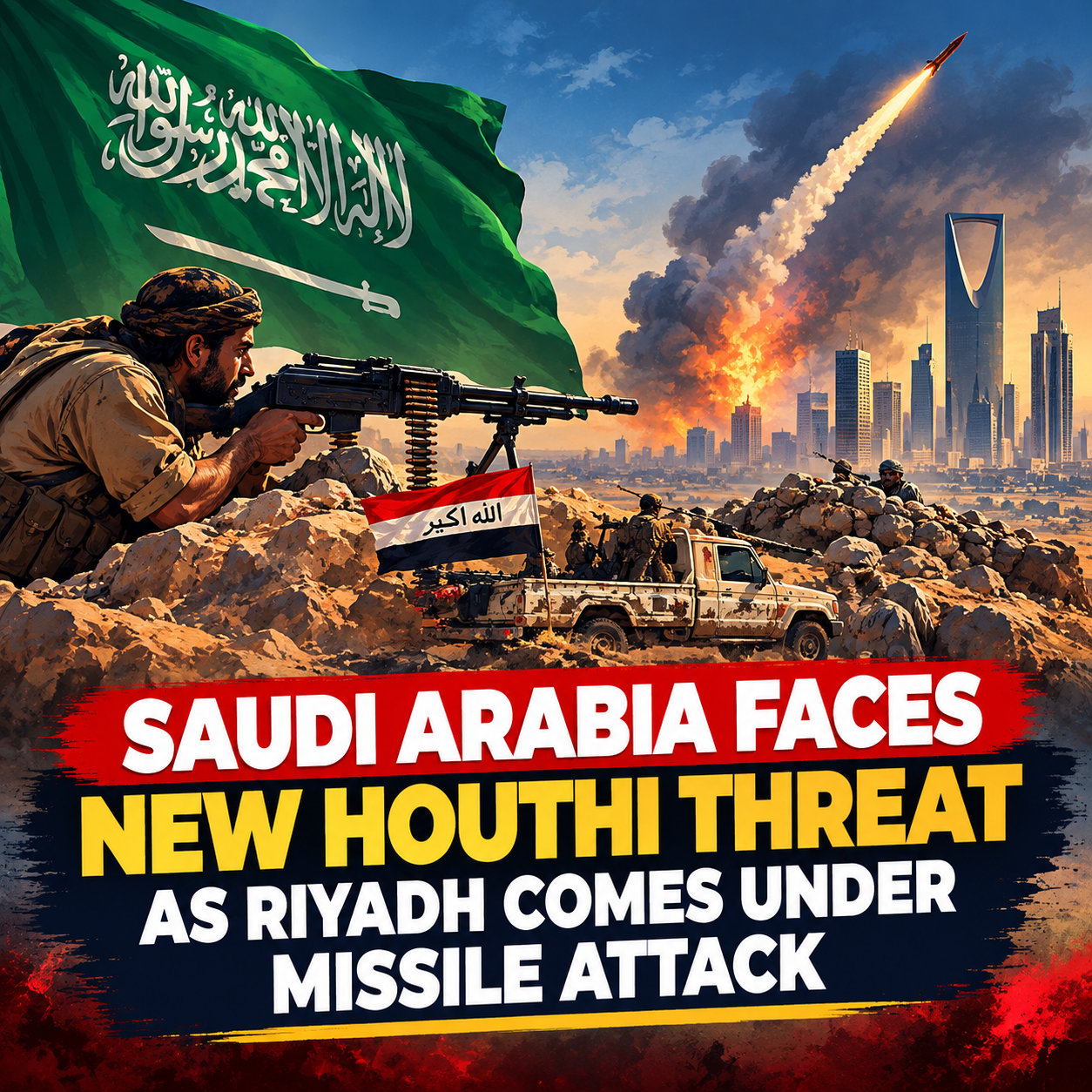
Saudi Arabia Faces New Houthi Threat as Riyadh Comes Under Missile Attack
38
International PK Live News 😔 Negative
Saudi Arabia Faces New Houthi Threat as Riyadh Comes Under Missile Attack
Riyadh — September 21, 2026: Tensions between Saudi Arabia and Yemen’s Houthi movement have entered a dangerous new phase after a missile was launched toward the Saudi capital Riyadh, intensifying concerns that the renewed conflict could spread beyond Yemen and further destabilize the wider Middle East. The latest escalation follows weeks of fighting between the Houthis and forces backed by Saudi Arabia. Saudi authorities said their air defenses intercepted and destroyed a ballistic missile heading toward Riyadh on September 19. The incident triggered an air-raid warning in the capital, while explosions and a large plume of smoke were reported near the area of King Khalid International Airport. Saudi authorities said there were no reported casualties from the intercepted missile. The Houthis claimed responsibility for attacks involving missiles and drones against what they described as sensitive sites in Riyadh. The group also said it targeted an Aramco facility in Yanbu. Reuters reported that the attacks came amid an intensifying confrontation between the Houthis and Saudi Arabia. A Conflict Expanding Beyond Yemen The renewed confrontation represents one of the most serious escalations between the two sides since the large-scale fighting was reduced by a UN-brokered truce in 2022. The ceasefire significantly reduced cross-border attacks, although it did not resolve Yemen's underlying political and military divisions. Recent developments have changed the situation dramatically. The Houthis have made rapid territorial gains in western Yemen and have moved toward strategically important areas around the Red Sea and Bab el-Mandeb Strait. Reuters reported that the group's advance has increased its influence over one of the world's most important maritime chokepoints. The Bab el-Mandeb is particularly important because it connects the Red Sea with the Gulf of Aden and is a major route for international shipping. Any prolonged disruption could affect commercial shipping, energy supplies and insurance costs well beyond the immediate region. The Council on Foreign Relations has also described the renewed fighting as a serious threat to regional stability, noting that the conflict that quieted after the 2022 ceasefire has once again intensified. Riyadh Under Pressure The missile attack on Riyadh has raised questions about how Saudi Arabia will respond. Saudi officials have repeatedly said they will protect the country's territory and civilian infrastructure. Saudi authorities previously reported attacks involving ballistic missiles and drones against several cities, including Khamis Mushait, Abha and Taif, with injuries and property damage reported after attacks on September 14. The September 19 attack was particularly significant because Riyadh itself had not experienced this kind of air-raid alert during the current escalation. Reports of smoke near King Khalid International Airport highlighted the potential vulnerability of important civilian and energy infrastructure. The Houthis, meanwhile, have warned that further escalation against them could produce a stronger response. Their leadership has also warned countries considering military assistance to Saudi Arabia against becoming directly involved in the Yemen conflict. Diplomatic Efforts Continue Despite the military escalation, diplomatic channels have not completely disappeared. Oman has historically played an important mediation role between the Houthis and outside governments. Recent reporting indicates that discussions involving the United States and Houthi representatives have taken place through Omani mediation, while regional governments have also explored ways to prevent the conflict from expanding. The Houthis have said they remain open to certain diplomatic arrangements, while demanding changes to what they describe as Saudi restrictions and military pressure. At the same time, Saudi Arabia faces pressure to protect its territory and prevent the Houthis from establishing an even stronger military position along strategic waterways. This creates a difficult situation: military pressure could weaken Houthi capabilities, but a broader ground offensive could also create a prolonged conflict with significant humanitarian and economic consequences. Regional Powers Watching Closely The confrontation is also taking place against the background of a much wider regional crisis involving Iran, Israel, the United States and several Gulf countries. Saudi Arabia has sought international and regional support as the situation deteriorates. Recent reporting has highlighted diplomatic contacts involving countries including Egypt, China, Turkey and others. The possibility of wider involvement has raised concerns that a conflict that began around Yemen could develop into a broader regional confrontation. The Houthis' growing influence around Bab el-Mandeb adds another international dimension. The waterway is not simply a Saudi-Yemeni issue; disruption there could affect vessels traveling between Europe, Asia and the Middle East. Reuters reported that Saudi and Gulf markets also came under pressure following the attacks on Riyadh, demonstrating how quickly military developments can affect regional economic confidence. What Happens Next? The central question is whether Saudi Arabia will respond with a major military campaign or continue combining limited military action with diplomatic efforts. Saudi Arabia possesses substantially greater conventional military capabilities than the Houthis, but the Yemen conflict has demonstrated that military superiority does not automatically produce a quick political settlement. The Houthis have developed experience in missile, drone and asymmetric warfare, while Yemen's political and military landscape remains highly fragmented. Another major concern is the humanitarian impact. The renewed fighting has already caused additional displacement and increased fears of further deterioration in Yemen, one of the world's most vulnerable humanitarian environments. Recent reports have put new displacement linked to the escalation at more than 100,000 people. For now, the situation remains fluid. Further missile or drone attacks could trigger a stronger Saudi response, while diplomatic intervention could still create an opportunity for a temporary ceasefire. The coming days will be critical for determining whether the latest escalation remains concentrated around Yemen and Saudi Arabia or becomes part of a much larger regional conflict. PK-News.com will continue monitoring developments involving Saudi Arabia, Yemen, the Houthis, Iran, the Red Sea and the wider Middle East. For the latest verified updates, breaking news and international developments, keep checking PK-News.com. More updates coming soon — stay connected with PK News for verified breaking news and international coverage.
Sep 21, 2026 at 10:00 AM
Riyadh — September 21, 2026: Tensions between Saudi Arabia and Yemen’s Houthi movement have entered a dangerous new phase after a missile was launched toward the Saudi capital Riyadh, intensifying concerns that the renewed conflict could spread beyond Yemen and further destabilize the wider Middle East. The latest escalation follows weeks of fighting between the Houthis and forces backed by Saudi Arabia. Saudi authorities said their air defenses intercepted and destroyed a ballistic missile heading toward Riyadh on September 19. The incident triggered an air-raid warning in the capital, while explosions and a large plume of smoke were reported near the area of King Khalid International Airport. Saudi authorities said there were no reported casualties from the intercepted missile. The Houthis claimed responsibility for attacks involving missiles and drones against what they described as sensitive sites in Riyadh. The group also said it targeted an Aramco facility in Yanbu. Reuters reported that the attacks came amid an intensifying confrontation between the Houthis and Saudi Arabia. A Conflict Expanding Beyond Yemen The renewed confrontation represents one of the most serious escalations between the two sides since the large-scale fighting was reduced by a UN-brokered truce in 2022. The ceasefire significantly reduced cross-border attacks, although it did not resolve Yemen's underlying political and military divisions. Recent developments have changed the situation dramatically. The Houthis have made rapid territorial gains in western Yemen and have moved toward strategically important areas around the Red Sea and Bab el-Mandeb Strait. Reuters reported that the group's advance has increased its influence over one of the world's most important maritime chokepoints. The Bab el-Mandeb is particularly important because it connects the Red Sea with the Gulf of Aden and is a major route for international shipping. Any prolonged disruption could affect commercial shipping, energy supplies and insurance costs well beyond the immediate region. The Council on Foreign Relations has also described the renewed fighting as a serious threat to regional stability, noting that the conflict that quieted after the 2022 ceasefire has once again intensified. Riyadh Under Pressure The missile attack on Riyadh has raised questions about how Saudi Arabia will respond. Saudi officials have repeatedly said they will protect the country's territory and civilian infrastructure. Saudi authorities previously reported attacks involving ballistic missiles and drones against several cities, including Khamis Mushait, Abha and Taif, with injuries and property damage reported after attacks on September 14. The September 19 attack was particularly significant because Riyadh itself had not experienced this kind of air-raid alert during the current escalation. Reports of smoke near King Khalid International Airport highlighted the potential vulnerability of important civilian and energy infrastructure. The Houthis, meanwhile, have warned that further escalation against them could produce a stronger response. Their leadership has also warned countries considering military assistance to Saudi Arabia against becoming directly involved in the Yemen conflict. Diplomatic Efforts Continue Despite the military escalation, diplomatic channels have not completely disappeared. Oman has historically played an important mediation role between the Houthis and outside governments. Recent reporting indicates that discussions involving the United States and Houthi representatives have taken place through Omani mediation, while regional governments have also explored ways to prevent the conflict from expanding. The Houthis have said they remain open to certain diplomatic arrangements, while demanding changes to what they describe as Saudi restrictions and military pressure. At the same time, Saudi Arabia faces pressure to protect its territory and prevent the Houthis from establishing an even stronger military position along strategic waterways. This creates a difficult situation: military pressure could weaken Houthi capabilities, but a broader ground offensive could also create a prolonged conflict with significant humanitarian and economic consequences. Regional Powers Watching Closely The confrontation is also taking place against the background of a much wider regional crisis involving Iran, Israel, the United States and several Gulf countries. Saudi Arabia has sought international and regional support as the situation deteriorates. Recent reporting has highlighted diplomatic contacts involving countries including Egypt, China, Turkey and others. The possibility of wider involvement has raised concerns that a conflict that began around Yemen could develop into a broader regional confrontation. The Houthis' growing influence around Bab el-Mandeb adds another international dimension. The waterway is not simply a Saudi-Yemeni issue; disruption there could affect vessels traveling between Europe, Asia and the Middle East. Reuters reported that Saudi and Gulf markets also came under pressure following the attacks on Riyadh, demonstrating how quickly military developments can affect regional economic confidence. What Happens Next? The central question is whether Saudi Arabia will respond with a major military campaign or continue combining limited military action with diplomatic efforts. Saudi Arabia possesses substantially greater conventional military capabilities than the Houthis, but the Yemen conflict has demonstrated that military superiority does not automatically produce a quick political settlement. The Houthis have developed experience in missile, drone and asymmetric warfare, while Yemen's political and military landscape remains highly fragmented. Another major concern is the humanitarian impact. The renewed fighting has already caused additional displacement and increased fears of further deterioration in Yemen, one of the world's most vulnerable humanitarian environments. Recent reports have put new displacement linked to the escalation at more than 100,000 people. For now, the situation remains fluid. Further missile or drone attacks could trigger a stronger Saudi response, while diplomatic intervention could still create an opportunity for a temporary ceasefire. The coming days will be critical for determining whether the latest escalation remains concentrated around Yemen and Saudi Arabia or becomes part of a much larger regional conflict. PK-News.com will continue monitoring developments involving Saudi Arabia, Yemen, the Houthis, Iran, the Red Sea and the wider Middle East. For the latest verified updates, breaking news and international developments, keep checking PK-News.com. More updates coming soon — stay connected with PK News for verified breaking news and international coverage.
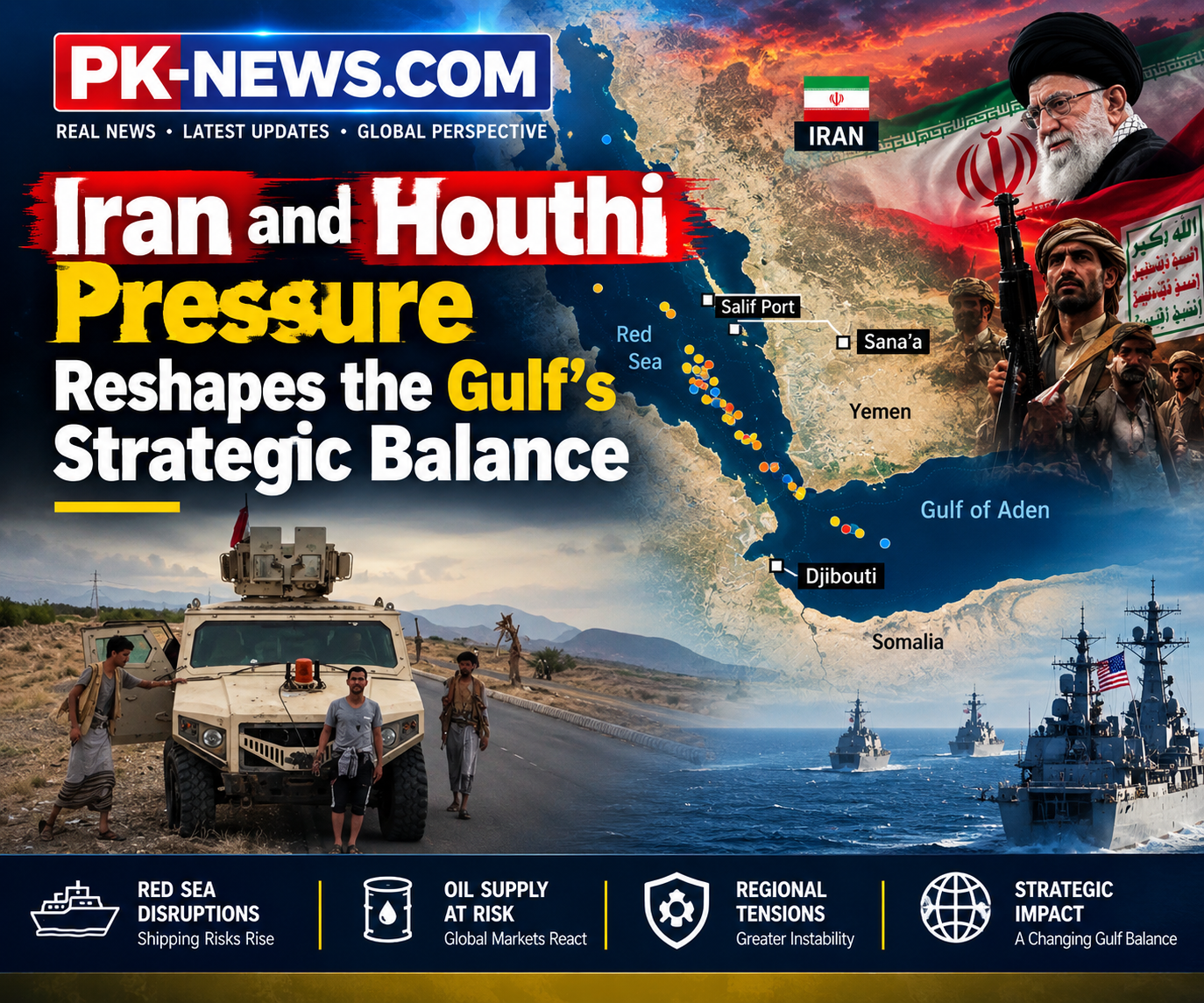
Iran and Houthi Pressure Reshapes the Gulfs Strategic Balance
25
International PK Live News 😔 Negative
Iran and Houthi Pressure Reshapes the Gulfs Strategic Balance
Iran and its regional allies are seeking to demonstrate that the security future of the Gulf and surrounding waterways cannot be determined without taking their interests into account, as tensions continue to affect major regional trade and energy routes. The growing pressure involving the Houthi
Sep 15, 2026 at 10:27 PM
Iran and its regional allies are seeking to demonstrate that the security future of the Gulf and surrounding waterways cannot be determined without taking their interests into account, as tensions continue to affect major regional trade and energy routes. The growing pressure involving the Houthi
Brazil Election How AI Deepfakes and Political Influencers Could Shape the Vote
9
International PK Live News 😔 Negative
Brazil Election How AI Deepfakes and Political Influencers Could Shape the Vote
PK-News.com | International Brazil’s upcoming presidential election is attracting attention far beyond Latin America, with the country’s political direction expected to have implications for the global economy, environmental policy, international trade and efforts to combat organized crime. As one of Latin America’s largest economies and a major democratic power, Brazil also plays a crucial role in protecting the Amazon rainforest. The political choices made by Brazilian voters could therefore influence issues extending well beyond the country’s borders. The election has also highlighted a growing challenge facing democracies around the world: the rapid use of artificial intelligence to create political videos, digital personalities and realistic-looking deepfakes. A Closely Watched Political Contest The presidential race is being shaped by a sharp political divide over the future direction of Brazil. Left-wing President Luiz Inácio Lula da Silva is seeking another term and has emphasized social welfare, public education and healthcare investment. His political opponents, meanwhile, are campaigning on a tougher approach to crime and a more conservative vision for the country. The contest also carries significance for former President Jair Bolsonaro, whose political legacy remains a major issue in Brazil. His supporters and opponents continue to debate the events surrounding the unrest at government buildings in Brasília and the legal consequences that followed. One of the most controversial issues surrounding the election is whether a future administration could take action affecting Bolsonaro himself. AI Enters the Political Battlefield While presidential candidates dominate traditional campaigning, artificial intelligence has created a new and unusual group of political voices online. One example is an AI-generated character known as Dona Maria, portrayed as an elderly Brazilian woman who frequently comments on politics and criticizes government officials. The character became popular across social media, attracting millions of views and significant engagement. However, the woman appearing in the videos is not a real individual. The character was reportedly created by Daniel Christiano dos Santos, an Uber driver who said the appearance was inspired by his grandmother and that he also saw the project as a way to express his political opinions while generating additional income. Some of the character's videos attracted millions of views, demonstrating how quickly AI-generated personalities can become influential in online political discussions. Why Outrage Performs Well Online The popularity of such content reflects a broader problem with social media algorithms. Political material that creates anger, fear or strong emotional reactions can generate large numbers of comments, shares and other interactions. This can give controversial material greater visibility and allow AI-generated political content to spread rapidly. For political creators, the combination of artificial intelligence and social media creates a powerful production system. A single individual can produce convincing videos featuring fictional characters, politicians or other public figures without the resources traditionally required for television production. That raises concerns about whether voters can easily distinguish genuine political communication from manipulated material. Deepfakes Target Brazil's Political Figures AI-generated videos have also been used to recreate Brazilian political figures, including Lula and Jair Bolsonaro. Some videos appear designed to encourage people to support particular candidates, while others portray politicians making statements they did not actually make. The problem becomes particularly serious during the final stage of an election campaign. False material released shortly before voting day may spread rapidly before journalists, election authorities or fact-checkers have enough time to investigate it. Experts caution that it would be difficult to prove that deepfakes alone could determine the result of an election. However, misleading AI content could still disrupt campaigns, influence undecided voters and intensify political divisions. Electoral Authorities Face a New Challenge The growing use of AI-generated political content has already triggered political and legal concerns in Brazil. Political groups have sought action against accounts accused of spreading misleading or manipulated content. In one case involving the Dona Maria character, an account was removed after complaints concerning its political reach. But removing one account does not necessarily solve the wider problem. Creators can establish new accounts, reuse existing audiences and distribute content across multiple platforms. This makes enforcement considerably more difficult. The Business Behind AI Political Content The Brazilian experience also shows that AI political content is not necessarily being produced solely for political purposes. Some creators have discovered that viral political videos can generate an audience that can later be monetized through advertising, courses and other digital products. The creator associated with Dona Maria reportedly began offering training on how to produce AI-generated videos. This illustrates how the technology is developing into a commercial opportunity alongside its political impact. The result is a new digital ecosystem in which political influence, entertainment, social-media engagement and online income can overlap. What This Means Beyond Brazil Brazil's election provides an important example of a challenge that other democracies may increasingly face. Artificial intelligence has dramatically reduced the cost and technical expertise required to create convincing political material. A fabricated video can now be produced and distributed to thousands or millions of people through social platforms. For voters, this means that seeing a politician or ordinary-looking person speaking in a video is no longer enough to establish that the content is authentic. The Brazilian election therefore represents more than a domestic political contest. It is also a test of how democratic societies respond to AI-generated misinformation, deepfakes and increasingly sophisticated digital campaigning. As artificial intelligence becomes more accessible, governments, election authorities, technology companies, journalists and voters will all face greater pressure to identify manipulated content and protect the integrity of political debate. PK-News.com Analysis: The growing influence of AI-generated political content demonstrates why digital literacy and reliable verification are becoming increasingly important during elections. Technology can give ordinary creators a powerful voice, but the same tools can also make misinformation much easier to produce and distribute.
Sep 15, 2026 at 9:40 PM
PK-News.com | International Brazil’s upcoming presidential election is attracting attention far beyond Latin America, with the country’s political direction expected to have implications for the global economy, environmental policy, international trade and efforts to combat organized crime. As one of Latin America’s largest economies and a major democratic power, Brazil also plays a crucial role in protecting the Amazon rainforest. The political choices made by Brazilian voters could therefore influence issues extending well beyond the country’s borders. The election has also highlighted a growing challenge facing democracies around the world: the rapid use of artificial intelligence to create political videos, digital personalities and realistic-looking deepfakes. A Closely Watched Political Contest The presidential race is being shaped by a sharp political divide over the future direction of Brazil. Left-wing President Luiz Inácio Lula da Silva is seeking another term and has emphasized social welfare, public education and healthcare investment. His political opponents, meanwhile, are campaigning on a tougher approach to crime and a more conservative vision for the country. The contest also carries significance for former President Jair Bolsonaro, whose political legacy remains a major issue in Brazil. His supporters and opponents continue to debate the events surrounding the unrest at government buildings in Brasília and the legal consequences that followed. One of the most controversial issues surrounding the election is whether a future administration could take action affecting Bolsonaro himself. AI Enters the Political Battlefield While presidential candidates dominate traditional campaigning, artificial intelligence has created a new and unusual group of political voices online. One example is an AI-generated character known as Dona Maria, portrayed as an elderly Brazilian woman who frequently comments on politics and criticizes government officials. The character became popular across social media, attracting millions of views and significant engagement. However, the woman appearing in the videos is not a real individual. The character was reportedly created by Daniel Christiano dos Santos, an Uber driver who said the appearance was inspired by his grandmother and that he also saw the project as a way to express his political opinions while generating additional income. Some of the character's videos attracted millions of views, demonstrating how quickly AI-generated personalities can become influential in online political discussions. Why Outrage Performs Well Online The popularity of such content reflects a broader problem with social media algorithms. Political material that creates anger, fear or strong emotional reactions can generate large numbers of comments, shares and other interactions. This can give controversial material greater visibility and allow AI-generated political content to spread rapidly. For political creators, the combination of artificial intelligence and social media creates a powerful production system. A single individual can produce convincing videos featuring fictional characters, politicians or other public figures without the resources traditionally required for television production. That raises concerns about whether voters can easily distinguish genuine political communication from manipulated material. Deepfakes Target Brazil's Political Figures AI-generated videos have also been used to recreate Brazilian political figures, including Lula and Jair Bolsonaro. Some videos appear designed to encourage people to support particular candidates, while others portray politicians making statements they did not actually make. The problem becomes particularly serious during the final stage of an election campaign. False material released shortly before voting day may spread rapidly before journalists, election authorities or fact-checkers have enough time to investigate it. Experts caution that it would be difficult to prove that deepfakes alone could determine the result of an election. However, misleading AI content could still disrupt campaigns, influence undecided voters and intensify political divisions. Electoral Authorities Face a New Challenge The growing use of AI-generated political content has already triggered political and legal concerns in Brazil. Political groups have sought action against accounts accused of spreading misleading or manipulated content. In one case involving the Dona Maria character, an account was removed after complaints concerning its political reach. But removing one account does not necessarily solve the wider problem. Creators can establish new accounts, reuse existing audiences and distribute content across multiple platforms. This makes enforcement considerably more difficult. The Business Behind AI Political Content The Brazilian experience also shows that AI political content is not necessarily being produced solely for political purposes. Some creators have discovered that viral political videos can generate an audience that can later be monetized through advertising, courses and other digital products. The creator associated with Dona Maria reportedly began offering training on how to produce AI-generated videos. This illustrates how the technology is developing into a commercial opportunity alongside its political impact. The result is a new digital ecosystem in which political influence, entertainment, social-media engagement and online income can overlap. What This Means Beyond Brazil Brazil's election provides an important example of a challenge that other democracies may increasingly face. Artificial intelligence has dramatically reduced the cost and technical expertise required to create convincing political material. A fabricated video can now be produced and distributed to thousands or millions of people through social platforms. For voters, this means that seeing a politician or ordinary-looking person speaking in a video is no longer enough to establish that the content is authentic. The Brazilian election therefore represents more than a domestic political contest. It is also a test of how democratic societies respond to AI-generated misinformation, deepfakes and increasingly sophisticated digital campaigning. As artificial intelligence becomes more accessible, governments, election authorities, technology companies, journalists and voters will all face greater pressure to identify manipulated content and protect the integrity of political debate. PK-News.com Analysis: The growing influence of AI-generated political content demonstrates why digital literacy and reliable verification are becoming increasingly important during elections. Technology can give ordinary creators a powerful voice, but the same tools can also make misinformation much easier to produce and distribute.
South African airline defends dramatic low-level flyby before rugby union clash BREAKING
8
International The Guardian 😐 Neutral
South African airline defends dramatic low-level flyby before rugby union clash
ullipCape Town stunt sparks major debate over safety risks/p/lilipAirlink insist flyby conducted according to regulations/p/li/ulpA pre-game stunt involving two passenger jets flying dramatically low over a stadium in South Africa drew huge cheers from the estimated crowd of around 56,000 people, but also sparked a major debate over safety risks./ppThe flyby by two Embraer jets, operated by local airline Airlink, happened on Saturday before the second rugby union Test a href"https://www.theguardian.com/sport/2026/aug/29/south-africa-new-zealand-greatest-rivalry-rugby-union-match-report"between South Africa and New Zealand/a in Cape Town./p a href"https://www.theguardian.com/sport/2026/aug/31/south-african-airline-defends-dramatic-low-level-flyby-before-rugby-union-springboks-new-zealand"/a
Aug 31, 2026 at 9:41 PM
ullipCape Town stunt sparks major debate over safety risks/p/lilipAirlink insist flyby conducted according to regulations/p/li/ulpA pre-game stunt involving two passenger jets flying dramatically low over a stadium in South Africa drew huge cheers from the estimated crowd of around 56,000 people, but also sparked a major debate over safety risks./ppThe flyby by two Embraer jets, operated by local airline Airlink, happened on Saturday before the second rugby union Test a href"https://www.theguardian.com/sport/2026/aug/29/south-africa-new-zealand-greatest-rivalry-rugby-union-match-report"between South Africa and New Zealand/a in Cape Town./p a href"https://www.theguardian.com/sport/2026/aug/31/south-african-airline-defends-dramatic-low-level-flyby-before-rugby-union-springboks-new-zealand"/a
Officials said no credible threat to Trump ahead of Air Force One switch: Sources BREAKING
8
International PK Live News 😔 Negative
Officials said no credible threat to Trump ahead of Air Force One switch: Sources
The intelligence originated with Israel, which passed it to the United States in real time as Trump prepared to leave Ankara, Turkey, according to the sources.
Aug 14, 2026 at 11:48 AM
The intelligence originated with Israel, which passed it to the United States in real time as Trump prepared to leave Ankara, Turkey, according to the sources.
14 August — Celebrating Freedom, Education & Pakistan
51
International PK Live News 😊 Positive
14 August — Celebrating Freedom, Education & Pakistan
Happy Independence Day, Pakistan! 🇵🇰 On this 14th August, pk-news.com proudly celebrates the spirit of freedom, unity, and progress that defines our beloved Pakistan. This Independence Day, we honor the sacrifices of those who made our freedom possible and celebrate the young generation
Aug 14, 2026 at 12:10 AM
Happy Independence Day, Pakistan! 🇵🇰 On this 14th August, pk-news.com proudly celebrates the spirit of freedom, unity, and progress that defines our beloved Pakistan. This Independence Day, we honor the sacrifices of those who made our freedom possible and celebrate the young generation
Eurovision to bar countries at war from hosting: What that means BREAKING
11
International Al Jazeera 😔 Negative
Eurovision to bar countries at war from hosting: What that means
Israel, which hosted the contest in 2019, will no longer be allowed to do so - but can still compete, protesters say.
Aug 13, 2026 at 4:22 PM
Israel, which hosted the contest in 2019, will no longer be allowed to do so - but can still compete, protesters say.
SEN TOM COTTON: Democrats say socialism will help. History says it will hurt BREAKING
6
International Fox News 😐 Neutral
SEN TOM COTTON: Democrats say socialism will help. History says it will hurt
From Venezuela to Cuba to the Soviet Union, history shows socialism creates shortages, inflation, and higher costs rather than eliminating scarcity.
Aug 13, 2026 at 4:22 PM
From Venezuela to Cuba to the Soviet Union, history shows socialism creates shortages, inflation, and higher costs rather than eliminating scarcity.
Has the U.S. lost its dominance to China? BREAKING
12
International NPR 😔 Negative
Has the U.S. lost its dominance to China?
Beijing may be benefiting from the war in Iran and Trump's tariffs and has an edge in the competition for tech supremacy. emThe New Yorker/em's Evan Osnos discusses his story a href"https://www.newyorker.com/magazine/2026/08/10/the-future-made-in-china"target"_blank" "The Future, Made in China."/a
Aug 12, 2026 at 11:59 PM
Beijing may be benefiting from the war in Iran and Trump's tariffs and has an edge in the competition for tech supremacy. emThe New Yorker/em's Evan Osnos discusses his story a href"https://www.newyorker.com/magazine/2026/08/10/the-future-made-in-china"target"_blank" "The Future, Made in China."/a
U.S. budget deficit surged in July to highest level since March 2021 BREAKING
6
International CNBC 😐 Neutral
U.S. budget deficit surged in July to highest level since March 2021
Beyond the big single-month jump, the collective red ink over the 10 months of the fiscal year rose to nearly 1.8 trillion, surpassing the same period in 2025.
Aug 12, 2026 at 11:59 PM
Beyond the big single-month jump, the collective red ink over the 10 months of the fiscal year rose to nearly 1.8 trillion, surpassing the same period in 2025.
Double killer and rapist given whole life sentence BREAKING
11
International BBC News 😐 Neutral
Double killer and rapist given whole life sentence
Simon Levy, from Tottenham, will spend the rest of his life in prison for the murder of two women and rape of a third.
Aug 12, 2026 at 8:09 PM
Simon Levy, from Tottenham, will spend the rest of his life in prison for the murder of two women and rape of a third.
Stronghold of Syrian revolution celebrates Assad’s death sentence BREAKING
11
International Al Jazeera 😐 Neutral
Stronghold of Syrian revolution celebrates Assad’s death sentence
Syrians in Idlib gathered in celebration after a court sentenced ousted President Bashar al-Assad
Aug 12, 2026 at 8:16 AM
Syrians in Idlib gathered in celebration after a court sentenced ousted President Bashar al-Assad
/* Related News Sidebar Widget Styles */ .sidebar-widget .card { transition: transform 0.2s ease-in-out, box-shadow 0.2s ease-in-out; } .sidebar-widget .card:hover { transform: translateY(-2px); box-shadow: 0 4px 15px rgba(0,0,0,0.15); } .sidebar-widget .img-fluid { width: 100%; height: auto; object-fit: cover; } .sidebar-widget .video-thumbnail { position: relative; overflow: hidden; } .sidebar-widget .video-play-button { position: absolute; top: 50%; left: 50%; transform: translate(-50%, -50%); width: 30px; height: 30px; background: rgba(0,0,0,0.7); border-radius: 50%; display: flex; align-items: center; justify-content: center; color: white; font-size: 12px; cursor: pointer; transition: all 0.3s ease; } .sidebar-widget .video-play-button:hover { background: rgba(0,0,0,0.9); transform: translate(-50%, -50%) scale(1.1); } .sidebar-widget .card-title { font-size: 0.9rem; font-weight: 600; line-height: 1.3; margin-bottom: 0.5rem; } .sidebar-widget .card-title a { color: #333; text-decoration: none; } .sidebar-widget .card-title a:hover { color: #dc3545; } /* List view styles */ .list-view { display: flex !important; flex-direction: column; gap: 1rem; } .list-view .col-md-6 { width: 100% !important; max-width: 100% !important; flex: 0 0 100% !important; } .list-view .news-card { display: flex; flex-direction: row; height: auto !important; } .list-view .news-card .image-container { width: 300px; height: 200px; flex-shrink: 0; } .list-view .news-card .card-body { flex: 1; display: flex; flex-direction: column; } @media (max-width: 768px) { .list-view .news-card { flex-direction: column; } .list-view .news-card .image-container { width: 100%; height: 200px; } }