Recent Category Articles

Latest Category News

Islamabad-Peshawar M-1 Reopens After Days of Closure as Road Access Returns
71
Recent
Global PK Live News 😐 Neutral
Islamabad-Peshawar M-1 Reopens After Days of Closure as Road Access Returns
By PK-News.com September 28, 2026 | Pakistan ISLAMABAD: The Islamabad-Peshawar Motorway (M-1) has been reopened to all types of traffic in both directions after remaining closed for several days amid heightened security arrangements around Islamabad. The reopening was confirmed by the National Highways & Motorway Police (NH&MP) on Monday, providing relief to commuters and transport operators travelling between the federal capital and Khyber Pakhtunkhwa. The motorway had been closed last week as authorities tightened security ahead of a planned political march towards Islamabad. The planned September 27 protest was later postponed to October 4, following an announcement by the Khyber Pakhtunkhwa chief minister. M-1 Fully Reopened According to the motorway police, the M-1 is now available for all categories of traffic in both directions between Islamabad and Peshawar. The reopening restores one of the country's most important road connections between the federal capital and Khyber Pakhtunkhwa. The motorway had previously been blocked between the Islamabad Toll Plaza and Chachh Interchange under security directives issued on September 22. The closure had forced travellers to use alternative routes, creating additional pressure on roads around Attock, Hasan Abdal and other connecting areas. GT Road Between Islamabad and Peshawar Also Restored The reopening is not limited to the motorway. The N-5 Grand Trunk Road between Islamabad and Peshawar has also been reopened to traffic, according to the motorway police. The road had earlier been blocked at Attock Khurd, an important crossing between Punjab and Khyber Pakhtunkhwa. Authorities had placed containers, sandbags and other barriers at strategic points during the security operation. The restoration of the GT Road is expected to provide another important route for commuters and commercial traffic between the two regions. M-14 Still Partially Under Restoration While the M-1 has been fully restored, some restrictions remain on the M-14 Islamabad-Dera Ismail Khan Motorway. The motorway police said restoration work is continuing on the section between Hakla and Kundal. According to the latest update, portions of the M-14 have reopened, including the sections from Hakla to Kot Belian and from Isa Khel to Yarik. Work remains underway on the section between Kot Belian and Isa Khel. Motorists travelling towards Dera Ismail Khan should therefore check the latest motorway situation before beginning their journey. Alternative Route for Abbottabad Travellers The motorway police have also provided guidance for travellers heading from Islamabad towards Abbottabad. Traffic using the M-1 can exit at Burhan Interchange, continue through the GT Road via Hasan Abdal, and then reconnect with the Hazara Expressway at Jhuri Kas Interchange. This route provides an alternative connection while restoration work continues on the M-1-to-Hazara Motorway loop. Why Were the Roads Closed? The closures were introduced during heightened security preparations ahead of a planned Pakistan Tehreek-e-Insaf (PTI) march towards Islamabad. The M-1, sections of the M-14 and the N-5 were among the major routes affected. Authorities also strengthened security arrangements in Attock, where important bridges and entry points were blocked with containers and other barriers. The political march was initially planned for September 27 but was subsequently postponed until October 4. Following the postponement, authorities began removing containers and other obstacles from major roads. Attock Becomes Key Traffic Point Attock played a particularly important role during the closure because the district connects Khyber Pakhtunkhwa with Punjab and the Islamabad-Rawalpindi region. The Attock Bridge and Attock Khurd crossing were among the locations where security barriers had been deployed. The closure disrupted normal movement between the two provinces and resulted in traffic diversions and delays. With the GT Road and M-1 now reopened, normal interprovincial movement is gradually returning, although some roads and connecting routes remain under restoration. What Travellers Should Know Although the main Islamabad-Peshawar motorway has reopened, travellers should remain aware that road conditions can change quickly because restoration work is still underway on parts of the M-14 and connecting routes. Motorists travelling towards Dera Ismail Khan, Hazara or other destinations connected through affected sections should check official motorway updates before travelling. Commercial transport operators are also expected to benefit from the reopening of the M-1 and N-5, as both routes are important corridors for passenger and freight movement. Political Situation Remains Relevant The reopening comes as the political situation surrounding the planned PTI march continues to develop. The postponement of the march from September 27 to October 4 appears to have been followed by the removal of several roadblocks and the restoration of major transport links. Authorities had previously introduced restrictions and increased security measures in Islamabad, Punjab and Attock in preparation for the planned protest. The future status of road closures could therefore depend on further security decisions as the revised October 4 date approaches. PK-News.com Update The reopening of the Islamabad-Peshawar M-1 marks a significant restoration of road connectivity between Islamabad and Khyber Pakhtunkhwa after several days of restrictions. The N-5/GT Road between Islamabad and Peshawar has also reopened, while restoration work continues on sections of the M-14 and the connection between the M-1 and Hazara Motorway. PK-News.com will continue monitoring motorway conditions, traffic restrictions and security developments affecting travellers across Punjab, Khyber Pakhtunkhwa and Islamabad. This report reflects information available on September 28, 2026. Motorway conditions may change as authorities complete restoration work or introduce new security measures.
4 hours ago
By PK-News.com September 28, 2026 | Pakistan ISLAMABAD: The Islamabad-Peshawar Motorway (M-1) has been reopened to all types of traffic in both directions after remaining closed for several days amid heightened security arrangements around Islamabad. The reopening was confirmed by the National Highways & Motorway Police (NH&MP) on Monday, providing relief to commuters and transport operators travelling between the federal capital and Khyber Pakhtunkhwa. The motorway had been closed last week as authorities tightened security ahead of a planned political march towards Islamabad. The planned September 27 protest was later postponed to October 4, following an announcement by the Khyber Pakhtunkhwa chief minister. M-1 Fully Reopened According to the motorway police, the M-1 is now available for all categories of traffic in both directions between Islamabad and Peshawar. The reopening restores one of the country's most important road connections between the federal capital and Khyber Pakhtunkhwa. The motorway had previously been blocked between the Islamabad Toll Plaza and Chachh Interchange under security directives issued on September 22. The closure had forced travellers to use alternative routes, creating additional pressure on roads around Attock, Hasan Abdal and other connecting areas. GT Road Between Islamabad and Peshawar Also Restored The reopening is not limited to the motorway. The N-5 Grand Trunk Road between Islamabad and Peshawar has also been reopened to traffic, according to the motorway police. The road had earlier been blocked at Attock Khurd, an important crossing between Punjab and Khyber Pakhtunkhwa. Authorities had placed containers, sandbags and other barriers at strategic points during the security operation. The restoration of the GT Road is expected to provide another important route for commuters and commercial traffic between the two regions. M-14 Still Partially Under Restoration While the M-1 has been fully restored, some restrictions remain on the M-14 Islamabad-Dera Ismail Khan Motorway. The motorway police said restoration work is continuing on the section between Hakla and Kundal. According to the latest update, portions of the M-14 have reopened, including the sections from Hakla to Kot Belian and from Isa Khel to Yarik. Work remains underway on the section between Kot Belian and Isa Khel. Motorists travelling towards Dera Ismail Khan should therefore check the latest motorway situation before beginning their journey. Alternative Route for Abbottabad Travellers The motorway police have also provided guidance for travellers heading from Islamabad towards Abbottabad. Traffic using the M-1 can exit at Burhan Interchange, continue through the GT Road via Hasan Abdal, and then reconnect with the Hazara Expressway at Jhuri Kas Interchange. This route provides an alternative connection while restoration work continues on the M-1-to-Hazara Motorway loop. Why Were the Roads Closed? The closures were introduced during heightened security preparations ahead of a planned Pakistan Tehreek-e-Insaf (PTI) march towards Islamabad. The M-1, sections of the M-14 and the N-5 were among the major routes affected. Authorities also strengthened security arrangements in Attock, where important bridges and entry points were blocked with containers and other barriers. The political march was initially planned for September 27 but was subsequently postponed until October 4. Following the postponement, authorities began removing containers and other obstacles from major roads. Attock Becomes Key Traffic Point Attock played a particularly important role during the closure because the district connects Khyber Pakhtunkhwa with Punjab and the Islamabad-Rawalpindi region. The Attock Bridge and Attock Khurd crossing were among the locations where security barriers had been deployed. The closure disrupted normal movement between the two provinces and resulted in traffic diversions and delays. With the GT Road and M-1 now reopened, normal interprovincial movement is gradually returning, although some roads and connecting routes remain under restoration. What Travellers Should Know Although the main Islamabad-Peshawar motorway has reopened, travellers should remain aware that road conditions can change quickly because restoration work is still underway on parts of the M-14 and connecting routes. Motorists travelling towards Dera Ismail Khan, Hazara or other destinations connected through affected sections should check official motorway updates before travelling. Commercial transport operators are also expected to benefit from the reopening of the M-1 and N-5, as both routes are important corridors for passenger and freight movement. Political Situation Remains Relevant The reopening comes as the political situation surrounding the planned PTI march continues to develop. The postponement of the march from September 27 to October 4 appears to have been followed by the removal of several roadblocks and the restoration of major transport links. Authorities had previously introduced restrictions and increased security measures in Islamabad, Punjab and Attock in preparation for the planned protest. The future status of road closures could therefore depend on further security decisions as the revised October 4 date approaches. PK-News.com Update The reopening of the Islamabad-Peshawar M-1 marks a significant restoration of road connectivity between Islamabad and Khyber Pakhtunkhwa after several days of restrictions. The N-5/GT Road between Islamabad and Peshawar has also reopened, while restoration work continues on sections of the M-14 and the connection between the M-1 and Hazara Motorway. PK-News.com will continue monitoring motorway conditions, traffic restrictions and security developments affecting travellers across Punjab, Khyber Pakhtunkhwa and Islamabad. This report reflects information available on September 28, 2026. Motorway conditions may change as authorities complete restoration work or introduce new security measures.
Oil Prices Rise as US-Iran Talks Stall, Keeping Global Energy Markets on Edge
57
Recent
Global PK Live News 😔 Negative
Oil Prices Rise as US-Iran Talks Stall, Keeping Global Energy Markets on Edge
By PK-News.com News Desk September 28, 2026 | International Business SINGAPORE: Global oil prices moved higher on Monday as diplomatic efforts between the United States and Iran failed to produce an immediate breakthrough, adding fresh uncertainty to an already volatile energy market. The latest rise came after US President Donald Trump rejected an Iranian proposal aimed at resolving the conflict and reopening the strategically important Strait of Hormuz. Although Washington has indicated that further discussions could take place, the absence of an immediate agreement has renewed concerns about regional security and energy supplies. According to market data reported by Reuters, Brent crude futures rose more than 3% during Monday's trading, reaching around $107.75 per barrel, while US West Texas Intermediate (WTI) crude climbed above $94 per barrel. Why Are Oil Prices Rising? The latest movement in oil prices is closely linked to uncertainty surrounding the US-Iran conflict and the future of the Strait of Hormuz, one of the world's most important energy shipping routes. Iran's latest proposal reportedly sought a path toward ending the conflict while allowing shipping through the Strait of Hormuz to resume. The proposal was communicated through Qatari mediators following discussions around the United Nations General Assembly in New York. Trump said he rejected the proposal, but also indicated that US negotiators could continue discussions with Iranian representatives during the week. This combination of rejected terms and continuing diplomatic contact has left markets uncertain about what comes next. Reuters reported that the rejection reduced hopes of an immediate diplomatic breakthrough, although negotiations have not completely stopped. Strait of Hormuz Remains Central to the Crisis The Strait of Hormuz has become one of the most important factors influencing international oil markets during the conflict. A large volume of oil and petroleum products normally passes through the waterway, making any disruption potentially significant for global energy supplies. Concerns about the route have already contributed to a geopolitical risk premium in oil prices. Traders are closely watching whether shipping activity can return to more normal levels or whether further restrictions and attacks could disrupt supplies. Recent data cited by Reuters, however, suggests that exports from major Middle Eastern producers have started to recover. Crude exports from key producers were estimated at 12.8 million barrels per day in September, the highest level since the conflict began in February. Shipments through the Strait of Hormuz were also expected to reach approximately 7.4 million barrels per day during the month. Middle East Supply Risks Remain While some oil flows have recovered, the broader security situation remains uncertain. The region has continued to experience attacks and military tensions involving Iran and Iran-backed groups. Yemen's Houthi movement has also remained a factor in regional security, particularly because attacks involving Saudi Arabia and energy infrastructure can create additional concerns for oil traders. Reuters reported that Saudi Arabia and the United Arab Emirates increased exports in September, helping restore some supply to international markets. Saudi Arabia also redirected some shipments after damage to its East-West pipeline affected normal transportation routes. The recovery in exports has provided some relief, but markets remain highly sensitive to any new escalation. What Happens If Talks Continue? The latest statements from Washington suggest that diplomacy has not completely ended. Trump has indicated that US negotiators are expected to engage in further talks with Tehran, despite his rejection of the latest Iranian proposal. Iranian officials, meanwhile, have maintained that Tehran is prepared to pursue diplomacy while also preparing for further confrontation if necessary. Iranian Foreign Minister Abbas Araghchi said Tehran remained open to diplomacy but was also prepared for renewed military confrontation. The next phase of negotiations could therefore have a direct effect on international energy markets. A credible diplomatic breakthrough could reduce some of the risk premium currently built into oil prices. Conversely, further military escalation or prolonged disruption around the Strait of Hormuz could increase concerns about global supply. Potential Impact on Global Markets Higher crude prices can affect economies well beyond the Middle East. When oil becomes more expensive, transportation, manufacturing and energy costs can increase. Countries that depend heavily on imported crude can face higher import bills and additional inflationary pressure. Financial markets are therefore watching the US-Iran situation alongside developments in oil shipping, refinery operations and fuel prices. Reuters reported that rising oil prices have already weighed on investor sentiment in Asian markets, highlighting the wider economic implications of the ongoing standoff. US Diesel Market Adds Another Concern Oil markets are also facing pressure from developments in refined petroleum products. US diesel prices have reached record levels, increasing concerns about inflation and prompting discussion about possible restrictions on diesel exports. Analysts cited by Reuters said restrictions on US diesel exports could tighten fuel availability outside the United States, potentially pushing prices higher in other markets. This means crude oil prices are being influenced by several factors at the same time — geopolitical tensions, shipping conditions, refinery economics and fuel-market pressures. What It Means for Consumers For ordinary consumers, prolonged oil-price increases could eventually translate into higher costs for transportation and other goods. The exact effect will depend on how long international crude prices remain elevated, currency movements, government pricing decisions and local fuel policies. For countries that import significant quantities of petroleum, sustained increases in international crude prices can put additional pressure on foreign-exchange reserves and consumer prices. Diplomatic Developments Now in Focus The oil market is now closely watching the next round of US-Iran diplomatic contacts. The current situation is not a complete end to negotiations. Instead, the latest developments show that the two sides remain far apart on the terms of a possible agreement while communication through intermediaries continues. The future of the Strait of Hormuz is particularly important because any improvement in shipping conditions could ease supply concerns, while renewed disruption could have the opposite effect. For now, oil markets remain sensitive to every major diplomatic and military development in the region. PK-News.com Analysis The latest movement in crude prices demonstrates how closely global energy markets remain connected to geopolitical developments in the Middle East. Although oil exports from several major producers have recovered, uncertainty surrounding the US-Iran conflict and the Strait of Hormuz continues to influence traders. PK-News.com will continue monitoring oil prices, US-Iran diplomatic developments, regional shipping conditions and their potential impact on global energy markets. This report was prepared by PK-News.com using current international market reporting and publicly available information. Market prices can change rapidly during trading.
4 hours ago
By PK-News.com News Desk September 28, 2026 | International Business SINGAPORE: Global oil prices moved higher on Monday as diplomatic efforts between the United States and Iran failed to produce an immediate breakthrough, adding fresh uncertainty to an already volatile energy market. The latest rise came after US President Donald Trump rejected an Iranian proposal aimed at resolving the conflict and reopening the strategically important Strait of Hormuz. Although Washington has indicated that further discussions could take place, the absence of an immediate agreement has renewed concerns about regional security and energy supplies. According to market data reported by Reuters, Brent crude futures rose more than 3% during Monday's trading, reaching around $107.75 per barrel, while US West Texas Intermediate (WTI) crude climbed above $94 per barrel. Why Are Oil Prices Rising? The latest movement in oil prices is closely linked to uncertainty surrounding the US-Iran conflict and the future of the Strait of Hormuz, one of the world's most important energy shipping routes. Iran's latest proposal reportedly sought a path toward ending the conflict while allowing shipping through the Strait of Hormuz to resume. The proposal was communicated through Qatari mediators following discussions around the United Nations General Assembly in New York. Trump said he rejected the proposal, but also indicated that US negotiators could continue discussions with Iranian representatives during the week. This combination of rejected terms and continuing diplomatic contact has left markets uncertain about what comes next. Reuters reported that the rejection reduced hopes of an immediate diplomatic breakthrough, although negotiations have not completely stopped. Strait of Hormuz Remains Central to the Crisis The Strait of Hormuz has become one of the most important factors influencing international oil markets during the conflict. A large volume of oil and petroleum products normally passes through the waterway, making any disruption potentially significant for global energy supplies. Concerns about the route have already contributed to a geopolitical risk premium in oil prices. Traders are closely watching whether shipping activity can return to more normal levels or whether further restrictions and attacks could disrupt supplies. Recent data cited by Reuters, however, suggests that exports from major Middle Eastern producers have started to recover. Crude exports from key producers were estimated at 12.8 million barrels per day in September, the highest level since the conflict began in February. Shipments through the Strait of Hormuz were also expected to reach approximately 7.4 million barrels per day during the month. Middle East Supply Risks Remain While some oil flows have recovered, the broader security situation remains uncertain. The region has continued to experience attacks and military tensions involving Iran and Iran-backed groups. Yemen's Houthi movement has also remained a factor in regional security, particularly because attacks involving Saudi Arabia and energy infrastructure can create additional concerns for oil traders. Reuters reported that Saudi Arabia and the United Arab Emirates increased exports in September, helping restore some supply to international markets. Saudi Arabia also redirected some shipments after damage to its East-West pipeline affected normal transportation routes. The recovery in exports has provided some relief, but markets remain highly sensitive to any new escalation. What Happens If Talks Continue? The latest statements from Washington suggest that diplomacy has not completely ended. Trump has indicated that US negotiators are expected to engage in further talks with Tehran, despite his rejection of the latest Iranian proposal. Iranian officials, meanwhile, have maintained that Tehran is prepared to pursue diplomacy while also preparing for further confrontation if necessary. Iranian Foreign Minister Abbas Araghchi said Tehran remained open to diplomacy but was also prepared for renewed military confrontation. The next phase of negotiations could therefore have a direct effect on international energy markets. A credible diplomatic breakthrough could reduce some of the risk premium currently built into oil prices. Conversely, further military escalation or prolonged disruption around the Strait of Hormuz could increase concerns about global supply. Potential Impact on Global Markets Higher crude prices can affect economies well beyond the Middle East. When oil becomes more expensive, transportation, manufacturing and energy costs can increase. Countries that depend heavily on imported crude can face higher import bills and additional inflationary pressure. Financial markets are therefore watching the US-Iran situation alongside developments in oil shipping, refinery operations and fuel prices. Reuters reported that rising oil prices have already weighed on investor sentiment in Asian markets, highlighting the wider economic implications of the ongoing standoff. US Diesel Market Adds Another Concern Oil markets are also facing pressure from developments in refined petroleum products. US diesel prices have reached record levels, increasing concerns about inflation and prompting discussion about possible restrictions on diesel exports. Analysts cited by Reuters said restrictions on US diesel exports could tighten fuel availability outside the United States, potentially pushing prices higher in other markets. This means crude oil prices are being influenced by several factors at the same time — geopolitical tensions, shipping conditions, refinery economics and fuel-market pressures. What It Means for Consumers For ordinary consumers, prolonged oil-price increases could eventually translate into higher costs for transportation and other goods. The exact effect will depend on how long international crude prices remain elevated, currency movements, government pricing decisions and local fuel policies. For countries that import significant quantities of petroleum, sustained increases in international crude prices can put additional pressure on foreign-exchange reserves and consumer prices. Diplomatic Developments Now in Focus The oil market is now closely watching the next round of US-Iran diplomatic contacts. The current situation is not a complete end to negotiations. Instead, the latest developments show that the two sides remain far apart on the terms of a possible agreement while communication through intermediaries continues. The future of the Strait of Hormuz is particularly important because any improvement in shipping conditions could ease supply concerns, while renewed disruption could have the opposite effect. For now, oil markets remain sensitive to every major diplomatic and military development in the region. PK-News.com Analysis The latest movement in crude prices demonstrates how closely global energy markets remain connected to geopolitical developments in the Middle East. Although oil exports from several major producers have recovered, uncertainty surrounding the US-Iran conflict and the Strait of Hormuz continues to influence traders. PK-News.com will continue monitoring oil prices, US-Iran diplomatic developments, regional shipping conditions and their potential impact on global energy markets. This report was prepared by PK-News.com using current international market reporting and publicly available information. Market prices can change rapidly during trading.
US Treasury Secretary Claims China Has Substantially Reduced Assistance to Iran
67
Recent
Global PK Live News 😔 Negative
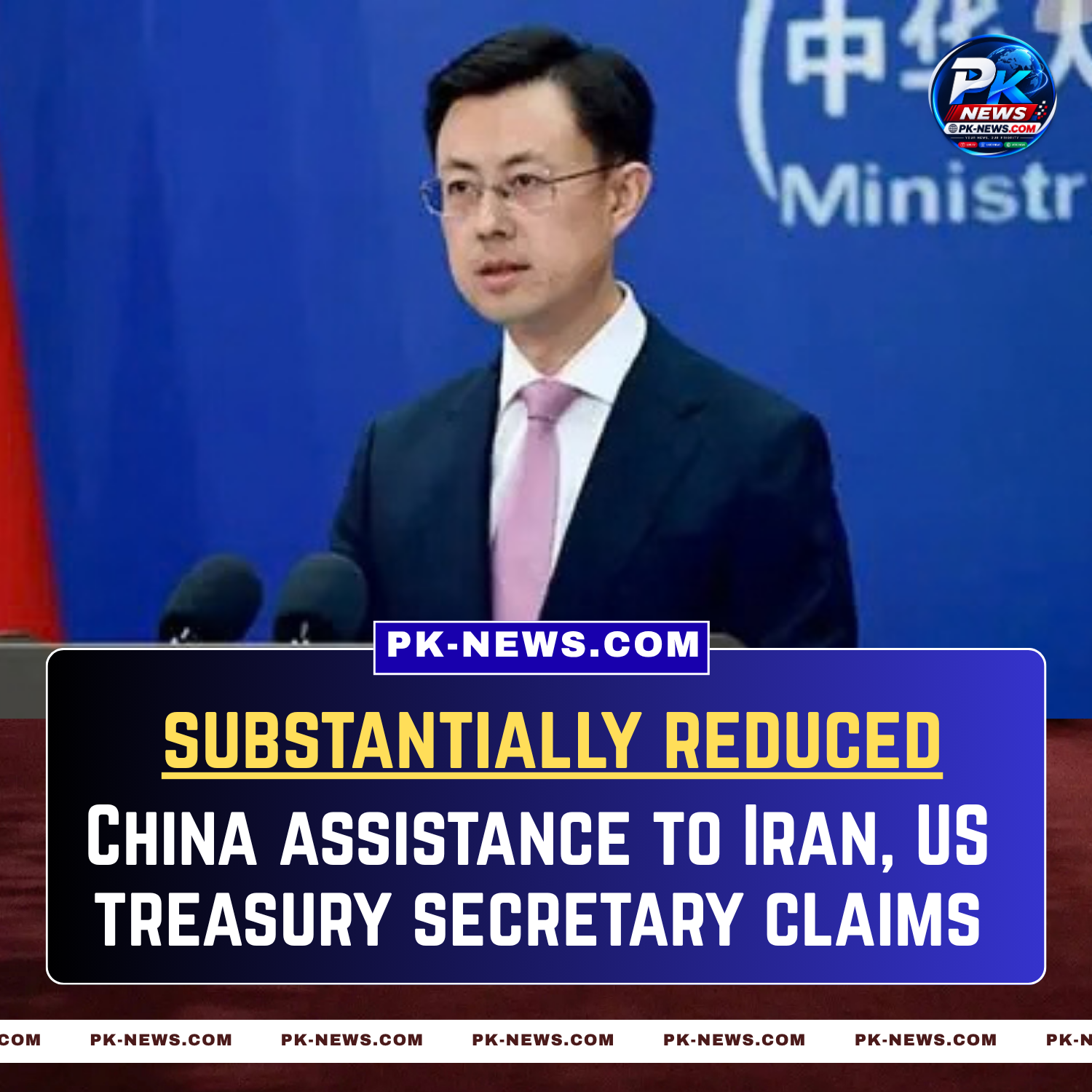
US Treasury Secretary Claims China Has Substantially Reduced Assistance to Iran
US Treasury Secretary Scott Bessent says China has substantially reduced its assistance to Iran as Washington continues its economic pressure campaign against Tehran. The claim comes amid growing tensions over Iranian oil exports, Chinese purchases of Iranian crude and the wider conflict surrounding the Strait of Hormuz. By PK-News.com News Desk September 27, 2026 The United States says China has substantially reduced its assistance to Iran, according to US Treasury Secretary Scott Bessent, in a development that could have important implications for Tehran's economy and its ability to maintain international trade during the ongoing Middle East crisis. PK-News.com has reviewed the latest available reporting and statements surrounding the development. The information currently available indicates that the claim comes from the US Treasury secretary, while China's broader relationship with Iran remains an important part of the regional picture. Bessent made the comments on September 27 during an interview with Fox News. He said Washington had seen a reduction in Chinese assistance to Iran and argued that Tehran was facing increasing economic pressure. US Says China's Assistance to Iran Has Declined According to Bessent, China has significantly reduced the assistance it provides to Iran. The Treasury secretary also discussed Iranian oil shipments to China, saying that only a limited amount of Iranian oil remained at sea and predicting that Iran could soon face greater difficulty using oil exports to obtain goods and other forms of support. Bessent said he expected Iran's remaining oil deliveries to China to be completed within approximately two weeks. These statements were made as Washington continues efforts to increase economic pressure on Tehran. However, the figures and assessment presented by the US Treasury secretary represent the US government's assessment and should be distinguished from independently verified measurements of China's overall assistance to Iran. China Remains an Important Economic Partner for Iran China has remained a major economic partner for Iran, particularly in the energy sector. Recent reporting has highlighted China's continued importance to Iranian oil exports. Al-Monitor reported that China purchases a very large share of Iran's exported oil, while describing Beijing's relationship with Tehran as continuing despite pressure from Washington. This makes the latest comments from Washington particularly significant. If China's purchases of Iranian oil or other forms of assistance decline substantially, Tehran could face additional pressure on its ability to generate foreign currency and obtain imported goods. At the same time, the extent and nature of any reduction remains an issue of ongoing reporting and debate. Trump Administration Has Pressured Beijing The latest statement follows direct efforts by the Trump administration to persuade China to reduce support for Iran. US Ambassador to China David Perdue said earlier this week that President Donald Trump had asked Chinese President Xi Jinping to stop assisting Iran. According to Perdue, Washington had raised concerns about possible Chinese assistance involving intelligence, military equipment and components. He also said the US had seen evidence that China had responded to those concerns by reducing some forms of assistance. Those comments provide context for Bessent's latest statement. Washington has been seeking to limit Iran's ability to maintain economic and military capabilities during the conflict, while China has continued to describe Iran as a strategic partner. China Has Not Publicly Indicated a Complete Break With Iran The latest US assessment does not mean that China has ended its relationship with Iran. Recent analysis has pointed out that Beijing has continued diplomatic and economic engagement with Tehran. Chinese officials have also criticized approaches that they believe threaten the sovereignty and security of countries in the Middle East. During recent diplomatic discussions at the United Nations, Chinese Vice President Han Zheng called for respect for the sovereignty and security of Middle Eastern and Gulf countries. China's position therefore remains more complicated than simply supporting or abandoning Iran. Beijing has economic interests in maintaining access to energy supplies while also seeking to manage its relationship with Washington. Iran's Oil Exports at the Centre of the Dispute Iranian oil exports are particularly important to the current confrontation. Bessent's comments focused heavily on the remaining Iranian oil shipments to China, suggesting that Washington believes economic pressure could increasingly restrict Tehran's ability to trade. The issue is closely connected to the wider dispute over the Strait of Hormuz, a strategically important waterway through which a significant amount of global energy trade passes. The Trump administration has been pushing for changes in Iran's position over the waterway, while Tehran has continued to reject what it describes as pressure and coercion. Trump recently rejected an Iranian proposal that Tehran said could have allowed the Strait of Hormuz to reopen to international shipping within a week. Why China's Position Matters China's role could be particularly important because of its economic relationship with Iran. If Chinese purchases of Iranian oil decline significantly, Iran could lose an important source of export revenue. However, China's position also has wider geopolitical implications. Beijing must balance its relationship with Tehran against its broader economic and diplomatic relationship with Washington. Recent reporting has shown that the United States has been pressing China to limit any assistance that could strengthen Iran's military or economic position. What Happens Next? The key question is whether the reported reduction in Chinese assistance will continue and whether it will significantly affect Iran's economy. Further developments could involve: Iranian oil exports to China Chinese purchases of Iranian crude US sanctions and enforcement measures Chinese diplomatic statements Iran's response to Washington's economic pressure Developments around the Strait of Hormuz US-China discussions over Iran Any substantial change in China's energy purchases from Iran could become an important indicator of how effective Washington's economic pressure campaign is becoming. PK-News.com Monitoring the Latest Developments PK-News.com has reviewed the latest available information and will continue monitoring developments involving the United States, China and Iran. At present, the key point is that US Treasury Secretary Scott Bessent claims China has substantially reduced assistance to Iran, while other reporting indicates that Beijing continues to maintain important economic and diplomatic ties with Tehran. The extent of any reduction in Chinese assistance, and its potential impact on Iran's economy, remains an evolving issue. PK-News.com will update this report as further official statements and independently verifiable information become available. US Treasury Secretary Scott Bessent says China has substantially reduced assistance to Iran. Bessent also discussed Iranian oil shipments to China. The Trump administration has previously asked Beijing to reduce assistance to Tehran. China continues to maintain economic and diplomatic ties with Iran. Chinese purchases of Iranian oil remain an important part of the relationship. The Strait of Hormuz remains central to the wider confrontation. The extent of any reduction in Chinese assistance remains subject to further reporting and verification.
16 hours ago
US Treasury Secretary Scott Bessent says China has substantially reduced its assistance to Iran as Washington continues its economic pressure campaign against Tehran. The claim comes amid growing tensions over Iranian oil exports, Chinese purchases of Iranian crude and the wider conflict surrounding the Strait of Hormuz. By PK-News.com News Desk September 27, 2026 The United States says China has substantially reduced its assistance to Iran, according to US Treasury Secretary Scott Bessent, in a development that could have important implications for Tehran's economy and its ability to maintain international trade during the ongoing Middle East crisis. PK-News.com has reviewed the latest available reporting and statements surrounding the development. The information currently available indicates that the claim comes from the US Treasury secretary, while China's broader relationship with Iran remains an important part of the regional picture. Bessent made the comments on September 27 during an interview with Fox News. He said Washington had seen a reduction in Chinese assistance to Iran and argued that Tehran was facing increasing economic pressure. US Says China's Assistance to Iran Has Declined According to Bessent, China has significantly reduced the assistance it provides to Iran. The Treasury secretary also discussed Iranian oil shipments to China, saying that only a limited amount of Iranian oil remained at sea and predicting that Iran could soon face greater difficulty using oil exports to obtain goods and other forms of support. Bessent said he expected Iran's remaining oil deliveries to China to be completed within approximately two weeks. These statements were made as Washington continues efforts to increase economic pressure on Tehran. However, the figures and assessment presented by the US Treasury secretary represent the US government's assessment and should be distinguished from independently verified measurements of China's overall assistance to Iran. China Remains an Important Economic Partner for Iran China has remained a major economic partner for Iran, particularly in the energy sector. Recent reporting has highlighted China's continued importance to Iranian oil exports. Al-Monitor reported that China purchases a very large share of Iran's exported oil, while describing Beijing's relationship with Tehran as continuing despite pressure from Washington. This makes the latest comments from Washington particularly significant. If China's purchases of Iranian oil or other forms of assistance decline substantially, Tehran could face additional pressure on its ability to generate foreign currency and obtain imported goods. At the same time, the extent and nature of any reduction remains an issue of ongoing reporting and debate. Trump Administration Has Pressured Beijing The latest statement follows direct efforts by the Trump administration to persuade China to reduce support for Iran. US Ambassador to China David Perdue said earlier this week that President Donald Trump had asked Chinese President Xi Jinping to stop assisting Iran. According to Perdue, Washington had raised concerns about possible Chinese assistance involving intelligence, military equipment and components. He also said the US had seen evidence that China had responded to those concerns by reducing some forms of assistance. Those comments provide context for Bessent's latest statement. Washington has been seeking to limit Iran's ability to maintain economic and military capabilities during the conflict, while China has continued to describe Iran as a strategic partner. China Has Not Publicly Indicated a Complete Break With Iran The latest US assessment does not mean that China has ended its relationship with Iran. Recent analysis has pointed out that Beijing has continued diplomatic and economic engagement with Tehran. Chinese officials have also criticized approaches that they believe threaten the sovereignty and security of countries in the Middle East. During recent diplomatic discussions at the United Nations, Chinese Vice President Han Zheng called for respect for the sovereignty and security of Middle Eastern and Gulf countries. China's position therefore remains more complicated than simply supporting or abandoning Iran. Beijing has economic interests in maintaining access to energy supplies while also seeking to manage its relationship with Washington. Iran's Oil Exports at the Centre of the Dispute Iranian oil exports are particularly important to the current confrontation. Bessent's comments focused heavily on the remaining Iranian oil shipments to China, suggesting that Washington believes economic pressure could increasingly restrict Tehran's ability to trade. The issue is closely connected to the wider dispute over the Strait of Hormuz, a strategically important waterway through which a significant amount of global energy trade passes. The Trump administration has been pushing for changes in Iran's position over the waterway, while Tehran has continued to reject what it describes as pressure and coercion. Trump recently rejected an Iranian proposal that Tehran said could have allowed the Strait of Hormuz to reopen to international shipping within a week. Why China's Position Matters China's role could be particularly important because of its economic relationship with Iran. If Chinese purchases of Iranian oil decline significantly, Iran could lose an important source of export revenue. However, China's position also has wider geopolitical implications. Beijing must balance its relationship with Tehran against its broader economic and diplomatic relationship with Washington. Recent reporting has shown that the United States has been pressing China to limit any assistance that could strengthen Iran's military or economic position. What Happens Next? The key question is whether the reported reduction in Chinese assistance will continue and whether it will significantly affect Iran's economy. Further developments could involve: Iranian oil exports to China Chinese purchases of Iranian crude US sanctions and enforcement measures Chinese diplomatic statements Iran's response to Washington's economic pressure Developments around the Strait of Hormuz US-China discussions over Iran Any substantial change in China's energy purchases from Iran could become an important indicator of how effective Washington's economic pressure campaign is becoming. PK-News.com Monitoring the Latest Developments PK-News.com has reviewed the latest available information and will continue monitoring developments involving the United States, China and Iran. At present, the key point is that US Treasury Secretary Scott Bessent claims China has substantially reduced assistance to Iran, while other reporting indicates that Beijing continues to maintain important economic and diplomatic ties with Tehran. The extent of any reduction in Chinese assistance, and its potential impact on Iran's economy, remains an evolving issue. PK-News.com will update this report as further official statements and independently verifiable information become available. US Treasury Secretary Scott Bessent says China has substantially reduced assistance to Iran. Bessent also discussed Iranian oil shipments to China. The Trump administration has previously asked Beijing to reduce assistance to Tehran. China continues to maintain economic and diplomatic ties with Iran. Chinese purchases of Iranian oil remain an important part of the relationship. The Strait of Hormuz remains central to the wider confrontation. The extent of any reduction in Chinese assistance remains subject to further reporting and verification.
Pakistan Rejects Afghan Taliban Claims Linking Islamabad to Reported Nuristan Violence
17
Recent
Global PK Live News 😔 Negative
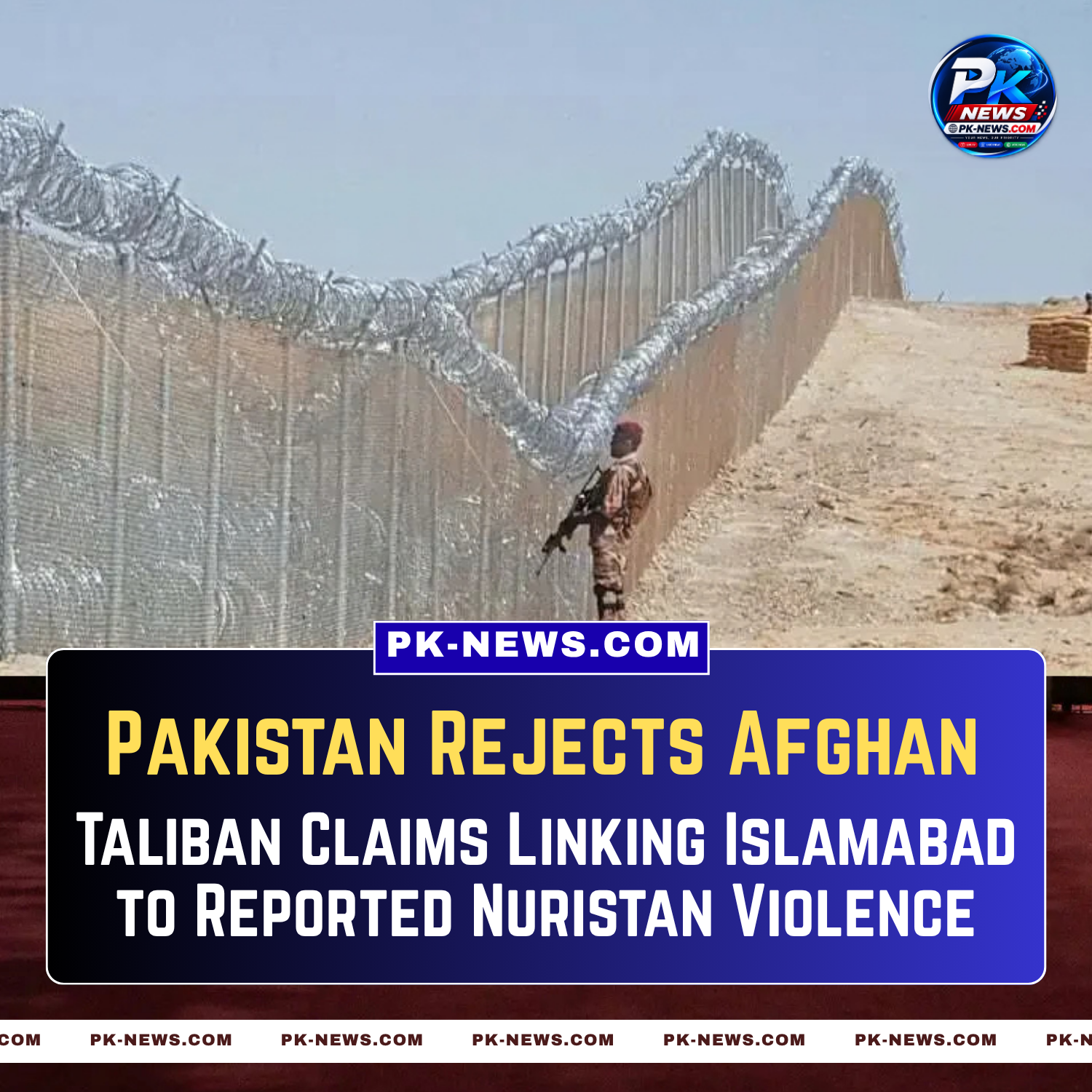
Pakistan Rejects Afghan Taliban Claims Linking Islamabad to Reported Nuristan Violence
Pakistan has rejected allegations by the Afghan Taliban authorities linking Pakistani security forces and intelligence agencies to reported violence in Afghanistan’s Nuristan province. Islamabad says the allegations are baseless and that no credible evidence has been presented to establish Pakistani involvement. The dispute comes amid rising tensions along the Pakistan-Afghanistan border. By PK-News.com News Desk September 27, 2026 Pakistan has strongly rejected allegations from the Afghan Taliban authorities linking Pakistan to reported violence in Afghanistan’s eastern Nuristan province, describing the accusations as baseless and unsupported by credible evidence. PK-News.com has reviewed the latest available reports, official statements and publicly reported developments surrounding the Nuristan incident. The information currently available shows that Kabul and Islamabad have presented sharply different accounts of what happened. According to reports on Sunday, Afghanistan’s Ministry of Defence alleged that groups including individuals associated with Daesh and what it described as elements involved in subversion had crossed from Pakistan into Nuristan’s Kamdesh district. Afghan authorities claimed that their forces had killed 28 fighters and captured 32 others, while saying that some others had fled back across the border. Those figures and the wider Afghan account have not been independently verified. Pakistan has rejected the allegations. Pakistan Denies Involvement Pakistan’s Ministry of Information and Broadcasting issued a fact-check statement on September 27 rejecting claims that Pakistani security forces or intelligence agencies were involved in clashes in Nuristan. The ministry described the allegations as “frivolous, baseless and devoid of any truth” and said Pakistan categorically rejected claims of involvement in internal clashes in Nuristan or elsewhere in Afghanistan. Islamabad also denied allegations that Pakistan had recruited or trained former Afghan security personnel or facilitated Daesh or other militant groups operating in Afghanistan. The ministry said that no evidence had been provided to substantiate the allegations, pointing specifically to the absence of identities, documents, communications, forensic evidence or independent verification. Dispute Over Video Evidence Another point of disagreement concerns video footage circulating on social media. Pakistan’s Information Ministry said the video being used to support the Afghan allegations did not establish Pakistani involvement. According to the ministry, the footage showed several unarmed individuals and did not provide independent evidence connecting them to Pakistan’s security forces or intelligence agencies. The ministry also questioned the circumstances under which the footage was recorded. Because the competing claims have not been independently resolved, PK-News.com is treating the allegations as claims rather than established facts. Afghanistan's Account Afghanistan's defence authorities have presented a different version of events. According to international reporting, Afghan officials said fighters had crossed the Pakistan-Afghanistan frontier and alleged that some of those involved were supported by Pakistani elements. Afghanistan also claimed that members associated with the Islamic State were among those involved. Pakistan has denied these allegations. Reuters reporting cited by international media said the Afghan casualty figures and account could not be independently verified. This distinction is important because the incident involves competing government claims during an already tense period between Islamabad and Kabul. Pakistan Points to Militancy Concerns While rejecting the Nuristan allegations, Pakistan's Information Ministry also pointed to the presence and activities of militant organisations inside Afghanistan. The ministry said terrorist groups operating from Afghan territory have been documented in reports by the United Nations and other international organisations. Pakistan has repeatedly raised concerns about militant groups based in Afghanistan, particularly the banned Tehreek-i-Taliban Pakistan (TTP), and has urged the authorities in Kabul to prevent Afghan territory from being used for attacks against Pakistan. Afghan authorities have disputed Pakistan's accusations regarding militant activity. A recent UN Security Council-mandated monitoring report covering December 2025 through June 2026 was cited in reporting as documenting concerns surrounding TTP activity and the security situation between Afghanistan and Pakistan. Border Tensions Continue The Nuristan dispute comes at a time when relations between Pakistan and Afghanistan are under significant pressure. Both sides have exchanged accusations over cross-border militancy and military activity. Recent Pakistani air operations inside Afghanistan have also become part of the wider dispute. Pakistan has said it targeted militant infrastructure, while Afghan authorities have criticized the strikes and reported casualties. The latest Nuristan incident therefore adds another layer to an already complicated security situation. International reporting has described the current relationship as one marked by repeated accusations concerning terrorism, cross-border attacks and military operations. What Happens Next? The key question now is whether either side will provide independently verifiable evidence concerning the Nuristan incident. Afghan authorities have presented their account of the alleged cross-border movement and the reported casualties, while Pakistan has categorically denied involvement and challenged the evidentiary basis of the accusations. Further information could emerge through official investigations, independent reporting, satellite imagery, eyewitness accounts or additional statements from the two governments. Until such evidence becomes available, the competing claims should be treated separately rather than presented as confirmed facts. PK-News.com Monitoring the Situation PK-News.com has reviewed the latest available information and will continue monitoring developments along the Pakistan-Afghanistan border. The Nuristan incident is particularly significant because it comes amid wider disputes over terrorism, border security and accusations between Islamabad and Kabul. For now, the central facts that can be established are that Afghan authorities have accused Pakistan of involvement in the reported Nuristan violence, while Pakistan has rejected those allegations and said no credible evidence has been provided to support them. PK-News.com will update this story if new official statements or independently verified information emerge. Afghanistan has accused Pakistan of involvement in reported violence in Nuristan. Afghan authorities claimed 28 fighters were killed and 32 captured. Pakistan's Information Ministry rejected the allegations. Islamabad says no identities, documents, communications, forensic evidence or independent verification were provided to substantiate the accusations. Pakistan also denied recruiting or training former Afghan security personnel or facilitating Daesh or other militant groups. The reported casualty figures and competing accounts have not been independently verified. The incident comes amid wider Pakistan-Afghanistan tensions over cross-border militancy and security.
17 hours ago
Pakistan has rejected allegations by the Afghan Taliban authorities linking Pakistani security forces and intelligence agencies to reported violence in Afghanistan’s Nuristan province. Islamabad says the allegations are baseless and that no credible evidence has been presented to establish Pakistani involvement. The dispute comes amid rising tensions along the Pakistan-Afghanistan border. By PK-News.com News Desk September 27, 2026 Pakistan has strongly rejected allegations from the Afghan Taliban authorities linking Pakistan to reported violence in Afghanistan’s eastern Nuristan province, describing the accusations as baseless and unsupported by credible evidence. PK-News.com has reviewed the latest available reports, official statements and publicly reported developments surrounding the Nuristan incident. The information currently available shows that Kabul and Islamabad have presented sharply different accounts of what happened. According to reports on Sunday, Afghanistan’s Ministry of Defence alleged that groups including individuals associated with Daesh and what it described as elements involved in subversion had crossed from Pakistan into Nuristan’s Kamdesh district. Afghan authorities claimed that their forces had killed 28 fighters and captured 32 others, while saying that some others had fled back across the border. Those figures and the wider Afghan account have not been independently verified. Pakistan has rejected the allegations. Pakistan Denies Involvement Pakistan’s Ministry of Information and Broadcasting issued a fact-check statement on September 27 rejecting claims that Pakistani security forces or intelligence agencies were involved in clashes in Nuristan. The ministry described the allegations as “frivolous, baseless and devoid of any truth” and said Pakistan categorically rejected claims of involvement in internal clashes in Nuristan or elsewhere in Afghanistan. Islamabad also denied allegations that Pakistan had recruited or trained former Afghan security personnel or facilitated Daesh or other militant groups operating in Afghanistan. The ministry said that no evidence had been provided to substantiate the allegations, pointing specifically to the absence of identities, documents, communications, forensic evidence or independent verification. Dispute Over Video Evidence Another point of disagreement concerns video footage circulating on social media. Pakistan’s Information Ministry said the video being used to support the Afghan allegations did not establish Pakistani involvement. According to the ministry, the footage showed several unarmed individuals and did not provide independent evidence connecting them to Pakistan’s security forces or intelligence agencies. The ministry also questioned the circumstances under which the footage was recorded. Because the competing claims have not been independently resolved, PK-News.com is treating the allegations as claims rather than established facts. Afghanistan's Account Afghanistan's defence authorities have presented a different version of events. According to international reporting, Afghan officials said fighters had crossed the Pakistan-Afghanistan frontier and alleged that some of those involved were supported by Pakistani elements. Afghanistan also claimed that members associated with the Islamic State were among those involved. Pakistan has denied these allegations. Reuters reporting cited by international media said the Afghan casualty figures and account could not be independently verified. This distinction is important because the incident involves competing government claims during an already tense period between Islamabad and Kabul. Pakistan Points to Militancy Concerns While rejecting the Nuristan allegations, Pakistan's Information Ministry also pointed to the presence and activities of militant organisations inside Afghanistan. The ministry said terrorist groups operating from Afghan territory have been documented in reports by the United Nations and other international organisations. Pakistan has repeatedly raised concerns about militant groups based in Afghanistan, particularly the banned Tehreek-i-Taliban Pakistan (TTP), and has urged the authorities in Kabul to prevent Afghan territory from being used for attacks against Pakistan. Afghan authorities have disputed Pakistan's accusations regarding militant activity. A recent UN Security Council-mandated monitoring report covering December 2025 through June 2026 was cited in reporting as documenting concerns surrounding TTP activity and the security situation between Afghanistan and Pakistan. Border Tensions Continue The Nuristan dispute comes at a time when relations between Pakistan and Afghanistan are under significant pressure. Both sides have exchanged accusations over cross-border militancy and military activity. Recent Pakistani air operations inside Afghanistan have also become part of the wider dispute. Pakistan has said it targeted militant infrastructure, while Afghan authorities have criticized the strikes and reported casualties. The latest Nuristan incident therefore adds another layer to an already complicated security situation. International reporting has described the current relationship as one marked by repeated accusations concerning terrorism, cross-border attacks and military operations. What Happens Next? The key question now is whether either side will provide independently verifiable evidence concerning the Nuristan incident. Afghan authorities have presented their account of the alleged cross-border movement and the reported casualties, while Pakistan has categorically denied involvement and challenged the evidentiary basis of the accusations. Further information could emerge through official investigations, independent reporting, satellite imagery, eyewitness accounts or additional statements from the two governments. Until such evidence becomes available, the competing claims should be treated separately rather than presented as confirmed facts. PK-News.com Monitoring the Situation PK-News.com has reviewed the latest available information and will continue monitoring developments along the Pakistan-Afghanistan border. The Nuristan incident is particularly significant because it comes amid wider disputes over terrorism, border security and accusations between Islamabad and Kabul. For now, the central facts that can be established are that Afghan authorities have accused Pakistan of involvement in the reported Nuristan violence, while Pakistan has rejected those allegations and said no credible evidence has been provided to support them. PK-News.com will update this story if new official statements or independently verified information emerge. Afghanistan has accused Pakistan of involvement in reported violence in Nuristan. Afghan authorities claimed 28 fighters were killed and 32 captured. Pakistan's Information Ministry rejected the allegations. Islamabad says no identities, documents, communications, forensic evidence or independent verification were provided to substantiate the accusations. Pakistan also denied recruiting or training former Afghan security personnel or facilitating Daesh or other militant groups. The reported casualty figures and competing accounts have not been independently verified. The incident comes amid wider Pakistan-Afghanistan tensions over cross-border militancy and security.
US Rejects Iran’s Claim of Seizing Advanced Drone in Strait of Hormuz
5
Recent
Global PK Live News 😐 Neutral
US Rejects Iran’s Claim of Seizing Advanced Drone in Strait of Hormuz
The United States has rejected Iran’s claim that its Revolutionary Guard seized an advanced American unmanned underwater vehicle in the Strait of Hormuz. The latest development adds another layer to the growing confrontation surrounding the strategically important waterway, with Washington disputing Tehran’s account of what happened to the alleged Remus 600 drone. By PK-News.com News Desk September 27, 2026 The United States has rejected a claim by Iran’s Islamic Revolutionary Guard Corps (IRGC) that Iranian forces captured an advanced American unmanned underwater vehicle operating in the Strait of Hormuz. PK-News.com researched the latest developments from available international reporting and official statements, and the information currently available shows a direct disagreement between Tehran and Washington over the alleged seizure. According to reports published on September 27, Iran’s IRGC announced that its naval forces had captured what it identified as a Remus 600, an advanced unmanned underwater vehicle. Iranian officials said the operation involved intelligence and electronic-warfare capabilities and claimed that the vehicle was being used for surveillance activities in the Strait of Hormuz. The United States, however, rejected the Iranian account. A U.S. Central Command spokesman, Captain Tim Hawkins, told Al Jazeera that the U.S. military maintains control of its operational drone assets. He characterized the Iranian claim as “clearly desperate,” according to reports published on Sunday. Iran Claims It Captured Remus 600 The IRGC said its naval forces conducted what it described as a coordinated and complex operation involving military intelligence and electronic warfare. Iranian state media reported that the underwater vehicle was identified as the Remus 600, an autonomous underwater system designed for a range of maritime missions. Iran claimed that the vehicle had been transferred to specialists who would examine the system and attempt to recover information stored on it. Tehran also used the announcement to reiterate its position regarding activity in the Strait of Hormuz. The claim comes at a particularly sensitive moment because the Strait of Hormuz remains at the centre of wider tensions involving Iran, the United States and regional security. Washington Disputes Tehran's Account The U.S. military has not accepted Iran's version of events. According to the latest reports, CENTCOM spokesman Captain Tim Hawkins said the United States retains “positive control” of its operational drone assets. The statement directly challenges the Iranian assertion that the Remus 600 was captured. The disagreement means that, at present, there are two conflicting accounts of the incident and no independently established evidence in the reporting reviewed by PK-News.com that conclusively resolves the dispute. For readers following the story, this distinction is important: Iran has claimed the seizure, while the United States has denied that an operational American drone was captured. Why the Strait of Hormuz Matters The Strait of Hormuz is one of the world's most strategically important maritime chokepoints. Events in the waterway can have consequences beyond the immediate military confrontation because the route is closely connected with global energy transportation and international shipping. The latest drone dispute therefore comes against a much wider backdrop of tensions surrounding navigation, military operations and diplomatic efforts involving Iran and the United States. Iran's announcement that the alleged vehicle was conducting intelligence activities also highlights the growing importance of unmanned maritime technology in modern military and surveillance operations. Previous Iranian Claim The latest announcement is not the first time Iranian authorities have claimed to have captured an American unmanned underwater vehicle. Earlier this month, Iranian authorities said they had captured another U.S. unmanned underwater vehicle near the entrance to the Strait of Hormuz. International reporting identified that earlier system as a Dive-LD, another autonomous underwater vehicle. The new claim involving the Remus 600 has therefore attracted additional attention because it represents another alleged incident involving American unmanned maritime technology. What Happens Next? The immediate question is whether Iran will release additional evidence supporting its claim and whether the United States will provide further information about the status and location of the alleged vehicle. Iranian authorities have said specialists were examining the captured system and attempting to retrieve its information. Meanwhile, Washington's denial leaves the central issue unresolved. As the situation develops, further statements from the U.S. military, Iranian authorities or independent sources could provide additional information. PK-News.com will continue monitoring the situation and update this report as verified information becomes available. Iran's IRGC says it captured a U.S. Remus 600 underwater drone. Iran says the operation involved intelligence and electronic-warfare capabilities. Tehran says specialists are examining the alleged captured vehicle. The United States rejects the claim. A U.S. Central Command spokesman said the U.S. retains control of its operational drone assets. The competing claims have not been independently resolved in the latest reporting reviewed by PK-News.com. The incident comes amid wider tensions surrounding t
17 hours ago
The United States has rejected Iran’s claim that its Revolutionary Guard seized an advanced American unmanned underwater vehicle in the Strait of Hormuz. The latest development adds another layer to the growing confrontation surrounding the strategically important waterway, with Washington disputing Tehran’s account of what happened to the alleged Remus 600 drone. By PK-News.com News Desk September 27, 2026 The United States has rejected a claim by Iran’s Islamic Revolutionary Guard Corps (IRGC) that Iranian forces captured an advanced American unmanned underwater vehicle operating in the Strait of Hormuz. PK-News.com researched the latest developments from available international reporting and official statements, and the information currently available shows a direct disagreement between Tehran and Washington over the alleged seizure. According to reports published on September 27, Iran’s IRGC announced that its naval forces had captured what it identified as a Remus 600, an advanced unmanned underwater vehicle. Iranian officials said the operation involved intelligence and electronic-warfare capabilities and claimed that the vehicle was being used for surveillance activities in the Strait of Hormuz. The United States, however, rejected the Iranian account. A U.S. Central Command spokesman, Captain Tim Hawkins, told Al Jazeera that the U.S. military maintains control of its operational drone assets. He characterized the Iranian claim as “clearly desperate,” according to reports published on Sunday. Iran Claims It Captured Remus 600 The IRGC said its naval forces conducted what it described as a coordinated and complex operation involving military intelligence and electronic warfare. Iranian state media reported that the underwater vehicle was identified as the Remus 600, an autonomous underwater system designed for a range of maritime missions. Iran claimed that the vehicle had been transferred to specialists who would examine the system and attempt to recover information stored on it. Tehran also used the announcement to reiterate its position regarding activity in the Strait of Hormuz. The claim comes at a particularly sensitive moment because the Strait of Hormuz remains at the centre of wider tensions involving Iran, the United States and regional security. Washington Disputes Tehran's Account The U.S. military has not accepted Iran's version of events. According to the latest reports, CENTCOM spokesman Captain Tim Hawkins said the United States retains “positive control” of its operational drone assets. The statement directly challenges the Iranian assertion that the Remus 600 was captured. The disagreement means that, at present, there are two conflicting accounts of the incident and no independently established evidence in the reporting reviewed by PK-News.com that conclusively resolves the dispute. For readers following the story, this distinction is important: Iran has claimed the seizure, while the United States has denied that an operational American drone was captured. Why the Strait of Hormuz Matters The Strait of Hormuz is one of the world's most strategically important maritime chokepoints. Events in the waterway can have consequences beyond the immediate military confrontation because the route is closely connected with global energy transportation and international shipping. The latest drone dispute therefore comes against a much wider backdrop of tensions surrounding navigation, military operations and diplomatic efforts involving Iran and the United States. Iran's announcement that the alleged vehicle was conducting intelligence activities also highlights the growing importance of unmanned maritime technology in modern military and surveillance operations. Previous Iranian Claim The latest announcement is not the first time Iranian authorities have claimed to have captured an American unmanned underwater vehicle. Earlier this month, Iranian authorities said they had captured another U.S. unmanned underwater vehicle near the entrance to the Strait of Hormuz. International reporting identified that earlier system as a Dive-LD, another autonomous underwater vehicle. The new claim involving the Remus 600 has therefore attracted additional attention because it represents another alleged incident involving American unmanned maritime technology. What Happens Next? The immediate question is whether Iran will release additional evidence supporting its claim and whether the United States will provide further information about the status and location of the alleged vehicle. Iranian authorities have said specialists were examining the captured system and attempting to retrieve its information. Meanwhile, Washington's denial leaves the central issue unresolved. As the situation develops, further statements from the U.S. military, Iranian authorities or independent sources could provide additional information. PK-News.com will continue monitoring the situation and update this report as verified information becomes available. Iran's IRGC says it captured a U.S. Remus 600 underwater drone. Iran says the operation involved intelligence and electronic-warfare capabilities. Tehran says specialists are examining the alleged captured vehicle. The United States rejects the claim. A U.S. Central Command spokesman said the U.S. retains control of its operational drone assets. The competing claims have not been independently resolved in the latest reporting reviewed by PK-News.com. The incident comes amid wider tensions surrounding t
Deadly Floods and Landslides Hit India and Nepal as Heavy Rain Continues
171
Recent
Global PK Live News 😔 Negative
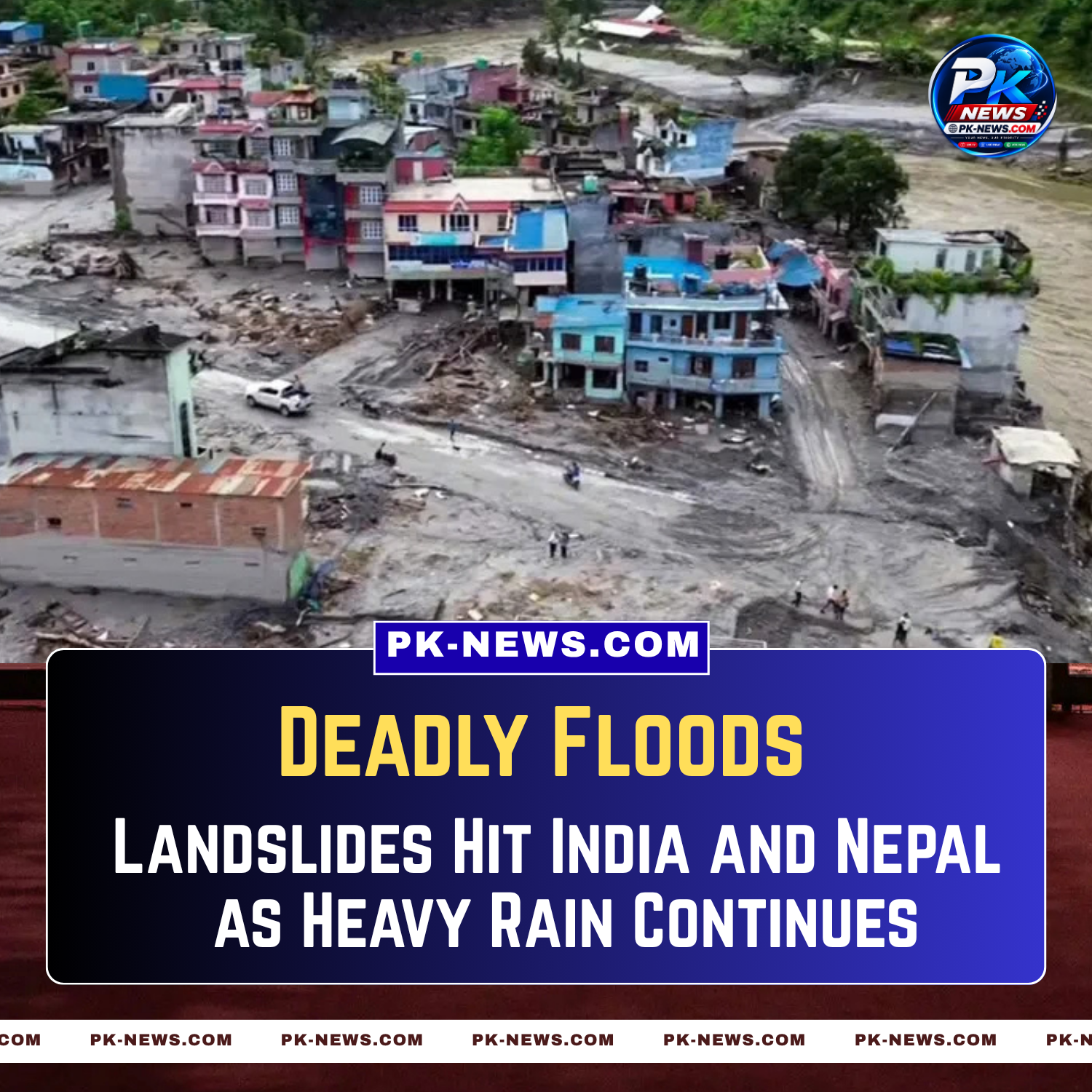
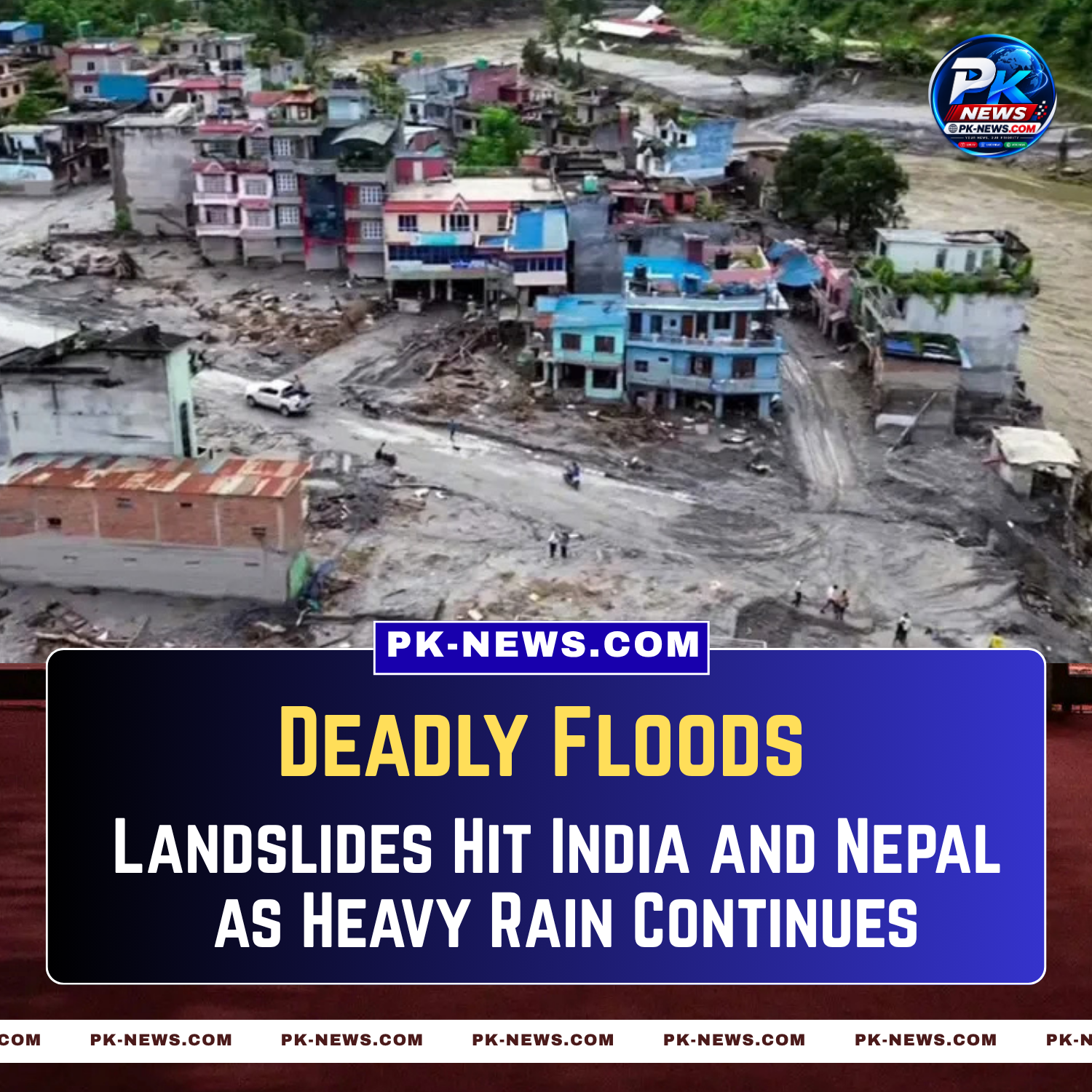
Deadly Floods and Landslides Hit India and Nepal as Heavy Rain Continues
Heavy rain and powerful storms have triggered floods and landslides across northern India and Nepal, causing dozens of deaths, damaging homes and infrastructure, and forcing authorities to warn communities about additional flash-flood risks. Several major rivers have risen above danger levels as emergency teams continue monitoring vulnerable areas. By PK-News.com | September 27, 2026 Heavy rainfall and storms have triggered a new wave of flooding and landslides across parts of northern India and neighboring Nepal, leaving dozens of people dead and creating renewed concerns about additional flooding as rivers continue to rise. According to the latest reports available on September 27, authorities in India and Nepal have recorded a rapidly increasing number of casualties. Reuters reported that 56 people had died in India's Uttar Pradesh state, while Nepal had reported 14 deaths and another 11 people missing in the latest situation. The disaster has affected communities already dealing with severe flooding and landslides in recent weeks, particularly in Nepal, where authorities remain concerned about the possibility of further flash floods. Heavy Rain Hits Northern India India's northern state of Uttar Pradesh has been among the worst-affected areas. Authorities reported that heavy rain and storms affected dozens of districts, with significant rainfall recorded over a short period. The extreme rainfall has caused flooding, landslides and damage to homes and infrastructure. Reports indicate that more than 1,000 houses have been damaged in Uttar Pradesh during the latest period of severe weather, while dozens of people have lost their lives. The situation remains particularly serious because rivers in several parts of northern India have continued to rise. India's Central Water Commission has reported severe conditions at multiple river-monitoring stations across several states. Major rivers, including the Ganga, Gandak, Kosi, Bagmati and Narmada, have been reported above danger levels at monitoring locations. This has increased concerns about additional flooding in low-lying communities. Nepal Faces New Flood and Landslide Threat Nepal is also facing renewed flooding and landslide risks after days of heavy rain. Authorities have warned that flash floods remain possible across a large number of districts. Reuters reported that Nepalese authorities had warned of possible flash floods in 49 of the country's 77 districts, with more than half of the country facing elevated flood or flash-flood risks as water levels continue to rise. The warning comes only weeks after Nepal suffered one of its most devastating natural disasters in recent history. Communities in several regions remain vulnerable because roads, bridges, power infrastructure and communications networks have already been damaged by previous flooding. Landslide Kills Family in Nepal One of the latest tragedies occurred in Baglung district, where a landslide buried a house while people were sleeping. Four people, including three children and a woman, were reported killed in the landslide in Nishi Khola village. The incident highlights the danger posed by landslides in Nepal's mountainous terrain, where prolonged rainfall can quickly destabilize slopes. Authorities continue to monitor vulnerable communities as rain persists. Workers Missing After Avalanche The severe weather has also created danger in Nepal's high-altitude mountain regions. Ten Nepali workers were reported missing after an avalanche buried a base camp at Himlung Himal, a mountain rising more than 7,100 metres in northern Nepal. The workers had reportedly been preparing tents for foreign climbers when the avalanche occurred. The foreign climbers were not present when the incident happened, according to Reuters. Search and rescue operations face major challenges because of the mountainous terrain and continuing adverse weather. Rivers Continue Rising The growing river levels are one of the biggest concerns for authorities. In India, several monitoring stations have recorded water levels approaching or exceeding dangerous levels. In Nepal, authorities are also watching major rivers closely. Recent flooding has already forced evacuations in some communities. India Today reported that fresh rain in Nepal has caused additional flooding and landslides, with authorities evacuating residents from vulnerable areas as rivers crossed danger levels. The situation remains fluid, with water levels changing rapidly depending on rainfall. Roads and Communications Disrupted Flooding and landslides have also affected transportation. Several roads in Nepal have been blocked by mudslides and landslides, disrupting movement between communities. Damage to telecommunications infrastructure has also been reported. According to Reuters, flooding and landslides damaged optical-fibre networks and power supplies in parts of Nepal, affecting communications. For remote communities, the loss of road and communication links can make rescue operations significantly more difficult. Authorities Warn Residents to Stay Alert Emergency authorities in both countries are urging residents in vulnerable areas to remain alert. People living close to rivers, streams and unstable hillsides face particular risks as heavy rain continues. Authorities are monitoring river levels and issuing warnings where necessary. In Nepal, the warning covers a large portion of the country because of the possibility of sudden flash flooding. Residents have been advised to move toward safer areas when officials issue evacuation warnings. Nepal Still Recovering From Previous Disaster The latest rainfall comes at an especially difficult time for Nepal. The country is still recovering from a catastrophic flooding disaster that struck last month. India Today reported that the previous disaster had resulted in more than 1,450 deaths, with thousands still reported missing. That earlier disaster caused extensive destruction to communities, roads and hydropower infrastructure. The arrival of another period of heavy rainfall is therefore raising fears that already vulnerable communities could face additional damage. Why the Situation Is Important for the Region The latest floods are not only a local humanitarian crisis. India and Nepal are connected by major river systems, and heavy rainfall in mountainous areas can rapidly affect downstream communities. Flooding can also disrupt transportation, electricity generation, telecommunications, agriculture and regional trade. For millions of people living near major rivers, changing water levels can create serious risks within a short period. The situation is therefore being closely monitored by disaster-management agencies. What Happens Next? The immediate priority is the protection of communities facing flooding and landslide risks. Authorities are expected to continue monitoring rivers, evacuating residents where necessary and conducting rescue operations in affected areas. Weather conditions will remain a key factor. If heavy rain continues, additional flooding and landslides could occur, particularly in mountainous and low-lying areas. The situation remains developing, and casualty figures may change as rescue teams reach isolated communities and authorities receive additional reports. PK-News.com Monitoring the Situation The floods and landslides across India and Nepal have become one of the major developing weather disasters in South Asia. With rivers rising, roads damaged and authorities warning of further flash floods, emergency agencies are continuing to monitor the situation. PK-News.com will continue following developments and provide updates as authorities release verified information about casualties, evacuations, infrastructure damage and weather conditions. Developed by PK-News.com
21 hours ago
Heavy rain and powerful storms have triggered floods and landslides across northern India and Nepal, causing dozens of deaths, damaging homes and infrastructure, and forcing authorities to warn communities about additional flash-flood risks. Several major rivers have risen above danger levels as emergency teams continue monitoring vulnerable areas. By PK-News.com | September 27, 2026 Heavy rainfall and storms have triggered a new wave of flooding and landslides across parts of northern India and neighboring Nepal, leaving dozens of people dead and creating renewed concerns about additional flooding as rivers continue to rise. According to the latest reports available on September 27, authorities in India and Nepal have recorded a rapidly increasing number of casualties. Reuters reported that 56 people had died in India's Uttar Pradesh state, while Nepal had reported 14 deaths and another 11 people missing in the latest situation. The disaster has affected communities already dealing with severe flooding and landslides in recent weeks, particularly in Nepal, where authorities remain concerned about the possibility of further flash floods. Heavy Rain Hits Northern India India's northern state of Uttar Pradesh has been among the worst-affected areas. Authorities reported that heavy rain and storms affected dozens of districts, with significant rainfall recorded over a short period. The extreme rainfall has caused flooding, landslides and damage to homes and infrastructure. Reports indicate that more than 1,000 houses have been damaged in Uttar Pradesh during the latest period of severe weather, while dozens of people have lost their lives. The situation remains particularly serious because rivers in several parts of northern India have continued to rise. India's Central Water Commission has reported severe conditions at multiple river-monitoring stations across several states. Major rivers, including the Ganga, Gandak, Kosi, Bagmati and Narmada, have been reported above danger levels at monitoring locations. This has increased concerns about additional flooding in low-lying communities. Nepal Faces New Flood and Landslide Threat Nepal is also facing renewed flooding and landslide risks after days of heavy rain. Authorities have warned that flash floods remain possible across a large number of districts. Reuters reported that Nepalese authorities had warned of possible flash floods in 49 of the country's 77 districts, with more than half of the country facing elevated flood or flash-flood risks as water levels continue to rise. The warning comes only weeks after Nepal suffered one of its most devastating natural disasters in recent history. Communities in several regions remain vulnerable because roads, bridges, power infrastructure and communications networks have already been damaged by previous flooding. Landslide Kills Family in Nepal One of the latest tragedies occurred in Baglung district, where a landslide buried a house while people were sleeping. Four people, including three children and a woman, were reported killed in the landslide in Nishi Khola village. The incident highlights the danger posed by landslides in Nepal's mountainous terrain, where prolonged rainfall can quickly destabilize slopes. Authorities continue to monitor vulnerable communities as rain persists. Workers Missing After Avalanche The severe weather has also created danger in Nepal's high-altitude mountain regions. Ten Nepali workers were reported missing after an avalanche buried a base camp at Himlung Himal, a mountain rising more than 7,100 metres in northern Nepal. The workers had reportedly been preparing tents for foreign climbers when the avalanche occurred. The foreign climbers were not present when the incident happened, according to Reuters. Search and rescue operations face major challenges because of the mountainous terrain and continuing adverse weather. Rivers Continue Rising The growing river levels are one of the biggest concerns for authorities. In India, several monitoring stations have recorded water levels approaching or exceeding dangerous levels. In Nepal, authorities are also watching major rivers closely. Recent flooding has already forced evacuations in some communities. India Today reported that fresh rain in Nepal has caused additional flooding and landslides, with authorities evacuating residents from vulnerable areas as rivers crossed danger levels. The situation remains fluid, with water levels changing rapidly depending on rainfall. Roads and Communications Disrupted Flooding and landslides have also affected transportation. Several roads in Nepal have been blocked by mudslides and landslides, disrupting movement between communities. Damage to telecommunications infrastructure has also been reported. According to Reuters, flooding and landslides damaged optical-fibre networks and power supplies in parts of Nepal, affecting communications. For remote communities, the loss of road and communication links can make rescue operations significantly more difficult. Authorities Warn Residents to Stay Alert Emergency authorities in both countries are urging residents in vulnerable areas to remain alert. People living close to rivers, streams and unstable hillsides face particular risks as heavy rain continues. Authorities are monitoring river levels and issuing warnings where necessary. In Nepal, the warning covers a large portion of the country because of the possibility of sudden flash flooding. Residents have been advised to move toward safer areas when officials issue evacuation warnings. Nepal Still Recovering From Previous Disaster The latest rainfall comes at an especially difficult time for Nepal. The country is still recovering from a catastrophic flooding disaster that struck last month. India Today reported that the previous disaster had resulted in more than 1,450 deaths, with thousands still reported missing. That earlier disaster caused extensive destruction to communities, roads and hydropower infrastructure. The arrival of another period of heavy rainfall is therefore raising fears that already vulnerable communities could face additional damage. Why the Situation Is Important for the Region The latest floods are not only a local humanitarian crisis. India and Nepal are connected by major river systems, and heavy rainfall in mountainous areas can rapidly affect downstream communities. Flooding can also disrupt transportation, electricity generation, telecommunications, agriculture and regional trade. For millions of people living near major rivers, changing water levels can create serious risks within a short period. The situation is therefore being closely monitored by disaster-management agencies. What Happens Next? The immediate priority is the protection of communities facing flooding and landslide risks. Authorities are expected to continue monitoring rivers, evacuating residents where necessary and conducting rescue operations in affected areas. Weather conditions will remain a key factor. If heavy rain continues, additional flooding and landslides could occur, particularly in mountainous and low-lying areas. The situation remains developing, and casualty figures may change as rescue teams reach isolated communities and authorities receive additional reports. PK-News.com Monitoring the Situation The floods and landslides across India and Nepal have become one of the major developing weather disasters in South Asia. With rivers rising, roads damaged and authorities warning of further flash floods, emergency agencies are continuing to monitor the situation. PK-News.com will continue following developments and provide updates as authorities release verified information about casualties, evacuations, infrastructure damage and weather conditions. Developed by PK-News.com
Deadly Floods and Landslides Hit India and Nepal as Heavy Rain Continues
169
Recent
Global PK Live News 😔 Negative
Deadly Floods and Landslides Hit India and Nepal as Heavy Rain Continues
Heavy rain and powerful storms have triggered floods and landslides across northern India and Nepal, causing dozens of deaths, damaging homes and infrastructure, and forcing authorities to warn communities about additional flash-flood risks. Several major rivers have risen above danger levels as emergency teams continue monitoring vulnerable areas. By PK-News.com | September 27, 2026 Heavy rainfall and storms have triggered a new wave of flooding and landslides across parts of northern India and neighboring Nepal, leaving dozens of people dead and creating renewed concerns about additional flooding as rivers continue to rise. According to the latest reports available on September 27, authorities in India and Nepal have recorded a rapidly increasing number of casualties. Reuters reported that 56 people had died in India's Uttar Pradesh state, while Nepal had reported 14 deaths and another 11 people missing in the latest situation. The disaster has affected communities already dealing with severe flooding and landslides in recent weeks, particularly in Nepal, where authorities remain concerned about the possibility of further flash floods. Heavy Rain Hits Northern India India's northern state of Uttar Pradesh has been among the worst-affected areas. Authorities reported that heavy rain and storms affected dozens of districts, with significant rainfall recorded over a short period. The extreme rainfall has caused flooding, landslides and damage to homes and infrastructure. Reports indicate that more than 1,000 houses have been damaged in Uttar Pradesh during the latest period of severe weather, while dozens of people have lost their lives. The situation remains particularly serious because rivers in several parts of northern India have continued to rise. India's Central Water Commission has reported severe conditions at multiple river-monitoring stations across several states. Major rivers, including the Ganga, Gandak, Kosi, Bagmati and Narmada, have been reported above danger levels at monitoring locations. This has increased concerns about additional flooding in low-lying communities. Nepal Faces New Flood and Landslide Threat Nepal is also facing renewed flooding and landslide risks after days of heavy rain. Authorities have warned that flash floods remain possible across a large number of districts. Reuters reported that Nepalese authorities had warned of possible flash floods in 49 of the country's 77 districts, with more than half of the country facing elevated flood or flash-flood risks as water levels continue to rise. The warning comes only weeks after Nepal suffered one of its most devastating natural disasters in recent history. Communities in several regions remain vulnerable because roads, bridges, power infrastructure and communications networks have already been damaged by previous flooding. Landslide Kills Family in Nepal One of the latest tragedies occurred in Baglung district, where a landslide buried a house while people were sleeping. Four people, including three children and a woman, were reported killed in the landslide in Nishi Khola village. The incident highlights the danger posed by landslides in Nepal's mountainous terrain, where prolonged rainfall can quickly destabilize slopes. Authorities continue to monitor vulnerable communities as rain persists. Workers Missing After Avalanche The severe weather has also created danger in Nepal's high-altitude mountain regions. Ten Nepali workers were reported missing after an avalanche buried a base camp at Himlung Himal, a mountain rising more than 7,100 metres in northern Nepal. The workers had reportedly been preparing tents for foreign climbers when the avalanche occurred. The foreign climbers were not present when the incident happened, according to Reuters. Search and rescue operations face major challenges because of the mountainous terrain and continuing adverse weather. Rivers Continue Rising The growing river levels are one of the biggest concerns for authorities. In India, several monitoring stations have recorded water levels approaching or exceeding dangerous levels. In Nepal, authorities are also watching major rivers closely. Recent flooding has already forced evacuations in some communities. India Today reported that fresh rain in Nepal has caused additional flooding and landslides, with authorities evacuating residents from vulnerable areas as rivers crossed danger levels. The situation remains fluid, with water levels changing rapidly depending on rainfall. Roads and Communications Disrupted Flooding and landslides have also affected transportation. Several roads in Nepal have been blocked by mudslides and landslides, disrupting movement between communities. Damage to telecommunications infrastructure has also been reported. According to Reuters, flooding and landslides damaged optical-fibre networks and power supplies in parts of Nepal, affecting communications. For remote communities, the loss of road and communication links can make rescue operations significantly more difficult. Authorities Warn Residents to Stay Alert Emergency authorities in both countries are urging residents in vulnerable areas to remain alert. People living close to rivers, streams and unstable hillsides face particular risks as heavy rain continues. Authorities are monitoring river levels and issuing warnings where necessary. In Nepal, the warning covers a large portion of the country because of the possibility of sudden flash flooding. Residents have been advised to move toward safer areas when officials issue evacuation warnings. Nepal Still Recovering From Previous Disaster The latest rainfall comes at an especially difficult time for Nepal. The country is still recovering from a catastrophic flooding disaster that struck last month. India Today reported that the previous disaster had resulted in more than 1,450 deaths, with thousands still reported missing. That earlier disaster caused extensive destruction to communities, roads and hydropower infrastructure. The arrival of another period of heavy rainfall is therefore raising fears that already vulnerable communities could face additional damage. Why the Situation Is Important for the Region The latest floods are not only a local humanitarian crisis. India and Nepal are connected by major river systems, and heavy rainfall in mountainous areas can rapidly affect downstream communities. Flooding can also disrupt transportation, electricity generation, telecommunications, agriculture and regional trade. For millions of people living near major rivers, changing water levels can create serious risks within a short period. The situation is therefore being closely monitored by disaster-management agencies. What Happens Next? The immediate priority is the protection of communities facing flooding and landslide risks. Authorities are expected to continue monitoring rivers, evacuating residents where necessary and conducting rescue operations in affected areas. Weather conditions will remain a key factor. If heavy rain continues, additional flooding and landslides could occur, particularly in mountainous and low-lying areas. The situation remains developing, and casualty figures may change as rescue teams reach isolated communities and authorities receive additional reports. PK-News.com Monitoring the Situation The floods and landslides across India and Nepal have become one of the major developing weather disasters in South Asia. With rivers rising, roads damaged and authorities warning of further flash floods, emergency agencies are continuing to monitor the situation. PK-News.com will continue following developments and provide updates as authorities release verified information about casualties, evacuations, infrastructure damage and weather conditions. Developed by PK-News.com
21 hours ago
Heavy rain and powerful storms have triggered floods and landslides across northern India and Nepal, causing dozens of deaths, damaging homes and infrastructure, and forcing authorities to warn communities about additional flash-flood risks. Several major rivers have risen above danger levels as emergency teams continue monitoring vulnerable areas. By PK-News.com | September 27, 2026 Heavy rainfall and storms have triggered a new wave of flooding and landslides across parts of northern India and neighboring Nepal, leaving dozens of people dead and creating renewed concerns about additional flooding as rivers continue to rise. According to the latest reports available on September 27, authorities in India and Nepal have recorded a rapidly increasing number of casualties. Reuters reported that 56 people had died in India's Uttar Pradesh state, while Nepal had reported 14 deaths and another 11 people missing in the latest situation. The disaster has affected communities already dealing with severe flooding and landslides in recent weeks, particularly in Nepal, where authorities remain concerned about the possibility of further flash floods. Heavy Rain Hits Northern India India's northern state of Uttar Pradesh has been among the worst-affected areas. Authorities reported that heavy rain and storms affected dozens of districts, with significant rainfall recorded over a short period. The extreme rainfall has caused flooding, landslides and damage to homes and infrastructure. Reports indicate that more than 1,000 houses have been damaged in Uttar Pradesh during the latest period of severe weather, while dozens of people have lost their lives. The situation remains particularly serious because rivers in several parts of northern India have continued to rise. India's Central Water Commission has reported severe conditions at multiple river-monitoring stations across several states. Major rivers, including the Ganga, Gandak, Kosi, Bagmati and Narmada, have been reported above danger levels at monitoring locations. This has increased concerns about additional flooding in low-lying communities. Nepal Faces New Flood and Landslide Threat Nepal is also facing renewed flooding and landslide risks after days of heavy rain. Authorities have warned that flash floods remain possible across a large number of districts. Reuters reported that Nepalese authorities had warned of possible flash floods in 49 of the country's 77 districts, with more than half of the country facing elevated flood or flash-flood risks as water levels continue to rise. The warning comes only weeks after Nepal suffered one of its most devastating natural disasters in recent history. Communities in several regions remain vulnerable because roads, bridges, power infrastructure and communications networks have already been damaged by previous flooding. Landslide Kills Family in Nepal One of the latest tragedies occurred in Baglung district, where a landslide buried a house while people were sleeping. Four people, including three children and a woman, were reported killed in the landslide in Nishi Khola village. The incident highlights the danger posed by landslides in Nepal's mountainous terrain, where prolonged rainfall can quickly destabilize slopes. Authorities continue to monitor vulnerable communities as rain persists. Workers Missing After Avalanche The severe weather has also created danger in Nepal's high-altitude mountain regions. Ten Nepali workers were reported missing after an avalanche buried a base camp at Himlung Himal, a mountain rising more than 7,100 metres in northern Nepal. The workers had reportedly been preparing tents for foreign climbers when the avalanche occurred. The foreign climbers were not present when the incident happened, according to Reuters. Search and rescue operations face major challenges because of the mountainous terrain and continuing adverse weather. Rivers Continue Rising The growing river levels are one of the biggest concerns for authorities. In India, several monitoring stations have recorded water levels approaching or exceeding dangerous levels. In Nepal, authorities are also watching major rivers closely. Recent flooding has already forced evacuations in some communities. India Today reported that fresh rain in Nepal has caused additional flooding and landslides, with authorities evacuating residents from vulnerable areas as rivers crossed danger levels. The situation remains fluid, with water levels changing rapidly depending on rainfall. Roads and Communications Disrupted Flooding and landslides have also affected transportation. Several roads in Nepal have been blocked by mudslides and landslides, disrupting movement between communities. Damage to telecommunications infrastructure has also been reported. According to Reuters, flooding and landslides damaged optical-fibre networks and power supplies in parts of Nepal, affecting communications. For remote communities, the loss of road and communication links can make rescue operations significantly more difficult. Authorities Warn Residents to Stay Alert Emergency authorities in both countries are urging residents in vulnerable areas to remain alert. People living close to rivers, streams and unstable hillsides face particular risks as heavy rain continues. Authorities are monitoring river levels and issuing warnings where necessary. In Nepal, the warning covers a large portion of the country because of the possibility of sudden flash flooding. Residents have been advised to move toward safer areas when officials issue evacuation warnings. Nepal Still Recovering From Previous Disaster The latest rainfall comes at an especially difficult time for Nepal. The country is still recovering from a catastrophic flooding disaster that struck last month. India Today reported that the previous disaster had resulted in more than 1,450 deaths, with thousands still reported missing. That earlier disaster caused extensive destruction to communities, roads and hydropower infrastructure. The arrival of another period of heavy rainfall is therefore raising fears that already vulnerable communities could face additional damage. Why the Situation Is Important for the Region The latest floods are not only a local humanitarian crisis. India and Nepal are connected by major river systems, and heavy rainfall in mountainous areas can rapidly affect downstream communities. Flooding can also disrupt transportation, electricity generation, telecommunications, agriculture and regional trade. For millions of people living near major rivers, changing water levels can create serious risks within a short period. The situation is therefore being closely monitored by disaster-management agencies. What Happens Next? The immediate priority is the protection of communities facing flooding and landslide risks. Authorities are expected to continue monitoring rivers, evacuating residents where necessary and conducting rescue operations in affected areas. Weather conditions will remain a key factor. If heavy rain continues, additional flooding and landslides could occur, particularly in mountainous and low-lying areas. The situation remains developing, and casualty figures may change as rescue teams reach isolated communities and authorities receive additional reports. PK-News.com Monitoring the Situation The floods and landslides across India and Nepal have become one of the major developing weather disasters in South Asia. With rivers rising, roads damaged and authorities warning of further flash floods, emergency agencies are continuing to monitor the situation. PK-News.com will continue following developments and provide updates as authorities release verified information about casualties, evacuations, infrastructure damage and weather conditions. Developed by PK-News.com
Bangkok Declared Disaster Zone as Torrential Rain Floods Thailand’s Capital
11
Global PK Live News 😔 Negative
Bangkok Declared Disaster Zone as Torrential Rain Floods Thailand’s Capital
Bangkok has been declared a disaster-affected zone after almost 300 millimetres of rain fell within 48 hours, flooding major roads and leaving vehicles partly submerged. Authorities have opened shelters, deployed the army for relief operations and urged residents in vulnerable areas to move to safer locations as more heavy rain is forecast. According to PK-News.com | September 26, 2026 Thailand's capital Bangkok is facing a major flooding emergency after days of torrential rain inundated roads, neighbourhoods and public areas across the city. On Saturday, September 26, Bangkok Governor Chadchart Sittipunt declared the capital a disaster-affected zone, warning that the flooding posed risks to people's lives and could damage public and private property. The announcement came after almost 300 millimetres (around 12 inches) of rain fell in Bangkok within 48 hours. The intense rainfall has overwhelmed parts of the city's drainage and canal systems, leaving major roads flooded and forcing residents to move through water that in some areas reached waist height. Authorities are now carrying out emergency operations while weather officials warn that thunderstorms could continue through the weekend. Nearly 300mm of Rain Falls in 48 Hours The flooding followed heavy rainfall that began on Thursday. According to Reuters, almost 300 mm of rain fell over a 48-hour period, causing widespread flooding across Bangkok. Some vehicles were partially submerged, while residents were forced to wade through deep floodwater. The situation has been particularly serious around canals, where water levels have risen sharply. The Bangkok governor said the flooding could pose a danger to residents and damage homes, businesses and other property. Authorities have urged residents living close to canals and other vulnerable areas to take precautions and move belongings to higher ground where necessary. All 50 Districts Affected Reports from local authorities indicate that the disaster declaration has been expanded across all 50 districts of Bangkok. The decision allows authorities to coordinate emergency operations more rapidly across the capital as flooding continues. The Indian Express reported that the declaration was expanded on Saturday after three districts had initially been designated disaster areas. Eastern areas of Bangkok have been among those particularly affected, although flooding has disrupted transportation and daily activities across several parts of the city. Roads have become difficult or impossible for some vehicles to use, while businesses in affected areas have temporarily closed. Residents Struggle Through Flooded Streets Images and videos from Bangkok have shown people walking through flooded streets while carrying food, water and personal belongings. Some vehicles have become trapped or partially submerged. Motorcyclists have reportedly been forced to push their motorcycles through flooded roads, while some residents have used alternative means of transportation to move through affected areas. The flooding has also disrupted normal commercial activity, with supermarkets seeing increased demand as residents purchase food, water and other essential supplies. The situation has created particular concern among residents living near canals and low-lying areas. Army Deploys for Relief Operations Thailand's military has been assisting the emergency response. According to Reuters, the army is preparing shelters and field kitchens to support people affected by the flooding. The Bangkok Metropolitan Administration has also designated schools as temporary accommodation facilities. More than 200 shelters have reportedly been established across the city, with around 900 people moving into shelters, according to reporting carried by the Times of India citing Reuters. Emergency teams are also working to remove floodwater and protect residents in areas considered particularly vulnerable. Authorities Urge People to Avoid Unnecessary Travel Officials have asked residents to avoid unnecessary travel while flooding remains widespread. The warning is particularly important because several major roads have become heavily flooded. Authorities are also advising people living near canals to move belongings to higher floors or other safer locations. The emergency measures are intended to reduce the risk of people becoming trapped in rapidly rising water. The governor has urged residents not to panic while emergency workers continue pumping operations and preparing shelters. More Rain Could Be Coming One of the biggest challenges is that the weather situation has not yet ended. Thailand's Meteorological Department has forecast additional thunderstorms and heavy rainfall over the weekend. That creates the possibility of further flooding, particularly if already-full canals and drainage systems are unable to absorb additional rainfall. Reuters reported that the weather agency was forecasting thunderstorms while authorities continued emergency operations. Residents in low-lying and canalside areas therefore remain particularly vulnerable. Bangkok Airport Continues Operating Despite the severe flooding, Bangkok's main Suvarnabhumi Airport was reported to be operating normally. However, travellers have been advised to allow additional time for journeys because flooding and traffic disruption can make access to the airport more difficult. Sky News reported that flights were operating normally, while some routes to the airport could experience delays because of road conditions. Travellers are therefore being advised to check transport conditions and flight information before leaving for the airport. Tourism and Business Disruption Bangkok is one of the world's major tourism and business destinations, meaning widespread flooding can have consequences beyond residential communities. Hotels, restaurants, shops and transportation services may experience disruption when major roads become inaccessible. Tourists travelling through Bangkok could also face delays when moving between airports, hotels and tourist areas. The authorities have encouraged people to avoid unnecessary movement while emergency operations continue. Wider Flooding Across Thailand The flooding emergency is not limited to Bangkok. Sky News reported that more than 84,000 people across 21 provinces had been affected by flooding, particularly in central Thailand. This places the Bangkok emergency within a broader national weather situation. The continuing rainfall means authorities across Thailand are monitoring rivers, canals and low-lying areas for additional flooding. Emergency teams are preparing supplies and shelters where necessary. Why Bangkok Is Vulnerable to Flooding Bangkok's geography makes the city particularly vulnerable to flooding. Large parts of the capital are relatively low-lying, while the city contains an extensive network of canals and drainage infrastructure. During extremely heavy rainfall, drainage systems can come under significant pressure. When rainfall continues for many hours, water levels can rise rapidly and canals can approach or exceed their capacity. This can result in flooding on roads and inside residential and commercial areas. Economic Impact Could Grow If heavy rain continues, the flooding could produce wider economic effects. Businesses may remain closed, transportation could face further disruption and emergency authorities may have to devote additional resources to pumping and evacuation operations. For residents, the immediate priorities are safety, food, clean water and access to emergency shelters. For businesses and tourists, the situation could result in delays and temporary disruption. The extent of the eventual economic impact will depend heavily on how quickly the rainfall decreases and floodwater recedes. Climate and Extreme Weather Concerns The latest Bangkok flooding is also drawing attention to the broader issue of extreme rainfall in major cities. Urban areas around the world are increasingly dealing with intense rainfall events that can overwhelm drainage systems. However, the specific causes and long-term climate contribution of this particular Bangkok event would require scientific assessment and should not be inferred solely from the current flooding. For now, Thai authorities are focused primarily on emergency response and protecting residents. What Happens Next? The immediate focus is on reducing floodwater and protecting people in the most affected areas. Emergency teams are continuing pumping operations while shelters remain available for people who cannot safely remain at home. Authorities are also monitoring weather forecasts for additional thunderstorms. If rainfall decreases, officials will assess how quickly water levels can fall. However, if further heavy rain arrives while canals remain near capacity, additional flooding could occur. Residents have therefore been advised to remain alert and follow official instructions. Conclusion Bangkok is facing a serious flooding emergency after nearly 300 mm of rain fell within 48 hours, flooding roads and neighbourhoods across Thailand's capital. The city's governor has declared Bangkok a disaster-affected zone, while the army and emergency authorities are helping establish shelters, prepare food and support residents. The situation remains active, with further thunderstorms forecast over the weekend. Although Suvarnabhumi Airport remains operational, road and local transportation disruptions are affecting daily life in several areas. The coming days will depend heavily on rainfall levels, drainage capacity and the speed at which floodwater can be removed. PK-News.com will continue monitoring the Bangkok flooding situation and provide updates as official information becomes available.
Yesterday at 10:15 PM
Bangkok has been declared a disaster-affected zone after almost 300 millimetres of rain fell within 48 hours, flooding major roads and leaving vehicles partly submerged. Authorities have opened shelters, deployed the army for relief operations and urged residents in vulnerable areas to move to safer locations as more heavy rain is forecast. According to PK-News.com | September 26, 2026 Thailand's capital Bangkok is facing a major flooding emergency after days of torrential rain inundated roads, neighbourhoods and public areas across the city. On Saturday, September 26, Bangkok Governor Chadchart Sittipunt declared the capital a disaster-affected zone, warning that the flooding posed risks to people's lives and could damage public and private property. The announcement came after almost 300 millimetres (around 12 inches) of rain fell in Bangkok within 48 hours. The intense rainfall has overwhelmed parts of the city's drainage and canal systems, leaving major roads flooded and forcing residents to move through water that in some areas reached waist height. Authorities are now carrying out emergency operations while weather officials warn that thunderstorms could continue through the weekend. Nearly 300mm of Rain Falls in 48 Hours The flooding followed heavy rainfall that began on Thursday. According to Reuters, almost 300 mm of rain fell over a 48-hour period, causing widespread flooding across Bangkok. Some vehicles were partially submerged, while residents were forced to wade through deep floodwater. The situation has been particularly serious around canals, where water levels have risen sharply. The Bangkok governor said the flooding could pose a danger to residents and damage homes, businesses and other property. Authorities have urged residents living close to canals and other vulnerable areas to take precautions and move belongings to higher ground where necessary. All 50 Districts Affected Reports from local authorities indicate that the disaster declaration has been expanded across all 50 districts of Bangkok. The decision allows authorities to coordinate emergency operations more rapidly across the capital as flooding continues. The Indian Express reported that the declaration was expanded on Saturday after three districts had initially been designated disaster areas. Eastern areas of Bangkok have been among those particularly affected, although flooding has disrupted transportation and daily activities across several parts of the city. Roads have become difficult or impossible for some vehicles to use, while businesses in affected areas have temporarily closed. Residents Struggle Through Flooded Streets Images and videos from Bangkok have shown people walking through flooded streets while carrying food, water and personal belongings. Some vehicles have become trapped or partially submerged. Motorcyclists have reportedly been forced to push their motorcycles through flooded roads, while some residents have used alternative means of transportation to move through affected areas. The flooding has also disrupted normal commercial activity, with supermarkets seeing increased demand as residents purchase food, water and other essential supplies. The situation has created particular concern among residents living near canals and low-lying areas. Army Deploys for Relief Operations Thailand's military has been assisting the emergency response. According to Reuters, the army is preparing shelters and field kitchens to support people affected by the flooding. The Bangkok Metropolitan Administration has also designated schools as temporary accommodation facilities. More than 200 shelters have reportedly been established across the city, with around 900 people moving into shelters, according to reporting carried by the Times of India citing Reuters. Emergency teams are also working to remove floodwater and protect residents in areas considered particularly vulnerable. Authorities Urge People to Avoid Unnecessary Travel Officials have asked residents to avoid unnecessary travel while flooding remains widespread. The warning is particularly important because several major roads have become heavily flooded. Authorities are also advising people living near canals to move belongings to higher floors or other safer locations. The emergency measures are intended to reduce the risk of people becoming trapped in rapidly rising water. The governor has urged residents not to panic while emergency workers continue pumping operations and preparing shelters. More Rain Could Be Coming One of the biggest challenges is that the weather situation has not yet ended. Thailand's Meteorological Department has forecast additional thunderstorms and heavy rainfall over the weekend. That creates the possibility of further flooding, particularly if already-full canals and drainage systems are unable to absorb additional rainfall. Reuters reported that the weather agency was forecasting thunderstorms while authorities continued emergency operations. Residents in low-lying and canalside areas therefore remain particularly vulnerable. Bangkok Airport Continues Operating Despite the severe flooding, Bangkok's main Suvarnabhumi Airport was reported to be operating normally. However, travellers have been advised to allow additional time for journeys because flooding and traffic disruption can make access to the airport more difficult. Sky News reported that flights were operating normally, while some routes to the airport could experience delays because of road conditions. Travellers are therefore being advised to check transport conditions and flight information before leaving for the airport. Tourism and Business Disruption Bangkok is one of the world's major tourism and business destinations, meaning widespread flooding can have consequences beyond residential communities. Hotels, restaurants, shops and transportation services may experience disruption when major roads become inaccessible. Tourists travelling through Bangkok could also face delays when moving between airports, hotels and tourist areas. The authorities have encouraged people to avoid unnecessary movement while emergency operations continue. Wider Flooding Across Thailand The flooding emergency is not limited to Bangkok. Sky News reported that more than 84,000 people across 21 provinces had been affected by flooding, particularly in central Thailand. This places the Bangkok emergency within a broader national weather situation. The continuing rainfall means authorities across Thailand are monitoring rivers, canals and low-lying areas for additional flooding. Emergency teams are preparing supplies and shelters where necessary. Why Bangkok Is Vulnerable to Flooding Bangkok's geography makes the city particularly vulnerable to flooding. Large parts of the capital are relatively low-lying, while the city contains an extensive network of canals and drainage infrastructure. During extremely heavy rainfall, drainage systems can come under significant pressure. When rainfall continues for many hours, water levels can rise rapidly and canals can approach or exceed their capacity. This can result in flooding on roads and inside residential and commercial areas. Economic Impact Could Grow If heavy rain continues, the flooding could produce wider economic effects. Businesses may remain closed, transportation could face further disruption and emergency authorities may have to devote additional resources to pumping and evacuation operations. For residents, the immediate priorities are safety, food, clean water and access to emergency shelters. For businesses and tourists, the situation could result in delays and temporary disruption. The extent of the eventual economic impact will depend heavily on how quickly the rainfall decreases and floodwater recedes. Climate and Extreme Weather Concerns The latest Bangkok flooding is also drawing attention to the broader issue of extreme rainfall in major cities. Urban areas around the world are increasingly dealing with intense rainfall events that can overwhelm drainage systems. However, the specific causes and long-term climate contribution of this particular Bangkok event would require scientific assessment and should not be inferred solely from the current flooding. For now, Thai authorities are focused primarily on emergency response and protecting residents. What Happens Next? The immediate focus is on reducing floodwater and protecting people in the most affected areas. Emergency teams are continuing pumping operations while shelters remain available for people who cannot safely remain at home. Authorities are also monitoring weather forecasts for additional thunderstorms. If rainfall decreases, officials will assess how quickly water levels can fall. However, if further heavy rain arrives while canals remain near capacity, additional flooding could occur. Residents have therefore been advised to remain alert and follow official instructions. Conclusion Bangkok is facing a serious flooding emergency after nearly 300 mm of rain fell within 48 hours, flooding roads and neighbourhoods across Thailand's capital. The city's governor has declared Bangkok a disaster-affected zone, while the army and emergency authorities are helping establish shelters, prepare food and support residents. The situation remains active, with further thunderstorms forecast over the weekend. Although Suvarnabhumi Airport remains operational, road and local transportation disruptions are affecting daily life in several areas. The coming days will depend heavily on rainfall levels, drainage capacity and the speed at which floodwater can be removed. PK-News.com will continue monitoring the Bangkok flooding situation and provide updates as official information becomes available.
33 Militants Reportedly Killed in Balochistan Operations as Security Forces Intensify Counterterrorism Campaign
20
Global PK Live News 😔 Negative
33 Militants Reportedly Killed in Balochistan Operations as Security Forces Intensify Counterterrorism Campaign
Pakistan's military says security forces have killed 33 militants in a series of counterterrorism operations across Balochistan since September 21. The reported deaths include 22 militants killed during the ongoing Operation Shaban and another 11 during an intelligence-based operation in Nushki on September 25. Weapons, ammunition and explosives were also reportedly recovered. The operations come amid a recent increase in militant violence in Balochistan and growing security concerns across the province. Security operations intensify across Balochistan Pakistan's security forces have intensified counterterrorism operations across Balochistan, with the military reporting that 33 militants have been killed since September 21. The figures were released by the Inter-Services Public Relations (ISPR), the media wing of Pakistan's military, on September 25. According to ISPR, the operations targeted groups that the Pakistani state describes as Fitna al-Khawarij and Fitna al-Hindustan. The military said the operations were conducted in different areas of Balochistan as part of an ongoing campaign against militant networks. The latest announcement follows several days of military activity in the province, including operations in Shaban and Nushki. Because the casualty figures come from the military, the number of militants killed should be understood as an ISPR-reported figure unless independently verified. 22 militants reported killed in Operation Shaban One of the main operations has been taking place in the Shaban area of Quetta district. According to ISPR, security forces continued Operation Shaban on September 24 and targeted additional militant hideouts. The military said that an intense exchange of fire took place after the hideouts were identified and that five militants were killed. The latest deaths brought the reported number killed during Operation Shaban to 22. ISPR also said that weapons, ammunition and explosives were recovered from the locations targeted during the operation. The military said the clearance operation would continue until what it described as the threat in the area was completely neutralised. 11 more reported killed in Nushki A separate operation took place in Nushki district on September 25. According to ISPR, security forces conducted an intelligence-based operation after receiving information about a militant hideout. The military said troops engaged the hideout and that an intense exchange of fire followed. ISPR reported that 11 militants were killed during the operation. With the five reported deaths in Shaban and 11 in Nushki, the military said the latest operations brought the total number of militants killed in Balochistan since September 21 to 33. Weapons and explosives reportedly recovered The military said security forces recovered weapons, ammunition and explosives from militant hideouts during the operations. The recovery of such material is significant from a security perspective because authorities frequently examine weapons and explosive materials recovered during counterterrorism operations to determine the capabilities and possible plans of militant networks. ISPR said the clearance operation in the Shaban area would continue. The military also said Pakistan's broader counterterrorism campaign would continue under the Azm-i-Istehkam framework. Balochistan facing increased militant violence The latest operations come at a time when Balochistan has experienced an increase in militant attacks. According to data cited by Dawn from the Pakistan Institute for Conflict and Security Studies, the number of terrorist attacks recorded in the province increased from 83 in July to 89 in August, representing a reported seven-percent increase. The increase has placed additional pressure on Pakistani security forces operating across the province. Balochistan's geography presents particular challenges for security agencies. The province is Pakistan's largest by area and includes long, remote stretches of terrain as well as a strategically important border with Afghanistan and Iran. Previous operations in September The latest 33 reported deaths follow several other security operations conducted across Balochistan earlier this month. On September 22, security forces reportedly killed six militants and arrested nine suspected individuals during an intelligence-based operation in the Saran Tangi area. Weapons and ammunition were also reportedly recovered. On the same day, four additional militants were reported killed during operations in Panjgur district. Officials said those operations followed intelligence reports about the presence of armed militants in the Koh-Prom and Aphan areas. The continuing operations indicate that Pakistani authorities are maintaining a high operational tempo in Balochistan. Earlier operation resulted in 19 reported deaths The military also announced another significant development on September 24. According to ISPR, security forces killed 19 militants during separate intelligence-based operations in Shaban, Kech and Quetta West. A Pakistani soldier was also reported killed during those operations. The military said the operations were launched after intelligence agencies received information about militant hideouts. These developments form part of a wider campaign that authorities say is intended to prevent militant groups from establishing or maintaining operational bases in the province. Government praises security forces President Asif Ali Zardari praised the security forces following the latest announcement. According to the Presidency, Zardari described the reported killing of 33 militants as an achievement for the country's security forces. He also praised the recovery of weapons and ammunition and said Pakistan would continue efforts against what the government describes as foreign-backed militant activity. The government's statements indicate that counterterrorism operations in Balochistan are expected to continue. Pakistan's allegations of foreign support The Pakistani military has described the militants targeted in the latest operations as foreign-sponsored. In its statement, ISPR used terminology referring to what the Pakistani state describes as Indian-backed militant networks. Such allegations are politically and diplomatically sensitive. Pakistan has repeatedly accused India of supporting militant activity inside Pakistan, while India has rejected such accusations. For that reason, claims about foreign sponsorship should be attributed to Pakistani authorities rather than presented as independently established facts. The wider security challenge The latest Balochistan operations are taking place against the backdrop of a broader security challenge in Pakistan. Militant violence has increased in several parts of the country, including Balochistan and Khyber Pakhtunkhwa. Pakistan has also been dealing with growing tensions along its border with Afghanistan. In recent days, Islamabad has accused militant groups operating from Afghan territory of involvement in attacks against Pakistan. Afghanistan rejects those accusations. The simultaneous security pressures in Balochistan and along the Afghanistan border have made counterterrorism a major national-security issue. Why Balochistan remains strategically important Balochistan has enormous strategic importance for Pakistan. The province borders Afghanistan and Iran and contains the country's coastline along the Arabian Sea. It is also home to major infrastructure and economic projects, including routes associated with the China-Pakistan Economic Corridor. Gwadar Port is located in the province, while important highways and energy infrastructure also cross Balochistan. Security incidents can therefore have implications beyond the immediate areas where fighting occurs. Any sustained increase in militant activity could affect transportation, investment, development projects and the movement of people and goods. What happens next? The immediate question is whether the counterterrorism operations will continue at the same pace. ISPR has indicated that clearance operations will continue in areas where security forces believe militant threats remain. The military has also said that its wider campaign under Azm-i-Istehkam will continue. For residents of affected districts, the coming days could therefore bring additional security operations and restrictions. Authorities will also be monitoring whether militant groups attempt retaliatory attacks following the reported losses. Need for continued verification The reported figure of 33 militants killed is significant, but it is important to distinguish between official claims and independently verified information. The figure was announced by ISPR and has been reported by Pakistani media organisations including Dawn, The Express Tribune, Business Recorder and Radio Pakistan. There is currently limited independent information publicly available that verifies every casualty or provides a separate account from the militant groups involved. For this reason, PK-News.com should use phrases such as “according to ISPR,” “the military said,” and “security officials reported” when describing the casualty figures. A significant security development The reported killing of 33 militants since September 21 marks one of the more significant counterterrorism developments recently announced in Balochistan. The operations cover several locations and include the continuing Operation Shaban as well as the latest intelligence-based operation in Nushki. The military says weapons, ammunition and explosives were recovered and that clearance operations will continue. At the same time, the rise in militant attacks in Balochistan demonstrates that the security challenge remains active. The coming days will show whether the latest operations lead to a reduction in militant activity or whether further attacks and security operations follow. For Pakistan, the developments are another indication that Balochistan remains a major focus of the country's counterterrorism campaign. PK-News.com will continue monitoring developments in Balochistan, official ISPR statements, security operations and any further information regarding the reported militant casualties.
2 days ago
Pakistan's military says security forces have killed 33 militants in a series of counterterrorism operations across Balochistan since September 21. The reported deaths include 22 militants killed during the ongoing Operation Shaban and another 11 during an intelligence-based operation in Nushki on September 25. Weapons, ammunition and explosives were also reportedly recovered. The operations come amid a recent increase in militant violence in Balochistan and growing security concerns across the province. Security operations intensify across Balochistan Pakistan's security forces have intensified counterterrorism operations across Balochistan, with the military reporting that 33 militants have been killed since September 21. The figures were released by the Inter-Services Public Relations (ISPR), the media wing of Pakistan's military, on September 25. According to ISPR, the operations targeted groups that the Pakistani state describes as Fitna al-Khawarij and Fitna al-Hindustan. The military said the operations were conducted in different areas of Balochistan as part of an ongoing campaign against militant networks. The latest announcement follows several days of military activity in the province, including operations in Shaban and Nushki. Because the casualty figures come from the military, the number of militants killed should be understood as an ISPR-reported figure unless independently verified. 22 militants reported killed in Operation Shaban One of the main operations has been taking place in the Shaban area of Quetta district. According to ISPR, security forces continued Operation Shaban on September 24 and targeted additional militant hideouts. The military said that an intense exchange of fire took place after the hideouts were identified and that five militants were killed. The latest deaths brought the reported number killed during Operation Shaban to 22. ISPR also said that weapons, ammunition and explosives were recovered from the locations targeted during the operation. The military said the clearance operation would continue until what it described as the threat in the area was completely neutralised. 11 more reported killed in Nushki A separate operation took place in Nushki district on September 25. According to ISPR, security forces conducted an intelligence-based operation after receiving information about a militant hideout. The military said troops engaged the hideout and that an intense exchange of fire followed. ISPR reported that 11 militants were killed during the operation. With the five reported deaths in Shaban and 11 in Nushki, the military said the latest operations brought the total number of militants killed in Balochistan since September 21 to 33. Weapons and explosives reportedly recovered The military said security forces recovered weapons, ammunition and explosives from militant hideouts during the operations. The recovery of such material is significant from a security perspective because authorities frequently examine weapons and explosive materials recovered during counterterrorism operations to determine the capabilities and possible plans of militant networks. ISPR said the clearance operation in the Shaban area would continue. The military also said Pakistan's broader counterterrorism campaign would continue under the Azm-i-Istehkam framework. Balochistan facing increased militant violence The latest operations come at a time when Balochistan has experienced an increase in militant attacks. According to data cited by Dawn from the Pakistan Institute for Conflict and Security Studies, the number of terrorist attacks recorded in the province increased from 83 in July to 89 in August, representing a reported seven-percent increase. The increase has placed additional pressure on Pakistani security forces operating across the province. Balochistan's geography presents particular challenges for security agencies. The province is Pakistan's largest by area and includes long, remote stretches of terrain as well as a strategically important border with Afghanistan and Iran. Previous operations in September The latest 33 reported deaths follow several other security operations conducted across Balochistan earlier this month. On September 22, security forces reportedly killed six militants and arrested nine suspected individuals during an intelligence-based operation in the Saran Tangi area. Weapons and ammunition were also reportedly recovered. On the same day, four additional militants were reported killed during operations in Panjgur district. Officials said those operations followed intelligence reports about the presence of armed militants in the Koh-Prom and Aphan areas. The continuing operations indicate that Pakistani authorities are maintaining a high operational tempo in Balochistan. Earlier operation resulted in 19 reported deaths The military also announced another significant development on September 24. According to ISPR, security forces killed 19 militants during separate intelligence-based operations in Shaban, Kech and Quetta West. A Pakistani soldier was also reported killed during those operations. The military said the operations were launched after intelligence agencies received information about militant hideouts. These developments form part of a wider campaign that authorities say is intended to prevent militant groups from establishing or maintaining operational bases in the province. Government praises security forces President Asif Ali Zardari praised the security forces following the latest announcement. According to the Presidency, Zardari described the reported killing of 33 militants as an achievement for the country's security forces. He also praised the recovery of weapons and ammunition and said Pakistan would continue efforts against what the government describes as foreign-backed militant activity. The government's statements indicate that counterterrorism operations in Balochistan are expected to continue. Pakistan's allegations of foreign support The Pakistani military has described the militants targeted in the latest operations as foreign-sponsored. In its statement, ISPR used terminology referring to what the Pakistani state describes as Indian-backed militant networks. Such allegations are politically and diplomatically sensitive. Pakistan has repeatedly accused India of supporting militant activity inside Pakistan, while India has rejected such accusations. For that reason, claims about foreign sponsorship should be attributed to Pakistani authorities rather than presented as independently established facts. The wider security challenge The latest Balochistan operations are taking place against the backdrop of a broader security challenge in Pakistan. Militant violence has increased in several parts of the country, including Balochistan and Khyber Pakhtunkhwa. Pakistan has also been dealing with growing tensions along its border with Afghanistan. In recent days, Islamabad has accused militant groups operating from Afghan territory of involvement in attacks against Pakistan. Afghanistan rejects those accusations. The simultaneous security pressures in Balochistan and along the Afghanistan border have made counterterrorism a major national-security issue. Why Balochistan remains strategically important Balochistan has enormous strategic importance for Pakistan. The province borders Afghanistan and Iran and contains the country's coastline along the Arabian Sea. It is also home to major infrastructure and economic projects, including routes associated with the China-Pakistan Economic Corridor. Gwadar Port is located in the province, while important highways and energy infrastructure also cross Balochistan. Security incidents can therefore have implications beyond the immediate areas where fighting occurs. Any sustained increase in militant activity could affect transportation, investment, development projects and the movement of people and goods. What happens next? The immediate question is whether the counterterrorism operations will continue at the same pace. ISPR has indicated that clearance operations will continue in areas where security forces believe militant threats remain. The military has also said that its wider campaign under Azm-i-Istehkam will continue. For residents of affected districts, the coming days could therefore bring additional security operations and restrictions. Authorities will also be monitoring whether militant groups attempt retaliatory attacks following the reported losses. Need for continued verification The reported figure of 33 militants killed is significant, but it is important to distinguish between official claims and independently verified information. The figure was announced by ISPR and has been reported by Pakistani media organisations including Dawn, The Express Tribune, Business Recorder and Radio Pakistan. There is currently limited independent information publicly available that verifies every casualty or provides a separate account from the militant groups involved. For this reason, PK-News.com should use phrases such as “according to ISPR,” “the military said,” and “security officials reported” when describing the casualty figures. A significant security development The reported killing of 33 militants since September 21 marks one of the more significant counterterrorism developments recently announced in Balochistan. The operations cover several locations and include the continuing Operation Shaban as well as the latest intelligence-based operation in Nushki. The military says weapons, ammunition and explosives were recovered and that clearance operations will continue. At the same time, the rise in militant attacks in Balochistan demonstrates that the security challenge remains active. The coming days will show whether the latest operations lead to a reduction in militant activity or whether further attacks and security operations follow. For Pakistan, the developments are another indication that Balochistan remains a major focus of the country's counterterrorism campaign. PK-News.com will continue monitoring developments in Balochistan, official ISPR statements, security operations and any further information regarding the reported militant casualties.
Ethiopia’s Northern Conflict Enters a New Phase as Tigray Forces Expand Offensive
51
Global PK Live News 😔 Negative
Ethiopia’s Northern Conflict Enters a New Phase as Tigray Forces Expand Offensive
Ethiopia is facing a renewed security crisis after Tigrayan forces launched attacks in northern regions and a newly formed alliance of seven armed groups declared its intention to challenge Prime Minister Abiy Ahmed’s government. The escalation has raised concerns about the future of the 2022 peace agreement, regional stability and the possibility of a wider conflict involving neighbouring countries. This PK News report examines the latest developments, the groups involved and what could happen next. PK-News.com Ethiopia Faces Renewed Conflict as Tigray Fighting Spreads ADDIS ABABA, September 24, 2026 — PK News: Ethiopia is experiencing its most serious security escalation in several years after fighting involving Tigrayan forces and the federal government intensified across parts of the country's north. The latest clashes come only days after seven armed groups announced a new coalition seeking to remove Prime Minister Abiy Ahmed's government and establish a transitional political arrangement. The developments have revived concerns about the fragile peace that followed Ethiopia's devastating 2020–2022 Tigray war. The conflict between the Ethiopian federal government and the Tigray People's Liberation Front (TPLF) caused enormous human suffering and was formally brought to an end by the Pretoria peace agreement in November 2022. However, political and territorial disputes remained unresolved. According to recent reports, fighting has now expanded beyond Tigray into neighbouring Afar and Amhara regions. Tigrayan forces have reportedly taken control of several locations and airports, while Ethiopian federal forces have responded with military operations. Ethiopian Airlines has also suspended flights to parts of Tigray because of the deteriorating security situation. New Alliance Brings Former Rivals Together One of the most significant developments is the creation of the Ethiopian Peoples' Forces Alliance for Survival, a coalition involving seven armed groups from different parts of Ethiopia. The alliance includes the TPLF and the Amhara Fano National Movement, groups that previously fought on opposite sides during the Tigray conflict. Other participating movements are linked to regions including Oromia, Afar and Benishangul-Gumuz. The coalition says it wants to challenge the federal government's political system and establish a transitional government. Reuters reported that the groups have accused the government of concentrating power at the centre and marginalising regional interests. The alliance is significant because its members have historically had different political objectives and, in some cases, have fought against one another. Their decision to cooperate therefore represents a major change in Ethiopia's political and military landscape. Analysts cited by Reuters have also cautioned that cooperation could be complicated by geographical distance, political differences and unresolved territorial disputes among some of the participating groups. Fighting Moves Beyond Tigray The latest military escalation is not limited to the Tigray region. Reports indicate that Tigrayan forces have launched operations in neighbouring Afar and Amhara. The situation around the Tigray-Afar border has become particularly important, with reports of fighting around Abala and other locations. There have also been reports of clashes around Weldiya in Amhara, an area that sits along an important route toward central Ethiopia. The Ethiopian federal military has claimed significant battlefield gains, including saying that hundreds of Tigrayan fighters were killed. However, those casualty figures have not been independently verified, and there is limited reliable information about civilian casualties and losses among federal forces. Tigrayan representatives, meanwhile, have described the situation as a major war and accused federal forces of beginning a large-scale offensive. Ethiopian government representatives have offered a different account, accusing TPLF forces of initiating attacks. Because both sides are providing competing descriptions of events, the precise sequence of military operations remains difficult to independently establish. The Pretoria Peace Agreement Under Pressure The renewed fighting represents a major challenge for the 2022 Pretoria Agreement, which ended the previous Tigray war. The agreement created a framework for ending hostilities between the federal government and the TPLF. It reduced large-scale fighting but did not resolve every major political and territorial dispute. Tensions gradually increased again, particularly over political control in Tigray and unresolved territorial questions involving western Tigray and neighbouring Amhara. The latest military escalation has therefore created questions about whether the peace framework can still prevent a much wider conflict. The African Union has called for restraint and renewed dialogue, while the European Union has also urged immediate de-escalation and a return to the commitments made under the Pretoria agreement. Eritrea Adds a Regional Dimension Ethiopia's crisis also has an important regional dimension because of its complicated relationship with Eritrea. Eritrea fought alongside Ethiopian government forces during the previous Tigray conflict, but relations between Asmara and Addis Ababa have subsequently deteriorated. The Ethiopian government has accused Eritrea of supporting armed groups involved in the new opposition alliance. Eritrea has repeatedly denied similar accusations. The dispute is particularly sensitive because Ethiopia has been seeking greater access to the Red Sea, while Eritrea is concerned about Ethiopian intentions toward its territory and coastline. Any direct involvement by Eritrea could potentially make an already complicated Ethiopian conflict more difficult to contain. However, there is currently no independently verified evidence establishing that Eritrea has directly entered the latest fighting. Why the New Coalition Matters The new alliance is important not simply because of its size, but because it connects several separate conflicts inside Ethiopia. For years, violence in Tigray, Amhara and Oromia has largely developed along separate political and ethnic lines. The new coalition creates an attempt to coordinate these movements against the federal government. However, the groups do not necessarily share identical political objectives. Their disagreements include questions about territory, regional autonomy, political representation and Ethiopia's future constitutional structure. These differences could become more significant if the coalition attempts to operate as a unified political and military organisation. Al Jazeera reported that the alliance's stated objective includes removing Abiy's government, establishing a transitional government, conducting constitutional discussions and eventually moving toward elections. Humanitarian Concerns The renewed fighting also raises serious humanitarian concerns. Tigray continues to deal with the consequences of the previous war, while hundreds of thousands of people remain displaced. A new escalation could force additional populations to leave their homes and place further pressure on humanitarian organisations. The wider Horn of Africa is already facing major instability because of the war in neighbouring Sudan, political tensions between regional governments and continuing disputes surrounding the Red Sea. A larger Ethiopian conflict could therefore have consequences extending beyond Ethiopia's borders. What Could Happen Next? The immediate future will depend heavily on whether the federal government and the armed groups choose military escalation or return to negotiations. Three developments will be particularly important to watch: First, whether fighting remains concentrated in northern Ethiopia or spreads to additional regions. Second, whether the seven-group alliance maintains its cooperation despite differences among its members. Third, whether the African Union, neighbouring governments and international partners can encourage direct negotiations before the conflict expands further. For now, Ethiopia remains in a highly uncertain situation. The latest fighting does not by itself establish that the country has entered another conflict on the same scale as 2020–2022, but the geographic expansion of hostilities and creation of a broad armed coalition have significantly increased the risks. The coming days could therefore be critical for determining whether Ethiopia moves toward another prolonged confrontation or finds a path back to political dialogue. Developed for PK News | PK-News.com
3 days ago
Ethiopia is facing a renewed security crisis after Tigrayan forces launched attacks in northern regions and a newly formed alliance of seven armed groups declared its intention to challenge Prime Minister Abiy Ahmed’s government. The escalation has raised concerns about the future of the 2022 peace agreement, regional stability and the possibility of a wider conflict involving neighbouring countries. This PK News report examines the latest developments, the groups involved and what could happen next. PK-News.com Ethiopia Faces Renewed Conflict as Tigray Fighting Spreads ADDIS ABABA, September 24, 2026 — PK News: Ethiopia is experiencing its most serious security escalation in several years after fighting involving Tigrayan forces and the federal government intensified across parts of the country's north. The latest clashes come only days after seven armed groups announced a new coalition seeking to remove Prime Minister Abiy Ahmed's government and establish a transitional political arrangement. The developments have revived concerns about the fragile peace that followed Ethiopia's devastating 2020–2022 Tigray war. The conflict between the Ethiopian federal government and the Tigray People's Liberation Front (TPLF) caused enormous human suffering and was formally brought to an end by the Pretoria peace agreement in November 2022. However, political and territorial disputes remained unresolved. According to recent reports, fighting has now expanded beyond Tigray into neighbouring Afar and Amhara regions. Tigrayan forces have reportedly taken control of several locations and airports, while Ethiopian federal forces have responded with military operations. Ethiopian Airlines has also suspended flights to parts of Tigray because of the deteriorating security situation. New Alliance Brings Former Rivals Together One of the most significant developments is the creation of the Ethiopian Peoples' Forces Alliance for Survival, a coalition involving seven armed groups from different parts of Ethiopia. The alliance includes the TPLF and the Amhara Fano National Movement, groups that previously fought on opposite sides during the Tigray conflict. Other participating movements are linked to regions including Oromia, Afar and Benishangul-Gumuz. The coalition says it wants to challenge the federal government's political system and establish a transitional government. Reuters reported that the groups have accused the government of concentrating power at the centre and marginalising regional interests. The alliance is significant because its members have historically had different political objectives and, in some cases, have fought against one another. Their decision to cooperate therefore represents a major change in Ethiopia's political and military landscape. Analysts cited by Reuters have also cautioned that cooperation could be complicated by geographical distance, political differences and unresolved territorial disputes among some of the participating groups. Fighting Moves Beyond Tigray The latest military escalation is not limited to the Tigray region. Reports indicate that Tigrayan forces have launched operations in neighbouring Afar and Amhara. The situation around the Tigray-Afar border has become particularly important, with reports of fighting around Abala and other locations. There have also been reports of clashes around Weldiya in Amhara, an area that sits along an important route toward central Ethiopia. The Ethiopian federal military has claimed significant battlefield gains, including saying that hundreds of Tigrayan fighters were killed. However, those casualty figures have not been independently verified, and there is limited reliable information about civilian casualties and losses among federal forces. Tigrayan representatives, meanwhile, have described the situation as a major war and accused federal forces of beginning a large-scale offensive. Ethiopian government representatives have offered a different account, accusing TPLF forces of initiating attacks. Because both sides are providing competing descriptions of events, the precise sequence of military operations remains difficult to independently establish. The Pretoria Peace Agreement Under Pressure The renewed fighting represents a major challenge for the 2022 Pretoria Agreement, which ended the previous Tigray war. The agreement created a framework for ending hostilities between the federal government and the TPLF. It reduced large-scale fighting but did not resolve every major political and territorial dispute. Tensions gradually increased again, particularly over political control in Tigray and unresolved territorial questions involving western Tigray and neighbouring Amhara. The latest military escalation has therefore created questions about whether the peace framework can still prevent a much wider conflict. The African Union has called for restraint and renewed dialogue, while the European Union has also urged immediate de-escalation and a return to the commitments made under the Pretoria agreement. Eritrea Adds a Regional Dimension Ethiopia's crisis also has an important regional dimension because of its complicated relationship with Eritrea. Eritrea fought alongside Ethiopian government forces during the previous Tigray conflict, but relations between Asmara and Addis Ababa have subsequently deteriorated. The Ethiopian government has accused Eritrea of supporting armed groups involved in the new opposition alliance. Eritrea has repeatedly denied similar accusations. The dispute is particularly sensitive because Ethiopia has been seeking greater access to the Red Sea, while Eritrea is concerned about Ethiopian intentions toward its territory and coastline. Any direct involvement by Eritrea could potentially make an already complicated Ethiopian conflict more difficult to contain. However, there is currently no independently verified evidence establishing that Eritrea has directly entered the latest fighting. Why the New Coalition Matters The new alliance is important not simply because of its size, but because it connects several separate conflicts inside Ethiopia. For years, violence in Tigray, Amhara and Oromia has largely developed along separate political and ethnic lines. The new coalition creates an attempt to coordinate these movements against the federal government. However, the groups do not necessarily share identical political objectives. Their disagreements include questions about territory, regional autonomy, political representation and Ethiopia's future constitutional structure. These differences could become more significant if the coalition attempts to operate as a unified political and military organisation. Al Jazeera reported that the alliance's stated objective includes removing Abiy's government, establishing a transitional government, conducting constitutional discussions and eventually moving toward elections. Humanitarian Concerns The renewed fighting also raises serious humanitarian concerns. Tigray continues to deal with the consequences of the previous war, while hundreds of thousands of people remain displaced. A new escalation could force additional populations to leave their homes and place further pressure on humanitarian organisations. The wider Horn of Africa is already facing major instability because of the war in neighbouring Sudan, political tensions between regional governments and continuing disputes surrounding the Red Sea. A larger Ethiopian conflict could therefore have consequences extending beyond Ethiopia's borders. What Could Happen Next? The immediate future will depend heavily on whether the federal government and the armed groups choose military escalation or return to negotiations. Three developments will be particularly important to watch: First, whether fighting remains concentrated in northern Ethiopia or spreads to additional regions. Second, whether the seven-group alliance maintains its cooperation despite differences among its members. Third, whether the African Union, neighbouring governments and international partners can encourage direct negotiations before the conflict expands further. For now, Ethiopia remains in a highly uncertain situation. The latest fighting does not by itself establish that the country has entered another conflict on the same scale as 2020–2022, but the geographic expansion of hostilities and creation of a broad armed coalition have significantly increased the risks. The coming days could therefore be critical for determining whether Ethiopia moves toward another prolonged confrontation or finds a path back to political dialogue. Developed for PK News | PK-News.com
Who Is Lt Gen Nauman Mahmood? Pakistan’s Retired General Takes Charge of New Makkah Defence Alliance Secretariat
6
Global PK Live News 😐 Neutral
Who Is Lt Gen Nauman Mahmood? Pakistan’s Retired General Takes Charge of New Makkah Defence Alliance Secretariat
By PK-News.com | September 23, 2026 Pakistan has selected a senior retired military officer to lead the emerging institutional structure of the Makkah Defence Alliance, marking another step in the development of the new security arrangement between Pakistan, Saudi Arabia and Türkiye. The Pakistani Foreign Office announced on September 23 that Lieutenant General (retd) Nauman Mahmood, who holds the Hilal-i-Imtiaz (Military), has been appointed the alliance's first Secretary General. His immediate workplace will be Riyadh, where the General Secretariat of the alliance is being established. The position gives Mahmood responsibility for helping build an organization that is still in its formative stages. A New Role at a New Institution The Makkah Defence Alliance emerged from the Makkah Joint Defence Agreement, signed by Pakistan, Saudi Arabia and Türkiye on August 7, 2026. The agreement provides for the three countries to treat an armed attack against one member as an attack against all three, creating a framework for collective defence and deterrence. The countries subsequently met in Istanbul on August 31 to begin establishing the alliance's institutional arrangements. Pakistan was selected to head the new secretariat, which will operate from Riyadh, and the first Secretary General is expected to serve for an initial three-year period. Mahmood's appointment therefore comes at a particularly important stage: the alliance has been politically established, but many of its administrative and operational mechanisms still need to be developed. Who Is Nauman Mahmood? Nauman Mahmood's military career spans more than three decades. He was commissioned into the Pakistan Army in September 1987 and belongs to the Baloch Regiment. His professional education included studies at the Command and Staff College in Quetta, a command and staff institution in Egypt and the National Defence University in Islamabad. He also holds a master's degree in War Studies. His career included both operational command and assignments focused on strategic analysis and military education. That combination is relevant to his new position because the Secretary General will have to coordinate among three countries with different military structures, strategic priorities and regional responsibilities. Experience in Military Education A significant part of Mahmood's career was spent at the Command and Staff College in Quetta. He served in several instructional positions and eventually became Chief Instructor. Such assignments involve training military officers in areas including operational planning, strategy and professional military studies. His experience in military education also brought him into contact with broader questions concerning defence planning and strategic decision-making. This background is different from a purely field-command career and provides experience in translating military concepts into structured planning and institutional processes. Command Experience in Pakistan's Northwest Mahmood also held important operational commands. As a major general, he commanded an infantry division in North Waziristan, an area that had been at the centre of Pakistan's counterterrorism campaign. His later appointment as commander of XI Corps in Peshawar placed him in charge of a major military formation during a period of considerable regional uncertainty. His time as corps commander coincided with the final phase of the US military presence in Afghanistan, the withdrawal process and continuing security challenges along Pakistan's western frontier. The role involved dealing with a strategically sensitive border environment where developments in Afghanistan could directly affect Pakistan's security calculations. From Military Command to Intelligence Analysis Another important stage in Mahmood's career came when he moved into the intelligence field. He served as Director General of the Analysis Directorate at Inter-Services Intelligence (ISI). The position involved assessing developments outside Pakistan from a national-security perspective. According to published profiles, the assignment also involved interaction with foreign intelligence organizations through external liaison. This experience is notable because the new Makkah alliance will require governments to assess regional security developments and coordinate their responses. The Secretary General's role is not equivalent to commanding the armed forces of the three countries. Instead, it is primarily connected with coordinating the alliance's institutional work and helping turn the agreement's political commitments into functioning mechanisms. Promotion to Lieutenant General Mahmood was promoted to the rank of Lieutenant General in April 2019. Following his promotion, he served as Inspector General of the Communications and Information Technology Branch at Pakistan Army General Headquarters. Later that year, in December 2019, he moved to Peshawar to take command of XI Corps. His career consequently covered several different dimensions of national defence — from frontline command and military education to intelligence analysis and technology-related responsibilities. National Defence University Presidency After completing his tenure as XI Corps commander in November 2021, Mahmood was appointed President of the National Defence University (NDU) in Islamabad. He became the institution's 35th head and remained in that position until his retirement from the Pakistan Army in April 2023. The National Defence University plays a role in higher-level professional military education and strategic studies, making the position another part of Mahmood's background that is relevant to his new international assignment. Why His Background Matters to the New Alliance The Makkah Defence Alliance is still developing its institutional structure. Its three members — Pakistan, Saudi Arabia and Türkiye — have agreed to strengthen cooperation and collective deterrence, but the practical mechanisms for implementing that cooperation will require sustained coordination. Mahmood's background gives him experience across several areas that could be relevant to that process. His career includes: Military command in sensitive operational areas Strategic and intelligence analysis Professional military education International security-related engagement Senior headquarters responsibilities Leadership of the National Defence University His appointment therefore places an experienced retired Pakistani military officer at the centre of the alliance's initial administrative development. What Will the Secretary General Actually Do? The Secretary General will lead the General Secretariat in Riyadh. The secretariat is intended to provide an institutional mechanism through which the three member states can coordinate their work under the defence agreement. The initial task is therefore likely to involve organizational development, coordination among member governments and establishing procedures for cooperation. The three countries have said they intend to further institutionalize their cooperation in ways designed to strengthen solidarity and the credibility of collective deterrence and defence. This means Mahmood's first period in office could be focused heavily on building the machinery of the alliance rather than immediately overseeing a fully developed military organization. Will Other Countries Join? Since the agreement was signed, there has been discussion about the possibility of the alliance eventually expanding. Türkiye had previously raised the possibility of Egypt becoming involved, although there has been no confirmation from Cairo. Pakistan's Foreign Office has also indicated that expansion was not immediately under consideration while the three founding members concentrate on establishing the new organization. That suggests the initial priority remains the consolidation of the Pakistan-Saudi-Türkiye framework. A Significant Assignment for Pakistan The appointment gives Pakistan a prominent institutional role within the new alliance. While Saudi Arabia hosts the secretariat in Riyadh, Pakistan will initially provide the Secretary General for the first three-year term. For Islamabad, this creates an opportunity to participate directly in shaping the procedures and coordination mechanisms of the emerging defence framework. For Mahmood personally, the appointment represents a transition from national military service to an international security role. What Comes Next? The next stage will be closely watched as the three countries move from signing an agreement toward building permanent institutional arrangements. Questions surrounding the alliance's future structure, defence coordination, decision-making processes and possible expansion are likely to become clearer as the secretariat begins its work. Mahmood's immediate challenge will be helping establish the organization itself and creating channels through which Pakistan, Saudi Arabia and Türkiye can coordinate effectively. His appointment does not by itself define how the alliance will respond to every future regional crisis. Those questions will depend on decisions by the three governments and the mechanisms they establish under the agreement. For now, the appointment marks a new phase: the Makkah Defence Alliance is moving from a signed political and defence agreement toward the construction of a functioning institution. PK-News.com Perspective Research conducted by PK-News.com shows that Nauman Mahmood's career combines operational command, intelligence analysis, strategic education and senior military leadership. Those experiences are now being brought into an international framework involving three regional powers. The effectiveness and long-term role of the Makkah Defence Alliance will become clearer as its Riyadh-based secretariat develops, but the appointment of its first Secretary General is an important institutional milestone in that process. PK-News.com will continue tracking developments surrounding the Makkah Defence Alliance, Pakistan-Saudi relations, Türkiye's regional security role and the emerging structure of the new defence arrangement.
4 days ago
By PK-News.com | September 23, 2026 Pakistan has selected a senior retired military officer to lead the emerging institutional structure of the Makkah Defence Alliance, marking another step in the development of the new security arrangement between Pakistan, Saudi Arabia and Türkiye. The Pakistani Foreign Office announced on September 23 that Lieutenant General (retd) Nauman Mahmood, who holds the Hilal-i-Imtiaz (Military), has been appointed the alliance's first Secretary General. His immediate workplace will be Riyadh, where the General Secretariat of the alliance is being established. The position gives Mahmood responsibility for helping build an organization that is still in its formative stages. A New Role at a New Institution The Makkah Defence Alliance emerged from the Makkah Joint Defence Agreement, signed by Pakistan, Saudi Arabia and Türkiye on August 7, 2026. The agreement provides for the three countries to treat an armed attack against one member as an attack against all three, creating a framework for collective defence and deterrence. The countries subsequently met in Istanbul on August 31 to begin establishing the alliance's institutional arrangements. Pakistan was selected to head the new secretariat, which will operate from Riyadh, and the first Secretary General is expected to serve for an initial three-year period. Mahmood's appointment therefore comes at a particularly important stage: the alliance has been politically established, but many of its administrative and operational mechanisms still need to be developed. Who Is Nauman Mahmood? Nauman Mahmood's military career spans more than three decades. He was commissioned into the Pakistan Army in September 1987 and belongs to the Baloch Regiment. His professional education included studies at the Command and Staff College in Quetta, a command and staff institution in Egypt and the National Defence University in Islamabad. He also holds a master's degree in War Studies. His career included both operational command and assignments focused on strategic analysis and military education. That combination is relevant to his new position because the Secretary General will have to coordinate among three countries with different military structures, strategic priorities and regional responsibilities. Experience in Military Education A significant part of Mahmood's career was spent at the Command and Staff College in Quetta. He served in several instructional positions and eventually became Chief Instructor. Such assignments involve training military officers in areas including operational planning, strategy and professional military studies. His experience in military education also brought him into contact with broader questions concerning defence planning and strategic decision-making. This background is different from a purely field-command career and provides experience in translating military concepts into structured planning and institutional processes. Command Experience in Pakistan's Northwest Mahmood also held important operational commands. As a major general, he commanded an infantry division in North Waziristan, an area that had been at the centre of Pakistan's counterterrorism campaign. His later appointment as commander of XI Corps in Peshawar placed him in charge of a major military formation during a period of considerable regional uncertainty. His time as corps commander coincided with the final phase of the US military presence in Afghanistan, the withdrawal process and continuing security challenges along Pakistan's western frontier. The role involved dealing with a strategically sensitive border environment where developments in Afghanistan could directly affect Pakistan's security calculations. From Military Command to Intelligence Analysis Another important stage in Mahmood's career came when he moved into the intelligence field. He served as Director General of the Analysis Directorate at Inter-Services Intelligence (ISI). The position involved assessing developments outside Pakistan from a national-security perspective. According to published profiles, the assignment also involved interaction with foreign intelligence organizations through external liaison. This experience is notable because the new Makkah alliance will require governments to assess regional security developments and coordinate their responses. The Secretary General's role is not equivalent to commanding the armed forces of the three countries. Instead, it is primarily connected with coordinating the alliance's institutional work and helping turn the agreement's political commitments into functioning mechanisms. Promotion to Lieutenant General Mahmood was promoted to the rank of Lieutenant General in April 2019. Following his promotion, he served as Inspector General of the Communications and Information Technology Branch at Pakistan Army General Headquarters. Later that year, in December 2019, he moved to Peshawar to take command of XI Corps. His career consequently covered several different dimensions of national defence — from frontline command and military education to intelligence analysis and technology-related responsibilities. National Defence University Presidency After completing his tenure as XI Corps commander in November 2021, Mahmood was appointed President of the National Defence University (NDU) in Islamabad. He became the institution's 35th head and remained in that position until his retirement from the Pakistan Army in April 2023. The National Defence University plays a role in higher-level professional military education and strategic studies, making the position another part of Mahmood's background that is relevant to his new international assignment. Why His Background Matters to the New Alliance The Makkah Defence Alliance is still developing its institutional structure. Its three members — Pakistan, Saudi Arabia and Türkiye — have agreed to strengthen cooperation and collective deterrence, but the practical mechanisms for implementing that cooperation will require sustained coordination. Mahmood's background gives him experience across several areas that could be relevant to that process. His career includes: Military command in sensitive operational areas Strategic and intelligence analysis Professional military education International security-related engagement Senior headquarters responsibilities Leadership of the National Defence University His appointment therefore places an experienced retired Pakistani military officer at the centre of the alliance's initial administrative development. What Will the Secretary General Actually Do? The Secretary General will lead the General Secretariat in Riyadh. The secretariat is intended to provide an institutional mechanism through which the three member states can coordinate their work under the defence agreement. The initial task is therefore likely to involve organizational development, coordination among member governments and establishing procedures for cooperation. The three countries have said they intend to further institutionalize their cooperation in ways designed to strengthen solidarity and the credibility of collective deterrence and defence. This means Mahmood's first period in office could be focused heavily on building the machinery of the alliance rather than immediately overseeing a fully developed military organization. Will Other Countries Join? Since the agreement was signed, there has been discussion about the possibility of the alliance eventually expanding. Türkiye had previously raised the possibility of Egypt becoming involved, although there has been no confirmation from Cairo. Pakistan's Foreign Office has also indicated that expansion was not immediately under consideration while the three founding members concentrate on establishing the new organization. That suggests the initial priority remains the consolidation of the Pakistan-Saudi-Türkiye framework. A Significant Assignment for Pakistan The appointment gives Pakistan a prominent institutional role within the new alliance. While Saudi Arabia hosts the secretariat in Riyadh, Pakistan will initially provide the Secretary General for the first three-year term. For Islamabad, this creates an opportunity to participate directly in shaping the procedures and coordination mechanisms of the emerging defence framework. For Mahmood personally, the appointment represents a transition from national military service to an international security role. What Comes Next? The next stage will be closely watched as the three countries move from signing an agreement toward building permanent institutional arrangements. Questions surrounding the alliance's future structure, defence coordination, decision-making processes and possible expansion are likely to become clearer as the secretariat begins its work. Mahmood's immediate challenge will be helping establish the organization itself and creating channels through which Pakistan, Saudi Arabia and Türkiye can coordinate effectively. His appointment does not by itself define how the alliance will respond to every future regional crisis. Those questions will depend on decisions by the three governments and the mechanisms they establish under the agreement. For now, the appointment marks a new phase: the Makkah Defence Alliance is moving from a signed political and defence agreement toward the construction of a functioning institution. PK-News.com Perspective Research conducted by PK-News.com shows that Nauman Mahmood's career combines operational command, intelligence analysis, strategic education and senior military leadership. Those experiences are now being brought into an international framework involving three regional powers. The effectiveness and long-term role of the Makkah Defence Alliance will become clearer as its Riyadh-based secretariat develops, but the appointment of its first Secretary General is an important institutional milestone in that process. PK-News.com will continue tracking developments surrounding the Makkah Defence Alliance, Pakistan-Saudi relations, Türkiye's regional security role and the emerging structure of the new defence arrangement.
Radiant World’s $1 Billion Receivables Face New Questions as UAE Companies Come Under Scrutiny
4
Global PK Live News 😐 Neutral
Radiant World’s $1 Billion Receivables Face New Questions as UAE Companies Come Under Scrutiny
A growing international dispute surrounding commodity trader Radiant World has taken a new turn as questions emerge over roughly $1 billion in trade receivables listed on the company’s balance sheet. Court documents and reporting reviewed by PK-News.com indicate that several relatively obscure UAE-based trading companies are listed among Radiant’s major debtors, while questions have been raised about their operations, addresses and ability to repay the amounts attributed to them. Radiant has denied wrongdoing, while creditors and courts continue to examine the company’s financial position. By PK-News.com | September 23, 2026 Radiant World, once a rapidly expanding participant in the global commodities market, is facing an increasingly complicated financial and legal situation. The latest developments have shifted attention toward a group of relatively little-known companies in the United Arab Emirates that appear on Radiant’s books as owing hundreds of millions of dollars. The issue matters because Radiant World’s reported financial position depends heavily on money it says is owed by customers and counterparties. A balance sheet filed in ongoing legal proceedings lists approximately $1.007 billion in trade receivables. In simple terms, these are amounts Radiant says other businesses owe it from commercial transactions. But determining whether those receivables can actually be collected has become one of the central questions surrounding the company. According to documents reviewed in connection with the dispute, four UAE-linked businesses — Milla Sky Trading, Thinkertech General Trading, Fly Horse General Trading and Bigbubble General Trading — are collectively listed as owing Radiant about $329 million. Reporting reviewed by PK-News.com found that attempts to establish the current operations of several of these companies have produced unanswered questions. Why the UAE Companies Matter The four companies are not the only debtors appearing on Radiant’s balance sheet. The document includes more than 30 companies, with major international commodity traders and financial counterparties among them. However, the UAE companies have attracted particular attention because some appear difficult to independently verify through ordinary business channels. For example, Milla Sky Trading is listed as owing Radiant approximately $76 million. Its registered address is reportedly located in a shared office facility in Ajman. Yet a person identified in reporting as the company's registered representative said Milla Sky had stopped trading about a year earlier and that he had no knowledge of Radiant World or the alleged debt. That discrepancy does not, by itself, establish that the receivable is invalid. Companies can have outstanding liabilities after they stop active trading, and corporate structures can involve entities that are not visibly operating from conventional offices. Nevertheless, the situation has made the verification of Radiant’s receivables a major issue for creditors and lawyers. Questions Around Corporate Addresses Similar questions have emerged concerning Fly Horse General Trading. The company’s business license reportedly gives an address in the same shared office location in Ajman associated with Milla Sky. When the location was visited, however, there was reportedly no obvious indication that Fly Horse had employees operating from the premises. Thinkertech General Trading presents another complication. Its business license reportedly expired in 2025, while the listed telephone number was not functioning and its registered address was associated with another shared-office facility in Dubai. Staff at that location reportedly said they were unfamiliar with the company. Bigbubble General Trading has also become a focus of attention. Its listed addresses reportedly provided limited information about its physical presence, with searches at the locations failing to establish an obvious operating office. These observations have contributed to broader questions about the nature of the receivables on Radiant’s books. Importantly, the existence of questions about a company’s office, license or current operations does not automatically prove that a debt is fictitious. The final status of individual receivables would depend on contracts, invoices, payment records, ownership structures and other evidence examined by courts, investigators and financial professionals. Radiant Provides Supporting Material Radiant World has rejected allegations of wrongdoing and has sought to defend the receivables listed in its financial records. In response to questions concerning the UAE companies, a Radiant spokesperson reportedly provided screenshots of emails that appeared to confirm debts attributed to Milla Sky, Fly Horse and Bigbubble. Those communications are part of the broader dispute over whether the amounts shown on Radiant’s balance sheet represent genuine and collectible commercial obligations. The controversy therefore goes beyond simply locating an office or identifying an employee. Investigators and creditors are likely to examine whether the underlying transactions actually occurred, whether goods were traded, whether invoices were properly issued, who controlled the relevant companies and whether payments were contractually due. Other Large Receivables Are Also Being Examined The UAE companies represent only part of the much larger puzzle. Radiant’s balance sheet identifies major receivables from international commodity businesses. Among them is Glencore International AG, with approximately $150.4 million listed as payable to Radiant. Another major receivable is attributed to Vitol Asia Pte, with roughly $100.7 million listed. However, Vitol has said it does not believe it currently owes Radiant money and told Bloomberg that its transactions with Radiant had been settled. Glencore has also taken steps affecting amounts it says are owed between the companies, while the broader dispute between Radiant and Glencore has escalated into litigation. This illustrates why the $1 billion figure cannot simply be treated as equivalent to $1 billion in cash. A receivable is an accounting claim for money expected from another party. Its actual value depends on whether the debtor recognizes the obligation, whether the transaction was valid, whether there are competing claims and whether the money can ultimately be recovered. A Company Under Global Pressure Radiant World’s difficulties have expanded well beyond the UAE. The commodity trader is facing legal action from multiple financial institutions and counterparties. A Jefferies-linked trade-finance fund obtained freezing orders involving Radiant World and related parties after raising allegations concerning invoices and receivables. Radiant has denied wrongdoing. In Singapore, Japanese financial institution Mizuho has also pursued legal action, seeking the appointment of restructuring professionals to oversee Radiant’s affairs. Radiant founder Pinkesh Nahar has argued that the company remains solvent and that judicial management is unnecessary. At the same time, a separate dispute involving Glencore has developed into a multibillion-dollar legal confrontation. Radiant and associated companies are seeking more than $2 billion in damages, while Glencore has rejected the claims. The company’s financial pressures are particularly striking because Radiant previously reported substantial revenues and maintained relationships across the international commodities and trade-finance sectors. Reuters reported that its Singapore entity recorded $9.6 billion in revenue for fiscal 2025, highlighting the scale of the business before the current crisis intensified. The $10,000 Cash Question Perhaps the sharpest contrast in the current dispute concerns Radiant’s reported cash position. A recent legal filing indicated that Radiant could have as little as $10,000 in cash, despite its balance sheet showing more than $1 billion in trade receivables. Reuters separately reported that the company’s audited financial statements had shown cash holdings of more than $200 million as of September 2025. That dramatic difference is one reason creditors are examining the company's assets so closely. If large receivables are genuine, documented and collectible, they could potentially represent significant value. If substantial portions cannot be verified or recovered, however, the practical value of Radiant’s balance sheet could be considerably lower than the headline asset figure suggests. What Happens Next? The next phase is likely to focus on evidence rather than headlines. Courts and creditors can be expected to examine transaction records, invoices, correspondence, corporate ownership, banking information and the relationships between Radiant and its counterparties. The UAE-based companies may therefore become an important part of the investigation into Radiant’s financial position, but their appearance in the dispute should not be interpreted as proof of criminal conduct or fraudulent activity without findings from competent authorities or courts. For the global commodities industry, the case also highlights a broader issue: large trading businesses can move billions of dollars through networks of contracts, receivables and financing arrangements, making the true value of assets dependent on documentation and the creditworthiness of counterparties. As legal proceedings continue across several jurisdictions, the central question remains whether Radiant World’s reported receivables can be converted into actual recoverable funds. For now, the $1 billion figure remains a reported balance-sheet amount under intense scrutiny, rather than a confirmed pool of immediately available cash. pk-news.com will continue monitoring the court proceedings, creditor claims and developments involving Radiant World and its international counterparties.
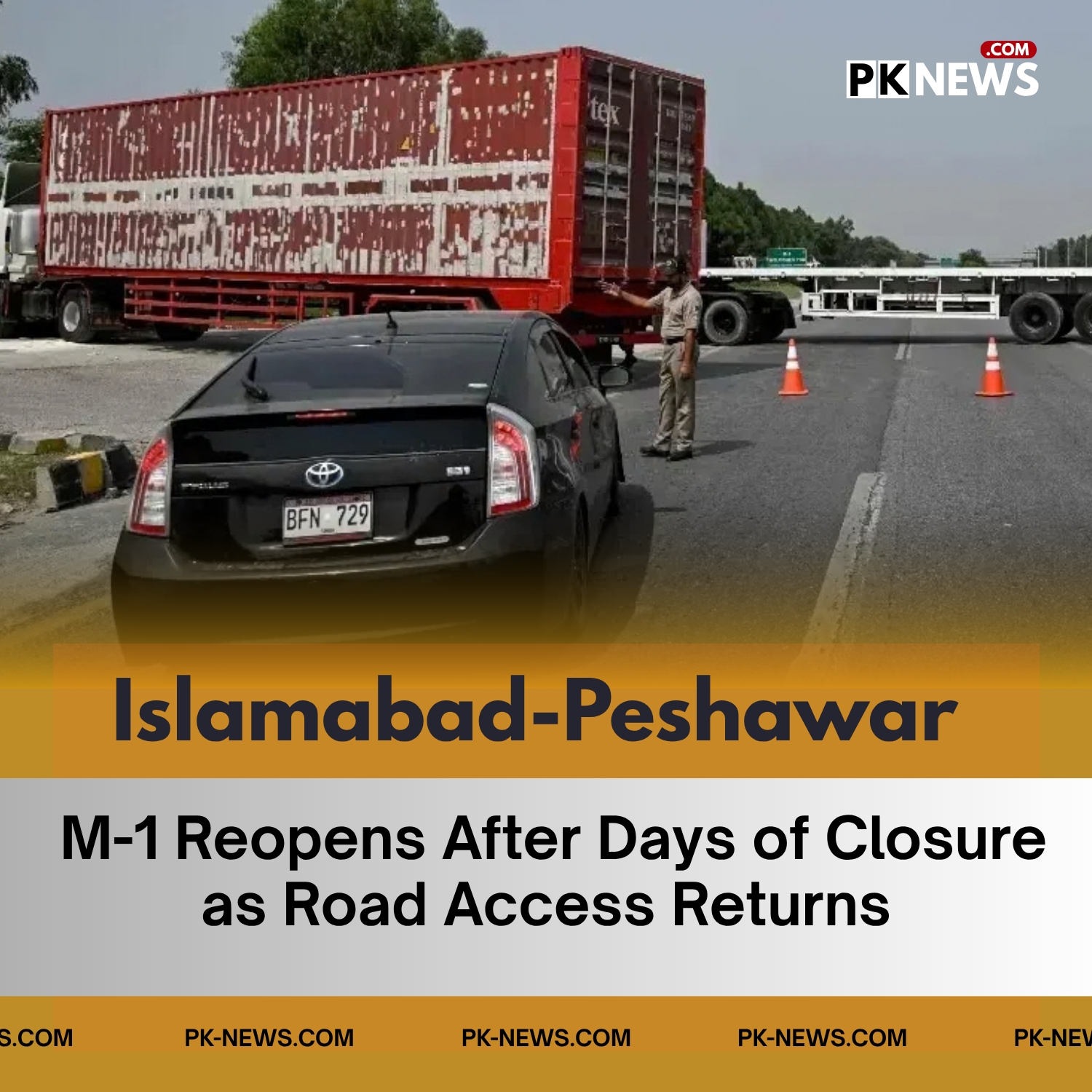
4 days ago
A growing international dispute surrounding commodity trader Radiant World has taken a new turn as questions emerge over roughly $1 billion in trade receivables listed on the company’s balance sheet. Court documents and reporting reviewed by PK-News.com indicate that several relatively obscure UAE-based trading companies are listed among Radiant’s major debtors, while questions have been raised about their operations, addresses and ability to repay the amounts attributed to them. Radiant has denied wrongdoing, while creditors and courts continue to examine the company’s financial position. By PK-News.com | September 23, 2026 Radiant World, once a rapidly expanding participant in the global commodities market, is facing an increasingly complicated financial and legal situation. The latest developments have shifted attention toward a group of relatively little-known companies in the United Arab Emirates that appear on Radiant’s books as owing hundreds of millions of dollars. The issue matters because Radiant World’s reported financial position depends heavily on money it says is owed by customers and counterparties. A balance sheet filed in ongoing legal proceedings lists approximately $1.007 billion in trade receivables. In simple terms, these are amounts Radiant says other businesses owe it from commercial transactions. But determining whether those receivables can actually be collected has become one of the central questions surrounding the company. According to documents reviewed in connection with the dispute, four UAE-linked businesses — Milla Sky Trading, Thinkertech General Trading, Fly Horse General Trading and Bigbubble General Trading — are collectively listed as owing Radiant about $329 million. Reporting reviewed by PK-News.com found that attempts to establish the current operations of several of these companies have produced unanswered questions. Why the UAE Companies Matter The four companies are not the only debtors appearing on Radiant’s balance sheet. The document includes more than 30 companies, with major international commodity traders and financial counterparties among them. However, the UAE companies have attracted particular attention because some appear difficult to independently verify through ordinary business channels. For example, Milla Sky Trading is listed as owing Radiant approximately $76 million. Its registered address is reportedly located in a shared office facility in Ajman. Yet a person identified in reporting as the company's registered representative said Milla Sky had stopped trading about a year earlier and that he had no knowledge of Radiant World or the alleged debt. That discrepancy does not, by itself, establish that the receivable is invalid. Companies can have outstanding liabilities after they stop active trading, and corporate structures can involve entities that are not visibly operating from conventional offices. Nevertheless, the situation has made the verification of Radiant’s receivables a major issue for creditors and lawyers. Questions Around Corporate Addresses Similar questions have emerged concerning Fly Horse General Trading. The company’s business license reportedly gives an address in the same shared office location in Ajman associated with Milla Sky. When the location was visited, however, there was reportedly no obvious indication that Fly Horse had employees operating from the premises. Thinkertech General Trading presents another complication. Its business license reportedly expired in 2025, while the listed telephone number was not functioning and its registered address was associated with another shared-office facility in Dubai. Staff at that location reportedly said they were unfamiliar with the company. Bigbubble General Trading has also become a focus of attention. Its listed addresses reportedly provided limited information about its physical presence, with searches at the locations failing to establish an obvious operating office. These observations have contributed to broader questions about the nature of the receivables on Radiant’s books. Importantly, the existence of questions about a company’s office, license or current operations does not automatically prove that a debt is fictitious. The final status of individual receivables would depend on contracts, invoices, payment records, ownership structures and other evidence examined by courts, investigators and financial professionals. Radiant Provides Supporting Material Radiant World has rejected allegations of wrongdoing and has sought to defend the receivables listed in its financial records. In response to questions concerning the UAE companies, a Radiant spokesperson reportedly provided screenshots of emails that appeared to confirm debts attributed to Milla Sky, Fly Horse and Bigbubble. Those communications are part of the broader dispute over whether the amounts shown on Radiant’s balance sheet represent genuine and collectible commercial obligations. The controversy therefore goes beyond simply locating an office or identifying an employee. Investigators and creditors are likely to examine whether the underlying transactions actually occurred, whether goods were traded, whether invoices were properly issued, who controlled the relevant companies and whether payments were contractually due. Other Large Receivables Are Also Being Examined The UAE companies represent only part of the much larger puzzle. Radiant’s balance sheet identifies major receivables from international commodity businesses. Among them is Glencore International AG, with approximately $150.4 million listed as payable to Radiant. Another major receivable is attributed to Vitol Asia Pte, with roughly $100.7 million listed. However, Vitol has said it does not believe it currently owes Radiant money and told Bloomberg that its transactions with Radiant had been settled. Glencore has also taken steps affecting amounts it says are owed between the companies, while the broader dispute between Radiant and Glencore has escalated into litigation. This illustrates why the $1 billion figure cannot simply be treated as equivalent to $1 billion in cash. A receivable is an accounting claim for money expected from another party. Its actual value depends on whether the debtor recognizes the obligation, whether the transaction was valid, whether there are competing claims and whether the money can ultimately be recovered. A Company Under Global Pressure Radiant World’s difficulties have expanded well beyond the UAE. The commodity trader is facing legal action from multiple financial institutions and counterparties. A Jefferies-linked trade-finance fund obtained freezing orders involving Radiant World and related parties after raising allegations concerning invoices and receivables. Radiant has denied wrongdoing. In Singapore, Japanese financial institution Mizuho has also pursued legal action, seeking the appointment of restructuring professionals to oversee Radiant’s affairs. Radiant founder Pinkesh Nahar has argued that the company remains solvent and that judicial management is unnecessary. At the same time, a separate dispute involving Glencore has developed into a multibillion-dollar legal confrontation. Radiant and associated companies are seeking more than $2 billion in damages, while Glencore has rejected the claims. The company’s financial pressures are particularly striking because Radiant previously reported substantial revenues and maintained relationships across the international commodities and trade-finance sectors. Reuters reported that its Singapore entity recorded $9.6 billion in revenue for fiscal 2025, highlighting the scale of the business before the current crisis intensified. The $10,000 Cash Question Perhaps the sharpest contrast in the current dispute concerns Radiant’s reported cash position. A recent legal filing indicated that Radiant could have as little as $10,000 in cash, despite its balance sheet showing more than $1 billion in trade receivables. Reuters separately reported that the company’s audited financial statements had shown cash holdings of more than $200 million as of September 2025. That dramatic difference is one reason creditors are examining the company's assets so closely. If large receivables are genuine, documented and collectible, they could potentially represent significant value. If substantial portions cannot be verified or recovered, however, the practical value of Radiant’s balance sheet could be considerably lower than the headline asset figure suggests. What Happens Next? The next phase is likely to focus on evidence rather than headlines. Courts and creditors can be expected to examine transaction records, invoices, correspondence, corporate ownership, banking information and the relationships between Radiant and its counterparties. The UAE-based companies may therefore become an important part of the investigation into Radiant’s financial position, but their appearance in the dispute should not be interpreted as proof of criminal conduct or fraudulent activity without findings from competent authorities or courts. For the global commodities industry, the case also highlights a broader issue: large trading businesses can move billions of dollars through networks of contracts, receivables and financing arrangements, making the true value of assets dependent on documentation and the creditworthiness of counterparties. As legal proceedings continue across several jurisdictions, the central question remains whether Radiant World’s reported receivables can be converted into actual recoverable funds. For now, the $1 billion figure remains a reported balance-sheet amount under intense scrutiny, rather than a confirmed pool of immediately available cash. pk-news.com will continue monitoring the court proceedings, creditor claims and developments involving Radiant World and its international counterparties.

/* Related News Sidebar Widget Styles */ .sidebar-widget .card { transition: transform 0.2s ease-in-out, box-shadow 0.2s ease-in-out; } .sidebar-widget .card:hover { transform: translateY(-2px); box-shadow: 0 4px 15px rgba(0,0,0,0.15); } .sidebar-widget .img-fluid { width: 100%; height: auto; object-fit: cover; } .sidebar-widget .video-thumbnail { position: relative; overflow: hidden; } .sidebar-widget .video-play-button { position: absolute; top: 50%; left: 50%; transform: translate(-50%, -50%); width: 30px; height: 30px; background: rgba(0,0,0,0.7); border-radius: 50%; display: flex; align-items: center; justify-content: center; color: white; font-size: 12px; cursor: pointer; transition: all 0.3s ease; } .sidebar-widget .video-play-button:hover { background: rgba(0,0,0,0.9); transform: translate(-50%, -50%) scale(1.1); } .sidebar-widget .card-title { font-size: 0.9rem; font-weight: 600; line-height: 1.3; margin-bottom: 0.5rem; } .sidebar-widget .card-title a { color: #333; text-decoration: none; } .sidebar-widget .card-title a:hover { color: #dc3545; } /* List view styles */ .list-view { display: flex !important; flex-direction: column; gap: 1rem; } .list-view .col-md-6 { width: 100% !important; max-width: 100% !important; flex: 0 0 100% !important; } .list-view .news-card { display: flex; flex-direction: row; height: auto !important; } .list-view .news-card .image-container { width: 300px; height: 200px; flex-shrink: 0; } .list-view .news-card .card-body { flex: 1; display: flex; flex-direction: column; } @media (max-width: 768px) { .list-view .news-card { flex-direction: column; } .list-view .news-card .image-container { width: 100%; height: 200px; } }