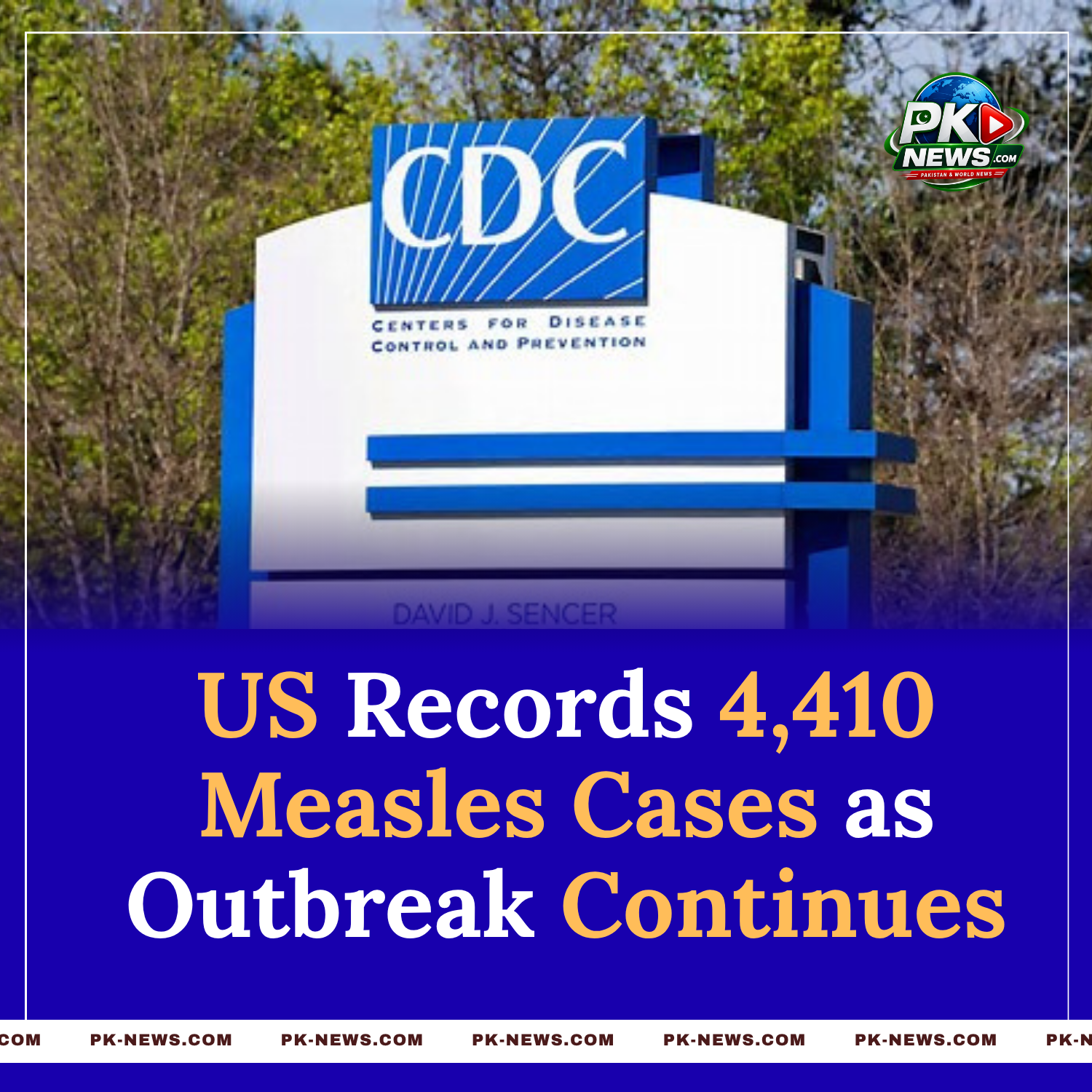
WASHINGTON, UNITED STATES — October 16, 2026: The United States has recorded 4,410 measles cases in 2026 as the highly contagious disease continues to spread across the country, according to the latest figures from the Centers for Disease Control and Prevention (CDC). The total, reported as of October 15, represents an increase of 330 cases compared with the previous weekly update, highlighting the continuing challenge facing public health authorities.
The growing outbreak has raised concerns about vaccination coverage, hospital admissions and the potential for further transmission in communities where immunity against the disease is insufficient. Health officials are monitoring infections across multiple states while encouraging eligible individuals to ensure that their vaccinations are up to date.
Measles is a highly infectious viral disease that can spread rapidly among people who have not developed immunity. Although many patients recover, the infection can cause serious complications, including pneumonia and inflammation of the brain. Young children, unvaccinated individuals and people with weakened immune systems may face a greater risk of severe illness.
The latest figures underline the importance of early detection, vaccination and public awareness as authorities work to contain the outbreak.
More Than 4,400 Cases Reported Nationwide
The CDC’s latest reported total of 4,410 cases marks a further increase in the national measles burden. The additional 330 cases reported over the preceding week indicate that transmission remains active and that public health agencies continue to face challenges in containing the virus.
The United States had reported 2,289 confirmed measles cases during the whole of 2025. The 2026 total has already substantially exceeded that figure, demonstrating the scale of the current resurgence.
The CDC collects national data from state and local health departments, which investigate suspected infections and report confirmed cases. Reporting schedules can differ between jurisdictions, meaning figures may be updated as new laboratory results and investigations become available.
The national total includes confirmed cases among US residents and international visitors. Public health officials use these reports to monitor transmission patterns, identify outbreaks and determine where additional prevention measures may be required.
The continuing rise in infections has renewed attention on the importance of maintaining high vaccination rates, particularly among schoolchildren and communities experiencing active transmission.
Pennsylvania Emerges as a Major Outbreak Hotspot
Pennsylvania has become one of the most closely watched locations in the current outbreak. State health department figures showed 1,222 measles cases as of October 14, alongside 225 disease-related hospitalisations.
The outbreak has placed additional demands on public health authorities, healthcare facilities and local communities. Officials are monitoring infections and encouraging residents to take preventive measures, particularly when cases are reported in schools, households or other settings where people have close contact.
The state has also reported measles-related deaths. However, the number publicly attributed to the disease by Pennsylvania authorities has differed from the national figure reported by the CDC, reflecting differences in how deaths are reviewed and classified.
The CDC has confirmed two measles-associated deaths nationally in 2026 under its current reporting approach, while Pennsylvania has reported five measles-related deaths. The difference has prompted questions about the process used to determine whether measles contributed to a person's death.
Measles can lead to fatal complications, and determining the underlying cause of death may require medical records, laboratory results and examination of other health conditions. The figures may therefore change as investigations and reviews continue.
The situation in Pennsylvania illustrates how a concentrated outbreak can create significant pressure on healthcare services while raising broader questions about surveillance and the consistency of public health reporting.
Hospitalisations Highlight the Seriousness of Measles
The CDC reported 451 measles-related hospitalisations across the United States in 2026. Although not every infection results in severe illness, the number of hospital admissions demonstrates that the outbreak is creating a substantial burden for some patients and healthcare providers.
Measles typically begins with symptoms such as a high fever, cough, runny nose and red, watery eyes. A characteristic rash usually develops after the initial symptoms and can spread across the body.
Some patients recover without major complications, but others may develop ear infections, diarrhoea, dehydration, pneumonia or encephalitis, which is inflammation of the brain. These complications can require hospital treatment and, in severe cases, may result in long-term health problems or death.
Infants, young children, pregnant women and people with weakened immune systems may require particular attention because of their increased vulnerability to complications.
Medical professionals advise people who suspect they have measles to contact a healthcare provider before arriving at a clinic or hospital. Calling ahead can help healthcare teams take precautions to reduce the risk of exposing other patients and staff.
Vaccination Remains the Main Prevention Measure
Vaccination remains the principal tool for preventing measles infections and reducing the risk of large outbreaks. The measles, mumps and rubella (MMR) vaccine is widely used to protect against measles and two other viral diseases.
According to the CDC, two doses of the MMR vaccine are approximately 97 per cent effective at preventing measles, while one dose is approximately 93 per cent effective.
The CDC's data indicate that the overwhelming majority of reported cases in 2026 have involved people who were unvaccinated or whose vaccination status was unknown. This pattern highlights the importance of checking immunisation records and ensuring that eligible individuals receive recommended doses.
Vaccination protects individuals and also helps reduce the likelihood that the virus will spread through schools, households and other community settings. When vaccination coverage falls, the virus can spread more easily among susceptible people.
Parents and caregivers should consult healthcare professionals about their children's vaccination schedules, particularly if their children attend schools or childcare facilities where exposure has been reported. Adults who are unsure about their vaccination history can also ask a healthcare provider whether they need additional protection.
People should not assume that a previous mild illness provided immunity. A healthcare professional can advise on vaccination and appropriate precautions based on a person's age, medical history and circumstances.
Why Measles Spreads So Easily
Measles is among the most contagious infectious diseases. The virus spreads through the air when an infected person breathes, coughs or sneezes. It can remain infectious in the air for a period after an infected person has left an enclosed space, allowing others to become exposed without direct physical contact.
An infected person can transmit the virus before the characteristic rash appears, making early identification more difficult. This can allow the disease to spread before a patient realises that the symptoms are consistent with measles.
Crowded indoor environments, schools, childcare facilities and households can provide opportunities for transmission when susceptible people come into contact with the virus.
Public health agencies may respond to confirmed cases by identifying people who were exposed, notifying affected communities and providing guidance on vaccination and monitoring for symptoms. These measures can help identify additional infections and limit further spread.
People who have been exposed should follow instructions from their local health department or healthcare provider, especially if they are unvaccinated, pregnant or immunocompromised.
Declining Vaccination Coverage Raises Concerns
The current outbreak has renewed debate about declining vaccination coverage and the role of public confidence in public health programmes. Measles was declared eliminated from continuous transmission in the United States in 2000, a milestone made possible by sustained vaccination efforts.
However, elimination did not mean that the virus disappeared worldwide or that the United States could no longer experience outbreaks. Infections can be introduced through international travel and spread within communities where vaccination coverage is inadequate.
The CDC has identified lower MMR vaccination coverage among kindergarten students as one factor contributing to the risk of outbreaks. Coverage has fallen below the national target of 95 per cent, while some communities have substantially lower rates.
When vaccination rates decline, outbreaks can become more difficult to control. Health experts therefore emphasise access to reliable information, routine immunisation and timely responses to confirmed cases.
Public health officials also face the challenge of communicating accurate information about vaccine effectiveness and safety. Clear guidance from healthcare professionals can help families understand the benefits of vaccination and make informed decisions.
What Happens Next?
The CDC and state health departments are continuing to monitor reported infections, hospitalisations and outbreaks. Their response may include investigations, public information campaigns, vaccination efforts and support for communities experiencing a rise in cases.
The number of confirmed infections may continue to change as additional cases are investigated and reported. Differences between national and state figures can also arise because of reporting schedules and the criteria used to classify certain outcomes.
The scale of the outbreak will depend partly on how quickly infections are identified, whether vaccination gaps are addressed and how effectively local health authorities can limit transmission.
For the public, the central message is to remain informed, check vaccination records and seek professional medical advice when symptoms or possible exposure raise concerns. People experiencing symptoms consistent with measles should contact a healthcare provider before visiting a medical facility in person.
Conclusion
The United States has reported 4,410 measles cases as of October 15, 2026, with 451 hospitalisations recorded this year. Pennsylvania remains a major hotspot, while differences in the reporting of measles-related deaths have added another issue to the public health response.
The outbreak demonstrates that measles remains a serious health risk when vaccination coverage is insufficient. Continued surveillance, timely medical assessment, public awareness and recommended vaccination will be important in limiting further transmission and protecting vulnerable communities.
PK-News.com will continue covering major international health developments, disease outbreaks and public safety updates as new information becomes available.
Developed, Researched & Published by PK-News.com
PK-News Digital News & Research Desk
Pakistan & World News | Health News | Medical Updates | Science & Technology
Founder & Lead Architect: Muhammad Ibraheem | PK-News.com
Recent Category Articles