ISLAMABAD, PAKISTAN — October 15, 2026: Pakistan is facing a growing security challenge along its western border as reports of drone incursions from Afghanistan raise concerns about airspace security, civilian protection and the changing nature of cross-border threats. A report published by Dawn on October 15 stated that Pakistan recorded 23 drone incursions from Afghanistan during September, highlighting the increasing importance of counter-drone capabilities in the country's security strategy.
The reported incidents have drawn attention to the use of relatively inexpensive and improvised unmanned aerial vehicles (UAVs), which can create operational difficulties even when their technological capabilities are limited compared with conventional military aircraft. For Pakistan, the challenge involves detecting small aircraft, determining their intended targets and responding before they threaten populated areas or sensitive infrastructure.
The latest developments come amid deteriorating relations between Islamabad and Kabul, with both countries facing growing security concerns along their shared border.
Eight Drones Intercepted Near Torkham and Kohat
One of the most significant reported incidents occurred on September 23, when Pakistani security sources said air defence systems intercepted eight drones after they entered Pakistani airspace from Afghanistan.
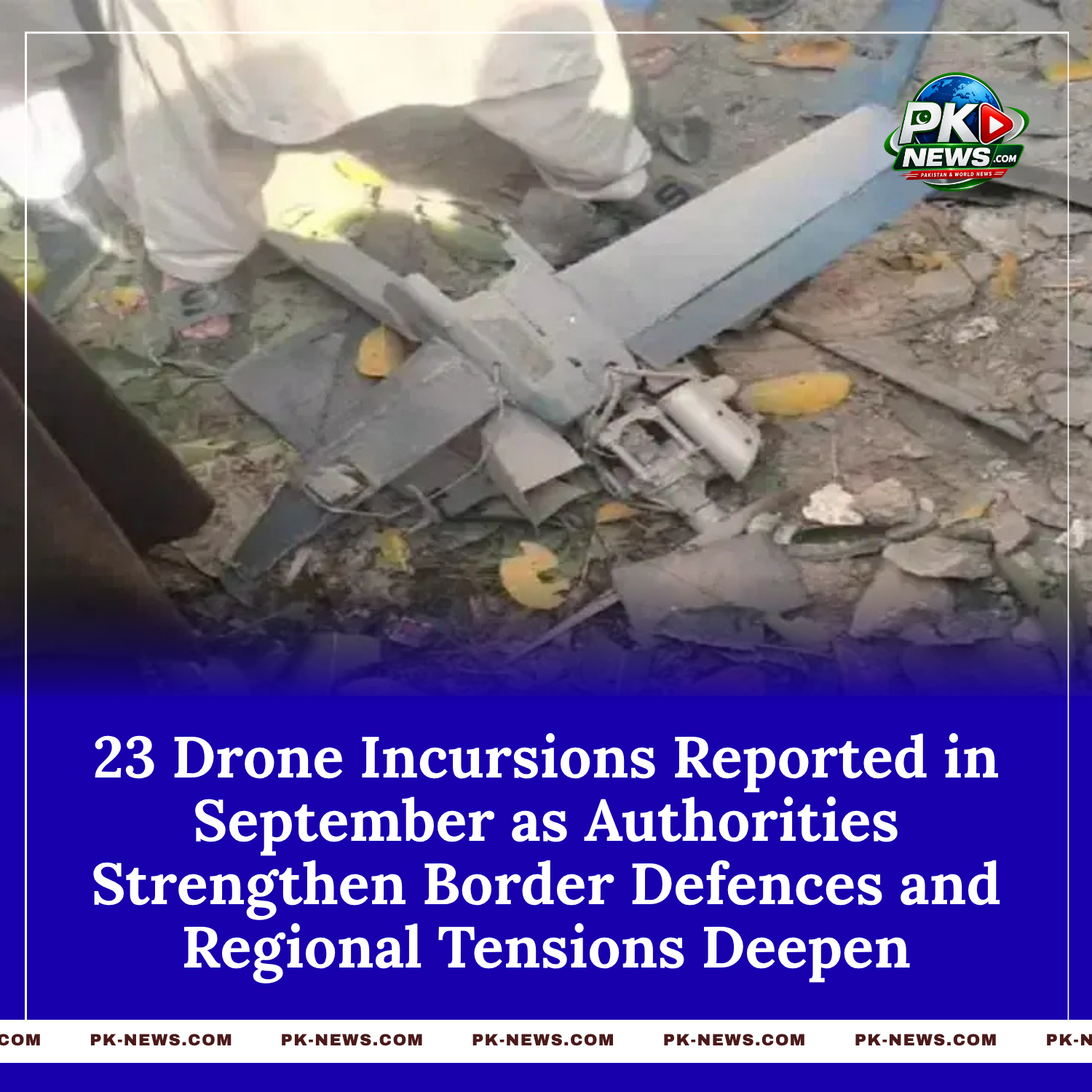
According to the reports, four drones were brought down near the Torkham border crossing, while another four were intercepted in mountainous areas near Kohat in Khyber Pakhtunkhwa. Security sources said the aircraft were detected and neutralised before reaching their reported targets.
The incident prompted renewed attention to the readiness of Pakistan's air defence network and the importance of protecting border communities. Authorities also reported recovering wreckage from the intercepted aircraft.
Pakistani officials attributed the incursion to the Afghan Taliban administration. However, the Taliban authorities have denied responsibility for launching the drones, and the competing claims underline the difficulty of independently establishing responsibility for every reported cross-border incident.
Why Low-Cost Drones Present a Serious Challenge
Unlike conventional military aircraft, small commercial or improvised drones can be relatively inexpensive, compact and difficult to detect in certain circumstances. Their availability has expanded the range of actors capable of conducting surveillance, carrying small payloads or attempting to disrupt security operations.
Their low cost can also create an economic challenge for defenders. Security agencies may need to use sophisticated detection systems and specialised countermeasures against aircraft that cost far less to manufacture or acquire.
The threat is not limited to the physical damage a drone might cause. Repeated incursions can force authorities to increase surveillance, redirect personnel and resources, and strengthen protection around government facilities, transport routes and populated areas.
Small drones can also create uncertainty about whether an aircraft is conducting reconnaissance, carrying a payload or testing defensive responses. This uncertainty makes reliable detection, identification and coordination between security agencies particularly important.
Pakistan-Afghanistan Relations Under Pressure
The drone reports have emerged during a period of heightened tensions between Pakistan and Afghanistan. Islamabad has repeatedly urged the Taliban administration to prevent armed groups, particularly the banned Tehreek-i-Taliban Pakistan (TTP), from using Afghan territory to plan or launch attacks against Pakistan.
Pakistani officials accuse the Afghan Taliban of providing sanctuary to militants responsible for attacks inside Pakistan. Kabul has rejected allegations that it is responsible for Pakistan's security problems and has disputed claims linking its authorities to the drone incidents.
The disagreement has contributed to a broader deterioration in bilateral relations, with border clashes, accusations of militant activity and cross-border military operations adding to tensions.
On September 24, Pakistan's information minister said Pakistani forces had carried out strikes against 10 locations in Afghanistan that Islamabad alleged were associated with launching or storing drones. Afghan authorities reported civilian casualties from the strikes, while Pakistan described its operations as directed at identified military objectives. The conflicting accounts illustrate the risks of further escalation.
Implications for Khyber Pakhtunkhwa
Khyber Pakhtunkhwa remains particularly exposed to security developments along the Afghan frontier. Areas around Torkham, the former tribal districts and the Kohat region have strategic importance because of their proximity to border routes and their connection to wider security operations.
Drone incursions add another layer to an already complicated security environment. Local communities may face disruption when authorities increase surveillance, restrict access to sensitive locations or respond to suspected threats.
For security agencies, the priority is to protect civilians while maintaining effective monitoring of the border. Reliable intelligence, coordinated airspace monitoring and appropriate counter-drone systems can help authorities assess threats without relying solely on expensive conventional defence capabilities.
The reported incidents also reinforce the need for clear public communication. Accurate information about intercepted aircraft, potential risks and official responses can help prevent rumours and unnecessary alarm among residents.
Technology, Preparedness and Civilian Protection
The spread of low-cost drones has become a security concern in several regions worldwide. Their use in conflicts demonstrates how relatively simple technology can complicate traditional military planning and border protection.
Pakistan's experience highlights the importance of combining surveillance, intelligence assessment and proportionate defensive responses. Security planning must account for different types of aircraft, changing tactics and the possibility that drone activity could accompany other forms of cross-border violence.
At the same time, claims about the origin, purpose and intended targets of individual drones require careful verification. Distinguishing confirmed information from official allegations is essential when incidents involve neighbouring countries and the possibility of retaliatory action.
Conclusion
The reported 23 drone incursions from Afghanistan during September have placed renewed focus on Pakistan's border security and its ability to respond to emerging aerial threats. The interception of eight drones near Torkham and Kohat on September 23 demonstrated the operational challenge posed by small unmanned aircraft and the importance of maintaining effective defensive systems.
As relations between Islamabad and Kabul remain strained, the drone issue adds another potential source of tension. Preventing further incidents will require effective security measures, credible investigations and sustained diplomatic engagement to reduce the risk of escalation.
For Pakistan, the central challenge is to protect its territory and civilian population while responding carefully to an evolving security environment along the Afghan border.
Developed, Researched & Published by PK-News.com
PK-News Digital News & Research Desk
37
Global
😔 Negative
23 Drone Incursions Reported in September as Authorities Strengthen Border Defences and Regional Tensions Deepen
Related Articles You May Like
Related News










Comments (0)
Leave a Comment
No comments yet. Be the first to comment!