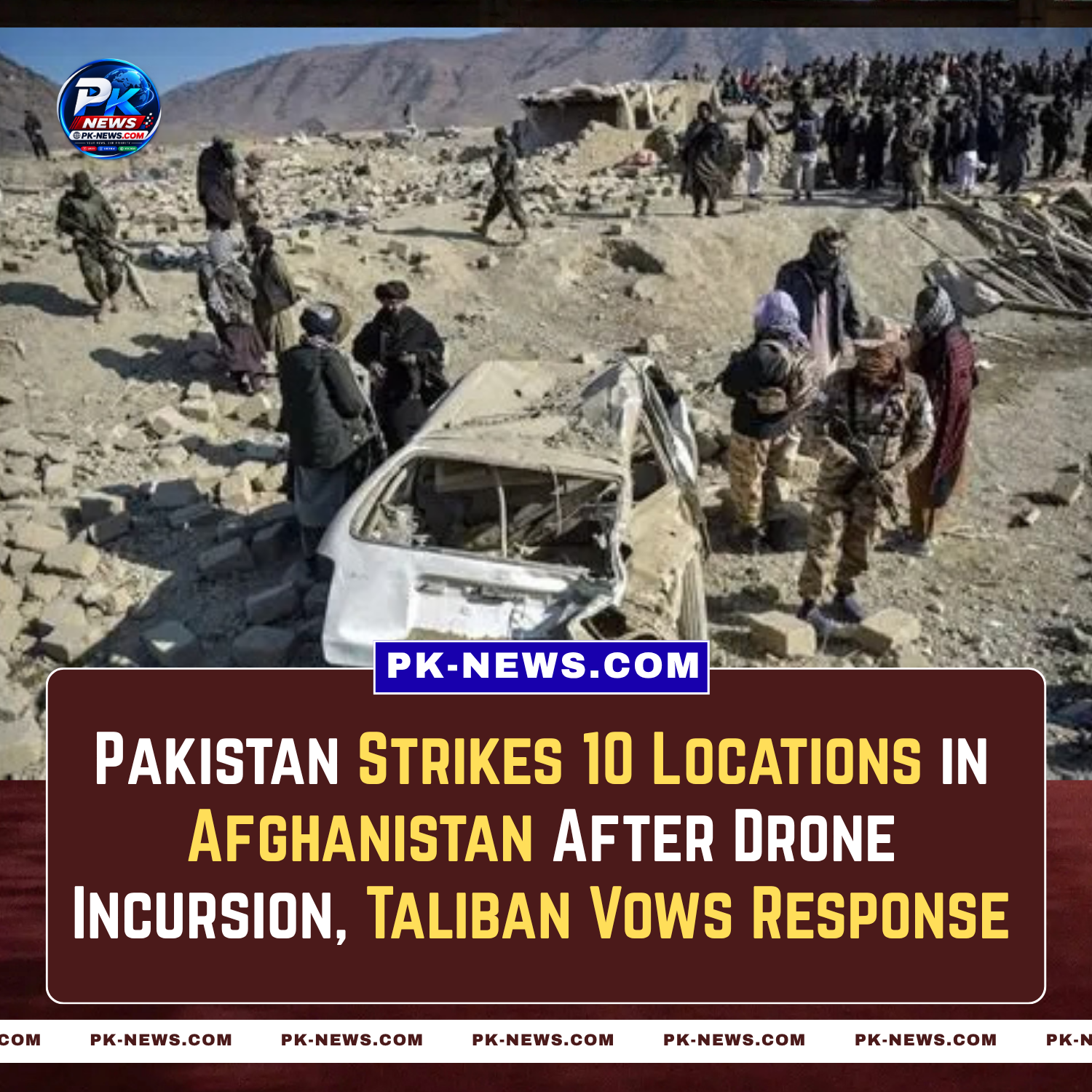
Pakistan says it carried out precision aerial and drone strikes against 10 locations in Afghanistan after its air-defence systems detected and neutralised eight drones that had entered Pakistani airspace from Afghan territory. Islamabad says the targets were linked to drone launching and storage facilities, while Afghan Taliban authorities say the strikes killed civilians and have vowed an appropriate response. The latest exchange marks another serious escalation between Pakistan and Afghanistan.
Islamabad — September 24, 2026 | PK News
Pakistan and Afghanistan are facing another major escalation after Pakistan announced that it had carried out aerial and drone strikes against 10 locations inside Afghanistan following an alleged cross-border drone incursion.
Pakistan's Information Minister Attaullah Tarar said the strikes were carried out early Thursday and targeted locations used to launch and store drones. Islamabad described the operation as a response to what it called an unlawful violation of Pakistani airspace.
The Afghan Taliban authorities have disputed Pakistan's account and said the strikes caused civilian deaths. Afghan officials have also warned that they will respond.
The latest development comes only days after another round of Pakistani strikes inside Afghanistan, increasing concerns about further deterioration in relations between the two neighbouring countries.
Pakistan Says Eight Drones Entered Its Airspace
According to Pakistan's government, the latest escalation began on September 23 when eight drones launched from Afghan territory entered Pakistani airspace.
Information Minister Attaullah Tarar said Pakistan's air-defence systems detected, tracked and neutralised all the drones before they could reach their intended targets.
Four drones were reportedly intercepted near the Torkham border area, while four others were shot down in mountainous areas near Kohat, according to Pakistani security sources.
Pakistan described the incident as a violation of its sovereignty and territorial integrity.
Tarar said Islamabad had repeatedly raised concerns with the Afghan Taliban authorities over militant networks and alleged support infrastructure operating from Afghan territory.
The Pakistani government says such networks have been connected to attacks inside Pakistan.
Pakistan Announces Strikes on 10 Locations
Following the reported drone incursion, Pakistan announced that it had carried out strikes against 10 locations across Afghanistan.
Tarar said the targets included sites used for launching and storing drones.
Pakistan described the strikes as "deliberate, precise, calibrated and proportionate" and said they were limited to military objectives that Islamabad linked directly to attempted attacks against Pakistan.
Pakistan also released footage that officials said showed the strikes.
The government said the operation was carried out under what it described as its sovereign right of self-defence.
However, independent verification of all the Pakistani claims about the targets and damage was not immediately available.
Strikes Reported in Kandahar, Paktia and Khost
Afghan Taliban spokesperson Zabihullah Mujahid said the Pakistani strikes hit Kandahar, Paktia and Khost provinces.
A resident of Kandahar city also told AFP that an airstrike occurred in the southern Afghan city, with an explosion followed by a fire.
Kandahar is particularly significant because it is the home region of the Taliban government's supreme leader, making reports of strikes there especially sensitive.
Pakistan has not publicly provided a complete list of all 10 locations in its initial announcement.
Further information may emerge as officials in both countries release additional details.
Afghanistan Reports Civilian Deaths
Afghan Taliban authorities have disputed Pakistan's description of the operation.
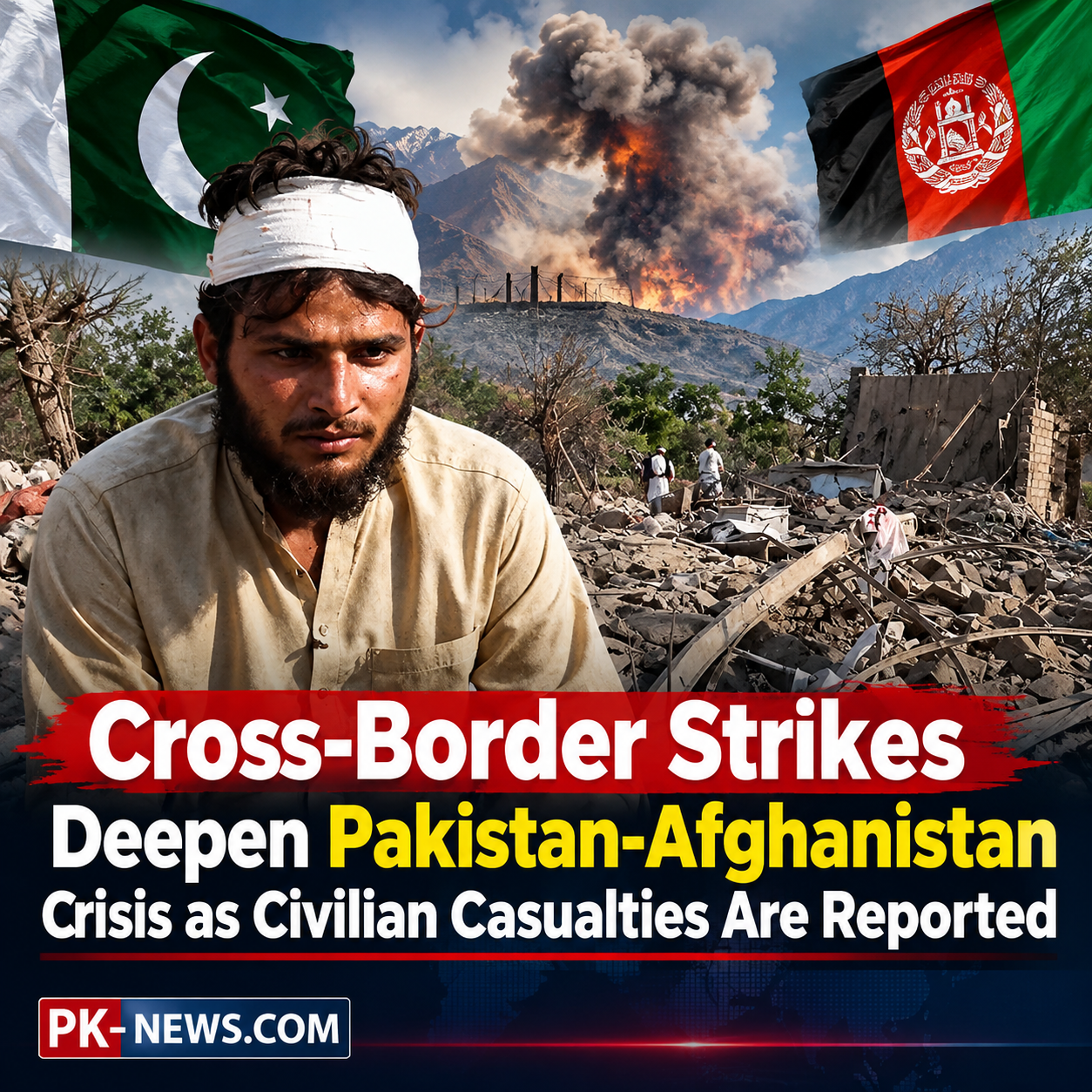
According to Reuters and Al Jazeera, Afghan officials said the strikes killed four civilians.
Zabihullah Mujahid said the strikes targeted areas in Kandahar, Paktia and Khost and promised an "appropriate response."
Afghan authorities have also denied that the Taliban government itself launched the drones involved in the September 23 incident.
These claims directly conflict with Pakistan's account, which says the drones originated from Afghan territory and links the sites targeted in the strikes to the attempted attacks.
Taliban Warns of Response
The latest strikes have raised concerns about what could happen next along the Pakistan-Afghanistan border.
Afghan Taliban authorities have vowed to respond to the Pakistani operation.
The precise nature, timing and location of any possible response have not been established.
The warning comes at a time when relations between Islamabad and Kabul are already under significant strain.
Both governments have repeatedly accused the other side of failing to prevent hostile activity from originating from territory under its control.
Why Are Pakistan and Afghanistan Tensions Rising?
The latest confrontation is part of a broader dispute over militant activity along the border.
Pakistan has repeatedly accused the Afghan Taliban authorities of allowing groups, particularly the Tehreek-e-Taliban Pakistan (TTP), to operate from Afghan territory.
Kabul has rejected the accusation that it provides safe havens for militants carrying out attacks in Pakistan.
The dispute has continued despite diplomatic efforts and periods of relative calm.
A recent deadly attack in Khyber Pakhtunkhwa has further increased tensions.
Pakistan has linked recent militant activity to groups that it says have bases or support networks in Afghanistan.
The Afghan authorities reject Pakistan's characterisation of the situation and have repeatedly called for dialogue.
Earlier Pakistani Strikes on September 21
Thursday's strikes were not the first Pakistani military action inside Afghanistan this week.
On September 21, Pakistan announced that it had conducted airstrikes and ground operations targeting militant positions near the Afghan border.
Pakistan said 28 militants were killed in the airstrikes and additional militants were killed during ground operations.
Afghan officials and the United Nations, however, reported that three civilians were killed in those earlier strikes.
The conflicting accounts illustrate the difficulty of independently verifying battlefield claims in remote border areas.
The September 21 strikes followed a deadly attack in Kohat that killed security personnel and civilians.
Pakistan has described the attack as part of a wider militant threat connected to groups operating from or through Afghan territory.
The Kohat Attack and the Latest Escalation
The recent deterioration in relations follows a deadly attack on a police facility in Kohat, Khyber Pakhtunkhwa.
According to Associated Press reporting, a coordinated attack involving a suicide bomber and armed attackers resulted in 21 deaths and more than 100 injuries.
Pakistani authorities blamed militants and accused the Afghan Taliban government of failing to prevent armed groups from operating from Afghan territory.
The Afghan Taliban has rejected such accusations.
Pakistan subsequently carried out military operations against what it described as militant targets.
The latest drone incident and subsequent strikes have now added another layer to the confrontation.
Pakistan Says It Does Not Seek Escalation
Despite the military action, Pakistan's government says it does not want a broader conflict with Afghanistan.
Tarar said Islamabad remained committed to regional peace, dialogue and constructive engagement.
At the same time, he warned that Pakistan would respond to what it considers attacks originating from Afghan territory.
Pakistan's public position therefore combines two messages: a stated commitment to dialogue and a warning that further cross-border attacks could trigger additional military responses.
Afghanistan's Position
Afghan Taliban officials have taken a different position.
They deny responsibility for the drone attacks and have condemned Pakistani strikes inside Afghanistan.
Afghan officials say Pakistan's military operations violate Afghan sovereignty and have indicated that Kabul will respond.
The two sides therefore currently disagree over both the cause of the latest confrontation and the legitimacy of the military response.
Could the Situation Escalate Further?
The latest developments create several areas to watch over the coming days.
1. Any Further Drone Attacks
A new cross-border drone incident could trigger another Pakistani military response.
2. Afghan Retaliation
The Taliban authorities have promised an appropriate response, but the form and timing of any action remain unclear.
3. Border Security
The Torkham and other border areas could see increased security measures as both sides monitor military activity.
4. Diplomatic Contacts
Regional countries and international organisations could attempt to encourage Pakistan and Afghanistan to reduce tensions.
5. Civilian Impact
The reports of civilian deaths in Afghanistan have added another humanitarian dimension to the dispute.
Any further military operations could increase risks for civilians living near disputed or contested areas.
International and Regional Concerns
The escalation is also significant because Pakistan and Afghanistan are already the subject of regional diplomatic efforts.
China, Türkiye, Qatar and Saudi Arabia have been involved in efforts aimed at reducing tensions between the two neighbours.
Al Jazeera reported that the latest escalation threatens mediation efforts intended to prevent a wider confrontation.
A prolonged military confrontation could have consequences beyond the immediate border region.
Pakistan and Afghanistan share a long and difficult border, and increased military activity could affect trade, transportation and civilian movement.
What Happens Next?
The immediate focus is now on whether either side takes additional military action.
Pakistan has said that it will defend its territory against further attacks.
Afghan Taliban authorities have promised a response to the strikes.
At the same time, both sides have previously indicated that they want dialogue to address their disputes.
The next several days could therefore involve a combination of military alerts, diplomatic contacts and additional statements from Islamabad and Kabul.
PK News Analysis
As of September 24, 2026, the confirmed public positions are sharply different.
Pakistan says eight drones entered its airspace from Afghanistan on September 23 and that it subsequently struck 10 locations in Afghanistan that it says were connected to drone operations.
Afghan authorities deny responsibility for the drone attack and say Pakistan's strikes killed four civilians.
The two sides therefore disagree over the origin of the drones, the nature of the targets and the consequences of the strikes.
What happens next will depend on whether the situation moves toward further military exchanges or whether diplomatic channels can contain the escalation.
For PK-News.com, the Pakistan-Afghanistan border situation remains a major developing regional story. Further military action, diplomatic intervention, border closures or additional drone incidents could significantly change the situation.
PK-News.com will continue monitoring developments involving Pakistan, Afghanistan, the Afghan Taliban, cross-border drone activity, border security and diplomatic efforts between Islamabad and Kabul.
1
NEW
War
😔 Negative
Pakistan Strikes 10 Locations in Afghanistan After Drone Incursion, Taliban Vows Response
Related Articles You May Like
Related News






Comments (0)
Leave a Comment
No comments yet. Be the first to comment!