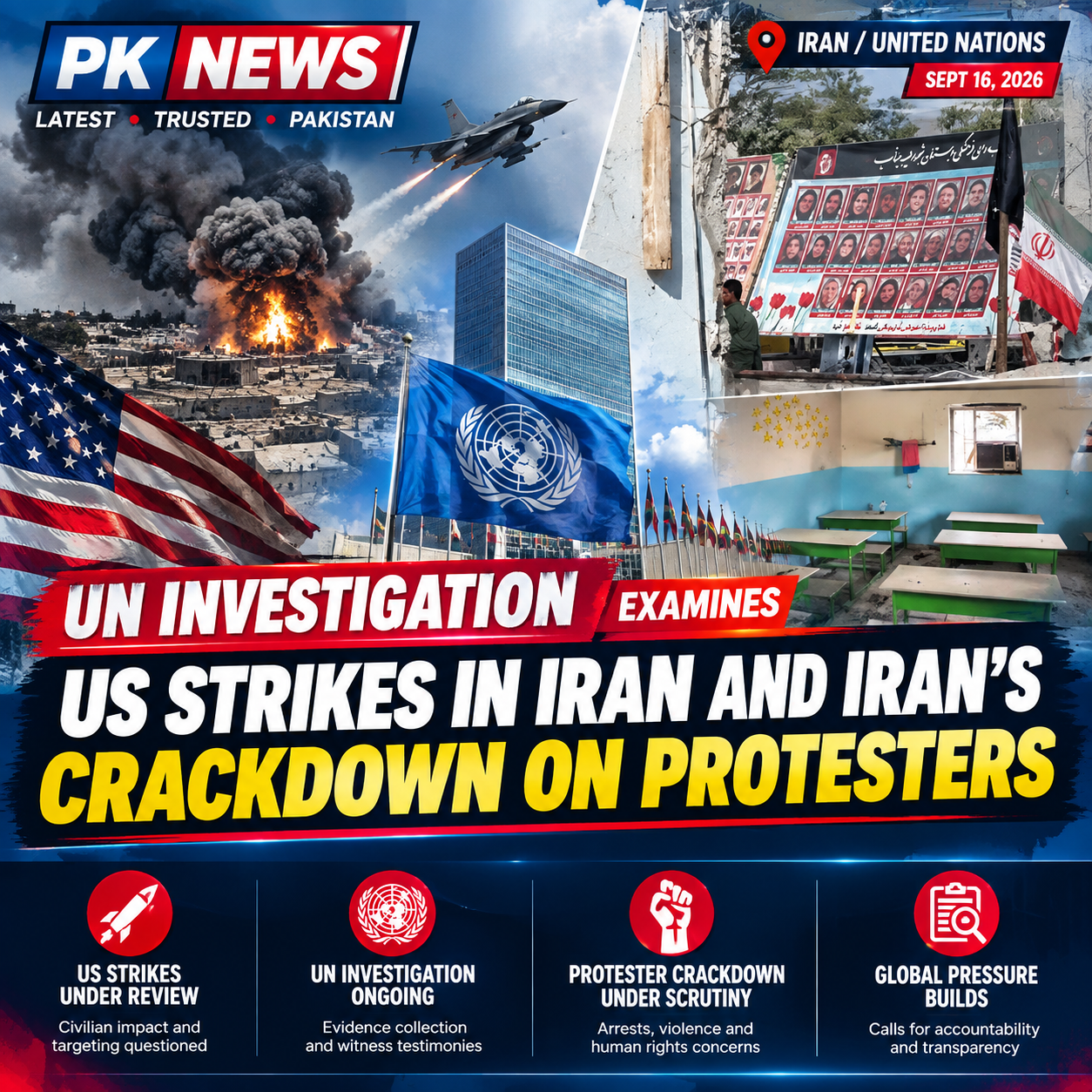
UN Investigation Examines US Strikes in Iran and Iran’s Crackdown on Protesters A United Nations investigation has released findings examining two major issues linked to the conflict involving the United States and Iran: alleged violations during US military strikes inside Iran and the Iranian authorities’ response to nationwide protests that began last December. The UN fact-finding mission said there were reasonable grounds to believe that the United States committed war crimes in at least two air strikes against civilian locations in Iran in February. One of the strikes hit a school in the southern Iranian city of Minab, where more than 150 people were reportedly killed, most of them children. According to the investigation, there was no evidence that the school was being used for military purposes at the time of the attack. A second strike against a sports facility in Lemur reportedly killed or injured 22 civilians. The findings have added to long-running questions about civilian casualties during the conflict and the circumstances surrounding US military targeting decisions. At the same time, the UN investigation examined the Iranian government's response to protests that spread across the country. The mission concluded that Iranian authorities committed acts that amounted to crimes against humanity, including unlawful killings, torture and persecution. The report therefore presents findings concerning both sides of the conflict, addressing alleged violations by the United States during military operations as well as actions carried out by Iranian authorities during the crackdown on protesters. Questions Over the US Strikes Iranian officials have repeatedly accused the United States of deliberately targeting civilian areas during the war. The UN findings have now increased international attention on two particular incidents, including the attack on the school in Minab. More than 150 people were reportedly killed in the school strike, with children making up the majority of those killed. The UN investigation said it found no evidence that the school was being used for military purposes. The investigation also examined a US strike on a sports center in Lemur, which reportedly killed or injured 22 civilians. The findings do not simply depend on the number of casualties. A central question under international humanitarian law is whether military forces properly distinguished between military targets and civilian locations and whether sufficient precautions were taken before an attack. War crimes lawyer and former prosecutor Reed Brody, who was interviewed about the findings, explained that the UN's use of the term “reasonable grounds” is significant. According to Brody, establishing that a civilian location was struck is not automatically identical to establishing the legal intent required for a war-crimes finding. He argued that international humanitarian law requires military forces to distinguish between military and civilian targets and to take feasible steps to verify that a target remains a legitimate military objective. Brody also referred to the importance of keeping targeting information current. He said the UN mission concluded that outdated targeting information was among the circumstances surrounding the school strike. According to the lawyer, the investigation considered several factors together, including the alleged use of outdated targeting information and concerns about changes in US policies concerning civilian-harm mitigation. The UN mission consequently concluded that the circumstances provided reasonable grounds for believing that the US acted recklessly. The United States, however, has rejected responsibility for deliberately targeting civilians. Washington's Response The US military has not yet publicly released a final report concerning the school strike. US officials have said that the incident remains under investigation. US Central Command has maintained that the civilians were not deliberately targeted. American officials have also said that the United States has complied with the laws governing armed conflict. The issue has nevertheless continued to generate questions for the US administration. According to reporting discussed in the program, President Donald Trump has provided different descriptions of responsibility for the school strike at different points. When asked about the incident in March, Trump initially blamed Iran. Several days later, his position shifted, with the president saying responsibility was uncertain and that the United States was investigating. When the issue was raised again in June, Trump appeared to suggest that the incident may have been accidental and said he did not believe it had been carried out deliberately. The US position therefore remains that the deaths were not the result of an intentional attack on civilians, while the UN investigation has raised serious concerns about the conduct and targeting process surrounding the strike. A Second Part of the UN Investigation The UN report also examined events inside Iran following nationwide protests that began last December. According to the investigation, Iranian authorities committed crimes against humanity during their response to the protests. These findings reportedly include unlawful killings, torture and persecution. Iranian authorities have disputed accounts that portray the state security forces as responsible for the majority of deaths. Iran has reported that more than 3,000 people were killed and around 25,000 injured during the unrest. Iranian officials have argued that many of those killed were civilians and security personnel who were victims of violence carried out by rioters rather than protesters being killed by government forces. The Iranian government has also previously described the protests as having been exploited by armed groups and foreign-backed organizations. Officials argued that security forces intervened because the situation had moved beyond peaceful demonstrations. However, independent human-rights organizations and other sources have reported significantly different casualty estimates. Some figures cited in the discussion range from several thousand deaths to much higher numbers. The program also noted that some estimates were reportedly based on hospital records. Because access to information inside Iran has been restricted and independent verification of individual records has been difficult, the exact number of people killed remains disputed. The UN investigation nevertheless concluded that the Iranian authorities' actions during the crackdown amounted to serious international crimes. Iran's Reaction At the time of the broadcast, Iranian authorities had not issued an immediate public response to the latest UN findings. The report is particularly sensitive for Tehran because it addresses both the conduct of the United States and the conduct of the Iranian government. The portion concerning US military strikes supports longstanding Iranian accusations that civilians were harmed during American attacks. Iranian officials have repeatedly called for international institutions to investigate such incidents and have argued that the international community should recognize what Tehran describes as violations committed during the war. However, the report's findings concerning Iran's own crackdown are likely to be strongly disputed by the Iranian government. The Iranian authorities have consistently presented a different account of the protests, emphasizing violence by armed groups and security threats. The UN investigation, by contrast, reached conclusions concerning unlawful killings, torture and persecution by state authorities. This difference illustrates the continuing dispute over what happened during the protests, how many people were killed and who was responsible for the deaths. The Legal Meaning of “Reasonable Grounds” One of the key points raised in the discussion is the legal meaning of the UN mission's wording. The investigators did not simply state that every allegation had been conclusively proven beyond all possible doubt. Instead, they said there were “reasonable grounds” to believe that war crimes had been committed in the two US strikes. Brody explained that investigations of alleged war crimes involve establishing both the physical circumstances of an attack and the mental element required under international law. For example, a school is generally a civilian object. If a missile strikes a school, investigators must determine whether the location was being used for military purposes, whether the attacker knew or should have known the relevant circumstances, whether the target information was accurate, and whether appropriate precautions were taken. The distinction is important because international humanitarian law does not treat every unintended civilian death as automatically constituting a war crime. The UN mission's concern, according to Brody's explanation, was that the available evidence suggested US forces may have relied on outdated targeting information and failed to take sufficient steps to verify the target. The investigation therefore examined not only the outcome of the strike but also the decision-making process that led to it. Broader Questions About the War The investigation also raises broader questions about the legality of the conflict itself. Brody argued that the UN mission did not fully examine the legality of the war as a whole. He said there was another legal question concerning the use of force by the United States against Iran without authorization from the UN Security Council. According to his interpretation, the issue could involve the UN Charter's restrictions on the use of force and potentially the international crime of aggression. That question is separate from the legality of individual attacks. In international law, there is a distinction between the legality of starting or conducting a war and the legality of individual military operations during a conflict. Even when a state claims that its broader military action is justified, individual attacks remain subject to rules governing civilian protection, military necessity, distinction and proportionality. The UN investigation's focus on specific strikes therefore provides a narrower examination of alleged conduct during the conflict. Neither Side Cooperated Fully Another important element of the investigation is that neither the United States nor Iran fully cooperated with the UN fact-finding mission. According to Brody, neither government responded to the mission's letters. This creates challenges for investigators because governments involved in conflicts often possess information that is not available publicly, including military targeting data, operational records and internal communications. Nevertheless, UN investigators can examine information from other sources, including witnesses, publicly available material, satellite imagery, media reports and documentation from humanitarian and human-rights organizations. The investigators' conclusions therefore represent their assessment of the evidence available to them. The lack of cooperation from the governments involved also means that some questions may remain unresolved until additional evidence becomes available. Civilian Protection Remains Central The central issue running through the UN findings is the protection of civilians during armed conflict. The school strike in Minab has become one of the most significant incidents discussed because of the large number of children reportedly killed. The sports-center strike in Lemur is another example of the civilian casualties being examined by investigators. At the same time, the UN's findings regarding Iran's crackdown highlight the protection of civilians and protesters inside the country. The two parts of the investigation demonstrate that international humanitarian and human-rights law can be applied to different actors and different circumstances. The findings do not resolve every disputed allegation surrounding the war or the protests. Instead, they provide an international assessment of specific incidents and patterns of conduct based on the evidence examined by the investigators. A Report With Findings Against Both Sides The investigation has produced findings concerning both Washington and Tehran. Regarding the United States, the UN mission said there were reasonable grounds to believe that war crimes were committed in at least two attacks on civilian sites in Iran. Regarding Iran, the mission concluded that authorities committed crimes against humanity during the crackdown on nationwide protests, including unlawful killings, torture and persecution. This dual focus makes the report significant because it does not limit its investigation to one party. The findings also demonstrate the difficulty of establishing facts during an ongoing conflict. Governments involved in wars often provide competing accounts, while independent investigators may have limited access to the locations and evidence required to establish exactly what happened. For civilians caught between military forces and governments, however, the consequences are immediate. The deaths of children at a school, injuries at a sports facility and deaths during political protests represent human costs that extend beyond the legal and political disputes surrounding them. The UN investigation now places these incidents into an international legal framework. Whether the United States or Iran accepts the findings remains uncertain. Both governments have previously rejected allegations that conflict with their own accounts of events. The report nevertheless adds another layer of documentation to the international record concerning the war, civilian casualties and the Iranian government's response to protests. For the United States, the findings raise questions about targeting procedures, civilian-harm mitigation and accountability for attacks on civilian locations. For Iran, the findings raise questions about the conduct of security forces during the protest crackdown and the treatment of people involved in or affected by the demonstrations. The broader significance of the investigation will depend on how governments, international organizations and legal institutions respond to its conclusions. For now, the UN findings provide a detailed examination of alleged violations on both sides and reinforce the principle that the laws governing armed conflict and human rights apply regardless of which government or armed force is involved.
18
NEW
War
😔 Negative
UN Investigation Examines US Strikes in Iran and Iran is Crackdown on Protesters
Related Articles You May Like
Related News





Comments (0)
Leave a Comment
No comments yet. Be the first to comment!