BREAKING
Advertisement

Recent Category Articles

Latest Category News

Oil Prices Jump 4% as China Suspends Fuel Exports
32
Global PK Live News 😐 Neutral
Oil Prices Jump 4% as China Suspends Fuel Exports
NEW YORK — Global oil prices jumped sharply on Thursday, with Brent crude rising more than 4 per cent, after reports that China had suspended exports of refined oil products and concerns grew over additional US military deployments to the Middle East. The market reaction reflects growing fears that already-tight global fuel supplies could become even more constrained. Brent crude settled at $102.31 per barrel, gaining $4.28, or 4.37 per cent, while US West Texas Intermediate crude settled at $92.87 per barrel, up $2.45, or 2.71 per cent. China Suspends Fuel Product Exports Chinese refiners have suspended exports of oil products to destinations outside Hong Kong and Macau for October, according to people familiar with the matter. The decision comes as Beijing prioritizes domestic fuel supplies and seeks to protect local inventories. The suspension affects important refined products including diesel, gasoline and jet fuel. China had previously tightened fuel exports following disruptions to Middle Eastern crude supplies, before partially relaxing restrictions in July. Beijing Focuses on Domestic Energy Security The export suspension appears to be linked to concerns about China's domestic fuel inventories. Trade sources said Beijing has made fuel exports dependent on domestic stocks recovering toward pre-war levels. According to analysis cited by Reuters, commercial gasoil and diesel inventories were estimated to be around 20 million barrels below the level Beijing considers necessary, while gasoline inventories were roughly 9 million barrels short of that threshold. Why the Decision Matters for Global Markets China is the world's largest refining country, and although its refined-fuel exports have generally been lower than those of India and South Korea, Chinese supplies play an important role in Asian fuel markets. Countries including Singapore, Malaysia, Australia, Vietnam, Bangladesh and the Philippines were among the major destinations for Chinese fuel exports in September. A prolonged suspension could therefore force some buyers to search for alternative suppliers. Diesel and Jet Fuel Markets Under Pressure The biggest concern is emerging in refined products rather than crude oil itself. Diesel markets were already tight because of disruptions affecting supplies from the Middle East and Russia. Analysts cited by Reuters said the loss of Chinese exports could further support diesel and jet-fuel prices, particularly because alternative supplies may not immediately be available in sufficient quantities. PetroChina Cancels Some October Shipments State-owned PetroChina reportedly cancelled several gasoline and jet-fuel shipments that had been scheduled for October. Another major Chinese refiner, Zhejiang Petroleum & Chemical, also did not schedule oil-product shipments during the holiday week, according to trade sources. The developments indicate that China's export restrictions are already affecting commercial planning in the refined-products market. Middle East Tensions Add to Market Pressure China's decision came at the same time as growing concerns about the security situation in the Middle East. A report that the United States was preparing to send another aircraft carrier and as many as 10,000 additional troops to the region added to market uncertainty. President Donald Trump has been weighing his options regarding the conflict with Iran, according to Reuters. The combination of China's fuel-export restrictions and geopolitical uncertainty contributed to the sharp rise in oil prices. Global Fuel Supplies Already Under Strain The latest development comes after months of disruption to global fuel markets. Damage to refinery infrastructure in the Middle East and attacks affecting Russian refining capacity have reduced available supplies of refined petroleum products. Russia has also maintained restrictions on diesel exports through October, adding another source of pressure to international fuel markets. Europe Considers Releasing Diesel Stocks European countries are also considering measures to deal with the tightening fuel market. Reuters reported that the European Union's energy task force was due to discuss a possible release of diesel stockpiles. The move could provide additional supplies to the market if shortages become more severe. The possibility of additional strategic stock releases highlights how quickly the supply situation has become a concern for major fuel-consuming economies. How Long Will China's Suspension Last? The duration of China's export restrictions remains uncertain. Sources told Reuters that Beijing could reconsider the policy after China's Golden Week holiday, which runs through October 7. Any decision could depend on domestic fuel inventories and refinery production levels. If inventories recover sufficiently, exports could eventually resume. If domestic supplies remain tight, restrictions could continue for longer. Impact on Asian Countries Asian fuel importers could be among the first to feel the effects of reduced Chinese supplies. Countries that regularly purchase Chinese gasoline, diesel and jet fuel may need to increase imports from other suppliers. South Korean refiners could potentially cover part of the shortfall, although their available spot volumes are limited because much of their production is already committed under long-term contracts. Possible Impact on Consumers Higher international oil and refined-fuel prices can eventually increase costs for consumers and businesses. Transportation, aviation, logistics and industrial operations are particularly sensitive to changes in fuel prices. The impact on individual countries will depend on local fuel inventories, government pricing policies, import costs and the duration of the supply disruption. For countries heavily dependent on imported petroleum products, sustained increases in global prices could also place additional pressure on trade balances and inflation. Oil Market Remains Highly Sensitive Thursday's price movement demonstrates how sensitive energy markets have become to changes in global supply expectations. Brent crude had already moved above $100 per barrel before the latest jump. The combination of geopolitical tensions, disruptions to refining capacity and China's decision to prioritize domestic fuel supplies has added another layer of uncertainty for traders and consumers. What Happens Next? Markets will closely monitor China's fuel inventories, refinery output and any decision after the Golden Week holiday regarding export permissions. Investors will also watch developments involving the United States, Iran, the Strait of Hormuz, Middle Eastern oil infrastructure and Russian fuel exports. Any improvement in those areas could ease supply concerns, while further disruptions could place additional upward pressure on energy prices. PK-News.com Update The latest oil-price surge reflects a combination of China's suspension of fuel-product exports, already-tight global refined-fuel supplies and renewed geopolitical concerns surrounding the Middle East. Brent crude settled at $102.31 per barrel, up 4.37 per cent, while WTI ended at $92.87 per barrel. China's decision to restrict refined-fuel exports outside Hong Kong and Macau has raised concerns about additional shortages in diesel, gasoline and jet fuel markets. The duration of China's restrictions remains uncertain, making the next several days important for global energy markets. This article was developed and researched by PK-News.com based on reports and information available on October 2, 2026.
Oct 2, 2026 at 8:15 AM
NEW YORK — Global oil prices jumped sharply on Thursday, with Brent crude rising more than 4 per cent, after reports that China had suspended exports of refined oil products and concerns grew over additional US military deployments to the Middle East. The market reaction reflects growing fears that already-tight global fuel supplies could become even more constrained. Brent crude settled at $102.31 per barrel, gaining $4.28, or 4.37 per cent, while US West Texas Intermediate crude settled at $92.87 per barrel, up $2.45, or 2.71 per cent. China Suspends Fuel Product Exports Chinese refiners have suspended exports of oil products to destinations outside Hong Kong and Macau for October, according to people familiar with the matter. The decision comes as Beijing prioritizes domestic fuel supplies and seeks to protect local inventories. The suspension affects important refined products including diesel, gasoline and jet fuel. China had previously tightened fuel exports following disruptions to Middle Eastern crude supplies, before partially relaxing restrictions in July. Beijing Focuses on Domestic Energy Security The export suspension appears to be linked to concerns about China's domestic fuel inventories. Trade sources said Beijing has made fuel exports dependent on domestic stocks recovering toward pre-war levels. According to analysis cited by Reuters, commercial gasoil and diesel inventories were estimated to be around 20 million barrels below the level Beijing considers necessary, while gasoline inventories were roughly 9 million barrels short of that threshold. Why the Decision Matters for Global Markets China is the world's largest refining country, and although its refined-fuel exports have generally been lower than those of India and South Korea, Chinese supplies play an important role in Asian fuel markets. Countries including Singapore, Malaysia, Australia, Vietnam, Bangladesh and the Philippines were among the major destinations for Chinese fuel exports in September. A prolonged suspension could therefore force some buyers to search for alternative suppliers. Diesel and Jet Fuel Markets Under Pressure The biggest concern is emerging in refined products rather than crude oil itself. Diesel markets were already tight because of disruptions affecting supplies from the Middle East and Russia. Analysts cited by Reuters said the loss of Chinese exports could further support diesel and jet-fuel prices, particularly because alternative supplies may not immediately be available in sufficient quantities. PetroChina Cancels Some October Shipments State-owned PetroChina reportedly cancelled several gasoline and jet-fuel shipments that had been scheduled for October. Another major Chinese refiner, Zhejiang Petroleum & Chemical, also did not schedule oil-product shipments during the holiday week, according to trade sources. The developments indicate that China's export restrictions are already affecting commercial planning in the refined-products market. Middle East Tensions Add to Market Pressure China's decision came at the same time as growing concerns about the security situation in the Middle East. A report that the United States was preparing to send another aircraft carrier and as many as 10,000 additional troops to the region added to market uncertainty. President Donald Trump has been weighing his options regarding the conflict with Iran, according to Reuters. The combination of China's fuel-export restrictions and geopolitical uncertainty contributed to the sharp rise in oil prices. Global Fuel Supplies Already Under Strain The latest development comes after months of disruption to global fuel markets. Damage to refinery infrastructure in the Middle East and attacks affecting Russian refining capacity have reduced available supplies of refined petroleum products. Russia has also maintained restrictions on diesel exports through October, adding another source of pressure to international fuel markets. Europe Considers Releasing Diesel Stocks European countries are also considering measures to deal with the tightening fuel market. Reuters reported that the European Union's energy task force was due to discuss a possible release of diesel stockpiles. The move could provide additional supplies to the market if shortages become more severe. The possibility of additional strategic stock releases highlights how quickly the supply situation has become a concern for major fuel-consuming economies. How Long Will China's Suspension Last? The duration of China's export restrictions remains uncertain. Sources told Reuters that Beijing could reconsider the policy after China's Golden Week holiday, which runs through October 7. Any decision could depend on domestic fuel inventories and refinery production levels. If inventories recover sufficiently, exports could eventually resume. If domestic supplies remain tight, restrictions could continue for longer. Impact on Asian Countries Asian fuel importers could be among the first to feel the effects of reduced Chinese supplies. Countries that regularly purchase Chinese gasoline, diesel and jet fuel may need to increase imports from other suppliers. South Korean refiners could potentially cover part of the shortfall, although their available spot volumes are limited because much of their production is already committed under long-term contracts. Possible Impact on Consumers Higher international oil and refined-fuel prices can eventually increase costs for consumers and businesses. Transportation, aviation, logistics and industrial operations are particularly sensitive to changes in fuel prices. The impact on individual countries will depend on local fuel inventories, government pricing policies, import costs and the duration of the supply disruption. For countries heavily dependent on imported petroleum products, sustained increases in global prices could also place additional pressure on trade balances and inflation. Oil Market Remains Highly Sensitive Thursday's price movement demonstrates how sensitive energy markets have become to changes in global supply expectations. Brent crude had already moved above $100 per barrel before the latest jump. The combination of geopolitical tensions, disruptions to refining capacity and China's decision to prioritize domestic fuel supplies has added another layer of uncertainty for traders and consumers. What Happens Next? Markets will closely monitor China's fuel inventories, refinery output and any decision after the Golden Week holiday regarding export permissions. Investors will also watch developments involving the United States, Iran, the Strait of Hormuz, Middle Eastern oil infrastructure and Russian fuel exports. Any improvement in those areas could ease supply concerns, while further disruptions could place additional upward pressure on energy prices. PK-News.com Update The latest oil-price surge reflects a combination of China's suspension of fuel-product exports, already-tight global refined-fuel supplies and renewed geopolitical concerns surrounding the Middle East. Brent crude settled at $102.31 per barrel, up 4.37 per cent, while WTI ended at $92.87 per barrel. China's decision to restrict refined-fuel exports outside Hong Kong and Macau has raised concerns about additional shortages in diesel, gasoline and jet fuel markets. The duration of China's restrictions remains uncertain, making the next several days important for global energy markets. This article was developed and researched by PK-News.com based on reports and information available on October 2, 2026.
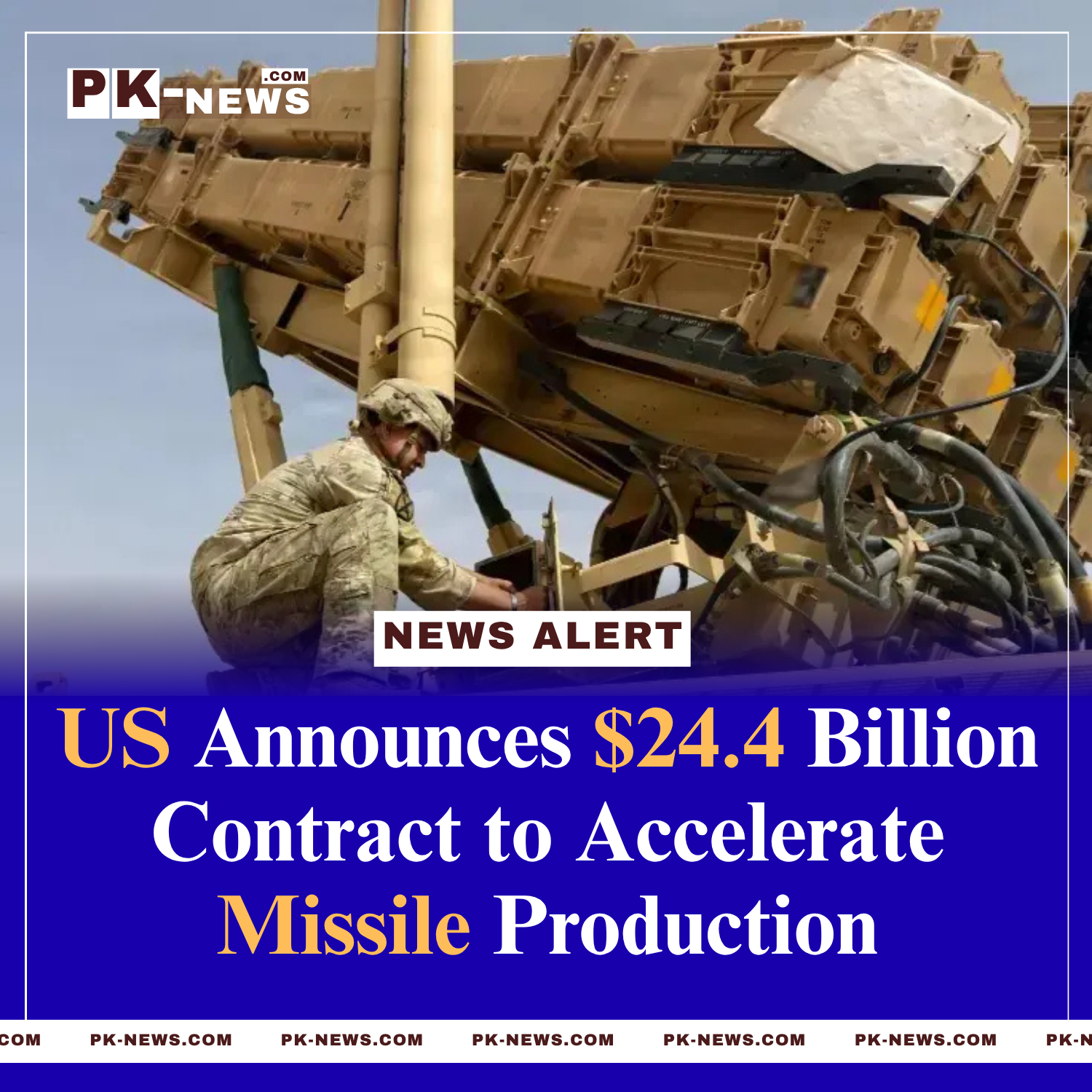
US Announces $24.4 Billion Contract to Accelerate Missile Production
28
Global PK Live News 😔 Negative
US Announces $24.4 Billion Contract to Accelerate Missile Production
WASHINGTON — The United States has announced a multibillion-dollar contract aimed at accelerating production of Standard Missile-6 (SM-6) interceptors, as the Pentagon works to replenish missile inventories following heavy expenditure during recent conflicts in the Middle East. The US Navy said on October 1 that it had awarded RTX’s Raytheon division a multiyear contract worth up to $24.4 billion. The agreement has an initial five-year term, with options for two additional years, and is intended to provide a more reliable supply of SM-6 missiles. Raytheon to Increase SM-6 Production The contract is designed to increase the pace at which Raytheon produces SM-6 missiles for the US military. The Pentagon said the agreement would help accelerate production while providing the defence industry with greater long-term certainty. RTX has said the company has been investing in additional manufacturing capacity, workforce expansion, supply-chain partnerships and automation to respond to increased demand for advanced munitions. What Is the SM-6 Missile? The SM-6 is a multifunctional missile used by the US Navy for several missions. It can be used against airborne threats, surface targets and ballistic missiles, making it a significant component of US naval air and missile defence capabilities. According to Raytheon, the missile can perform anti-air warfare, anti-surface warfare and ballistic missile defence missions. The system has been deployed from US Navy ships as well as land-based launchers. Why Is Washington Increasing Production? The new contract comes as the Pentagon seeks to rebuild inventories following substantial weapons use during conflicts in the Middle East. Reuters reported that the US military has been pursuing several major multiyear weapons contracts this year as part of an effort to increase production and replenish stocks. The latest SM-6 agreement follows other large contracts involving AMRAAM air-to-air missiles and Patriot interceptors. The Pentagon's effort reflects concerns that modern military operations can consume advanced missiles more quickly than existing industrial capacity can replace them. US Missile Stocks Face Pressure The decision to accelerate production follows concerns about US munitions inventories and manufacturing capacity. A US Defense Department inspector general report cited by international media said weapons expenditure during Operation Epic Fury had contributed to strategic inventory shortages and exposed bottlenecks in the defence industrial base. A September report from the Congressional Budget Office also warned that pressure on missile-defence inventories could leave the United States with reduced stocks of interceptors for several years. Contract Includes Two Additional Option Years The $24.4 billion agreement covers five years and contains options for an additional two years. The structure gives the manufacturer greater visibility over future demand and allows production planning over a longer period. The Pentagon said this type of arrangement is intended to provide defence companies with the predictability needed to expand their workforce and secure critical supply chains. Broader US Push to Expand Weapons Production The SM-6 agreement is part of a wider US effort to expand the production of critical weapons. In late September, the Pentagon awarded or pursued a $20.7 billion multiyear arrangement involving AMRAAM missiles, while a $58.6 billion Patriot interceptor agreement with Lockheed Martin was announced earlier in the year. These deals are intended to increase production capacity and strengthen the US military's stockpile of advanced weapons. Funding Questions Remain Despite the large contracts, questions remain about the funding required to support the planned expansion. Reuters reported that industry executives have warned that Congress has not yet appropriated all the funding associated with some of the agreements. This could affect how quickly defence companies can make large-scale investments in new facilities, equipment and components. The issue highlights the difference between awarding a long-term contract and immediately having the funds and industrial capacity necessary to fulfil it at maximum speed. Impact of the Iran Conflict The announcement comes against the backdrop of the continuing US-Iran conflict described in the reports. American and Israeli military operations against Iran have involved substantial use of precision-guided weapons and missile-defence systems. The increased demand has placed additional pressure on US weapons inventories and defence manufacturers. The Pentagon is therefore seeking to rebuild stocks while simultaneously maintaining the ability to respond to future military threats. Importance for US Missile Defence Increasing SM-6 production could strengthen the availability of a missile system that performs multiple roles. Because the SM-6 can address aircraft, surface targets and ballistic-missile threats, additional production could provide the US Navy with greater flexibility in maintaining defensive and offensive capabilities. However, the actual effect on US inventories will depend on production rates, funding, supply-chain availability and delivery schedules. A Major Defence Industry Investment The $24.4 billion agreement represents a substantial long-term investment in US missile manufacturing. It also demonstrates the scale of resources being directed toward replenishing weapons inventories after recent military operations. For Raytheon and its suppliers, the contract could mean expanded production, additional employment and greater demand for components. For the Pentagon, the objective is to establish a more resilient supply of critical missiles. Global Security Implications The expansion of US missile production is likely to be closely watched by governments and militaries around the world. The SM-6 is not only a defensive system but also has capabilities against surface targets, giving it a broader role in US military planning. The announcement comes at a time of heightened security tensions in the Middle East and wider concerns about missile defence, maritime security and the ability of major powers to sustain prolonged military operations. PK-News.com Update The United States has awarded Raytheon a contract worth up to $24.4 billion to accelerate production of SM-6 missiles. The five-year agreement, with two additional option years, is part of a broader Pentagon effort to replenish weapons inventories and expand production capacity. The move follows concerns about depleted missile stocks and production bottlenecks following recent military operations. Alongside the SM-6 programme, Washington has pursued major contracts for AMRAAM and Patriot systems, indicating a broader effort to strengthen the US defence industrial base. This article was developed and researched by PK-News.com based on reports and official information available on October 2, 2026.
Oct 2, 2026 at 8:08 AM
WASHINGTON — The United States has announced a multibillion-dollar contract aimed at accelerating production of Standard Missile-6 (SM-6) interceptors, as the Pentagon works to replenish missile inventories following heavy expenditure during recent conflicts in the Middle East. The US Navy said on October 1 that it had awarded RTX’s Raytheon division a multiyear contract worth up to $24.4 billion. The agreement has an initial five-year term, with options for two additional years, and is intended to provide a more reliable supply of SM-6 missiles. Raytheon to Increase SM-6 Production The contract is designed to increase the pace at which Raytheon produces SM-6 missiles for the US military. The Pentagon said the agreement would help accelerate production while providing the defence industry with greater long-term certainty. RTX has said the company has been investing in additional manufacturing capacity, workforce expansion, supply-chain partnerships and automation to respond to increased demand for advanced munitions. What Is the SM-6 Missile? The SM-6 is a multifunctional missile used by the US Navy for several missions. It can be used against airborne threats, surface targets and ballistic missiles, making it a significant component of US naval air and missile defence capabilities. According to Raytheon, the missile can perform anti-air warfare, anti-surface warfare and ballistic missile defence missions. The system has been deployed from US Navy ships as well as land-based launchers. Why Is Washington Increasing Production? The new contract comes as the Pentagon seeks to rebuild inventories following substantial weapons use during conflicts in the Middle East. Reuters reported that the US military has been pursuing several major multiyear weapons contracts this year as part of an effort to increase production and replenish stocks. The latest SM-6 agreement follows other large contracts involving AMRAAM air-to-air missiles and Patriot interceptors. The Pentagon's effort reflects concerns that modern military operations can consume advanced missiles more quickly than existing industrial capacity can replace them. US Missile Stocks Face Pressure The decision to accelerate production follows concerns about US munitions inventories and manufacturing capacity. A US Defense Department inspector general report cited by international media said weapons expenditure during Operation Epic Fury had contributed to strategic inventory shortages and exposed bottlenecks in the defence industrial base. A September report from the Congressional Budget Office also warned that pressure on missile-defence inventories could leave the United States with reduced stocks of interceptors for several years. Contract Includes Two Additional Option Years The $24.4 billion agreement covers five years and contains options for an additional two years. The structure gives the manufacturer greater visibility over future demand and allows production planning over a longer period. The Pentagon said this type of arrangement is intended to provide defence companies with the predictability needed to expand their workforce and secure critical supply chains. Broader US Push to Expand Weapons Production The SM-6 agreement is part of a wider US effort to expand the production of critical weapons. In late September, the Pentagon awarded or pursued a $20.7 billion multiyear arrangement involving AMRAAM missiles, while a $58.6 billion Patriot interceptor agreement with Lockheed Martin was announced earlier in the year. These deals are intended to increase production capacity and strengthen the US military's stockpile of advanced weapons. Funding Questions Remain Despite the large contracts, questions remain about the funding required to support the planned expansion. Reuters reported that industry executives have warned that Congress has not yet appropriated all the funding associated with some of the agreements. This could affect how quickly defence companies can make large-scale investments in new facilities, equipment and components. The issue highlights the difference between awarding a long-term contract and immediately having the funds and industrial capacity necessary to fulfil it at maximum speed. Impact of the Iran Conflict The announcement comes against the backdrop of the continuing US-Iran conflict described in the reports. American and Israeli military operations against Iran have involved substantial use of precision-guided weapons and missile-defence systems. The increased demand has placed additional pressure on US weapons inventories and defence manufacturers. The Pentagon is therefore seeking to rebuild stocks while simultaneously maintaining the ability to respond to future military threats. Importance for US Missile Defence Increasing SM-6 production could strengthen the availability of a missile system that performs multiple roles. Because the SM-6 can address aircraft, surface targets and ballistic-missile threats, additional production could provide the US Navy with greater flexibility in maintaining defensive and offensive capabilities. However, the actual effect on US inventories will depend on production rates, funding, supply-chain availability and delivery schedules. A Major Defence Industry Investment The $24.4 billion agreement represents a substantial long-term investment in US missile manufacturing. It also demonstrates the scale of resources being directed toward replenishing weapons inventories after recent military operations. For Raytheon and its suppliers, the contract could mean expanded production, additional employment and greater demand for components. For the Pentagon, the objective is to establish a more resilient supply of critical missiles. Global Security Implications The expansion of US missile production is likely to be closely watched by governments and militaries around the world. The SM-6 is not only a defensive system but also has capabilities against surface targets, giving it a broader role in US military planning. The announcement comes at a time of heightened security tensions in the Middle East and wider concerns about missile defence, maritime security and the ability of major powers to sustain prolonged military operations. PK-News.com Update The United States has awarded Raytheon a contract worth up to $24.4 billion to accelerate production of SM-6 missiles. The five-year agreement, with two additional option years, is part of a broader Pentagon effort to replenish weapons inventories and expand production capacity. The move follows concerns about depleted missile stocks and production bottlenecks following recent military operations. Alongside the SM-6 programme, Washington has pursued major contracts for AMRAAM and Patriot systems, indicating a broader effort to strengthen the US defence industrial base. This article was developed and researched by PK-News.com based on reports and official information available on October 2, 2026.
PTI Reaffirms October 4 Islamabad March as Leaders Reject Further Delay
25
Global PK Live News 😐 Neutral
PTI Reaffirms October 4 Islamabad March as Leaders Reject Further Delay
ISLAMABAD/PESHAWAR — Pakistan Tehreek-e-Insaf (PTI) has reaffirmed that its planned October 4, 2026 protest march toward Islamabad will proceed, with senior party leaders rejecting suggestions that the event should be postponed again. The march was originally scheduled for September 27 but was moved to October 4 after authorities took extensive security measures around the capital. PTI Says October 4 Plan Remains Intact PTI Chairman Barrister Gohar Ali Khan and other senior leaders have publicly maintained that the October 4 programme remains in place. Former National Assembly speaker Asad Qaiser also said there was no possibility of another postponement and that the party would proceed according to its announced plan. The latest statements come after some voices within PTI called for additional time or reconsideration because of the security situation and the potential consequences of a confrontation with the authorities. Sohail Afridi Announces Two-Phase March Plan Khyber Pakhtunkhwa Chief Minister Sohail Afridi has said the march will initially move toward Swabi, near the KP-Punjab border, before proceeding toward Islamabad. Afridi has described the planned demonstration as peaceful and has called on supporters to participate without weapons or objects that could cause harm. He has also urged the federal government to use the remaining time before October 4 for dialogue. PTI's Main Demand Remains Imran Khan's Release The protest is centered on PTI's demand for the release of its founder, former Prime Minister Imran Khan, who has remained imprisoned since 2023. Party leaders have also raised concerns about access to Khan, including meetings with his family, lawyers and other authorized visitors, as well as medical care. Barrister Gohar has said the party's immediate demands include allowing meetings and ensuring medical treatment for Khan. Opposition Alliance Says It Will Participate The Tehreek-i-Tahafuz-Ayin-i-Pakistan (TTAP) opposition alliance has announced that it will fully participate in PTI's October 4 protest. The alliance had expressed reservations about the earlier postponement from September 27, but subsequently said it would participate in the rescheduled demonstration. This could broaden participation beyond PTI's own organizational structure, although the eventual size and nature of participation cannot be established in advance. Calls for Another Delay Within PTI While the main PTI leadership has reaffirmed October 4, Khyber Pakhtunkhwa Information Secretary Shaukat Yousafzai recently called for the march to be postponed again. In a letter to the party leadership, Yousafzai reportedly argued that proceeding under the current circumstances could increase the risk of emergency rule. PTI leaders have treated his position as an individual view rather than a change in the party's official decision. Security Measures Around Islamabad Authorities have already taken extensive security measures ahead of the planned demonstration. Major roads and entry points around Islamabad have seen the deployment of containers and other barriers, while security personnel have been positioned at important locations. The Associated Press reported that many containers remained in place even after the original September 27 protest was postponed. Key routes toward the capital, including the Attock Bridge, have been affected by security preparations. These measures have also affected ordinary commuters and businesses in Islamabad and Rawalpindi, with traffic disruptions reported in areas where roads have been restricted. Government Warns of Constitutional Options The federal government has warned that governor's rule or emergency measures could become options if circumstances in Khyber Pakhtunkhwa deteriorate. Law Minister Azam Nazeer Tarar has said constitutional mechanisms could be used if the required circumstances arise. KP Governor Faisal Karim Kundi has similarly warned about the possibility of intervention if political unrest escalates. PTI leaders have rejected these warnings and argued that political differences should be resolved through constitutional and political means. PTI Calls for a Peaceful Protest Sohail Afridi has repeatedly said that PTI's planned demonstration should remain peaceful. He has urged participants to come unarmed and said individuals carrying objects capable of causing harm should be handed over to police. PTI leaders have also rejected suggestions that the party intends to attack government buildings or forcibly enter sensitive areas. Barrister Gohar said the party had repeatedly assured authorities that it would not storm locations. Why October 4 Is Important The October 4 date follows a significant political and security buildup that began before the original September 27 protest call. PTI's decision to postpone the march gave authorities additional time to maintain security arrangements while giving the party another opportunity to organize supporters. The latest statements indicate that the principal PTI leadership currently continues to support the October 4 schedule, while disagreements over strategy remain visible within the party. What to Watch Before October 4 Several developments could shape the situation before the scheduled march, including any talks between the federal government and PTI, decisions concerning access to Imran Khan, further security restrictions, and the response of the KP government. The position of opposition groups participating alongside PTI could also affect the scale of the demonstration. Meanwhile, any changes to road closures or security arrangements around Islamabad are likely to have a direct impact on movement toward the capital. PTI's Position on Dialogue Despite maintaining the October 4 protest schedule, Sohail Afridi has said there is still time for negotiations. He has questioned why talks could not begin before the demonstration if dialogue would ultimately be required afterward. This leaves open the possibility of political engagement before the scheduled protest, although there is currently no confirmed agreement that would cancel or postpone the October 4 programme. Current Status — October 1, 2026 As of October 1, 2026, the latest reported position is that PTI's October 4 Islamabad march remains scheduled and the party leadership has ruled out another postponement. Sohail Afridi has outlined a route beginning from KP toward Swabi and then Islamabad, while Barrister Gohar and Asad Qaiser have also reaffirmed the programme. At the same time, authorities continue security preparations, and government officials have warned about possible constitutional measures if unrest escalates. PTI maintains that the protest will be peaceful. PK-News.com Update The October 4 PTI march remains a major developing political story in Pakistan. PTI leadership has reaffirmed the date despite security restrictions and internal calls for another delay. The party says its demands center on Imran Khan's release and access to meetings and medical care, while the federal government has emphasized security and constitutional considerations. The situation remains fluid. Any new talks between PTI and the government, changes in security arrangements, or further statements from Sohail Afridi, Barrister Gohar Khan or federal authorities could affect developments before October 4. This article was developed and researched by PK-News.com using reports and statements available on October 1, 2026.
Oct 1, 2026 at 10:31 PM
ISLAMABAD/PESHAWAR — Pakistan Tehreek-e-Insaf (PTI) has reaffirmed that its planned October 4, 2026 protest march toward Islamabad will proceed, with senior party leaders rejecting suggestions that the event should be postponed again. The march was originally scheduled for September 27 but was moved to October 4 after authorities took extensive security measures around the capital. PTI Says October 4 Plan Remains Intact PTI Chairman Barrister Gohar Ali Khan and other senior leaders have publicly maintained that the October 4 programme remains in place. Former National Assembly speaker Asad Qaiser also said there was no possibility of another postponement and that the party would proceed according to its announced plan. The latest statements come after some voices within PTI called for additional time or reconsideration because of the security situation and the potential consequences of a confrontation with the authorities. Sohail Afridi Announces Two-Phase March Plan Khyber Pakhtunkhwa Chief Minister Sohail Afridi has said the march will initially move toward Swabi, near the KP-Punjab border, before proceeding toward Islamabad. Afridi has described the planned demonstration as peaceful and has called on supporters to participate without weapons or objects that could cause harm. He has also urged the federal government to use the remaining time before October 4 for dialogue. PTI's Main Demand Remains Imran Khan's Release The protest is centered on PTI's demand for the release of its founder, former Prime Minister Imran Khan, who has remained imprisoned since 2023. Party leaders have also raised concerns about access to Khan, including meetings with his family, lawyers and other authorized visitors, as well as medical care. Barrister Gohar has said the party's immediate demands include allowing meetings and ensuring medical treatment for Khan. Opposition Alliance Says It Will Participate The Tehreek-i-Tahafuz-Ayin-i-Pakistan (TTAP) opposition alliance has announced that it will fully participate in PTI's October 4 protest. The alliance had expressed reservations about the earlier postponement from September 27, but subsequently said it would participate in the rescheduled demonstration. This could broaden participation beyond PTI's own organizational structure, although the eventual size and nature of participation cannot be established in advance. Calls for Another Delay Within PTI While the main PTI leadership has reaffirmed October 4, Khyber Pakhtunkhwa Information Secretary Shaukat Yousafzai recently called for the march to be postponed again. In a letter to the party leadership, Yousafzai reportedly argued that proceeding under the current circumstances could increase the risk of emergency rule. PTI leaders have treated his position as an individual view rather than a change in the party's official decision. Security Measures Around Islamabad Authorities have already taken extensive security measures ahead of the planned demonstration. Major roads and entry points around Islamabad have seen the deployment of containers and other barriers, while security personnel have been positioned at important locations. The Associated Press reported that many containers remained in place even after the original September 27 protest was postponed. Key routes toward the capital, including the Attock Bridge, have been affected by security preparations. These measures have also affected ordinary commuters and businesses in Islamabad and Rawalpindi, with traffic disruptions reported in areas where roads have been restricted. Government Warns of Constitutional Options The federal government has warned that governor's rule or emergency measures could become options if circumstances in Khyber Pakhtunkhwa deteriorate. Law Minister Azam Nazeer Tarar has said constitutional mechanisms could be used if the required circumstances arise. KP Governor Faisal Karim Kundi has similarly warned about the possibility of intervention if political unrest escalates. PTI leaders have rejected these warnings and argued that political differences should be resolved through constitutional and political means. PTI Calls for a Peaceful Protest Sohail Afridi has repeatedly said that PTI's planned demonstration should remain peaceful. He has urged participants to come unarmed and said individuals carrying objects capable of causing harm should be handed over to police. PTI leaders have also rejected suggestions that the party intends to attack government buildings or forcibly enter sensitive areas. Barrister Gohar said the party had repeatedly assured authorities that it would not storm locations. Why October 4 Is Important The October 4 date follows a significant political and security buildup that began before the original September 27 protest call. PTI's decision to postpone the march gave authorities additional time to maintain security arrangements while giving the party another opportunity to organize supporters. The latest statements indicate that the principal PTI leadership currently continues to support the October 4 schedule, while disagreements over strategy remain visible within the party. What to Watch Before October 4 Several developments could shape the situation before the scheduled march, including any talks between the federal government and PTI, decisions concerning access to Imran Khan, further security restrictions, and the response of the KP government. The position of opposition groups participating alongside PTI could also affect the scale of the demonstration. Meanwhile, any changes to road closures or security arrangements around Islamabad are likely to have a direct impact on movement toward the capital. PTI's Position on Dialogue Despite maintaining the October 4 protest schedule, Sohail Afridi has said there is still time for negotiations. He has questioned why talks could not begin before the demonstration if dialogue would ultimately be required afterward. This leaves open the possibility of political engagement before the scheduled protest, although there is currently no confirmed agreement that would cancel or postpone the October 4 programme. Current Status — October 1, 2026 As of October 1, 2026, the latest reported position is that PTI's October 4 Islamabad march remains scheduled and the party leadership has ruled out another postponement. Sohail Afridi has outlined a route beginning from KP toward Swabi and then Islamabad, while Barrister Gohar and Asad Qaiser have also reaffirmed the programme. At the same time, authorities continue security preparations, and government officials have warned about possible constitutional measures if unrest escalates. PTI maintains that the protest will be peaceful. PK-News.com Update The October 4 PTI march remains a major developing political story in Pakistan. PTI leadership has reaffirmed the date despite security restrictions and internal calls for another delay. The party says its demands center on Imran Khan's release and access to meetings and medical care, while the federal government has emphasized security and constitutional considerations. The situation remains fluid. Any new talks between PTI and the government, changes in security arrangements, or further statements from Sohail Afridi, Barrister Gohar Khan or federal authorities could affect developments before October 4. This article was developed and researched by PK-News.com using reports and statements available on October 1, 2026.
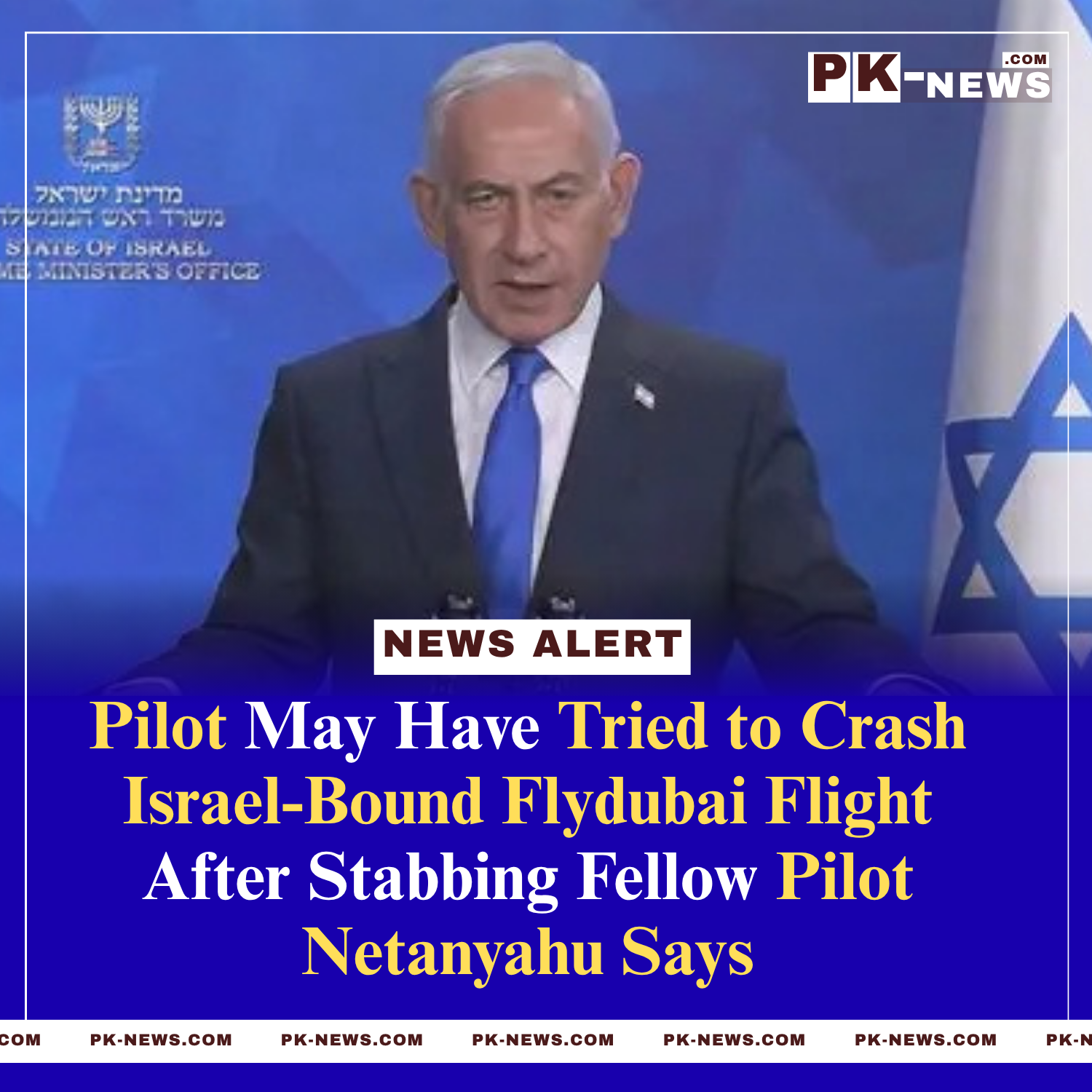
Netanyahu Says Flydubai Suspect Underwent ‘Islamist Radical Indoctrination’ as Motive Remains Unclear
44
Global PK Live News 😔 Negative
Netanyahu Says Flydubai Suspect Underwent ‘Islamist Radical Indoctrination’ as Motive Remains Unclear
JERUSALEM — Israeli Prime Minister Benjamin Netanyahu has said that the co-pilot accused of stabbing the captain of a Flydubai passenger aircraft had undergone what he described as “Islamist radical indoctrination,” while stressing that investigators have not yet established the full motive behind the incident. The comments came one day after Flydubai Flight FZ1073, travelling from Dubai to Tel Aviv, was diverted to Tabuk, Saudi Arabia, following a violent confrontation in the cockpit. The aircraft was carrying 174 people and landed safely after passengers and crew intervened. Netanyahu Says Radicalisation Was Found in Suspect’s Background Speaking to Fox News, Netanyahu said information gathered about the suspect indicated that he had undergone Islamist radical indoctrination. He also described the suspect as apparently suicidal and said the available information suggested that he may have intended to bring down the aircraft. However, Netanyahu emphasized that he was not making a final conclusion about the motive. Reuters reported that the Israeli prime minister said the indications were being assessed as part of an ongoing investigation. Motive Has Not Been Officially Established Despite Netanyahu's comments, the precise reason for the cockpit attack remains unclear. Flydubai said after the incident that the underlying reasons and motives were unknown and remained subject to a formal investigation. The airline urged parties involved not to engage in premature speculation while authorities gathered evidence. The United Arab Emirates has also launched an investigation to establish the circumstances, motives and whether the incident involved terrorist activity, prior planning or direction. What Happened on Flight FZ1073? The flight was travelling from Dubai to Tel Aviv when the co-pilot allegedly attacked Captain Smit Machchhar, an Indian national. According to reports, the aircraft subsequently entered a steep descent, losing almost 14,000 feet in less than 30 seconds. The injured captain managed to open the cockpit door, allowing passengers to enter and help restrain the attacker. A reserve crew that was aboard the aircraft then helped regain control of the aircraft and ultimately landed it safely at Tabuk Airport in northwestern Saudi Arabia. Captain Smit Machchhar Injured in the Attack Captain Smit Machchhar suffered serious injuries during the confrontation but survived. The Indian Embassy in Saudi Arabia said he was receiving treatment in a Saudi hospital and was in stable condition. His actions in opening the cockpit door despite his injuries were credited by passengers and officials with allowing others to intervene. Indian Prime Minister Narendra Modi and Netanyahu publicly praised Machchhar for his actions during the emergency. Suspect Identified as Omani National Israeli officials identified the alleged attacker as an Omani national. Omani authorities had not publicly commented on the identification at the time of the latest reports. The suspect remained in Saudi custody following the emergency landing. Netanyahu said the investigation would examine the suspect's background and whether there were any accomplices or outside connections. No Confirmed Iranian Connection Netanyahu was also asked whether Iran could have been involved in the incident. He said it was too early to determine whether the suspect had connections to Iran or anyone else. Reuters reported that there were no official Israeli suggestions of Iranian involvement at that stage, and Israeli security officials had not identified Iranian involvement. This means claims linking the incident to Iran remain unconfirmed and should not be presented as established facts. UAE Launches Its Own Investigation The United Arab Emirates has opened an investigation because the aircraft is registered in the UAE and operates under its flag. According to Reuters, UAE judicial authorities said investigators would examine the circumstances and motives and determine whether the incident had any connection to terrorism or prior planning or direction. The investigation is expected to examine the suspect's background, actions aboard the aircraft and any possible communications or outside connections. Saudi Arabia Has Not Publicly Detailed Its Investigation The aircraft landed at Tabuk after the emergency, and Saudi authorities took control of the suspect. Saudi Arabia has not publicly released detailed findings from its investigation, according to Reuters. Israeli officials have indicated that they want access to information concerning the suspect and the circumstances surrounding the attack. Security Questions Raised After the Incident The incident has raised renewed questions about aviation security, particularly the possibility of a member of a flight crew becoming a threat while inside the cockpit. The aircraft's rapid descent and the emergency signals transmitted during the incident prompted a major security response, including Israeli fighter aircraft being scrambled as authorities initially assessed the possibility of a hijacking. The successful intervention by passengers and crew prevented the aircraft from continuing its dangerous descent. Investigators Still Have Major Questions Several key questions remain unanswered. Investigators need to establish why the co-pilot attacked the captain, whether the aircraft was deliberately placed into a dangerous descent, whether the suspect acted alone and whether there was any outside direction or planning. Authorities are also examining the suspect's background, including the allegations about radicalisation made by Netanyahu. Until investigators release further evidence, the motive should be treated as under investigation rather than conclusively established. Flydubai itself has specifically warned against premature conclusions. PK-News.com Update The Flydubai cockpit incident remains under investigation after a Dubai-to-Tel Aviv flight was diverted to Saudi Arabia following an alleged attack by the co-pilot against the captain. Netanyahu has now said that the suspect underwent what he called “Islamist radical indoctrination” and appeared to have been suicidal. However, the Israeli prime minister also acknowledged that he was not making a final conclusion about the motive. UAE authorities are independently investigating whether the incident involved terrorism, prior planning or direction. The aircraft's safe landing was made possible after the wounded captain opened the cockpit door and passengers helped restrain the attacker, allowing a reserve crew to take control and land the aircraft safely. This article was developed and researched by PK-News.com based on reports and official statements available on October 1, 2026. Further details may emerge as investigations in Saudi Arabia, the UAE and Israel continue.
Oct 1, 2026 at 9:49 PM
JERUSALEM — Israeli Prime Minister Benjamin Netanyahu has said that the co-pilot accused of stabbing the captain of a Flydubai passenger aircraft had undergone what he described as “Islamist radical indoctrination,” while stressing that investigators have not yet established the full motive behind the incident. The comments came one day after Flydubai Flight FZ1073, travelling from Dubai to Tel Aviv, was diverted to Tabuk, Saudi Arabia, following a violent confrontation in the cockpit. The aircraft was carrying 174 people and landed safely after passengers and crew intervened. Netanyahu Says Radicalisation Was Found in Suspect’s Background Speaking to Fox News, Netanyahu said information gathered about the suspect indicated that he had undergone Islamist radical indoctrination. He also described the suspect as apparently suicidal and said the available information suggested that he may have intended to bring down the aircraft. However, Netanyahu emphasized that he was not making a final conclusion about the motive. Reuters reported that the Israeli prime minister said the indications were being assessed as part of an ongoing investigation. Motive Has Not Been Officially Established Despite Netanyahu's comments, the precise reason for the cockpit attack remains unclear. Flydubai said after the incident that the underlying reasons and motives were unknown and remained subject to a formal investigation. The airline urged parties involved not to engage in premature speculation while authorities gathered evidence. The United Arab Emirates has also launched an investigation to establish the circumstances, motives and whether the incident involved terrorist activity, prior planning or direction. What Happened on Flight FZ1073? The flight was travelling from Dubai to Tel Aviv when the co-pilot allegedly attacked Captain Smit Machchhar, an Indian national. According to reports, the aircraft subsequently entered a steep descent, losing almost 14,000 feet in less than 30 seconds. The injured captain managed to open the cockpit door, allowing passengers to enter and help restrain the attacker. A reserve crew that was aboard the aircraft then helped regain control of the aircraft and ultimately landed it safely at Tabuk Airport in northwestern Saudi Arabia. Captain Smit Machchhar Injured in the Attack Captain Smit Machchhar suffered serious injuries during the confrontation but survived. The Indian Embassy in Saudi Arabia said he was receiving treatment in a Saudi hospital and was in stable condition. His actions in opening the cockpit door despite his injuries were credited by passengers and officials with allowing others to intervene. Indian Prime Minister Narendra Modi and Netanyahu publicly praised Machchhar for his actions during the emergency. Suspect Identified as Omani National Israeli officials identified the alleged attacker as an Omani national. Omani authorities had not publicly commented on the identification at the time of the latest reports. The suspect remained in Saudi custody following the emergency landing. Netanyahu said the investigation would examine the suspect's background and whether there were any accomplices or outside connections. No Confirmed Iranian Connection Netanyahu was also asked whether Iran could have been involved in the incident. He said it was too early to determine whether the suspect had connections to Iran or anyone else. Reuters reported that there were no official Israeli suggestions of Iranian involvement at that stage, and Israeli security officials had not identified Iranian involvement. This means claims linking the incident to Iran remain unconfirmed and should not be presented as established facts. UAE Launches Its Own Investigation The United Arab Emirates has opened an investigation because the aircraft is registered in the UAE and operates under its flag. According to Reuters, UAE judicial authorities said investigators would examine the circumstances and motives and determine whether the incident had any connection to terrorism or prior planning or direction. The investigation is expected to examine the suspect's background, actions aboard the aircraft and any possible communications or outside connections. Saudi Arabia Has Not Publicly Detailed Its Investigation The aircraft landed at Tabuk after the emergency, and Saudi authorities took control of the suspect. Saudi Arabia has not publicly released detailed findings from its investigation, according to Reuters. Israeli officials have indicated that they want access to information concerning the suspect and the circumstances surrounding the attack. Security Questions Raised After the Incident The incident has raised renewed questions about aviation security, particularly the possibility of a member of a flight crew becoming a threat while inside the cockpit. The aircraft's rapid descent and the emergency signals transmitted during the incident prompted a major security response, including Israeli fighter aircraft being scrambled as authorities initially assessed the possibility of a hijacking. The successful intervention by passengers and crew prevented the aircraft from continuing its dangerous descent. Investigators Still Have Major Questions Several key questions remain unanswered. Investigators need to establish why the co-pilot attacked the captain, whether the aircraft was deliberately placed into a dangerous descent, whether the suspect acted alone and whether there was any outside direction or planning. Authorities are also examining the suspect's background, including the allegations about radicalisation made by Netanyahu. Until investigators release further evidence, the motive should be treated as under investigation rather than conclusively established. Flydubai itself has specifically warned against premature conclusions. PK-News.com Update The Flydubai cockpit incident remains under investigation after a Dubai-to-Tel Aviv flight was diverted to Saudi Arabia following an alleged attack by the co-pilot against the captain. Netanyahu has now said that the suspect underwent what he called “Islamist radical indoctrination” and appeared to have been suicidal. However, the Israeli prime minister also acknowledged that he was not making a final conclusion about the motive. UAE authorities are independently investigating whether the incident involved terrorism, prior planning or direction. The aircraft's safe landing was made possible after the wounded captain opened the cockpit door and passengers helped restrain the attacker, allowing a reserve crew to take control and land the aircraft safely. This article was developed and researched by PK-News.com based on reports and official statements available on October 1, 2026. Further details may emerge as investigations in Saudi Arabia, the UAE and Israel continue.
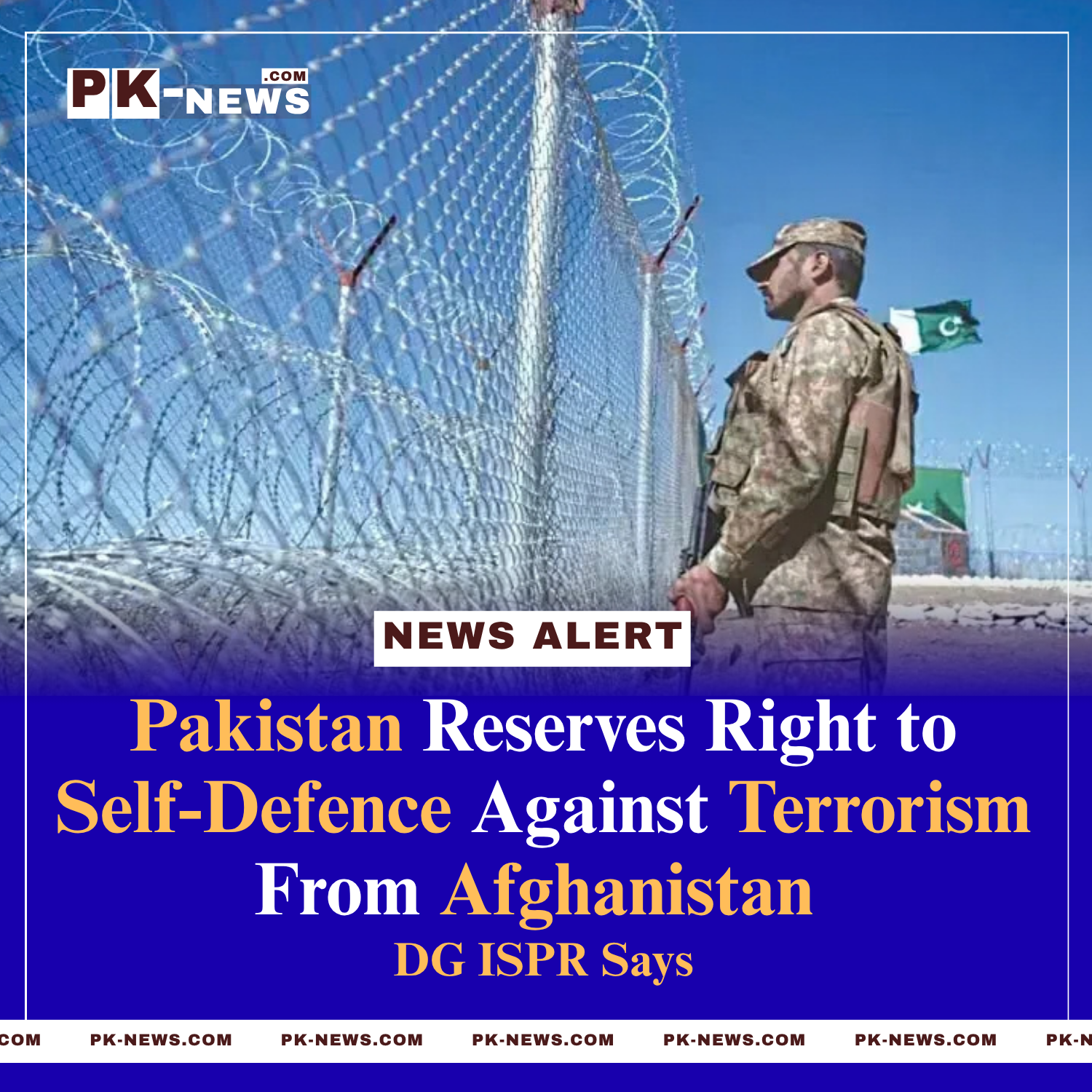
Pakistan Reserves Right to Self-Defence Against Terrorism From Afghanistan, DG ISPR Says
36
Global PK Live News 😔 Negative
Pakistan Reserves Right to Self-Defence Against Terrorism From Afghanistan, DG ISPR Says
ISLAMABAD — Pakistan has reiterated that it reserves the right to defend itself against terrorism and security threats originating from Afghanistan, with Director General Inter-Services Public Relations (DG ISPR) Lieutenant General Ahmed Sharif Chaudhry saying that “everything that is necessary will be done” to protect the country's territorial integrity and security. The remarks came during a press briefing on Thursday, October 1, 2026, as Pakistan continued to address concerns over militant activity linked to Afghan territory and the broader security situation along the Pakistan-Afghanistan border. Pakistan Says Territorial Integrity Is Non-Negotiable During the briefing, the DG ISPR said Pakistan's policy was clear regarding its sovereignty and territorial integrity. He stated that there would be no compromise over threats to Pakistan's security and stability. He further said Pakistan has a right to self-defence and that the armed forces would take whatever measures they consider necessary in response to threats. The statement was made specifically in the context of questions about terrorism and attacks emanating from Afghanistan. Focus on Terrorism From Afghan Territory Pakistan has repeatedly raised concerns with the authorities in Kabul over militant groups allegedly operating from Afghan territory. Islamabad has particularly focused on the Tehreek-i-Taliban Pakistan (TTP), which Pakistan says uses Afghan territory to organize and launch attacks inside the country. In a September 19 interview, the DG ISPR said Pakistan's principal demand was that Afghan territory should not be used for terrorism against Pakistan. He also said Islamabad reserved its right to self-defence if commitments concerning terrorism were not fulfilled. Pakistan Cites Right to Self-Defence The latest statement builds on Pakistan's previously stated position that the country has a right to defend its population against cross-border terrorism. Earlier, the DG ISPR referred to Article 51 of the United Nations Charter, saying Pakistan reserves its right to self-defence while dealing with threats originating from Afghan territory. He said Pakistan would continue taking measures intended to protect the lives and property of its citizens. The latest briefing did not itself announce a specific new military operation, but it reinforced the position that Islamabad considers countering cross-border terrorism a matter of national security. Tensions Between Islamabad and Kabul Relations between Pakistan and Afghanistan have remained strained over allegations involving militant groups and cross-border attacks. Islamabad has repeatedly accused the Afghan authorities of allowing militant organizations to maintain safe havens on Afghan soil. Kabul has rejected such accusations and has disputed Pakistani claims concerning attacks and militant activity originating from Afghanistan. The disagreement has become one of the central issues affecting relations between the two neighboring countries. Border Security Remains a Major Concern The Pakistan-Afghanistan border remains a major security concern for Islamabad because of its length, difficult terrain and the presence of militant networks in the wider region. Pakistan's security forces have conducted counterterrorism operations for years, particularly in areas of Khyber Pakhtunkhwa and Balochistan. Pakistani officials maintain that militant groups operating from or through Afghanistan pose a direct threat to communities and security personnel inside Pakistan. Earlier Military Escalations The latest warning comes after previous periods of serious military tension between Pakistan and Afghanistan. In February 2026, Pakistan's military announced strikes against what it described as militant and military targets in Afghanistan following clashes along the border. Afghan authorities disputed aspects of Pakistan's account and the reported casualties. Because claims from both sides have sometimes differed significantly, casualty figures and battlefield assessments should be treated according to the source making the claim unless independently verified. Recent Cross-Border Strikes The security situation has continued to develop in recent days. Reuters reported on October 1 that Pakistani airstrikes targeted locations in Afghanistan's Kunar and Helmand provinces. Afghan authorities said civilians were killed, while Pakistan said its strikes targeted militant hideouts and reported militant casualties. The competing accounts have not been independently reconciled, highlighting the continuing difficulty of establishing a common factual account during cross-border military operations. Pakistan Says Its Target Is Terrorism The Pakistani military has repeatedly framed its Afghanistan-related security policy around preventing terrorism from reaching Pakistani territory. In his September interview, the DG ISPR said Pakistan's issue was with the use of Afghan territory by militant organizations rather than with the Afghan people. He said Islamabad wanted the authorities in Afghanistan to prevent terrorist groups from using their territory to plan or launch attacks against Pakistan. This distinction has been part of Pakistan's public messaging as tensions with Kabul have increased. Kabul's Position Afghan authorities have rejected Pakistan's accusations that Afghanistan is deliberately being used to facilitate attacks against Pakistan. Kabul has maintained that security problems inside Pakistan are primarily an internal matter and has disputed Pakistani accounts of military operations and casualties. Recent clashes and airstrikes have therefore been accompanied by competing statements from Islamabad and Kabul, with each side presenting different accounts of events along the border. Regional Security Implications Continued tensions between Pakistan and Afghanistan could have wider consequences for regional security, particularly because the two countries share a long and strategically important border. The situation is also being watched by neighboring and regional countries concerned about terrorism, cross-border movement, trade and stability. Diplomatic efforts involving regional states have previously sought to reduce tensions and encourage communication between Islamabad and Kabul. For Pakistan, preventing attacks linked to militant groups remains a central security priority, while Afghanistan continues to reject accusations that it intentionally provides support for terrorism against its neighbor. What the DG ISPR Statement Means The latest comments indicate that Pakistan's military leadership continues to regard terrorism originating from Afghan territory as a serious national-security threat. The statement that “everything that is necessary will be done” signals that Islamabad continues to maintain its stated right to respond to threats, while the government and military have previously also emphasized the need to prevent terrorism and protect Pakistan's territorial integrity. However, the statement by itself does not announce a particular future military action. Any subsequent operation, diplomatic initiative or border-security measure would depend on developments and decisions by Pakistan's authorities. PK-News.com Update The latest statement from DG ISPR Lt Gen Ahmed Sharif Chaudhry comes amid heightened Pakistan-Afghanistan tensions and continuing disagreements over cross-border terrorism. Pakistan says Afghan territory must not be used to launch attacks against Pakistan and has reiterated its claimed right to self-defence. At the same time, Kabul has rejected Islamabad's accusations, while recent military incidents have produced conflicting accounts from the two sides. The situation remains fluid, with security developments and diplomatic engagement likely to shape the next phase of Pakistan-Afghanistan relations. This article was developed and researched by PK-News.com based on statements and reports available on October 1, 2026.
Oct 1, 2026 at 8:49 PM
ISLAMABAD — Pakistan has reiterated that it reserves the right to defend itself against terrorism and security threats originating from Afghanistan, with Director General Inter-Services Public Relations (DG ISPR) Lieutenant General Ahmed Sharif Chaudhry saying that “everything that is necessary will be done” to protect the country's territorial integrity and security. The remarks came during a press briefing on Thursday, October 1, 2026, as Pakistan continued to address concerns over militant activity linked to Afghan territory and the broader security situation along the Pakistan-Afghanistan border. Pakistan Says Territorial Integrity Is Non-Negotiable During the briefing, the DG ISPR said Pakistan's policy was clear regarding its sovereignty and territorial integrity. He stated that there would be no compromise over threats to Pakistan's security and stability. He further said Pakistan has a right to self-defence and that the armed forces would take whatever measures they consider necessary in response to threats. The statement was made specifically in the context of questions about terrorism and attacks emanating from Afghanistan. Focus on Terrorism From Afghan Territory Pakistan has repeatedly raised concerns with the authorities in Kabul over militant groups allegedly operating from Afghan territory. Islamabad has particularly focused on the Tehreek-i-Taliban Pakistan (TTP), which Pakistan says uses Afghan territory to organize and launch attacks inside the country. In a September 19 interview, the DG ISPR said Pakistan's principal demand was that Afghan territory should not be used for terrorism against Pakistan. He also said Islamabad reserved its right to self-defence if commitments concerning terrorism were not fulfilled. Pakistan Cites Right to Self-Defence The latest statement builds on Pakistan's previously stated position that the country has a right to defend its population against cross-border terrorism. Earlier, the DG ISPR referred to Article 51 of the United Nations Charter, saying Pakistan reserves its right to self-defence while dealing with threats originating from Afghan territory. He said Pakistan would continue taking measures intended to protect the lives and property of its citizens. The latest briefing did not itself announce a specific new military operation, but it reinforced the position that Islamabad considers countering cross-border terrorism a matter of national security. Tensions Between Islamabad and Kabul Relations between Pakistan and Afghanistan have remained strained over allegations involving militant groups and cross-border attacks. Islamabad has repeatedly accused the Afghan authorities of allowing militant organizations to maintain safe havens on Afghan soil. Kabul has rejected such accusations and has disputed Pakistani claims concerning attacks and militant activity originating from Afghanistan. The disagreement has become one of the central issues affecting relations between the two neighboring countries. Border Security Remains a Major Concern The Pakistan-Afghanistan border remains a major security concern for Islamabad because of its length, difficult terrain and the presence of militant networks in the wider region. Pakistan's security forces have conducted counterterrorism operations for years, particularly in areas of Khyber Pakhtunkhwa and Balochistan. Pakistani officials maintain that militant groups operating from or through Afghanistan pose a direct threat to communities and security personnel inside Pakistan. Earlier Military Escalations The latest warning comes after previous periods of serious military tension between Pakistan and Afghanistan. In February 2026, Pakistan's military announced strikes against what it described as militant and military targets in Afghanistan following clashes along the border. Afghan authorities disputed aspects of Pakistan's account and the reported casualties. Because claims from both sides have sometimes differed significantly, casualty figures and battlefield assessments should be treated according to the source making the claim unless independently verified. Recent Cross-Border Strikes The security situation has continued to develop in recent days. Reuters reported on October 1 that Pakistani airstrikes targeted locations in Afghanistan's Kunar and Helmand provinces. Afghan authorities said civilians were killed, while Pakistan said its strikes targeted militant hideouts and reported militant casualties. The competing accounts have not been independently reconciled, highlighting the continuing difficulty of establishing a common factual account during cross-border military operations. Pakistan Says Its Target Is Terrorism The Pakistani military has repeatedly framed its Afghanistan-related security policy around preventing terrorism from reaching Pakistani territory. In his September interview, the DG ISPR said Pakistan's issue was with the use of Afghan territory by militant organizations rather than with the Afghan people. He said Islamabad wanted the authorities in Afghanistan to prevent terrorist groups from using their territory to plan or launch attacks against Pakistan. This distinction has been part of Pakistan's public messaging as tensions with Kabul have increased. Kabul's Position Afghan authorities have rejected Pakistan's accusations that Afghanistan is deliberately being used to facilitate attacks against Pakistan. Kabul has maintained that security problems inside Pakistan are primarily an internal matter and has disputed Pakistani accounts of military operations and casualties. Recent clashes and airstrikes have therefore been accompanied by competing statements from Islamabad and Kabul, with each side presenting different accounts of events along the border. Regional Security Implications Continued tensions between Pakistan and Afghanistan could have wider consequences for regional security, particularly because the two countries share a long and strategically important border. The situation is also being watched by neighboring and regional countries concerned about terrorism, cross-border movement, trade and stability. Diplomatic efforts involving regional states have previously sought to reduce tensions and encourage communication between Islamabad and Kabul. For Pakistan, preventing attacks linked to militant groups remains a central security priority, while Afghanistan continues to reject accusations that it intentionally provides support for terrorism against its neighbor. What the DG ISPR Statement Means The latest comments indicate that Pakistan's military leadership continues to regard terrorism originating from Afghan territory as a serious national-security threat. The statement that “everything that is necessary will be done” signals that Islamabad continues to maintain its stated right to respond to threats, while the government and military have previously also emphasized the need to prevent terrorism and protect Pakistan's territorial integrity. However, the statement by itself does not announce a particular future military action. Any subsequent operation, diplomatic initiative or border-security measure would depend on developments and decisions by Pakistan's authorities. PK-News.com Update The latest statement from DG ISPR Lt Gen Ahmed Sharif Chaudhry comes amid heightened Pakistan-Afghanistan tensions and continuing disagreements over cross-border terrorism. Pakistan says Afghan territory must not be used to launch attacks against Pakistan and has reiterated its claimed right to self-defence. At the same time, Kabul has rejected Islamabad's accusations, while recent military incidents have produced conflicting accounts from the two sides. The situation remains fluid, with security developments and diplomatic engagement likely to shape the next phase of Pakistan-Afghanistan relations. This article was developed and researched by PK-News.com based on statements and reports available on October 1, 2026.
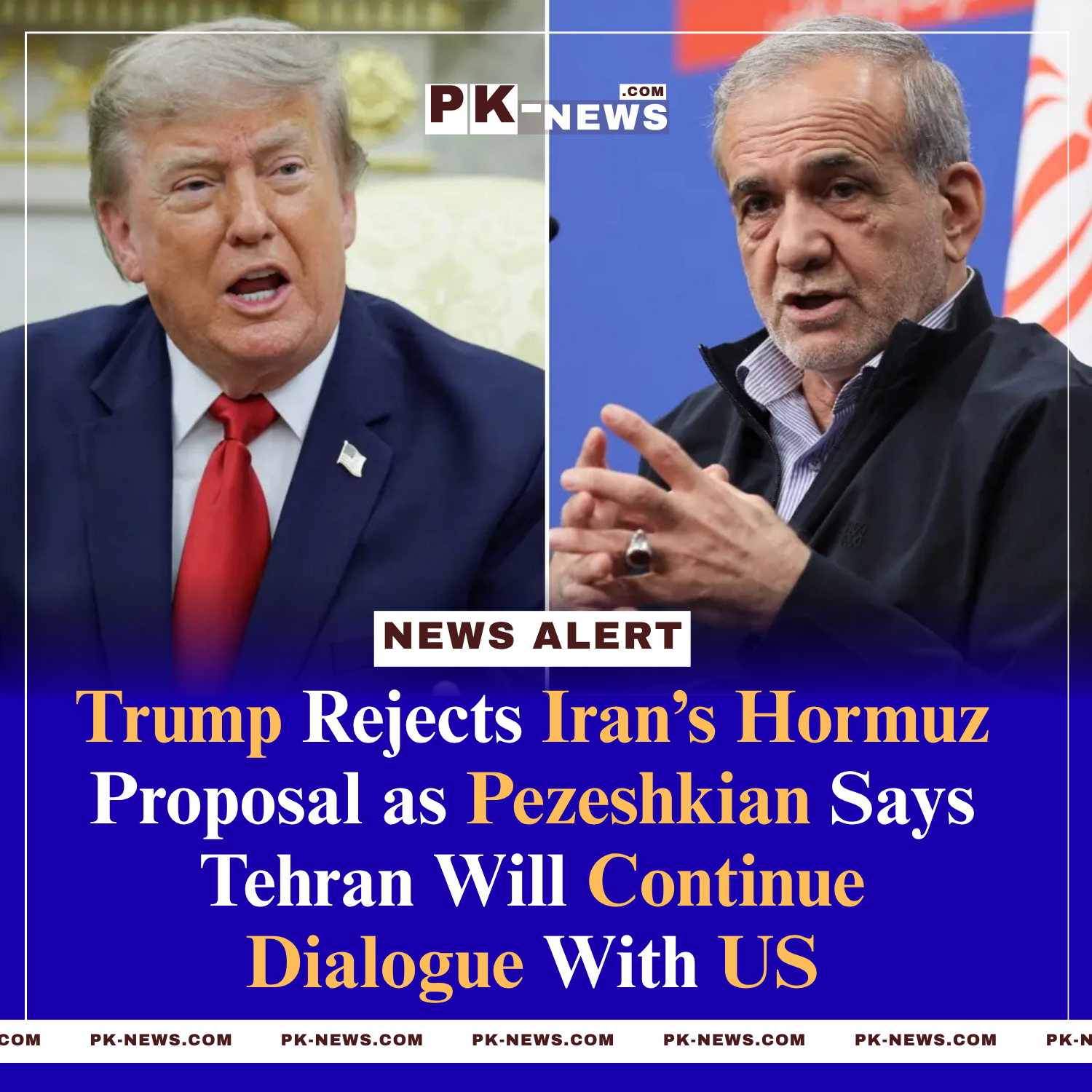
Trump Rejects Iran’s Hormuz Proposal as Pezeshkian Says Tehran Will Continue Dialogue With US
13
Global PK Live News 😔 Negative
Trump Rejects Iran’s Hormuz Proposal as Pezeshkian Says Tehran Will Continue Dialogue With US
WASHINGTON/TEHRAN — Diplomatic efforts between the United States and Iran remain active despite major differences over the future of the Strait of Hormuz, with US President Donald Trump saying Iran’s latest proposal was not acceptable while Iranian President Masoud Pezeshkian has continued to signal that Tehran is prepared to pursue dialogue. Iran had proposed a framework under which the Strait of Hormuz could be reopened within seven days while negotiations with Washington resumed. The proposal was presented through diplomatic channels during the United Nations General Assembly in New York. Iran Proposes Seven-Day Plan Iranian Foreign Minister Abbas Araghchi said Tehran had offered a plan involving a temporary cessation of hostilities, followed by the reopening of the strategic waterway and the resumption of negotiations. According to reports, the Iranian proposal included conditions related to the US naval blockade, sanctions and frozen Iranian assets. Tehran's position was that these measures should form part of a broader framework aimed at ending the conflict and returning to negotiations over unresolved issues, including Iran's nuclear programme. Trump Says the Proposal Is Not Acceptable Trump rejected the proposal publicly, saying the agreement offered by Iran did not meet US requirements. He argued that Washington had gained significant leverage over the Strait of Hormuz and indicated that the United States was not under pressure to accept Tehran's terms. Trump's comments came after US and Iranian officials had conducted indirect discussions through mediators. The disagreement demonstrates that although both sides have discussed diplomacy, substantial differences remain over the conditions required for a wider settlement. Pezeshkian Says Iran Will Keep Seeking Dialogue Pezeshkian has maintained that Tehran remains open to diplomacy despite the continuing confrontation with Washington. The Iranian president has previously said that Iran does not want to continue the conflict and that disagreements should be addressed through dialogue when possible. He has also said Tehran would consider an agreement if the United States is prepared to negotiate within what Iran considers an acceptable framework. More recent reporting indicates that Pezeshkian continues to support dialogue with Washington even as diplomatic progress remains limited. Strait of Hormuz Remains the Central Issue The Strait of Hormuz has become one of the central issues in the US-Iran confrontation because of its importance to international energy transportation and maritime trade. Iran's proposal specifically connected the reopening of the waterway with broader diplomatic arrangements. Washington, meanwhile, has maintained its own conditions for a settlement, creating a significant gap between the two positions. The waterway's importance extends far beyond Iran and the United States. Disruptions can affect energy shipments, shipping costs, insurance markets and international supply chains. Indirect Talks Continue Through Mediators The diplomatic discussions have largely taken place indirectly, with countries including Qatar and Oman involved in communicating between Washington and Tehran. Recent reports indicate that US and Iranian representatives held discussions around the Strait of Hormuz, the conflict and Iran's nuclear programme. However, the negotiations have not yet produced a comprehensive agreement. The involvement of regional mediators reflects the difficulty of direct US-Iran diplomacy during an ongoing conflict. Iran Awaits Further US Response Iran has indicated that it received a US response to its proposal, although significant differences remain regarding implementation and the conditions surrounding any reopening of Hormuz. The latest developments suggest that diplomatic channels have not completely closed despite Trump's rejection of the original proposal. Tehran continues to discuss possible arrangements while Washington is evaluating what it considers acceptable terms. Nuclear Issue Remains Part of the Negotiations The Strait of Hormuz is not the only issue involved in the diplomatic process. Iran's nuclear programme remains an important component of discussions between the two countries. Reports on the proposed framework indicate that future negotiations could address nuclear inspections and other restrictions alongside maritime arrangements and sanctions. The United States has sought commitments from Iran on its nuclear activities, while Tehran has continued to insist on its right to peaceful nuclear technology. Regional Security Adds Another Layer The US-Iran dispute also has consequences for the wider Middle East. Any agreement concerning Hormuz would need to take into account regional security, maritime traffic and the actions of other armed groups and governments involved in the broader conflict. Recent analysis has noted that both Washington and Tehran believe they retain significant leverage, which has complicated efforts to reach a settlement. Latest Diplomatic Picture As of October 1, 2026, the two sides remain publicly divided over the terms of a potential agreement. Trump has rejected Iran's latest Hormuz proposal as insufficient, while Pezeshkian has continued to indicate that Tehran is prepared to pursue dialogue. The Iranian proposal has nevertheless kept diplomacy in the discussion, particularly concerning the reopening of the Strait of Hormuz and the possibility of restarting broader negotiations. Whether those discussions can produce a durable agreement will depend on whether Washington and Tehran can bridge their differences over maritime access, sanctions, security arrangements and Iran's nuclear programme. PK-News.com Update The latest US-Iran developments show that diplomatic contacts continue despite major disagreements over the Strait of Hormuz. Iran has proposed reopening the strategic waterway under specific conditions, while President Trump has said those terms are unacceptable. Pezeshkian, meanwhile, has continued to emphasize dialogue and negotiations with Washington. The situation remains fluid, and further diplomatic responses from both governments could influence the future of the Hormuz waterway and the wider regional conflict. This article was developed and researched by PK-News.com based on reports and statements available on October 1, 2026.
Oct 1, 2026 at 8:41 PM
WASHINGTON/TEHRAN — Diplomatic efforts between the United States and Iran remain active despite major differences over the future of the Strait of Hormuz, with US President Donald Trump saying Iran’s latest proposal was not acceptable while Iranian President Masoud Pezeshkian has continued to signal that Tehran is prepared to pursue dialogue. Iran had proposed a framework under which the Strait of Hormuz could be reopened within seven days while negotiations with Washington resumed. The proposal was presented through diplomatic channels during the United Nations General Assembly in New York. Iran Proposes Seven-Day Plan Iranian Foreign Minister Abbas Araghchi said Tehran had offered a plan involving a temporary cessation of hostilities, followed by the reopening of the strategic waterway and the resumption of negotiations. According to reports, the Iranian proposal included conditions related to the US naval blockade, sanctions and frozen Iranian assets. Tehran's position was that these measures should form part of a broader framework aimed at ending the conflict and returning to negotiations over unresolved issues, including Iran's nuclear programme. Trump Says the Proposal Is Not Acceptable Trump rejected the proposal publicly, saying the agreement offered by Iran did not meet US requirements. He argued that Washington had gained significant leverage over the Strait of Hormuz and indicated that the United States was not under pressure to accept Tehran's terms. Trump's comments came after US and Iranian officials had conducted indirect discussions through mediators. The disagreement demonstrates that although both sides have discussed diplomacy, substantial differences remain over the conditions required for a wider settlement. Pezeshkian Says Iran Will Keep Seeking Dialogue Pezeshkian has maintained that Tehran remains open to diplomacy despite the continuing confrontation with Washington. The Iranian president has previously said that Iran does not want to continue the conflict and that disagreements should be addressed through dialogue when possible. He has also said Tehran would consider an agreement if the United States is prepared to negotiate within what Iran considers an acceptable framework. More recent reporting indicates that Pezeshkian continues to support dialogue with Washington even as diplomatic progress remains limited. Strait of Hormuz Remains the Central Issue The Strait of Hormuz has become one of the central issues in the US-Iran confrontation because of its importance to international energy transportation and maritime trade. Iran's proposal specifically connected the reopening of the waterway with broader diplomatic arrangements. Washington, meanwhile, has maintained its own conditions for a settlement, creating a significant gap between the two positions. The waterway's importance extends far beyond Iran and the United States. Disruptions can affect energy shipments, shipping costs, insurance markets and international supply chains. Indirect Talks Continue Through Mediators The diplomatic discussions have largely taken place indirectly, with countries including Qatar and Oman involved in communicating between Washington and Tehran. Recent reports indicate that US and Iranian representatives held discussions around the Strait of Hormuz, the conflict and Iran's nuclear programme. However, the negotiations have not yet produced a comprehensive agreement. The involvement of regional mediators reflects the difficulty of direct US-Iran diplomacy during an ongoing conflict. Iran Awaits Further US Response Iran has indicated that it received a US response to its proposal, although significant differences remain regarding implementation and the conditions surrounding any reopening of Hormuz. The latest developments suggest that diplomatic channels have not completely closed despite Trump's rejection of the original proposal. Tehran continues to discuss possible arrangements while Washington is evaluating what it considers acceptable terms. Nuclear Issue Remains Part of the Negotiations The Strait of Hormuz is not the only issue involved in the diplomatic process. Iran's nuclear programme remains an important component of discussions between the two countries. Reports on the proposed framework indicate that future negotiations could address nuclear inspections and other restrictions alongside maritime arrangements and sanctions. The United States has sought commitments from Iran on its nuclear activities, while Tehran has continued to insist on its right to peaceful nuclear technology. Regional Security Adds Another Layer The US-Iran dispute also has consequences for the wider Middle East. Any agreement concerning Hormuz would need to take into account regional security, maritime traffic and the actions of other armed groups and governments involved in the broader conflict. Recent analysis has noted that both Washington and Tehran believe they retain significant leverage, which has complicated efforts to reach a settlement. Latest Diplomatic Picture As of October 1, 2026, the two sides remain publicly divided over the terms of a potential agreement. Trump has rejected Iran's latest Hormuz proposal as insufficient, while Pezeshkian has continued to indicate that Tehran is prepared to pursue dialogue. The Iranian proposal has nevertheless kept diplomacy in the discussion, particularly concerning the reopening of the Strait of Hormuz and the possibility of restarting broader negotiations. Whether those discussions can produce a durable agreement will depend on whether Washington and Tehran can bridge their differences over maritime access, sanctions, security arrangements and Iran's nuclear programme. PK-News.com Update The latest US-Iran developments show that diplomatic contacts continue despite major disagreements over the Strait of Hormuz. Iran has proposed reopening the strategic waterway under specific conditions, while President Trump has said those terms are unacceptable. Pezeshkian, meanwhile, has continued to emphasize dialogue and negotiations with Washington. The situation remains fluid, and further diplomatic responses from both governments could influence the future of the Hormuz waterway and the wider regional conflict. This article was developed and researched by PK-News.com based on reports and statements available on October 1, 2026.
Pilot May Have Tried to Crash Israel-Bound Flydubai Flight After Stabbing Fellow Pilot, Netanyahu Says
38
Global PK Live News 😔 Negative
Pilot May Have Tried to Crash Israel-Bound Flydubai Flight After Stabbing Fellow Pilot, Netanyahu Says
DUBAI — A Flydubai passenger aircraft travelling from Dubai to Tel Aviv made an emergency landing in Saudi Arabia on Wednesday after one of its pilots allegedly stabbed the other and apparently attempted to take control of the aircraft, according to Israeli Prime Minister Benjamin Netanyahu. The incident occurred aboard Flydubai Flight FZ1073, which was carrying more than 170 passengers. The aircraft diverted to Tabuk Airport in northwestern Saudi Arabia, where it landed safely. Israeli officials said passengers and crew members intervened during the incident, while Saudi authorities arrested the pilot accused of the attack. Netanyahu Says Pilot Apparently Tried to Crash the Aircraft Netanyahu described the incident as a serious security event and said the co-pilot allegedly stabbed the captain before apparently trying to crash the aircraft. According to Netanyahu, passengers and members of the crew entered the cockpit after the aircraft began descending rapidly. They reportedly managed to overpower the suspected attacker and allow other crew members to regain control of the aircraft. Netanyahu said those who intervened prevented what could have become a major disaster. Flight Suddenly Lost Thousands of Feet Flight-tracking information showed an unusual and rapid change in the aircraft's altitude during the incident. Reuters reported that Flightradar24 data showed the aircraft falling by nearly 14,000 feet in about 30 seconds. Other reports said the Boeing 737 had been flying at approximately 33,000 feet before descending sharply toward 17,000 feet. The sudden descent, combined with emergency signals from the aircraft, immediately raised concerns about a possible hijacking or serious security breach. Emergency Signals Sent From the Aircraft The aircraft reportedly transmitted the internationally recognized 7700 emergency code, followed by 7500, which is associated with unlawful interference or a possible hijacking. The aircraft then changed course and eventually headed toward Tabuk in Saudi Arabia. Israeli authorities responded to the emergency by scrambling fighter aircraft while the situation remained unclear. Passengers and Crew Entered the Cockpit Netanyahu said a passenger and a crew member entered the cockpit as the aircraft was descending. According to his account, passengers then helped subdue the suspected attacker while other crew members took over the aircraft's controls. Reports also said that some passengers who intervened had security or aviation backgrounds. The incident reportedly left both pilots injured. Tabuk airport authorities said the captain and co-pilot were taken for medical treatment after the aircraft landed. Aircraft Diverted to Saudi Arabia Instead of continuing toward Ben Gurion Airport in Israel, the flight was diverted to Prince Sultan bin Abdulaziz International Airport in Tabuk. The aircraft landed safely, and passengers were taken from the plane while Saudi authorities secured the situation. According to Reuters, the passengers later departed Saudi Arabia for Israel aboard a replacement Flydubai aircraft. The emergency landing was particularly notable because Saudi Arabia does not have formal diplomatic relations with Israel, although Saudi airspace has been used by flights between Israel and other countries and the kingdom has previously handled emergency landings involving Israeli passengers. Suspected Pilot Arrested in Saudi Arabia Netanyahu said the pilot accused of attacking his fellow crew member was arrested after the aircraft landed in Saudi Arabia. Reuters reported that an Israeli official identified the alleged attacker as an Omani national, although details about the pilot's background and motive remained under investigation. Saudi authorities were expected to question the suspect as investigators examined what happened aboard the aircraft. Flydubai Urges Against Premature Speculation While Israeli officials have described the incident as an apparent attempt to crash the aircraft, Flydubai has taken a more cautious position. The airline confirmed that an altercation occurred in the flight deck and said its crew secured the aircraft before diverting and landing safely in Tabuk. Flydubai said the underlying reasons and motives remained unknown and were subject to a formal investigation. This distinction is important because the investigation is still developing. The precise motive behind the confrontation has not been publicly established. Israel Orders Additional Security Measures Following the incident, Netanyahu ordered increased security measures for both Israeli and foreign airlines operating flights to Israel. Israel's Transport Ministry also said a joint investigation would be conducted with the country's defence establishment. The incident prompted consultations among senior Israeli security officials as authorities assessed whether there could be additional risks. Passengers Eventually Returned to Israel Despite the dramatic events during the flight, the passengers were ultimately brought safely to Israel. Reuters reported that the passengers remained in Saudi Arabia for approximately eight hours before departing aboard a replacement Flydubai aircraft. Flydubai also confirmed that two replacement aircraft were sent to Tabuk to assist passengers and crew affected by the incident. The airline said the event did not disrupt its other scheduled operations. What Remains Unknown? Several important questions remain unanswered. Investigators still need to establish exactly how the confrontation began, why one pilot allegedly attacked the other, whether there was a deliberate attempt to crash the aircraft and how the aircraft's control systems were affected during the rapid descent. Flydubai has specifically urged the public and media to avoid premature conclusions while authorities gather evidence. PK-News.com Analysis of the Developing Story The Flydubai incident has raised major questions about cockpit security after a routine Dubai-to-Tel Aviv flight turned into an emergency over the region. The confirmed sequence includes a cockpit altercation, injuries to both pilots, an abrupt descent, emergency signals, diversion to Saudi Arabia and the safe landing of the aircraft. Israeli officials have gone further, saying the co-pilot apparently attempted to crash the aircraft after stabbing the captain. Flydubai, however, has emphasized that the motive remains unknown and is being formally investigated. The safe intervention by passengers and crew members, followed by the aircraft's landing in Tabuk, prevented the incident from developing into a larger aviation disaster. Authorities in Israel and Saudi Arabia are now expected to examine the circumstances surrounding the cockpit confrontation and determine the exact motive behind it. This article was developed and researched by PK-News.com based on reports and official statements available on September 30, 2026. Further details may change as the investigation continues.
Sep 30, 2026 at 9:36 PM
DUBAI — A Flydubai passenger aircraft travelling from Dubai to Tel Aviv made an emergency landing in Saudi Arabia on Wednesday after one of its pilots allegedly stabbed the other and apparently attempted to take control of the aircraft, according to Israeli Prime Minister Benjamin Netanyahu. The incident occurred aboard Flydubai Flight FZ1073, which was carrying more than 170 passengers. The aircraft diverted to Tabuk Airport in northwestern Saudi Arabia, where it landed safely. Israeli officials said passengers and crew members intervened during the incident, while Saudi authorities arrested the pilot accused of the attack. Netanyahu Says Pilot Apparently Tried to Crash the Aircraft Netanyahu described the incident as a serious security event and said the co-pilot allegedly stabbed the captain before apparently trying to crash the aircraft. According to Netanyahu, passengers and members of the crew entered the cockpit after the aircraft began descending rapidly. They reportedly managed to overpower the suspected attacker and allow other crew members to regain control of the aircraft. Netanyahu said those who intervened prevented what could have become a major disaster. Flight Suddenly Lost Thousands of Feet Flight-tracking information showed an unusual and rapid change in the aircraft's altitude during the incident. Reuters reported that Flightradar24 data showed the aircraft falling by nearly 14,000 feet in about 30 seconds. Other reports said the Boeing 737 had been flying at approximately 33,000 feet before descending sharply toward 17,000 feet. The sudden descent, combined with emergency signals from the aircraft, immediately raised concerns about a possible hijacking or serious security breach. Emergency Signals Sent From the Aircraft The aircraft reportedly transmitted the internationally recognized 7700 emergency code, followed by 7500, which is associated with unlawful interference or a possible hijacking. The aircraft then changed course and eventually headed toward Tabuk in Saudi Arabia. Israeli authorities responded to the emergency by scrambling fighter aircraft while the situation remained unclear. Passengers and Crew Entered the Cockpit Netanyahu said a passenger and a crew member entered the cockpit as the aircraft was descending. According to his account, passengers then helped subdue the suspected attacker while other crew members took over the aircraft's controls. Reports also said that some passengers who intervened had security or aviation backgrounds. The incident reportedly left both pilots injured. Tabuk airport authorities said the captain and co-pilot were taken for medical treatment after the aircraft landed. Aircraft Diverted to Saudi Arabia Instead of continuing toward Ben Gurion Airport in Israel, the flight was diverted to Prince Sultan bin Abdulaziz International Airport in Tabuk. The aircraft landed safely, and passengers were taken from the plane while Saudi authorities secured the situation. According to Reuters, the passengers later departed Saudi Arabia for Israel aboard a replacement Flydubai aircraft. The emergency landing was particularly notable because Saudi Arabia does not have formal diplomatic relations with Israel, although Saudi airspace has been used by flights between Israel and other countries and the kingdom has previously handled emergency landings involving Israeli passengers. Suspected Pilot Arrested in Saudi Arabia Netanyahu said the pilot accused of attacking his fellow crew member was arrested after the aircraft landed in Saudi Arabia. Reuters reported that an Israeli official identified the alleged attacker as an Omani national, although details about the pilot's background and motive remained under investigation. Saudi authorities were expected to question the suspect as investigators examined what happened aboard the aircraft. Flydubai Urges Against Premature Speculation While Israeli officials have described the incident as an apparent attempt to crash the aircraft, Flydubai has taken a more cautious position. The airline confirmed that an altercation occurred in the flight deck and said its crew secured the aircraft before diverting and landing safely in Tabuk. Flydubai said the underlying reasons and motives remained unknown and were subject to a formal investigation. This distinction is important because the investigation is still developing. The precise motive behind the confrontation has not been publicly established. Israel Orders Additional Security Measures Following the incident, Netanyahu ordered increased security measures for both Israeli and foreign airlines operating flights to Israel. Israel's Transport Ministry also said a joint investigation would be conducted with the country's defence establishment. The incident prompted consultations among senior Israeli security officials as authorities assessed whether there could be additional risks. Passengers Eventually Returned to Israel Despite the dramatic events during the flight, the passengers were ultimately brought safely to Israel. Reuters reported that the passengers remained in Saudi Arabia for approximately eight hours before departing aboard a replacement Flydubai aircraft. Flydubai also confirmed that two replacement aircraft were sent to Tabuk to assist passengers and crew affected by the incident. The airline said the event did not disrupt its other scheduled operations. What Remains Unknown? Several important questions remain unanswered. Investigators still need to establish exactly how the confrontation began, why one pilot allegedly attacked the other, whether there was a deliberate attempt to crash the aircraft and how the aircraft's control systems were affected during the rapid descent. Flydubai has specifically urged the public and media to avoid premature conclusions while authorities gather evidence. PK-News.com Analysis of the Developing Story The Flydubai incident has raised major questions about cockpit security after a routine Dubai-to-Tel Aviv flight turned into an emergency over the region. The confirmed sequence includes a cockpit altercation, injuries to both pilots, an abrupt descent, emergency signals, diversion to Saudi Arabia and the safe landing of the aircraft. Israeli officials have gone further, saying the co-pilot apparently attempted to crash the aircraft after stabbing the captain. Flydubai, however, has emphasized that the motive remains unknown and is being formally investigated. The safe intervention by passengers and crew members, followed by the aircraft's landing in Tabuk, prevented the incident from developing into a larger aviation disaster. Authorities in Israel and Saudi Arabia are now expected to examine the circumstances surrounding the cockpit confrontation and determine the exact motive behind it. This article was developed and researched by PK-News.com based on reports and official statements available on September 30, 2026. Further details may change as the investigation continues.
Flydubai Flight to Israel Diverted After Pilot Stabbing Incident: What We Know So Far
95
Global PK Live News 😔 Negative
Flydubai Flight to Israel Diverted After Pilot Stabbing Incident: What We Know So Far
DUBAI/TEL AVIV — A Flydubai passenger flight travelling from Dubai to Tel Aviv was diverted to Saudi Arabia on Wednesday after a violent altercation in the cockpit left both pilots injured and triggered an emergency response. The aircraft, Flydubai Flight FZ1073, was carrying roughly 170–180 passengers when the incident occurred during its journey from Dubai International Airport to Ben Gurion Airport near Tel Aviv. The aircraft ultimately landed safely at Tabuk Airport in northwestern Saudi Arabia, with all passengers and crew reported safe and accounted for. What Happened Inside the Cockpit? According to Israeli officials and statements reported by Reuters and the Associated Press, one pilot allegedly stabbed the other during the flight. Israeli Prime Minister Benjamin Netanyahu said the pilot apparently attempted to crash the aircraft after the stabbing. The exact circumstances surrounding the confrontation remain under investigation. Flydubai itself initially described the incident as an “altercation” in the flight deck and said the aircraft was secured by its crew before being diverted safely to Tabuk. The airline has urged people not to speculate about the motive before investigators establish the facts. Passengers and Crew Helped Secure the Aircraft Reports indicate that passengers and members of the crew intervened after the situation inside the cockpit became apparent. Netanyahu said passengers and crew members managed to enter the cockpit and subdue the suspected attacker, allowing other crew members to regain control of the aircraft. AP reported that people familiar with the investigation said some passengers who intervened included Israeli security personnel and air marshals. The intervention was followed by the aircraft's diversion toward Saudi Arabia, where it could make a safe emergency landing. Aircraft Made a Rapid Descent Flight-tracking data provided another indication of the seriousness of the incident. According to AP, the aircraft was flying at approximately 33,000 feet before descending to around 17,000 feet in roughly a minute. The aircraft subsequently made an unusual turn near the Saudi-Jordanian border before continuing toward Tabuk. Reuters also reported that Flightradar24 data showed the aircraft losing nearly 14,000 feet within about 30 seconds. The rapid descent contributed to concerns that the aircraft could have been facing a hijacking or another serious emergency. Emergency Signals Triggered Security Response The aircraft transmitted an emergency signal during the incident. Reports have indicated that the flight used the aviation code associated with unlawful interference before later using a general emergency code. The emergency transmission prompted heightened concern in Israel, with Israeli authorities scrambling fighter aircraft because of fears that the passenger plane could have been hijacked or otherwise endangered. Israeli officials later said the situation was under control and the aircraft had landed safely in Saudi Arabia. Why Did the Plane Land in Saudi Arabia? Rather than continuing toward Israel, the flight was diverted to Tabuk Airport, located in northwestern Saudi Arabia. The diversion provided the aircraft with a safe location to land while authorities dealt with the situation. Saudi authorities subsequently took the suspected attacker into custody, according to Israeli officials. Netanyahu said Saudi authorities would question the co-pilot involved in the incident. The emergency landing was notable because Saudi Arabia and Israel do not have formal diplomatic relations, although Saudi airspace has previously been used by Israeli aircraft and Saudi airports have handled emergency situations involving Israeli passengers. Both Pilots Were Injured The captain and first officer were reportedly injured during the confrontation. The airport in Tabuk said both pilots had suffered injuries and that passengers received medical assistance following the landing. The exact extent of their injuries was not immediately clear in the initial reports. The priority after landing was to secure the aircraft, provide medical assistance and ensure that passengers and crew were safe. What Happened to the Passengers? After spending several hours in Saudi Arabia, replacement aircraft were arranged to transport the passengers onward. Flydubai said it had deployed two replacement aircraft to Tabuk to assist the affected passengers and crew. The airline also said the incident did not affect other scheduled operations across its network. Reports later said the Israeli passengers were transported toward Israel aboard a replacement flight. What Was the Motive? At this stage, the motive remains unclear. This is an important point because some early reports and political statements raised the possibility that the incident was an intentional attempt to crash the aircraft. However, Flydubai has said that the underlying reasons and motives remain unknown and are subject to a formal investigation. Therefore, claims about terrorism, a planned hijacking or a deliberate suicide attack should not be treated as established facts until investigators release further findings. Israeli Authorities Launch Investigation The incident immediately triggered a security assessment in Israel. According to Reuters, Israel's Transport Ministry said a joint investigation would take place with the country's defence establishment. Netanyahu also ordered increased security measures for Israeli and non-Israeli airlines operating flights to Israel following the incident. The investigation is expected to examine what happened inside the cockpit, how the confrontation began, how the aircraft was controlled during the emergency and whether the incident involved a deliberate attempt to interfere with the flight. Why the Incident Is Significant The incident is particularly significant because commercial aviation relies heavily on cockpit security and strict procedures separating flight crews from passengers. A physical confrontation between pilots during a commercial flight presents a highly unusual safety situation because the pilots are responsible for maintaining control of the aircraft and responding to emergencies. The incident also demonstrates why emergency procedures and the presence of additional trained crew can become critical when an unexpected situation develops onboard. Flydubai Calls for Caution Flydubai has not publicly confirmed all of the more serious allegations surrounding the incident. The airline's official position is that an altercation occurred in the flight deck, that its on-duty crew secured the aircraft and that the aircraft was safely diverted to Tabuk. The company said investigators would determine the underlying reasons and motives. This distinction is important as the investigation develops. Statements from political officials, passengers, witnesses and media reports may provide details about the incident, but investigators will ultimately need to establish what happened and why. What We Know and What Remains Unclear At the time of publication, several facts have been established: Flydubai Flight FZ1073 was travelling from Dubai to Tel Aviv; a serious altercation occurred in the cockpit; both pilots were injured; the aircraft issued emergency signals; the plane diverted to Tabuk in Saudi Arabia; and all passengers and crew survived the incident. However, several major questions remain unanswered. Investigators still need to determine the precise sequence of events inside the cockpit, the motive behind the confrontation, whether the aircraft was intentionally being diverted or brought down, and how the suspected attacker gained access to or control over the aircraft's systems. PK-News.com Update The Flydubai incident has become one of the most closely watched aviation stories of September 30, 2026. A routine flight from Dubai to Tel Aviv turned into a major emergency after an apparent cockpit confrontation, forcing the aircraft to divert to Saudi Arabia. While Israeli officials have described the incident as an apparent attempt to crash the aircraft, Flydubai has said the motive remains unknown and is being investigated. The safe landing at Tabuk and intervention by crew and passengers prevented the situation from developing into a larger aviation disaster, according to officials. This article was developed and researched by PK-News.com using reports and official statements available on September 30, 2026. Further updates may follow as Saudi, Israeli and aviation authorities release additional findings.
Sep 30, 2026 at 9:24 PM
DUBAI/TEL AVIV — A Flydubai passenger flight travelling from Dubai to Tel Aviv was diverted to Saudi Arabia on Wednesday after a violent altercation in the cockpit left both pilots injured and triggered an emergency response. The aircraft, Flydubai Flight FZ1073, was carrying roughly 170–180 passengers when the incident occurred during its journey from Dubai International Airport to Ben Gurion Airport near Tel Aviv. The aircraft ultimately landed safely at Tabuk Airport in northwestern Saudi Arabia, with all passengers and crew reported safe and accounted for. What Happened Inside the Cockpit? According to Israeli officials and statements reported by Reuters and the Associated Press, one pilot allegedly stabbed the other during the flight. Israeli Prime Minister Benjamin Netanyahu said the pilot apparently attempted to crash the aircraft after the stabbing. The exact circumstances surrounding the confrontation remain under investigation. Flydubai itself initially described the incident as an “altercation” in the flight deck and said the aircraft was secured by its crew before being diverted safely to Tabuk. The airline has urged people not to speculate about the motive before investigators establish the facts. Passengers and Crew Helped Secure the Aircraft Reports indicate that passengers and members of the crew intervened after the situation inside the cockpit became apparent. Netanyahu said passengers and crew members managed to enter the cockpit and subdue the suspected attacker, allowing other crew members to regain control of the aircraft. AP reported that people familiar with the investigation said some passengers who intervened included Israeli security personnel and air marshals. The intervention was followed by the aircraft's diversion toward Saudi Arabia, where it could make a safe emergency landing. Aircraft Made a Rapid Descent Flight-tracking data provided another indication of the seriousness of the incident. According to AP, the aircraft was flying at approximately 33,000 feet before descending to around 17,000 feet in roughly a minute. The aircraft subsequently made an unusual turn near the Saudi-Jordanian border before continuing toward Tabuk. Reuters also reported that Flightradar24 data showed the aircraft losing nearly 14,000 feet within about 30 seconds. The rapid descent contributed to concerns that the aircraft could have been facing a hijacking or another serious emergency. Emergency Signals Triggered Security Response The aircraft transmitted an emergency signal during the incident. Reports have indicated that the flight used the aviation code associated with unlawful interference before later using a general emergency code. The emergency transmission prompted heightened concern in Israel, with Israeli authorities scrambling fighter aircraft because of fears that the passenger plane could have been hijacked or otherwise endangered. Israeli officials later said the situation was under control and the aircraft had landed safely in Saudi Arabia. Why Did the Plane Land in Saudi Arabia? Rather than continuing toward Israel, the flight was diverted to Tabuk Airport, located in northwestern Saudi Arabia. The diversion provided the aircraft with a safe location to land while authorities dealt with the situation. Saudi authorities subsequently took the suspected attacker into custody, according to Israeli officials. Netanyahu said Saudi authorities would question the co-pilot involved in the incident. The emergency landing was notable because Saudi Arabia and Israel do not have formal diplomatic relations, although Saudi airspace has previously been used by Israeli aircraft and Saudi airports have handled emergency situations involving Israeli passengers. Both Pilots Were Injured The captain and first officer were reportedly injured during the confrontation. The airport in Tabuk said both pilots had suffered injuries and that passengers received medical assistance following the landing. The exact extent of their injuries was not immediately clear in the initial reports. The priority after landing was to secure the aircraft, provide medical assistance and ensure that passengers and crew were safe. What Happened to the Passengers? After spending several hours in Saudi Arabia, replacement aircraft were arranged to transport the passengers onward. Flydubai said it had deployed two replacement aircraft to Tabuk to assist the affected passengers and crew. The airline also said the incident did not affect other scheduled operations across its network. Reports later said the Israeli passengers were transported toward Israel aboard a replacement flight. What Was the Motive? At this stage, the motive remains unclear. This is an important point because some early reports and political statements raised the possibility that the incident was an intentional attempt to crash the aircraft. However, Flydubai has said that the underlying reasons and motives remain unknown and are subject to a formal investigation. Therefore, claims about terrorism, a planned hijacking or a deliberate suicide attack should not be treated as established facts until investigators release further findings. Israeli Authorities Launch Investigation The incident immediately triggered a security assessment in Israel. According to Reuters, Israel's Transport Ministry said a joint investigation would take place with the country's defence establishment. Netanyahu also ordered increased security measures for Israeli and non-Israeli airlines operating flights to Israel following the incident. The investigation is expected to examine what happened inside the cockpit, how the confrontation began, how the aircraft was controlled during the emergency and whether the incident involved a deliberate attempt to interfere with the flight. Why the Incident Is Significant The incident is particularly significant because commercial aviation relies heavily on cockpit security and strict procedures separating flight crews from passengers. A physical confrontation between pilots during a commercial flight presents a highly unusual safety situation because the pilots are responsible for maintaining control of the aircraft and responding to emergencies. The incident also demonstrates why emergency procedures and the presence of additional trained crew can become critical when an unexpected situation develops onboard. Flydubai Calls for Caution Flydubai has not publicly confirmed all of the more serious allegations surrounding the incident. The airline's official position is that an altercation occurred in the flight deck, that its on-duty crew secured the aircraft and that the aircraft was safely diverted to Tabuk. The company said investigators would determine the underlying reasons and motives. This distinction is important as the investigation develops. Statements from political officials, passengers, witnesses and media reports may provide details about the incident, but investigators will ultimately need to establish what happened and why. What We Know and What Remains Unclear At the time of publication, several facts have been established: Flydubai Flight FZ1073 was travelling from Dubai to Tel Aviv; a serious altercation occurred in the cockpit; both pilots were injured; the aircraft issued emergency signals; the plane diverted to Tabuk in Saudi Arabia; and all passengers and crew survived the incident. However, several major questions remain unanswered. Investigators still need to determine the precise sequence of events inside the cockpit, the motive behind the confrontation, whether the aircraft was intentionally being diverted or brought down, and how the suspected attacker gained access to or control over the aircraft's systems. PK-News.com Update The Flydubai incident has become one of the most closely watched aviation stories of September 30, 2026. A routine flight from Dubai to Tel Aviv turned into a major emergency after an apparent cockpit confrontation, forcing the aircraft to divert to Saudi Arabia. While Israeli officials have described the incident as an apparent attempt to crash the aircraft, Flydubai has said the motive remains unknown and is being investigated. The safe landing at Tabuk and intervention by crew and passengers prevented the situation from developing into a larger aviation disaster, according to officials. This article was developed and researched by PK-News.com using reports and official statements available on September 30, 2026. Further updates may follow as Saudi, Israeli and aviation authorities release additional findings.
Iran’s Pezeshkian Calls for Regional Cooperation to Ensure Sustainable Gulf Security
25
Global PK Live News 😊 Positive
Iran’s Pezeshkian Calls for Regional Cooperation to Ensure Sustainable Gulf Security
TEHRAN — Iran’s President Masoud Pezeshkian has called for greater cooperation and shared responsibility among countries bordering the Persian Gulf, saying sustainable security in the Gulf and its waterways depends primarily on the active participation of regional states. Pezeshkian made the remarks in a message marking World Maritime Day on September 30, 2026, in which he linked maritime security with economic development, international trade, shipping and regional stability. His comments come amid continued international attention surrounding the Strait of Hormuz, one of the world’s most strategically important maritime passages. Pezeshkian Links Gulf Security to Regional Cooperation The Iranian president said lasting security in the Persian Gulf cannot be achieved through the actions of a single country. According to his message, cooperation, responsibility and active participation by regional countries are central to maintaining stability across the Gulf and its waterways. Pezeshkian presented the issue as both a security and economic concern, arguing that safe maritime routes, ports and shipping connections create the conditions necessary for trade and economic activity. He also emphasized that economic development can strengthen the capabilities of countries in the region. Strait of Hormuz Remains at the Center of Regional Attention Pezeshkian specifically highlighted the Strait of Hormuz, describing it as one of the world's most important maritime passages with a major role in both regional and global economic and security affairs. Iran's president said Tehran's approach toward the strategic waterway is based on what he described as responsibility and the preservation of security, stability and the interests of regional countries. The statement places the Strait of Hormuz at the center of Iran's broader argument that Gulf states should have a greater role in determining the security arrangements affecting their own region. Maritime Security and Economic Development Pezeshkian also connected maritime security with economic growth. Iran has long relied on its northern and southern coastlines and maritime connections for shipping, trade and economic activity. In his World Maritime Day message, he said maritime activities contribute to economic growth, regional development, employment and international connectivity. He argued that secure seas, ports and transportation routes help facilitate commercial activity, while stronger economic development can contribute to national capabilities. The Iranian president therefore presented maritime security not only as a military or political issue but also as an important component of economic planning and regional connectivity. Iran Says It Has a Responsibility for Regional Waterways Pezeshkian said Iran is pursuing what he described as its responsibility to maintain security and stability along regional waterways and to safeguard maritime shipping and trade. He pointed to Iran's naval forces and maritime professionals as part of the country's ability to protect its maritime interests. He also praised Iranian seafarers and other maritime workers, saying their activities had helped keep the country's vital economic lifelines operating during a challenging period. Calls for Greater Participation Across the Maritime Sector The Iranian president also broadened his message beyond governments and military forces. He called for greater participation from shipping companies, fishing communities, port operators, maritime industries, universities, scientific institutions and coastal communities. Pezeshkian said investment in maritime infrastructure, research, technology and safety would be important for the future. His message also highlighted the importance of marine science and environmental protection, suggesting that sustainable maritime development should include both economic activity and protection of marine ecosystems. Regional Discussions Over Hormuz Navigation The latest comments follow other recent statements from Tehran about the future of navigation through the Strait of Hormuz. Earlier in September, Pezeshkian said Iran was prepared to cooperate with neighboring countries on regional security and had discussed a framework for navigation through the strategic waterway with Oman and other regional states. Iranian Foreign Minister Abbas Araqchi later said discussions involving Oman were intended to address maritime arrangements and regional consultations, while stressing Tehran's position that regional countries themselves have a responsibility for security and stability. Hormuz Has Wider International Economic Importance The Strait of Hormuz is particularly significant because of its location between the Persian Gulf and the Gulf of Oman. Shipping through the waterway connects major energy-producing countries with international markets. Any prolonged disruption to maritime traffic can therefore have consequences beyond the countries directly surrounding the Gulf. Energy transportation, shipping costs, insurance, supply chains and international trade can all be affected by instability around major maritime routes. For countries in Asia, Europe and other parts of the world that depend on Middle Eastern energy supplies and maritime commerce, developments around Hormuz remain closely watched. Iran Emphasizes a Regional Approach to Security Pezeshkian's latest message continues a broader Iranian position that Gulf security should involve the countries located in the region. In a September 23 address at the United Nations General Assembly, he said Iran wanted cooperation with its neighbors and called for strong regional relationships around the Strait of Hormuz. The latest World Maritime Day statement similarly emphasizes regional responsibility rather than focusing exclusively on external military involvement. At the same time, Iran's position on the role of foreign powers remains part of the wider diplomatic dispute surrounding security arrangements in the Gulf. Security, Trade and Environment Increasingly Connected Another important aspect of Pezeshkian's message was the connection between security, economic development and environmental protection. He argued that maritime policy must involve investment in scientific research, modern technology, infrastructure and safety. For Gulf countries, these issues are closely connected. The region contains major ports, shipping routes, energy infrastructure and coastal communities. Maintaining safe maritime transportation while protecting marine ecosystems is therefore a long-term challenge for governments and private industries. Pezeshkian's comments indicate that Tehran wants maritime security discussions to extend beyond military considerations and include trade, scientific cooperation, infrastructure and environmental issues. What Pezeshkian’s Statement Means for the Gulf The Iranian president's statement comes at a time when the Strait of Hormuz remains an important focus of regional and international diplomacy. His central message is that Gulf states should play an active role in establishing sustainable security arrangements for the waterways surrounding them. Whether such an approach can produce broader regional agreements will depend on the positions of Iran's neighbors and other governments involved in Gulf security and maritime trade. The statement itself does not establish a new security mechanism, but it reinforces Tehran's call for regional cooperation and responsibility. PK-News.com Analysis of the Latest Development From a regional perspective, Pezeshkian's World Maritime Day message places cooperation, maritime security and economic connectivity at the center of Iran's public position on the Persian Gulf. The Strait of Hormuz remains particularly important because developments there can have implications for regional security as well as international commerce. Iran's president is calling for neighboring countries to take an active role in maintaining stability, while also emphasizing shipping, infrastructure, scientific research and environmental protection. The remarks add to recent diplomatic discussions surrounding navigation through Hormuz and the broader question of how Gulf security should be managed. This article was developed and researched by PK-News.com based on the latest available statements and reports dated September 30, 2026.

Sep 30, 2026 at 9:15 PM
TEHRAN — Iran’s President Masoud Pezeshkian has called for greater cooperation and shared responsibility among countries bordering the Persian Gulf, saying sustainable security in the Gulf and its waterways depends primarily on the active participation of regional states. Pezeshkian made the remarks in a message marking World Maritime Day on September 30, 2026, in which he linked maritime security with economic development, international trade, shipping and regional stability. His comments come amid continued international attention surrounding the Strait of Hormuz, one of the world’s most strategically important maritime passages. Pezeshkian Links Gulf Security to Regional Cooperation The Iranian president said lasting security in the Persian Gulf cannot be achieved through the actions of a single country. According to his message, cooperation, responsibility and active participation by regional countries are central to maintaining stability across the Gulf and its waterways. Pezeshkian presented the issue as both a security and economic concern, arguing that safe maritime routes, ports and shipping connections create the conditions necessary for trade and economic activity. He also emphasized that economic development can strengthen the capabilities of countries in the region. Strait of Hormuz Remains at the Center of Regional Attention Pezeshkian specifically highlighted the Strait of Hormuz, describing it as one of the world's most important maritime passages with a major role in both regional and global economic and security affairs. Iran's president said Tehran's approach toward the strategic waterway is based on what he described as responsibility and the preservation of security, stability and the interests of regional countries. The statement places the Strait of Hormuz at the center of Iran's broader argument that Gulf states should have a greater role in determining the security arrangements affecting their own region. Maritime Security and Economic Development Pezeshkian also connected maritime security with economic growth. Iran has long relied on its northern and southern coastlines and maritime connections for shipping, trade and economic activity. In his World Maritime Day message, he said maritime activities contribute to economic growth, regional development, employment and international connectivity. He argued that secure seas, ports and transportation routes help facilitate commercial activity, while stronger economic development can contribute to national capabilities. The Iranian president therefore presented maritime security not only as a military or political issue but also as an important component of economic planning and regional connectivity. Iran Says It Has a Responsibility for Regional Waterways Pezeshkian said Iran is pursuing what he described as its responsibility to maintain security and stability along regional waterways and to safeguard maritime shipping and trade. He pointed to Iran's naval forces and maritime professionals as part of the country's ability to protect its maritime interests. He also praised Iranian seafarers and other maritime workers, saying their activities had helped keep the country's vital economic lifelines operating during a challenging period. Calls for Greater Participation Across the Maritime Sector The Iranian president also broadened his message beyond governments and military forces. He called for greater participation from shipping companies, fishing communities, port operators, maritime industries, universities, scientific institutions and coastal communities. Pezeshkian said investment in maritime infrastructure, research, technology and safety would be important for the future. His message also highlighted the importance of marine science and environmental protection, suggesting that sustainable maritime development should include both economic activity and protection of marine ecosystems. Regional Discussions Over Hormuz Navigation The latest comments follow other recent statements from Tehran about the future of navigation through the Strait of Hormuz. Earlier in September, Pezeshkian said Iran was prepared to cooperate with neighboring countries on regional security and had discussed a framework for navigation through the strategic waterway with Oman and other regional states. Iranian Foreign Minister Abbas Araqchi later said discussions involving Oman were intended to address maritime arrangements and regional consultations, while stressing Tehran's position that regional countries themselves have a responsibility for security and stability. Hormuz Has Wider International Economic Importance The Strait of Hormuz is particularly significant because of its location between the Persian Gulf and the Gulf of Oman. Shipping through the waterway connects major energy-producing countries with international markets. Any prolonged disruption to maritime traffic can therefore have consequences beyond the countries directly surrounding the Gulf. Energy transportation, shipping costs, insurance, supply chains and international trade can all be affected by instability around major maritime routes. For countries in Asia, Europe and other parts of the world that depend on Middle Eastern energy supplies and maritime commerce, developments around Hormuz remain closely watched. Iran Emphasizes a Regional Approach to Security Pezeshkian's latest message continues a broader Iranian position that Gulf security should involve the countries located in the region. In a September 23 address at the United Nations General Assembly, he said Iran wanted cooperation with its neighbors and called for strong regional relationships around the Strait of Hormuz. The latest World Maritime Day statement similarly emphasizes regional responsibility rather than focusing exclusively on external military involvement. At the same time, Iran's position on the role of foreign powers remains part of the wider diplomatic dispute surrounding security arrangements in the Gulf. Security, Trade and Environment Increasingly Connected Another important aspect of Pezeshkian's message was the connection between security, economic development and environmental protection. He argued that maritime policy must involve investment in scientific research, modern technology, infrastructure and safety. For Gulf countries, these issues are closely connected. The region contains major ports, shipping routes, energy infrastructure and coastal communities. Maintaining safe maritime transportation while protecting marine ecosystems is therefore a long-term challenge for governments and private industries. Pezeshkian's comments indicate that Tehran wants maritime security discussions to extend beyond military considerations and include trade, scientific cooperation, infrastructure and environmental issues. What Pezeshkian’s Statement Means for the Gulf The Iranian president's statement comes at a time when the Strait of Hormuz remains an important focus of regional and international diplomacy. His central message is that Gulf states should play an active role in establishing sustainable security arrangements for the waterways surrounding them. Whether such an approach can produce broader regional agreements will depend on the positions of Iran's neighbors and other governments involved in Gulf security and maritime trade. The statement itself does not establish a new security mechanism, but it reinforces Tehran's call for regional cooperation and responsibility. PK-News.com Analysis of the Latest Development From a regional perspective, Pezeshkian's World Maritime Day message places cooperation, maritime security and economic connectivity at the center of Iran's public position on the Persian Gulf. The Strait of Hormuz remains particularly important because developments there can have implications for regional security as well as international commerce. Iran's president is calling for neighboring countries to take an active role in maintaining stability, while also emphasizing shipping, infrastructure, scientific research and environmental protection. The remarks add to recent diplomatic discussions surrounding navigation through Hormuz and the broader question of how Gulf security should be managed. This article was developed and researched by PK-News.com based on the latest available statements and reports dated September 30, 2026.

US Assures Pakistan There Is No Change in Kashmir Policy
24
Global PK Live News 😐 Neutral
US Assures Pakistan There Is No Change in Kashmir Policy
The United States has assured Pakistan that there has been no change in its policy on the Kashmir dispute, according to Pakistani officials. The clarification comes amid renewed diplomatic activity between Islamabad and Washington and continuing regional tensions involving India and Pakistan. By PK-News.com | September 30, 2026 ISLAMABAD — The United States has assured Pakistan that there has been no change in Washington's policy on Kashmir, according to Pakistani officials, in a development that comes amid continuing diplomatic engagement between Islamabad and Washington. The assurance was conveyed during recent discussions between Pakistani and US officials, with Islamabad seeking clarification over Washington's position on the long-running Kashmir dispute. The issue remains one of the most sensitive subjects in South Asian diplomacy, particularly because Pakistan and India maintain opposing positions over the territory. The latest clarification comes as Pakistan continues to engage with the United States on regional security, bilateral relations and developments in South Asia. Pakistan Seeks Clarification From Washington According to Pakistani officials, Islamabad raised questions about the US position on Kashmir during diplomatic discussions with Washington. The Pakistani side was subsequently assured that there had been no change in the American policy regarding the Kashmir dispute. The development is significant for Islamabad because Pakistan has consistently sought international attention to the Kashmir issue and has maintained that the dispute should be resolved in accordance with the aspirations of the Kashmiri people and relevant international commitments. The United States has historically encouraged India and Pakistan to resolve their differences through dialogue. Kashmir Remains a Major Regional Dispute The Kashmir dispute dates back to the partition of British India in 1947. India and Pakistan both administer parts of the region and claim the territory in its entirety. The two countries have fought multiple wars and experienced repeated periods of military tension over Kashmir. The region has also remained heavily militarised, with the Line of Control (LoC) separating the areas administered by India and Pakistan. Both countries continue to maintain significantly different positions regarding the future status of the disputed territory. US Position Has Been Closely Watched Washington's position on Kashmir has been closely monitored in both Islamabad and New Delhi. Pakistan has historically welcomed US statements supporting dialogue between India and Pakistan. India, meanwhile, maintains that Kashmir is a bilateral matter and has generally rejected third-party mediation. The latest US assurance to Islamabad therefore carries diplomatic importance because it addresses concerns that Washington's position may have changed. Pakistani officials have said the United States communicated that there was no policy shift. Regional Tensions Remain The clarification comes against the backdrop of continuing tensions in South Asia. Relations between Pakistan and India have remained strained following recent military and diplomatic confrontations. The two countries have exchanged accusations over security incidents, cross-border violence and other regional issues. The Kashmir dispute remains at the centre of many of these disagreements. Any significant change in the position of a major international power such as the United States could therefore have wider diplomatic implications. Pakistan-US Relations The Kashmir discussion is taking place as Pakistan and the United States continue to strengthen communication on several regional matters. Washington and Islamabad have maintained contacts on counterterrorism, regional security, Afghanistan and economic issues. Pakistan also remains an important country in US discussions concerning developments in the Middle East and South Asia. Recent diplomatic contacts have included discussions involving Pakistan's role in regional mediation and communication channels. The latest Kashmir clarification is therefore part of a broader period of engagement between the two countries. India Closely Follows US Statements Any US statement concerning Kashmir is also closely watched in India. New Delhi has consistently maintained that Kashmir is an internal or bilateral issue and has opposed internationalisation of the dispute. Indian officials have also rejected calls for third-party involvement in negotiations with Pakistan. For Islamabad, however, international attention remains important. Pakistan has repeatedly raised the Kashmir issue at international forums and called for implementation of relevant United Nations resolutions. What Does "No Change" Mean? The wording of the latest assurance is important. Pakistan's account indicates that Washington has told Islamabad that there has been no change in its Kashmir policy. That does not necessarily mean that Washington has adopted a new position or committed itself to a particular settlement. Rather, the immediate development is a clarification that the United States does not consider its existing position to have changed. The exact details of the diplomatic communication have not been publicly disclosed in full. Diplomatic Engagement Could Continue The latest development could lead to further discussions between Islamabad and Washington. Pakistan is expected to continue raising Kashmir during diplomatic contacts, particularly when regional security and India-Pakistan relations are discussed. The United States, meanwhile, has an interest in maintaining communication with both Pakistan and India because of their importance to regional security. Whether the latest assurance produces any broader diplomatic development remains to be seen. Why the Development Matters The Kashmir dispute has implications far beyond the territory itself. India and Pakistan are both nuclear-armed states, making the management of military tensions between them an important international security concern. The United States has maintained relations with both countries and has repeatedly sought to avoid escalation between New Delhi and Islamabad. For Pakistan, confirmation that Washington's Kashmir policy has not changed provides diplomatic clarity at a time when regional politics remain sensitive. For India, the continuation of Washington's existing approach means there has been no announced shift in American policy toward the dispute. What Happens Next? The immediate focus will be on whether Pakistan and the United States issue additional details about their discussions. Islamabad is likely to continue seeking international attention to Kashmir, while Washington is expected to maintain diplomatic engagement with both India and Pakistan. The broader regional situation will also influence the importance of the issue. For now, the central development remains the assurance communicated to Islamabad: Pakistan says Washington has confirmed that there has been no change in the US position on Kashmir. PK-News.com will continue monitoring developments involving Pakistan, India, Kashmir and US diplomatic policy in South Asia. Developed by PK-News.com
Sep 30, 2026 at 9:04 AM
The United States has assured Pakistan that there has been no change in its policy on the Kashmir dispute, according to Pakistani officials. The clarification comes amid renewed diplomatic activity between Islamabad and Washington and continuing regional tensions involving India and Pakistan. By PK-News.com | September 30, 2026 ISLAMABAD — The United States has assured Pakistan that there has been no change in Washington's policy on Kashmir, according to Pakistani officials, in a development that comes amid continuing diplomatic engagement between Islamabad and Washington. The assurance was conveyed during recent discussions between Pakistani and US officials, with Islamabad seeking clarification over Washington's position on the long-running Kashmir dispute. The issue remains one of the most sensitive subjects in South Asian diplomacy, particularly because Pakistan and India maintain opposing positions over the territory. The latest clarification comes as Pakistan continues to engage with the United States on regional security, bilateral relations and developments in South Asia. Pakistan Seeks Clarification From Washington According to Pakistani officials, Islamabad raised questions about the US position on Kashmir during diplomatic discussions with Washington. The Pakistani side was subsequently assured that there had been no change in the American policy regarding the Kashmir dispute. The development is significant for Islamabad because Pakistan has consistently sought international attention to the Kashmir issue and has maintained that the dispute should be resolved in accordance with the aspirations of the Kashmiri people and relevant international commitments. The United States has historically encouraged India and Pakistan to resolve their differences through dialogue. Kashmir Remains a Major Regional Dispute The Kashmir dispute dates back to the partition of British India in 1947. India and Pakistan both administer parts of the region and claim the territory in its entirety. The two countries have fought multiple wars and experienced repeated periods of military tension over Kashmir. The region has also remained heavily militarised, with the Line of Control (LoC) separating the areas administered by India and Pakistan. Both countries continue to maintain significantly different positions regarding the future status of the disputed territory. US Position Has Been Closely Watched Washington's position on Kashmir has been closely monitored in both Islamabad and New Delhi. Pakistan has historically welcomed US statements supporting dialogue between India and Pakistan. India, meanwhile, maintains that Kashmir is a bilateral matter and has generally rejected third-party mediation. The latest US assurance to Islamabad therefore carries diplomatic importance because it addresses concerns that Washington's position may have changed. Pakistani officials have said the United States communicated that there was no policy shift. Regional Tensions Remain The clarification comes against the backdrop of continuing tensions in South Asia. Relations between Pakistan and India have remained strained following recent military and diplomatic confrontations. The two countries have exchanged accusations over security incidents, cross-border violence and other regional issues. The Kashmir dispute remains at the centre of many of these disagreements. Any significant change in the position of a major international power such as the United States could therefore have wider diplomatic implications. Pakistan-US Relations The Kashmir discussion is taking place as Pakistan and the United States continue to strengthen communication on several regional matters. Washington and Islamabad have maintained contacts on counterterrorism, regional security, Afghanistan and economic issues. Pakistan also remains an important country in US discussions concerning developments in the Middle East and South Asia. Recent diplomatic contacts have included discussions involving Pakistan's role in regional mediation and communication channels. The latest Kashmir clarification is therefore part of a broader period of engagement between the two countries. India Closely Follows US Statements Any US statement concerning Kashmir is also closely watched in India. New Delhi has consistently maintained that Kashmir is an internal or bilateral issue and has opposed internationalisation of the dispute. Indian officials have also rejected calls for third-party involvement in negotiations with Pakistan. For Islamabad, however, international attention remains important. Pakistan has repeatedly raised the Kashmir issue at international forums and called for implementation of relevant United Nations resolutions. What Does "No Change" Mean? The wording of the latest assurance is important. Pakistan's account indicates that Washington has told Islamabad that there has been no change in its Kashmir policy. That does not necessarily mean that Washington has adopted a new position or committed itself to a particular settlement. Rather, the immediate development is a clarification that the United States does not consider its existing position to have changed. The exact details of the diplomatic communication have not been publicly disclosed in full. Diplomatic Engagement Could Continue The latest development could lead to further discussions between Islamabad and Washington. Pakistan is expected to continue raising Kashmir during diplomatic contacts, particularly when regional security and India-Pakistan relations are discussed. The United States, meanwhile, has an interest in maintaining communication with both Pakistan and India because of their importance to regional security. Whether the latest assurance produces any broader diplomatic development remains to be seen. Why the Development Matters The Kashmir dispute has implications far beyond the territory itself. India and Pakistan are both nuclear-armed states, making the management of military tensions between them an important international security concern. The United States has maintained relations with both countries and has repeatedly sought to avoid escalation between New Delhi and Islamabad. For Pakistan, confirmation that Washington's Kashmir policy has not changed provides diplomatic clarity at a time when regional politics remain sensitive. For India, the continuation of Washington's existing approach means there has been no announced shift in American policy toward the dispute. What Happens Next? The immediate focus will be on whether Pakistan and the United States issue additional details about their discussions. Islamabad is likely to continue seeking international attention to Kashmir, while Washington is expected to maintain diplomatic engagement with both India and Pakistan. The broader regional situation will also influence the importance of the issue. For now, the central development remains the assurance communicated to Islamabad: Pakistan says Washington has confirmed that there has been no change in the US position on Kashmir. PK-News.com will continue monitoring developments involving Pakistan, India, Kashmir and US diplomatic policy in South Asia. Developed by PK-News.com
US and Iran Escalate Rhetoric as Diplomats Push for Strait of Hormuz Deal
14
Global PK Live News 😔 Negative
US and Iran Escalate Rhetoric as Diplomats Push for Strait of Hormuz Deal
The United States and Iran have intensified their public rhetoric as Qatar-mediated diplomacy continues over a possible agreement to reopen the Strait of Hormuz. President Donald Trump says Iran will eventually give up, while Iranian officials have warned that regional infrastructure could face consequences if Tehran's security demands are not addressed. By PK-News.com | September 30, 2026 WASHINGTON/TEHRAN — The United States and Iran have sharply intensified their public rhetoric as diplomatic efforts continue behind the scenes to find a possible agreement over the Strait of Hormuz and the wider conflict. Qatar is continuing to exchange messages between Washington and Tehran, with mediators attempting to establish common ground for an agreement. However, major disagreements remain over sanctions, Iran's nuclear programme, the reopening of the strategic waterway and the sequence of commitments expected from both sides. The latest exchange of statements has added uncertainty to negotiations that diplomats are trying to keep alive. Trump Says Iran Will Eventually Give Up US President Donald Trump told reporters that Iran would eventually give up, while also claiming that the United States had moved record amounts of oil through the Strait of Hormuz in recent days. Trump did not provide figures to substantiate the claim in the remarks reported on September 30. His comments came as diplomatic contacts continued through Qatar and as Washington maintained pressure on Tehran over its nuclear programme and regional security. Trump has repeatedly said that preventing Iran from obtaining a nuclear weapon remains a central US objective. Iran, however, denies seeking nuclear weapons and says its nuclear programme has civilian purposes. Iran Issues Warning Over Regional Infrastructure Iranian Parliament Speaker Mohammad Bagher Ghalibaf responded by warning that regional infrastructure could become unsafe if Iran's security is not guaranteed. Ghalibaf linked the security of the region to the movement of oil, saying that if Iran cannot sell its oil, other countries should not expect uninterrupted oil exports. The remarks represent Iran's stated position and amount to a warning during an already tense period of negotiations. The statements have raised concerns about the possibility that continued diplomatic failure could lead to further disruption around the Gulf and surrounding energy infrastructure. Qatar Continues Shuttle Diplomacy Qatar remains one of the main channels between Washington and Tehran. Qatari Foreign Ministry spokesman Majed al-Ansari said Doha was exchanging messages with both sides and working toward common ground. The goal is to find an arrangement that could end the conflict and restore normal commercial movement through the Strait of Hormuz. Iranian Foreign Minister Abbas Araghchi has also met Qatari mediators and said the discussions focused on Tehran's proposal for reopening the waterway. Araghchi said Qatar would present ideas discussed with Iran to the American side and then communicate Washington's response back to Tehran. Hormuz Proposal Remains at the Centre Iran has proposed reopening the Strait of Hormuz under specific conditions. According to recent reporting, Tehran's proposal includes demands involving the US naval blockade, sanctions affecting Iranian oil exports, frozen Iranian funds and the wider military confrontation. Iran has also indicated that reopening the waterway would be connected to fulfilment of its conditions rather than being an unconditional step. President Trump previously rejected Iran's latest proposal, describing it as unacceptable. Despite that public rejection, Iranian officials have continued to wait for what they describe as an official response through mediators. Nuclear Issue Remains a Major Obstacle The nuclear issue is one of the biggest differences between Washington and Tehran. US officials have said there will be no comprehensive agreement unless Iran's nuclear programme is addressed. Iran has maintained that it will not accept negotiations conducted through coercion. President Masoud Pezeshkian has said Tehran remains prepared to discuss its nuclear programme and other issues, but Iran continues to reject conditions it considers unacceptable. This disagreement means that even if progress is made on Hormuz, a broader settlement could still require further negotiations. Why Hormuz Matters to the World The Strait of Hormuz is one of the world's most important energy routes. Before the current conflict, enormous volumes of oil and gas moved through the waterway, connecting Gulf producers with international markets. Disruption has therefore affected shipping, energy supplies and oil prices well beyond the Middle East. The current situation has also created uncertainty for countries that depend on imported energy, including countries in Asia. For Pakistan, developments around Hormuz are particularly important because changes in international oil prices can affect domestic fuel costs, transport and inflation. Oil Markets Closely Watching the Talks International oil markets are reacting to every major development involving the United States, Iran and Hormuz. Recent reports indicate that oil prices remain sensitive to both the possibility of a diplomatic breakthrough and the risk of continued disruption. The possibility of increased oil flows has put downward pressure on prices at times, while renewed tensions have created fresh concerns about supply. This creates a difficult balance for energy markets: diplomacy could restore larger flows, while an escalation could restrict supplies again. Iran Faces Economic Pressure Iran's domestic economic situation has also deteriorated amid the prolonged conflict and sanctions. The Iranian rial recently fell beyond 2.5 million to the US dollar, according to Associated Press reporting, marking another record low. The currency crisis comes after years of sanctions and additional economic pressure linked to the current conflict. The economic situation adds pressure on Tehran while negotiations continue. US Also Maintains Economic Pressure Washington has continued its economic campaign against Iran. The United States has imposed additional sanctions on individuals and entities accused of helping Iran obtain military equipment and components. The latest measures have included targets connected to Iran's military supply network in several countries. At the same time, US officials have discussed the possibility of sanctions relief as part of a potential final agreement, provided Iran makes concrete progress on nuclear issues. However, Trump has publicly denied reports that he had already offered Tehran sanctions relief. No Final Agreement Yet Despite the continuing diplomatic contacts, Washington and Tehran have not announced a final agreement. The main unresolved questions include: When would the Strait of Hormuz reopen? What conditions would Iran accept? Would the United States lift or ease sanctions? What nuclear commitments would Tehran make? What guarantees would Iran receive? Which side would take the first step? Qatar's mediation could help narrow these differences, but the public rhetoric indicates that the negotiations remain difficult. A Critical Moment for the Region The latest exchange between Washington and Tehran comes at a particularly sensitive moment. On one side, diplomats are attempting to create a pathway toward negotiations and restore commercial traffic through Hormuz. On the other, both governments continue making strong public statements designed to reinforce their respective positions. Iran says it will not reopen the waterway without its conditions being addressed, while Washington continues to demand progress on nuclear and security issues. The outcome could affect not only the two countries but also global energy markets, shipping routes and economies that depend on Gulf oil supplies. What Happens Next? The next major development could come through the Qatar-mediated communication channel. Iran is awaiting Washington's position on its proposal, while the United States continues to insist that any lasting settlement must address the nuclear issue. If diplomats reach an understanding over Hormuz, commercial shipping could gradually increase and pressure on energy markets could ease. If negotiations break down, however, the confrontation could continue with further consequences for regional security and global oil supplies. For now, the situation remains fluid, with diplomatic contacts continuing while Washington and Tehran maintain sharply different public positions. PK-News.com will continue monitoring the US-Iran negotiations, the Strait of Hormuz, oil markets and the wider Middle East crisis. Developed by PK-News.com
Sep 30, 2026 at 8:57 AM
The United States and Iran have intensified their public rhetoric as Qatar-mediated diplomacy continues over a possible agreement to reopen the Strait of Hormuz. President Donald Trump says Iran will eventually give up, while Iranian officials have warned that regional infrastructure could face consequences if Tehran's security demands are not addressed. By PK-News.com | September 30, 2026 WASHINGTON/TEHRAN — The United States and Iran have sharply intensified their public rhetoric as diplomatic efforts continue behind the scenes to find a possible agreement over the Strait of Hormuz and the wider conflict. Qatar is continuing to exchange messages between Washington and Tehran, with mediators attempting to establish common ground for an agreement. However, major disagreements remain over sanctions, Iran's nuclear programme, the reopening of the strategic waterway and the sequence of commitments expected from both sides. The latest exchange of statements has added uncertainty to negotiations that diplomats are trying to keep alive. Trump Says Iran Will Eventually Give Up US President Donald Trump told reporters that Iran would eventually give up, while also claiming that the United States had moved record amounts of oil through the Strait of Hormuz in recent days. Trump did not provide figures to substantiate the claim in the remarks reported on September 30. His comments came as diplomatic contacts continued through Qatar and as Washington maintained pressure on Tehran over its nuclear programme and regional security. Trump has repeatedly said that preventing Iran from obtaining a nuclear weapon remains a central US objective. Iran, however, denies seeking nuclear weapons and says its nuclear programme has civilian purposes. Iran Issues Warning Over Regional Infrastructure Iranian Parliament Speaker Mohammad Bagher Ghalibaf responded by warning that regional infrastructure could become unsafe if Iran's security is not guaranteed. Ghalibaf linked the security of the region to the movement of oil, saying that if Iran cannot sell its oil, other countries should not expect uninterrupted oil exports. The remarks represent Iran's stated position and amount to a warning during an already tense period of negotiations. The statements have raised concerns about the possibility that continued diplomatic failure could lead to further disruption around the Gulf and surrounding energy infrastructure. Qatar Continues Shuttle Diplomacy Qatar remains one of the main channels between Washington and Tehran. Qatari Foreign Ministry spokesman Majed al-Ansari said Doha was exchanging messages with both sides and working toward common ground. The goal is to find an arrangement that could end the conflict and restore normal commercial movement through the Strait of Hormuz. Iranian Foreign Minister Abbas Araghchi has also met Qatari mediators and said the discussions focused on Tehran's proposal for reopening the waterway. Araghchi said Qatar would present ideas discussed with Iran to the American side and then communicate Washington's response back to Tehran. Hormuz Proposal Remains at the Centre Iran has proposed reopening the Strait of Hormuz under specific conditions. According to recent reporting, Tehran's proposal includes demands involving the US naval blockade, sanctions affecting Iranian oil exports, frozen Iranian funds and the wider military confrontation. Iran has also indicated that reopening the waterway would be connected to fulfilment of its conditions rather than being an unconditional step. President Trump previously rejected Iran's latest proposal, describing it as unacceptable. Despite that public rejection, Iranian officials have continued to wait for what they describe as an official response through mediators. Nuclear Issue Remains a Major Obstacle The nuclear issue is one of the biggest differences between Washington and Tehran. US officials have said there will be no comprehensive agreement unless Iran's nuclear programme is addressed. Iran has maintained that it will not accept negotiations conducted through coercion. President Masoud Pezeshkian has said Tehran remains prepared to discuss its nuclear programme and other issues, but Iran continues to reject conditions it considers unacceptable. This disagreement means that even if progress is made on Hormuz, a broader settlement could still require further negotiations. Why Hormuz Matters to the World The Strait of Hormuz is one of the world's most important energy routes. Before the current conflict, enormous volumes of oil and gas moved through the waterway, connecting Gulf producers with international markets. Disruption has therefore affected shipping, energy supplies and oil prices well beyond the Middle East. The current situation has also created uncertainty for countries that depend on imported energy, including countries in Asia. For Pakistan, developments around Hormuz are particularly important because changes in international oil prices can affect domestic fuel costs, transport and inflation. Oil Markets Closely Watching the Talks International oil markets are reacting to every major development involving the United States, Iran and Hormuz. Recent reports indicate that oil prices remain sensitive to both the possibility of a diplomatic breakthrough and the risk of continued disruption. The possibility of increased oil flows has put downward pressure on prices at times, while renewed tensions have created fresh concerns about supply. This creates a difficult balance for energy markets: diplomacy could restore larger flows, while an escalation could restrict supplies again. Iran Faces Economic Pressure Iran's domestic economic situation has also deteriorated amid the prolonged conflict and sanctions. The Iranian rial recently fell beyond 2.5 million to the US dollar, according to Associated Press reporting, marking another record low. The currency crisis comes after years of sanctions and additional economic pressure linked to the current conflict. The economic situation adds pressure on Tehran while negotiations continue. US Also Maintains Economic Pressure Washington has continued its economic campaign against Iran. The United States has imposed additional sanctions on individuals and entities accused of helping Iran obtain military equipment and components. The latest measures have included targets connected to Iran's military supply network in several countries. At the same time, US officials have discussed the possibility of sanctions relief as part of a potential final agreement, provided Iran makes concrete progress on nuclear issues. However, Trump has publicly denied reports that he had already offered Tehran sanctions relief. No Final Agreement Yet Despite the continuing diplomatic contacts, Washington and Tehran have not announced a final agreement. The main unresolved questions include: When would the Strait of Hormuz reopen? What conditions would Iran accept? Would the United States lift or ease sanctions? What nuclear commitments would Tehran make? What guarantees would Iran receive? Which side would take the first step? Qatar's mediation could help narrow these differences, but the public rhetoric indicates that the negotiations remain difficult. A Critical Moment for the Region The latest exchange between Washington and Tehran comes at a particularly sensitive moment. On one side, diplomats are attempting to create a pathway toward negotiations and restore commercial traffic through Hormuz. On the other, both governments continue making strong public statements designed to reinforce their respective positions. Iran says it will not reopen the waterway without its conditions being addressed, while Washington continues to demand progress on nuclear and security issues. The outcome could affect not only the two countries but also global energy markets, shipping routes and economies that depend on Gulf oil supplies. What Happens Next? The next major development could come through the Qatar-mediated communication channel. Iran is awaiting Washington's position on its proposal, while the United States continues to insist that any lasting settlement must address the nuclear issue. If diplomats reach an understanding over Hormuz, commercial shipping could gradually increase and pressure on energy markets could ease. If negotiations break down, however, the confrontation could continue with further consequences for regional security and global oil supplies. For now, the situation remains fluid, with diplomatic contacts continuing while Washington and Tehran maintain sharply different public positions. PK-News.com will continue monitoring the US-Iran negotiations, the Strait of Hormuz, oil markets and the wider Middle East crisis. Developed by PK-News.com
Pezeshkian Warns US and Israel Cannot Subdue Iran Through War
23
Global PK Live News 😔 Negative
Pezeshkian Warns US and Israel Cannot Subdue Iran Through War
Iranian President Masoud Pezeshkian has accused the United States and Israel of attempting to create divisions inside Iran, while insisting that military pressure cannot force Tehran to surrender. His comments come as Qatar and Pakistan continue efforts to facilitate communication between Iran and Washington over the conflict and the Strait of Hormuz. By PK-News.com | September 30, 2026 TEHRAN — Iranian President Masoud Pezeshkian has warned that military pressure will not force Iran to surrender, accusing the United States and Israel of seeking to create divisions inside the country as the conflict and diplomatic crisis continue. In an interview with Al Jazeera, Pezeshkian said Tehran remained prepared to discuss its nuclear programme and other issues but would not accept what he described as pressure or coercion. He also said Iran had no intention of seeking war while maintaining that the country would defend itself against attacks. The Iranian president's remarks come as diplomatic efforts involving Qatar and Pakistan continue to carry messages between Tehran and Washington. Pezeshkian Accuses US and Israel of Seeking Internal Divisions Pezeshkian said Iran's opponents were attempting to exploit internal disagreements and create divisions among Iranian officials and the wider population. He argued that Iran had maintained national cohesion despite military attacks, sanctions and economic pressure. The Iranian president said the country was experiencing what he described as an unusually high level of unity and cohesion. His comments reflect Tehran's broader position that external military and economic pressure will not force the Iranian leadership to abandon its policies. Earlier this month, Pezeshkian similarly warned that sanctions, blockade and war could be intended to create unrest and divisions within Iran. Iran Says It Is Ready for Negotiations Despite his criticism of US and Israeli actions, Pezeshkian said Iran remained open to negotiations. He said Tehran was prepared to discuss its nuclear programme and other issues but rejected negotiations conducted under what he considers coercive conditions. Iranian Foreign Minister Abbas Araghchi has also indicated that indirect contacts with Washington are continuing. Qatar has played an important mediating role, while Pakistan has also been involved in transmitting messages between the two sides. The diplomatic channel remains significant because the United States and Iran have been unable to reach a comprehensive agreement despite several rounds of discussions and mediation efforts. Strait of Hormuz Remains Central to the Crisis The Strait of Hormuz remains one of the most important issues in the negotiations. Iran has proposed steps that could lead to the reopening of the strategic waterway, while Washington has demanded broader commitments concerning Iran's nuclear programme and regional security. According to recent reporting, mediators are working on a possible interim arrangement under which Iran would allow commercial traffic through the strait while the United States would ease elements of its blockade and sanctions. The proposed framework remains under negotiation, with disagreements over the sequence of actions still unresolved. The waterway is critical to global energy markets because a significant share of internationally traded oil and liquefied natural gas normally passes through it. Tehran Rejects Claims That War Can Force Surrender Pezeshkian said Iran had resisted previous military and economic pressure and would continue to do so. He argued that the killing of senior Iranian figures, military attacks and economic sanctions had not caused Tehran to abandon its position. Iran has repeatedly rejected calls for surrender and maintains that its nuclear programme is intended for peaceful purposes. The United States, meanwhile, says preventing Iran from obtaining a nuclear weapon is one of its central objectives in the conflict. Iran denies seeking nuclear weapons. Iran's Economy Under Severe Pressure The confrontation has also placed enormous pressure on Iran's economy. Iran's currency reached a new record low on September 29, with the rial falling beyond 2.5 million rials per US dollar, according to the Associated Press. The decline reflects the growing economic pressure caused by sanctions, restrictions on Iranian oil exports and the continuing conflict. Iran has faced international sanctions for years, but the latest military and economic measures have intensified the pressure on its economy. The currency crisis adds another layer of difficulty for the Iranian government as it attempts to maintain domestic stability. Revolutionary Guards Appeal Directly to US Public The latest developments also include an unusual public message from Iran's Islamic Revolutionary Guard Corps. The IRGC issued a 26-page letter aimed at US voters, urging them to reject policies supporting military intervention and US backing for Israel. The letter was released as US forces completed their withdrawal from remaining bases in Iraq. Iran portrayed the withdrawal as a significant development in its broader regional strategy, while Washington continues to insist that its military campaign is aimed at Iran's nuclear and military capabilities. US-Iran Diplomatic Efforts Continue Qatar continues to act as a mediator between Washington and Tehran. Qatari officials have said they are exchanging messages between the two sides and attempting to establish common ground for an agreement. However, significant differences remain. The two countries continue to disagree over sanctions, Iran's nuclear activities, the Strait of Hormuz and the broader security arrangements that would be required to end the conflict. Recent diplomatic efforts have produced discussions but no final agreement. Pakistan's Role in the Diplomacy Pakistan has also emerged as a channel for communication between Tehran and Washington. Pezeshkian previously said that Qatar and Pakistan were conveying Iran's messages to the United States. Pakistan's involvement is particularly significant because Islamabad maintains relations with both Iran and Gulf Arab states and has repeatedly called for diplomatic solutions to regional conflicts. The extent of Pakistan's role in any eventual agreement will depend on how the broader negotiations develop. What Happens Next? The immediate focus remains on whether mediators can bridge the differences between Washington and Tehran. A possible agreement involving the Strait of Hormuz could have consequences far beyond Iran and the United States because the waterway is central to international energy supplies. At the same time, the continuing military confrontation means the diplomatic process remains fragile. Pezeshkian's latest comments indicate that Tehran wants to keep the possibility of negotiations open while rejecting any settlement that it considers imposed through military or economic pressure. For now, both diplomatic and military developments are continuing simultaneously. PK-News.com will continue monitoring developments involving Iran, the United States, Israel, the Strait of Hormuz and ongoing diplomatic efforts in the region. Developed by PK-News.com
Sep 30, 2026 at 8:51 AM
Iranian President Masoud Pezeshkian has accused the United States and Israel of attempting to create divisions inside Iran, while insisting that military pressure cannot force Tehran to surrender. His comments come as Qatar and Pakistan continue efforts to facilitate communication between Iran and Washington over the conflict and the Strait of Hormuz. By PK-News.com | September 30, 2026 TEHRAN — Iranian President Masoud Pezeshkian has warned that military pressure will not force Iran to surrender, accusing the United States and Israel of seeking to create divisions inside the country as the conflict and diplomatic crisis continue. In an interview with Al Jazeera, Pezeshkian said Tehran remained prepared to discuss its nuclear programme and other issues but would not accept what he described as pressure or coercion. He also said Iran had no intention of seeking war while maintaining that the country would defend itself against attacks. The Iranian president's remarks come as diplomatic efforts involving Qatar and Pakistan continue to carry messages between Tehran and Washington. Pezeshkian Accuses US and Israel of Seeking Internal Divisions Pezeshkian said Iran's opponents were attempting to exploit internal disagreements and create divisions among Iranian officials and the wider population. He argued that Iran had maintained national cohesion despite military attacks, sanctions and economic pressure. The Iranian president said the country was experiencing what he described as an unusually high level of unity and cohesion. His comments reflect Tehran's broader position that external military and economic pressure will not force the Iranian leadership to abandon its policies. Earlier this month, Pezeshkian similarly warned that sanctions, blockade and war could be intended to create unrest and divisions within Iran. Iran Says It Is Ready for Negotiations Despite his criticism of US and Israeli actions, Pezeshkian said Iran remained open to negotiations. He said Tehran was prepared to discuss its nuclear programme and other issues but rejected negotiations conducted under what he considers coercive conditions. Iranian Foreign Minister Abbas Araghchi has also indicated that indirect contacts with Washington are continuing. Qatar has played an important mediating role, while Pakistan has also been involved in transmitting messages between the two sides. The diplomatic channel remains significant because the United States and Iran have been unable to reach a comprehensive agreement despite several rounds of discussions and mediation efforts. Strait of Hormuz Remains Central to the Crisis The Strait of Hormuz remains one of the most important issues in the negotiations. Iran has proposed steps that could lead to the reopening of the strategic waterway, while Washington has demanded broader commitments concerning Iran's nuclear programme and regional security. According to recent reporting, mediators are working on a possible interim arrangement under which Iran would allow commercial traffic through the strait while the United States would ease elements of its blockade and sanctions. The proposed framework remains under negotiation, with disagreements over the sequence of actions still unresolved. The waterway is critical to global energy markets because a significant share of internationally traded oil and liquefied natural gas normally passes through it. Tehran Rejects Claims That War Can Force Surrender Pezeshkian said Iran had resisted previous military and economic pressure and would continue to do so. He argued that the killing of senior Iranian figures, military attacks and economic sanctions had not caused Tehran to abandon its position. Iran has repeatedly rejected calls for surrender and maintains that its nuclear programme is intended for peaceful purposes. The United States, meanwhile, says preventing Iran from obtaining a nuclear weapon is one of its central objectives in the conflict. Iran denies seeking nuclear weapons. Iran's Economy Under Severe Pressure The confrontation has also placed enormous pressure on Iran's economy. Iran's currency reached a new record low on September 29, with the rial falling beyond 2.5 million rials per US dollar, according to the Associated Press. The decline reflects the growing economic pressure caused by sanctions, restrictions on Iranian oil exports and the continuing conflict. Iran has faced international sanctions for years, but the latest military and economic measures have intensified the pressure on its economy. The currency crisis adds another layer of difficulty for the Iranian government as it attempts to maintain domestic stability. Revolutionary Guards Appeal Directly to US Public The latest developments also include an unusual public message from Iran's Islamic Revolutionary Guard Corps. The IRGC issued a 26-page letter aimed at US voters, urging them to reject policies supporting military intervention and US backing for Israel. The letter was released as US forces completed their withdrawal from remaining bases in Iraq. Iran portrayed the withdrawal as a significant development in its broader regional strategy, while Washington continues to insist that its military campaign is aimed at Iran's nuclear and military capabilities. US-Iran Diplomatic Efforts Continue Qatar continues to act as a mediator between Washington and Tehran. Qatari officials have said they are exchanging messages between the two sides and attempting to establish common ground for an agreement. However, significant differences remain. The two countries continue to disagree over sanctions, Iran's nuclear activities, the Strait of Hormuz and the broader security arrangements that would be required to end the conflict. Recent diplomatic efforts have produced discussions but no final agreement. Pakistan's Role in the Diplomacy Pakistan has also emerged as a channel for communication between Tehran and Washington. Pezeshkian previously said that Qatar and Pakistan were conveying Iran's messages to the United States. Pakistan's involvement is particularly significant because Islamabad maintains relations with both Iran and Gulf Arab states and has repeatedly called for diplomatic solutions to regional conflicts. The extent of Pakistan's role in any eventual agreement will depend on how the broader negotiations develop. What Happens Next? The immediate focus remains on whether mediators can bridge the differences between Washington and Tehran. A possible agreement involving the Strait of Hormuz could have consequences far beyond Iran and the United States because the waterway is central to international energy supplies. At the same time, the continuing military confrontation means the diplomatic process remains fragile. Pezeshkian's latest comments indicate that Tehran wants to keep the possibility of negotiations open while rejecting any settlement that it considers imposed through military or economic pressure. For now, both diplomatic and military developments are continuing simultaneously. PK-News.com will continue monitoring developments involving Iran, the United States, Israel, the Strait of Hormuz and ongoing diplomatic efforts in the region. Developed by PK-News.com
/* Related News Sidebar Widget Styles */ .sidebar-widget .card { transition: transform 0.2s ease-in-out, box-shadow 0.2s ease-in-out; } .sidebar-widget .card:hover { transform: translateY(-2px); box-shadow: 0 4px 15px rgba(0,0,0,0.15); } .sidebar-widget .img-fluid { width: 100%; height: auto; object-fit: cover; } .sidebar-widget .video-thumbnail { position: relative; overflow: hidden; } .sidebar-widget .video-play-button { position: absolute; top: 50%; left: 50%; transform: translate(-50%, -50%); width: 30px; height: 30px; background: rgba(0,0,0,0.7); border-radius: 50%; display: flex; align-items: center; justify-content: center; color: white; font-size: 12px; cursor: pointer; transition: all 0.3s ease; } .sidebar-widget .video-play-button:hover { background: rgba(0,0,0,0.9); transform: translate(-50%, -50%) scale(1.1); } .sidebar-widget .card-title { font-size: 0.9rem; font-weight: 600; line-height: 1.3; margin-bottom: 0.5rem; } .sidebar-widget .card-title a { color: #333; text-decoration: none; } .sidebar-widget .card-title a:hover { color: #dc3545; } /* List view styles */ .list-view { display: flex !important; flex-direction: column; gap: 1rem; } .list-view .col-md-6 { width: 100% !important; max-width: 100% !important; flex: 0 0 100% !important; } .list-view .news-card { display: flex; flex-direction: row; height: auto !important; } .list-view .news-card .image-container { width: 300px; height: 200px; flex-shrink: 0; } .list-view .news-card .card-body { flex: 1; display: flex; flex-direction: column; } @media (max-width: 768px) { .list-view .news-card { flex-direction: column; } .list-view .news-card .image-container { width: 100%; height: 200px; } }