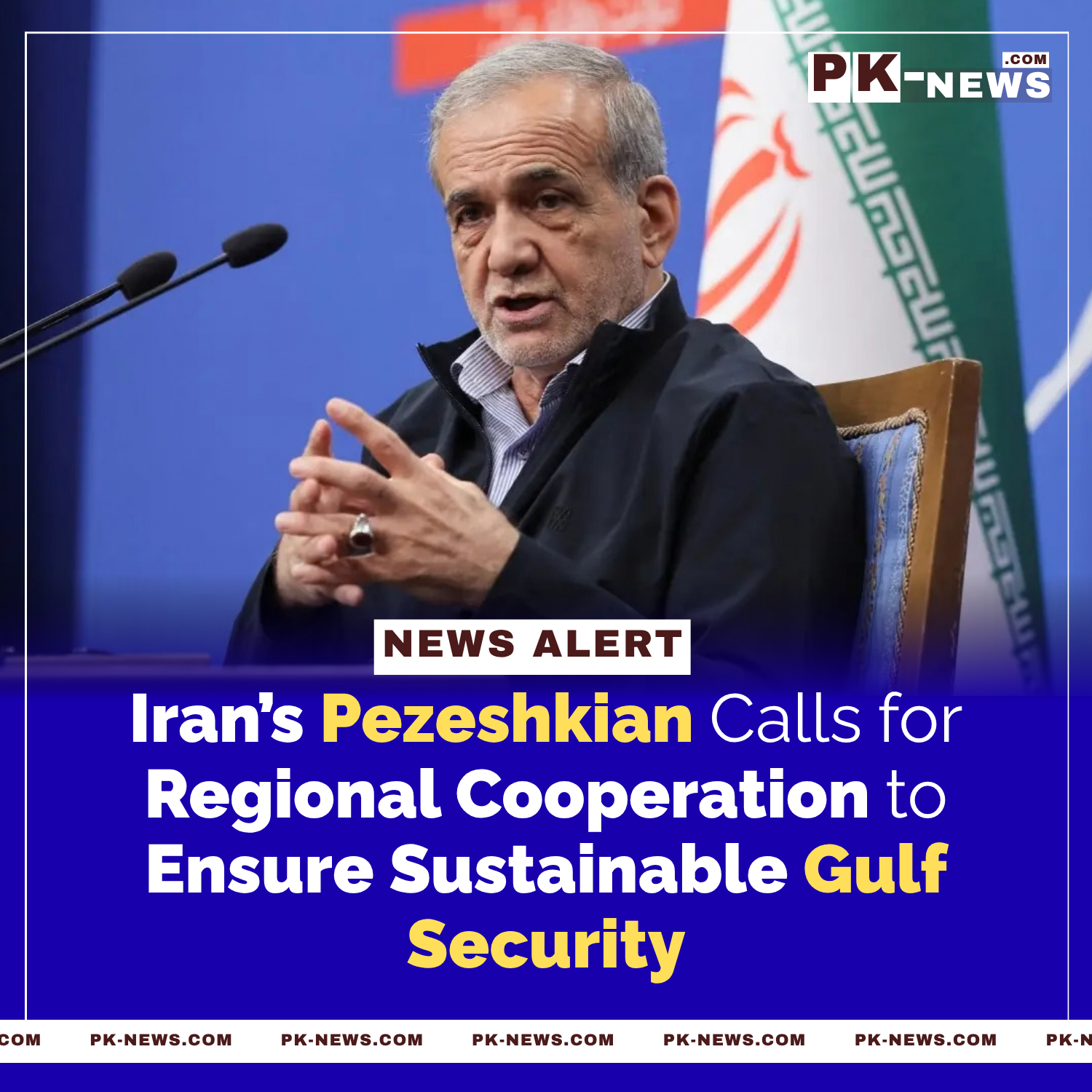
TEHRAN — Iran’s President Masoud Pezeshkian has called for greater cooperation and shared responsibility among countries bordering the Persian Gulf, saying sustainable security in the Gulf and its waterways depends primarily on the active participation of regional states.
Pezeshkian made the remarks in a message marking World Maritime Day on September 30, 2026, in which he linked maritime security with economic development, international trade, shipping and regional stability. His comments come amid continued international attention surrounding the Strait of Hormuz, one of the world’s most strategically important maritime passages.
Pezeshkian Links Gulf Security to Regional Cooperation
The Iranian president said lasting security in the Persian Gulf cannot be achieved through the actions of a single country. According to his message, cooperation, responsibility and active participation by regional countries are central to maintaining stability across the Gulf and its waterways.
Pezeshkian presented the issue as both a security and economic concern, arguing that safe maritime routes, ports and shipping connections create the conditions necessary for trade and economic activity. He also emphasized that economic development can strengthen the capabilities of countries in the region.
Strait of Hormuz Remains at the Center of Regional Attention
Pezeshkian specifically highlighted the Strait of Hormuz, describing it as one of the world's most important maritime passages with a major role in both regional and global economic and security affairs.
Iran's president said Tehran's approach toward the strategic waterway is based on what he described as responsibility and the preservation of security, stability and the interests of regional countries. The statement places the Strait of Hormuz at the center of Iran's broader argument that Gulf states should have a greater role in determining the security arrangements affecting their own region.
Maritime Security and Economic Development
Pezeshkian also connected maritime security with economic growth. Iran has long relied on its northern and southern coastlines and maritime connections for shipping, trade and economic activity.
In his World Maritime Day message, he said maritime activities contribute to economic growth, regional development, employment and international connectivity. He argued that secure seas, ports and transportation routes help facilitate commercial activity, while stronger economic development can contribute to national capabilities.
The Iranian president therefore presented maritime security not only as a military or political issue but also as an important component of economic planning and regional connectivity.
Iran Says It Has a Responsibility for Regional Waterways
Pezeshkian said Iran is pursuing what he described as its responsibility to maintain security and stability along regional waterways and to safeguard maritime shipping and trade.
He pointed to Iran's naval forces and maritime professionals as part of the country's ability to protect its maritime interests. He also praised Iranian seafarers and other maritime workers, saying their activities had helped keep the country's vital economic lifelines operating during a challenging period.
Calls for Greater Participation Across the Maritime Sector
The Iranian president also broadened his message beyond governments and military forces. He called for greater participation from shipping companies, fishing communities, port operators, maritime industries, universities, scientific institutions and coastal communities.
Pezeshkian said investment in maritime infrastructure, research, technology and safety would be important for the future. His message also highlighted the importance of marine science and environmental protection, suggesting that sustainable maritime development should include both economic activity and protection of marine ecosystems.
Regional Discussions Over Hormuz Navigation
The latest comments follow other recent statements from Tehran about the future of navigation through the Strait of Hormuz. Earlier in September, Pezeshkian said Iran was prepared to cooperate with neighboring countries on regional security and had discussed a framework for navigation through the strategic waterway with Oman and other regional states.
Iranian Foreign Minister Abbas Araqchi later said discussions involving Oman were intended to address maritime arrangements and regional consultations, while stressing Tehran's position that regional countries themselves have a responsibility for security and stability.
Hormuz Has Wider International Economic Importance
The Strait of Hormuz is particularly significant because of its location between the Persian Gulf and the Gulf of Oman. Shipping through the waterway connects major energy-producing countries with international markets.
Any prolonged disruption to maritime traffic can therefore have consequences beyond the countries directly surrounding the Gulf. Energy transportation, shipping costs, insurance, supply chains and international trade can all be affected by instability around major maritime routes.
For countries in Asia, Europe and other parts of the world that depend on Middle Eastern energy supplies and maritime commerce, developments around Hormuz remain closely watched.
Iran Emphasizes a Regional Approach to Security
Pezeshkian's latest message continues a broader Iranian position that Gulf security should involve the countries located in the region. In a September 23 address at the United Nations General Assembly, he said Iran wanted cooperation with its neighbors and called for strong regional relationships around the Strait of Hormuz.
The latest World Maritime Day statement similarly emphasizes regional responsibility rather than focusing exclusively on external military involvement. At the same time, Iran's position on the role of foreign powers remains part of the wider diplomatic dispute surrounding security arrangements in the Gulf.
Security, Trade and Environment Increasingly Connected
Another important aspect of Pezeshkian's message was the connection between security, economic development and environmental protection. He argued that maritime policy must involve investment in scientific research, modern technology, infrastructure and safety.
For Gulf countries, these issues are closely connected. The region contains major ports, shipping routes, energy infrastructure and coastal communities. Maintaining safe maritime transportation while protecting marine ecosystems is therefore a long-term challenge for governments and private industries.
Pezeshkian's comments indicate that Tehran wants maritime security discussions to extend beyond military considerations and include trade, scientific cooperation, infrastructure and environmental issues.
What Pezeshkian’s Statement Means for the Gulf
The Iranian president's statement comes at a time when the Strait of Hormuz remains an important focus of regional and international diplomacy. His central message is that Gulf states should play an active role in establishing sustainable security arrangements for the waterways surrounding them.
Whether such an approach can produce broader regional agreements will depend on the positions of Iran's neighbors and other governments involved in Gulf security and maritime trade. The statement itself does not establish a new security mechanism, but it reinforces Tehran's call for regional cooperation and responsibility.
PK-News.com Analysis of the Latest Development
From a regional perspective, Pezeshkian's World Maritime Day message places cooperation, maritime security and economic connectivity at the center of Iran's public position on the Persian Gulf. The Strait of Hormuz remains particularly important because developments there can have implications for regional security as well as international commerce.
Iran's president is calling for neighboring countries to take an active role in maintaining stability, while also emphasizing shipping, infrastructure, scientific research and environmental protection. The remarks add to recent diplomatic discussions surrounding navigation through Hormuz and the broader question of how Gulf security should be managed.
This article was developed and researched by PK-News.com based on the latest available statements and reports dated September 30, 2026.
4
NEW
Global
😊 Positive
Iran’s Pezeshkian Calls for Regional Cooperation to Ensure Sustainable Gulf Security
Related Articles You May Like
Related News






Comments (0)
Leave a Comment
No comments yet. Be the first to comment!