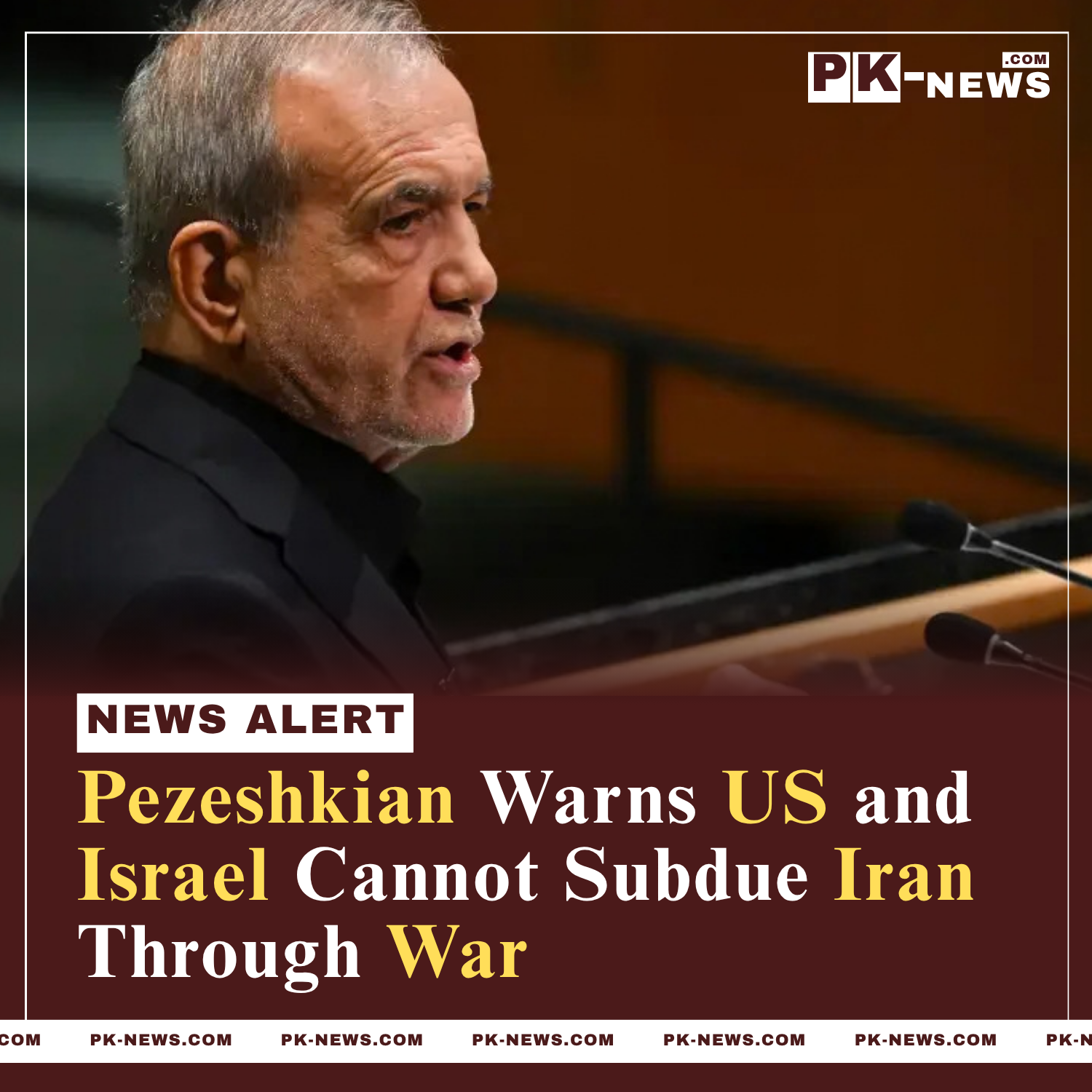
Iranian President Masoud Pezeshkian has accused the United States and Israel of attempting to create divisions inside Iran, while insisting that military pressure cannot force Tehran to surrender. His comments come as Qatar and Pakistan continue efforts to facilitate communication between Iran and Washington over the conflict and the Strait of Hormuz.
By PK-News.com | September 30, 2026
TEHRAN — Iranian President Masoud Pezeshkian has warned that military pressure will not force Iran to surrender, accusing the United States and Israel of seeking to create divisions inside the country as the conflict and diplomatic crisis continue.
In an interview with Al Jazeera, Pezeshkian said Tehran remained prepared to discuss its nuclear programme and other issues but would not accept what he described as pressure or coercion. He also said Iran had no intention of seeking war while maintaining that the country would defend itself against attacks.
The Iranian president's remarks come as diplomatic efforts involving Qatar and Pakistan continue to carry messages between Tehran and Washington.
Pezeshkian Accuses US and Israel of Seeking Internal Divisions
Pezeshkian said Iran's opponents were attempting to exploit internal disagreements and create divisions among Iranian officials and the wider population.
He argued that Iran had maintained national cohesion despite military attacks, sanctions and economic pressure.
The Iranian president said the country was experiencing what he described as an unusually high level of unity and cohesion.
His comments reflect Tehran's broader position that external military and economic pressure will not force the Iranian leadership to abandon its policies.
Earlier this month, Pezeshkian similarly warned that sanctions, blockade and war could be intended to create unrest and divisions within Iran.
Iran Says It Is Ready for Negotiations
Despite his criticism of US and Israeli actions, Pezeshkian said Iran remained open to negotiations.
He said Tehran was prepared to discuss its nuclear programme and other issues but rejected negotiations conducted under what he considers coercive conditions.
Iranian Foreign Minister Abbas Araghchi has also indicated that indirect contacts with Washington are continuing.
Qatar has played an important mediating role, while Pakistan has also been involved in transmitting messages between the two sides.
The diplomatic channel remains significant because the United States and Iran have been unable to reach a comprehensive agreement despite several rounds of discussions and mediation efforts.
Strait of Hormuz Remains Central to the Crisis
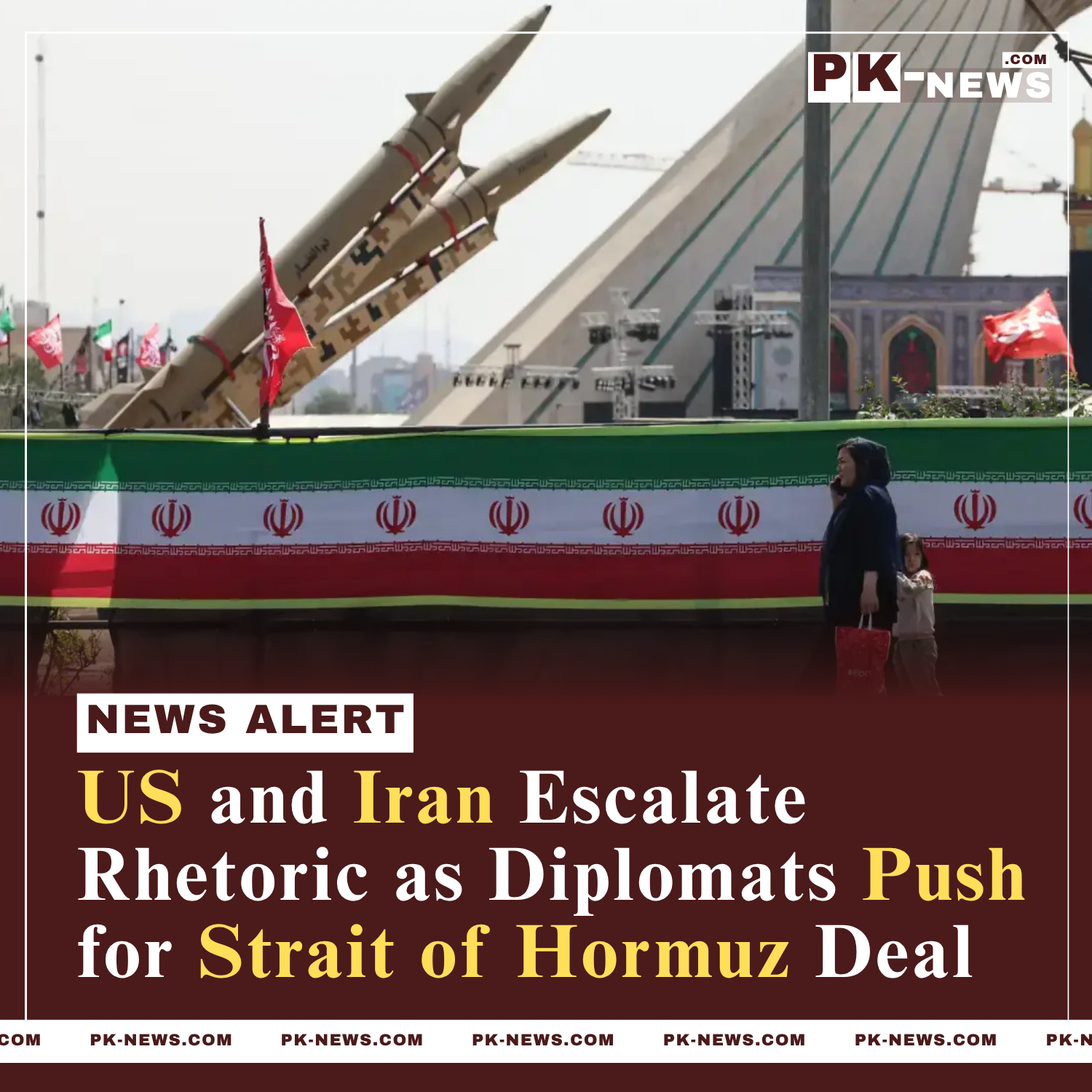
The Strait of Hormuz remains one of the most important issues in the negotiations.
Iran has proposed steps that could lead to the reopening of the strategic waterway, while Washington has demanded broader commitments concerning Iran's nuclear programme and regional security.
According to recent reporting, mediators are working on a possible interim arrangement under which Iran would allow commercial traffic through the strait while the United States would ease elements of its blockade and sanctions. The proposed framework remains under negotiation, with disagreements over the sequence of actions still unresolved.
The waterway is critical to global energy markets because a significant share of internationally traded oil and liquefied natural gas normally passes through it.
Tehran Rejects Claims That War Can Force Surrender
Pezeshkian said Iran had resisted previous military and economic pressure and would continue to do so.
He argued that the killing of senior Iranian figures, military attacks and economic sanctions had not caused Tehran to abandon its position.
Iran has repeatedly rejected calls for surrender and maintains that its nuclear programme is intended for peaceful purposes.
The United States, meanwhile, says preventing Iran from obtaining a nuclear weapon is one of its central objectives in the conflict. Iran denies seeking nuclear weapons.
Iran's Economy Under Severe Pressure
The confrontation has also placed enormous pressure on Iran's economy.
Iran's currency reached a new record low on September 29, with the rial falling beyond 2.5 million rials per US dollar, according to the Associated Press.
The decline reflects the growing economic pressure caused by sanctions, restrictions on Iranian oil exports and the continuing conflict.
Iran has faced international sanctions for years, but the latest military and economic measures have intensified the pressure on its economy.
The currency crisis adds another layer of difficulty for the Iranian government as it attempts to maintain domestic stability.
Revolutionary Guards Appeal Directly to US Public
The latest developments also include an unusual public message from Iran's Islamic Revolutionary Guard Corps.
The IRGC issued a 26-page letter aimed at US voters, urging them to reject policies supporting military intervention and US backing for Israel.
The letter was released as US forces completed their withdrawal from remaining bases in Iraq.
Iran portrayed the withdrawal as a significant development in its broader regional strategy, while Washington continues to insist that its military campaign is aimed at Iran's nuclear and military capabilities.
US-Iran Diplomatic Efforts Continue
Qatar continues to act as a mediator between Washington and Tehran.
Qatari officials have said they are exchanging messages between the two sides and attempting to establish common ground for an agreement.
However, significant differences remain.
The two countries continue to disagree over sanctions, Iran's nuclear activities, the Strait of Hormuz and the broader security arrangements that would be required to end the conflict.
Recent diplomatic efforts have produced discussions but no final agreement.
Pakistan's Role in the Diplomacy
Pakistan has also emerged as a channel for communication between Tehran and Washington.
Pezeshkian previously said that Qatar and Pakistan were conveying Iran's messages to the United States.
Pakistan's involvement is particularly significant because Islamabad maintains relations with both Iran and Gulf Arab states and has repeatedly called for diplomatic solutions to regional conflicts.
The extent of Pakistan's role in any eventual agreement will depend on how the broader negotiations develop.
What Happens Next?
The immediate focus remains on whether mediators can bridge the differences between Washington and Tehran.
A possible agreement involving the Strait of Hormuz could have consequences far beyond Iran and the United States because the waterway is central to international energy supplies.
At the same time, the continuing military confrontation means the diplomatic process remains fragile.
Pezeshkian's latest comments indicate that Tehran wants to keep the possibility of negotiations open while rejecting any settlement that it considers imposed through military or economic pressure.
For now, both diplomatic and military developments are continuing simultaneously.
PK-News.com will continue monitoring developments involving Iran, the United States, Israel, the Strait of Hormuz and ongoing diplomatic efforts in the region.
Developed by PK-News.com
0
NEW
Global
😔 Negative
Pezeshkian Warns US and Israel Cannot Subdue Iran Through War
Related Articles You May Like
Related News





Comments (0)
Leave a Comment
No comments yet. Be the first to comment!