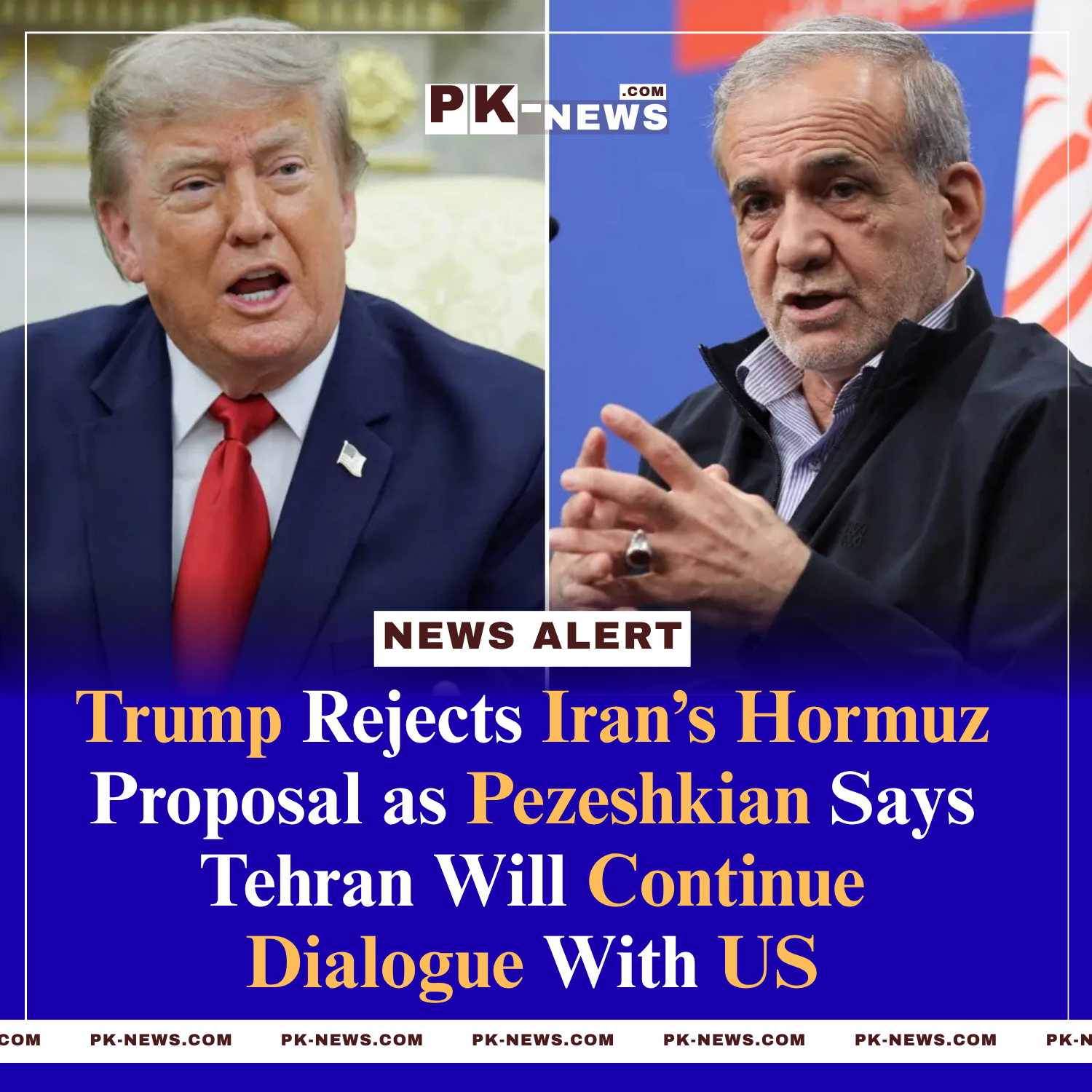
WASHINGTON/TEHRAN — Diplomatic efforts between the United States and Iran remain active despite major differences over the future of the Strait of Hormuz, with US President Donald Trump saying Iran’s latest proposal was not acceptable while Iranian President Masoud Pezeshkian has continued to signal that Tehran is prepared to pursue dialogue.
Iran had proposed a framework under which the Strait of Hormuz could be reopened within seven days while negotiations with Washington resumed. The proposal was presented through diplomatic channels during the United Nations General Assembly in New York.
Iran Proposes Seven-Day Plan
Iranian Foreign Minister Abbas Araghchi said Tehran had offered a plan involving a temporary cessation of hostilities, followed by the reopening of the strategic waterway and the resumption of negotiations.
According to reports, the Iranian proposal included conditions related to the US naval blockade, sanctions and frozen Iranian assets. Tehran's position was that these measures should form part of a broader framework aimed at ending the conflict and returning to negotiations over unresolved issues, including Iran's nuclear programme.
Trump Says the Proposal Is Not Acceptable
Trump rejected the proposal publicly, saying the agreement offered by Iran did not meet US requirements. He argued that Washington had gained significant leverage over the Strait of Hormuz and indicated that the United States was not under pressure to accept Tehran's terms.
Trump's comments came after US and Iranian officials had conducted indirect discussions through mediators. The disagreement demonstrates that although both sides have discussed diplomacy, substantial differences remain over the conditions required for a wider settlement.
Pezeshkian Says Iran Will Keep Seeking Dialogue
Pezeshkian has maintained that Tehran remains open to diplomacy despite the continuing confrontation with Washington.
The Iranian president has previously said that Iran does not want to continue the conflict and that disagreements should be addressed through dialogue when possible. He has also said Tehran would consider an agreement if the United States is prepared to negotiate within what Iran considers an acceptable framework.
More recent reporting indicates that Pezeshkian continues to support dialogue with Washington even as diplomatic progress remains limited.
Strait of Hormuz Remains the Central Issue
The Strait of Hormuz has become one of the central issues in the US-Iran confrontation because of its importance to international energy transportation and maritime trade.
Iran's proposal specifically connected the reopening of the waterway with broader diplomatic arrangements. Washington, meanwhile, has maintained its own conditions for a settlement, creating a significant gap between the two positions.
The waterway's importance extends far beyond Iran and the United States. Disruptions can affect energy shipments, shipping costs, insurance markets and international supply chains.
Indirect Talks Continue Through Mediators
The diplomatic discussions have largely taken place indirectly, with countries including Qatar and Oman involved in communicating between Washington and Tehran.
Recent reports indicate that US and Iranian representatives held discussions around the Strait of Hormuz, the conflict and Iran's nuclear programme. However, the negotiations have not yet produced a comprehensive agreement.
The involvement of regional mediators reflects the difficulty of direct US-Iran diplomacy during an ongoing conflict.
Iran Awaits Further US Response
Iran has indicated that it received a US response to its proposal, although significant differences remain regarding implementation and the conditions surrounding any reopening of Hormuz.
The latest developments suggest that diplomatic channels have not completely closed despite Trump's rejection of the original proposal. Tehran continues to discuss possible arrangements while Washington is evaluating what it considers acceptable terms.
Nuclear Issue Remains Part of the Negotiations
The Strait of Hormuz is not the only issue involved in the diplomatic process. Iran's nuclear programme remains an important component of discussions between the two countries.
Reports on the proposed framework indicate that future negotiations could address nuclear inspections and other restrictions alongside maritime arrangements and sanctions. The United States has sought commitments from Iran on its nuclear activities, while Tehran has continued to insist on its right to peaceful nuclear technology.
Regional Security Adds Another Layer
The US-Iran dispute also has consequences for the wider Middle East. Any agreement concerning Hormuz would need to take into account regional security, maritime traffic and the actions of other armed groups and governments involved in the broader conflict.
Recent analysis has noted that both Washington and Tehran believe they retain significant leverage, which has complicated efforts to reach a settlement.
Latest Diplomatic Picture
As of October 1, 2026, the two sides remain publicly divided over the terms of a potential agreement. Trump has rejected Iran's latest Hormuz proposal as insufficient, while Pezeshkian has continued to indicate that Tehran is prepared to pursue dialogue.
The Iranian proposal has nevertheless kept diplomacy in the discussion, particularly concerning the reopening of the Strait of Hormuz and the possibility of restarting broader negotiations. Whether those discussions can produce a durable agreement will depend on whether Washington and Tehran can bridge their differences over maritime access, sanctions, security arrangements and Iran's nuclear programme.
PK-News.com Update
The latest US-Iran developments show that diplomatic contacts continue despite major disagreements over the Strait of Hormuz. Iran has proposed reopening the strategic waterway under specific conditions, while President Trump has said those terms are unacceptable. Pezeshkian, meanwhile, has continued to emphasize dialogue and negotiations with Washington.
The situation remains fluid, and further diplomatic responses from both governments could influence the future of the Hormuz waterway and the wider regional conflict.
This article was developed and researched by PK-News.com based on reports and statements available on October 1, 2026.
4
Global
😔 Negative
Trump Rejects Iran’s Hormuz Proposal as Pezeshkian Says Tehran Will Continue Dialogue With US
Related Articles You May Like
Related News








Comments (0)
Leave a Comment
No comments yet. Be the first to comment!