Recent Category Articles
Latest Category News

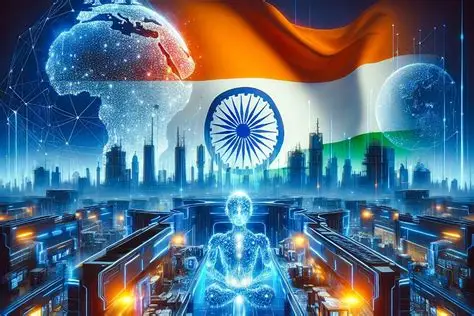
🇮🇳 INDIA’S TECHNOLOGY FUTURE: FROM SEMICONDUCTORS TO AI AND SPACE India Accelerates Its Technology Ambitions as Chips, Artificial Intelligence and Space Become Strategic Priorities
13
Global PK Live News 😊 Positive
🇮🇳 INDIA’S TECHNOLOGY FUTURE: FROM SEMICONDUCTORS TO AI AND SPACE India Accelerates Its Technology Ambitions as Chips, Artificial Intelligence and Space Become Strategic Priorities
By PK News | September 23, 2026 India is entering a new phase in its technology development, with the country increasingly focusing on industries that could shape the global economy over the coming decades. From semiconductor manufacturing and artificial intelligence to quantum computing and space exploration, New Delhi is attempting to build a broader domestic technology ecosystem rather than relying primarily on imported critical technologies. The latest momentum comes from SEMICON India 2026, where the government outlined the next stage of its semiconductor strategy. India's Semicon 2.0 program is designed to expand capabilities across chip design, semiconductor manufacturing, equipment and materials, advanced packaging, research and development, and technical talent. The government says the program has an overall outlay of ₹1.275 trillion. According to India's Ministry of Electronics and Information Technology, approximately ₹1 trillion in investment commitments have been received, while the wider semiconductor ecosystem is expected to generate close to 100,000 employment opportunities. The government says five semiconductor manufacturing plants have also begun commercial production. 🔬 The Semiconductor Race Semiconductors are increasingly important because they are the foundation of modern technologies including AI systems, smartphones, telecommunications, electric vehicles, data centers, defense systems and autonomous machines. India historically became a major global center for software and information-technology services, but semiconductor manufacturing represents a different challenge: it requires huge investments, advanced equipment, specialized materials, highly trained engineers and reliable industrial supply chains. The country's new strategy therefore goes beyond simply building chip factories. It includes chip design, manufacturing equipment, materials, advanced packaging, research and workforce development. The government has also discussed expanding India's chip-design ecosystem and training large numbers of engineers and technicians. 🤖 AI and Quantum Technology Artificial intelligence is another major component of India's technology strategy. The government has called for stronger cooperation between industry and policymakers in AI and quantum computing. Prime Minister Narendra Modi has also discussed an ambition to train one crore people in AI, according to a September government statement. The strategic significance is considerable. AI requires enormous computing capacity, and advanced computing depends heavily on semiconductors, data centers and specialized processors. Building domestic capability in these areas could therefore connect India's semiconductor ambitions directly with its AI ambitions. However, these plans also face challenges. India still has to expand its manufacturing capabilities, develop specialized supply chains, attract investment, train enough highly skilled workers and compete with established semiconductor and AI ecosystems in countries such as the United States, China, Taiwan, South Korea and Japan. 🚀 India's Space Ambitions India's technology story is not limited to Earth. The country's space program is also entering a more ambitious phase. At the International Space Summit in Paris earlier this month, the Indian government highlighted long-term plans that include establishing an indigenous space station by 2035 and sending an Indian astronaut to the Moon by 2040. India and the European Space Agency have also renewed their cooperation through 2032, with future work including areas such as space weather and robotic space exploration. This cooperation could become increasingly important as India develops its own capabilities while working with international space agencies. Indian space technology is also becoming connected with the country's semiconductor ambitions. Indigenous chips produced by India's Semiconductor Laboratory in Mohali have been used in space missions, including technologies associated with Chandrayaan-3 and Aditya-L1. 🌐 What Could India's Future Look Like? If the current plans are implemented successfully, India's technology landscape could look significantly different during the 2030s. The country could develop a larger domestic semiconductor industry, expand AI computing and software capabilities, increase the use of locally designed electronics, and build stronger links between universities, startups, manufacturers and government research institutions. Space could become another major part of this transformation, particularly as private Indian space companies increasingly work alongside ISRO. But these are long-term ambitions rather than guaranteed outcomes. Building a complete semiconductor ecosystem and competing at the frontier of AI and space technology will require sustained investment, skilled workers, infrastructure, research and international partnerships. 🔮 The Bigger Picture India's current technology strategy can therefore be viewed as an attempt to move from being primarily a consumer and service provider of advanced technology toward becoming a larger producer and developer of critical technologies. The semiconductor push provides the hardware foundation. AI provides a major new computing and software frontier. Quantum technology represents a longer-term research opportunity, while space exploration offers another area where advanced electronics, computing and engineering capabilities can be applied. The coming decade will show how successfully India can turn these announcements and investments into commercially competitive industries and internationally significant technologies. PK News will continue tracking India's semiconductor, AI, quantum-computing and space developments as these projects move from announcements toward implementation. PK-News.com — PK News
5 days ago
By PK News | September 23, 2026 India is entering a new phase in its technology development, with the country increasingly focusing on industries that could shape the global economy over the coming decades. From semiconductor manufacturing and artificial intelligence to quantum computing and space exploration, New Delhi is attempting to build a broader domestic technology ecosystem rather than relying primarily on imported critical technologies. The latest momentum comes from SEMICON India 2026, where the government outlined the next stage of its semiconductor strategy. India's Semicon 2.0 program is designed to expand capabilities across chip design, semiconductor manufacturing, equipment and materials, advanced packaging, research and development, and technical talent. The government says the program has an overall outlay of ₹1.275 trillion. According to India's Ministry of Electronics and Information Technology, approximately ₹1 trillion in investment commitments have been received, while the wider semiconductor ecosystem is expected to generate close to 100,000 employment opportunities. The government says five semiconductor manufacturing plants have also begun commercial production. 🔬 The Semiconductor Race Semiconductors are increasingly important because they are the foundation of modern technologies including AI systems, smartphones, telecommunications, electric vehicles, data centers, defense systems and autonomous machines. India historically became a major global center for software and information-technology services, but semiconductor manufacturing represents a different challenge: it requires huge investments, advanced equipment, specialized materials, highly trained engineers and reliable industrial supply chains. The country's new strategy therefore goes beyond simply building chip factories. It includes chip design, manufacturing equipment, materials, advanced packaging, research and workforce development. The government has also discussed expanding India's chip-design ecosystem and training large numbers of engineers and technicians. 🤖 AI and Quantum Technology Artificial intelligence is another major component of India's technology strategy. The government has called for stronger cooperation between industry and policymakers in AI and quantum computing. Prime Minister Narendra Modi has also discussed an ambition to train one crore people in AI, according to a September government statement. The strategic significance is considerable. AI requires enormous computing capacity, and advanced computing depends heavily on semiconductors, data centers and specialized processors. Building domestic capability in these areas could therefore connect India's semiconductor ambitions directly with its AI ambitions. However, these plans also face challenges. India still has to expand its manufacturing capabilities, develop specialized supply chains, attract investment, train enough highly skilled workers and compete with established semiconductor and AI ecosystems in countries such as the United States, China, Taiwan, South Korea and Japan. 🚀 India's Space Ambitions India's technology story is not limited to Earth. The country's space program is also entering a more ambitious phase. At the International Space Summit in Paris earlier this month, the Indian government highlighted long-term plans that include establishing an indigenous space station by 2035 and sending an Indian astronaut to the Moon by 2040. India and the European Space Agency have also renewed their cooperation through 2032, with future work including areas such as space weather and robotic space exploration. This cooperation could become increasingly important as India develops its own capabilities while working with international space agencies. Indian space technology is also becoming connected with the country's semiconductor ambitions. Indigenous chips produced by India's Semiconductor Laboratory in Mohali have been used in space missions, including technologies associated with Chandrayaan-3 and Aditya-L1. 🌐 What Could India's Future Look Like? If the current plans are implemented successfully, India's technology landscape could look significantly different during the 2030s. The country could develop a larger domestic semiconductor industry, expand AI computing and software capabilities, increase the use of locally designed electronics, and build stronger links between universities, startups, manufacturers and government research institutions. Space could become another major part of this transformation, particularly as private Indian space companies increasingly work alongside ISRO. But these are long-term ambitions rather than guaranteed outcomes. Building a complete semiconductor ecosystem and competing at the frontier of AI and space technology will require sustained investment, skilled workers, infrastructure, research and international partnerships. 🔮 The Bigger Picture India's current technology strategy can therefore be viewed as an attempt to move from being primarily a consumer and service provider of advanced technology toward becoming a larger producer and developer of critical technologies. The semiconductor push provides the hardware foundation. AI provides a major new computing and software frontier. Quantum technology represents a longer-term research opportunity, while space exploration offers another area where advanced electronics, computing and engineering capabilities can be applied. The coming decade will show how successfully India can turn these announcements and investments into commercially competitive industries and internationally significant technologies. PK News will continue tracking India's semiconductor, AI, quantum-computing and space developments as these projects move from announcements toward implementation. PK-News.com — PK News
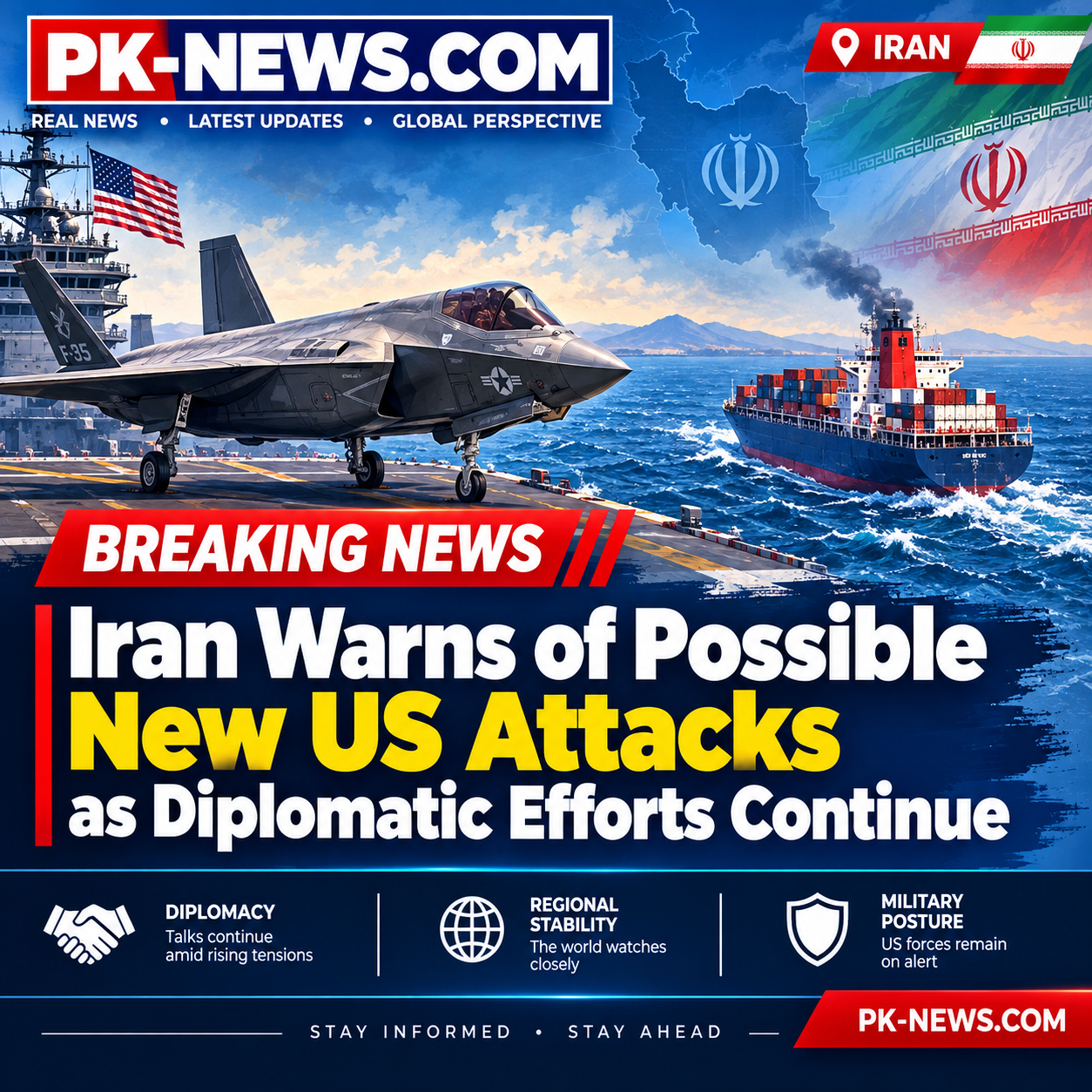
Iran Sets Conditions for Reopening Strait of Hormuz in Message to US
32
Global PK Live News 😔 Negative
Iran Sets Conditions for Reopening Strait of Hormuz in Message to US
September 23, 2026 | PK News Iran has formally conveyed its conditions for reopening the Strait of Hormuz to the United States as diplomatic efforts continue amid the ongoing conflict between Washington and Tehran. According to Iranian state media and Reuters reporting, Iranian Foreign Minister Abbas Araqchi met US Special Envoy Steve Witkoff on Tuesday on the sidelines of the United Nations General Assembly in New York. During the meeting, Tehran's conditions for reopening the strategically important waterway were communicated to the American side. Iranian officials have previously said that the Strait of Hormuz would not return to normal operations unless several demands were addressed. Iran's Conditions Iran's reported conditions include: 🔹 An immediate end to the US naval blockade 🔹 The release of frozen Iranian assets 🔹 An end to fighting across all resistance fronts Iranian officials have repeatedly linked the reopening of the waterway to broader arrangements concerning the conflict and US military pressure. Iran's parliament speaker Mohammad Bagher Ghalibaf previously said that Tehran's messages and conditions had been transmitted to Washington through intermediaries. He said that without those conditions being met and US commitments being honoured, Iran would not return to the previous situation in which the strait was open. Tehran Says the Strait Could Reopen The latest development follows an earlier statement from a senior Iranian official who told Reuters that Iran could reopen the Strait of Hormuz within seven days if Washington eases military pressure and lifts its blockade of Iranian ports. The official said Washington would first need to formally announce that it wants to resolve the dispute through diplomacy and agree on a timetable for negotiations. This indicates that Tehran is presenting reopening the waterway as part of a wider diplomatic process rather than as an isolated maritime issue. Why Hormuz Matters The Strait of Hormuz is one of the world's most important energy routes. Oil and gas shipments from the Persian Gulf pass through the narrow waterway, meaning prolonged disruption can affect energy supplies, shipping and global prices. Previous reporting has shown that uncertainty surrounding the strait has already created significant pressure in international energy markets. The situation also has wider consequences for Gulf countries and international shipping because any prolonged confrontation around Hormuz could affect commercial vessels and energy transportation. Diplomacy and Military Pressure The latest meeting between Araqchi and Witkoff comes as Washington and Tehran continue to send sharply different public messages. US President Donald Trump, speaking at the UN General Assembly, called on Iran to reopen the Strait of Hormuz and return to negotiations. Trump also warned that he faces a choice between reaching a deal with Iran and taking further military action. At the same time, Iranian officials have warned that renewed US military action could trigger retaliation and further regional escalation. The two sides therefore appear to be combining public pressure with diplomatic contacts through officials and intermediaries. Pakistan's Diplomatic Role Pakistan has also been involved in diplomatic efforts surrounding the conflict. Earlier reports said Iranian officials conveyed their conditions through mediators, including Pakistan and Qatar, while Pakistani officials have travelled to Tehran for discussions. Dawn reported that Iran's conditions included ending the conflict across the region, releasing frozen Iranian funds and ending the US naval blockade. What Happens Next? The key question is whether Washington accepts any of Tehran's conditions and whether the two sides can establish a broader framework for ending hostilities. For now, the reopening of the Strait of Hormuz remains connected to negotiations over the wider conflict. The meeting between Araqchi and Witkoff does not by itself represent a final agreement. It does, however, show that direct communication between US and Iranian representatives remains possible despite the continuing confrontation. PK News will continue tracking developments surrounding Iran, the United States, the Strait of Hormuz, Gulf security, oil markets and diplomatic negotiations. 🌐 For more updates, visit https://pk-news.com 🔔 Follow PK News for breaking international news, verified developments and continuing coverage.
5 days ago
September 23, 2026 | PK News Iran has formally conveyed its conditions for reopening the Strait of Hormuz to the United States as diplomatic efforts continue amid the ongoing conflict between Washington and Tehran. According to Iranian state media and Reuters reporting, Iranian Foreign Minister Abbas Araqchi met US Special Envoy Steve Witkoff on Tuesday on the sidelines of the United Nations General Assembly in New York. During the meeting, Tehran's conditions for reopening the strategically important waterway were communicated to the American side. Iranian officials have previously said that the Strait of Hormuz would not return to normal operations unless several demands were addressed. Iran's Conditions Iran's reported conditions include: 🔹 An immediate end to the US naval blockade 🔹 The release of frozen Iranian assets 🔹 An end to fighting across all resistance fronts Iranian officials have repeatedly linked the reopening of the waterway to broader arrangements concerning the conflict and US military pressure. Iran's parliament speaker Mohammad Bagher Ghalibaf previously said that Tehran's messages and conditions had been transmitted to Washington through intermediaries. He said that without those conditions being met and US commitments being honoured, Iran would not return to the previous situation in which the strait was open. Tehran Says the Strait Could Reopen The latest development follows an earlier statement from a senior Iranian official who told Reuters that Iran could reopen the Strait of Hormuz within seven days if Washington eases military pressure and lifts its blockade of Iranian ports. The official said Washington would first need to formally announce that it wants to resolve the dispute through diplomacy and agree on a timetable for negotiations. This indicates that Tehran is presenting reopening the waterway as part of a wider diplomatic process rather than as an isolated maritime issue. Why Hormuz Matters The Strait of Hormuz is one of the world's most important energy routes. Oil and gas shipments from the Persian Gulf pass through the narrow waterway, meaning prolonged disruption can affect energy supplies, shipping and global prices. Previous reporting has shown that uncertainty surrounding the strait has already created significant pressure in international energy markets. The situation also has wider consequences for Gulf countries and international shipping because any prolonged confrontation around Hormuz could affect commercial vessels and energy transportation. Diplomacy and Military Pressure The latest meeting between Araqchi and Witkoff comes as Washington and Tehran continue to send sharply different public messages. US President Donald Trump, speaking at the UN General Assembly, called on Iran to reopen the Strait of Hormuz and return to negotiations. Trump also warned that he faces a choice between reaching a deal with Iran and taking further military action. At the same time, Iranian officials have warned that renewed US military action could trigger retaliation and further regional escalation. The two sides therefore appear to be combining public pressure with diplomatic contacts through officials and intermediaries. Pakistan's Diplomatic Role Pakistan has also been involved in diplomatic efforts surrounding the conflict. Earlier reports said Iranian officials conveyed their conditions through mediators, including Pakistan and Qatar, while Pakistani officials have travelled to Tehran for discussions. Dawn reported that Iran's conditions included ending the conflict across the region, releasing frozen Iranian funds and ending the US naval blockade. What Happens Next? The key question is whether Washington accepts any of Tehran's conditions and whether the two sides can establish a broader framework for ending hostilities. For now, the reopening of the Strait of Hormuz remains connected to negotiations over the wider conflict. The meeting between Araqchi and Witkoff does not by itself represent a final agreement. It does, however, show that direct communication between US and Iranian representatives remains possible despite the continuing confrontation. PK News will continue tracking developments surrounding Iran, the United States, the Strait of Hormuz, Gulf security, oil markets and diplomatic negotiations. 🌐 For more updates, visit https://pk-news.com 🔔 Follow PK News for breaking international news, verified developments and continuing coverage.
Trump Threatens to ‘Annihilate’ Iran in UN Speech as US-Iran Contacts Continue
29
Global PK Live News 😔 Negative
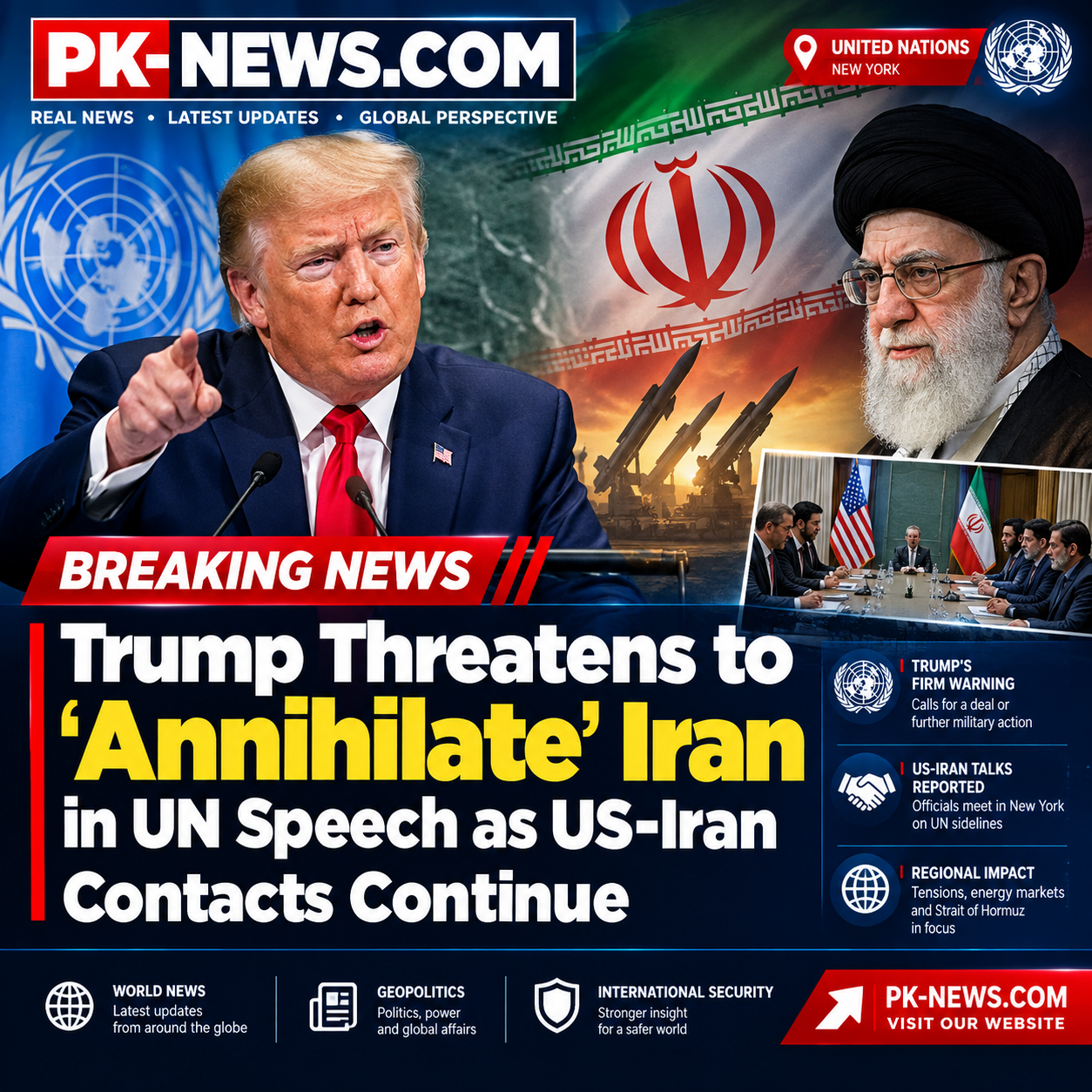
Trump Threatens to ‘Annihilate’ Iran in UN Speech as US-Iran Contacts Continue
New York — September 23, 2026 | PK News US President Donald Trump has warned that he could “annihilate” the Islamic Republic of Iran if Washington and Tehran fail to reach an agreement, delivering one of his strongest threats yet during his address to the United Nations General Assembly in New York. Trump presented the conflict as a choice between a diplomatic agreement and further military action. He said the United States could allow Iran to rebuild and pursue a different future through a deal, but also raised the possibility of destroying the Islamic Republic if an agreement cannot be reached. The remarks came as tensions between Washington and Tehran remain extremely high, while diplomatic efforts continue behind the scenes. US and Iran Continue Indirect Discussions Despite Trump's tough language at the UN, US and Iranian representatives have continued communicating through intermediaries. US envoy Steve Witkoff said on Tuesday that Washington and Tehran had engaged in lengthy discussions on the sidelines of the UN General Assembly. According to Witkoff, mediators moved between the two sides throughout the day in an effort to explore possible diplomatic progress. He described the discussions as potentially constructive, although no agreement has been announced. The diplomatic activity highlights the uncertainty surrounding the conflict: public statements remain confrontational, while intermediaries continue exploring whether a negotiated settlement is possible. Trump Links Possible Deal to US Elections Trump also indicated that he expects a potential agreement with Iran to come after the November 3 US midterm elections. He argued that Iranian leaders may be waiting to see how the elections affect the political situation in Washington. Trump has rejected the idea that the elections should determine his approach to the conflict and said his primary concern is preventing Iran from obtaining a nuclear weapon. The timing has become particularly important because the conflict is already affecting energy markets and regional security. Iran Rejects Trump's Threat Iran's Armed Forces responded to Trump's UN remarks by dismissing them as propaganda and warning that Iran was prepared to respond to further attacks. Iranian officials have repeatedly said that any renewed military action against the country could produce a wider regional confrontation. Tehran has also linked a possible diplomatic settlement to issues including military pressure, sanctions and the situation surrounding the Strait of Hormuz. The waterway is strategically important to the global energy market. Reuters reported that it normally carries a significant share of global oil and gas shipments, making continued disruption a major concern for international markets. Gulf States Caught Between Security and Diplomacy The escalating US-Iran confrontation is also putting pressure on countries across the Gulf. Several Gulf states maintain close security relationships with Washington while simultaneously seeking to avoid becoming direct participants in the conflict. Many also host US military facilities and have faced threats or attacks connected to the wider confrontation. Saudi Arabia, in particular, faces additional security concerns because fighting involving Yemen's Houthi movement has intensified. Reuters reported that Saudi Arabia and the Houthis exchanged attacks in September, adding another layer to an already complicated regional conflict. Pakistan, Türkiye, Saudi Arabia and Egypt also issued a joint statement at the UN affirming Saudi Arabia's right to defend itself under international law while stressing the importance of maintaining freedom of navigation in the region. Oil Markets Remain Under Pressure The conflict is also affecting global energy markets. Oil prices have remained close to or around the $100-per-barrel level amid concerns about supply disruptions and uncertainty over the Strait of Hormuz. Reuters reported that Brent crude was trading near $100 per barrel after Trump's comments about the possible timing of an Iran peace agreement. Saudi Arabia has also taken steps to maintain oil flows through alternative routes. The reopening of the kingdom's East-West Pipeline has helped reduce some concerns over supply, although markets remain sensitive to any further escalation. What Happens Next? The immediate question is whether the diplomatic contacts at the United Nations can produce a framework for negotiations. For now, Washington's public position remains highly confrontational, while Iranian officials continue to signal that they are prepared to respond to military pressure. At the same time, intermediaries are attempting to keep communication channels open. That leaves the region facing two competing possibilities: renewed diplomatic engagement or another escalation of military confrontation. No final agreement has been announced, and the situation remains fluid. PK News will continue monitoring developments between the United States and Iran, including diplomatic talks, military developments, the Strait of Hormuz and their impact on the wider Middle East. 🌐 For more international news and updates, visit PK-News.com 🔔 Follow PK News for breaking news, verified updates and developing stories.
5 days ago
New York — September 23, 2026 | PK News US President Donald Trump has warned that he could “annihilate” the Islamic Republic of Iran if Washington and Tehran fail to reach an agreement, delivering one of his strongest threats yet during his address to the United Nations General Assembly in New York. Trump presented the conflict as a choice between a diplomatic agreement and further military action. He said the United States could allow Iran to rebuild and pursue a different future through a deal, but also raised the possibility of destroying the Islamic Republic if an agreement cannot be reached. The remarks came as tensions between Washington and Tehran remain extremely high, while diplomatic efforts continue behind the scenes. US and Iran Continue Indirect Discussions Despite Trump's tough language at the UN, US and Iranian representatives have continued communicating through intermediaries. US envoy Steve Witkoff said on Tuesday that Washington and Tehran had engaged in lengthy discussions on the sidelines of the UN General Assembly. According to Witkoff, mediators moved between the two sides throughout the day in an effort to explore possible diplomatic progress. He described the discussions as potentially constructive, although no agreement has been announced. The diplomatic activity highlights the uncertainty surrounding the conflict: public statements remain confrontational, while intermediaries continue exploring whether a negotiated settlement is possible. Trump Links Possible Deal to US Elections Trump also indicated that he expects a potential agreement with Iran to come after the November 3 US midterm elections. He argued that Iranian leaders may be waiting to see how the elections affect the political situation in Washington. Trump has rejected the idea that the elections should determine his approach to the conflict and said his primary concern is preventing Iran from obtaining a nuclear weapon. The timing has become particularly important because the conflict is already affecting energy markets and regional security. Iran Rejects Trump's Threat Iran's Armed Forces responded to Trump's UN remarks by dismissing them as propaganda and warning that Iran was prepared to respond to further attacks. Iranian officials have repeatedly said that any renewed military action against the country could produce a wider regional confrontation. Tehran has also linked a possible diplomatic settlement to issues including military pressure, sanctions and the situation surrounding the Strait of Hormuz. The waterway is strategically important to the global energy market. Reuters reported that it normally carries a significant share of global oil and gas shipments, making continued disruption a major concern for international markets. Gulf States Caught Between Security and Diplomacy The escalating US-Iran confrontation is also putting pressure on countries across the Gulf. Several Gulf states maintain close security relationships with Washington while simultaneously seeking to avoid becoming direct participants in the conflict. Many also host US military facilities and have faced threats or attacks connected to the wider confrontation. Saudi Arabia, in particular, faces additional security concerns because fighting involving Yemen's Houthi movement has intensified. Reuters reported that Saudi Arabia and the Houthis exchanged attacks in September, adding another layer to an already complicated regional conflict. Pakistan, Türkiye, Saudi Arabia and Egypt also issued a joint statement at the UN affirming Saudi Arabia's right to defend itself under international law while stressing the importance of maintaining freedom of navigation in the region. Oil Markets Remain Under Pressure The conflict is also affecting global energy markets. Oil prices have remained close to or around the $100-per-barrel level amid concerns about supply disruptions and uncertainty over the Strait of Hormuz. Reuters reported that Brent crude was trading near $100 per barrel after Trump's comments about the possible timing of an Iran peace agreement. Saudi Arabia has also taken steps to maintain oil flows through alternative routes. The reopening of the kingdom's East-West Pipeline has helped reduce some concerns over supply, although markets remain sensitive to any further escalation. What Happens Next? The immediate question is whether the diplomatic contacts at the United Nations can produce a framework for negotiations. For now, Washington's public position remains highly confrontational, while Iranian officials continue to signal that they are prepared to respond to military pressure. At the same time, intermediaries are attempting to keep communication channels open. That leaves the region facing two competing possibilities: renewed diplomatic engagement or another escalation of military confrontation. No final agreement has been announced, and the situation remains fluid. PK News will continue monitoring developments between the United States and Iran, including diplomatic talks, military developments, the Strait of Hormuz and their impact on the wider Middle East. 🌐 For more international news and updates, visit PK-News.com 🔔 Follow PK News for breaking news, verified updates and developing stories.
Ethiopia Faces New Political and Security Crisis as Seven Groups Unite Against Government
59
Global PK Live News 😔 Negative
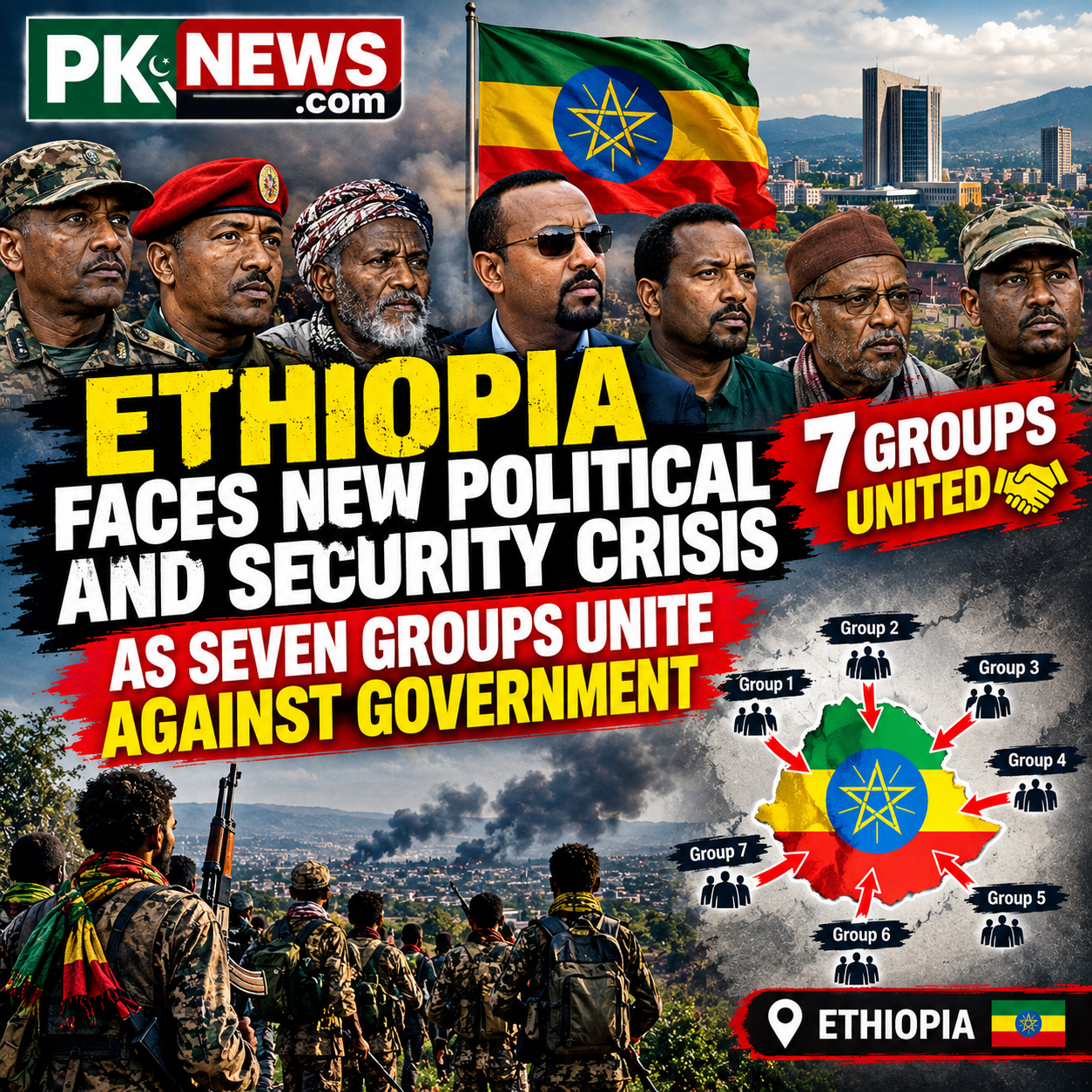
Ethiopia Faces New Political and Security Crisis as Seven Groups Unite Against Government
Addis Ababa — September 22, 2026 | PK News Ethiopia is facing renewed political and security tensions after seven armed and opposition groups announced a new alliance aimed at challenging Prime Minister Abiy Ahmed's government, raising concerns that the country could again experience a wider armed conflict. The groups have presented themselves as a united front against what they describe as political marginalisation, inequality and failures to resolve longstanding disputes. Their announcement comes less than four years after the agreement that ended the devastating war in the northern Tigray region. The development has attracted particular attention because several members of the new coalition have previously fought against one another or have had sharply different political objectives. Seven Groups Join Forces The new coalition is being described as an alliance for survival and brings together seven organisations with different ethnic, political and regional bases. Among the most prominent are the Oromo Liberation Army (OLA), the Amhara Fano movement and the Tigray People's Liberation Front (TPLF). They are joined by the Ogaden National Liberation Front (ONLF), the Far Revolutionary Democratic Unity Front, the Benishangul People's Liberation Movement and the Gumuz People's Democratic Movement. The groups have accused the federal government in Addis Ababa of failing to address political grievances and of not adequately implementing previous agreements. Their stated objective is to pressure or remove the current government and establish a transitional political arrangement. However, members of the coalition have stressed different descriptions of their relationship. The TPLF, for example, has described the arrangement as a defensive or survival alliance rather than a formal military coalition. A Coalition With Deep Internal Differences One of the biggest questions surrounding the new alliance is whether organisations with such different histories can maintain a common strategy. The groups have previously been on opposing sides of Ethiopia's conflicts. The TPLF once dominated Ethiopia's federal political system before its relationship with the government deteriorated and fighting erupted in Tigray in 2020. The Fano movement also has a complicated relationship with the federal government and has been involved in armed confrontation in the Amhara region. The Oromo Liberation Army has separately been involved in an armed struggle with Ethiopian authorities. These histories mean that opposition to the government may be the principal issue currently bringing the groups together. Analysts quoted in the programme suggested that the alliance could therefore be more tactical than ideological. The Tigray War Still Shapes Ethiopia's Politics The new political development cannot be separated from Ethiopia's 2020–2022 conflict in Tigray. The war caused enormous civilian suffering, mass displacement and destruction. Estimates of the death toll vary considerably, but researchers and international organisations have described the conflict as one of the world's most severe humanitarian crises during that period. A peace agreement signed in Pretoria in November 2022 brought large-scale fighting to an end. However, important disputes remained unresolved, including questions concerning territory, the return of displaced people, political authority and the future of armed forces. The incomplete implementation of post-war arrangements has continued to influence relations between the federal government and political actors in northern Ethiopia. TPLF's Position Adds Uncertainty The TPLF's participation in the new alliance has attracted particular attention because the organisation itself has experienced internal divisions. Some TPLF figures have continued working within Ethiopia's political system, while other factions have taken a more confrontational position toward the federal government. The organisation has also had disagreements over the implementation of the 2022 peace agreement. This makes it difficult to determine how far the entire TPLF leadership supports the latest alliance or what form its involvement could eventually take. The coalition's long-term political programme also remains unclear. Government Says Ethiopia Can Defend Itself Prime Minister Abiy Ahmed's administration has sought to project confidence in the country's ability to deal with security threats. The government has also promoted a national dialogue process intended to address political and social disputes. Government officials have previously accused external actors of encouraging instability inside Ethiopia. Eritrea, which has repeatedly been mentioned in allegations concerning regional political and armed groups, has denied involvement in Ethiopia's internal affairs. The Ethiopian government has not accepted the coalition's characterization of the country as being on the verge of disintegration. This represents one of the central disagreements between Addis Ababa and the newly formed opposition alliance. Foreign Powers and Regional Politics Ethiopia's internal disputes are also connected to wider developments across the Horn of Africa. The region has experienced overlapping conflicts and rivalries involving Ethiopia, Eritrea, Sudan, Somalia and other neighbouring states. Relations between Ethiopia and Eritrea remain an important factor because the two countries have a complicated history, including their previous war and Eritrea's involvement during the Tigray conflict. Sudan's continuing civil war has added another layer of regional instability. Analysts have also pointed to the involvement or interests of countries including Egypt, Saudi Arabia and the United Arab Emirates in wider Horn of Africa politics. However, allegations concerning specific forms of support for the Ethiopian opposition groups remain disputed, and countries accused of involvement have denied such claims. Could Ethiopia Return to War? The formation of the alliance does not automatically mean that a new nationwide war will begin. The organisations still face major questions about command structures, military coordination, political leadership and their competing visions for Ethiopia. Several groups have armed wings, but the alliance has not publicly demonstrated a unified military structure. Its members also disagree on fundamental questions about Ethiopia's political future, including federalism, regional autonomy, national identity and the distribution of political power. Those differences could make sustained cooperation difficult. At the same time, the existence of armed organisations with longstanding grievances means the announcement has significant security implications. Civilians Remain at the Center of Concern For ordinary Ethiopians, the possibility of another major conflict is particularly concerning. The previous Tigray war displaced millions and created severe humanitarian needs. Ethiopia has also experienced violence and displacement in other regions. Aid organisations continue to deal with food insecurity, displacement and the consequences of previous conflicts. A return to large-scale fighting could put additional pressure on communities already struggling to recover. The greatest concern is that political disagreements could once again develop into armed confrontations involving civilian areas. Can Dialogue Prevent Escalation? The African Union has previously played a major role in efforts to end Ethiopia's conflicts, including supporting the negotiations that produced the 2022 Pretoria agreement. The organisation remains an important potential channel for diplomacy. The Intergovernmental Authority on Development (IGAD) and international partners could also become involved if tensions escalate. However, analysts quoted in the discussion argued that successful mediation would require the parties themselves to accept negotiations as an alternative to armed confrontation. The United States is another potentially influential actor because of its diplomatic relationships with Ethiopia and several countries involved in wider regional politics. What Happens Next? The immediate challenge for Ethiopia will be determining whether the newly announced coalition remains primarily political or develops into a coordinated armed front. The alliance's members will need to address their substantial ideological and historical differences if they intend to operate as a unified political movement. Meanwhile, the federal government faces pressure to address grievances raised by opposition groups while maintaining security across the country. Whether the current tensions lead to further conflict or renewed political negotiations will depend on developments in the coming weeks. PK News Analysis The formation of a seven-group alliance represents a significant new development in Ethiopia's complicated political landscape. The organisations share opposition to Prime Minister Abiy Ahmed's government, but they do not share identical political goals or histories. The TPLF has described the arrangement as an alliance for survival and has disputed descriptions of it as a formal military alliance. Several other members, however, have armed wings and histories of conflict with the Ethiopian state. The key questions now are whether the coalition can maintain unity, whether the Ethiopian government can prevent further escalation, and whether African and international mediators can encourage political negotiations. For a country still recovering from the devastating Tigray conflict, renewed large-scale fighting could have serious humanitarian consequences. This article has been independently rewritten and prepared for publication by PK-News.com from the supplied programme transcript and its reported information. It does not reproduce the original broadcast script. PK News — PK-News.com | Africa • Ethiopia • Horn of Africa • World News
5 days ago
Addis Ababa — September 22, 2026 | PK News Ethiopia is facing renewed political and security tensions after seven armed and opposition groups announced a new alliance aimed at challenging Prime Minister Abiy Ahmed's government, raising concerns that the country could again experience a wider armed conflict. The groups have presented themselves as a united front against what they describe as political marginalisation, inequality and failures to resolve longstanding disputes. Their announcement comes less than four years after the agreement that ended the devastating war in the northern Tigray region. The development has attracted particular attention because several members of the new coalition have previously fought against one another or have had sharply different political objectives. Seven Groups Join Forces The new coalition is being described as an alliance for survival and brings together seven organisations with different ethnic, political and regional bases. Among the most prominent are the Oromo Liberation Army (OLA), the Amhara Fano movement and the Tigray People's Liberation Front (TPLF). They are joined by the Ogaden National Liberation Front (ONLF), the Far Revolutionary Democratic Unity Front, the Benishangul People's Liberation Movement and the Gumuz People's Democratic Movement. The groups have accused the federal government in Addis Ababa of failing to address political grievances and of not adequately implementing previous agreements. Their stated objective is to pressure or remove the current government and establish a transitional political arrangement. However, members of the coalition have stressed different descriptions of their relationship. The TPLF, for example, has described the arrangement as a defensive or survival alliance rather than a formal military coalition. A Coalition With Deep Internal Differences One of the biggest questions surrounding the new alliance is whether organisations with such different histories can maintain a common strategy. The groups have previously been on opposing sides of Ethiopia's conflicts. The TPLF once dominated Ethiopia's federal political system before its relationship with the government deteriorated and fighting erupted in Tigray in 2020. The Fano movement also has a complicated relationship with the federal government and has been involved in armed confrontation in the Amhara region. The Oromo Liberation Army has separately been involved in an armed struggle with Ethiopian authorities. These histories mean that opposition to the government may be the principal issue currently bringing the groups together. Analysts quoted in the programme suggested that the alliance could therefore be more tactical than ideological. The Tigray War Still Shapes Ethiopia's Politics The new political development cannot be separated from Ethiopia's 2020–2022 conflict in Tigray. The war caused enormous civilian suffering, mass displacement and destruction. Estimates of the death toll vary considerably, but researchers and international organisations have described the conflict as one of the world's most severe humanitarian crises during that period. A peace agreement signed in Pretoria in November 2022 brought large-scale fighting to an end. However, important disputes remained unresolved, including questions concerning territory, the return of displaced people, political authority and the future of armed forces. The incomplete implementation of post-war arrangements has continued to influence relations between the federal government and political actors in northern Ethiopia. TPLF's Position Adds Uncertainty The TPLF's participation in the new alliance has attracted particular attention because the organisation itself has experienced internal divisions. Some TPLF figures have continued working within Ethiopia's political system, while other factions have taken a more confrontational position toward the federal government. The organisation has also had disagreements over the implementation of the 2022 peace agreement. This makes it difficult to determine how far the entire TPLF leadership supports the latest alliance or what form its involvement could eventually take. The coalition's long-term political programme also remains unclear. Government Says Ethiopia Can Defend Itself Prime Minister Abiy Ahmed's administration has sought to project confidence in the country's ability to deal with security threats. The government has also promoted a national dialogue process intended to address political and social disputes. Government officials have previously accused external actors of encouraging instability inside Ethiopia. Eritrea, which has repeatedly been mentioned in allegations concerning regional political and armed groups, has denied involvement in Ethiopia's internal affairs. The Ethiopian government has not accepted the coalition's characterization of the country as being on the verge of disintegration. This represents one of the central disagreements between Addis Ababa and the newly formed opposition alliance. Foreign Powers and Regional Politics Ethiopia's internal disputes are also connected to wider developments across the Horn of Africa. The region has experienced overlapping conflicts and rivalries involving Ethiopia, Eritrea, Sudan, Somalia and other neighbouring states. Relations between Ethiopia and Eritrea remain an important factor because the two countries have a complicated history, including their previous war and Eritrea's involvement during the Tigray conflict. Sudan's continuing civil war has added another layer of regional instability. Analysts have also pointed to the involvement or interests of countries including Egypt, Saudi Arabia and the United Arab Emirates in wider Horn of Africa politics. However, allegations concerning specific forms of support for the Ethiopian opposition groups remain disputed, and countries accused of involvement have denied such claims. Could Ethiopia Return to War? The formation of the alliance does not automatically mean that a new nationwide war will begin. The organisations still face major questions about command structures, military coordination, political leadership and their competing visions for Ethiopia. Several groups have armed wings, but the alliance has not publicly demonstrated a unified military structure. Its members also disagree on fundamental questions about Ethiopia's political future, including federalism, regional autonomy, national identity and the distribution of political power. Those differences could make sustained cooperation difficult. At the same time, the existence of armed organisations with longstanding grievances means the announcement has significant security implications. Civilians Remain at the Center of Concern For ordinary Ethiopians, the possibility of another major conflict is particularly concerning. The previous Tigray war displaced millions and created severe humanitarian needs. Ethiopia has also experienced violence and displacement in other regions. Aid organisations continue to deal with food insecurity, displacement and the consequences of previous conflicts. A return to large-scale fighting could put additional pressure on communities already struggling to recover. The greatest concern is that political disagreements could once again develop into armed confrontations involving civilian areas. Can Dialogue Prevent Escalation? The African Union has previously played a major role in efforts to end Ethiopia's conflicts, including supporting the negotiations that produced the 2022 Pretoria agreement. The organisation remains an important potential channel for diplomacy. The Intergovernmental Authority on Development (IGAD) and international partners could also become involved if tensions escalate. However, analysts quoted in the discussion argued that successful mediation would require the parties themselves to accept negotiations as an alternative to armed confrontation. The United States is another potentially influential actor because of its diplomatic relationships with Ethiopia and several countries involved in wider regional politics. What Happens Next? The immediate challenge for Ethiopia will be determining whether the newly announced coalition remains primarily political or develops into a coordinated armed front. The alliance's members will need to address their substantial ideological and historical differences if they intend to operate as a unified political movement. Meanwhile, the federal government faces pressure to address grievances raised by opposition groups while maintaining security across the country. Whether the current tensions lead to further conflict or renewed political negotiations will depend on developments in the coming weeks. PK News Analysis The formation of a seven-group alliance represents a significant new development in Ethiopia's complicated political landscape. The organisations share opposition to Prime Minister Abiy Ahmed's government, but they do not share identical political goals or histories. The TPLF has described the arrangement as an alliance for survival and has disputed descriptions of it as a formal military alliance. Several other members, however, have armed wings and histories of conflict with the Ethiopian state. The key questions now are whether the coalition can maintain unity, whether the Ethiopian government can prevent further escalation, and whether African and international mediators can encourage political negotiations. For a country still recovering from the devastating Tigray conflict, renewed large-scale fighting could have serious humanitarian consequences. This article has been independently rewritten and prepared for publication by PK-News.com from the supplied programme transcript and its reported information. It does not reproduce the original broadcast script. PK News — PK-News.com | Africa • Ethiopia • Horn of Africa • World News
Will China or the West Define the 21st Century? Global Influence Takes Center Stage
5
Global PK Live News 😐 Neutral
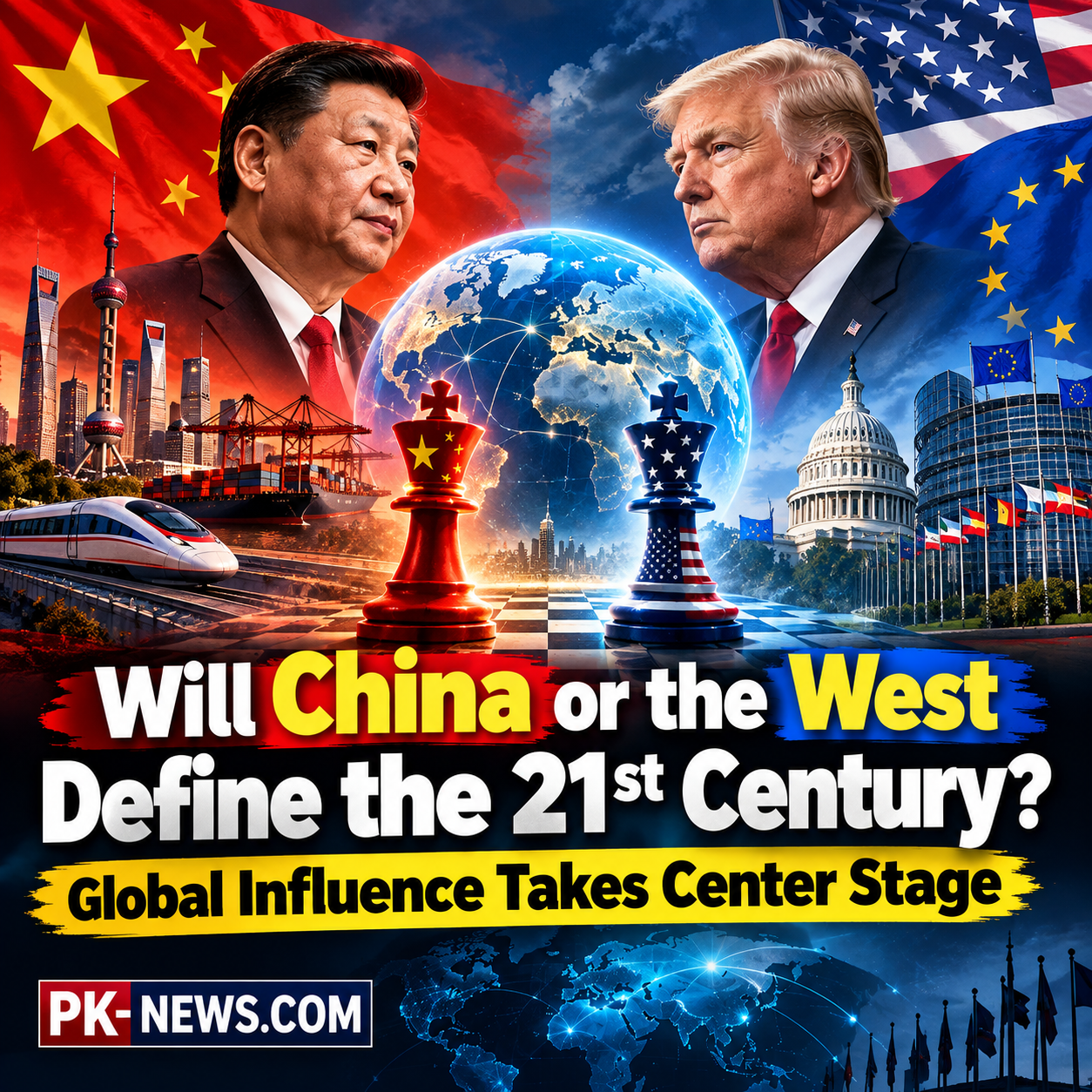
Will China or the West Define the 21st Century? Global Influence Takes Center Stage
Doha — September 22, 2026 | PK News The growing competition between China and Western powers is reshaping debates over the future of the international system, with questions increasingly focused on whether the 21st century will be defined by continued Western influence, China’s rise, or a more fragmented and multipolar world. A recent Doha Debates discussion brought together experts with different perspectives on China’s global role, Western influence, international law, human rights, economic development and the future of global governance. The discussion highlighted the significant expansion of China’s economic and diplomatic influence over recent decades. Participants pointed to China’s extensive trade relationships, infrastructure investment and growing engagement with countries across the Global South as important elements of its international presence. Henry Wang, a former counselor of China’s State Council, argued that China’s development model and long-term planning have helped transform its economy and reduce poverty on a huge scale. He presented China as a supporter of multilateral institutions and argued that Beijing seeks a more cooperative international system rather than replacing the existing global order with a single dominant power. Other participants challenged parts of that interpretation. They argued that China’s growing economic influence does not necessarily mean that other countries are adopting the Chinese political model. They also raised questions about China's approach to territorial disputes, human rights and the application of international rules. The debate also examined the Western-led rules-based international order established after World War II. Participants noted that institutions such as the United Nations and international law were designed to create common rules for states and reduce the risk of major-power conflict. Critics of Western policy argued that Western governments have sometimes applied international principles inconsistently, pointing to military interventions and different responses to conflicts around the world. Others maintained that the existence of violations by powerful states does not invalidate the underlying international legal framework. The war in Ukraine became another major point of disagreement. Wang said China supports Ukraine’s sovereignty and territorial integrity while also emphasizing the wider security architecture surrounding the conflict. Other speakers questioned why Beijing has not explicitly condemned Russia’s invasion. China’s position in the Global South was also discussed. Some participants argued that countries outside the traditional Western sphere are increasingly seeking greater independence in international affairs rather than simply choosing between Washington and Beijing. The discussion ultimately moved beyond the question of whether China or the West should dominate. Several participants emphasized the possibility of a multipolar international system, in which major powers, middle powers and developing countries all have greater influence. Climate change emerged as another major challenge. Speakers argued that the scale of climate-related risks requires international cooperation that goes beyond geopolitical competition. China’s role in developing and manufacturing climate technologies was also highlighted during the discussion. The debate reflected a broader transformation in global politics: China has become a major economic and diplomatic power, while Western influence remains substantial but faces increasing challenges. Rather than producing a simple transfer of power from one side to another, the changing balance could lead to a more complex international system in which cooperation, competition and disagreement coexist. The central question for the coming decades may therefore be less about whether China or the West completely defines the 21st century, and more about how both interact with a growing number of influential countries in an increasingly multipolar world.
5 days ago
Doha — September 22, 2026 | PK News The growing competition between China and Western powers is reshaping debates over the future of the international system, with questions increasingly focused on whether the 21st century will be defined by continued Western influence, China’s rise, or a more fragmented and multipolar world. A recent Doha Debates discussion brought together experts with different perspectives on China’s global role, Western influence, international law, human rights, economic development and the future of global governance. The discussion highlighted the significant expansion of China’s economic and diplomatic influence over recent decades. Participants pointed to China’s extensive trade relationships, infrastructure investment and growing engagement with countries across the Global South as important elements of its international presence. Henry Wang, a former counselor of China’s State Council, argued that China’s development model and long-term planning have helped transform its economy and reduce poverty on a huge scale. He presented China as a supporter of multilateral institutions and argued that Beijing seeks a more cooperative international system rather than replacing the existing global order with a single dominant power. Other participants challenged parts of that interpretation. They argued that China’s growing economic influence does not necessarily mean that other countries are adopting the Chinese political model. They also raised questions about China's approach to territorial disputes, human rights and the application of international rules. The debate also examined the Western-led rules-based international order established after World War II. Participants noted that institutions such as the United Nations and international law were designed to create common rules for states and reduce the risk of major-power conflict. Critics of Western policy argued that Western governments have sometimes applied international principles inconsistently, pointing to military interventions and different responses to conflicts around the world. Others maintained that the existence of violations by powerful states does not invalidate the underlying international legal framework. The war in Ukraine became another major point of disagreement. Wang said China supports Ukraine’s sovereignty and territorial integrity while also emphasizing the wider security architecture surrounding the conflict. Other speakers questioned why Beijing has not explicitly condemned Russia’s invasion. China’s position in the Global South was also discussed. Some participants argued that countries outside the traditional Western sphere are increasingly seeking greater independence in international affairs rather than simply choosing between Washington and Beijing. The discussion ultimately moved beyond the question of whether China or the West should dominate. Several participants emphasized the possibility of a multipolar international system, in which major powers, middle powers and developing countries all have greater influence. Climate change emerged as another major challenge. Speakers argued that the scale of climate-related risks requires international cooperation that goes beyond geopolitical competition. China’s role in developing and manufacturing climate technologies was also highlighted during the discussion. The debate reflected a broader transformation in global politics: China has become a major economic and diplomatic power, while Western influence remains substantial but faces increasing challenges. Rather than producing a simple transfer of power from one side to another, the changing balance could lead to a more complex international system in which cooperation, competition and disagreement coexist. The central question for the coming decades may therefore be less about whether China or the West completely defines the 21st century, and more about how both interact with a growing number of influential countries in an increasingly multipolar world.
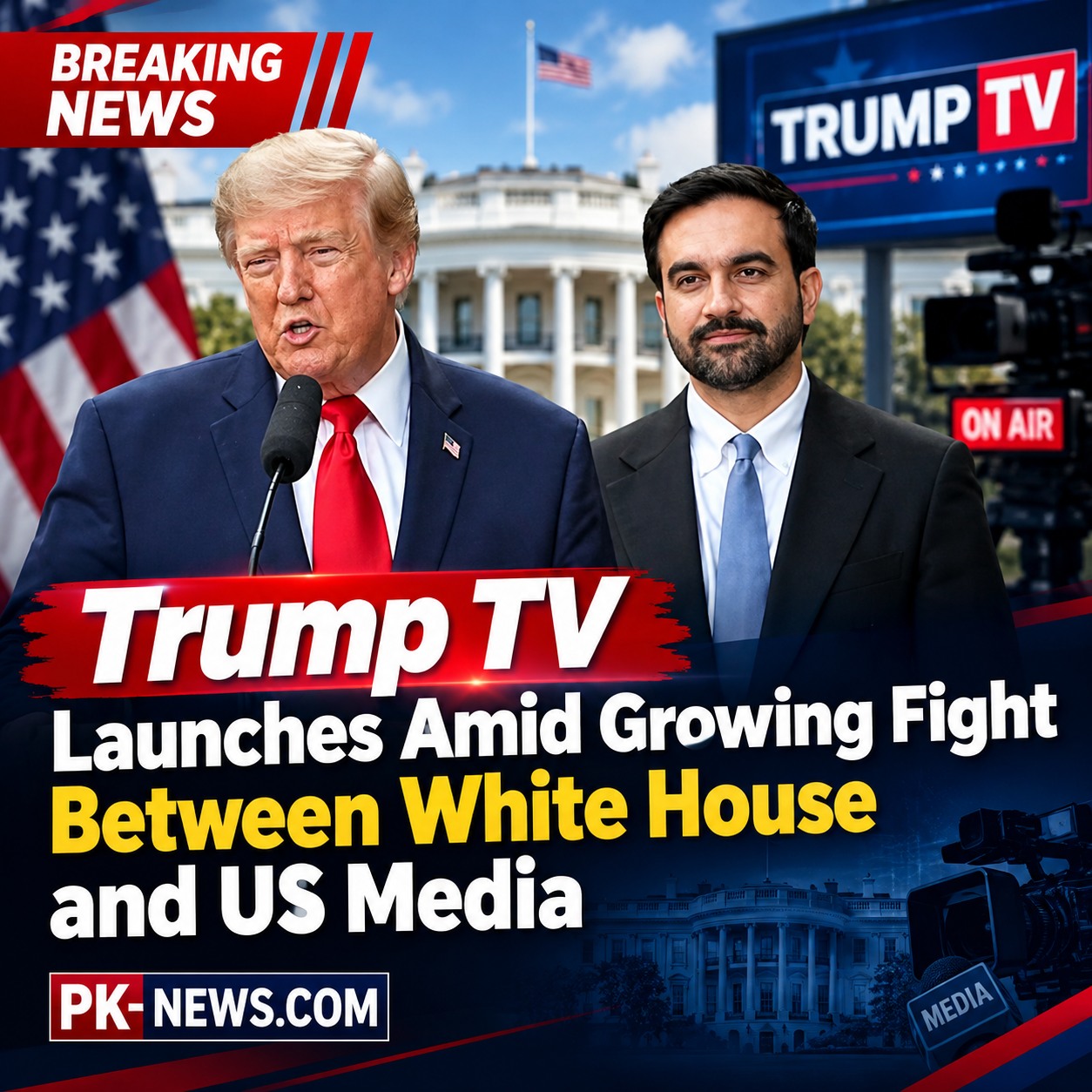
Trump TV Launches Amid Growing Fight Between White House and US Media
16
Global PK Live News 😔 Negative
Trump TV Launches Amid Growing Fight Between White House and US Media
Washington — September 22, 2026 | PK News The White House has launched a new online video channel branded “Trump TV” as a growing dispute between President Donald Trump and several major American news organizations disrupts the traditional system used to televise presidential events. The launch came shortly after the White House barred CNN, MS NOW and Politico from its grounds. The three organizations have challenged the decision in federal court, arguing that the administration's action violates constitutional protections for the press. The dispute has also prompted the major television networks that normally share responsibility for filming presidential events to suspend their White House pool coverage. What Is Trump TV? The new online service provides video coverage of Trump administration events directly to viewers. The initiative gives the White House a way to distribute footage without depending entirely on the traditional television networks that normally operate the presidential television pool. The system became particularly important after CNN was removed from its scheduled role in the rotating pool. ABC, CBS, Fox and NBC subsequently joined CNN in suspending the normal pool arrangement rather than replacing CNN with another network. The television pool normally allows the participating networks to share the costs of sending crews to presidential events and distribute the resulting footage to other media organizations. First Trump TV Broadcast Faces Technical Problems The first major test of the White House's new system produced technical difficulties. During a White House ribbon-cutting event, Trump spoke while Marine One was operating nearby. The helicopter's noise made his remarks difficult to hear, while the absence of the normal television pool meant that major networks did not provide their usual live coverage. Reports said viewers were left without a clear audio feed of Trump's comments from the event. The episode highlighted the practical role traditionally played by the White House television pool. The pool is not simply a political arrangement. It provides cameras, audio, crews and technical infrastructure that allow broadcasters around the country and internationally to receive presidential footage quickly. Why Did Trump Ban CNN, MS NOW and Politico? Trump announced the restrictions on September 18, accusing CNN, MS NOW and Politico of producing what he described as false and unfavorable coverage. The president has argued that media organizations should report fairly and has said that outlets he considers unreliable should not receive access to the White House. The administration has defended the decision by arguing that access to the White House is a privilege rather than an unrestricted right. The three organizations strongly dispute the administration's reasoning. CNN, MS NOW and Politico filed a federal lawsuit seeking restoration of their access. Their legal challenge argues that the government cannot selectively restrict journalists because officials object to the content of their reporting. Court Battle Begins The dispute is now before a federal court in Washington. The news organizations are seeking emergency relief that would restore their access to the White House while the broader legal case proceeds. The case has been assigned to US District Judge Timothy Kelly, who previously handled a dispute involving CNN reporter Jim Acosta during Trump's first administration. The current case could therefore become an important test of how much control a presidential administration has over access for journalists covering the executive branch. The administration, meanwhile, maintains that White House access can be regulated and that its decision was based on the outlets' conduct and coverage. Television Pool System Disrupted The conflict has created an unusual situation for presidential coverage. Five major television networks — ABC, CBS, CNN, Fox and NBC — traditionally rotate responsibility for operating the White House television pool. The designated network provides the primary camera and distributes the signal to other news organizations. CNN had been scheduled for pool duties when the White House excluded it from the premises. Rather than simply assigning the job to another network, the participating broadcasters collectively suspended the arrangement. That means presidential events may receive less conventional television coverage from inside the White House. Other forms of reporting have continued, including print, radio, wire-service reporting and coverage from locations outside the White House. Trump Defends His Decision Trump has continued to defend the restrictions. He has said that media organizations have an obligation to be fair and has repeatedly used the phrase “fake news” when criticizing coverage he believes is inaccurate or hostile toward his administration. The president has also suggested that additional media organizations could potentially face restrictions. The administration says the policy is intended to prevent what it considers inaccurate or harmful reporting rather than to suppress legitimate journalism. Critics of the policy argue that government officials should not determine which news organizations receive access based on whether they approve of their coverage. Broader Debate Over Press Freedom The dispute has quickly moved beyond a disagreement between Trump and individual media organizations. Press organizations and First Amendment advocates have raised concerns about the consequences of allowing a government administration to selectively determine which journalists can enter the White House. The White House Correspondents' Association has called for the banned journalists' access to be restored, emphasizing the importance of independent reporting on the government. The organizations involved in the lawsuit say the decision could affect the public's ability to receive independent information about the president. The administration disputes that interpretation and says journalists remain free to report from outside the White House. Immigration Policy Adds Another Political Dimension The media dispute is developing alongside intense political debate over Trump's immigration enforcement policies. The administration has significantly expanded immigration enforcement, while critics have raised concerns about the use of force and the treatment of people during enforcement operations. Recent incidents involving immigration authorities have generated additional political attention and renewed debate over the limits of federal enforcement powers. Trump and his supporters argue that stronger enforcement is necessary to address illegal immigration and public safety. Opponents have focused on specific incidents involving injuries, shootings and the treatment of migrants and other individuals during enforcement operations. Those disagreements have also become part of the broader media battle, with competing interpretations of how Trump's policies should be reported. A New Information Model? Trump TV could represent a significant change in how the administration communicates with the public if it develops beyond its initial launch. Instead of relying exclusively on traditional television networks to distribute presidential footage, the White House can now publish video directly through its own digital channels. That gives the administration greater control over the timing and presentation of official events. Traditional media organizations, however, provide independent reporting, verification and editorial context alongside the raw footage. The current conflict therefore raises a broader question about whether government-produced video can replace the role traditionally played by independent news organizations. What Happens Next? The immediate focus is on Wednesday's federal court hearing concerning the media-access dispute. The court could determine whether CNN, MS NOW and Politico regain access while their lawsuit proceeds. Meanwhile, the television networks must decide how long they will continue suspending their traditional White House pool coverage. The White House is also likely to continue developing its direct-to-public video operation. For the American public, the dispute could affect how easily viewers receive live images and information from presidential events. PK News Analysis The launch of Trump TV follows a major breakdown in the traditional White House media-access system. The White House says it acted because it believes CNN, MS NOW and Politico have repeatedly published inaccurate or unfair coverage. The three media organizations say the restrictions are retaliation for their reporting and have challenged the decision in federal court. Major television networks have responded by suspending their shared White House television pool rather than replacing CNN after the network was removed from its scheduled duties. The legal question remains unresolved. The upcoming court proceedings will help determine whether the administration's restrictions can remain in place while the case continues. For now, Trump TV provides the White House with a direct method of distributing presidential video, while the traditional media organizations continue covering the administration through other reporting channels. This article has been independently rewritten and prepared for publication by PK-News.com using the supplied transcript and current reporting from established news organizations. It does not reproduce the original broadcast. PK News — PK-News.com | World News • US Politics • Media • International Affairs
5 days ago
Washington — September 22, 2026 | PK News The White House has launched a new online video channel branded “Trump TV” as a growing dispute between President Donald Trump and several major American news organizations disrupts the traditional system used to televise presidential events. The launch came shortly after the White House barred CNN, MS NOW and Politico from its grounds. The three organizations have challenged the decision in federal court, arguing that the administration's action violates constitutional protections for the press. The dispute has also prompted the major television networks that normally share responsibility for filming presidential events to suspend their White House pool coverage. What Is Trump TV? The new online service provides video coverage of Trump administration events directly to viewers. The initiative gives the White House a way to distribute footage without depending entirely on the traditional television networks that normally operate the presidential television pool. The system became particularly important after CNN was removed from its scheduled role in the rotating pool. ABC, CBS, Fox and NBC subsequently joined CNN in suspending the normal pool arrangement rather than replacing CNN with another network. The television pool normally allows the participating networks to share the costs of sending crews to presidential events and distribute the resulting footage to other media organizations. First Trump TV Broadcast Faces Technical Problems The first major test of the White House's new system produced technical difficulties. During a White House ribbon-cutting event, Trump spoke while Marine One was operating nearby. The helicopter's noise made his remarks difficult to hear, while the absence of the normal television pool meant that major networks did not provide their usual live coverage. Reports said viewers were left without a clear audio feed of Trump's comments from the event. The episode highlighted the practical role traditionally played by the White House television pool. The pool is not simply a political arrangement. It provides cameras, audio, crews and technical infrastructure that allow broadcasters around the country and internationally to receive presidential footage quickly. Why Did Trump Ban CNN, MS NOW and Politico? Trump announced the restrictions on September 18, accusing CNN, MS NOW and Politico of producing what he described as false and unfavorable coverage. The president has argued that media organizations should report fairly and has said that outlets he considers unreliable should not receive access to the White House. The administration has defended the decision by arguing that access to the White House is a privilege rather than an unrestricted right. The three organizations strongly dispute the administration's reasoning. CNN, MS NOW and Politico filed a federal lawsuit seeking restoration of their access. Their legal challenge argues that the government cannot selectively restrict journalists because officials object to the content of their reporting. Court Battle Begins The dispute is now before a federal court in Washington. The news organizations are seeking emergency relief that would restore their access to the White House while the broader legal case proceeds. The case has been assigned to US District Judge Timothy Kelly, who previously handled a dispute involving CNN reporter Jim Acosta during Trump's first administration. The current case could therefore become an important test of how much control a presidential administration has over access for journalists covering the executive branch. The administration, meanwhile, maintains that White House access can be regulated and that its decision was based on the outlets' conduct and coverage. Television Pool System Disrupted The conflict has created an unusual situation for presidential coverage. Five major television networks — ABC, CBS, CNN, Fox and NBC — traditionally rotate responsibility for operating the White House television pool. The designated network provides the primary camera and distributes the signal to other news organizations. CNN had been scheduled for pool duties when the White House excluded it from the premises. Rather than simply assigning the job to another network, the participating broadcasters collectively suspended the arrangement. That means presidential events may receive less conventional television coverage from inside the White House. Other forms of reporting have continued, including print, radio, wire-service reporting and coverage from locations outside the White House. Trump Defends His Decision Trump has continued to defend the restrictions. He has said that media organizations have an obligation to be fair and has repeatedly used the phrase “fake news” when criticizing coverage he believes is inaccurate or hostile toward his administration. The president has also suggested that additional media organizations could potentially face restrictions. The administration says the policy is intended to prevent what it considers inaccurate or harmful reporting rather than to suppress legitimate journalism. Critics of the policy argue that government officials should not determine which news organizations receive access based on whether they approve of their coverage. Broader Debate Over Press Freedom The dispute has quickly moved beyond a disagreement between Trump and individual media organizations. Press organizations and First Amendment advocates have raised concerns about the consequences of allowing a government administration to selectively determine which journalists can enter the White House. The White House Correspondents' Association has called for the banned journalists' access to be restored, emphasizing the importance of independent reporting on the government. The organizations involved in the lawsuit say the decision could affect the public's ability to receive independent information about the president. The administration disputes that interpretation and says journalists remain free to report from outside the White House. Immigration Policy Adds Another Political Dimension The media dispute is developing alongside intense political debate over Trump's immigration enforcement policies. The administration has significantly expanded immigration enforcement, while critics have raised concerns about the use of force and the treatment of people during enforcement operations. Recent incidents involving immigration authorities have generated additional political attention and renewed debate over the limits of federal enforcement powers. Trump and his supporters argue that stronger enforcement is necessary to address illegal immigration and public safety. Opponents have focused on specific incidents involving injuries, shootings and the treatment of migrants and other individuals during enforcement operations. Those disagreements have also become part of the broader media battle, with competing interpretations of how Trump's policies should be reported. A New Information Model? Trump TV could represent a significant change in how the administration communicates with the public if it develops beyond its initial launch. Instead of relying exclusively on traditional television networks to distribute presidential footage, the White House can now publish video directly through its own digital channels. That gives the administration greater control over the timing and presentation of official events. Traditional media organizations, however, provide independent reporting, verification and editorial context alongside the raw footage. The current conflict therefore raises a broader question about whether government-produced video can replace the role traditionally played by independent news organizations. What Happens Next? The immediate focus is on Wednesday's federal court hearing concerning the media-access dispute. The court could determine whether CNN, MS NOW and Politico regain access while their lawsuit proceeds. Meanwhile, the television networks must decide how long they will continue suspending their traditional White House pool coverage. The White House is also likely to continue developing its direct-to-public video operation. For the American public, the dispute could affect how easily viewers receive live images and information from presidential events. PK News Analysis The launch of Trump TV follows a major breakdown in the traditional White House media-access system. The White House says it acted because it believes CNN, MS NOW and Politico have repeatedly published inaccurate or unfair coverage. The three media organizations say the restrictions are retaliation for their reporting and have challenged the decision in federal court. Major television networks have responded by suspending their shared White House television pool rather than replacing CNN after the network was removed from its scheduled duties. The legal question remains unresolved. The upcoming court proceedings will help determine whether the administration's restrictions can remain in place while the case continues. For now, Trump TV provides the White House with a direct method of distributing presidential video, while the traditional media organizations continue covering the administration through other reporting channels. This article has been independently rewritten and prepared for publication by PK-News.com using the supplied transcript and current reporting from established news organizations. It does not reproduce the original broadcast. PK News — PK-News.com | World News • US Politics • Media • International Affairs
Iran Warns of Possible New US Attacks as Diplomatic Efforts Continue
18
Global PK Live News 😔 Negative
Iran Warns of Possible New US Attacks as Diplomatic Efforts Continue
Iran has warned that it is preparing for the possibility of renewed military action by the United States, while diplomatic efforts continue behind the scenes to prevent another major escalation across the Middle East. Iranian officials have said intelligence gathered by the country indicates that Washington could resume attacks against Iranian territory. However, such claims represent Iran's assessment and have not independently established that a new US attack is imminent. Iran's Supreme National Security Council Secretary Mohsen Rezaei has taken a particularly strong position, saying Tehran is prepared to respond if American forces launch another attack. At the same time, Iranian officials have continued to signal that diplomacy remains possible. Iran's Conditions for Renewed Talks According to recent reporting, Tehran has communicated conditions for returning to negotiations through Qatari mediators. Among the demands publicly identified by Rezaei are: An end to fighting on all fronts The release of frozen Iranian assets An end to the US naval blockade Iran has also indicated that it is waiting for a response from Washington. Qatar has been working as an intermediary, while Pakistan has also remained involved in diplomatic efforts between the two sides. The diplomatic channel is significant because the conflict has already placed enormous pressure on regional security, energy markets and international shipping. Strait of Hormuz Remains Central One of the biggest issues in the confrontation is the Strait of Hormuz, a critical waterway connecting the Persian Gulf with international shipping routes. Iran has linked the reopening of the strait to broader political and security conditions. Recent discussions involving Iran and Oman have also focused on creating arrangements that could allow shipping to resume under specific conditions. Any prolonged disruption around Hormuz has consequences far beyond Iran and the United States. Energy shipments, oil prices, insurance costs and international supply chains can all be affected by instability around the waterway. Military Pressure and Diplomatic Pressure The current situation is developing along two tracks. On one side, Iranian officials are warning that another attack would produce a strong military response. Iranian statements have also warned regional countries against allowing their territory or military facilities to be used for attacks against Iran. On the other side, diplomatic contacts have not completely stopped. Qatar has continued efforts to bring Washington and Tehran closer to negotiations, while Pakistan has also maintained a mediation role. Recent reporting indicates that Iranian officials remain willing to consider negotiations, although Tehran has attached significant conditions to any renewed process. This creates an increasingly complicated situation: military preparations and threats are continuing while diplomatic channels remain open. Why the Situation Matters Beyond the Region The consequences of another escalation would not necessarily remain limited to the battlefield. The wider Middle East is already experiencing pressure involving oil production, shipping routes and regional security. Recent developments around the Strait of Hormuz and attacks involving regional infrastructure have contributed to higher oil prices and increased uncertainty in global markets. The conflict is also connected to developments in Yemen and the Red Sea. Attacks involving Houthi forces have added another layer of risk around the Bab el-Mandeb shipping route, another important gateway for international trade. For consumers around the world, prolonged instability can translate into higher transportation, energy and shipping costs. What Happens Next? The key question is whether the current diplomatic efforts can produce a workable agreement before the conflict enters another major phase. Iran says it is prepared to defend itself and has warned of a strong response to any new attack. At the same time, Tehran has communicated conditions for returning to negotiations. The United States, meanwhile, faces decisions over military pressure, sanctions, diplomacy and regional security. There is currently no confirmed public evidence establishing that a new large-scale US attack will definitely occur. Statements from Iranian officials about possible future operations should therefore be treated as warnings and assessments rather than confirmation of what Washington will do. For now, the region remains caught between two possibilities: a renewed diplomatic process or another escalation in the conflict. PK-News.com will continue following developments involving Iran, the United States, the Strait of Hormuz and wider Middle East security. 🔎 Search: PK-News.com 🌐 Visit: PK-News.com 📰 For more updates: Follow PK News for continuing international news, breaking developments and verified updates as the situation develops.
Sep 21, 2026 at 6:00 AM
Iran has warned that it is preparing for the possibility of renewed military action by the United States, while diplomatic efforts continue behind the scenes to prevent another major escalation across the Middle East. Iranian officials have said intelligence gathered by the country indicates that Washington could resume attacks against Iranian territory. However, such claims represent Iran's assessment and have not independently established that a new US attack is imminent. Iran's Supreme National Security Council Secretary Mohsen Rezaei has taken a particularly strong position, saying Tehran is prepared to respond if American forces launch another attack. At the same time, Iranian officials have continued to signal that diplomacy remains possible. Iran's Conditions for Renewed Talks According to recent reporting, Tehran has communicated conditions for returning to negotiations through Qatari mediators. Among the demands publicly identified by Rezaei are: An end to fighting on all fronts The release of frozen Iranian assets An end to the US naval blockade Iran has also indicated that it is waiting for a response from Washington. Qatar has been working as an intermediary, while Pakistan has also remained involved in diplomatic efforts between the two sides. The diplomatic channel is significant because the conflict has already placed enormous pressure on regional security, energy markets and international shipping. Strait of Hormuz Remains Central One of the biggest issues in the confrontation is the Strait of Hormuz, a critical waterway connecting the Persian Gulf with international shipping routes. Iran has linked the reopening of the strait to broader political and security conditions. Recent discussions involving Iran and Oman have also focused on creating arrangements that could allow shipping to resume under specific conditions. Any prolonged disruption around Hormuz has consequences far beyond Iran and the United States. Energy shipments, oil prices, insurance costs and international supply chains can all be affected by instability around the waterway. Military Pressure and Diplomatic Pressure The current situation is developing along two tracks. On one side, Iranian officials are warning that another attack would produce a strong military response. Iranian statements have also warned regional countries against allowing their territory or military facilities to be used for attacks against Iran. On the other side, diplomatic contacts have not completely stopped. Qatar has continued efforts to bring Washington and Tehran closer to negotiations, while Pakistan has also maintained a mediation role. Recent reporting indicates that Iranian officials remain willing to consider negotiations, although Tehran has attached significant conditions to any renewed process. This creates an increasingly complicated situation: military preparations and threats are continuing while diplomatic channels remain open. Why the Situation Matters Beyond the Region The consequences of another escalation would not necessarily remain limited to the battlefield. The wider Middle East is already experiencing pressure involving oil production, shipping routes and regional security. Recent developments around the Strait of Hormuz and attacks involving regional infrastructure have contributed to higher oil prices and increased uncertainty in global markets. The conflict is also connected to developments in Yemen and the Red Sea. Attacks involving Houthi forces have added another layer of risk around the Bab el-Mandeb shipping route, another important gateway for international trade. For consumers around the world, prolonged instability can translate into higher transportation, energy and shipping costs. What Happens Next? The key question is whether the current diplomatic efforts can produce a workable agreement before the conflict enters another major phase. Iran says it is prepared to defend itself and has warned of a strong response to any new attack. At the same time, Tehran has communicated conditions for returning to negotiations. The United States, meanwhile, faces decisions over military pressure, sanctions, diplomacy and regional security. There is currently no confirmed public evidence establishing that a new large-scale US attack will definitely occur. Statements from Iranian officials about possible future operations should therefore be treated as warnings and assessments rather than confirmation of what Washington will do. For now, the region remains caught between two possibilities: a renewed diplomatic process or another escalation in the conflict. PK-News.com will continue following developments involving Iran, the United States, the Strait of Hormuz and wider Middle East security. 🔎 Search: PK-News.com 🌐 Visit: PK-News.com 📰 For more updates: Follow PK News for continuing international news, breaking developments and verified updates as the situation develops.
Russia Moves Against Western Corporate Assets as Putin Orders New Takeovers
14
Global PK Live News 😔 Negative
Russia Moves Against Western Corporate Assets as Putin Orders New Takeovers
Russia has placed the Russian operations of several major European companies under temporary administration in one of Moscow’s most significant moves against Western-owned businesses since the start of the war in Ukraine. A decree signed by Russian President Vladimir Putin transferred the Russian businesses of Swiss food giant Nestlé and French retail groups including Auchan and the former Leroy Merlin operation, now known as Lemana Pro, to a little-known Russian company called L.E.V. Management. Russian subsidiaries of French logistics company FM Logistic were also included in the measure. The decision has immediately raised questions about why Moscow acted now, what will happen to the companies' Russian operations and whether temporary control could eventually become permanent ownership. Why Did Russia Act Now? The Kremlin has connected the decision to growing tensions between Russia and European governments over the war in Ukraine. Kremlin spokesperson Dmitry Peskov said the companies come from countries that Moscow considers "unfriendly" and argued that those countries are actively supporting Ukraine. He also pointed to Western involvement in attacks on Russian civilian and economic infrastructure. Russia has classified numerous Western countries as unfriendly since the invasion of Ukraine and has progressively introduced restrictions on their businesses and investments. The latest action therefore comes within a much wider economic confrontation between Moscow and Western governments. Russia says the temporary-management system is designed to protect businesses operating inside the country and prevent economic disruption. Western governments, however, have repeatedly criticized Moscow's treatment of foreign-owned property. What Does "Temporary Administration" Mean? The Russian government introduced its temporary-management mechanism in 2023. Under the system, foreign shareholders can retain formal ownership of their Russian subsidiaries while losing control over important management decisions. The Russian authorities appoint another entity to manage the business. Although the latest decree describes the arrangement as temporary, previous cases have demonstrated that temporary control can eventually lead to a permanent change in ownership. The Russian operations of French food company Danone and Danish brewer Carlsberg previously went through similar processes. Their assets were eventually transferred or sold to Russian buyers under conditions that Western companies criticized. This history is one reason investors are closely watching the latest decision involving Nestlé and the French retailers. Nestlé Faces Uncertainty Nestlé remains one of the world's largest food companies and has maintained a reduced presence in Russia since the invasion of Ukraine. The Swiss company previously suspended many activities in Russia, including advertising, investment and sales of several non-essential products. It continued producing what it described as essential everyday food products. Before the war, Russia generated roughly 2% of Nestlé's global sales. Analysts now estimate the contribution is considerably smaller following the company's reduction in operations. Nestlé has six factories in Russia and around 7,000 employees there, according to reporting cited by Reuters. Following Putin's decree, Nestlé said it was assessing the situation and considering its options. The company said it intended to protect its rights while maintaining continuity for its employees and other stakeholders. The company could now face difficult legal and financial questions over the future of its Russian assets. Auchan Also Caught in the Move French supermarket chain Auchan has maintained a much larger physical presence in Russia. The company expanded heavily in the Russian market over the years and operated hundreds of stores before the latest developments. Its Russian business employs tens of thousands of people and represents a significant part of the company's international operations. Auchan has faced pressure over its continued Russian presence since the invasion of Ukraine. The company has previously argued that its stores provide food and other essential products to Russian consumers. Under Putin's latest decree, however, the Russian business has been transferred to temporary management. The company has sought clarification from Russian authorities regarding the decision. Leroy Merlin's Russian Business Also Affected The decree also covers the Russian operation connected to the former Leroy Merlin brand. Leroy Merlin's parent company had announced plans to leave Russia, and the Russian business subsequently began operating under the Lemana Pro name. Despite the rebranding and changes in management, the Russian business remained economically important. The latest Kremlin decision places it within the same temporary-management framework as other Western businesses. A Broader Economic Conflict The latest asset transfers are part of a much larger economic confrontation that has developed since Russia's full-scale invasion of Ukraine in 2022. More than a thousand foreign companies have reduced or ended their Russian activities. At the same time, Moscow has introduced increasingly strict conditions for companies attempting to leave. Companies from countries designated as unfriendly have faced requirements including government approval, significant discounts on asset sales and additional financial obligations. Russia has also previously taken control of assets belonging to foreign companies in sectors ranging from energy and manufacturing to food and retail. Reuters reported that a 2025 estimate from a Moscow law firm put the value of private property seized by the Russian state at more than $50 billion since the beginning of the war. Could Temporary Control Become Permanent? That is one of the biggest questions surrounding Putin's latest decree. The Russian government maintains that the current arrangement is temporary. However, previous cases involving Western businesses have sometimes ended with assets being transferred or sold to Russian owners. For companies such as Nestlé and Auchan, the immediate issue is therefore not simply management of their Russian operations. It is whether they will eventually be able to regain full control of their businesses. The companies could pursue legal and diplomatic measures, although the political relationship between Russia and many European governments makes the situation complicated. Europe Responds France has called for the Russian decision involving French companies to be reversed. Switzerland has also expressed concern over the treatment of Nestlé and supported efforts to protect the company's interests. The dispute could add another layer to already strained relations between Russia and European countries. For Moscow, the action demonstrates that Western economic pressure can be met with countermeasures against European businesses still operating inside Russia. For affected companies, the move highlights the growing risks of maintaining assets in a market where government intervention can rapidly change ownership and management arrangements. What Happens Next? The immediate future of the businesses remains uncertain. Nestlé has said it is assessing its options, while Auchan and other affected companies are seeking clarification from Russian authorities. The Russian government, meanwhile, has placed the businesses under L.E.V. Management. The key question will be whether the temporary arrangement remains temporary or becomes the first step toward permanent ownership changes. The latest move also sends a wider message to international companies that continue to operate in Russia: geopolitical tensions can have direct consequences for corporate ownership, management and investment. For global businesses, the developments involving Nestlé, Auchan, Lemana Pro and FM Logistic are another indication that the commercial consequences of the Russia-Ukraine conflict extend far beyond sanctions and trade restrictions. PK News Analysis: The situation remains developing, and the legal ownership status of the affected companies should not be confused with the temporary transfer of management ordered by Moscow. Further decisions by Russian authorities, the companies themselves and European governments could significantly change the situation. This article has been independently rewritten and prepared for PK-News.com using current public reporting and official statements. It is not reproduced from the original source article. PK News — PK-News.com | World News • Business • Politics • International Affairs
Sep 21, 2026 at 5:00 AM
Russia has placed the Russian operations of several major European companies under temporary administration in one of Moscow’s most significant moves against Western-owned businesses since the start of the war in Ukraine. A decree signed by Russian President Vladimir Putin transferred the Russian businesses of Swiss food giant Nestlé and French retail groups including Auchan and the former Leroy Merlin operation, now known as Lemana Pro, to a little-known Russian company called L.E.V. Management. Russian subsidiaries of French logistics company FM Logistic were also included in the measure. The decision has immediately raised questions about why Moscow acted now, what will happen to the companies' Russian operations and whether temporary control could eventually become permanent ownership. Why Did Russia Act Now? The Kremlin has connected the decision to growing tensions between Russia and European governments over the war in Ukraine. Kremlin spokesperson Dmitry Peskov said the companies come from countries that Moscow considers "unfriendly" and argued that those countries are actively supporting Ukraine. He also pointed to Western involvement in attacks on Russian civilian and economic infrastructure. Russia has classified numerous Western countries as unfriendly since the invasion of Ukraine and has progressively introduced restrictions on their businesses and investments. The latest action therefore comes within a much wider economic confrontation between Moscow and Western governments. Russia says the temporary-management system is designed to protect businesses operating inside the country and prevent economic disruption. Western governments, however, have repeatedly criticized Moscow's treatment of foreign-owned property. What Does "Temporary Administration" Mean? The Russian government introduced its temporary-management mechanism in 2023. Under the system, foreign shareholders can retain formal ownership of their Russian subsidiaries while losing control over important management decisions. The Russian authorities appoint another entity to manage the business. Although the latest decree describes the arrangement as temporary, previous cases have demonstrated that temporary control can eventually lead to a permanent change in ownership. The Russian operations of French food company Danone and Danish brewer Carlsberg previously went through similar processes. Their assets were eventually transferred or sold to Russian buyers under conditions that Western companies criticized. This history is one reason investors are closely watching the latest decision involving Nestlé and the French retailers. Nestlé Faces Uncertainty Nestlé remains one of the world's largest food companies and has maintained a reduced presence in Russia since the invasion of Ukraine. The Swiss company previously suspended many activities in Russia, including advertising, investment and sales of several non-essential products. It continued producing what it described as essential everyday food products. Before the war, Russia generated roughly 2% of Nestlé's global sales. Analysts now estimate the contribution is considerably smaller following the company's reduction in operations. Nestlé has six factories in Russia and around 7,000 employees there, according to reporting cited by Reuters. Following Putin's decree, Nestlé said it was assessing the situation and considering its options. The company said it intended to protect its rights while maintaining continuity for its employees and other stakeholders. The company could now face difficult legal and financial questions over the future of its Russian assets. Auchan Also Caught in the Move French supermarket chain Auchan has maintained a much larger physical presence in Russia. The company expanded heavily in the Russian market over the years and operated hundreds of stores before the latest developments. Its Russian business employs tens of thousands of people and represents a significant part of the company's international operations. Auchan has faced pressure over its continued Russian presence since the invasion of Ukraine. The company has previously argued that its stores provide food and other essential products to Russian consumers. Under Putin's latest decree, however, the Russian business has been transferred to temporary management. The company has sought clarification from Russian authorities regarding the decision. Leroy Merlin's Russian Business Also Affected The decree also covers the Russian operation connected to the former Leroy Merlin brand. Leroy Merlin's parent company had announced plans to leave Russia, and the Russian business subsequently began operating under the Lemana Pro name. Despite the rebranding and changes in management, the Russian business remained economically important. The latest Kremlin decision places it within the same temporary-management framework as other Western businesses. A Broader Economic Conflict The latest asset transfers are part of a much larger economic confrontation that has developed since Russia's full-scale invasion of Ukraine in 2022. More than a thousand foreign companies have reduced or ended their Russian activities. At the same time, Moscow has introduced increasingly strict conditions for companies attempting to leave. Companies from countries designated as unfriendly have faced requirements including government approval, significant discounts on asset sales and additional financial obligations. Russia has also previously taken control of assets belonging to foreign companies in sectors ranging from energy and manufacturing to food and retail. Reuters reported that a 2025 estimate from a Moscow law firm put the value of private property seized by the Russian state at more than $50 billion since the beginning of the war. Could Temporary Control Become Permanent? That is one of the biggest questions surrounding Putin's latest decree. The Russian government maintains that the current arrangement is temporary. However, previous cases involving Western businesses have sometimes ended with assets being transferred or sold to Russian owners. For companies such as Nestlé and Auchan, the immediate issue is therefore not simply management of their Russian operations. It is whether they will eventually be able to regain full control of their businesses. The companies could pursue legal and diplomatic measures, although the political relationship between Russia and many European governments makes the situation complicated. Europe Responds France has called for the Russian decision involving French companies to be reversed. Switzerland has also expressed concern over the treatment of Nestlé and supported efforts to protect the company's interests. The dispute could add another layer to already strained relations between Russia and European countries. For Moscow, the action demonstrates that Western economic pressure can be met with countermeasures against European businesses still operating inside Russia. For affected companies, the move highlights the growing risks of maintaining assets in a market where government intervention can rapidly change ownership and management arrangements. What Happens Next? The immediate future of the businesses remains uncertain. Nestlé has said it is assessing its options, while Auchan and other affected companies are seeking clarification from Russian authorities. The Russian government, meanwhile, has placed the businesses under L.E.V. Management. The key question will be whether the temporary arrangement remains temporary or becomes the first step toward permanent ownership changes. The latest move also sends a wider message to international companies that continue to operate in Russia: geopolitical tensions can have direct consequences for corporate ownership, management and investment. For global businesses, the developments involving Nestlé, Auchan, Lemana Pro and FM Logistic are another indication that the commercial consequences of the Russia-Ukraine conflict extend far beyond sanctions and trade restrictions. PK News Analysis: The situation remains developing, and the legal ownership status of the affected companies should not be confused with the temporary transfer of management ordered by Moscow. Further decisions by Russian authorities, the companies themselves and European governments could significantly change the situation. This article has been independently rewritten and prepared for PK-News.com using current public reporting and official statements. It is not reproduced from the original source article. PK News — PK-News.com | World News • Business • Politics • International Affairs
Iranies Students Return to Classrooms After Months of War
30
Global PK Live News 😔 Negative
Iranies Students Return to Classrooms After Months of War
Schools and universities across Iran are reopening after a difficult period marked by war, damaged educational facilities, disrupted classes and growing financial pressure on families. Months of fighting affected education across the country. Numerous schools were damaged, while universities and research facilities also faced disruptions. According to the report, more than 1,700 schools suffered damage ranging from minor destruction to severe structural losses. One of the most devastating incidents occurred in Minab, where an attack on an elementary school reportedly killed at least 156 students and staff. Other schools were also affected as air strikes and the wider conflict disrupted communities. Universities were not spared. Institutions including Sharif University of Technology and facilities connected to Shahid Beheshti University experienced damage or disruption, affecting lessons and academic activities. For students, the problems extended beyond damaged buildings. During the previous academic term, poor internet connectivity, energy shortages and the emotional pressure created by the conflict repeatedly interrupted classes. Younger children have also been affected psychologically. Staff at a kindergarten in Tehran described changes in children's behavior and artwork following the air strikes. Some drawings reportedly began featuring missiles and scenes connected to the war, highlighting how deeply the conflict has entered children's everyday lives. Families are facing another challenge as they prepare their children to return to school: rising costs. Parents interviewed in the report said school supplies have become significantly more expensive. Items that were affordable a year earlier now place greater pressure on household budgets. Students who need computers and other equipment for their studies are also finding them increasingly difficult to afford. Despite these challenges, students are returning to classrooms with hopes of continuing their education. The reopening of schools represents more than a return to normal lessons. For many Iranian families, it is an attempt to restore a sense of routine after months of uncertainty. However, damaged schools, disrupted universities, economic difficulties and the emotional impact of conflict remain major challenges for students and teachers. As the new academic year begins, many young people are looking toward their education as a path toward a more stable future. 🔴 PK-News.com | International News For more updates on Iran, education and developments around the world, visit PK-News.com.
Sep 21, 2026 at 4:03 AM
Schools and universities across Iran are reopening after a difficult period marked by war, damaged educational facilities, disrupted classes and growing financial pressure on families. Months of fighting affected education across the country. Numerous schools were damaged, while universities and research facilities also faced disruptions. According to the report, more than 1,700 schools suffered damage ranging from minor destruction to severe structural losses. One of the most devastating incidents occurred in Minab, where an attack on an elementary school reportedly killed at least 156 students and staff. Other schools were also affected as air strikes and the wider conflict disrupted communities. Universities were not spared. Institutions including Sharif University of Technology and facilities connected to Shahid Beheshti University experienced damage or disruption, affecting lessons and academic activities. For students, the problems extended beyond damaged buildings. During the previous academic term, poor internet connectivity, energy shortages and the emotional pressure created by the conflict repeatedly interrupted classes. Younger children have also been affected psychologically. Staff at a kindergarten in Tehran described changes in children's behavior and artwork following the air strikes. Some drawings reportedly began featuring missiles and scenes connected to the war, highlighting how deeply the conflict has entered children's everyday lives. Families are facing another challenge as they prepare their children to return to school: rising costs. Parents interviewed in the report said school supplies have become significantly more expensive. Items that were affordable a year earlier now place greater pressure on household budgets. Students who need computers and other equipment for their studies are also finding them increasingly difficult to afford. Despite these challenges, students are returning to classrooms with hopes of continuing their education. The reopening of schools represents more than a return to normal lessons. For many Iranian families, it is an attempt to restore a sense of routine after months of uncertainty. However, damaged schools, disrupted universities, economic difficulties and the emotional impact of conflict remain major challenges for students and teachers. As the new academic year begins, many young people are looking toward their education as a path toward a more stable future. 🔴 PK-News.com | International News For more updates on Iran, education and developments around the world, visit PK-News.com.
Trump’s Kennedy Center Overhaul Raises Questions Over Politics, Art and the Institution’s Future BREAKING
27
Global PK Live News 😐 Neutral
Trump’s Kennedy Center Overhaul Raises Questions Over Politics, Art and the Institution’s Future
The John F. Kennedy Center for the Performing Arts in Washington has become the center of an escalating political, financial and legal dispute following major changes introduced under President Donald Trump’s administration. The controversy has expanded beyond the question of who controls the institution. Internal emails and documents reported in recent days have provided new details about plans for the Kennedy Center’s management, finances, artwork and future direction. The developments have also coincided with a serious dispute over Trump’s name being placed on the building. According to documents reviewed by The New York Times, Trump’s influence over the institution increased significantly after he reshaped its board and became its chairman. The changes were followed by departures among audiences and donors and growing concerns about the center’s financial position. A Major Change in Kennedy Center Leadership The Kennedy Center traditionally operates as one of the United States’ most prominent performing-arts institutions. Its programming has included theater, music, dance and other cultural events. The institution entered a new phase in 2025 when Trump removed members of its board and installed new trustees aligned with his administration. The newly configured board subsequently elected Trump as chairman. That unprecedented political involvement has become one of the central issues surrounding the center. The administration and its supporters have argued that stronger leadership is necessary to address long-standing financial and physical problems at the complex. Critics, including some lawmakers and former supporters of the institution, have questioned whether the changes have allowed political considerations to influence decisions that traditionally belonged to arts administrators and trustees. These disagreements are now playing out in court as well as inside the institution. Dispute Over the Kennedy Center’s Artwork One of the most significant revelations concerns the center’s extensive art collection. Documents reported by The New York Times indicate that former Kennedy Center leadership considered changes to artwork displayed throughout the complex. Richard Grenell, Trump’s first director of the center during his second-term administration, was involved in discussions about removing or returning some works. A proposal circulated by Kennedy Center officials described several possible methods for disposing of artwork, including returning pieces to their countries of origin, transferring or exchanging works, selling them publicly or, in certain circumstances, destroying them. The discussions are significant because some works in the Kennedy Center were gifts connected to international relationships and the institution’s history. The reported documents suggest that questions about which artwork should remain were not simply an artistic matter. Political considerations and the changing direction of the institution also became part of the internal debate. Financial Problems Add to the Pressure The political dispute comes as the Kennedy Center faces serious financial difficulties. Documents presented to trustees reportedly warned that the institution could face a severe fiscal crisis and potentially bankruptcy. Officials argued that additional financial support was urgently needed to keep the center operating and address major maintenance problems. The Kennedy Center has also received congressional funding for renovations. In 2025, Congress approved $257 million connected to renovation work at the institution. The building’s physical condition has become increasingly visible. In September 2026, a large section of ceiling plaster fell inside the Grand Foyer. No injuries were reported, but the incident became a major symbol of the center’s maintenance problems. Officials supporting the renovation effort have pointed to the incident as evidence that significant work is required. Others have questioned how the center reached its current financial and operational position and whether decisions made under the new leadership contributed to the crisis. The Fight Over Trump’s Name Another major dispute involves the name of the institution. The Kennedy Center board previously voted to add Trump’s name to the building. However, a federal judge ruled that the board did not have the authority to make such a change without congressional approval. The court subsequently ordered Trump's name removed from the building and other official references. The issue has not ended there. In August, the Trump-aligned board voted again on efforts to recognize the president on the building. Rep. Joyce Beatty, a Democratic member of Congress and Kennedy Center trustee, challenged the move in court. More recently, the federal court again blocked efforts to restore Trump's name without congressional authorization. The Justice Department has appealed the decision. The dispute has therefore developed into a broader constitutional and institutional question over the authority of the Kennedy Center board and Congress. Closure and Renovation Plans The Kennedy Center’s physical and financial problems have also led to an extraordinary decision concerning the future of the building. In September, the board voted to close much of the center for renovations. Officials described the work as necessary because of the building’s deteriorating condition. The decision has generated further controversy because previous court proceedings had addressed plans to close the institution. Trump has argued that renovation work and his involvement are necessary to save the Kennedy Center. His administration has also connected fundraising and the institution’s future financial stability with the broader dispute over recognizing his role. Opponents have challenged that approach and questioned whether the institution’s financial difficulties should be connected to the president’s name. What Happens Next? The future of the Kennedy Center remains uncertain. Several issues are now connected: the institution’s finances, its physical infrastructure, its artistic collection, the composition of its board, the role of the president and the legal dispute over the building’s name. The courts will continue to play an important role, particularly over whether the board can make changes involving the building’s identity and operations without congressional approval. At the same time, the center must address immediate practical challenges, including renovations, financial obligations and maintaining its cultural programming. For audiences and artists, the dispute raises questions about what the Kennedy Center will look like when its renovation period ends and whether its programming and leadership structure will change permanently. For Congress and the courts, the conflict raises a different question: how much authority should a presidential administration have over an institution created by federal law and associated with the legacy of President John F. Kennedy? As these disputes continue, the Kennedy Center has become more than a debate about a performing-arts building. It has become a national discussion about political influence, public cultural institutions, government funding, artistic independence and the limits of presidential authority. This report has been rewritten and prepared for publication by PK-News.com based on publicly reported documents, court developments and reporting from established news organizations. PK News | PK-News.com — Independent Digital News & Information
Sep 21, 2026 at 3:34 AM
The John F. Kennedy Center for the Performing Arts in Washington has become the center of an escalating political, financial and legal dispute following major changes introduced under President Donald Trump’s administration. The controversy has expanded beyond the question of who controls the institution. Internal emails and documents reported in recent days have provided new details about plans for the Kennedy Center’s management, finances, artwork and future direction. The developments have also coincided with a serious dispute over Trump’s name being placed on the building. According to documents reviewed by The New York Times, Trump’s influence over the institution increased significantly after he reshaped its board and became its chairman. The changes were followed by departures among audiences and donors and growing concerns about the center’s financial position. A Major Change in Kennedy Center Leadership The Kennedy Center traditionally operates as one of the United States’ most prominent performing-arts institutions. Its programming has included theater, music, dance and other cultural events. The institution entered a new phase in 2025 when Trump removed members of its board and installed new trustees aligned with his administration. The newly configured board subsequently elected Trump as chairman. That unprecedented political involvement has become one of the central issues surrounding the center. The administration and its supporters have argued that stronger leadership is necessary to address long-standing financial and physical problems at the complex. Critics, including some lawmakers and former supporters of the institution, have questioned whether the changes have allowed political considerations to influence decisions that traditionally belonged to arts administrators and trustees. These disagreements are now playing out in court as well as inside the institution. Dispute Over the Kennedy Center’s Artwork One of the most significant revelations concerns the center’s extensive art collection. Documents reported by The New York Times indicate that former Kennedy Center leadership considered changes to artwork displayed throughout the complex. Richard Grenell, Trump’s first director of the center during his second-term administration, was involved in discussions about removing or returning some works. A proposal circulated by Kennedy Center officials described several possible methods for disposing of artwork, including returning pieces to their countries of origin, transferring or exchanging works, selling them publicly or, in certain circumstances, destroying them. The discussions are significant because some works in the Kennedy Center were gifts connected to international relationships and the institution’s history. The reported documents suggest that questions about which artwork should remain were not simply an artistic matter. Political considerations and the changing direction of the institution also became part of the internal debate. Financial Problems Add to the Pressure The political dispute comes as the Kennedy Center faces serious financial difficulties. Documents presented to trustees reportedly warned that the institution could face a severe fiscal crisis and potentially bankruptcy. Officials argued that additional financial support was urgently needed to keep the center operating and address major maintenance problems. The Kennedy Center has also received congressional funding for renovations. In 2025, Congress approved $257 million connected to renovation work at the institution. The building’s physical condition has become increasingly visible. In September 2026, a large section of ceiling plaster fell inside the Grand Foyer. No injuries were reported, but the incident became a major symbol of the center’s maintenance problems. Officials supporting the renovation effort have pointed to the incident as evidence that significant work is required. Others have questioned how the center reached its current financial and operational position and whether decisions made under the new leadership contributed to the crisis. The Fight Over Trump’s Name Another major dispute involves the name of the institution. The Kennedy Center board previously voted to add Trump’s name to the building. However, a federal judge ruled that the board did not have the authority to make such a change without congressional approval. The court subsequently ordered Trump's name removed from the building and other official references. The issue has not ended there. In August, the Trump-aligned board voted again on efforts to recognize the president on the building. Rep. Joyce Beatty, a Democratic member of Congress and Kennedy Center trustee, challenged the move in court. More recently, the federal court again blocked efforts to restore Trump's name without congressional authorization. The Justice Department has appealed the decision. The dispute has therefore developed into a broader constitutional and institutional question over the authority of the Kennedy Center board and Congress. Closure and Renovation Plans The Kennedy Center’s physical and financial problems have also led to an extraordinary decision concerning the future of the building. In September, the board voted to close much of the center for renovations. Officials described the work as necessary because of the building’s deteriorating condition. The decision has generated further controversy because previous court proceedings had addressed plans to close the institution. Trump has argued that renovation work and his involvement are necessary to save the Kennedy Center. His administration has also connected fundraising and the institution’s future financial stability with the broader dispute over recognizing his role. Opponents have challenged that approach and questioned whether the institution’s financial difficulties should be connected to the president’s name. What Happens Next? The future of the Kennedy Center remains uncertain. Several issues are now connected: the institution’s finances, its physical infrastructure, its artistic collection, the composition of its board, the role of the president and the legal dispute over the building’s name. The courts will continue to play an important role, particularly over whether the board can make changes involving the building’s identity and operations without congressional approval. At the same time, the center must address immediate practical challenges, including renovations, financial obligations and maintaining its cultural programming. For audiences and artists, the dispute raises questions about what the Kennedy Center will look like when its renovation period ends and whether its programming and leadership structure will change permanently. For Congress and the courts, the conflict raises a different question: how much authority should a presidential administration have over an institution created by federal law and associated with the legacy of President John F. Kennedy? As these disputes continue, the Kennedy Center has become more than a debate about a performing-arts building. It has become a national discussion about political influence, public cultural institutions, government funding, artistic independence and the limits of presidential authority. This report has been rewritten and prepared for publication by PK-News.com based on publicly reported documents, court developments and reporting from established news organizations. PK News | PK-News.com — Independent Digital News & Information
Iran Mobilizes Volunteers as Tensions Rise
12
Global PK Live News 😐 Neutral
Iran Mobilizes Volunteers as Tensions Rise
Iran has mobilized around 3,000 volunteers in Tehran as tensions remain high, with authorities presenting the initiative as part of a broader national defense effort. The number 313 carries religious significance in Shia belief. According to the belief described by participants, Imam Mahdi, a mes
Sep 18, 2026 at 8:00 PM
Iran has mobilized around 3,000 volunteers in Tehran as tensions remain high, with authorities presenting the initiative as part of a broader national defense effort. The number 313 carries religious significance in Shia belief. According to the belief described by participants, Imam Mahdi, a mes
Yemens War: A Conflict With No Simple Ending
154
Global PK Live News 😔 Negative
Yemens War: A Conflict With No Simple Ending
Yemen’s conflict is not a single war. It is a complicated struggle involving several armed groups, political factions and regional powers, each with different interests. The Houthi movement (Ansar Allah) controls much of northern Yemen and has significant influence along the Red Sea. Its positi
Sep 18, 2026 at 7:21 PM
Yemen’s conflict is not a single war. It is a complicated struggle involving several armed groups, political factions and regional powers, each with different interests. The Houthi movement (Ansar Allah) controls much of northern Yemen and has significant influence along the Red Sea. Its positi
/* Related News Sidebar Widget Styles */ .sidebar-widget .card { transition: transform 0.2s ease-in-out, box-shadow 0.2s ease-in-out; } .sidebar-widget .card:hover { transform: translateY(-2px); box-shadow: 0 4px 15px rgba(0,0,0,0.15); } .sidebar-widget .img-fluid { width: 100%; height: auto; object-fit: cover; } .sidebar-widget .video-thumbnail { position: relative; overflow: hidden; } .sidebar-widget .video-play-button { position: absolute; top: 50%; left: 50%; transform: translate(-50%, -50%); width: 30px; height: 30px; background: rgba(0,0,0,0.7); border-radius: 50%; display: flex; align-items: center; justify-content: center; color: white; font-size: 12px; cursor: pointer; transition: all 0.3s ease; } .sidebar-widget .video-play-button:hover { background: rgba(0,0,0,0.9); transform: translate(-50%, -50%) scale(1.1); } .sidebar-widget .card-title { font-size: 0.9rem; font-weight: 600; line-height: 1.3; margin-bottom: 0.5rem; } .sidebar-widget .card-title a { color: #333; text-decoration: none; } .sidebar-widget .card-title a:hover { color: #dc3545; } /* List view styles */ .list-view { display: flex !important; flex-direction: column; gap: 1rem; } .list-view .col-md-6 { width: 100% !important; max-width: 100% !important; flex: 0 0 100% !important; } .list-view .news-card { display: flex; flex-direction: row; height: auto !important; } .list-view .news-card .image-container { width: 300px; height: 200px; flex-shrink: 0; } .list-view .news-card .card-body { flex: 1; display: flex; flex-direction: column; } @media (max-width: 768px) { .list-view .news-card { flex-direction: column; } .list-view .news-card .image-container { width: 100%; height: 200px; } }