By PK-News.com News Desk
September 28, 2026 | International Business
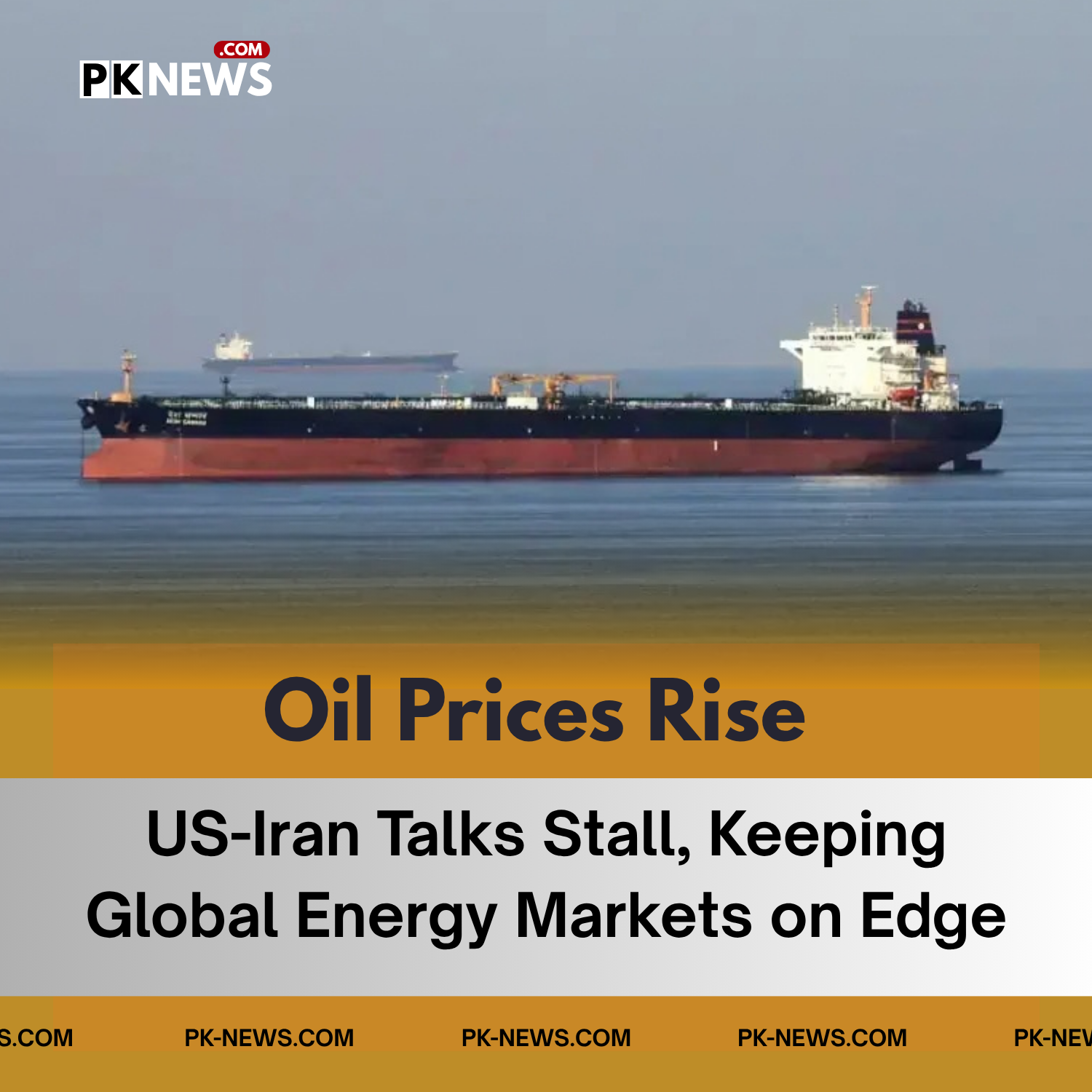
SINGAPORE: Global oil prices moved higher on Monday as diplomatic efforts between the United States and Iran failed to produce an immediate breakthrough, adding fresh uncertainty to an already volatile energy market.
The latest rise came after US President Donald Trump rejected an Iranian proposal aimed at resolving the conflict and reopening the strategically important Strait of Hormuz. Although Washington has indicated that further discussions could take place, the absence of an immediate agreement has renewed concerns about regional security and energy supplies.
According to market data reported by Reuters, Brent crude futures rose more than 3% during Monday's trading, reaching around $107.75 per barrel, while US West Texas Intermediate (WTI) crude climbed above $94 per barrel.
Why Are Oil Prices Rising?
The latest movement in oil prices is closely linked to uncertainty surrounding the US-Iran conflict and the future of the Strait of Hormuz, one of the world's most important energy shipping routes.
Iran's latest proposal reportedly sought a path toward ending the conflict while allowing shipping through the Strait of Hormuz to resume. The proposal was communicated through Qatari mediators following discussions around the United Nations General Assembly in New York.
Trump said he rejected the proposal, but also indicated that US negotiators could continue discussions with Iranian representatives during the week.
This combination of rejected terms and continuing diplomatic contact has left markets uncertain about what comes next. Reuters reported that the rejection reduced hopes of an immediate diplomatic breakthrough, although negotiations have not completely stopped.
Strait of Hormuz Remains Central to the Crisis
The Strait of Hormuz has become one of the most important factors influencing international oil markets during the conflict.
A large volume of oil and petroleum products normally passes through the waterway, making any disruption potentially significant for global energy supplies.
Concerns about the route have already contributed to a geopolitical risk premium in oil prices. Traders are closely watching whether shipping activity can return to more normal levels or whether further restrictions and attacks could disrupt supplies.
Recent data cited by Reuters, however, suggests that exports from major Middle Eastern producers have started to recover.
Crude exports from key producers were estimated at 12.8 million barrels per day in September, the highest level since the conflict began in February. Shipments through the Strait of Hormuz were also expected to reach approximately 7.4 million barrels per day during the month.
Middle East Supply Risks Remain
While some oil flows have recovered, the broader security situation remains uncertain.
The region has continued to experience attacks and military tensions involving Iran and Iran-backed groups. Yemen's Houthi movement has also remained a factor in regional security, particularly because attacks involving Saudi Arabia and energy infrastructure can create additional concerns for oil traders.
Reuters reported that Saudi Arabia and the United Arab Emirates increased exports in September, helping restore some supply to international markets. Saudi Arabia also redirected some shipments after damage to its East-West pipeline affected normal transportation routes.
The recovery in exports has provided some relief, but markets remain highly sensitive to any new escalation.
What Happens If Talks Continue?
The latest statements from Washington suggest that diplomacy has not completely ended.
Trump has indicated that US negotiators are expected to engage in further talks with Tehran, despite his rejection of the latest Iranian proposal.
Iranian officials, meanwhile, have maintained that Tehran is prepared to pursue diplomacy while also preparing for further confrontation if necessary.
Iranian Foreign Minister Abbas Araghchi said Tehran remained open to diplomacy but was also prepared for renewed military confrontation.
The next phase of negotiations could therefore have a direct effect on international energy markets.
A credible diplomatic breakthrough could reduce some of the risk premium currently built into oil prices. Conversely, further military escalation or prolonged disruption around the Strait of Hormuz could increase concerns about global supply.
Potential Impact on Global Markets
Higher crude prices can affect economies well beyond the Middle East.
When oil becomes more expensive, transportation, manufacturing and energy costs can increase. Countries that depend heavily on imported crude can face higher import bills and additional inflationary pressure.
Financial markets are therefore watching the US-Iran situation alongside developments in oil shipping, refinery operations and fuel prices.
Reuters reported that rising oil prices have already weighed on investor sentiment in Asian markets, highlighting the wider economic implications of the ongoing standoff.
US Diesel Market Adds Another Concern
Oil markets are also facing pressure from developments in refined petroleum products.
US diesel prices have reached record levels, increasing concerns about inflation and prompting discussion about possible restrictions on diesel exports.
Analysts cited by Reuters said restrictions on US diesel exports could tighten fuel availability outside the United States, potentially pushing prices higher in other markets.
This means crude oil prices are being influenced by several factors at the same time — geopolitical tensions, shipping conditions, refinery economics and fuel-market pressures.
What It Means for Consumers
For ordinary consumers, prolonged oil-price increases could eventually translate into higher costs for transportation and other goods.
The exact effect will depend on how long international crude prices remain elevated, currency movements, government pricing decisions and local fuel policies.
For countries that import significant quantities of petroleum, sustained increases in international crude prices can put additional pressure on foreign-exchange reserves and consumer prices.
Diplomatic Developments Now in Focus
The oil market is now closely watching the next round of US-Iran diplomatic contacts.
The current situation is not a complete end to negotiations. Instead, the latest developments show that the two sides remain far apart on the terms of a possible agreement while communication through intermediaries continues.
The future of the Strait of Hormuz is particularly important because any improvement in shipping conditions could ease supply concerns, while renewed disruption could have the opposite effect.
For now, oil markets remain sensitive to every major diplomatic and military development in the region.
PK-News.com Analysis
The latest movement in crude prices demonstrates how closely global energy markets remain connected to geopolitical developments in the Middle East.
Although oil exports from several major producers have recovered, uncertainty surrounding the US-Iran conflict and the Strait of Hormuz continues to influence traders.
PK-News.com will continue monitoring oil prices, US-Iran diplomatic developments, regional shipping conditions and their potential impact on global energy markets.
This report was prepared by PK-News.com using current international market reporting and publicly available information. Market prices can change rapidly during trading.
60
Global
😔 Negative
Oil Prices Rise as US-Iran Talks Stall, Keeping Global Energy Markets on Edge
Related Articles You May Like
Related News









Comments (0)
Leave a Comment
No comments yet. Be the first to comment!