Russia has placed the Russian operations of several major European companies under temporary administration in one of Moscow’s most significant moves against Western-owned businesses since the start of the war in Ukraine.
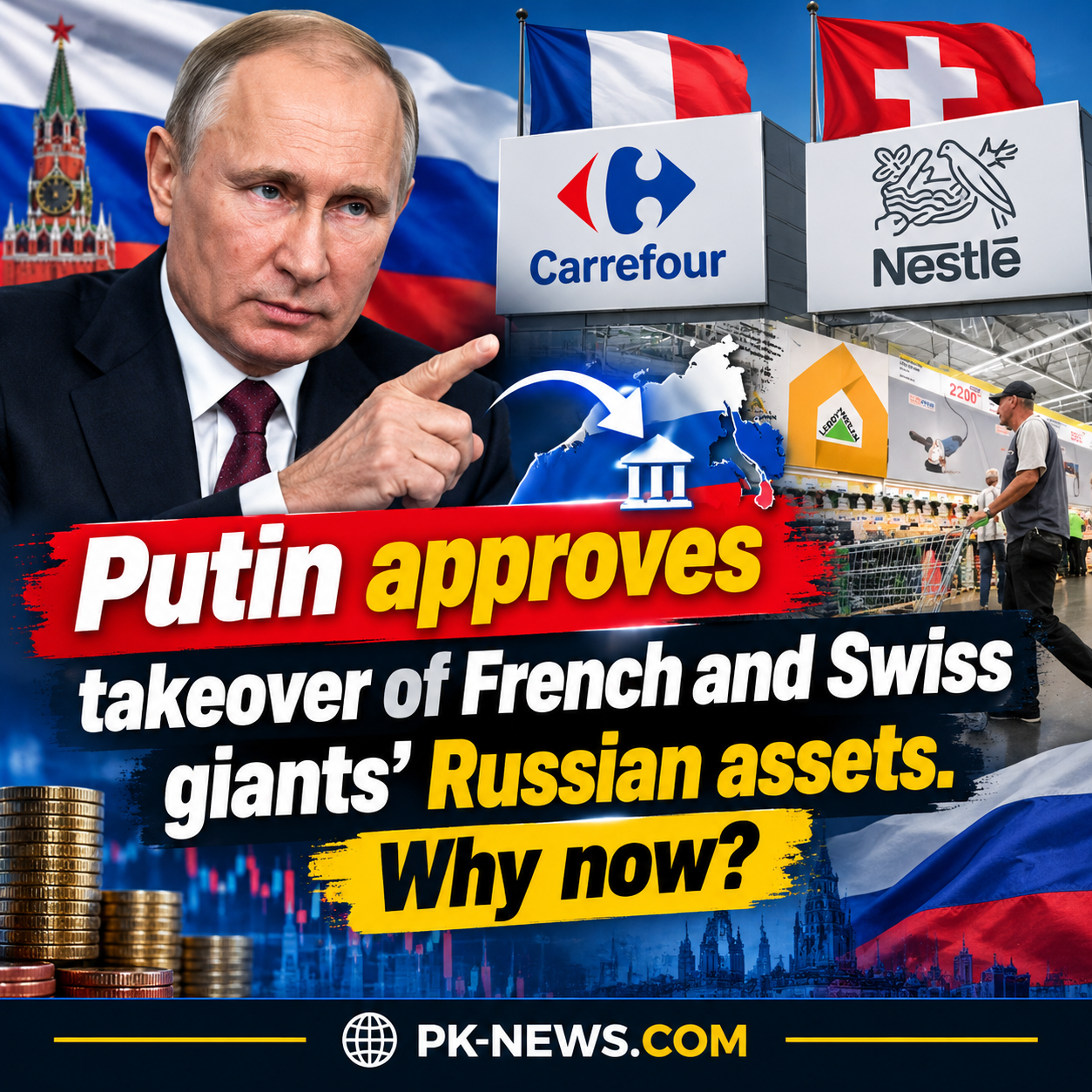
A decree signed by Russian President Vladimir Putin transferred the Russian businesses of Swiss food giant Nestlé and French retail groups including Auchan and the former Leroy Merlin operation, now known as Lemana Pro, to a little-known Russian company called L.E.V. Management. Russian subsidiaries of French logistics company FM Logistic were also included in the measure.
The decision has immediately raised questions about why Moscow acted now, what will happen to the companies' Russian operations and whether temporary control could eventually become permanent ownership.
Why Did Russia Act Now?
The Kremlin has connected the decision to growing tensions between Russia and European governments over the war in Ukraine.
Kremlin spokesperson Dmitry Peskov said the companies come from countries that Moscow considers "unfriendly" and argued that those countries are actively supporting Ukraine. He also pointed to Western involvement in attacks on Russian civilian and economic infrastructure.
Russia has classified numerous Western countries as unfriendly since the invasion of Ukraine and has progressively introduced restrictions on their businesses and investments.
The latest action therefore comes within a much wider economic confrontation between Moscow and Western governments.
Russia says the temporary-management system is designed to protect businesses operating inside the country and prevent economic disruption. Western governments, however, have repeatedly criticized Moscow's treatment of foreign-owned property.
What Does "Temporary Administration" Mean?
The Russian government introduced its temporary-management mechanism in 2023.
Under the system, foreign shareholders can retain formal ownership of their Russian subsidiaries while losing control over important management decisions. The Russian authorities appoint another entity to manage the business.
Although the latest decree describes the arrangement as temporary, previous cases have demonstrated that temporary control can eventually lead to a permanent change in ownership.
The Russian operations of French food company Danone and Danish brewer Carlsberg previously went through similar processes. Their assets were eventually transferred or sold to Russian buyers under conditions that Western companies criticized.
This history is one reason investors are closely watching the latest decision involving Nestlé and the French retailers.
Nestlé Faces Uncertainty
Nestlé remains one of the world's largest food companies and has maintained a reduced presence in Russia since the invasion of Ukraine.
The Swiss company previously suspended many activities in Russia, including advertising, investment and sales of several non-essential products. It continued producing what it described as essential everyday food products.
Before the war, Russia generated roughly 2% of Nestlé's global sales. Analysts now estimate the contribution is considerably smaller following the company's reduction in operations. Nestlé has six factories in Russia and around 7,000 employees there, according to reporting cited by Reuters.
Following Putin's decree, Nestlé said it was assessing the situation and considering its options. The company said it intended to protect its rights while maintaining continuity for its employees and other stakeholders.
The company could now face difficult legal and financial questions over the future of its Russian assets.
Auchan Also Caught in the Move
French supermarket chain Auchan has maintained a much larger physical presence in Russia.
The company expanded heavily in the Russian market over the years and operated hundreds of stores before the latest developments. Its Russian business employs tens of thousands of people and represents a significant part of the company's international operations.
Auchan has faced pressure over its continued Russian presence since the invasion of Ukraine. The company has previously argued that its stores provide food and other essential products to Russian consumers.
Under Putin's latest decree, however, the Russian business has been transferred to temporary management.
The company has sought clarification from Russian authorities regarding the decision.
Leroy Merlin's Russian Business Also Affected
The decree also covers the Russian operation connected to the former Leroy Merlin brand.
Leroy Merlin's parent company had announced plans to leave Russia, and the Russian business subsequently began operating under the Lemana Pro name.
Despite the rebranding and changes in management, the Russian business remained economically important. The latest Kremlin decision places it within the same temporary-management framework as other Western businesses.
A Broader Economic Conflict
The latest asset transfers are part of a much larger economic confrontation that has developed since Russia's full-scale invasion of Ukraine in 2022.
More than a thousand foreign companies have reduced or ended their Russian activities. At the same time, Moscow has introduced increasingly strict conditions for companies attempting to leave.
Companies from countries designated as unfriendly have faced requirements including government approval, significant discounts on asset sales and additional financial obligations.
Russia has also previously taken control of assets belonging to foreign companies in sectors ranging from energy and manufacturing to food and retail.
Reuters reported that a 2025 estimate from a Moscow law firm put the value of private property seized by the Russian state at more than $50 billion since the beginning of the war.
Could Temporary Control Become Permanent?
That is one of the biggest questions surrounding Putin's latest decree.
The Russian government maintains that the current arrangement is temporary. However, previous cases involving Western businesses have sometimes ended with assets being transferred or sold to Russian owners.
For companies such as Nestlé and Auchan, the immediate issue is therefore not simply management of their Russian operations. It is whether they will eventually be able to regain full control of their businesses.
The companies could pursue legal and diplomatic measures, although the political relationship between Russia and many European governments makes the situation complicated.
Europe Responds
France has called for the Russian decision involving French companies to be reversed. Switzerland has also expressed concern over the treatment of Nestlé and supported efforts to protect the company's interests.
The dispute could add another layer to already strained relations between Russia and European countries.
For Moscow, the action demonstrates that Western economic pressure can be met with countermeasures against European businesses still operating inside Russia.
For affected companies, the move highlights the growing risks of maintaining assets in a market where government intervention can rapidly change ownership and management arrangements.
What Happens Next?
The immediate future of the businesses remains uncertain.
Nestlé has said it is assessing its options, while Auchan and other affected companies are seeking clarification from Russian authorities. The Russian government, meanwhile, has placed the businesses under L.E.V. Management.
The key question will be whether the temporary arrangement remains temporary or becomes the first step toward permanent ownership changes.
The latest move also sends a wider message to international companies that continue to operate in Russia: geopolitical tensions can have direct consequences for corporate ownership, management and investment.
For global businesses, the developments involving Nestlé, Auchan, Lemana Pro and FM Logistic are another indication that the commercial consequences of the Russia-Ukraine conflict extend far beyond sanctions and trade restrictions.
PK News Analysis: The situation remains developing, and the legal ownership status of the affected companies should not be confused with the temporary transfer of management ordered by Moscow. Further decisions by Russian authorities, the companies themselves and European governments could significantly change the situation.
This article has been independently rewritten and prepared for PK-News.com using current public reporting and official statements. It is not reproduced from the original source article.
PK News — PK-News.com | World News • Business • Politics • International Affairs
0
NEW
Global
😔 Negative
Russia Moves Against Western Corporate Assets as Putin Orders New Takeovers
Related Articles You May Like
Related News








Comments (0)
Leave a Comment
No comments yet. Be the first to comment!