BREAKING
Advertisement

Recent Category Articles

Latest Category News

Ishaq Dar Reviews Fuel Relief Scheme as 7.6 Million Pakistanis Register
19
Global PK Live News 😔 Negative
Ishaq Dar Reviews Fuel Relief Scheme as 7.6 Million Pakistanis Register
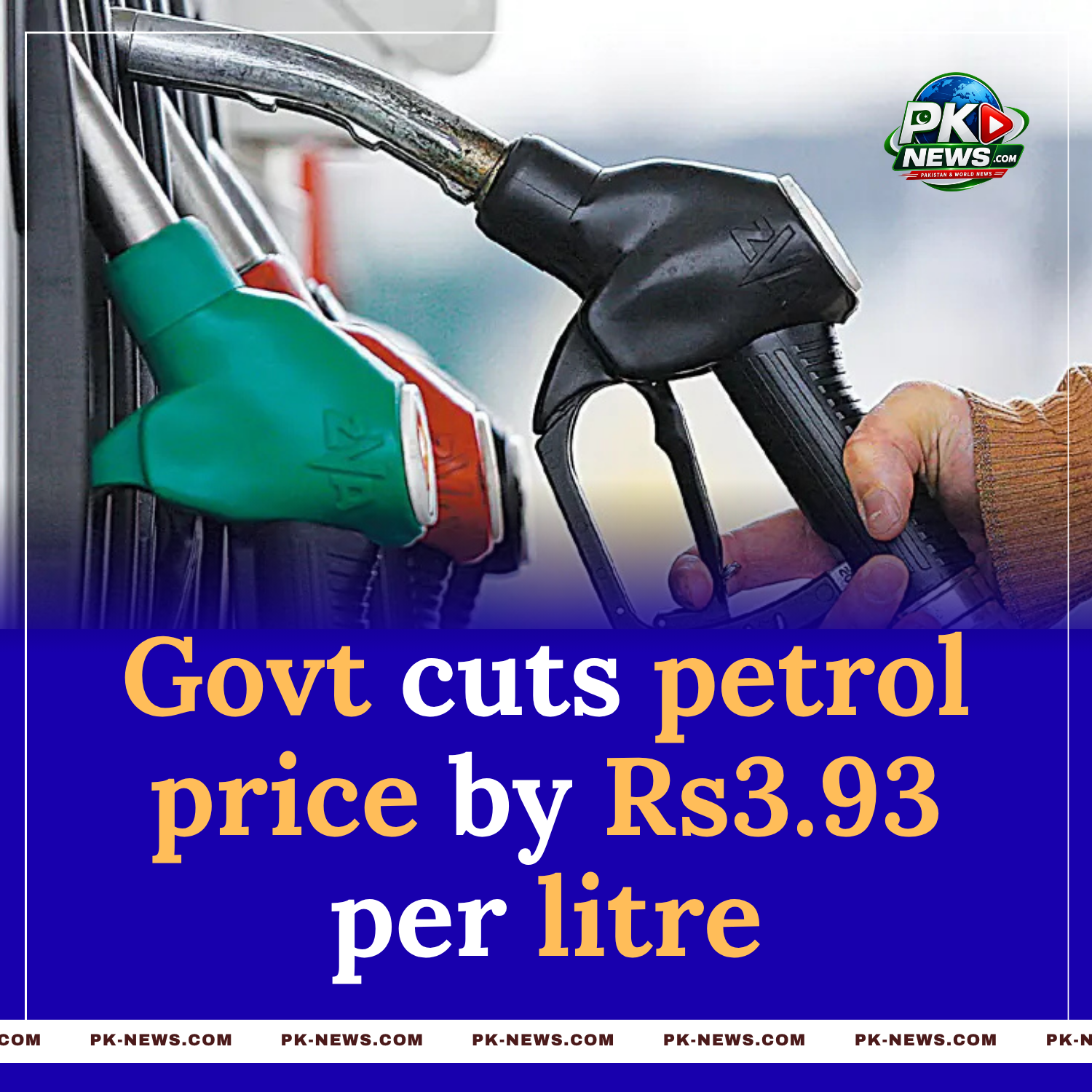
Deputy Prime Minister Ishaq Dar has reviewed the implementation of Pakistan’s Prime Minister’s Fuel Relief Scheme, highlighting coordination among federal and provincial institutions as registrations reach around 7.6 million and more than 7.7 million fuel-relief tokens are redeemed. By PK-News.com | September 29, 2026 ISLAMABAD — Deputy Prime Minister and Foreign Minister Ishaq Dar on Tuesday chaired a meeting of the National Steering Committee on Fuel Subsidy to review the implementation of the government’s Prime Minister’s Special Fuel Relief Scheme. During the meeting, Dar described the programme as an example of a coordinated “whole of government” approach, with several federal ministries, regulatory institutions, the State Bank of Pakistan and provincial authorities involved in its implementation. The government launched the relief programme to provide targeted assistance to owners of motorcycles, rickshaws and vehicles with engines of up to 800cc amid elevated fuel prices and disruptions affecting international oil markets. 7.6 Million Registrations Completed According to the latest government figures discussed at the meeting, approximately 7.60 million registrations have been successfully completed under the fuel relief programme. The token redemption process has also entered its second week, with around 7.71 million tokens redeemed so far. The figures indicate substantial participation in the programme since its nationwide rollout on September 17. Dar directed the relevant authorities to maintain coordination and ensure that eligible beneficiaries can access the relief scheme without unnecessary difficulties. How the Fuel Subsidy Works Under the current structure, owners of two- and three-wheeled vehicles are eligible for a subsidy of Rs100 per litre against a monthly quota of 20 litres. Owners of vehicles with engines of up to 800cc are eligible for the same Rs100-per-litre subsidy against a monthly quota of 30 litres. The programme was introduced as a targeted relief measure rather than a general reduction in fuel prices. The government has also made changes to the scheme during its implementation to improve access for beneficiaries, including adjustments involving registration and token redemption. Multiple Institutions Involved Dar highlighted the involvement of several government bodies in implementing the programme. The Information Technology and Petroleum ministries, Oil and Gas Regulatory Authority (Ogra), State Bank of Pakistan and provincial administrations have all been involved in the implementation process. The meeting was attended by IT Minister Shaza Fatima Khawaja, Information Minister Attaullah Tarar, senior federal and provincial officials and representatives of institutions including SBP, Ogra, the National Information Technology Board and Pakistan Digital Authority. The government says continued coordination is necessary to ensure smooth service delivery throughout the country. Fuel Prices Remain a Major Concern The subsidy programme comes as Pakistan continues to face pressure from elevated international fuel prices. The latest government price revision, announced on September 28, reduced petrol by Rs2.27 per litre and high-speed diesel by Rs3.56 per litre. Following the adjustment, petrol was set at Rs389.03 per litre, while high-speed diesel was priced at Rs404.97 per litre. Despite the reduction, fuel prices remain a major issue for households, transport operators and businesses. Middle East Conflict Adds Pressure The international energy situation has also complicated Pakistan’s fuel outlook. Disruptions to major oil supply routes amid the continuing Middle East conflict have contributed to volatility in international energy markets. The Strait of Hormuz remains particularly important because of its role in global oil transportation. Concerns have also emerged around the Bab al-Mandab shipping route. These developments have increased uncertainty for countries that depend heavily on imported petroleum. Pakistan’s government has therefore combined targeted fuel relief with conservation and austerity measures. Government Introduces Conservation Measures The government has also continued efforts to reduce fuel consumption by public institutions and businesses. Earlier this month, authorities reintroduced austerity measures that included requiring markets to close at 9pm and reducing fuel allocations for official vehicles by 50 percent for three months. Dar separately chaired a meeting of the committee responsible for monitoring implementation of these conservation and austerity measures. Officials reviewed progress and discussed fiscal discipline and more efficient use of public resources. Daily Fuel Price System Pakistan also changed its fuel-pricing mechanism earlier this year. In July, the government announced that petroleum prices would be adjusted on a daily basis in response to fluctuations in international markets. Previously, fuel prices had generally been revised weekly. The shift to more frequent adjustments was introduced against the backdrop of increased volatility in global oil markets. For consumers, the new mechanism means domestic fuel prices can respond more quickly to movements in international petroleum prices. IMF Talks and Pakistan’s Economic Position The fuel situation is also unfolding as Pakistan conducts its latest discussions with the International Monetary Fund. An IMF staff mission is currently in Islamabad for reviews under Pakistan’s $7 billion Extended Fund Facility and the $1.4 billion Resilience and Sustainability Facility. The outcome of those discussions could have implications for Pakistan’s economic policy and fiscal management in the coming months. The government is simultaneously seeking to maintain fiscal discipline while providing targeted assistance to consumers facing higher living costs. What Happens Next? The immediate focus will be on the continued redemption of fuel-relief tokens and ensuring that registered beneficiaries can access the subsidy. Government agencies will also need to monitor whether the programme is reaching eligible households and whether implementation problems are emerging in different parts of the country. At the same time, international oil prices and developments in the Middle East will remain important factors for Pakistan’s fuel market. The government’s latest review indicates that the fuel relief programme remains an active component of its response to the current energy and economic pressures. With millions of registrations already completed, authorities are now focused on maintaining the programme and ensuring smoother service delivery across Pakistan. PK-News.com will continue monitoring fuel prices, government relief measures and developments affecting Pakistan’s energy and economy. Developed by PK-News.com
Sep 29, 2026 at 7:25 PM
Deputy Prime Minister Ishaq Dar has reviewed the implementation of Pakistan’s Prime Minister’s Fuel Relief Scheme, highlighting coordination among federal and provincial institutions as registrations reach around 7.6 million and more than 7.7 million fuel-relief tokens are redeemed. By PK-News.com | September 29, 2026 ISLAMABAD — Deputy Prime Minister and Foreign Minister Ishaq Dar on Tuesday chaired a meeting of the National Steering Committee on Fuel Subsidy to review the implementation of the government’s Prime Minister’s Special Fuel Relief Scheme. During the meeting, Dar described the programme as an example of a coordinated “whole of government” approach, with several federal ministries, regulatory institutions, the State Bank of Pakistan and provincial authorities involved in its implementation. The government launched the relief programme to provide targeted assistance to owners of motorcycles, rickshaws and vehicles with engines of up to 800cc amid elevated fuel prices and disruptions affecting international oil markets. 7.6 Million Registrations Completed According to the latest government figures discussed at the meeting, approximately 7.60 million registrations have been successfully completed under the fuel relief programme. The token redemption process has also entered its second week, with around 7.71 million tokens redeemed so far. The figures indicate substantial participation in the programme since its nationwide rollout on September 17. Dar directed the relevant authorities to maintain coordination and ensure that eligible beneficiaries can access the relief scheme without unnecessary difficulties. How the Fuel Subsidy Works Under the current structure, owners of two- and three-wheeled vehicles are eligible for a subsidy of Rs100 per litre against a monthly quota of 20 litres. Owners of vehicles with engines of up to 800cc are eligible for the same Rs100-per-litre subsidy against a monthly quota of 30 litres. The programme was introduced as a targeted relief measure rather than a general reduction in fuel prices. The government has also made changes to the scheme during its implementation to improve access for beneficiaries, including adjustments involving registration and token redemption. Multiple Institutions Involved Dar highlighted the involvement of several government bodies in implementing the programme. The Information Technology and Petroleum ministries, Oil and Gas Regulatory Authority (Ogra), State Bank of Pakistan and provincial administrations have all been involved in the implementation process. The meeting was attended by IT Minister Shaza Fatima Khawaja, Information Minister Attaullah Tarar, senior federal and provincial officials and representatives of institutions including SBP, Ogra, the National Information Technology Board and Pakistan Digital Authority. The government says continued coordination is necessary to ensure smooth service delivery throughout the country. Fuel Prices Remain a Major Concern The subsidy programme comes as Pakistan continues to face pressure from elevated international fuel prices. The latest government price revision, announced on September 28, reduced petrol by Rs2.27 per litre and high-speed diesel by Rs3.56 per litre. Following the adjustment, petrol was set at Rs389.03 per litre, while high-speed diesel was priced at Rs404.97 per litre. Despite the reduction, fuel prices remain a major issue for households, transport operators and businesses. Middle East Conflict Adds Pressure The international energy situation has also complicated Pakistan’s fuel outlook. Disruptions to major oil supply routes amid the continuing Middle East conflict have contributed to volatility in international energy markets. The Strait of Hormuz remains particularly important because of its role in global oil transportation. Concerns have also emerged around the Bab al-Mandab shipping route. These developments have increased uncertainty for countries that depend heavily on imported petroleum. Pakistan’s government has therefore combined targeted fuel relief with conservation and austerity measures. Government Introduces Conservation Measures The government has also continued efforts to reduce fuel consumption by public institutions and businesses. Earlier this month, authorities reintroduced austerity measures that included requiring markets to close at 9pm and reducing fuel allocations for official vehicles by 50 percent for three months. Dar separately chaired a meeting of the committee responsible for monitoring implementation of these conservation and austerity measures. Officials reviewed progress and discussed fiscal discipline and more efficient use of public resources. Daily Fuel Price System Pakistan also changed its fuel-pricing mechanism earlier this year. In July, the government announced that petroleum prices would be adjusted on a daily basis in response to fluctuations in international markets. Previously, fuel prices had generally been revised weekly. The shift to more frequent adjustments was introduced against the backdrop of increased volatility in global oil markets. For consumers, the new mechanism means domestic fuel prices can respond more quickly to movements in international petroleum prices. IMF Talks and Pakistan’s Economic Position The fuel situation is also unfolding as Pakistan conducts its latest discussions with the International Monetary Fund. An IMF staff mission is currently in Islamabad for reviews under Pakistan’s $7 billion Extended Fund Facility and the $1.4 billion Resilience and Sustainability Facility. The outcome of those discussions could have implications for Pakistan’s economic policy and fiscal management in the coming months. The government is simultaneously seeking to maintain fiscal discipline while providing targeted assistance to consumers facing higher living costs. What Happens Next? The immediate focus will be on the continued redemption of fuel-relief tokens and ensuring that registered beneficiaries can access the subsidy. Government agencies will also need to monitor whether the programme is reaching eligible households and whether implementation problems are emerging in different parts of the country. At the same time, international oil prices and developments in the Middle East will remain important factors for Pakistan’s fuel market. The government’s latest review indicates that the fuel relief programme remains an active component of its response to the current energy and economic pressures. With millions of registrations already completed, authorities are now focused on maintaining the programme and ensuring smoother service delivery across Pakistan. PK-News.com will continue monitoring fuel prices, government relief measures and developments affecting Pakistan’s energy and economy. Developed by PK-News.com
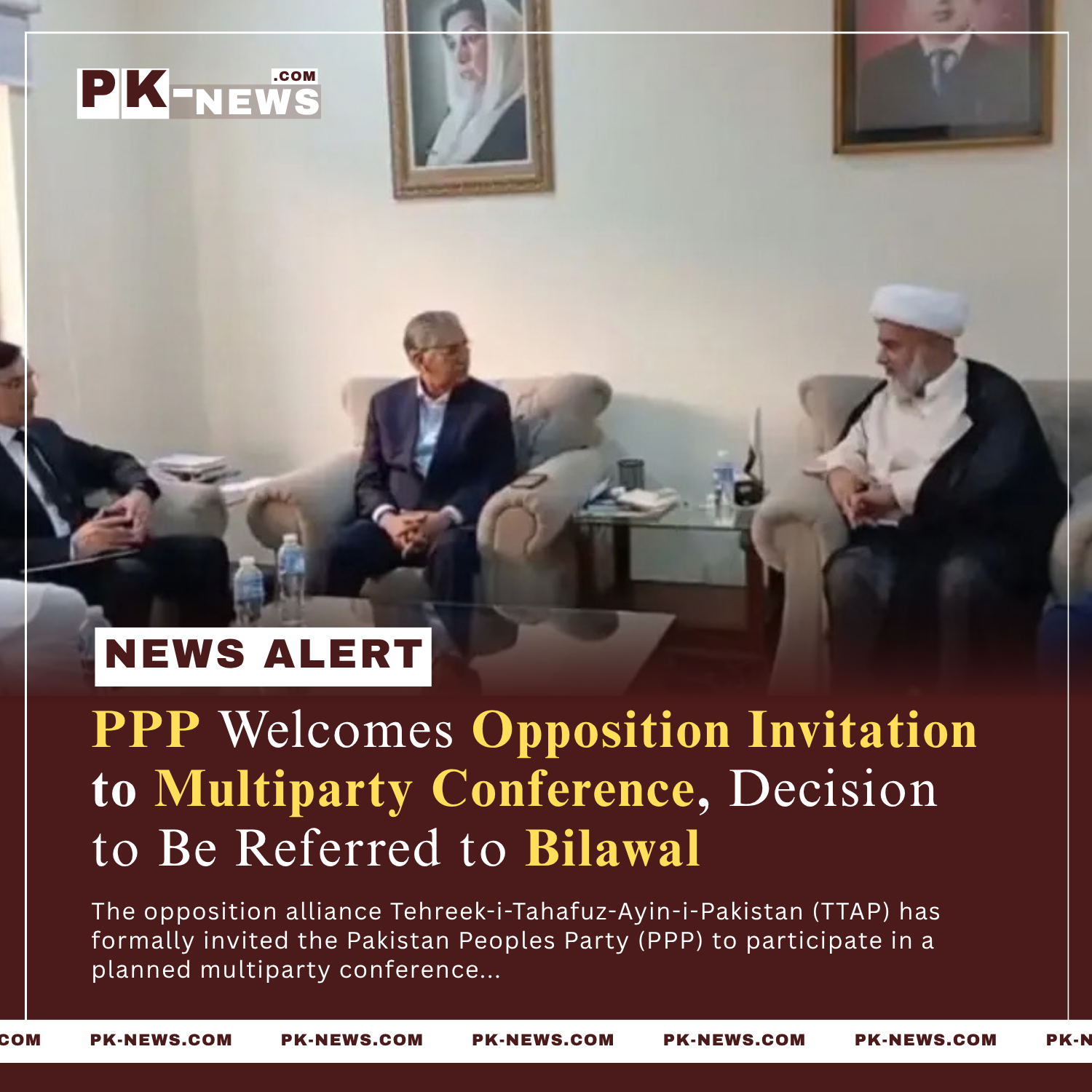
PPP Welcomes Opposition Invitation to Multiparty Conference, Decision to Be Referred to Bilawal
15
Global PK Live News 😊 Positive
PPP Welcomes Opposition Invitation to Multiparty Conference, Decision to Be Referred to Bilawal
The opposition alliance Tehreek-i-Tahafuz-Ayin-i-Pakistan (TTAP) has formally invited the Pakistan Peoples Party (PPP) to participate in a planned multiparty conference. PPP Secretary General Nayyar Hussain Bukhari welcomed the invitation and said it would be forwarded to party Chairman Bilawal Bhutto-Zardari for consideration. By PK-News.com | September 29, 2026 ISLAMABAD — Pakistan's political landscape saw another significant development on Tuesday as the opposition alliance Tehreek-i-Tahafuz-Ayin-i-Pakistan (TTAP) formally invited the Pakistan Peoples Party (PPP) to participate in a proposed multiparty conference. The invitation was delivered by a TTAP delegation during a meeting with PPP Secretary General Nayyar Hussain Bukhari at the PPP Central Secretariat in Islamabad. The PPP welcomed the move but said the final decision regarding participation would be referred to party Chairman Bilawal Bhutto-Zardari. According to Dawn, Bukhari told the opposition delegation that the PPP considered engagement and consultation among political parties important, particularly on constitutional and democratic matters. Opposition Seeks Broader Political Consultation The TTAP delegation was led by PTI Chairman Barrister Gohar Ali Khan and included Senate Opposition Leader Allama Raja Nasir Abbas, Senator Zeeshan Akhunzada and TTAP spokesperson Akhunzada Hussain Yousafzai. During the meeting, the opposition representatives briefed the PPP leadership about the objectives and proposed agenda of the multiparty conference. The discussions covered the country's political situation, constitutional matters, democratic institutions and greater coordination between political parties. The invitation comes as opposition parties continue discussions about a common platform on several national issues. Barrister Gohar has previously said that the proposed conference could address issues including the current law-and-order situation, the economy, inflation, lawlessness and the question of creating new provinces. PPP to Forward Invitation to Bilawal Following the meeting, PPP officials said the invitation would be forwarded to Bilawal Bhutto-Zardari. The party has not announced that Bilawal or the PPP has accepted the invitation. Instead, the immediate development is that the PPP has acknowledged and welcomed the invitation and will communicate the party chairman's position to the opposition alliance. This distinction is important because the date, venue and final participation of political parties in the conference have not yet been finalized. TTAP spokesperson Akhunzada Hussain Yousafzai told Dawn that discussions with political parties had already begun to finalize the arrangements. Conference Expected After October 4 PTI Protest According to the opposition alliance, the proposed multiparty conference is expected to take place after PTI's planned October 4 protest. The protest is linked to PTI's demand for the release of its jailed founder, Imran Khan. TTAP has said that consultations are underway with different political parties before the date and venue of the multiparty conference are finalized. The timing places the proposed conference within a period of heightened political activity in Pakistan, with opposition parties seeking to coordinate their positions on several national issues. New Provinces Among Key Issues One of the issues connecting the PPP and opposition discussions is the question of creating new provinces or administrative units. The opposition alliance has said that the issue is among the subjects that could be discussed at the proposed multiparty gathering. The PPP, which governs Sindh, has opposed any division of the province and has maintained that decisions concerning the creation of new provinces should follow constitutional and parliamentary procedures and require political consensus. The subject has become increasingly prominent in political discussions after Interior Minister Mohsin Naqvi raised the proposal for new administrative units earlier this year. Different political groups and legal organizations have expressed differing positions on the issue. Other Opposition Parties May Be Invited TTAP has indicated that its consultations will extend beyond the PPP. According to the alliance, Jamiat Ulema-i-Islam (JUI), Awami National Party (ANP) and Jamaat-i-Islami are also expected to be invited. The ruling PML-N and its federal coalition partner Muttahida Qaumi Movement-Pakistan (MQM-P), however, are not currently planned to receive invitations, according to TTAP spokesperson Yousafzai. This would make the proposed gathering primarily an opposition-led political consultation rather than a conference involving all major parties. Gohar Calls for Political Coordination Speaking after the meeting, Barrister Gohar Ali Khan emphasized the role of political parties in strengthening democratic institutions. He said coordinated political efforts were needed on issues including electoral reforms, provincial autonomy and the question of provinces. Gohar also expressed hope that the PPP would respond positively to the opposition's invitation. The TTAP has already established a six-member committee tasked with consulting political parties and working toward agreement on the agenda of the proposed multiparty conference. Background of PPP-Opposition Contacts The latest invitation follows earlier contacts between PPP and opposition representatives. In August, Bilawal Bhutto-Zardari met opposition leaders including Mahmood Khan Achakzai and Allama Raja Nasir Abbas in Parliament. That meeting focused on parliamentary affairs and the country's political situation. PPP and opposition representatives agreed to maintain contact and cooperate on legislative matters, while Bilawal also urged opposition parties to reconsider their boycott of parliamentary committees. The latest TTAP invitation therefore represents another point of contact between the PPP and opposition groups. However, the current development does not yet establish a formal political alliance between PPP and the opposition parties involved in the proposed conference. Political Situation Remains Fluid The invitation comes amid continuing political tensions and disagreements among Pakistan's major political parties. The PPP remains an important coalition partner of the federal government, while PTI and other opposition groups have been pursuing their own political agenda. The proposed multiparty conference could provide a platform for discussions on constitutional issues, electoral reforms, provincial matters and other national concerns. Whether the PPP ultimately participates will depend on the decision of its chairman and the party's internal consultations. What Happens Next? The immediate next step is for the PPP to communicate the invitation to Bilawal Bhutto-Zardari for consideration. Meanwhile, TTAP will continue consultations with other political parties and work on the proposed conference's agenda, date and venue. The opposition alliance has indicated that the conference is expected after the October 4 PTI protest. Further developments are therefore likely in the coming days as political parties decide whether to participate and what issues they want placed before the proposed forum. For now, the confirmed development is that PPP has welcomed the opposition's invitation but has not yet confirmed its participation. PK-News.com will continue monitoring developments surrounding the proposed multiparty conference, PPP's response and Pakistan's evolving political situation. Developed by PK-News.com
Sep 29, 2026 at 7:20 PM
The opposition alliance Tehreek-i-Tahafuz-Ayin-i-Pakistan (TTAP) has formally invited the Pakistan Peoples Party (PPP) to participate in a planned multiparty conference. PPP Secretary General Nayyar Hussain Bukhari welcomed the invitation and said it would be forwarded to party Chairman Bilawal Bhutto-Zardari for consideration. By PK-News.com | September 29, 2026 ISLAMABAD — Pakistan's political landscape saw another significant development on Tuesday as the opposition alliance Tehreek-i-Tahafuz-Ayin-i-Pakistan (TTAP) formally invited the Pakistan Peoples Party (PPP) to participate in a proposed multiparty conference. The invitation was delivered by a TTAP delegation during a meeting with PPP Secretary General Nayyar Hussain Bukhari at the PPP Central Secretariat in Islamabad. The PPP welcomed the move but said the final decision regarding participation would be referred to party Chairman Bilawal Bhutto-Zardari. According to Dawn, Bukhari told the opposition delegation that the PPP considered engagement and consultation among political parties important, particularly on constitutional and democratic matters. Opposition Seeks Broader Political Consultation The TTAP delegation was led by PTI Chairman Barrister Gohar Ali Khan and included Senate Opposition Leader Allama Raja Nasir Abbas, Senator Zeeshan Akhunzada and TTAP spokesperson Akhunzada Hussain Yousafzai. During the meeting, the opposition representatives briefed the PPP leadership about the objectives and proposed agenda of the multiparty conference. The discussions covered the country's political situation, constitutional matters, democratic institutions and greater coordination between political parties. The invitation comes as opposition parties continue discussions about a common platform on several national issues. Barrister Gohar has previously said that the proposed conference could address issues including the current law-and-order situation, the economy, inflation, lawlessness and the question of creating new provinces. PPP to Forward Invitation to Bilawal Following the meeting, PPP officials said the invitation would be forwarded to Bilawal Bhutto-Zardari. The party has not announced that Bilawal or the PPP has accepted the invitation. Instead, the immediate development is that the PPP has acknowledged and welcomed the invitation and will communicate the party chairman's position to the opposition alliance. This distinction is important because the date, venue and final participation of political parties in the conference have not yet been finalized. TTAP spokesperson Akhunzada Hussain Yousafzai told Dawn that discussions with political parties had already begun to finalize the arrangements. Conference Expected After October 4 PTI Protest According to the opposition alliance, the proposed multiparty conference is expected to take place after PTI's planned October 4 protest. The protest is linked to PTI's demand for the release of its jailed founder, Imran Khan. TTAP has said that consultations are underway with different political parties before the date and venue of the multiparty conference are finalized. The timing places the proposed conference within a period of heightened political activity in Pakistan, with opposition parties seeking to coordinate their positions on several national issues. New Provinces Among Key Issues One of the issues connecting the PPP and opposition discussions is the question of creating new provinces or administrative units. The opposition alliance has said that the issue is among the subjects that could be discussed at the proposed multiparty gathering. The PPP, which governs Sindh, has opposed any division of the province and has maintained that decisions concerning the creation of new provinces should follow constitutional and parliamentary procedures and require political consensus. The subject has become increasingly prominent in political discussions after Interior Minister Mohsin Naqvi raised the proposal for new administrative units earlier this year. Different political groups and legal organizations have expressed differing positions on the issue. Other Opposition Parties May Be Invited TTAP has indicated that its consultations will extend beyond the PPP. According to the alliance, Jamiat Ulema-i-Islam (JUI), Awami National Party (ANP) and Jamaat-i-Islami are also expected to be invited. The ruling PML-N and its federal coalition partner Muttahida Qaumi Movement-Pakistan (MQM-P), however, are not currently planned to receive invitations, according to TTAP spokesperson Yousafzai. This would make the proposed gathering primarily an opposition-led political consultation rather than a conference involving all major parties. Gohar Calls for Political Coordination Speaking after the meeting, Barrister Gohar Ali Khan emphasized the role of political parties in strengthening democratic institutions. He said coordinated political efforts were needed on issues including electoral reforms, provincial autonomy and the question of provinces. Gohar also expressed hope that the PPP would respond positively to the opposition's invitation. The TTAP has already established a six-member committee tasked with consulting political parties and working toward agreement on the agenda of the proposed multiparty conference. Background of PPP-Opposition Contacts The latest invitation follows earlier contacts between PPP and opposition representatives. In August, Bilawal Bhutto-Zardari met opposition leaders including Mahmood Khan Achakzai and Allama Raja Nasir Abbas in Parliament. That meeting focused on parliamentary affairs and the country's political situation. PPP and opposition representatives agreed to maintain contact and cooperate on legislative matters, while Bilawal also urged opposition parties to reconsider their boycott of parliamentary committees. The latest TTAP invitation therefore represents another point of contact between the PPP and opposition groups. However, the current development does not yet establish a formal political alliance between PPP and the opposition parties involved in the proposed conference. Political Situation Remains Fluid The invitation comes amid continuing political tensions and disagreements among Pakistan's major political parties. The PPP remains an important coalition partner of the federal government, while PTI and other opposition groups have been pursuing their own political agenda. The proposed multiparty conference could provide a platform for discussions on constitutional issues, electoral reforms, provincial matters and other national concerns. Whether the PPP ultimately participates will depend on the decision of its chairman and the party's internal consultations. What Happens Next? The immediate next step is for the PPP to communicate the invitation to Bilawal Bhutto-Zardari for consideration. Meanwhile, TTAP will continue consultations with other political parties and work on the proposed conference's agenda, date and venue. The opposition alliance has indicated that the conference is expected after the October 4 PTI protest. Further developments are therefore likely in the coming days as political parties decide whether to participate and what issues they want placed before the proposed forum. For now, the confirmed development is that PPP has welcomed the opposition's invitation but has not yet confirmed its participation. PK-News.com will continue monitoring developments surrounding the proposed multiparty conference, PPP's response and Pakistan's evolving political situation. Developed by PK-News.com
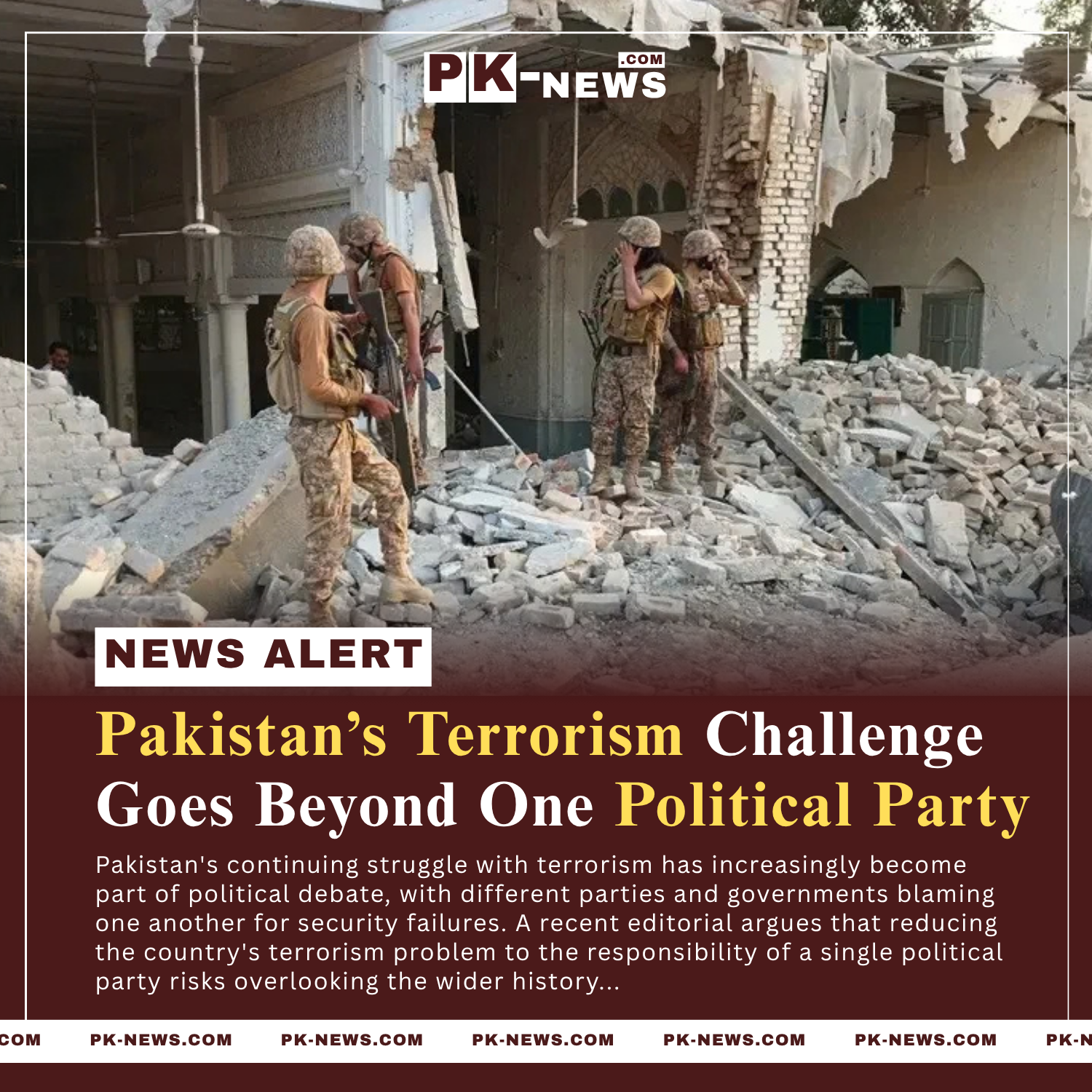
Pakistan is Terrorism Challenge Goes Beyond One Political Party
680
Global PK Live News 😔 Negative
Pakistan is Terrorism Challenge Goes Beyond One Political Party
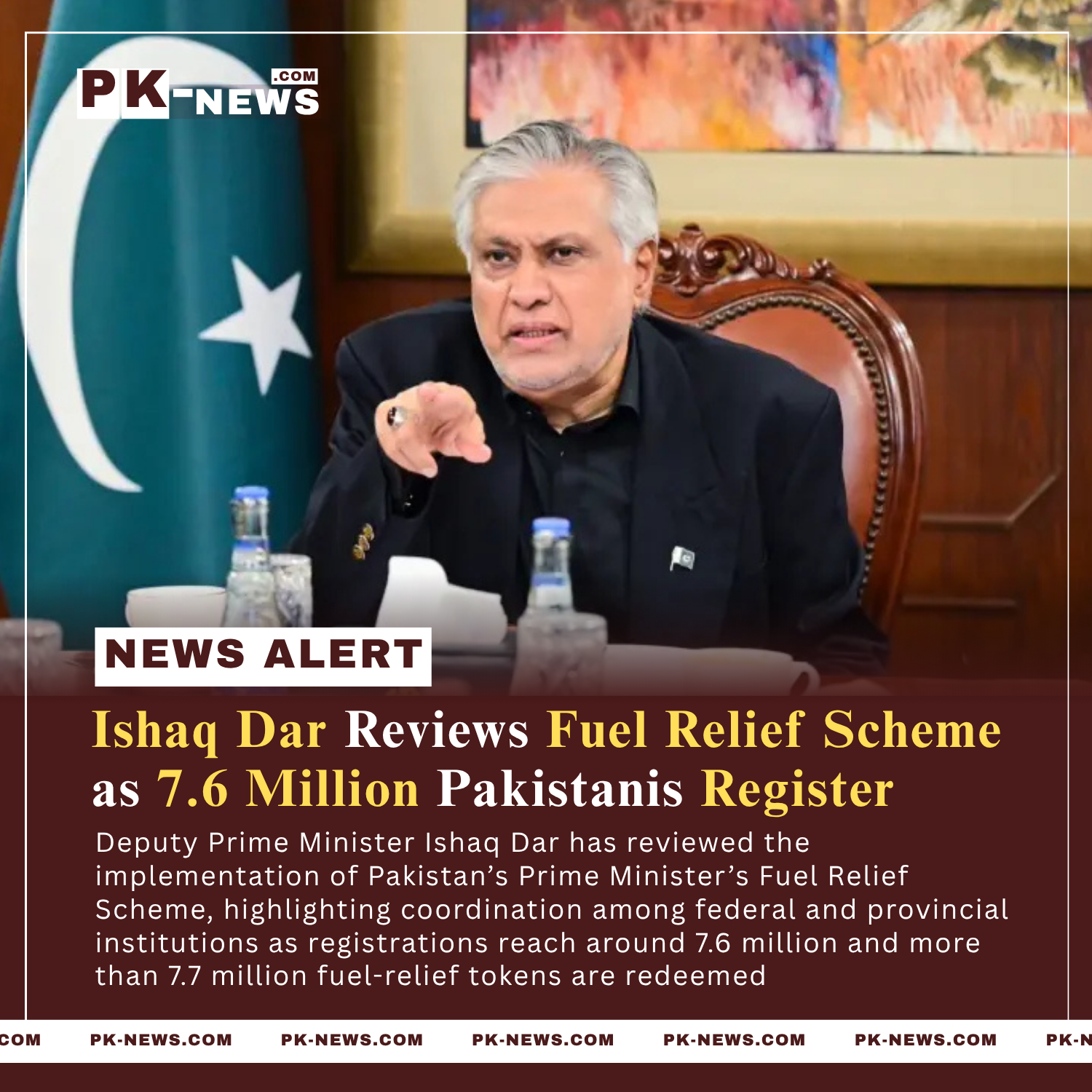
Pakistan's continuing struggle with terrorism has increasingly become part of political debate, with different parties and governments blaming one another for security failures. A recent editorial argues that reducing the country's terrorism problem to the responsibility of a single political party risks overlooking the wider history, institutional challenges and policy decisions that have shaped Pakistan's security environment. By PK-News.com September 29, 2026 Pakistan's terrorism challenge has once again become the subject of intense political debate, particularly following renewed attacks in Khyber Pakhtunkhwa and growing disagreement between the federal government and the provincial administration. PK-News.com has reviewed the arguments presented in the latest editorial discussion and is presenting the issue as an analysis of the competing political positions, rather than attributing responsibility for terrorism to any single political party. The debate has become particularly visible amid recent exchanges between federal ministers and the Khyber Pakhtunkhwa government over counterterrorism policy. Terrorism Has a Long and Complicated History Pakistan's struggle with militancy did not begin with one political party or one provincial government. Over several decades, the country has experienced attacks involving different militant organisations, with security challenges changing considerably over time. Military operations, intelligence-based actions, policing, border management, negotiations and political strategies have all been used by successive governments and state institutions. As a result, the country's present security environment has been shaped by decisions made across different periods rather than by one administration alone. Political Blame Has Become Part of the Debate Recent statements from federal officials have criticised the Khyber Pakhtunkhwa government over its handling of terrorism. Federal ministers have questioned provincial security policies, resources and political positions concerning Afghanistan. The KP government, meanwhile, has argued that the province has suffered disproportionately from terrorism and that decisions concerning counterterrorism should involve the provincial administration. Chief Minister Sohail Afridi has called for changes to the existing counterterrorism approach and greater participation by KP authorities in security policymaking. These competing positions demonstrate the political disagreement surrounding the issue. However, political accusations and responsibility for individual attacks are not necessarily the same thing. Why a Broader Examination Matters A serious examination of Pakistan's terrorism problem requires attention to several factors. These include: The activities of militant organisations Cross-border security concerns Developments in Afghanistan Intelligence and law-enforcement capabilities Police resources and training Federal-provincial coordination Border management Previous counterterrorism policies Economic and social conditions in affected areas Looking at only one political party can leave important parts of this wider picture outside the discussion. Khyber Pakhtunkhwa Faces Significant Security Pressure Khyber Pakhtunkhwa remains one of Pakistan's most affected regions when it comes to militant violence. The province has experienced repeated attacks against police, security forces and civilians. Recent incidents have once again increased public concern about security. For communities living in affected districts, the debate over which political party is responsible can appear secondary to the immediate need for effective protection, functioning law enforcement and long-term stability. This does not remove the importance of political accountability, but it suggests that accountability should be based on documented decisions and responsibilities rather than broad political accusations. Federal and Provincial Roles Pakistan's constitutional structure gives both federal and provincial institutions important responsibilities relating to security. The federal government has major responsibilities involving national security, defence, intelligence coordination and border affairs. Provincial governments, meanwhile, have important responsibilities involving policing, administration and local security. Effective counterterrorism therefore requires coordination between different levels of government. When political disputes weaken that coordination, security policy can become more difficult to implement consistently. Afghanistan Remains an Important Factor The situation in Afghanistan is another major element in Pakistan's security debate. Islamabad has repeatedly raised concerns about militant groups operating from Afghan territory, particularly the Tehreek-i-Taliban Pakistan (TTP). Afghan authorities have rejected various Pakistani accusations. The disagreement over cross-border militancy has contributed to strained relations between Islamabad and Kabul. Any comprehensive discussion of Pakistan's terrorism challenge therefore also needs to consider developments along the country's western border. Accountability Should Be Evidence-Based Political leaders have the right to criticise one another over security policy. However, determining responsibility for terrorism requires evidence. An attack carried out by a militant organisation should be distinguished from questions about whether a government failed to prevent that attack. Likewise, criticism of a government's security policy should be supported by documented decisions, available resources and measurable outcomes. This distinction is particularly important when terrorism becomes part of partisan political messaging. The Need for Long-Term Counterterrorism Strategy Pakistan's experience demonstrates that short-term responses alone are unlikely to resolve the broader security challenge. A sustainable strategy requires cooperation between federal and provincial authorities, professional policing, intelligence coordination, effective border controls and action against militant networks. It also requires consistent policies that can continue across changes in government. Frequent political disputes over responsibility can make long-term planning more difficult. A National Security Issue Terrorism affects Pakistan beyond political party lines. Civilians, police officers, soldiers, journalists, government workers and local communities have all suffered from militant violence. For that reason, the issue can be viewed as a national security challenge rather than simply a dispute between political parties. Political governments may legitimately be held accountable for decisions made while they are in office, but the wider history of militancy should also be recognised. PK-News.com Perspective PK-News.com's review of the current debate indicates that Pakistan's terrorism challenge cannot be understood solely through the political rivalry between the federal government and the KP administration. The latest dispute demonstrates a wider disagreement over counterterrorism policy, resources, Afghanistan and the distribution of responsibilities between federal and provincial institutions. The editorial argument that terrorism should not automatically be presented as a problem created solely by one political party raises an important distinction between political accountability and historical responsibility. Different governments and institutions have made different security decisions over the years, while militant organisations themselves remain central actors in carrying out terrorist violence. For Pakistan to address the current security situation, reliable evidence, institutional coordination and a long-term counterterrorism strategy remain central to the discussion. PK-News.com will continue covering verified developments concerning terrorism, security policy and the federal-provincial debate in Pakistan.
Sep 29, 2026 at 9:05 AM
Pakistan's continuing struggle with terrorism has increasingly become part of political debate, with different parties and governments blaming one another for security failures. A recent editorial argues that reducing the country's terrorism problem to the responsibility of a single political party risks overlooking the wider history, institutional challenges and policy decisions that have shaped Pakistan's security environment. By PK-News.com September 29, 2026 Pakistan's terrorism challenge has once again become the subject of intense political debate, particularly following renewed attacks in Khyber Pakhtunkhwa and growing disagreement between the federal government and the provincial administration. PK-News.com has reviewed the arguments presented in the latest editorial discussion and is presenting the issue as an analysis of the competing political positions, rather than attributing responsibility for terrorism to any single political party. The debate has become particularly visible amid recent exchanges between federal ministers and the Khyber Pakhtunkhwa government over counterterrorism policy. Terrorism Has a Long and Complicated History Pakistan's struggle with militancy did not begin with one political party or one provincial government. Over several decades, the country has experienced attacks involving different militant organisations, with security challenges changing considerably over time. Military operations, intelligence-based actions, policing, border management, negotiations and political strategies have all been used by successive governments and state institutions. As a result, the country's present security environment has been shaped by decisions made across different periods rather than by one administration alone. Political Blame Has Become Part of the Debate Recent statements from federal officials have criticised the Khyber Pakhtunkhwa government over its handling of terrorism. Federal ministers have questioned provincial security policies, resources and political positions concerning Afghanistan. The KP government, meanwhile, has argued that the province has suffered disproportionately from terrorism and that decisions concerning counterterrorism should involve the provincial administration. Chief Minister Sohail Afridi has called for changes to the existing counterterrorism approach and greater participation by KP authorities in security policymaking. These competing positions demonstrate the political disagreement surrounding the issue. However, political accusations and responsibility for individual attacks are not necessarily the same thing. Why a Broader Examination Matters A serious examination of Pakistan's terrorism problem requires attention to several factors. These include: The activities of militant organisations Cross-border security concerns Developments in Afghanistan Intelligence and law-enforcement capabilities Police resources and training Federal-provincial coordination Border management Previous counterterrorism policies Economic and social conditions in affected areas Looking at only one political party can leave important parts of this wider picture outside the discussion. Khyber Pakhtunkhwa Faces Significant Security Pressure Khyber Pakhtunkhwa remains one of Pakistan's most affected regions when it comes to militant violence. The province has experienced repeated attacks against police, security forces and civilians. Recent incidents have once again increased public concern about security. For communities living in affected districts, the debate over which political party is responsible can appear secondary to the immediate need for effective protection, functioning law enforcement and long-term stability. This does not remove the importance of political accountability, but it suggests that accountability should be based on documented decisions and responsibilities rather than broad political accusations. Federal and Provincial Roles Pakistan's constitutional structure gives both federal and provincial institutions important responsibilities relating to security. The federal government has major responsibilities involving national security, defence, intelligence coordination and border affairs. Provincial governments, meanwhile, have important responsibilities involving policing, administration and local security. Effective counterterrorism therefore requires coordination between different levels of government. When political disputes weaken that coordination, security policy can become more difficult to implement consistently. Afghanistan Remains an Important Factor The situation in Afghanistan is another major element in Pakistan's security debate. Islamabad has repeatedly raised concerns about militant groups operating from Afghan territory, particularly the Tehreek-i-Taliban Pakistan (TTP). Afghan authorities have rejected various Pakistani accusations. The disagreement over cross-border militancy has contributed to strained relations between Islamabad and Kabul. Any comprehensive discussion of Pakistan's terrorism challenge therefore also needs to consider developments along the country's western border. Accountability Should Be Evidence-Based Political leaders have the right to criticise one another over security policy. However, determining responsibility for terrorism requires evidence. An attack carried out by a militant organisation should be distinguished from questions about whether a government failed to prevent that attack. Likewise, criticism of a government's security policy should be supported by documented decisions, available resources and measurable outcomes. This distinction is particularly important when terrorism becomes part of partisan political messaging. The Need for Long-Term Counterterrorism Strategy Pakistan's experience demonstrates that short-term responses alone are unlikely to resolve the broader security challenge. A sustainable strategy requires cooperation between federal and provincial authorities, professional policing, intelligence coordination, effective border controls and action against militant networks. It also requires consistent policies that can continue across changes in government. Frequent political disputes over responsibility can make long-term planning more difficult. A National Security Issue Terrorism affects Pakistan beyond political party lines. Civilians, police officers, soldiers, journalists, government workers and local communities have all suffered from militant violence. For that reason, the issue can be viewed as a national security challenge rather than simply a dispute between political parties. Political governments may legitimately be held accountable for decisions made while they are in office, but the wider history of militancy should also be recognised. PK-News.com Perspective PK-News.com's review of the current debate indicates that Pakistan's terrorism challenge cannot be understood solely through the political rivalry between the federal government and the KP administration. The latest dispute demonstrates a wider disagreement over counterterrorism policy, resources, Afghanistan and the distribution of responsibilities between federal and provincial institutions. The editorial argument that terrorism should not automatically be presented as a problem created solely by one political party raises an important distinction between political accountability and historical responsibility. Different governments and institutions have made different security decisions over the years, while militant organisations themselves remain central actors in carrying out terrorist violence. For Pakistan to address the current security situation, reliable evidence, institutional coordination and a long-term counterterrorism strategy remain central to the discussion. PK-News.com will continue covering verified developments concerning terrorism, security policy and the federal-provincial debate in Pakistan.

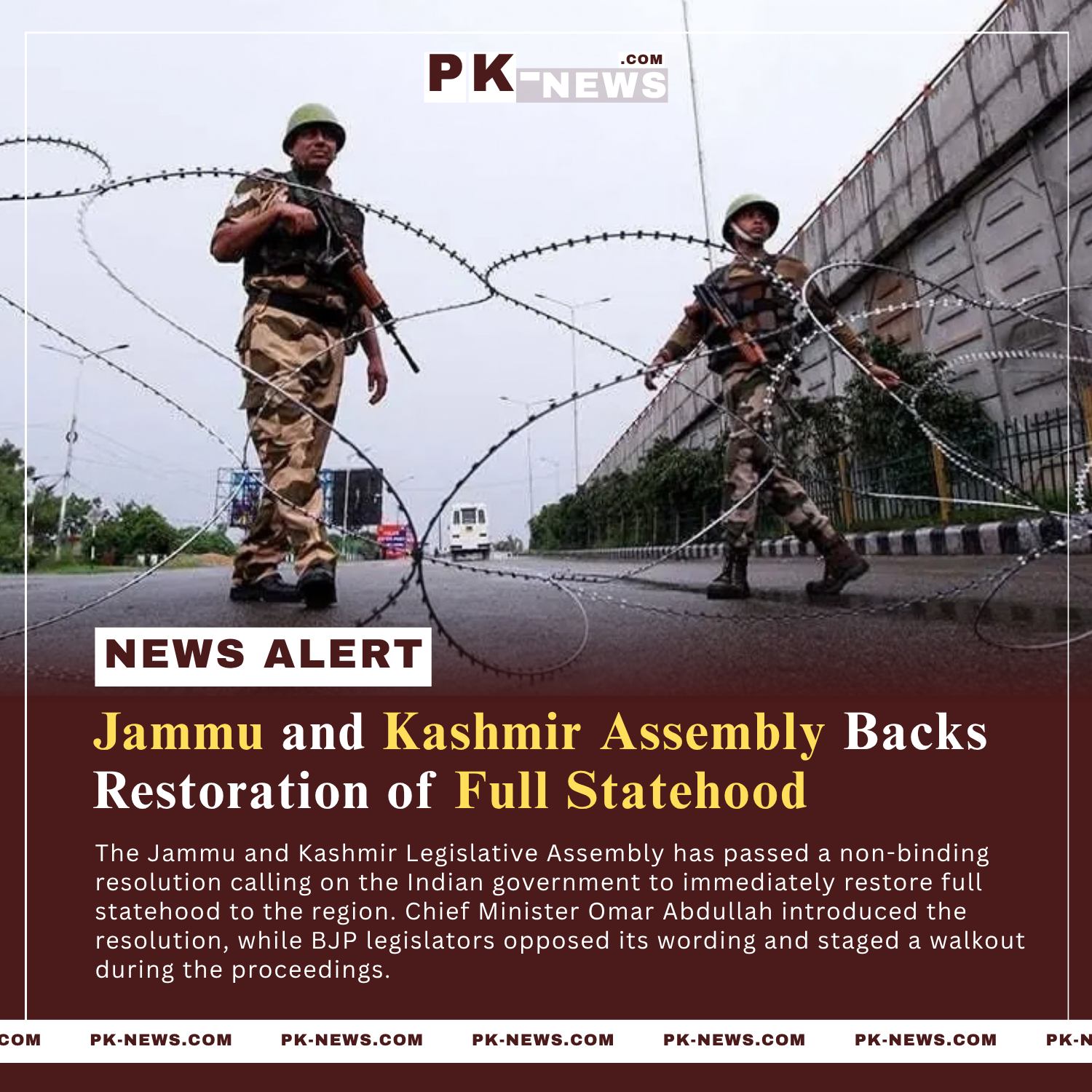
Jammu and Kashmir Assembly Backs Restoration of Full Statehood
673
Global PK Live News 😐 Neutral
Jammu and Kashmir Assembly Backs Restoration of Full Statehood
The Jammu and Kashmir Legislative Assembly has passed a non-binding resolution calling on the Indian government to immediately restore full statehood to the region. Chief Minister Omar Abdullah introduced the resolution, while BJP legislators opposed its wording and staged a walkout during the proceedings. By PK-News.com News Desk September 29, 2026 The Jammu and Kashmir Legislative Assembly has endorsed the restoration of full statehood to the region, passing a non-binding resolution calling on the government in New Delhi to take immediate steps towards restoring its former statehood. PK-News.com has searched and reviewed the latest available reports and official developments surrounding the Assembly session. The resolution was introduced by Chief Minister Omar Abdullah and approved during a politically tense session in which legislators from India's ruling Bharatiya Janata Party (BJP) strongly objected to parts of the resolution. The development is the latest chapter in the continuing political debate over Jammu and Kashmir's constitutional and administrative status following the changes introduced by New Delhi in 2019. Assembly Calls for Immediate Restoration The resolution calls upon the Government of India to ensure the “immediate and urgent restoration of full statehood” to Jammu and Kashmir. It also directs that the resolution be forwarded to the central government in New Delhi. However, the resolution is not legally binding. Its passage does not automatically restore statehood or change the region's current constitutional status. Any restoration would require action by India's central government. Chief Minister Omar Abdullah argued that restoring statehood was a right of the region and said the Assembly was reminding the central government of commitments previously made regarding statehood. BJP Legislators Walk Out The resolution triggered strong objections from BJP legislators. Members of the BJP staged a walkout before the vote, with some describing the resolution as unconstitutional and objecting to references contained in its text. The BJP has indicated that it supports restoration of statehood in principle but opposes combining that demand with references to the region's previous constitutional arrangements, including issues connected with the period before 2019. The disagreement resulted in heated scenes inside the Assembly, including protests and disruptions by opposition legislators. Debate Over Earlier Constitutional Status A major point of disagreement concerns references in the resolution to previous Assembly resolutions dealing with autonomy and Jammu and Kashmir's earlier constitutional arrangements. The latest resolution refers to resolutions passed in 2000 and 2024. The BJP has objected to connecting those earlier resolutions with the current demand for statehood. BJP Leader of Opposition Sunil Sharma said his party supports statehood but does not support references to the pre-1953 position or the restoration of provisions that existed before the constitutional changes of 2019. The distinction has become central to the political debate inside the Assembly. What Changed in 2019? The current dispute is rooted in major constitutional changes introduced by the Indian government in August 2019. New Delhi removed Jammu and Kashmir's previous special constitutional status and reorganised the former state into two Union Territories. The region subsequently came under greater direct administration from New Delhi. The 2019 changes remain highly controversial and continue to influence political debate in Jammu and Kashmir as well as relations between India and Pakistan. Election and Local Government Jammu and Kashmir held Assembly elections in 2024, resulting in the formation of a government led by Omar Abdullah's National Conference. The elected administration, however, operates with powers different from those previously exercised by the former state government. The region continues to have a centrally appointed administrator, while important areas of governance remain subject to the constitutional framework established after 2019. The statehood resolution is therefore being presented by its supporters as a demand for restoration of a fuller form of state government. Omar Abdullah's Position Omar Abdullah has repeatedly called for the restoration of statehood. During the Assembly debate, he questioned why the central government had not yet acted despite previous assurances that statehood would eventually be restored. He argued that the elected Assembly should formally communicate its position to New Delhi rather than wait indefinitely. The resolution consequently represents a formal request from the elected regional legislature rather than an automatic constitutional change. BJP's Position The BJP's position, as expressed by its legislators, is more specific. BJP leaders have said they support restoration of statehood but oppose attempts to combine the statehood demand with discussions about the region's former special constitutional status. Sunil Sharma said the party would support a resolution dealing solely with statehood but objected to references to earlier political and constitutional arrangements. This means the principal disagreement is not simply over the word statehood, but also over the historical and constitutional framework referenced in the Assembly resolution. What Does the Resolution Actually Do? The Assembly's decision should be understood as a political resolution rather than an immediate legal restoration of statehood. Its main effects are: It formally records the Assembly's demand for restoration of full statehood. It asks India's central government to act. It puts the issue back at the centre of political debate. It does not itself change Jammu and Kashmir's current constitutional status. It is not legally binding on New Delhi. The next step therefore rests with the central government. Wider India-Pakistan Context Jammu and Kashmir remains a disputed territory claimed by both India and Pakistan. The two countries have controlled different parts of the region since independence in 1947 and have fought multiple conflicts over the dispute. The political developments inside Indian-administered Jammu and Kashmir therefore continue to attract attention in Pakistan and across the wider region. The latest Assembly resolution is focused on statehood rather than directly changing the broader territorial dispute between India and Pakistan. What Happens Next? The central question is how New Delhi will respond to the Assembly's demand. The Indian government has previously indicated that statehood would be restored at an appropriate time, but no immediate restoration has been announced alongside the Assembly resolution. The issue is therefore likely to remain part of political discussions in Jammu and Kashmir in the coming months. Further debate could also focus on whether any future statehood proposal will address only administrative status or include broader questions concerning the region's former constitutional arrangements. PK-News.com Monitoring the Development PK-News.com has searched and reviewed the latest available reports on the Jammu and Kashmir Assembly's statehood resolution. The latest confirmed development is that the Assembly has passed a non-binding resolution calling for the immediate restoration of full statehood to Jammu and Kashmir. Chief Minister Omar Abdullah supported the demand, while BJP legislators opposed parts of the resolution and walked out of the proceedings. The resolution does not itself restore statehood. The final decision would require action by India's central government. PK-News.com will continue monitoring developments and update this story as further verified information becomes available.
Sep 29, 2026 at 8:58 AM
The Jammu and Kashmir Legislative Assembly has passed a non-binding resolution calling on the Indian government to immediately restore full statehood to the region. Chief Minister Omar Abdullah introduced the resolution, while BJP legislators opposed its wording and staged a walkout during the proceedings. By PK-News.com News Desk September 29, 2026 The Jammu and Kashmir Legislative Assembly has endorsed the restoration of full statehood to the region, passing a non-binding resolution calling on the government in New Delhi to take immediate steps towards restoring its former statehood. PK-News.com has searched and reviewed the latest available reports and official developments surrounding the Assembly session. The resolution was introduced by Chief Minister Omar Abdullah and approved during a politically tense session in which legislators from India's ruling Bharatiya Janata Party (BJP) strongly objected to parts of the resolution. The development is the latest chapter in the continuing political debate over Jammu and Kashmir's constitutional and administrative status following the changes introduced by New Delhi in 2019. Assembly Calls for Immediate Restoration The resolution calls upon the Government of India to ensure the “immediate and urgent restoration of full statehood” to Jammu and Kashmir. It also directs that the resolution be forwarded to the central government in New Delhi. However, the resolution is not legally binding. Its passage does not automatically restore statehood or change the region's current constitutional status. Any restoration would require action by India's central government. Chief Minister Omar Abdullah argued that restoring statehood was a right of the region and said the Assembly was reminding the central government of commitments previously made regarding statehood. BJP Legislators Walk Out The resolution triggered strong objections from BJP legislators. Members of the BJP staged a walkout before the vote, with some describing the resolution as unconstitutional and objecting to references contained in its text. The BJP has indicated that it supports restoration of statehood in principle but opposes combining that demand with references to the region's previous constitutional arrangements, including issues connected with the period before 2019. The disagreement resulted in heated scenes inside the Assembly, including protests and disruptions by opposition legislators. Debate Over Earlier Constitutional Status A major point of disagreement concerns references in the resolution to previous Assembly resolutions dealing with autonomy and Jammu and Kashmir's earlier constitutional arrangements. The latest resolution refers to resolutions passed in 2000 and 2024. The BJP has objected to connecting those earlier resolutions with the current demand for statehood. BJP Leader of Opposition Sunil Sharma said his party supports statehood but does not support references to the pre-1953 position or the restoration of provisions that existed before the constitutional changes of 2019. The distinction has become central to the political debate inside the Assembly. What Changed in 2019? The current dispute is rooted in major constitutional changes introduced by the Indian government in August 2019. New Delhi removed Jammu and Kashmir's previous special constitutional status and reorganised the former state into two Union Territories. The region subsequently came under greater direct administration from New Delhi. The 2019 changes remain highly controversial and continue to influence political debate in Jammu and Kashmir as well as relations between India and Pakistan. Election and Local Government Jammu and Kashmir held Assembly elections in 2024, resulting in the formation of a government led by Omar Abdullah's National Conference. The elected administration, however, operates with powers different from those previously exercised by the former state government. The region continues to have a centrally appointed administrator, while important areas of governance remain subject to the constitutional framework established after 2019. The statehood resolution is therefore being presented by its supporters as a demand for restoration of a fuller form of state government. Omar Abdullah's Position Omar Abdullah has repeatedly called for the restoration of statehood. During the Assembly debate, he questioned why the central government had not yet acted despite previous assurances that statehood would eventually be restored. He argued that the elected Assembly should formally communicate its position to New Delhi rather than wait indefinitely. The resolution consequently represents a formal request from the elected regional legislature rather than an automatic constitutional change. BJP's Position The BJP's position, as expressed by its legislators, is more specific. BJP leaders have said they support restoration of statehood but oppose attempts to combine the statehood demand with discussions about the region's former special constitutional status. Sunil Sharma said the party would support a resolution dealing solely with statehood but objected to references to earlier political and constitutional arrangements. This means the principal disagreement is not simply over the word statehood, but also over the historical and constitutional framework referenced in the Assembly resolution. What Does the Resolution Actually Do? The Assembly's decision should be understood as a political resolution rather than an immediate legal restoration of statehood. Its main effects are: It formally records the Assembly's demand for restoration of full statehood. It asks India's central government to act. It puts the issue back at the centre of political debate. It does not itself change Jammu and Kashmir's current constitutional status. It is not legally binding on New Delhi. The next step therefore rests with the central government. Wider India-Pakistan Context Jammu and Kashmir remains a disputed territory claimed by both India and Pakistan. The two countries have controlled different parts of the region since independence in 1947 and have fought multiple conflicts over the dispute. The political developments inside Indian-administered Jammu and Kashmir therefore continue to attract attention in Pakistan and across the wider region. The latest Assembly resolution is focused on statehood rather than directly changing the broader territorial dispute between India and Pakistan. What Happens Next? The central question is how New Delhi will respond to the Assembly's demand. The Indian government has previously indicated that statehood would be restored at an appropriate time, but no immediate restoration has been announced alongside the Assembly resolution. The issue is therefore likely to remain part of political discussions in Jammu and Kashmir in the coming months. Further debate could also focus on whether any future statehood proposal will address only administrative status or include broader questions concerning the region's former constitutional arrangements. PK-News.com Monitoring the Development PK-News.com has searched and reviewed the latest available reports on the Jammu and Kashmir Assembly's statehood resolution. The latest confirmed development is that the Assembly has passed a non-binding resolution calling for the immediate restoration of full statehood to Jammu and Kashmir. Chief Minister Omar Abdullah supported the demand, while BJP legislators opposed parts of the resolution and walked out of the proceedings. The resolution does not itself restore statehood. The final decision would require action by India's central government. PK-News.com will continue monitoring developments and update this story as further verified information becomes available.
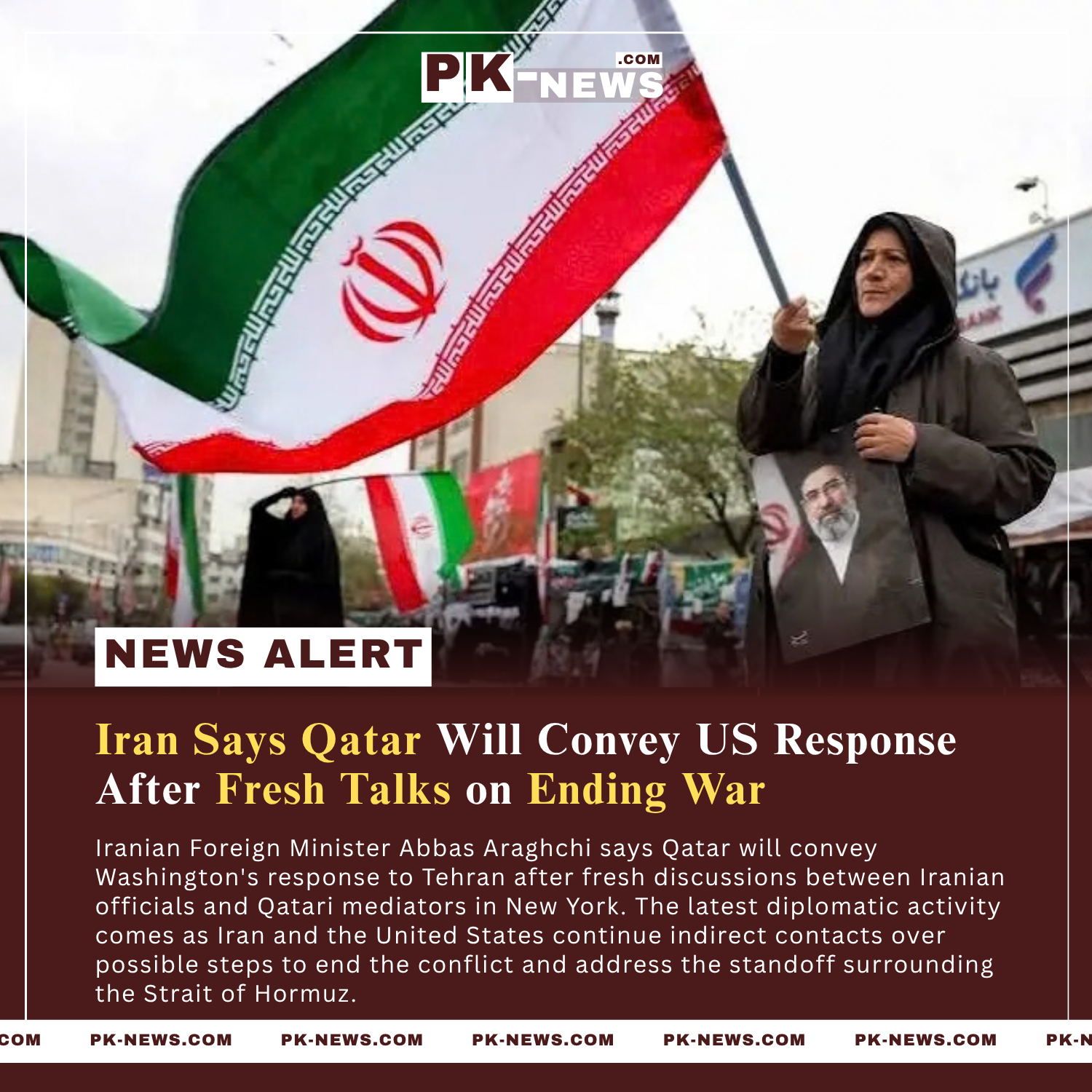
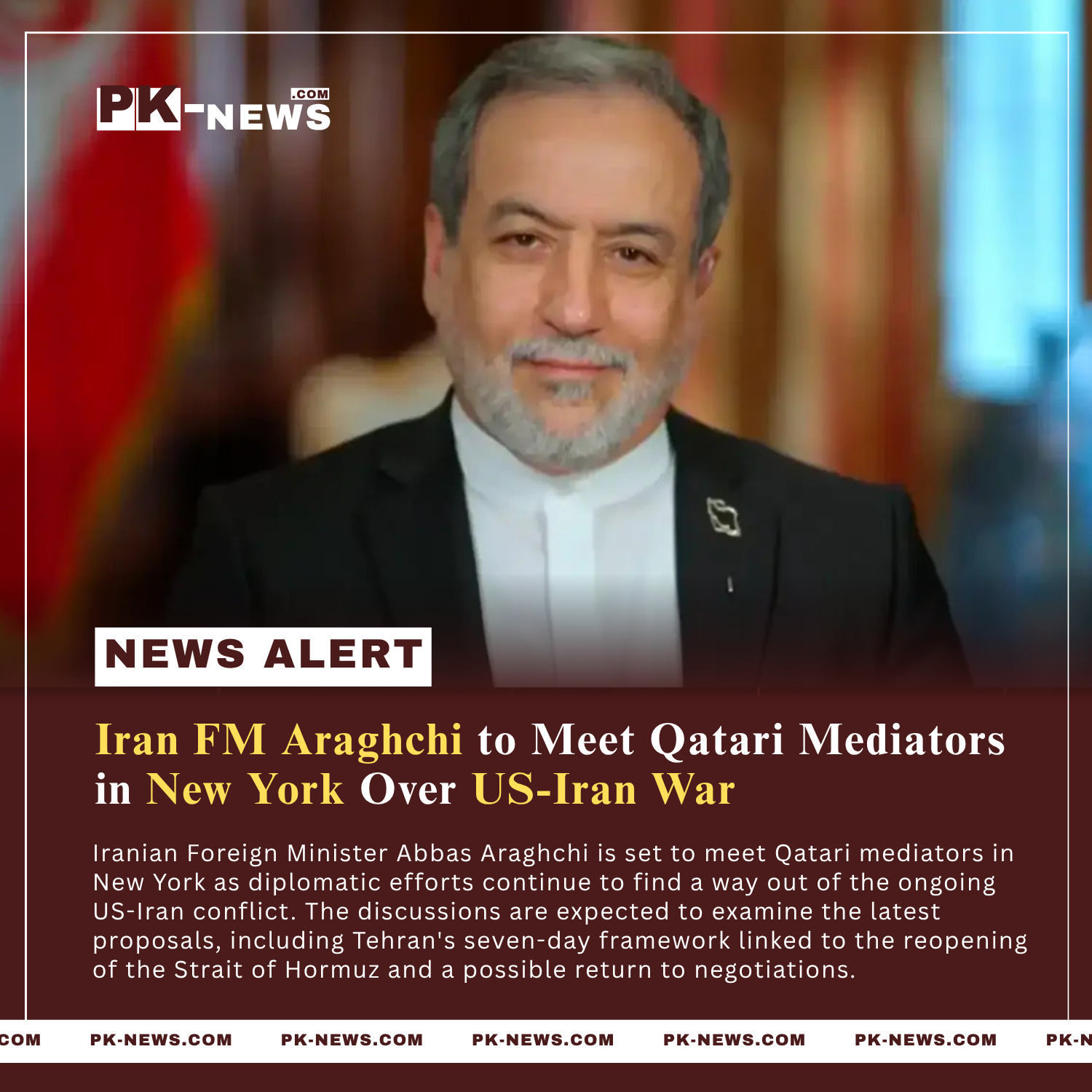
Iran Says Qatar Will Convey US Response After Fresh Talks on Ending War
21
Global PK Live News 😔 Negative
Iran Says Qatar Will Convey US Response After Fresh Talks on Ending War
Iranian Foreign Minister Abbas Araghchi says Qatar will convey Washington's response to Tehran after fresh discussions between Iranian officials and Qatari mediators in New York. The latest diplomatic activity comes as Iran and the United States continue indirect contacts over possible steps to end the conflict and address the standoff surrounding the Strait of Hormuz. By PK-News.com News Desk September 29, 2026 Iran says Qatar will convey the United States' response to Tehran after fresh discussions between Iranian officials and Qatari mediators over possible ways to resolve the ongoing conflict. Iranian Foreign Minister Abbas Araghchi, speaking in New York, said the latest discussions involved ideas that would be presented to the American side through Qatar. Tehran is now waiting for Washington's response through the Qatari intermediary. PK-News.com has searched and reviewed the latest available international reporting and statements concerning the renewed diplomatic contacts. The latest information indicates that the United States and Iran are still communicating indirectly, even though major differences remain over the conditions for ending hostilities and reopening the Strait of Hormuz. Qatar Carries Messages Between Tehran and Washington According to Iranian state news agency IRNA, Araghchi said Iran had discussed new ideas with Qatari mediators. Those ideas are expected to be presented to Washington before Qatar communicates the American response back to Tehran. The discussions are part of an indirect diplomatic process in which Qatar has been playing the role of intermediary between Iran and the United States. Reuters also reported that Iranian and U.S. officials were holding separate discussions through mediators as part of a renewed attempt to find a way forward. Iran Waiting for US Response Araghchi said Tehran expected to receive Washington's response after the latest exchange. The Iranian foreign minister has indicated that he would return to Tehran rather than remain in New York waiting for the response. Iranian officials have said their positions and conditions have already been communicated to the United States through intermediaries. The exact contents of the latest ideas discussed with Qatar have not all been publicly disclosed. That means the details of any possible agreement remain uncertain. Strait of Hormuz Remains Central A major issue in the diplomatic discussions is the Strait of Hormuz, one of the world's most important maritime routes for energy transportation. Iran has linked the reopening of the waterway to conditions concerning the conflict and negotiations with Washington. According to Reuters reporting, Tehran's latest proposal involves ending hostilities, addressing sanctions and frozen Iranian assets, and removing the U.S. blockade on Iranian ports. In return, Iran would reopen the Strait of Hormuz and resume talks concerning its nuclear programme. Iran has presented these conditions through intermediaries as part of its proposed path toward negotiations. Trump Previously Rejected Iran's Proposal U.S. President Donald Trump has previously rejected Iran's seven-day proposal. However, despite Washington's rejection, indirect communication between the two countries has continued through mediators. Reuters reported that Trump had indicated further negotiations could take place, while Iranian officials have continued waiting for a formal response through diplomatic channels. This has created a situation in which the two sides remain publicly divided while diplomatic messages continue to move between them. Araghchi Says Iran Has Presented Its Solution Araghchi said Iran had communicated its conditions not only to the United States but also to the broader international community. He argued that if Washington is seeking a peaceful solution, Tehran has already presented what it considers a possible framework for resolving the crisis. Iran has maintained that any agreement must address its stated conditions. The United States has not publicly accepted those conditions. Pakistan Also Involved in Diplomatic Contacts Qatar is not the only intermediary involved in the communication process. Araghchi said messages between Iran and the United States have also been exchanged through Qatari and Pakistani intermediaries. He indicated that such communication has existed previously but has become more serious following Iran's latest proposal. Pakistan's involvement gives Islamabad an additional diplomatic role in a conflict with major implications for the wider region and global energy markets. Why the Latest Talks Matter The latest diplomatic contacts are significant because they show that indirect communication between Washington and Tehran is continuing despite the rejection of Iran's initial proposal. The talks could potentially focus on several interconnected issues: Ending or reducing hostilities Reopening the Strait of Hormuz Iranian oil exports U.S. sanctions Frozen Iranian financial assets The U.S. blockade of Iranian ports Future nuclear negotiations Regional security arrangements However, there has been no announcement of a final agreement. Conflicting Signals From Tehran and Washington Recent developments have produced mixed signals about the possibility of further negotiations. Iranian state media had earlier reported that the Iranian delegation had no plans for another direct round of negotiations with the United States in New York and was waiting for Washington's response through Qatar. At the same time, international reporting has indicated that indirect contacts through mediators continued. The latest developments therefore appear to represent continued indirect diplomacy rather than a confirmed direct U.S.-Iran agreement. What Happens Next? The next major development could come when Qatar receives Washington's response and communicates it to Tehran. The response could determine whether the current diplomatic channel develops into another round of negotiations or whether the differences between the two sides remain unresolved. The situation around the Strait of Hormuz will also remain important because any prolonged disruption could affect international shipping and energy markets. Further statements from Araghchi, Qatari officials, the White House or U.S. negotiators could provide more information about the proposals currently under discussion. PK-News.com Monitoring the Latest Developments PK-News.com has searched and reviewed the latest available reports concerning the renewed diplomatic contacts between Iran and the United States. The latest development is that Iran says Qatar will take Tehran's latest ideas to Washington and subsequently convey the U.S. response back to Iran. The discussions are being conducted indirectly, with Qatar serving as a key intermediary. Pakistan has also been involved in previous exchanges between the two sides. The precise details of the latest ideas have not all been made public, and no final agreement has been announced. PK-News.com will continue monitoring the situation and update this report as verified information emerges.
Sep 29, 2026 at 8:44 AM
Iranian Foreign Minister Abbas Araghchi says Qatar will convey Washington's response to Tehran after fresh discussions between Iranian officials and Qatari mediators in New York. The latest diplomatic activity comes as Iran and the United States continue indirect contacts over possible steps to end the conflict and address the standoff surrounding the Strait of Hormuz. By PK-News.com News Desk September 29, 2026 Iran says Qatar will convey the United States' response to Tehran after fresh discussions between Iranian officials and Qatari mediators over possible ways to resolve the ongoing conflict. Iranian Foreign Minister Abbas Araghchi, speaking in New York, said the latest discussions involved ideas that would be presented to the American side through Qatar. Tehran is now waiting for Washington's response through the Qatari intermediary. PK-News.com has searched and reviewed the latest available international reporting and statements concerning the renewed diplomatic contacts. The latest information indicates that the United States and Iran are still communicating indirectly, even though major differences remain over the conditions for ending hostilities and reopening the Strait of Hormuz. Qatar Carries Messages Between Tehran and Washington According to Iranian state news agency IRNA, Araghchi said Iran had discussed new ideas with Qatari mediators. Those ideas are expected to be presented to Washington before Qatar communicates the American response back to Tehran. The discussions are part of an indirect diplomatic process in which Qatar has been playing the role of intermediary between Iran and the United States. Reuters also reported that Iranian and U.S. officials were holding separate discussions through mediators as part of a renewed attempt to find a way forward. Iran Waiting for US Response Araghchi said Tehran expected to receive Washington's response after the latest exchange. The Iranian foreign minister has indicated that he would return to Tehran rather than remain in New York waiting for the response. Iranian officials have said their positions and conditions have already been communicated to the United States through intermediaries. The exact contents of the latest ideas discussed with Qatar have not all been publicly disclosed. That means the details of any possible agreement remain uncertain. Strait of Hormuz Remains Central A major issue in the diplomatic discussions is the Strait of Hormuz, one of the world's most important maritime routes for energy transportation. Iran has linked the reopening of the waterway to conditions concerning the conflict and negotiations with Washington. According to Reuters reporting, Tehran's latest proposal involves ending hostilities, addressing sanctions and frozen Iranian assets, and removing the U.S. blockade on Iranian ports. In return, Iran would reopen the Strait of Hormuz and resume talks concerning its nuclear programme. Iran has presented these conditions through intermediaries as part of its proposed path toward negotiations. Trump Previously Rejected Iran's Proposal U.S. President Donald Trump has previously rejected Iran's seven-day proposal. However, despite Washington's rejection, indirect communication between the two countries has continued through mediators. Reuters reported that Trump had indicated further negotiations could take place, while Iranian officials have continued waiting for a formal response through diplomatic channels. This has created a situation in which the two sides remain publicly divided while diplomatic messages continue to move between them. Araghchi Says Iran Has Presented Its Solution Araghchi said Iran had communicated its conditions not only to the United States but also to the broader international community. He argued that if Washington is seeking a peaceful solution, Tehran has already presented what it considers a possible framework for resolving the crisis. Iran has maintained that any agreement must address its stated conditions. The United States has not publicly accepted those conditions. Pakistan Also Involved in Diplomatic Contacts Qatar is not the only intermediary involved in the communication process. Araghchi said messages between Iran and the United States have also been exchanged through Qatari and Pakistani intermediaries. He indicated that such communication has existed previously but has become more serious following Iran's latest proposal. Pakistan's involvement gives Islamabad an additional diplomatic role in a conflict with major implications for the wider region and global energy markets. Why the Latest Talks Matter The latest diplomatic contacts are significant because they show that indirect communication between Washington and Tehran is continuing despite the rejection of Iran's initial proposal. The talks could potentially focus on several interconnected issues: Ending or reducing hostilities Reopening the Strait of Hormuz Iranian oil exports U.S. sanctions Frozen Iranian financial assets The U.S. blockade of Iranian ports Future nuclear negotiations Regional security arrangements However, there has been no announcement of a final agreement. Conflicting Signals From Tehran and Washington Recent developments have produced mixed signals about the possibility of further negotiations. Iranian state media had earlier reported that the Iranian delegation had no plans for another direct round of negotiations with the United States in New York and was waiting for Washington's response through Qatar. At the same time, international reporting has indicated that indirect contacts through mediators continued. The latest developments therefore appear to represent continued indirect diplomacy rather than a confirmed direct U.S.-Iran agreement. What Happens Next? The next major development could come when Qatar receives Washington's response and communicates it to Tehran. The response could determine whether the current diplomatic channel develops into another round of negotiations or whether the differences between the two sides remain unresolved. The situation around the Strait of Hormuz will also remain important because any prolonged disruption could affect international shipping and energy markets. Further statements from Araghchi, Qatari officials, the White House or U.S. negotiators could provide more information about the proposals currently under discussion. PK-News.com Monitoring the Latest Developments PK-News.com has searched and reviewed the latest available reports concerning the renewed diplomatic contacts between Iran and the United States. The latest development is that Iran says Qatar will take Tehran's latest ideas to Washington and subsequently convey the U.S. response back to Iran. The discussions are being conducted indirectly, with Qatar serving as a key intermediary. Pakistan has also been involved in previous exchanges between the two sides. The precise details of the latest ideas have not all been made public, and no final agreement has been announced. PK-News.com will continue monitoring the situation and update this report as verified information emerges.
RAF Fairford Suspects Released on Bail as UK Counter-Terror Police Continue Investigation
17
Global PK Live News 😐 Neutral
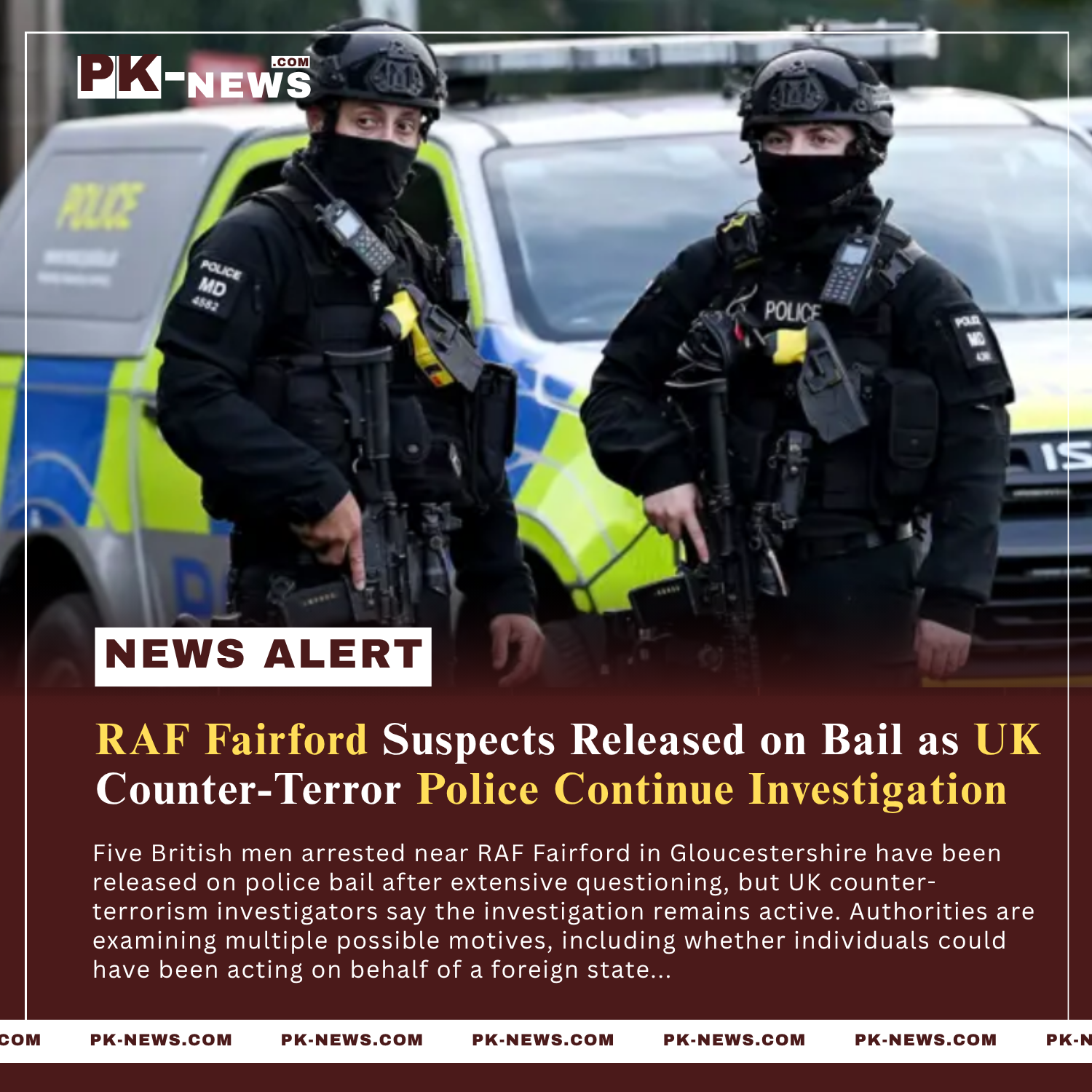
RAF Fairford Suspects Released on Bail as UK Counter-Terror Police Continue Investigation
Five British nationals arrested near RAF Fairford in England over suspected terrorism and explosives offences have been released on bail, according to UK counter-terrorism police. Investigators say the men remain under investigation and are examining multiple possibilities, including potential involvement by individuals acting on behalf of a foreign state. By PK-News.com News Desk September 28, 2026 Five men arrested near RAF Fairford, a British airbase used by the United States military, have been released on bail as UK counter-terrorism police continue investigating the circumstances surrounding their arrest. PK-News.com has searched and reviewed the latest available reports from UK authorities and international news agencies regarding the incident. The five men have not been charged, and authorities have stressed that their release does not mean the investigation has ended. The arrests occurred early Sunday after police received information about suspicious activity involving several vehicles near the airbase in Gloucestershire. Five Men Released on Bail UK Counter Terrorism Policing said the five suspects were released on Monday following extensive interviews and inquiries. The men are all British nationals from London, aged between 23 and 25. Police said they had initially been arrested on suspicion of offences under the Explosives Act and later investigated on suspicion of preparing a terrorist act. Head of UK Counter Terrorism Policing Laurence Taylor said the suspects remain under investigation and are subject to stringent conditions regarding their movements and contact with other people. He stressed that the investigation remains active. Police Say Investigation Is Continuing Taylor said investigators are pursuing multiple lines of inquiry to establish exactly what the men were doing near RAF Fairford, what they knew and what their motivation may have been. Police are also examining whether the activity could have involved people acting for a foreign state. Taylor said investigators were considering every possible angle, including the possibility that individuals could have been acting knowingly or unknowingly on behalf of a foreign government. Authorities have not publicly established that any foreign government was responsible. How the Arrests Happened Police were alerted early Sunday after a local farmer reported seeing three large white vans close to RAF Fairford. The witness also reported seeing a group of people near the vehicles. Armed police subsequently attended the area and arrested five men in the nearby Whelford area, around a mile from the airbase. A large security cordon was established and around 85 households were evacuated from nearby properties while authorities examined the vehicles and surrounding area. Police and military personnel remained at the scene while forensic specialists examined the vehicles. RAF Fairford's Importance RAF Fairford is an important military facility in Gloucestershire and has been used by the United States Air Force for long-range operations. The base has particular significance because American aircraft have operated from the facility during the ongoing conflict involving Iran. That wider geopolitical situation has generated considerable attention around the arrests. However, UK authorities have not confirmed that the incident was connected to Iran. Iran Denies Involvement Speculation about a possible Iranian connection emerged after the arrests. Iran's embassy in London has categorically denied involvement and criticized what it described as unfounded claims linking Tehran to the incident. Iranian officials have said such speculation is not supported by established evidence. The denial comes as British investigators continue examining the incident and have said they are keeping an open mind about the motive. Therefore, PK-News.com is treating any alleged Iranian connection as an unconfirmed line of investigation rather than an established fact. Police Consider Foreign-State Possibility While investigators have not named a foreign government as being responsible, counter-terrorism officials have acknowledged that geopolitical factors are being considered. Taylor said investigators were examining whether the activity could have involved proxies or individuals working, knowingly or unknowingly, on behalf of a foreign state. This does not establish that a foreign government directed the suspects. The investigation will need to determine the purpose of the vehicles, the nature of any materials found and the relationship between the individuals involved. Trump Comments on Arrests US President Donald Trump also commented on the arrests, saying the suspects had allegedly been looking to cause significant damage to US forces at the base. Trump praised the cooperation between British and US authorities. However, British investigators have continued their own investigation and have not publicly confirmed all of the claims surrounding the suspects' alleged intentions. Investigation Remains Active The decision to release the five men on bail does not mean authorities have closed the case. Counter-terrorism police say the men remain under investigation and must comply with strict conditions. Investigators are continuing to examine: The three vans found near RAF Fairford Any materials discovered inside or around the vehicles The movements of the suspects Their communications and contacts Their possible motivation Any potential foreign-state connection Whether an actual terrorist act was being prepared Authorities are also maintaining a significant police presence around the scene while forensic and investigative work continues. UK Security Concerns The incident comes amid heightened security concerns in Britain. The country's terrorism threat level was raised to its second-highest category earlier this year, meaning authorities consider an attack highly likely. British counter-terrorism officials have also been investigating a number of incidents involving alleged activity connected to Iran, although those investigations do not establish that the RAF Fairford incident was directed by Tehran. What Happens Next? The next stage of the investigation will focus on determining why the five men were near RAF Fairford and whether they intended to carry out an attack. Police are expected to continue forensic examinations and interviews while examining possible links between the suspects and other individuals or organisations. The authorities may provide additional information if investigators establish a clear motive or determine whether any foreign organisation was involved. Until then, the central facts remain that five British nationals were arrested, later released on bail, and remain under investigation without charges being announced. PK-News.com Monitoring the Story PK-News.com has searched the latest available reports and official statements concerning the RAF Fairford incident. The latest confirmed development is that five suspects have been released on bail after being questioned by British counter-terrorism police. The investigation remains active, and authorities are examining multiple possibilities, including whether individuals may have been acting on behalf of a foreign state. At present, no Iranian involvement has been established by UK authorities, while Iran has denied any connection to the incident. PK-News.com will continue monitoring the investigation and update this report when further verified information becomes avail
Sep 28, 2026 at 11:07 PM
Five British nationals arrested near RAF Fairford in England over suspected terrorism and explosives offences have been released on bail, according to UK counter-terrorism police. Investigators say the men remain under investigation and are examining multiple possibilities, including potential involvement by individuals acting on behalf of a foreign state. By PK-News.com News Desk September 28, 2026 Five men arrested near RAF Fairford, a British airbase used by the United States military, have been released on bail as UK counter-terrorism police continue investigating the circumstances surrounding their arrest. PK-News.com has searched and reviewed the latest available reports from UK authorities and international news agencies regarding the incident. The five men have not been charged, and authorities have stressed that their release does not mean the investigation has ended. The arrests occurred early Sunday after police received information about suspicious activity involving several vehicles near the airbase in Gloucestershire. Five Men Released on Bail UK Counter Terrorism Policing said the five suspects were released on Monday following extensive interviews and inquiries. The men are all British nationals from London, aged between 23 and 25. Police said they had initially been arrested on suspicion of offences under the Explosives Act and later investigated on suspicion of preparing a terrorist act. Head of UK Counter Terrorism Policing Laurence Taylor said the suspects remain under investigation and are subject to stringent conditions regarding their movements and contact with other people. He stressed that the investigation remains active. Police Say Investigation Is Continuing Taylor said investigators are pursuing multiple lines of inquiry to establish exactly what the men were doing near RAF Fairford, what they knew and what their motivation may have been. Police are also examining whether the activity could have involved people acting for a foreign state. Taylor said investigators were considering every possible angle, including the possibility that individuals could have been acting knowingly or unknowingly on behalf of a foreign government. Authorities have not publicly established that any foreign government was responsible. How the Arrests Happened Police were alerted early Sunday after a local farmer reported seeing three large white vans close to RAF Fairford. The witness also reported seeing a group of people near the vehicles. Armed police subsequently attended the area and arrested five men in the nearby Whelford area, around a mile from the airbase. A large security cordon was established and around 85 households were evacuated from nearby properties while authorities examined the vehicles and surrounding area. Police and military personnel remained at the scene while forensic specialists examined the vehicles. RAF Fairford's Importance RAF Fairford is an important military facility in Gloucestershire and has been used by the United States Air Force for long-range operations. The base has particular significance because American aircraft have operated from the facility during the ongoing conflict involving Iran. That wider geopolitical situation has generated considerable attention around the arrests. However, UK authorities have not confirmed that the incident was connected to Iran. Iran Denies Involvement Speculation about a possible Iranian connection emerged after the arrests. Iran's embassy in London has categorically denied involvement and criticized what it described as unfounded claims linking Tehran to the incident. Iranian officials have said such speculation is not supported by established evidence. The denial comes as British investigators continue examining the incident and have said they are keeping an open mind about the motive. Therefore, PK-News.com is treating any alleged Iranian connection as an unconfirmed line of investigation rather than an established fact. Police Consider Foreign-State Possibility While investigators have not named a foreign government as being responsible, counter-terrorism officials have acknowledged that geopolitical factors are being considered. Taylor said investigators were examining whether the activity could have involved proxies or individuals working, knowingly or unknowingly, on behalf of a foreign state. This does not establish that a foreign government directed the suspects. The investigation will need to determine the purpose of the vehicles, the nature of any materials found and the relationship between the individuals involved. Trump Comments on Arrests US President Donald Trump also commented on the arrests, saying the suspects had allegedly been looking to cause significant damage to US forces at the base. Trump praised the cooperation between British and US authorities. However, British investigators have continued their own investigation and have not publicly confirmed all of the claims surrounding the suspects' alleged intentions. Investigation Remains Active The decision to release the five men on bail does not mean authorities have closed the case. Counter-terrorism police say the men remain under investigation and must comply with strict conditions. Investigators are continuing to examine: The three vans found near RAF Fairford Any materials discovered inside or around the vehicles The movements of the suspects Their communications and contacts Their possible motivation Any potential foreign-state connection Whether an actual terrorist act was being prepared Authorities are also maintaining a significant police presence around the scene while forensic and investigative work continues. UK Security Concerns The incident comes amid heightened security concerns in Britain. The country's terrorism threat level was raised to its second-highest category earlier this year, meaning authorities consider an attack highly likely. British counter-terrorism officials have also been investigating a number of incidents involving alleged activity connected to Iran, although those investigations do not establish that the RAF Fairford incident was directed by Tehran. What Happens Next? The next stage of the investigation will focus on determining why the five men were near RAF Fairford and whether they intended to carry out an attack. Police are expected to continue forensic examinations and interviews while examining possible links between the suspects and other individuals or organisations. The authorities may provide additional information if investigators establish a clear motive or determine whether any foreign organisation was involved. Until then, the central facts remain that five British nationals were arrested, later released on bail, and remain under investigation without charges being announced. PK-News.com Monitoring the Story PK-News.com has searched the latest available reports and official statements concerning the RAF Fairford incident. The latest confirmed development is that five suspects have been released on bail after being questioned by British counter-terrorism police. The investigation remains active, and authorities are examining multiple possibilities, including whether individuals may have been acting on behalf of a foreign state. At present, no Iranian involvement has been established by UK authorities, while Iran has denied any connection to the incident. PK-News.com will continue monitoring the investigation and update this report when further verified information becomes avail
Iran FM Araghchi to Meet Qatari Mediators in New York Over US-Iran War
13
Global PK Live News 😔 Negative
Iran FM Araghchi to Meet Qatari Mediators in New York Over US-Iran War
Iranian Foreign Minister Abbas Araghchi is set to meet Qatari mediators in New York as diplomatic efforts continue to find a way out of the ongoing US-Iran conflict. The discussions are expected to examine the latest proposals, including Tehran's seven-day framework linked to the reopening of the Strait of Hormuz and a possible return to negotiations. By PK-News.com News Desk September 28, 2026 Iranian Foreign Minister Abbas Araghchi is meeting Qatari mediators in New York as diplomatic efforts continue over the ongoing conflict between Iran and the United States. PK-News.com has searched and reviewed the latest international reports, Iranian media updates and information from officials familiar with the negotiations. The latest reports indicate that the meeting is part of a renewed diplomatic effort involving Qatar, Iran and the United States, although the Iranian foreign minister's meeting with the Qatari mediators is not expected to include a direct U.S. representative. The talks come after Iran presented a seven-day proposal aimed at creating conditions for the reopening of the strategically important Strait of Hormuz and restarting broader negotiations with Washington. Araghchi to Meet Qatari Mediators Iranian semi-official news agency ISNA confirmed that Araghchi would meet mediators in New York on Monday. The agency said the Iranian delegation and the mediators would examine the latest proposals and views concerning the current situation. A separate report citing an official familiar with the negotiations said Qatari mediators were expected to hold discussions with Araghchi and separately with the American side on Monday or Tuesday. The meetings represent another attempt to maintain communication between Tehran and Washington through intermediaries despite significant differences between the two sides. No Direct US Representative Expected at Meeting Iranian media reported that no U.S. representative would participate directly in Araghchi's meeting with the Qatari mediators. Instead, Qatar is expected to continue acting as an intermediary between the two sides. The arrangement allows messages and proposals to continue moving between Tehran and Washington without requiring an immediate direct meeting between Iranian and American officials. The identity of the U.S. representative who may separately meet the mediators was not immediately clear. Iran's Seven-Day Proposal The latest diplomatic effort follows a proposal presented by Iran last week on the sidelines of the United Nations General Assembly in New York. According to reports, Tehran's framework calls for several measures, including an end to hostilities, the release of frozen Iranian assets, changes to sanctions affecting Iranian oil exports and an end to the U.S. blockade of Iranian ports. Under the proposal, Iran would then allow the Strait of Hormuz to reopen, with the two sides returning to negotiations over a broader agreement, including Iran's nuclear programme. The proposal was transmitted to Washington through mediators. Trump Has Rejected the Proposal U.S. President Donald Trump has said he rejected Iran's latest proposal. However, despite the rejection, diplomatic contacts have continued through intermediaries. Reuters reported that Trump also indicated that U.S. negotiators were expected to engage in further talks during the week. This has left the diplomatic channel open even though major disagreements remain between Washington and Tehran. Tehran Says It Is Waiting for a Formal Response Araghchi has said that Iran had seen Trump's initial public reaction but had not yet received a definitive response through the mediators. According to Iranian media, the foreign minister said Tehran was waiting for the intermediaries to communicate Washington's formal position before deciding on its next steps. Iran has also maintained that its conditions for reopening the Strait of Hormuz remain unchanged. The position means that any progress on the waterway is linked by Tehran to the wider terms of a potential diplomatic arrangement. Strait of Hormuz at the Centre of Negotiations The Strait of Hormuz remains one of the most important issues in the negotiations. The waterway is a major route for international energy shipments, meaning prolonged disruption could have consequences for oil markets, shipping and economies around the world. Iran's seven-day proposal specifically connects the reopening of the strait with steps involving sanctions, frozen Iranian assets and the wider conflict. The United States, meanwhile, has maintained its own position regarding the waterway and military operations in the region. The competing positions have made Hormuz one of the central issues in the diplomatic discussions. Qatar's Role as Mediator Qatar has played an important role in regional diplomacy and has maintained communication with both sides. The latest discussions demonstrate Doha's continuing role as an intermediary at a time when direct U.S.-Iran diplomatic contacts remain difficult. Qatari mediators are expected to communicate with both Iranian and American officials separately as they attempt to identify areas where the two sides could potentially reach an understanding. The latest diplomatic activity follows earlier efforts by Gulf states to encourage dialogue between Washington and Tehran. Diplomacy Continues Despite Military Tensions The diplomatic contacts are taking place while military tensions remain high. Iranian officials have continued to state that the country is prepared for the possibility of renewed fighting while also keeping the diplomatic channel open. Araghchi recently said Iran remained prepared if the conflict resumed but had not abandoned diplomacy. This combination of military preparedness and continued diplomatic engagement has become a central feature of the current crisis. What Happens Next? The immediate focus will be on the discussions between Araghchi and the Qatari mediators and on whether the mediators can obtain a more detailed response from Washington. Several issues remain unresolved, including: The reopening of the Strait of Hormuz U.S. sanctions on Iranian oil Frozen Iranian financial assets The U.S. naval blockade A possible ceasefire The future of nuclear negotiations Security arrangements in the region The conditions required for a broader agreement The coming days could therefore determine whether the latest diplomatic contacts lead to another round of negotiations or whether the differences remain unresolved. PK-News.com Monitoring the Developments PK-News.com has searched the latest available international reporting and is monitoring the ongoing diplomatic efforts between Iran and the United States. The latest development is that Iranian Foreign Minister Abbas Araghchi is meeting Qatari mediators in New York to discuss the latest proposals and the situation surrounding the US-Iran conflict. The meeting is taking place without a direct U.S. representative, according to Iranian media, while separate contacts between the mediators and Washington are also expected. Iran continues to link the reopening of the Strait of Hormuz to conditions involving sanctions, frozen assets and the wider conflict, while Washington has rejected Tehran's latest proposal but indicated that further talks could continue. PK-News.com will continue updating this story as new verified information emerges.
Sep 28, 2026 at 10:50 PM
Iranian Foreign Minister Abbas Araghchi is set to meet Qatari mediators in New York as diplomatic efforts continue to find a way out of the ongoing US-Iran conflict. The discussions are expected to examine the latest proposals, including Tehran's seven-day framework linked to the reopening of the Strait of Hormuz and a possible return to negotiations. By PK-News.com News Desk September 28, 2026 Iranian Foreign Minister Abbas Araghchi is meeting Qatari mediators in New York as diplomatic efforts continue over the ongoing conflict between Iran and the United States. PK-News.com has searched and reviewed the latest international reports, Iranian media updates and information from officials familiar with the negotiations. The latest reports indicate that the meeting is part of a renewed diplomatic effort involving Qatar, Iran and the United States, although the Iranian foreign minister's meeting with the Qatari mediators is not expected to include a direct U.S. representative. The talks come after Iran presented a seven-day proposal aimed at creating conditions for the reopening of the strategically important Strait of Hormuz and restarting broader negotiations with Washington. Araghchi to Meet Qatari Mediators Iranian semi-official news agency ISNA confirmed that Araghchi would meet mediators in New York on Monday. The agency said the Iranian delegation and the mediators would examine the latest proposals and views concerning the current situation. A separate report citing an official familiar with the negotiations said Qatari mediators were expected to hold discussions with Araghchi and separately with the American side on Monday or Tuesday. The meetings represent another attempt to maintain communication between Tehran and Washington through intermediaries despite significant differences between the two sides. No Direct US Representative Expected at Meeting Iranian media reported that no U.S. representative would participate directly in Araghchi's meeting with the Qatari mediators. Instead, Qatar is expected to continue acting as an intermediary between the two sides. The arrangement allows messages and proposals to continue moving between Tehran and Washington without requiring an immediate direct meeting between Iranian and American officials. The identity of the U.S. representative who may separately meet the mediators was not immediately clear. Iran's Seven-Day Proposal The latest diplomatic effort follows a proposal presented by Iran last week on the sidelines of the United Nations General Assembly in New York. According to reports, Tehran's framework calls for several measures, including an end to hostilities, the release of frozen Iranian assets, changes to sanctions affecting Iranian oil exports and an end to the U.S. blockade of Iranian ports. Under the proposal, Iran would then allow the Strait of Hormuz to reopen, with the two sides returning to negotiations over a broader agreement, including Iran's nuclear programme. The proposal was transmitted to Washington through mediators. Trump Has Rejected the Proposal U.S. President Donald Trump has said he rejected Iran's latest proposal. However, despite the rejection, diplomatic contacts have continued through intermediaries. Reuters reported that Trump also indicated that U.S. negotiators were expected to engage in further talks during the week. This has left the diplomatic channel open even though major disagreements remain between Washington and Tehran. Tehran Says It Is Waiting for a Formal Response Araghchi has said that Iran had seen Trump's initial public reaction but had not yet received a definitive response through the mediators. According to Iranian media, the foreign minister said Tehran was waiting for the intermediaries to communicate Washington's formal position before deciding on its next steps. Iran has also maintained that its conditions for reopening the Strait of Hormuz remain unchanged. The position means that any progress on the waterway is linked by Tehran to the wider terms of a potential diplomatic arrangement. Strait of Hormuz at the Centre of Negotiations The Strait of Hormuz remains one of the most important issues in the negotiations. The waterway is a major route for international energy shipments, meaning prolonged disruption could have consequences for oil markets, shipping and economies around the world. Iran's seven-day proposal specifically connects the reopening of the strait with steps involving sanctions, frozen Iranian assets and the wider conflict. The United States, meanwhile, has maintained its own position regarding the waterway and military operations in the region. The competing positions have made Hormuz one of the central issues in the diplomatic discussions. Qatar's Role as Mediator Qatar has played an important role in regional diplomacy and has maintained communication with both sides. The latest discussions demonstrate Doha's continuing role as an intermediary at a time when direct U.S.-Iran diplomatic contacts remain difficult. Qatari mediators are expected to communicate with both Iranian and American officials separately as they attempt to identify areas where the two sides could potentially reach an understanding. The latest diplomatic activity follows earlier efforts by Gulf states to encourage dialogue between Washington and Tehran. Diplomacy Continues Despite Military Tensions The diplomatic contacts are taking place while military tensions remain high. Iranian officials have continued to state that the country is prepared for the possibility of renewed fighting while also keeping the diplomatic channel open. Araghchi recently said Iran remained prepared if the conflict resumed but had not abandoned diplomacy. This combination of military preparedness and continued diplomatic engagement has become a central feature of the current crisis. What Happens Next? The immediate focus will be on the discussions between Araghchi and the Qatari mediators and on whether the mediators can obtain a more detailed response from Washington. Several issues remain unresolved, including: The reopening of the Strait of Hormuz U.S. sanctions on Iranian oil Frozen Iranian financial assets The U.S. naval blockade A possible ceasefire The future of nuclear negotiations Security arrangements in the region The conditions required for a broader agreement The coming days could therefore determine whether the latest diplomatic contacts lead to another round of negotiations or whether the differences remain unresolved. PK-News.com Monitoring the Developments PK-News.com has searched the latest available international reporting and is monitoring the ongoing diplomatic efforts between Iran and the United States. The latest development is that Iranian Foreign Minister Abbas Araghchi is meeting Qatari mediators in New York to discuss the latest proposals and the situation surrounding the US-Iran conflict. The meeting is taking place without a direct U.S. representative, according to Iranian media, while separate contacts between the mediators and Washington are also expected. Iran continues to link the reopening of the Strait of Hormuz to conditions involving sanctions, frozen assets and the wider conflict, while Washington has rejected Tehran's latest proposal but indicated that further talks could continue. PK-News.com will continue updating this story as new verified information emerges.
Thousands Take Shelter as Bangkok Floods Cause More Than $320 Million in Damage
13
Global PK Live News 😔 Negative
Thousands Take Shelter as Bangkok Floods Cause More Than $320 Million in Damage
Severe flooding has inundated large parts of Bangkok after days of intense rainfall, forcing thousands of residents into evacuation centres and leaving more than 80,000 people unable to leave flooded areas. Thailand's floods have affected more than 580,000 homes across 41 provinces, while economic losses are estimated at more than $320 million. By PK-News.com September 28, 2026 Thailand is facing a major flooding emergency as intense rainfall has inundated large parts of Bangkok, forcing thousands of residents to seek shelter while authorities continue relief operations across the country. PK-News.com has searched and reviewed the latest available international reports and official information surrounding the flooding. The latest reports indicate that Bangkok remains among the worst-affected areas, with residents in some neighbourhoods wading through waist-deep water to obtain food and essential supplies. The flooding follows exceptionally heavy rainfall over several days, overwhelming drainage systems in parts of the Thai capital. Thousands Moved to Evacuation Centres At least 5,901 people in Bangkok have moved to 234 evacuation centres, according to a city administration official cited in the latest reporting. Thailand's Interior Ministry said more than 80,000 residents living in flooded areas were unable to leave their homes. Authorities have deployed boats and mobile kitchens to support people affected by the flooding. The government says the relief effort is aimed at ensuring affected residents receive food throughout the flooding period and for several days after the water begins to recede. Eight People Reportedly Killed The flooding has affected 41 provinces across Thailand since September 16, according to the country's Interior Ministry. At least eight people have died, while more than 580,000 homes have been affected or disrupted by the floods, according to the latest figures reported by Reuters. Authorities continue to monitor water levels and the condition of reservoirs as additional areas remain vulnerable to flooding. 320 Millimetres of Rain The scale of rainfall has placed enormous pressure on Bangkok's drainage infrastructure. Approximately 320 millimetres of rain fell over two or three days last week. That amount is close to the rainfall Bangkok would normally receive during the entire month of September. The heavy rainfall overwhelmed drainage networks, leaving entire neighbourhoods under water. Residents in some areas have been forced to use boats or walk through floodwaters to purchase food and other necessities. Economic Damage Estimated Above $320 Million The flooding is also expected to have a significant impact on Thailand's economy. Economist Aat Pisanwanich of Rangsit University estimated that nationwide economic damage could reach at least 11 billion baht, or around $327 million. He warned that losses could increase if flooding continues. According to the economic assessment cited by Reuters, the floods could reduce Thailand's projected annual GDP growth by around 0.3 percentage points, taking the estimate to approximately 2.1%. Another estimate from the University of the Thai Chamber of Commerce placed the potential nationwide economic impact at around 12.3 billion baht, while damage to Bangkok alone could reach approximately 7 billion baht. Bangkok Businesses Under Pressure Bangkok's wholesale and retail sectors are among those facing significant disruption. Floodwaters have affected roads, markets and neighbourhood businesses, making it difficult for residents and traders to move around the city. In the hard-hit Bang Kapi area, residents were reported walking through knee- and waist-deep water to purchase essential goods. Some vendors adapted by moving their goods to the edges of flooded areas, with improvised floating arrangements being used to continue selling food and other necessities. The flooding has therefore affected not only homes but also local commerce and supply chains. Additional Evacuations Ordered in Rayong The emergency is not limited to Bangkok. In the eastern coastal province of Rayong, authorities ordered additional evacuations after floodwaters caused two reservoirs to rise beyond their capacity. The province is close to an important industrial region, raising concerns about possible disruption to industrial and commercial activity if flooding continues. Authorities are continuing to monitor reservoir levels and water movement. Why Bangkok Is Vulnerable to Flooding Bangkok's geography makes the city particularly vulnerable to flooding. The capital sits on a low-lying river delta, with large parts of the city only around 1.5 metres above sea level. The city is also reported to be sinking by several millimetres each year. Combined with intense seasonal rainfall, dense urban development and pressure on drainage infrastructure, these factors can make major flooding particularly difficult to manage. Relief Operations Continue Thai authorities are continuing emergency operations as residents remain in shelters and some communities remain surrounded by floodwater. Mobile kitchens and boats are being used to deliver food and assist residents who cannot safely leave their homes. Officials are also monitoring rainfall, reservoirs and drainage conditions to determine whether additional evacuations will be necessary. The immediate priority remains providing food, water and safe shelter to affected residents. Flooding Could Continue to Affect the Economy The economic consequences could extend beyond the immediate cost of repairing damaged homes and infrastructure. Businesses affected by flooded roads and markets may face lost sales, while disruptions to transportation and industrial activity could add further costs. Agriculture and industry outside Bangkok are also vulnerable if flooding spreads or remains for an extended period. Economists therefore expect the final cost to become clearer only after floodwaters recede and authorities complete damage assessments. PK-News.com Monitoring the Situation PK-News.com has searched the latest available international reports and will continue monitoring the Thailand flooding situation. The latest available information indicates that at least eight people have died, more than 580,000 homes have been affected across 41 provinces, and nearly 5,901 people in Bangkok have moved to 234 evacuation centres. More than 80,000 people in flooded areas are reportedly unable to leave their homes, while economic losses have been estimated at more than $320 million. The situation remains fluid, with authorities continuing evacuation, food-delivery and emergency-response operations. PK-News.com will update this report as new verified information becomes available. Bangkok is experiencing widespread flooding after exceptionally heavy rainfall. Around 320mm of rain fell over two or three days. At least 8 people have died in Thailand's floods since September 16. More than 580,000 homes have been affected across 41 provinces. More than 80,000 people are reportedly unable to leave flooded areas. Nearly 5,901 people in Bangkok have moved to 234 evacuation centres. Economic damage has been estimated at more than $320 million. Additional evacuations have been ordered in parts of east
Sep 28, 2026 at 10:41 PM
Severe flooding has inundated large parts of Bangkok after days of intense rainfall, forcing thousands of residents into evacuation centres and leaving more than 80,000 people unable to leave flooded areas. Thailand's floods have affected more than 580,000 homes across 41 provinces, while economic losses are estimated at more than $320 million. By PK-News.com September 28, 2026 Thailand is facing a major flooding emergency as intense rainfall has inundated large parts of Bangkok, forcing thousands of residents to seek shelter while authorities continue relief operations across the country. PK-News.com has searched and reviewed the latest available international reports and official information surrounding the flooding. The latest reports indicate that Bangkok remains among the worst-affected areas, with residents in some neighbourhoods wading through waist-deep water to obtain food and essential supplies. The flooding follows exceptionally heavy rainfall over several days, overwhelming drainage systems in parts of the Thai capital. Thousands Moved to Evacuation Centres At least 5,901 people in Bangkok have moved to 234 evacuation centres, according to a city administration official cited in the latest reporting. Thailand's Interior Ministry said more than 80,000 residents living in flooded areas were unable to leave their homes. Authorities have deployed boats and mobile kitchens to support people affected by the flooding. The government says the relief effort is aimed at ensuring affected residents receive food throughout the flooding period and for several days after the water begins to recede. Eight People Reportedly Killed The flooding has affected 41 provinces across Thailand since September 16, according to the country's Interior Ministry. At least eight people have died, while more than 580,000 homes have been affected or disrupted by the floods, according to the latest figures reported by Reuters. Authorities continue to monitor water levels and the condition of reservoirs as additional areas remain vulnerable to flooding. 320 Millimetres of Rain The scale of rainfall has placed enormous pressure on Bangkok's drainage infrastructure. Approximately 320 millimetres of rain fell over two or three days last week. That amount is close to the rainfall Bangkok would normally receive during the entire month of September. The heavy rainfall overwhelmed drainage networks, leaving entire neighbourhoods under water. Residents in some areas have been forced to use boats or walk through floodwaters to purchase food and other necessities. Economic Damage Estimated Above $320 Million The flooding is also expected to have a significant impact on Thailand's economy. Economist Aat Pisanwanich of Rangsit University estimated that nationwide economic damage could reach at least 11 billion baht, or around $327 million. He warned that losses could increase if flooding continues. According to the economic assessment cited by Reuters, the floods could reduce Thailand's projected annual GDP growth by around 0.3 percentage points, taking the estimate to approximately 2.1%. Another estimate from the University of the Thai Chamber of Commerce placed the potential nationwide economic impact at around 12.3 billion baht, while damage to Bangkok alone could reach approximately 7 billion baht. Bangkok Businesses Under Pressure Bangkok's wholesale and retail sectors are among those facing significant disruption. Floodwaters have affected roads, markets and neighbourhood businesses, making it difficult for residents and traders to move around the city. In the hard-hit Bang Kapi area, residents were reported walking through knee- and waist-deep water to purchase essential goods. Some vendors adapted by moving their goods to the edges of flooded areas, with improvised floating arrangements being used to continue selling food and other necessities. The flooding has therefore affected not only homes but also local commerce and supply chains. Additional Evacuations Ordered in Rayong The emergency is not limited to Bangkok. In the eastern coastal province of Rayong, authorities ordered additional evacuations after floodwaters caused two reservoirs to rise beyond their capacity. The province is close to an important industrial region, raising concerns about possible disruption to industrial and commercial activity if flooding continues. Authorities are continuing to monitor reservoir levels and water movement. Why Bangkok Is Vulnerable to Flooding Bangkok's geography makes the city particularly vulnerable to flooding. The capital sits on a low-lying river delta, with large parts of the city only around 1.5 metres above sea level. The city is also reported to be sinking by several millimetres each year. Combined with intense seasonal rainfall, dense urban development and pressure on drainage infrastructure, these factors can make major flooding particularly difficult to manage. Relief Operations Continue Thai authorities are continuing emergency operations as residents remain in shelters and some communities remain surrounded by floodwater. Mobile kitchens and boats are being used to deliver food and assist residents who cannot safely leave their homes. Officials are also monitoring rainfall, reservoirs and drainage conditions to determine whether additional evacuations will be necessary. The immediate priority remains providing food, water and safe shelter to affected residents. Flooding Could Continue to Affect the Economy The economic consequences could extend beyond the immediate cost of repairing damaged homes and infrastructure. Businesses affected by flooded roads and markets may face lost sales, while disruptions to transportation and industrial activity could add further costs. Agriculture and industry outside Bangkok are also vulnerable if flooding spreads or remains for an extended period. Economists therefore expect the final cost to become clearer only after floodwaters recede and authorities complete damage assessments. PK-News.com Monitoring the Situation PK-News.com has searched the latest available international reports and will continue monitoring the Thailand flooding situation. The latest available information indicates that at least eight people have died, more than 580,000 homes have been affected across 41 provinces, and nearly 5,901 people in Bangkok have moved to 234 evacuation centres. More than 80,000 people in flooded areas are reportedly unable to leave their homes, while economic losses have been estimated at more than $320 million. The situation remains fluid, with authorities continuing evacuation, food-delivery and emergency-response operations. PK-News.com will update this report as new verified information becomes available. Bangkok is experiencing widespread flooding after exceptionally heavy rainfall. Around 320mm of rain fell over two or three days. At least 8 people have died in Thailand's floods since September 16. More than 580,000 homes have been affected across 41 provinces. More than 80,000 people are reportedly unable to leave flooded areas. Nearly 5,901 people in Bangkok have moved to 234 evacuation centres. Economic damage has been estimated at more than $320 million. Additional evacuations have been ordered in parts of east
Islamabad-Peshawar M-1 Reopens After Days of Closure as Road Access Returns
84
Global PK Live News 😐 Neutral
Islamabad-Peshawar M-1 Reopens After Days of Closure as Road Access Returns
By PK-News.com September 28, 2026 | Pakistan ISLAMABAD: The Islamabad-Peshawar Motorway (M-1) has been reopened to all types of traffic in both directions after remaining closed for several days amid heightened security arrangements around Islamabad. The reopening was confirmed by the National Highways & Motorway Police (NH&MP) on Monday, providing relief to commuters and transport operators travelling between the federal capital and Khyber Pakhtunkhwa. The motorway had been closed last week as authorities tightened security ahead of a planned political march towards Islamabad. The planned September 27 protest was later postponed to October 4, following an announcement by the Khyber Pakhtunkhwa chief minister. M-1 Fully Reopened According to the motorway police, the M-1 is now available for all categories of traffic in both directions between Islamabad and Peshawar. The reopening restores one of the country's most important road connections between the federal capital and Khyber Pakhtunkhwa. The motorway had previously been blocked between the Islamabad Toll Plaza and Chachh Interchange under security directives issued on September 22. The closure had forced travellers to use alternative routes, creating additional pressure on roads around Attock, Hasan Abdal and other connecting areas. GT Road Between Islamabad and Peshawar Also Restored The reopening is not limited to the motorway. The N-5 Grand Trunk Road between Islamabad and Peshawar has also been reopened to traffic, according to the motorway police. The road had earlier been blocked at Attock Khurd, an important crossing between Punjab and Khyber Pakhtunkhwa. Authorities had placed containers, sandbags and other barriers at strategic points during the security operation. The restoration of the GT Road is expected to provide another important route for commuters and commercial traffic between the two regions. M-14 Still Partially Under Restoration While the M-1 has been fully restored, some restrictions remain on the M-14 Islamabad-Dera Ismail Khan Motorway. The motorway police said restoration work is continuing on the section between Hakla and Kundal. According to the latest update, portions of the M-14 have reopened, including the sections from Hakla to Kot Belian and from Isa Khel to Yarik. Work remains underway on the section between Kot Belian and Isa Khel. Motorists travelling towards Dera Ismail Khan should therefore check the latest motorway situation before beginning their journey. Alternative Route for Abbottabad Travellers The motorway police have also provided guidance for travellers heading from Islamabad towards Abbottabad. Traffic using the M-1 can exit at Burhan Interchange, continue through the GT Road via Hasan Abdal, and then reconnect with the Hazara Expressway at Jhuri Kas Interchange. This route provides an alternative connection while restoration work continues on the M-1-to-Hazara Motorway loop. Why Were the Roads Closed? The closures were introduced during heightened security preparations ahead of a planned Pakistan Tehreek-e-Insaf (PTI) march towards Islamabad. The M-1, sections of the M-14 and the N-5 were among the major routes affected. Authorities also strengthened security arrangements in Attock, where important bridges and entry points were blocked with containers and other barriers. The political march was initially planned for September 27 but was subsequently postponed until October 4. Following the postponement, authorities began removing containers and other obstacles from major roads. Attock Becomes Key Traffic Point Attock played a particularly important role during the closure because the district connects Khyber Pakhtunkhwa with Punjab and the Islamabad-Rawalpindi region. The Attock Bridge and Attock Khurd crossing were among the locations where security barriers had been deployed. The closure disrupted normal movement between the two provinces and resulted in traffic diversions and delays. With the GT Road and M-1 now reopened, normal interprovincial movement is gradually returning, although some roads and connecting routes remain under restoration. What Travellers Should Know Although the main Islamabad-Peshawar motorway has reopened, travellers should remain aware that road conditions can change quickly because restoration work is still underway on parts of the M-14 and connecting routes. Motorists travelling towards Dera Ismail Khan, Hazara or other destinations connected through affected sections should check official motorway updates before travelling. Commercial transport operators are also expected to benefit from the reopening of the M-1 and N-5, as both routes are important corridors for passenger and freight movement. Political Situation Remains Relevant The reopening comes as the political situation surrounding the planned PTI march continues to develop. The postponement of the march from September 27 to October 4 appears to have been followed by the removal of several roadblocks and the restoration of major transport links. Authorities had previously introduced restrictions and increased security measures in Islamabad, Punjab and Attock in preparation for the planned protest. The future status of road closures could therefore depend on further security decisions as the revised October 4 date approaches. PK-News.com Update The reopening of the Islamabad-Peshawar M-1 marks a significant restoration of road connectivity between Islamabad and Khyber Pakhtunkhwa after several days of restrictions. The N-5/GT Road between Islamabad and Peshawar has also reopened, while restoration work continues on sections of the M-14 and the connection between the M-1 and Hazara Motorway. PK-News.com will continue monitoring motorway conditions, traffic restrictions and security developments affecting travellers across Punjab, Khyber Pakhtunkhwa and Islamabad. This report reflects information available on September 28, 2026. Motorway conditions may change as authorities complete restoration work or introduce new security measures.
Sep 28, 2026 at 12:09 PM
By PK-News.com September 28, 2026 | Pakistan ISLAMABAD: The Islamabad-Peshawar Motorway (M-1) has been reopened to all types of traffic in both directions after remaining closed for several days amid heightened security arrangements around Islamabad. The reopening was confirmed by the National Highways & Motorway Police (NH&MP) on Monday, providing relief to commuters and transport operators travelling between the federal capital and Khyber Pakhtunkhwa. The motorway had been closed last week as authorities tightened security ahead of a planned political march towards Islamabad. The planned September 27 protest was later postponed to October 4, following an announcement by the Khyber Pakhtunkhwa chief minister. M-1 Fully Reopened According to the motorway police, the M-1 is now available for all categories of traffic in both directions between Islamabad and Peshawar. The reopening restores one of the country's most important road connections between the federal capital and Khyber Pakhtunkhwa. The motorway had previously been blocked between the Islamabad Toll Plaza and Chachh Interchange under security directives issued on September 22. The closure had forced travellers to use alternative routes, creating additional pressure on roads around Attock, Hasan Abdal and other connecting areas. GT Road Between Islamabad and Peshawar Also Restored The reopening is not limited to the motorway. The N-5 Grand Trunk Road between Islamabad and Peshawar has also been reopened to traffic, according to the motorway police. The road had earlier been blocked at Attock Khurd, an important crossing between Punjab and Khyber Pakhtunkhwa. Authorities had placed containers, sandbags and other barriers at strategic points during the security operation. The restoration of the GT Road is expected to provide another important route for commuters and commercial traffic between the two regions. M-14 Still Partially Under Restoration While the M-1 has been fully restored, some restrictions remain on the M-14 Islamabad-Dera Ismail Khan Motorway. The motorway police said restoration work is continuing on the section between Hakla and Kundal. According to the latest update, portions of the M-14 have reopened, including the sections from Hakla to Kot Belian and from Isa Khel to Yarik. Work remains underway on the section between Kot Belian and Isa Khel. Motorists travelling towards Dera Ismail Khan should therefore check the latest motorway situation before beginning their journey. Alternative Route for Abbottabad Travellers The motorway police have also provided guidance for travellers heading from Islamabad towards Abbottabad. Traffic using the M-1 can exit at Burhan Interchange, continue through the GT Road via Hasan Abdal, and then reconnect with the Hazara Expressway at Jhuri Kas Interchange. This route provides an alternative connection while restoration work continues on the M-1-to-Hazara Motorway loop. Why Were the Roads Closed? The closures were introduced during heightened security preparations ahead of a planned Pakistan Tehreek-e-Insaf (PTI) march towards Islamabad. The M-1, sections of the M-14 and the N-5 were among the major routes affected. Authorities also strengthened security arrangements in Attock, where important bridges and entry points were blocked with containers and other barriers. The political march was initially planned for September 27 but was subsequently postponed until October 4. Following the postponement, authorities began removing containers and other obstacles from major roads. Attock Becomes Key Traffic Point Attock played a particularly important role during the closure because the district connects Khyber Pakhtunkhwa with Punjab and the Islamabad-Rawalpindi region. The Attock Bridge and Attock Khurd crossing were among the locations where security barriers had been deployed. The closure disrupted normal movement between the two provinces and resulted in traffic diversions and delays. With the GT Road and M-1 now reopened, normal interprovincial movement is gradually returning, although some roads and connecting routes remain under restoration. What Travellers Should Know Although the main Islamabad-Peshawar motorway has reopened, travellers should remain aware that road conditions can change quickly because restoration work is still underway on parts of the M-14 and connecting routes. Motorists travelling towards Dera Ismail Khan, Hazara or other destinations connected through affected sections should check official motorway updates before travelling. Commercial transport operators are also expected to benefit from the reopening of the M-1 and N-5, as both routes are important corridors for passenger and freight movement. Political Situation Remains Relevant The reopening comes as the political situation surrounding the planned PTI march continues to develop. The postponement of the march from September 27 to October 4 appears to have been followed by the removal of several roadblocks and the restoration of major transport links. Authorities had previously introduced restrictions and increased security measures in Islamabad, Punjab and Attock in preparation for the planned protest. The future status of road closures could therefore depend on further security decisions as the revised October 4 date approaches. PK-News.com Update The reopening of the Islamabad-Peshawar M-1 marks a significant restoration of road connectivity between Islamabad and Khyber Pakhtunkhwa after several days of restrictions. The N-5/GT Road between Islamabad and Peshawar has also reopened, while restoration work continues on sections of the M-14 and the connection between the M-1 and Hazara Motorway. PK-News.com will continue monitoring motorway conditions, traffic restrictions and security developments affecting travellers across Punjab, Khyber Pakhtunkhwa and Islamabad. This report reflects information available on September 28, 2026. Motorway conditions may change as authorities complete restoration work or introduce new security measures.
Oil Prices Rise as US-Iran Talks Stall, Keeping Global Energy Markets on Edge
67
Global PK Live News 😔 Negative
Oil Prices Rise as US-Iran Talks Stall, Keeping Global Energy Markets on Edge
By PK-News.com News Desk September 28, 2026 | International Business SINGAPORE: Global oil prices moved higher on Monday as diplomatic efforts between the United States and Iran failed to produce an immediate breakthrough, adding fresh uncertainty to an already volatile energy market. The latest rise came after US President Donald Trump rejected an Iranian proposal aimed at resolving the conflict and reopening the strategically important Strait of Hormuz. Although Washington has indicated that further discussions could take place, the absence of an immediate agreement has renewed concerns about regional security and energy supplies. According to market data reported by Reuters, Brent crude futures rose more than 3% during Monday's trading, reaching around $107.75 per barrel, while US West Texas Intermediate (WTI) crude climbed above $94 per barrel. Why Are Oil Prices Rising? The latest movement in oil prices is closely linked to uncertainty surrounding the US-Iran conflict and the future of the Strait of Hormuz, one of the world's most important energy shipping routes. Iran's latest proposal reportedly sought a path toward ending the conflict while allowing shipping through the Strait of Hormuz to resume. The proposal was communicated through Qatari mediators following discussions around the United Nations General Assembly in New York. Trump said he rejected the proposal, but also indicated that US negotiators could continue discussions with Iranian representatives during the week. This combination of rejected terms and continuing diplomatic contact has left markets uncertain about what comes next. Reuters reported that the rejection reduced hopes of an immediate diplomatic breakthrough, although negotiations have not completely stopped. Strait of Hormuz Remains Central to the Crisis The Strait of Hormuz has become one of the most important factors influencing international oil markets during the conflict. A large volume of oil and petroleum products normally passes through the waterway, making any disruption potentially significant for global energy supplies. Concerns about the route have already contributed to a geopolitical risk premium in oil prices. Traders are closely watching whether shipping activity can return to more normal levels or whether further restrictions and attacks could disrupt supplies. Recent data cited by Reuters, however, suggests that exports from major Middle Eastern producers have started to recover. Crude exports from key producers were estimated at 12.8 million barrels per day in September, the highest level since the conflict began in February. Shipments through the Strait of Hormuz were also expected to reach approximately 7.4 million barrels per day during the month. Middle East Supply Risks Remain While some oil flows have recovered, the broader security situation remains uncertain. The region has continued to experience attacks and military tensions involving Iran and Iran-backed groups. Yemen's Houthi movement has also remained a factor in regional security, particularly because attacks involving Saudi Arabia and energy infrastructure can create additional concerns for oil traders. Reuters reported that Saudi Arabia and the United Arab Emirates increased exports in September, helping restore some supply to international markets. Saudi Arabia also redirected some shipments after damage to its East-West pipeline affected normal transportation routes. The recovery in exports has provided some relief, but markets remain highly sensitive to any new escalation. What Happens If Talks Continue? The latest statements from Washington suggest that diplomacy has not completely ended. Trump has indicated that US negotiators are expected to engage in further talks with Tehran, despite his rejection of the latest Iranian proposal. Iranian officials, meanwhile, have maintained that Tehran is prepared to pursue diplomacy while also preparing for further confrontation if necessary. Iranian Foreign Minister Abbas Araghchi said Tehran remained open to diplomacy but was also prepared for renewed military confrontation. The next phase of negotiations could therefore have a direct effect on international energy markets. A credible diplomatic breakthrough could reduce some of the risk premium currently built into oil prices. Conversely, further military escalation or prolonged disruption around the Strait of Hormuz could increase concerns about global supply. Potential Impact on Global Markets Higher crude prices can affect economies well beyond the Middle East. When oil becomes more expensive, transportation, manufacturing and energy costs can increase. Countries that depend heavily on imported crude can face higher import bills and additional inflationary pressure. Financial markets are therefore watching the US-Iran situation alongside developments in oil shipping, refinery operations and fuel prices. Reuters reported that rising oil prices have already weighed on investor sentiment in Asian markets, highlighting the wider economic implications of the ongoing standoff. US Diesel Market Adds Another Concern Oil markets are also facing pressure from developments in refined petroleum products. US diesel prices have reached record levels, increasing concerns about inflation and prompting discussion about possible restrictions on diesel exports. Analysts cited by Reuters said restrictions on US diesel exports could tighten fuel availability outside the United States, potentially pushing prices higher in other markets. This means crude oil prices are being influenced by several factors at the same time — geopolitical tensions, shipping conditions, refinery economics and fuel-market pressures. What It Means for Consumers For ordinary consumers, prolonged oil-price increases could eventually translate into higher costs for transportation and other goods. The exact effect will depend on how long international crude prices remain elevated, currency movements, government pricing decisions and local fuel policies. For countries that import significant quantities of petroleum, sustained increases in international crude prices can put additional pressure on foreign-exchange reserves and consumer prices. Diplomatic Developments Now in Focus The oil market is now closely watching the next round of US-Iran diplomatic contacts. The current situation is not a complete end to negotiations. Instead, the latest developments show that the two sides remain far apart on the terms of a possible agreement while communication through intermediaries continues. The future of the Strait of Hormuz is particularly important because any improvement in shipping conditions could ease supply concerns, while renewed disruption could have the opposite effect. For now, oil markets remain sensitive to every major diplomatic and military development in the region. PK-News.com Analysis The latest movement in crude prices demonstrates how closely global energy markets remain connected to geopolitical developments in the Middle East. Although oil exports from several major producers have recovered, uncertainty surrounding the US-Iran conflict and the Strait of Hormuz continues to influence traders. PK-News.com will continue monitoring oil prices, US-Iran diplomatic developments, regional shipping conditions and their potential impact on global energy markets. This report was prepared by PK-News.com using current international market reporting and publicly available information. Market prices can change rapidly during trading.
Sep 28, 2026 at 12:05 PM
By PK-News.com News Desk September 28, 2026 | International Business SINGAPORE: Global oil prices moved higher on Monday as diplomatic efforts between the United States and Iran failed to produce an immediate breakthrough, adding fresh uncertainty to an already volatile energy market. The latest rise came after US President Donald Trump rejected an Iranian proposal aimed at resolving the conflict and reopening the strategically important Strait of Hormuz. Although Washington has indicated that further discussions could take place, the absence of an immediate agreement has renewed concerns about regional security and energy supplies. According to market data reported by Reuters, Brent crude futures rose more than 3% during Monday's trading, reaching around $107.75 per barrel, while US West Texas Intermediate (WTI) crude climbed above $94 per barrel. Why Are Oil Prices Rising? The latest movement in oil prices is closely linked to uncertainty surrounding the US-Iran conflict and the future of the Strait of Hormuz, one of the world's most important energy shipping routes. Iran's latest proposal reportedly sought a path toward ending the conflict while allowing shipping through the Strait of Hormuz to resume. The proposal was communicated through Qatari mediators following discussions around the United Nations General Assembly in New York. Trump said he rejected the proposal, but also indicated that US negotiators could continue discussions with Iranian representatives during the week. This combination of rejected terms and continuing diplomatic contact has left markets uncertain about what comes next. Reuters reported that the rejection reduced hopes of an immediate diplomatic breakthrough, although negotiations have not completely stopped. Strait of Hormuz Remains Central to the Crisis The Strait of Hormuz has become one of the most important factors influencing international oil markets during the conflict. A large volume of oil and petroleum products normally passes through the waterway, making any disruption potentially significant for global energy supplies. Concerns about the route have already contributed to a geopolitical risk premium in oil prices. Traders are closely watching whether shipping activity can return to more normal levels or whether further restrictions and attacks could disrupt supplies. Recent data cited by Reuters, however, suggests that exports from major Middle Eastern producers have started to recover. Crude exports from key producers were estimated at 12.8 million barrels per day in September, the highest level since the conflict began in February. Shipments through the Strait of Hormuz were also expected to reach approximately 7.4 million barrels per day during the month. Middle East Supply Risks Remain While some oil flows have recovered, the broader security situation remains uncertain. The region has continued to experience attacks and military tensions involving Iran and Iran-backed groups. Yemen's Houthi movement has also remained a factor in regional security, particularly because attacks involving Saudi Arabia and energy infrastructure can create additional concerns for oil traders. Reuters reported that Saudi Arabia and the United Arab Emirates increased exports in September, helping restore some supply to international markets. Saudi Arabia also redirected some shipments after damage to its East-West pipeline affected normal transportation routes. The recovery in exports has provided some relief, but markets remain highly sensitive to any new escalation. What Happens If Talks Continue? The latest statements from Washington suggest that diplomacy has not completely ended. Trump has indicated that US negotiators are expected to engage in further talks with Tehran, despite his rejection of the latest Iranian proposal. Iranian officials, meanwhile, have maintained that Tehran is prepared to pursue diplomacy while also preparing for further confrontation if necessary. Iranian Foreign Minister Abbas Araghchi said Tehran remained open to diplomacy but was also prepared for renewed military confrontation. The next phase of negotiations could therefore have a direct effect on international energy markets. A credible diplomatic breakthrough could reduce some of the risk premium currently built into oil prices. Conversely, further military escalation or prolonged disruption around the Strait of Hormuz could increase concerns about global supply. Potential Impact on Global Markets Higher crude prices can affect economies well beyond the Middle East. When oil becomes more expensive, transportation, manufacturing and energy costs can increase. Countries that depend heavily on imported crude can face higher import bills and additional inflationary pressure. Financial markets are therefore watching the US-Iran situation alongside developments in oil shipping, refinery operations and fuel prices. Reuters reported that rising oil prices have already weighed on investor sentiment in Asian markets, highlighting the wider economic implications of the ongoing standoff. US Diesel Market Adds Another Concern Oil markets are also facing pressure from developments in refined petroleum products. US diesel prices have reached record levels, increasing concerns about inflation and prompting discussion about possible restrictions on diesel exports. Analysts cited by Reuters said restrictions on US diesel exports could tighten fuel availability outside the United States, potentially pushing prices higher in other markets. This means crude oil prices are being influenced by several factors at the same time — geopolitical tensions, shipping conditions, refinery economics and fuel-market pressures. What It Means for Consumers For ordinary consumers, prolonged oil-price increases could eventually translate into higher costs for transportation and other goods. The exact effect will depend on how long international crude prices remain elevated, currency movements, government pricing decisions and local fuel policies. For countries that import significant quantities of petroleum, sustained increases in international crude prices can put additional pressure on foreign-exchange reserves and consumer prices. Diplomatic Developments Now in Focus The oil market is now closely watching the next round of US-Iran diplomatic contacts. The current situation is not a complete end to negotiations. Instead, the latest developments show that the two sides remain far apart on the terms of a possible agreement while communication through intermediaries continues. The future of the Strait of Hormuz is particularly important because any improvement in shipping conditions could ease supply concerns, while renewed disruption could have the opposite effect. For now, oil markets remain sensitive to every major diplomatic and military development in the region. PK-News.com Analysis The latest movement in crude prices demonstrates how closely global energy markets remain connected to geopolitical developments in the Middle East. Although oil exports from several major producers have recovered, uncertainty surrounding the US-Iran conflict and the Strait of Hormuz continues to influence traders. PK-News.com will continue monitoring oil prices, US-Iran diplomatic developments, regional shipping conditions and their potential impact on global energy markets. This report was prepared by PK-News.com using current international market reporting and publicly available information. Market prices can change rapidly during trading.
US Treasury Secretary Claims China Has Substantially Reduced Assistance to Iran
110
Global PK Live News 😔 Negative
US Treasury Secretary Claims China Has Substantially Reduced Assistance to Iran
US Treasury Secretary Scott Bessent says China has substantially reduced its assistance to Iran as Washington continues its economic pressure campaign against Tehran. The claim comes amid growing tensions over Iranian oil exports, Chinese purchases of Iranian crude and the wider conflict surrounding the Strait of Hormuz. By PK-News.com News Desk September 27, 2026 The United States says China has substantially reduced its assistance to Iran, according to US Treasury Secretary Scott Bessent, in a development that could have important implications for Tehran's economy and its ability to maintain international trade during the ongoing Middle East crisis. PK-News.com has reviewed the latest available reporting and statements surrounding the development. The information currently available indicates that the claim comes from the US Treasury secretary, while China's broader relationship with Iran remains an important part of the regional picture. Bessent made the comments on September 27 during an interview with Fox News. He said Washington had seen a reduction in Chinese assistance to Iran and argued that Tehran was facing increasing economic pressure. US Says China's Assistance to Iran Has Declined According to Bessent, China has significantly reduced the assistance it provides to Iran. The Treasury secretary also discussed Iranian oil shipments to China, saying that only a limited amount of Iranian oil remained at sea and predicting that Iran could soon face greater difficulty using oil exports to obtain goods and other forms of support. Bessent said he expected Iran's remaining oil deliveries to China to be completed within approximately two weeks. These statements were made as Washington continues efforts to increase economic pressure on Tehran. However, the figures and assessment presented by the US Treasury secretary represent the US government's assessment and should be distinguished from independently verified measurements of China's overall assistance to Iran. China Remains an Important Economic Partner for Iran China has remained a major economic partner for Iran, particularly in the energy sector. Recent reporting has highlighted China's continued importance to Iranian oil exports. Al-Monitor reported that China purchases a very large share of Iran's exported oil, while describing Beijing's relationship with Tehran as continuing despite pressure from Washington. This makes the latest comments from Washington particularly significant. If China's purchases of Iranian oil or other forms of assistance decline substantially, Tehran could face additional pressure on its ability to generate foreign currency and obtain imported goods. At the same time, the extent and nature of any reduction remains an issue of ongoing reporting and debate. Trump Administration Has Pressured Beijing The latest statement follows direct efforts by the Trump administration to persuade China to reduce support for Iran. US Ambassador to China David Perdue said earlier this week that President Donald Trump had asked Chinese President Xi Jinping to stop assisting Iran. According to Perdue, Washington had raised concerns about possible Chinese assistance involving intelligence, military equipment and components. He also said the US had seen evidence that China had responded to those concerns by reducing some forms of assistance. Those comments provide context for Bessent's latest statement. Washington has been seeking to limit Iran's ability to maintain economic and military capabilities during the conflict, while China has continued to describe Iran as a strategic partner. China Has Not Publicly Indicated a Complete Break With Iran The latest US assessment does not mean that China has ended its relationship with Iran. Recent analysis has pointed out that Beijing has continued diplomatic and economic engagement with Tehran. Chinese officials have also criticized approaches that they believe threaten the sovereignty and security of countries in the Middle East. During recent diplomatic discussions at the United Nations, Chinese Vice President Han Zheng called for respect for the sovereignty and security of Middle Eastern and Gulf countries. China's position therefore remains more complicated than simply supporting or abandoning Iran. Beijing has economic interests in maintaining access to energy supplies while also seeking to manage its relationship with Washington. Iran's Oil Exports at the Centre of the Dispute Iranian oil exports are particularly important to the current confrontation. Bessent's comments focused heavily on the remaining Iranian oil shipments to China, suggesting that Washington believes economic pressure could increasingly restrict Tehran's ability to trade. The issue is closely connected to the wider dispute over the Strait of Hormuz, a strategically important waterway through which a significant amount of global energy trade passes. The Trump administration has been pushing for changes in Iran's position over the waterway, while Tehran has continued to reject what it describes as pressure and coercion. Trump recently rejected an Iranian proposal that Tehran said could have allowed the Strait of Hormuz to reopen to international shipping within a week. Why China's Position Matters China's role could be particularly important because of its economic relationship with Iran. If Chinese purchases of Iranian oil decline significantly, Iran could lose an important source of export revenue. However, China's position also has wider geopolitical implications. Beijing must balance its relationship with Tehran against its broader economic and diplomatic relationship with Washington. Recent reporting has shown that the United States has been pressing China to limit any assistance that could strengthen Iran's military or economic position. What Happens Next? The key question is whether the reported reduction in Chinese assistance will continue and whether it will significantly affect Iran's economy. Further developments could involve: Iranian oil exports to China Chinese purchases of Iranian crude US sanctions and enforcement measures Chinese diplomatic statements Iran's response to Washington's economic pressure Developments around the Strait of Hormuz US-China discussions over Iran Any substantial change in China's energy purchases from Iran could become an important indicator of how effective Washington's economic pressure campaign is becoming. PK-News.com Monitoring the Latest Developments PK-News.com has reviewed the latest available information and will continue monitoring developments involving the United States, China and Iran. At present, the key point is that US Treasury Secretary Scott Bessent claims China has substantially reduced assistance to Iran, while other reporting indicates that Beijing continues to maintain important economic and diplomatic ties with Tehran. The extent of any reduction in Chinese assistance, and its potential impact on Iran's economy, remains an evolving issue. PK-News.com will update this report as further official statements and independently verifiable information become available. US Treasury Secretary Scott Bessent says China has substantially reduced assistance to Iran. Bessent also discussed Iranian oil shipments to China. The Trump administration has previously asked Beijing to reduce assistance to Tehran. China continues to maintain economic and diplomatic ties with Iran. Chinese purchases of Iranian oil remain an important part of the relationship. The Strait of Hormuz remains central to the wider confrontation. The extent of any reduction in Chinese assistance remains subject to further reporting and verification.
Sep 27, 2026 at 11:38 PM
US Treasury Secretary Scott Bessent says China has substantially reduced its assistance to Iran as Washington continues its economic pressure campaign against Tehran. The claim comes amid growing tensions over Iranian oil exports, Chinese purchases of Iranian crude and the wider conflict surrounding the Strait of Hormuz. By PK-News.com News Desk September 27, 2026 The United States says China has substantially reduced its assistance to Iran, according to US Treasury Secretary Scott Bessent, in a development that could have important implications for Tehran's economy and its ability to maintain international trade during the ongoing Middle East crisis. PK-News.com has reviewed the latest available reporting and statements surrounding the development. The information currently available indicates that the claim comes from the US Treasury secretary, while China's broader relationship with Iran remains an important part of the regional picture. Bessent made the comments on September 27 during an interview with Fox News. He said Washington had seen a reduction in Chinese assistance to Iran and argued that Tehran was facing increasing economic pressure. US Says China's Assistance to Iran Has Declined According to Bessent, China has significantly reduced the assistance it provides to Iran. The Treasury secretary also discussed Iranian oil shipments to China, saying that only a limited amount of Iranian oil remained at sea and predicting that Iran could soon face greater difficulty using oil exports to obtain goods and other forms of support. Bessent said he expected Iran's remaining oil deliveries to China to be completed within approximately two weeks. These statements were made as Washington continues efforts to increase economic pressure on Tehran. However, the figures and assessment presented by the US Treasury secretary represent the US government's assessment and should be distinguished from independently verified measurements of China's overall assistance to Iran. China Remains an Important Economic Partner for Iran China has remained a major economic partner for Iran, particularly in the energy sector. Recent reporting has highlighted China's continued importance to Iranian oil exports. Al-Monitor reported that China purchases a very large share of Iran's exported oil, while describing Beijing's relationship with Tehran as continuing despite pressure from Washington. This makes the latest comments from Washington particularly significant. If China's purchases of Iranian oil or other forms of assistance decline substantially, Tehran could face additional pressure on its ability to generate foreign currency and obtain imported goods. At the same time, the extent and nature of any reduction remains an issue of ongoing reporting and debate. Trump Administration Has Pressured Beijing The latest statement follows direct efforts by the Trump administration to persuade China to reduce support for Iran. US Ambassador to China David Perdue said earlier this week that President Donald Trump had asked Chinese President Xi Jinping to stop assisting Iran. According to Perdue, Washington had raised concerns about possible Chinese assistance involving intelligence, military equipment and components. He also said the US had seen evidence that China had responded to those concerns by reducing some forms of assistance. Those comments provide context for Bessent's latest statement. Washington has been seeking to limit Iran's ability to maintain economic and military capabilities during the conflict, while China has continued to describe Iran as a strategic partner. China Has Not Publicly Indicated a Complete Break With Iran The latest US assessment does not mean that China has ended its relationship with Iran. Recent analysis has pointed out that Beijing has continued diplomatic and economic engagement with Tehran. Chinese officials have also criticized approaches that they believe threaten the sovereignty and security of countries in the Middle East. During recent diplomatic discussions at the United Nations, Chinese Vice President Han Zheng called for respect for the sovereignty and security of Middle Eastern and Gulf countries. China's position therefore remains more complicated than simply supporting or abandoning Iran. Beijing has economic interests in maintaining access to energy supplies while also seeking to manage its relationship with Washington. Iran's Oil Exports at the Centre of the Dispute Iranian oil exports are particularly important to the current confrontation. Bessent's comments focused heavily on the remaining Iranian oil shipments to China, suggesting that Washington believes economic pressure could increasingly restrict Tehran's ability to trade. The issue is closely connected to the wider dispute over the Strait of Hormuz, a strategically important waterway through which a significant amount of global energy trade passes. The Trump administration has been pushing for changes in Iran's position over the waterway, while Tehran has continued to reject what it describes as pressure and coercion. Trump recently rejected an Iranian proposal that Tehran said could have allowed the Strait of Hormuz to reopen to international shipping within a week. Why China's Position Matters China's role could be particularly important because of its economic relationship with Iran. If Chinese purchases of Iranian oil decline significantly, Iran could lose an important source of export revenue. However, China's position also has wider geopolitical implications. Beijing must balance its relationship with Tehran against its broader economic and diplomatic relationship with Washington. Recent reporting has shown that the United States has been pressing China to limit any assistance that could strengthen Iran's military or economic position. What Happens Next? The key question is whether the reported reduction in Chinese assistance will continue and whether it will significantly affect Iran's economy. Further developments could involve: Iranian oil exports to China Chinese purchases of Iranian crude US sanctions and enforcement measures Chinese diplomatic statements Iran's response to Washington's economic pressure Developments around the Strait of Hormuz US-China discussions over Iran Any substantial change in China's energy purchases from Iran could become an important indicator of how effective Washington's economic pressure campaign is becoming. PK-News.com Monitoring the Latest Developments PK-News.com has reviewed the latest available information and will continue monitoring developments involving the United States, China and Iran. At present, the key point is that US Treasury Secretary Scott Bessent claims China has substantially reduced assistance to Iran, while other reporting indicates that Beijing continues to maintain important economic and diplomatic ties with Tehran. The extent of any reduction in Chinese assistance, and its potential impact on Iran's economy, remains an evolving issue. PK-News.com will update this report as further official statements and independently verifiable information become available. US Treasury Secretary Scott Bessent says China has substantially reduced assistance to Iran. Bessent also discussed Iranian oil shipments to China. The Trump administration has previously asked Beijing to reduce assistance to Tehran. China continues to maintain economic and diplomatic ties with Iran. Chinese purchases of Iranian oil remain an important part of the relationship. The Strait of Hormuz remains central to the wider confrontation. The extent of any reduction in Chinese assistance remains subject to further reporting and verification.
Pakistan Rejects Afghan Taliban Claims Linking Islamabad to Reported Nuristan Violence
27
Global PK Live News 😔 Negative
Pakistan Rejects Afghan Taliban Claims Linking Islamabad to Reported Nuristan Violence
Pakistan has rejected allegations by the Afghan Taliban authorities linking Pakistani security forces and intelligence agencies to reported violence in Afghanistan’s Nuristan province. Islamabad says the allegations are baseless and that no credible evidence has been presented to establish Pakistani involvement. The dispute comes amid rising tensions along the Pakistan-Afghanistan border. By PK-News.com News Desk September 27, 2026 Pakistan has strongly rejected allegations from the Afghan Taliban authorities linking Pakistan to reported violence in Afghanistan’s eastern Nuristan province, describing the accusations as baseless and unsupported by credible evidence. PK-News.com has reviewed the latest available reports, official statements and publicly reported developments surrounding the Nuristan incident. The information currently available shows that Kabul and Islamabad have presented sharply different accounts of what happened. According to reports on Sunday, Afghanistan’s Ministry of Defence alleged that groups including individuals associated with Daesh and what it described as elements involved in subversion had crossed from Pakistan into Nuristan’s Kamdesh district. Afghan authorities claimed that their forces had killed 28 fighters and captured 32 others, while saying that some others had fled back across the border. Those figures and the wider Afghan account have not been independently verified. Pakistan has rejected the allegations. Pakistan Denies Involvement Pakistan’s Ministry of Information and Broadcasting issued a fact-check statement on September 27 rejecting claims that Pakistani security forces or intelligence agencies were involved in clashes in Nuristan. The ministry described the allegations as “frivolous, baseless and devoid of any truth” and said Pakistan categorically rejected claims of involvement in internal clashes in Nuristan or elsewhere in Afghanistan. Islamabad also denied allegations that Pakistan had recruited or trained former Afghan security personnel or facilitated Daesh or other militant groups operating in Afghanistan. The ministry said that no evidence had been provided to substantiate the allegations, pointing specifically to the absence of identities, documents, communications, forensic evidence or independent verification. Dispute Over Video Evidence Another point of disagreement concerns video footage circulating on social media. Pakistan’s Information Ministry said the video being used to support the Afghan allegations did not establish Pakistani involvement. According to the ministry, the footage showed several unarmed individuals and did not provide independent evidence connecting them to Pakistan’s security forces or intelligence agencies. The ministry also questioned the circumstances under which the footage was recorded. Because the competing claims have not been independently resolved, PK-News.com is treating the allegations as claims rather than established facts. Afghanistan's Account Afghanistan's defence authorities have presented a different version of events. According to international reporting, Afghan officials said fighters had crossed the Pakistan-Afghanistan frontier and alleged that some of those involved were supported by Pakistani elements. Afghanistan also claimed that members associated with the Islamic State were among those involved. Pakistan has denied these allegations. Reuters reporting cited by international media said the Afghan casualty figures and account could not be independently verified. This distinction is important because the incident involves competing government claims during an already tense period between Islamabad and Kabul. Pakistan Points to Militancy Concerns While rejecting the Nuristan allegations, Pakistan's Information Ministry also pointed to the presence and activities of militant organisations inside Afghanistan. The ministry said terrorist groups operating from Afghan territory have been documented in reports by the United Nations and other international organisations. Pakistan has repeatedly raised concerns about militant groups based in Afghanistan, particularly the banned Tehreek-i-Taliban Pakistan (TTP), and has urged the authorities in Kabul to prevent Afghan territory from being used for attacks against Pakistan. Afghan authorities have disputed Pakistan's accusations regarding militant activity. A recent UN Security Council-mandated monitoring report covering December 2025 through June 2026 was cited in reporting as documenting concerns surrounding TTP activity and the security situation between Afghanistan and Pakistan. Border Tensions Continue The Nuristan dispute comes at a time when relations between Pakistan and Afghanistan are under significant pressure. Both sides have exchanged accusations over cross-border militancy and military activity. Recent Pakistani air operations inside Afghanistan have also become part of the wider dispute. Pakistan has said it targeted militant infrastructure, while Afghan authorities have criticized the strikes and reported casualties. The latest Nuristan incident therefore adds another layer to an already complicated security situation. International reporting has described the current relationship as one marked by repeated accusations concerning terrorism, cross-border attacks and military operations. What Happens Next? The key question now is whether either side will provide independently verifiable evidence concerning the Nuristan incident. Afghan authorities have presented their account of the alleged cross-border movement and the reported casualties, while Pakistan has categorically denied involvement and challenged the evidentiary basis of the accusations. Further information could emerge through official investigations, independent reporting, satellite imagery, eyewitness accounts or additional statements from the two governments. Until such evidence becomes available, the competing claims should be treated separately rather than presented as confirmed facts. PK-News.com Monitoring the Situation PK-News.com has reviewed the latest available information and will continue monitoring developments along the Pakistan-Afghanistan border. The Nuristan incident is particularly significant because it comes amid wider disputes over terrorism, border security and accusations between Islamabad and Kabul. For now, the central facts that can be established are that Afghan authorities have accused Pakistan of involvement in the reported Nuristan violence, while Pakistan has rejected those allegations and said no credible evidence has been provided to support them. PK-News.com will update this story if new official statements or independently verified information emerge. Afghanistan has accused Pakistan of involvement in reported violence in Nuristan. Afghan authorities claimed 28 fighters were killed and 32 captured. Pakistan's Information Ministry rejected the allegations. Islamabad says no identities, documents, communications, forensic evidence or independent verification were provided to substantiate the accusations. Pakistan also denied recruiting or training former Afghan security personnel or facilitating Daesh or other militant groups. The reported casualty figures and competing accounts have not been independently verified. The incident comes amid wider Pakistan-Afghanistan tensions over cross-border militancy and security.
Sep 27, 2026 at 11:33 PM
Pakistan has rejected allegations by the Afghan Taliban authorities linking Pakistani security forces and intelligence agencies to reported violence in Afghanistan’s Nuristan province. Islamabad says the allegations are baseless and that no credible evidence has been presented to establish Pakistani involvement. The dispute comes amid rising tensions along the Pakistan-Afghanistan border. By PK-News.com News Desk September 27, 2026 Pakistan has strongly rejected allegations from the Afghan Taliban authorities linking Pakistan to reported violence in Afghanistan’s eastern Nuristan province, describing the accusations as baseless and unsupported by credible evidence. PK-News.com has reviewed the latest available reports, official statements and publicly reported developments surrounding the Nuristan incident. The information currently available shows that Kabul and Islamabad have presented sharply different accounts of what happened. According to reports on Sunday, Afghanistan’s Ministry of Defence alleged that groups including individuals associated with Daesh and what it described as elements involved in subversion had crossed from Pakistan into Nuristan’s Kamdesh district. Afghan authorities claimed that their forces had killed 28 fighters and captured 32 others, while saying that some others had fled back across the border. Those figures and the wider Afghan account have not been independently verified. Pakistan has rejected the allegations. Pakistan Denies Involvement Pakistan’s Ministry of Information and Broadcasting issued a fact-check statement on September 27 rejecting claims that Pakistani security forces or intelligence agencies were involved in clashes in Nuristan. The ministry described the allegations as “frivolous, baseless and devoid of any truth” and said Pakistan categorically rejected claims of involvement in internal clashes in Nuristan or elsewhere in Afghanistan. Islamabad also denied allegations that Pakistan had recruited or trained former Afghan security personnel or facilitated Daesh or other militant groups operating in Afghanistan. The ministry said that no evidence had been provided to substantiate the allegations, pointing specifically to the absence of identities, documents, communications, forensic evidence or independent verification. Dispute Over Video Evidence Another point of disagreement concerns video footage circulating on social media. Pakistan’s Information Ministry said the video being used to support the Afghan allegations did not establish Pakistani involvement. According to the ministry, the footage showed several unarmed individuals and did not provide independent evidence connecting them to Pakistan’s security forces or intelligence agencies. The ministry also questioned the circumstances under which the footage was recorded. Because the competing claims have not been independently resolved, PK-News.com is treating the allegations as claims rather than established facts. Afghanistan's Account Afghanistan's defence authorities have presented a different version of events. According to international reporting, Afghan officials said fighters had crossed the Pakistan-Afghanistan frontier and alleged that some of those involved were supported by Pakistani elements. Afghanistan also claimed that members associated with the Islamic State were among those involved. Pakistan has denied these allegations. Reuters reporting cited by international media said the Afghan casualty figures and account could not be independently verified. This distinction is important because the incident involves competing government claims during an already tense period between Islamabad and Kabul. Pakistan Points to Militancy Concerns While rejecting the Nuristan allegations, Pakistan's Information Ministry also pointed to the presence and activities of militant organisations inside Afghanistan. The ministry said terrorist groups operating from Afghan territory have been documented in reports by the United Nations and other international organisations. Pakistan has repeatedly raised concerns about militant groups based in Afghanistan, particularly the banned Tehreek-i-Taliban Pakistan (TTP), and has urged the authorities in Kabul to prevent Afghan territory from being used for attacks against Pakistan. Afghan authorities have disputed Pakistan's accusations regarding militant activity. A recent UN Security Council-mandated monitoring report covering December 2025 through June 2026 was cited in reporting as documenting concerns surrounding TTP activity and the security situation between Afghanistan and Pakistan. Border Tensions Continue The Nuristan dispute comes at a time when relations between Pakistan and Afghanistan are under significant pressure. Both sides have exchanged accusations over cross-border militancy and military activity. Recent Pakistani air operations inside Afghanistan have also become part of the wider dispute. Pakistan has said it targeted militant infrastructure, while Afghan authorities have criticized the strikes and reported casualties. The latest Nuristan incident therefore adds another layer to an already complicated security situation. International reporting has described the current relationship as one marked by repeated accusations concerning terrorism, cross-border attacks and military operations. What Happens Next? The key question now is whether either side will provide independently verifiable evidence concerning the Nuristan incident. Afghan authorities have presented their account of the alleged cross-border movement and the reported casualties, while Pakistan has categorically denied involvement and challenged the evidentiary basis of the accusations. Further information could emerge through official investigations, independent reporting, satellite imagery, eyewitness accounts or additional statements from the two governments. Until such evidence becomes available, the competing claims should be treated separately rather than presented as confirmed facts. PK-News.com Monitoring the Situation PK-News.com has reviewed the latest available information and will continue monitoring developments along the Pakistan-Afghanistan border. The Nuristan incident is particularly significant because it comes amid wider disputes over terrorism, border security and accusations between Islamabad and Kabul. For now, the central facts that can be established are that Afghan authorities have accused Pakistan of involvement in the reported Nuristan violence, while Pakistan has rejected those allegations and said no credible evidence has been provided to support them. PK-News.com will update this story if new official statements or independently verified information emerge. Afghanistan has accused Pakistan of involvement in reported violence in Nuristan. Afghan authorities claimed 28 fighters were killed and 32 captured. Pakistan's Information Ministry rejected the allegations. Islamabad says no identities, documents, communications, forensic evidence or independent verification were provided to substantiate the accusations. Pakistan also denied recruiting or training former Afghan security personnel or facilitating Daesh or other militant groups. The reported casualty figures and competing accounts have not been independently verified. The incident comes amid wider Pakistan-Afghanistan tensions over cross-border militancy and security.
/* Related News Sidebar Widget Styles */ .sidebar-widget .card { transition: transform 0.2s ease-in-out, box-shadow 0.2s ease-in-out; } .sidebar-widget .card:hover { transform: translateY(-2px); box-shadow: 0 4px 15px rgba(0,0,0,0.15); } .sidebar-widget .img-fluid { width: 100%; height: auto; object-fit: cover; } .sidebar-widget .video-thumbnail { position: relative; overflow: hidden; } .sidebar-widget .video-play-button { position: absolute; top: 50%; left: 50%; transform: translate(-50%, -50%); width: 30px; height: 30px; background: rgba(0,0,0,0.7); border-radius: 50%; display: flex; align-items: center; justify-content: center; color: white; font-size: 12px; cursor: pointer; transition: all 0.3s ease; } .sidebar-widget .video-play-button:hover { background: rgba(0,0,0,0.9); transform: translate(-50%, -50%) scale(1.1); } .sidebar-widget .card-title { font-size: 0.9rem; font-weight: 600; line-height: 1.3; margin-bottom: 0.5rem; } .sidebar-widget .card-title a { color: #333; text-decoration: none; } .sidebar-widget .card-title a:hover { color: #dc3545; } /* List view styles */ .list-view { display: flex !important; flex-direction: column; gap: 1rem; } .list-view .col-md-6 { width: 100% !important; max-width: 100% !important; flex: 0 0 100% !important; } .list-view .news-card { display: flex; flex-direction: row; height: auto !important; } .list-view .news-card .image-container { width: 300px; height: 200px; flex-shrink: 0; } .list-view .news-card .card-body { flex: 1; display: flex; flex-direction: column; } @media (max-width: 768px) { .list-view .news-card { flex-direction: column; } .list-view .news-card .image-container { width: 100%; height: 200px; } }