Recent Category Articles

Latest Category News

Iran Warns of Retaliation as Tehran Says US May Resume Attacks
2
Recent
War PK Live News 😔 Negative
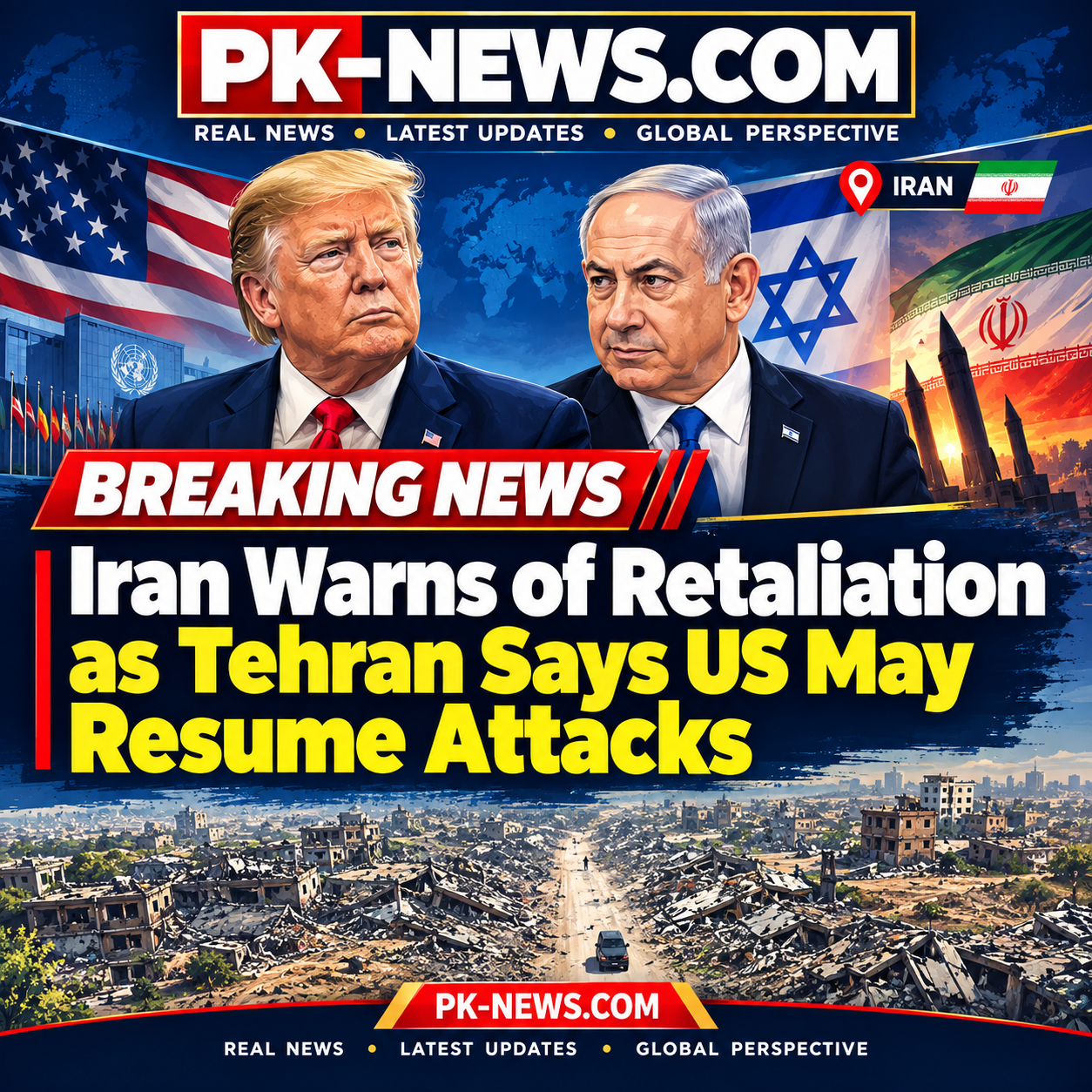
Iran Warns of Retaliation as Tehran Says US May Resume Attacks
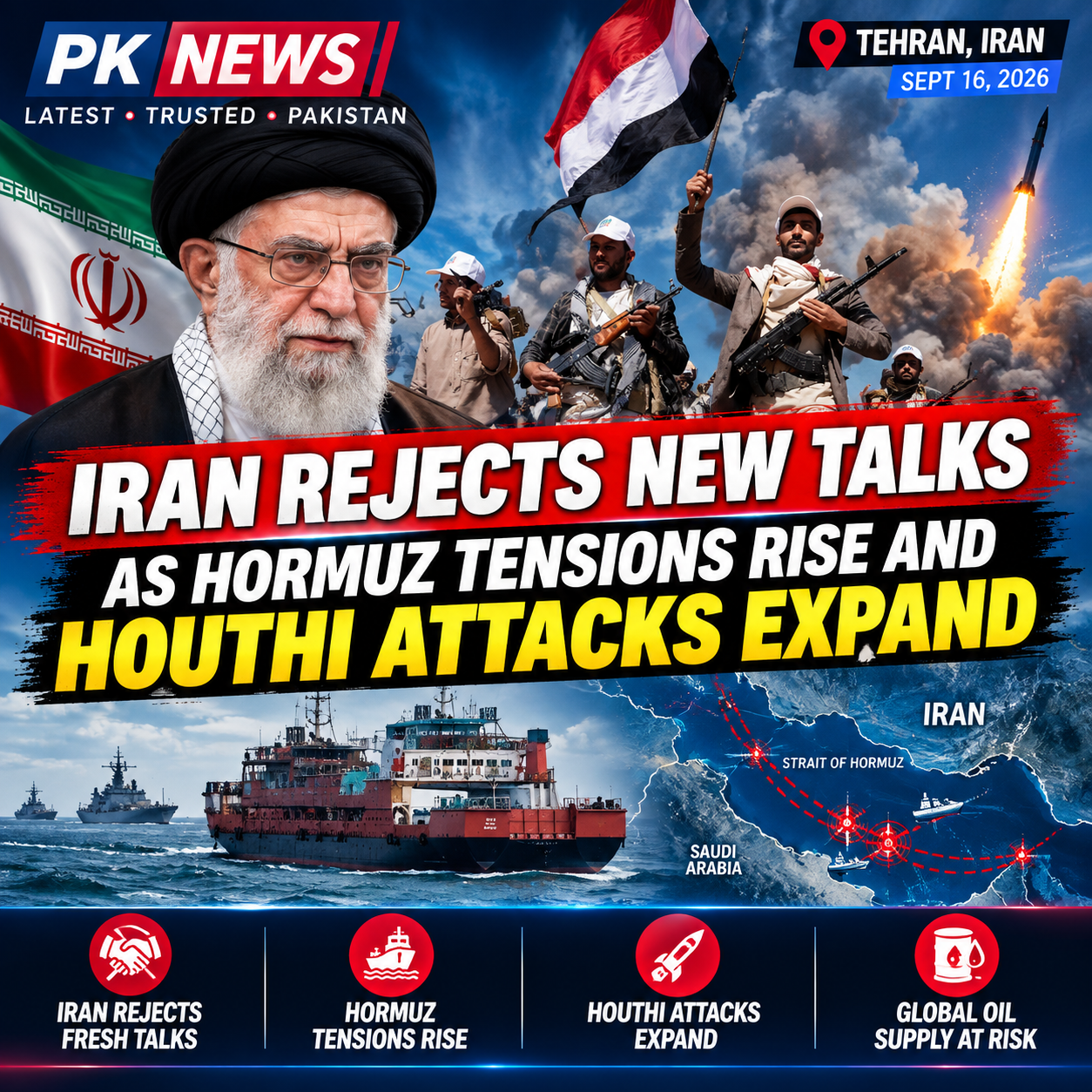
Iranian authorities are warning that the country is prepared to respond to any renewed U.S. military action, while diplomatic efforts continue behind the scenes to reopen negotiations between Tehran and Washington. Iranian state media reported that the country's military leadership had received intelligence suggesting the United States could be preparing to resume attacks against Iranian territory. The warning comes amid heightened tensions across the Middle East and growing concern that another escalation could widen the conflict beyond Iran and the United States. Iran's top negotiator said Tehran would respond without what he described as limitations if Washington launched new strikes. At the same time, Iranian officials have continued to emphasize that diplomacy remains possible, provided their stated conditions are addressed. According to the remarks carried in the transcript, Iran is demanding an end to fighting on all fronts, the unfreezing of Iranian financial assets and an end to the U.S. naval blockade. Iranian officials have also linked the reopening of the Strait of Hormuz to progress on these demands. The Strait of Hormuz is a critical international energy route, and continued disruption there has broader consequences for global oil markets and regional economies. Tehran Signals Both Negotiation and Military Readiness Iran's public messaging has combined two seemingly parallel positions: a willingness to consider diplomatic engagement and a warning that its military is prepared for another confrontation. Iranian officials cited in the report said mediated discussions involving Pakistan and Qatar have been taking place. Tehran is also expecting a Pakistani delegation, which the report describes as another possible indication that diplomatic channels remain active. Qatar has separately said it is working to help restart talks between Washington and Tehran. A Qatari foreign ministry spokesman said mediators had been moving between different capitals and exchanging proposals in an effort to bridge differences between the two sides. The diplomatic activity does not mean an agreement has been reached. Instead, it indicates that several governments are attempting to create conditions for negotiations while military tensions remain high. Iranian officials have simultaneously issued increasingly strong warnings about a possible new round of fighting. The report says Iran's military leadership warned that any U.S. attack could result in severe retaliation. Tehran has also warned neighboring Gulf states against allowing their territory or military facilities to be used for U.S. operations against Iran. Concerns About a Wider Regional Conflict One of the most significant concerns surrounding the current tensions is the possibility that a renewed U.S.-Iran confrontation could involve other countries in the region. An Iranian academic interviewed in the report claimed that Tehran had observed movements of U.S. military assets and other operational activity in the Middle East. These claims were presented as part of Iran's assessment that Washington could be preparing for another military operation. However, such claims represent the interpretation of the speaker and should not be treated as independent confirmation that a new U.S. attack is imminent. The same discussion highlighted the possibility of military activity extending beyond Iran's borders if the conflict escalates. Iranian officials have warned that countries assisting U.S. military operations could also face consequences. That creates a difficult position for Gulf governments, many of which maintain security relationships with Washington while also seeking to avoid becoming directly involved in another regional war. Washington Faces Military, Economic and Diplomatic Pressure A former U.S. national security official interviewed in the report described Washington as facing several simultaneous challenges. These include maintaining military pressure, protecting American personnel and facilities, enforcing sanctions, monitoring Iran's military capabilities and continuing diplomatic engagement. The former official argued that the United States needs a broader strategy rather than relying primarily on individual public statements or short-term military decisions. He also pointed to the importance of coordination among intelligence agencies, the military, the State Department and the Treasury Department. The assessment presented in the interview is one individual's analysis and does not establish U.S. government policy. The discussion also highlighted the economic consequences of the conflict. Oil prices have risen above $100 per barrel according to the transcript, while disruption around major regional shipping routes has added pressure to global energy markets. The Strait of Hormuz and the Bab el-Mandeb are particularly important because both are strategically significant routes for international trade and energy transportation. Diplomatic Channels Remain Open Despite the harsh rhetoric, Qatar's efforts to bring Washington and Tehran back to negotiations suggest that diplomacy has not completely broken down. Qatari officials said different proposals have been exchanged during recent weeks, with mediators attempting to find a formula that could allow discussions to restart. Pakistan is also mentioned in the report as a potential intermediary. Tehran's expectation of a Pakistani delegation adds another diplomatic channel to the wider effort. Whether these efforts can produce direct negotiations remains uncertain. The central obstacles include Iran's demands concerning military operations, sanctions, financial assets and the Strait of Hormuz, as well as Washington's broader security objectives. What Happens Next? The immediate question is whether the current military warnings will remain political and diplomatic messaging or develop into another phase of direct confrontation. Iran says it is prepared for further fighting but also maintains that negotiations are possible under conditions it considers acceptable. Meanwhile, Qatar and Pakistan are among the countries involved in efforts to maintain communication between the two sides. The situation therefore remains highly fluid. Any new military action could have consequences beyond the battlefield, particularly for energy prices, shipping, financial markets and the security of U.S. allies across the Middle East. For now, both military preparedness and diplomatic activity are continuing at the same time. The next developments will depend heavily on whether Washington and Tehran can narrow their differences and establish a framework for renewed negotiations. PK-News.com will continue monitoring developments and provide further updates as new information becomes available. 📌 For more international news, breaking developments and updates, visit PK-News.com.
23 hours ago
Iranian authorities are warning that the country is prepared to respond to any renewed U.S. military action, while diplomatic efforts continue behind the scenes to reopen negotiations between Tehran and Washington. Iranian state media reported that the country's military leadership had received intelligence suggesting the United States could be preparing to resume attacks against Iranian territory. The warning comes amid heightened tensions across the Middle East and growing concern that another escalation could widen the conflict beyond Iran and the United States. Iran's top negotiator said Tehran would respond without what he described as limitations if Washington launched new strikes. At the same time, Iranian officials have continued to emphasize that diplomacy remains possible, provided their stated conditions are addressed. According to the remarks carried in the transcript, Iran is demanding an end to fighting on all fronts, the unfreezing of Iranian financial assets and an end to the U.S. naval blockade. Iranian officials have also linked the reopening of the Strait of Hormuz to progress on these demands. The Strait of Hormuz is a critical international energy route, and continued disruption there has broader consequences for global oil markets and regional economies. Tehran Signals Both Negotiation and Military Readiness Iran's public messaging has combined two seemingly parallel positions: a willingness to consider diplomatic engagement and a warning that its military is prepared for another confrontation. Iranian officials cited in the report said mediated discussions involving Pakistan and Qatar have been taking place. Tehran is also expecting a Pakistani delegation, which the report describes as another possible indication that diplomatic channels remain active. Qatar has separately said it is working to help restart talks between Washington and Tehran. A Qatari foreign ministry spokesman said mediators had been moving between different capitals and exchanging proposals in an effort to bridge differences between the two sides. The diplomatic activity does not mean an agreement has been reached. Instead, it indicates that several governments are attempting to create conditions for negotiations while military tensions remain high. Iranian officials have simultaneously issued increasingly strong warnings about a possible new round of fighting. The report says Iran's military leadership warned that any U.S. attack could result in severe retaliation. Tehran has also warned neighboring Gulf states against allowing their territory or military facilities to be used for U.S. operations against Iran. Concerns About a Wider Regional Conflict One of the most significant concerns surrounding the current tensions is the possibility that a renewed U.S.-Iran confrontation could involve other countries in the region. An Iranian academic interviewed in the report claimed that Tehran had observed movements of U.S. military assets and other operational activity in the Middle East. These claims were presented as part of Iran's assessment that Washington could be preparing for another military operation. However, such claims represent the interpretation of the speaker and should not be treated as independent confirmation that a new U.S. attack is imminent. The same discussion highlighted the possibility of military activity extending beyond Iran's borders if the conflict escalates. Iranian officials have warned that countries assisting U.S. military operations could also face consequences. That creates a difficult position for Gulf governments, many of which maintain security relationships with Washington while also seeking to avoid becoming directly involved in another regional war. Washington Faces Military, Economic and Diplomatic Pressure A former U.S. national security official interviewed in the report described Washington as facing several simultaneous challenges. These include maintaining military pressure, protecting American personnel and facilities, enforcing sanctions, monitoring Iran's military capabilities and continuing diplomatic engagement. The former official argued that the United States needs a broader strategy rather than relying primarily on individual public statements or short-term military decisions. He also pointed to the importance of coordination among intelligence agencies, the military, the State Department and the Treasury Department. The assessment presented in the interview is one individual's analysis and does not establish U.S. government policy. The discussion also highlighted the economic consequences of the conflict. Oil prices have risen above $100 per barrel according to the transcript, while disruption around major regional shipping routes has added pressure to global energy markets. The Strait of Hormuz and the Bab el-Mandeb are particularly important because both are strategically significant routes for international trade and energy transportation. Diplomatic Channels Remain Open Despite the harsh rhetoric, Qatar's efforts to bring Washington and Tehran back to negotiations suggest that diplomacy has not completely broken down. Qatari officials said different proposals have been exchanged during recent weeks, with mediators attempting to find a formula that could allow discussions to restart. Pakistan is also mentioned in the report as a potential intermediary. Tehran's expectation of a Pakistani delegation adds another diplomatic channel to the wider effort. Whether these efforts can produce direct negotiations remains uncertain. The central obstacles include Iran's demands concerning military operations, sanctions, financial assets and the Strait of Hormuz, as well as Washington's broader security objectives. What Happens Next? The immediate question is whether the current military warnings will remain political and diplomatic messaging or develop into another phase of direct confrontation. Iran says it is prepared for further fighting but also maintains that negotiations are possible under conditions it considers acceptable. Meanwhile, Qatar and Pakistan are among the countries involved in efforts to maintain communication between the two sides. The situation therefore remains highly fluid. Any new military action could have consequences beyond the battlefield, particularly for energy prices, shipping, financial markets and the security of U.S. allies across the Middle East. For now, both military preparedness and diplomatic activity are continuing at the same time. The next developments will depend heavily on whether Washington and Tehran can narrow their differences and establish a framework for renewed negotiations. PK-News.com will continue monitoring developments and provide further updates as new information becomes available. 📌 For more international news, breaking developments and updates, visit PK-News.com.
Moscow Hit by Massive Drone Attack as Russia Votes
89
War PK Live News 😔 Negative
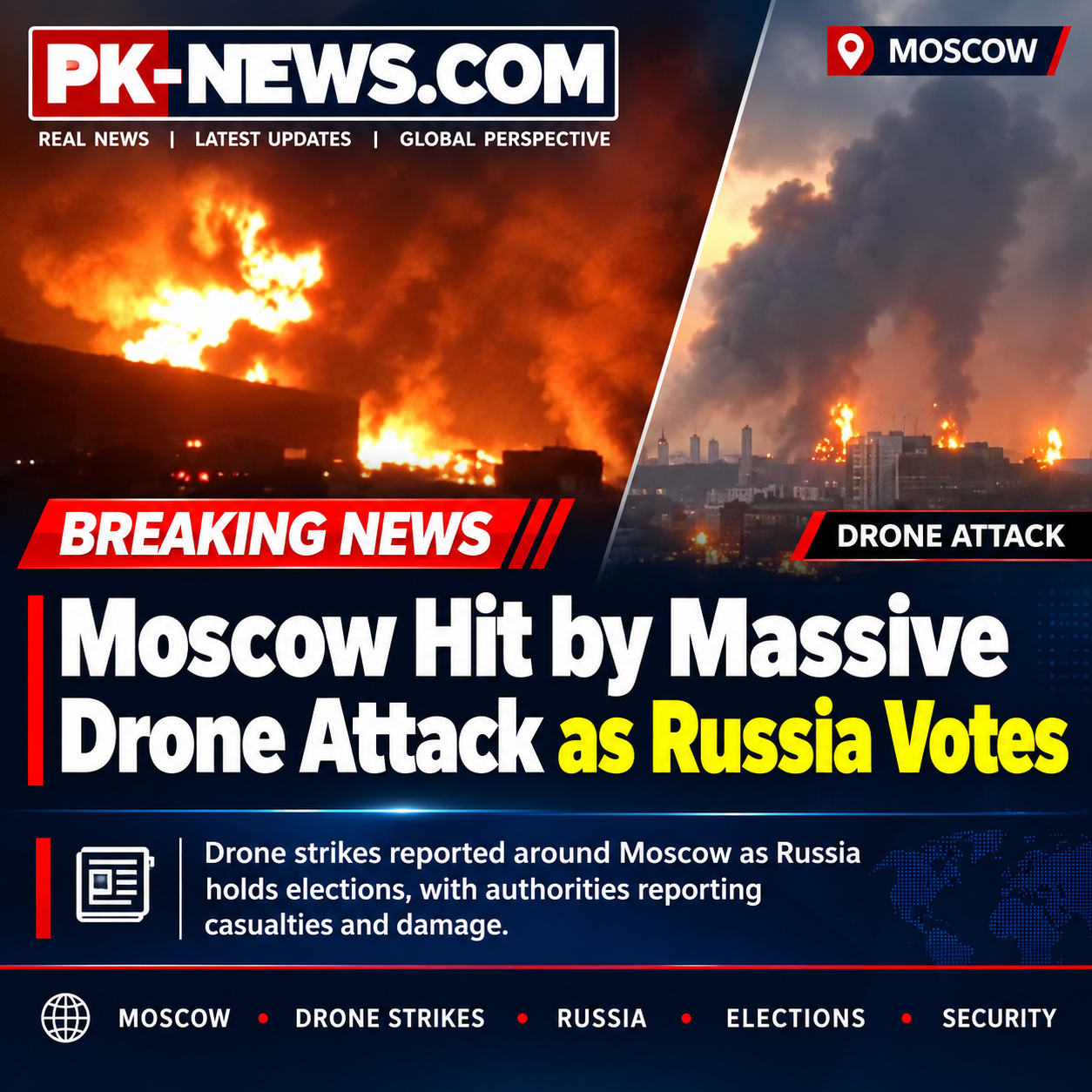
Moscow Hit by Massive Drone Attack as Russia Votes
A major Ukrainian drone offensive struck Moscow and surrounding areas as Russia entered the final day of its parliamentary elections, leaving at least two people dead and causing damage to an important oil refinery and residential buildings, according to Russian authorities. Moscow Mayor Sergei Sobyanin described the attack as unprecedented. He said Russian air defenses had intercepted more than 1,600 drones since Saturday, including around 450 heading toward Moscow. Several drones reportedly reached the grounds of the Moscow Oil Refinery, while another struck a residential building. The attack also caused casualties in the Moscow region. Russian officials initially reported that at least two people had been killed, while later reports gave differing casualty figures as authorities continued assessing the damage. Ukraine's President Volodymyr Zelenskyy confirmed that Ukrainian forces had targeted a Russian oil-industry facility and a logistics site. He described the targets as important to Russia's ability to finance and sustain its military operations. The timing of the attack has drawn particular attention because it occurred on the final day of Russia's three-day parliamentary election. Russian officials accused Ukraine of attempting to disrupt the vote. That is an allegation from Russian authorities; independent reporting has established the timing of the attack but does not independently establish its stated purpose. The election itself is the first Russian parliamentary election since the country's full-scale invasion of Ukraine began in 2022. International reporting has highlighted the tightly controlled political environment surrounding the vote, including restrictions on opposition participation. The strikes demonstrate how the Russia-Ukraine conflict continues to extend beyond the front lines. Energy infrastructure has increasingly become a target of long-range attacks, with oil refineries and other facilities playing an important role in Russia's economy and fuel supply. The Moscow refinery is particularly significant because it supplies fuel to the capital and surrounding areas. Damage to the facility comes amid wider reports of pressure on Russia's fuel market following repeated attacks on energy infrastructure. For residents of Moscow, the latest attack brought the war directly into the capital once again. Local authorities reported evacuations after a drone damaged a high-rise residential building, while emergency crews responded to fires and other damage. The wider drone campaign also affected other parts of Russia. Russia's Defence Ministry reported that more than 1,100 drones had been intercepted across Russia, occupied Ukrainian territories and the Black Sea during the overnight attack. Ukraine has increasingly used long-range drones to strike targets deep inside Russian territory, particularly energy and military-related infrastructure. Russia, meanwhile, continues to launch large-scale drone and missile attacks against Ukraine. The latest escalation comes at a politically sensitive moment for Moscow and highlights the continuing connection between the war, Russia's energy infrastructure and domestic security. PK-News.com will continue monitoring developments from Moscow, Kyiv and other affected regions. Follow PK-News.com for further updates, verified developments, casualty figures and official statements as more information becomes available.
Yesterday at 2:05 AM
A major Ukrainian drone offensive struck Moscow and surrounding areas as Russia entered the final day of its parliamentary elections, leaving at least two people dead and causing damage to an important oil refinery and residential buildings, according to Russian authorities. Moscow Mayor Sergei Sobyanin described the attack as unprecedented. He said Russian air defenses had intercepted more than 1,600 drones since Saturday, including around 450 heading toward Moscow. Several drones reportedly reached the grounds of the Moscow Oil Refinery, while another struck a residential building. The attack also caused casualties in the Moscow region. Russian officials initially reported that at least two people had been killed, while later reports gave differing casualty figures as authorities continued assessing the damage. Ukraine's President Volodymyr Zelenskyy confirmed that Ukrainian forces had targeted a Russian oil-industry facility and a logistics site. He described the targets as important to Russia's ability to finance and sustain its military operations. The timing of the attack has drawn particular attention because it occurred on the final day of Russia's three-day parliamentary election. Russian officials accused Ukraine of attempting to disrupt the vote. That is an allegation from Russian authorities; independent reporting has established the timing of the attack but does not independently establish its stated purpose. The election itself is the first Russian parliamentary election since the country's full-scale invasion of Ukraine began in 2022. International reporting has highlighted the tightly controlled political environment surrounding the vote, including restrictions on opposition participation. The strikes demonstrate how the Russia-Ukraine conflict continues to extend beyond the front lines. Energy infrastructure has increasingly become a target of long-range attacks, with oil refineries and other facilities playing an important role in Russia's economy and fuel supply. The Moscow refinery is particularly significant because it supplies fuel to the capital and surrounding areas. Damage to the facility comes amid wider reports of pressure on Russia's fuel market following repeated attacks on energy infrastructure. For residents of Moscow, the latest attack brought the war directly into the capital once again. Local authorities reported evacuations after a drone damaged a high-rise residential building, while emergency crews responded to fires and other damage. The wider drone campaign also affected other parts of Russia. Russia's Defence Ministry reported that more than 1,100 drones had been intercepted across Russia, occupied Ukrainian territories and the Black Sea during the overnight attack. Ukraine has increasingly used long-range drones to strike targets deep inside Russian territory, particularly energy and military-related infrastructure. Russia, meanwhile, continues to launch large-scale drone and missile attacks against Ukraine. The latest escalation comes at a politically sensitive moment for Moscow and highlights the continuing connection between the war, Russia's energy infrastructure and domestic security. PK-News.com will continue monitoring developments from Moscow, Kyiv and other affected regions. Follow PK-News.com for further updates, verified developments, casualty figures and official statements as more information becomes available.
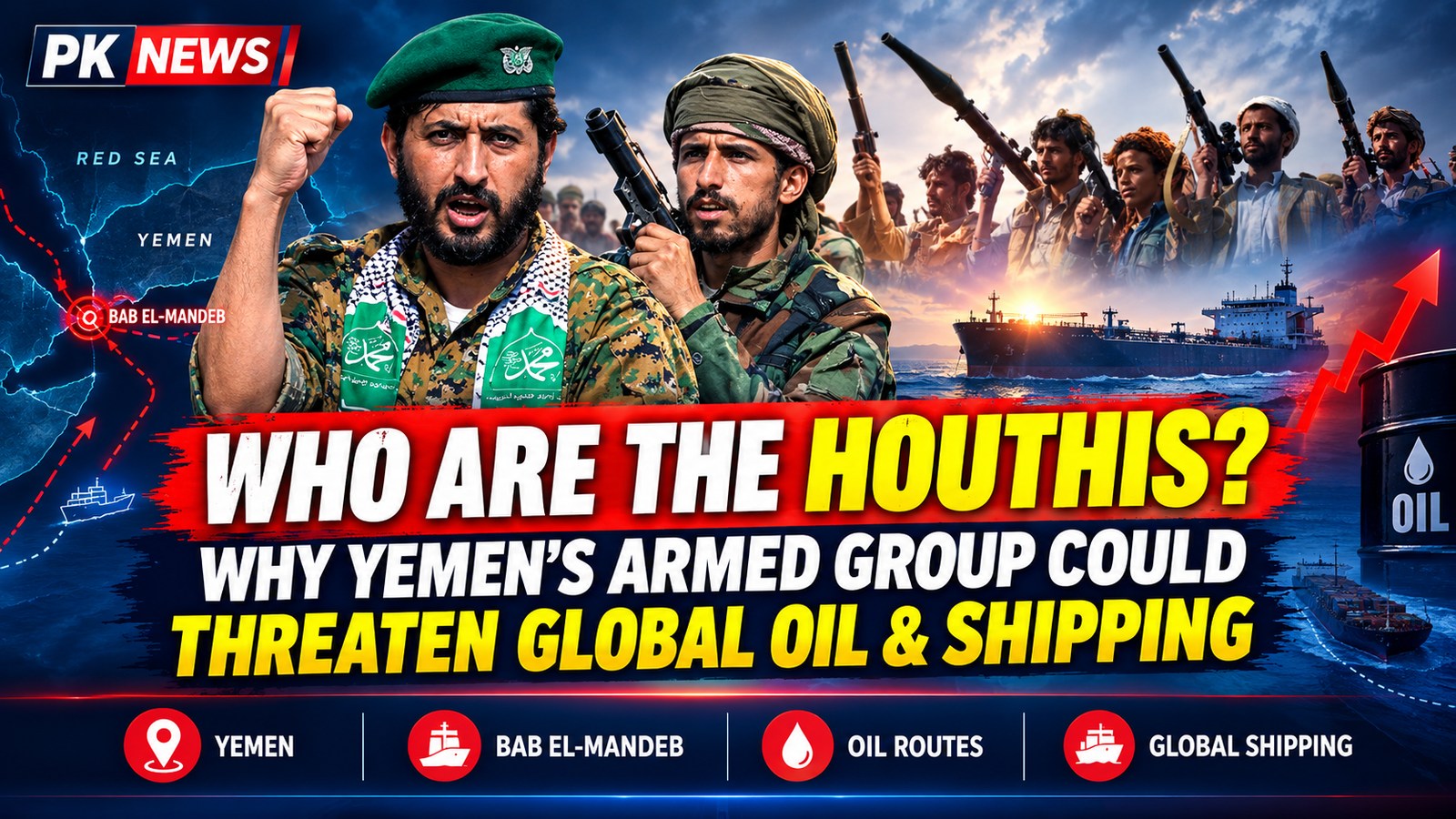
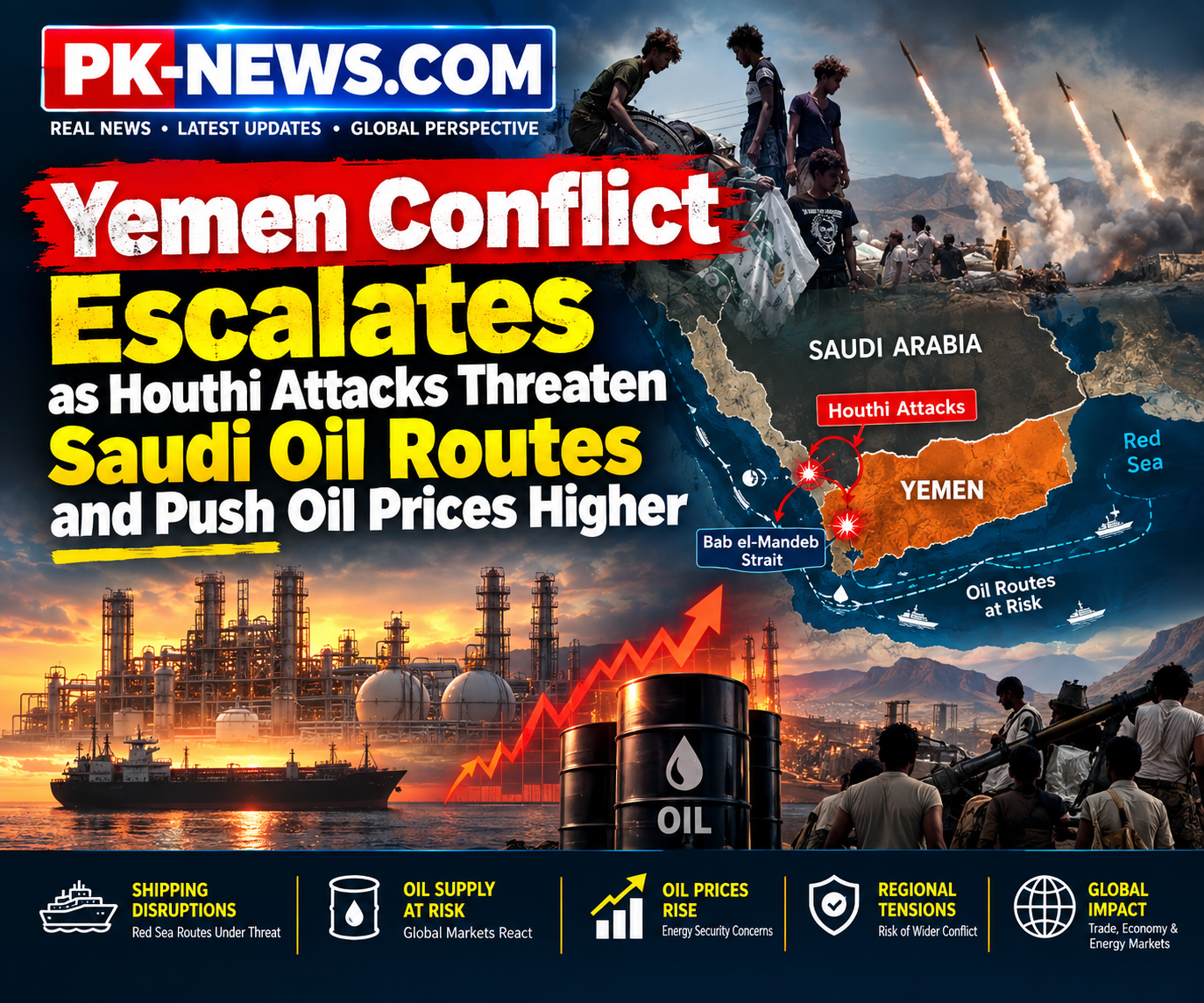
The Houthis, Yemen and the Growing Regional Conflict BREAKING
207
War PK Live News 😔 Negative
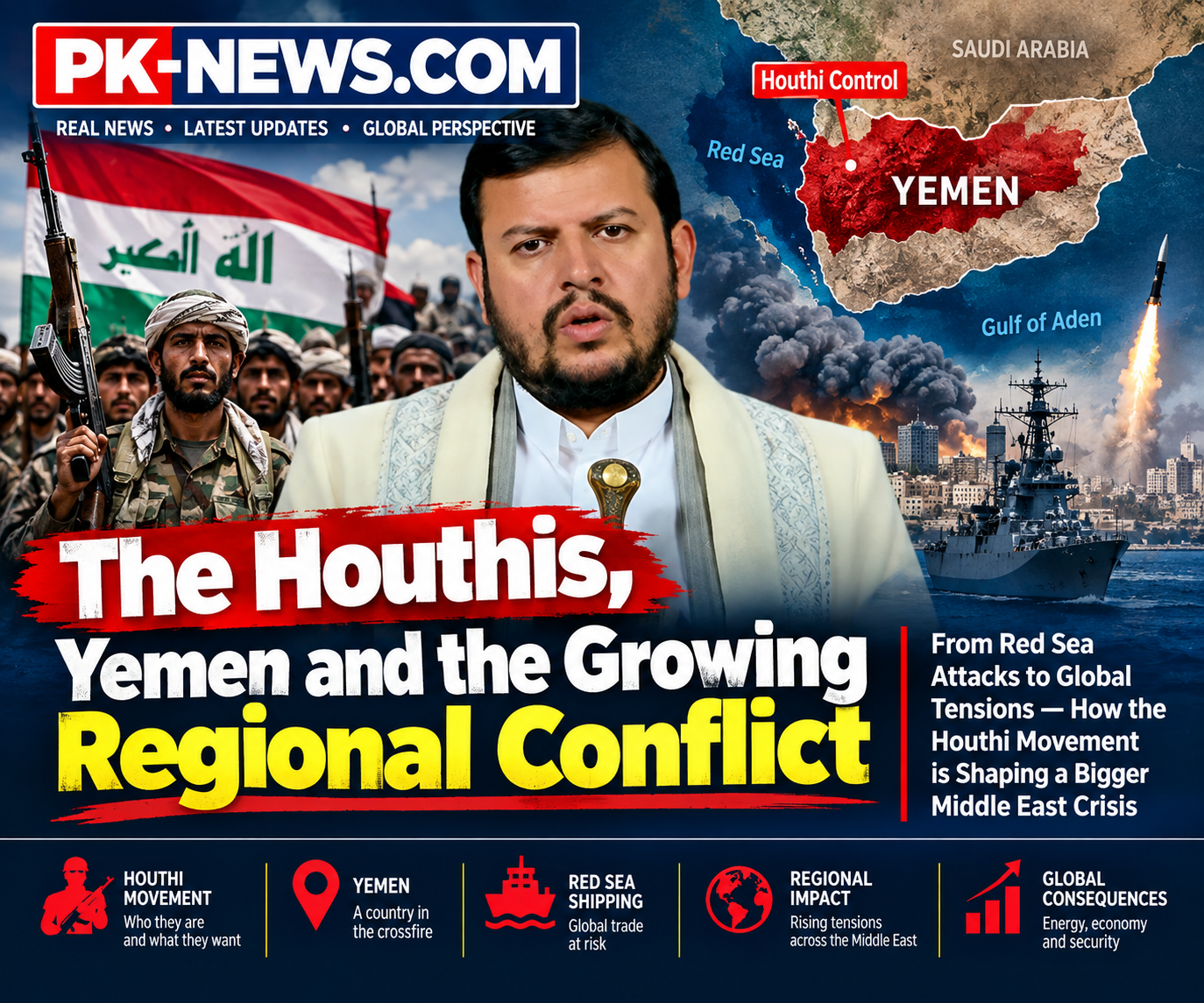
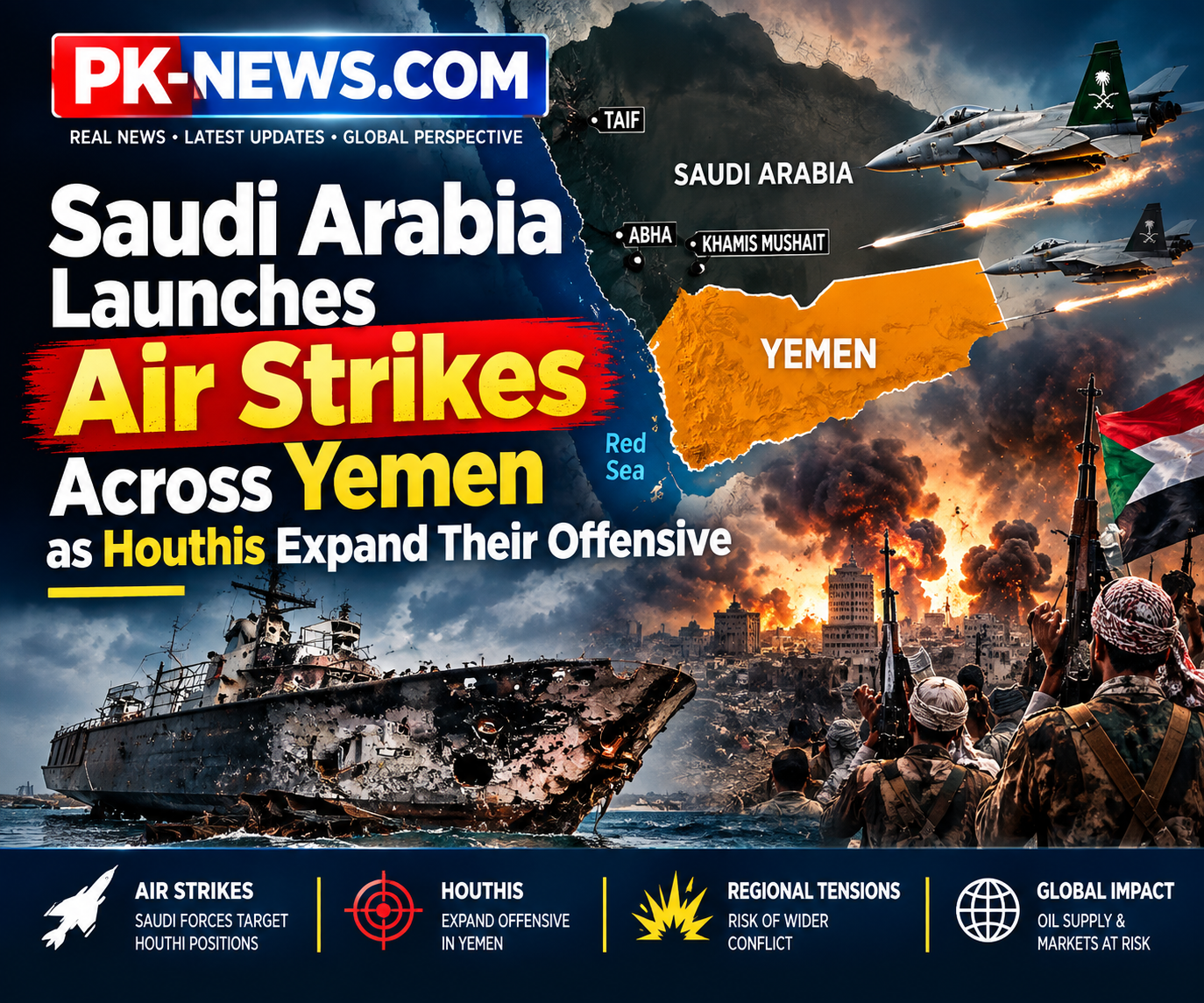
The Houthis, Yemen and the Growing Regional Conflict
The conflict involving Yemen’s Houthi movement, Saudi Arabia and the wider regional confrontation has entered another tense phase. In a lengthy address, Houthi leader Abdul-Malik al-Houthi discussed the group’s position, its conflict with Saudi Arabia and its response to accusations involving attacks near the holy city of Mecca. His remarks came as fighting and military activity in Yemen were intensifying, while the broader conflict involving Iran and its regional allies continued to create concerns about energy supplies, shipping routes and stability across the Middle East. The Houthi leadership presented the conflict as a struggle for Yemen’s sovereignty, independence and dignity. Saudi Arabia, however, has accused the Houthis of carrying out attacks that threaten its security, including an alleged drone incident near the area of Mecca. The Houthis have denied targeting the holy city and have described the accusation as propaganda intended to generate international and regional support for Saudi military action. Because many of the statements surrounding the conflict are politically and militarily contested, claims made by either side should be understood as positions expressed by the parties involved rather than independently established facts. Houthi Leadership Defends Its Position During his address, Abdul-Malik al-Houthi began by remembering those killed in the conflict and expressing wishes for the recovery of wounded fighters. He described the Houthi movement as defending Yemen against what he characterized as a long-running campaign of military pressure and economic restrictions. According to al-Houthi, the current confrontation cannot be separated from the wider conflict that began in 2015. He argued that the Saudi-led military intervention transformed Yemen’s internal conflict into a broader regional war. The Houthi leader also referred to the period of de-escalation that began in 2022. He argued that the reduction in major fighting did not resolve the underlying political and economic disputes. In his account, Saudi Arabia used the quieter period to strengthen its military and economic pressure on Houthi-controlled areas rather than reaching a permanent political settlement. Al-Houthi said the Houthis wanted relations with neighboring countries to be based on mutual respect and coexistence. He rejected what he described as efforts to weaken or control Yemen and argued that Yemenis should have the ability to determine their own political future. His speech repeatedly emphasized sovereignty, independence and dignity. These themes form a central part of the Houthi movement’s public justification for its military activities. The Roots of the Yemen Conflict The modern Yemen conflict developed from years of political instability, economic difficulties and disputes between different political and armed groups. The Houthis, formally associated with the Ansar Allah movement, became a major force in Yemen during the years of political upheaval following the Arab Spring protests. The group expanded its influence from northern Yemen and eventually seized control of the capital, Sanaa, in 2014. The political transition that followed the removal of longtime president Ali Abdullah Saleh failed to produce a stable national settlement. Rival political factions, military groups and regional powers became increasingly involved. Saudi Arabia viewed the growing influence of the Houthis as a major security concern, particularly because of the group's relationship with Iran. In 2015, Saudi Arabia led a coalition that intervened militarily in Yemen in support of the internationally recognized Yemeni government. The intervention resulted in years of airstrikes and ground fighting. The war caused extensive destruction and contributed to a severe humanitarian crisis. Millions of Yemenis have experienced displacement, food insecurity, limited access to healthcare and damage to essential infrastructure. Although the intensity of the conflict has changed over time, the fundamental political division has remained unresolved. Houthi Claims About Saudi Military Operations A major part of al-Houthi’s speech focused on accusations against Saudi Arabia. He claimed that Saudi military operations had affected civilian areas, homes, marketplaces, roads, hospitals, schools and religious sites. He also accused Saudi forces and their allies of imposing restrictions that affected the movement of people and the delivery of goods into Yemen. Al-Houthi argued that the economic consequences of the conflict were particularly damaging because Yemen relies heavily on imported food, medicine and other essential supplies. He also spoke about the difficulties faced by people requiring medical treatment, including patients suffering from chronic illnesses. According to his account, restrictions on imports and transportation had made access to medicine increasingly difficult. The Houthi leader further argued that Yemen’s natural resources, including oil revenues, should belong to the Yemeni people and accused Saudi Arabia of contributing to restrictions on access to those resources. These allegations represent the Houthi leadership’s interpretation of the conflict. The broader history of the war includes extensive allegations of violations by multiple parties, making independent documentation and international investigations important when assessing individual incidents. The Dispute Over Mecca One of the most politically sensitive issues discussed in the speech was the accusation that the Houthis had launched a drone toward the area of Mecca. Saudi authorities said that a drone had been intercepted in the region and reported that a person was killed by falling debris. Saudi officials linked the incident to the Houthi threat, while the Houthis denied that they had targeted Mecca. Al-Houthi strongly rejected the accusation and described it as a deliberate falsehood. He argued that the Houthi movement understood the religious significance of Mecca and would not intentionally attack the holy city. He also accused Saudi Arabia of using the religious importance of Mecca to strengthen public support for military action against the Houthis. The issue is particularly sensitive because Mecca is Islam’s holiest city and is central to the religious identity of Muslims around the world. Any allegation involving an attack on the city therefore has the potential to generate strong political and public reactions across Muslim-majority countries. The Houthi leadership attempted to use its denial to emphasize its own religious identity and to reject the accusation as politically motivated. Iran’s Relationship With the Houthis Another important element of the Yemen conflict is the relationship between the Houthis and Iran. The Houthi movement has received political and military support from Iran, although the exact nature and extent of Iranian involvement have been subjects of continuing debate. In the material provided, the Houthi leadership presents the movement as an independent Yemeni force defending its interests. At the same time, outside reporting and regional governments have repeatedly focused on Iran’s support for the group. This relationship has made Yemen part of a much larger regional confrontation involving Iran, Saudi Arabia, Israel and the United States. The strategic importance of Yemen goes beyond its borders. The country sits beside the Red Sea and the Bab el-Mandeb Strait, a major maritime passage connecting the Red Sea with the Gulf of Aden and the wider Indian Ocean. Any major disruption in this area can affect international shipping, energy transportation and global supply chains. The Bab el-Mandeb and Global Shipping The Bab el-Mandeb Strait is one of the world's important maritime chokepoints. Ships traveling between Europe and Asia through the Suez Canal generally pass through the Red Sea and then through the Bab el-Mandeb. This makes Yemen strategically important far beyond the immediate battlefield. Houthi attacks or threats against commercial shipping have previously raised concerns among governments and international businesses. Shipping companies may respond to increased security risks by changing routes, increasing insurance costs or sending vessels around the southern tip of Africa. Longer shipping routes can increase transportation expenses and contribute to higher prices for goods. The possibility of attacks against oil infrastructure or tankers creates an additional concern because energy markets are highly sensitive to geopolitical instability. The significance of Yemen therefore extends beyond the Yemeni population. Events in the country can have consequences for international trade, fuel prices and regional security. Saudi Arabia’s Security Concerns From Saudi Arabia’s perspective, the Houthi movement represents a serious security challenge. Yemen shares a long border with Saudi Arabia, and Houthi missile and drone capabilities have allowed the group to threaten targets inside Saudi territory. Saudi officials have therefore argued that military action is necessary to protect the kingdom and prevent armed groups supported by Iran from establishing a stronger position along its southern border. The Saudi government’s position contrasts sharply with the Houthi description of the conflict. While Houthi leaders describe their actions as resistance and self-defense, Saudi authorities have emphasized national security and the threat posed by missile and drone attacks. These competing narratives are central to understanding why the conflict has been so difficult to resolve. Humanitarian Consequences Regardless of the competing political narratives, Yemen has suffered enormous humanitarian consequences from years of conflict. The country entered the war with significant economic and development challenges. Years of fighting further damaged infrastructure and weakened public institutions. Hospitals and medical facilities have faced shortages of resources, while millions of people have experienced food insecurity and displacement. The material provided also describes renewed displacement as fighting increases. People living in affected areas have been forced to leave their homes, sometimes traveling through difficult terrain to find safer locations. Humanitarian organizations face significant challenges in delivering food, medicine and other essential supplies. The situation is especially difficult because the conflict is not simply a domestic struggle. Regional military intervention, international political interests and the involvement of armed groups with outside relationships have all complicated efforts to achieve a lasting settlement. Houthi Military Strategy Al-Houthi also attempted to explain the Houthi movement’s military strategy. He argued that Houthi operations were primarily directed toward military facilities and economic infrastructure connected to the Saudi war effort. He described attacks on oil infrastructure as a way of applying pressure to Saudi Arabia. Saudi Arabia and its allies, however, view attacks against energy facilities and other targets as serious threats to national and regional security. The dispute illustrates the wider problem of asymmetric warfare. The Houthis do not possess the same conventional military capabilities as a major regional power such as Saudi Arabia, but missiles, drones and maritime threats can provide them with ways to impose costs on a stronger opponent. This capability has helped transform Yemen from a local civil conflict into a factor in regional security calculations. The Role of the United States The United States has also been closely connected to the Yemen conflict because of its long-standing security relationship with Saudi Arabia. Al-Houthi accused Washington of supporting Saudi military operations and claimed that American personnel were involved in coordinating military activities. Such statements should be distinguished from independently verified information about the precise role and number of American personnel involved at any particular time. The broader relationship between the United States and Saudi Arabia has included arms sales, military cooperation and security assistance. Washington has also faced political pressure over the humanitarian consequences of the Yemen war and the extent of American involvement. The American role is therefore an important part of the larger geopolitical picture surrounding Yemen. A Conflict With Regional Consequences The Yemen war has increasingly become connected to wider Middle Eastern tensions. The Houthis' relationship with Iran places them within a regional network of actors associated with Tehran. Saudi Arabia, meanwhile, remains a major regional power with close relationships with the United States and other countries. As tensions involving Iran increase, the possibility of additional activity in Yemen creates concerns about the conflict spreading across multiple fronts. The Red Sea is particularly important because military activity there can affect international commerce. The combination of missile threats, drone warfare, maritime attacks and political confrontation has created a complex security environment that extends well beyond Yemen itself. What Happens Next? The future of Yemen remains uncertain. A lasting solution would require more than a temporary reduction in fighting. It would require political negotiations addressing the competing claims of the Houthis, the internationally recognized Yemeni government and other political and regional actors. Economic issues would also need to be addressed, including control of natural resources, public-sector salaries, access to ports and airports, and the movement of food and medicine. Security guarantees would be another major challenge. Saudi Arabia wants protection from missile and drone attacks, while the Houthis demand recognition of Yemen's sovereignty and political independence. The humanitarian situation adds urgency to the search for a political solution. The speech by Abdul-Malik al-Houthi demonstrates how deeply divided the competing narratives remain. The Houthi leadership describes the movement as defending Yemen against foreign aggression and economic pressure. Saudi Arabia and its allies describe the Houthis as a security threat connected to Iran. Between these competing positions are millions of Yemeni civilians who have experienced years of war, displacement and economic hardship. The conflict is therefore not only a military confrontation. It is also a struggle over political legitimacy, regional influence, economic resources and Yemen's future. As fighting continues and tensions across the Middle East remain high, developments in Yemen could have consequences far beyond the country's borders. The security of the Bab el-Mandeb Strait, international shipping, energy markets and regional stability are all connected to what happens next. For Yemen, however, the most immediate issue remains the same: whether years of conflict can eventually give way to a political settlement that reduces violence and allows ordinary people to rebuild their lives.
4 days ago
The conflict involving Yemen’s Houthi movement, Saudi Arabia and the wider regional confrontation has entered another tense phase. In a lengthy address, Houthi leader Abdul-Malik al-Houthi discussed the group’s position, its conflict with Saudi Arabia and its response to accusations involving attacks near the holy city of Mecca. His remarks came as fighting and military activity in Yemen were intensifying, while the broader conflict involving Iran and its regional allies continued to create concerns about energy supplies, shipping routes and stability across the Middle East. The Houthi leadership presented the conflict as a struggle for Yemen’s sovereignty, independence and dignity. Saudi Arabia, however, has accused the Houthis of carrying out attacks that threaten its security, including an alleged drone incident near the area of Mecca. The Houthis have denied targeting the holy city and have described the accusation as propaganda intended to generate international and regional support for Saudi military action. Because many of the statements surrounding the conflict are politically and militarily contested, claims made by either side should be understood as positions expressed by the parties involved rather than independently established facts. Houthi Leadership Defends Its Position During his address, Abdul-Malik al-Houthi began by remembering those killed in the conflict and expressing wishes for the recovery of wounded fighters. He described the Houthi movement as defending Yemen against what he characterized as a long-running campaign of military pressure and economic restrictions. According to al-Houthi, the current confrontation cannot be separated from the wider conflict that began in 2015. He argued that the Saudi-led military intervention transformed Yemen’s internal conflict into a broader regional war. The Houthi leader also referred to the period of de-escalation that began in 2022. He argued that the reduction in major fighting did not resolve the underlying political and economic disputes. In his account, Saudi Arabia used the quieter period to strengthen its military and economic pressure on Houthi-controlled areas rather than reaching a permanent political settlement. Al-Houthi said the Houthis wanted relations with neighboring countries to be based on mutual respect and coexistence. He rejected what he described as efforts to weaken or control Yemen and argued that Yemenis should have the ability to determine their own political future. His speech repeatedly emphasized sovereignty, independence and dignity. These themes form a central part of the Houthi movement’s public justification for its military activities. The Roots of the Yemen Conflict The modern Yemen conflict developed from years of political instability, economic difficulties and disputes between different political and armed groups. The Houthis, formally associated with the Ansar Allah movement, became a major force in Yemen during the years of political upheaval following the Arab Spring protests. The group expanded its influence from northern Yemen and eventually seized control of the capital, Sanaa, in 2014. The political transition that followed the removal of longtime president Ali Abdullah Saleh failed to produce a stable national settlement. Rival political factions, military groups and regional powers became increasingly involved. Saudi Arabia viewed the growing influence of the Houthis as a major security concern, particularly because of the group's relationship with Iran. In 2015, Saudi Arabia led a coalition that intervened militarily in Yemen in support of the internationally recognized Yemeni government. The intervention resulted in years of airstrikes and ground fighting. The war caused extensive destruction and contributed to a severe humanitarian crisis. Millions of Yemenis have experienced displacement, food insecurity, limited access to healthcare and damage to essential infrastructure. Although the intensity of the conflict has changed over time, the fundamental political division has remained unresolved. Houthi Claims About Saudi Military Operations A major part of al-Houthi’s speech focused on accusations against Saudi Arabia. He claimed that Saudi military operations had affected civilian areas, homes, marketplaces, roads, hospitals, schools and religious sites. He also accused Saudi forces and their allies of imposing restrictions that affected the movement of people and the delivery of goods into Yemen. Al-Houthi argued that the economic consequences of the conflict were particularly damaging because Yemen relies heavily on imported food, medicine and other essential supplies. He also spoke about the difficulties faced by people requiring medical treatment, including patients suffering from chronic illnesses. According to his account, restrictions on imports and transportation had made access to medicine increasingly difficult. The Houthi leader further argued that Yemen’s natural resources, including oil revenues, should belong to the Yemeni people and accused Saudi Arabia of contributing to restrictions on access to those resources. These allegations represent the Houthi leadership’s interpretation of the conflict. The broader history of the war includes extensive allegations of violations by multiple parties, making independent documentation and international investigations important when assessing individual incidents. The Dispute Over Mecca One of the most politically sensitive issues discussed in the speech was the accusation that the Houthis had launched a drone toward the area of Mecca. Saudi authorities said that a drone had been intercepted in the region and reported that a person was killed by falling debris. Saudi officials linked the incident to the Houthi threat, while the Houthis denied that they had targeted Mecca. Al-Houthi strongly rejected the accusation and described it as a deliberate falsehood. He argued that the Houthi movement understood the religious significance of Mecca and would not intentionally attack the holy city. He also accused Saudi Arabia of using the religious importance of Mecca to strengthen public support for military action against the Houthis. The issue is particularly sensitive because Mecca is Islam’s holiest city and is central to the religious identity of Muslims around the world. Any allegation involving an attack on the city therefore has the potential to generate strong political and public reactions across Muslim-majority countries. The Houthi leadership attempted to use its denial to emphasize its own religious identity and to reject the accusation as politically motivated. Iran’s Relationship With the Houthis Another important element of the Yemen conflict is the relationship between the Houthis and Iran. The Houthi movement has received political and military support from Iran, although the exact nature and extent of Iranian involvement have been subjects of continuing debate. In the material provided, the Houthi leadership presents the movement as an independent Yemeni force defending its interests. At the same time, outside reporting and regional governments have repeatedly focused on Iran’s support for the group. This relationship has made Yemen part of a much larger regional confrontation involving Iran, Saudi Arabia, Israel and the United States. The strategic importance of Yemen goes beyond its borders. The country sits beside the Red Sea and the Bab el-Mandeb Strait, a major maritime passage connecting the Red Sea with the Gulf of Aden and the wider Indian Ocean. Any major disruption in this area can affect international shipping, energy transportation and global supply chains. The Bab el-Mandeb and Global Shipping The Bab el-Mandeb Strait is one of the world's important maritime chokepoints. Ships traveling between Europe and Asia through the Suez Canal generally pass through the Red Sea and then through the Bab el-Mandeb. This makes Yemen strategically important far beyond the immediate battlefield. Houthi attacks or threats against commercial shipping have previously raised concerns among governments and international businesses. Shipping companies may respond to increased security risks by changing routes, increasing insurance costs or sending vessels around the southern tip of Africa. Longer shipping routes can increase transportation expenses and contribute to higher prices for goods. The possibility of attacks against oil infrastructure or tankers creates an additional concern because energy markets are highly sensitive to geopolitical instability. The significance of Yemen therefore extends beyond the Yemeni population. Events in the country can have consequences for international trade, fuel prices and regional security. Saudi Arabia’s Security Concerns From Saudi Arabia’s perspective, the Houthi movement represents a serious security challenge. Yemen shares a long border with Saudi Arabia, and Houthi missile and drone capabilities have allowed the group to threaten targets inside Saudi territory. Saudi officials have therefore argued that military action is necessary to protect the kingdom and prevent armed groups supported by Iran from establishing a stronger position along its southern border. The Saudi government’s position contrasts sharply with the Houthi description of the conflict. While Houthi leaders describe their actions as resistance and self-defense, Saudi authorities have emphasized national security and the threat posed by missile and drone attacks. These competing narratives are central to understanding why the conflict has been so difficult to resolve. Humanitarian Consequences Regardless of the competing political narratives, Yemen has suffered enormous humanitarian consequences from years of conflict. The country entered the war with significant economic and development challenges. Years of fighting further damaged infrastructure and weakened public institutions. Hospitals and medical facilities have faced shortages of resources, while millions of people have experienced food insecurity and displacement. The material provided also describes renewed displacement as fighting increases. People living in affected areas have been forced to leave their homes, sometimes traveling through difficult terrain to find safer locations. Humanitarian organizations face significant challenges in delivering food, medicine and other essential supplies. The situation is especially difficult because the conflict is not simply a domestic struggle. Regional military intervention, international political interests and the involvement of armed groups with outside relationships have all complicated efforts to achieve a lasting settlement. Houthi Military Strategy Al-Houthi also attempted to explain the Houthi movement’s military strategy. He argued that Houthi operations were primarily directed toward military facilities and economic infrastructure connected to the Saudi war effort. He described attacks on oil infrastructure as a way of applying pressure to Saudi Arabia. Saudi Arabia and its allies, however, view attacks against energy facilities and other targets as serious threats to national and regional security. The dispute illustrates the wider problem of asymmetric warfare. The Houthis do not possess the same conventional military capabilities as a major regional power such as Saudi Arabia, but missiles, drones and maritime threats can provide them with ways to impose costs on a stronger opponent. This capability has helped transform Yemen from a local civil conflict into a factor in regional security calculations. The Role of the United States The United States has also been closely connected to the Yemen conflict because of its long-standing security relationship with Saudi Arabia. Al-Houthi accused Washington of supporting Saudi military operations and claimed that American personnel were involved in coordinating military activities. Such statements should be distinguished from independently verified information about the precise role and number of American personnel involved at any particular time. The broader relationship between the United States and Saudi Arabia has included arms sales, military cooperation and security assistance. Washington has also faced political pressure over the humanitarian consequences of the Yemen war and the extent of American involvement. The American role is therefore an important part of the larger geopolitical picture surrounding Yemen. A Conflict With Regional Consequences The Yemen war has increasingly become connected to wider Middle Eastern tensions. The Houthis' relationship with Iran places them within a regional network of actors associated with Tehran. Saudi Arabia, meanwhile, remains a major regional power with close relationships with the United States and other countries. As tensions involving Iran increase, the possibility of additional activity in Yemen creates concerns about the conflict spreading across multiple fronts. The Red Sea is particularly important because military activity there can affect international commerce. The combination of missile threats, drone warfare, maritime attacks and political confrontation has created a complex security environment that extends well beyond Yemen itself. What Happens Next? The future of Yemen remains uncertain. A lasting solution would require more than a temporary reduction in fighting. It would require political negotiations addressing the competing claims of the Houthis, the internationally recognized Yemeni government and other political and regional actors. Economic issues would also need to be addressed, including control of natural resources, public-sector salaries, access to ports and airports, and the movement of food and medicine. Security guarantees would be another major challenge. Saudi Arabia wants protection from missile and drone attacks, while the Houthis demand recognition of Yemen's sovereignty and political independence. The humanitarian situation adds urgency to the search for a political solution. The speech by Abdul-Malik al-Houthi demonstrates how deeply divided the competing narratives remain. The Houthi leadership describes the movement as defending Yemen against foreign aggression and economic pressure. Saudi Arabia and its allies describe the Houthis as a security threat connected to Iran. Between these competing positions are millions of Yemeni civilians who have experienced years of war, displacement and economic hardship. The conflict is therefore not only a military confrontation. It is also a struggle over political legitimacy, regional influence, economic resources and Yemen's future. As fighting continues and tensions across the Middle East remain high, developments in Yemen could have consequences far beyond the country's borders. The security of the Bab el-Mandeb Strait, international shipping, energy markets and regional stability are all connected to what happens next. For Yemen, however, the most immediate issue remains the same: whether years of conflict can eventually give way to a political settlement that reduces violence and allows ordinary people to rebuild their lives.
UN Investigation Examines US Strikes in Iran and Iran is Crackdown on Protesters
200
War PK Live News 😔 Negative
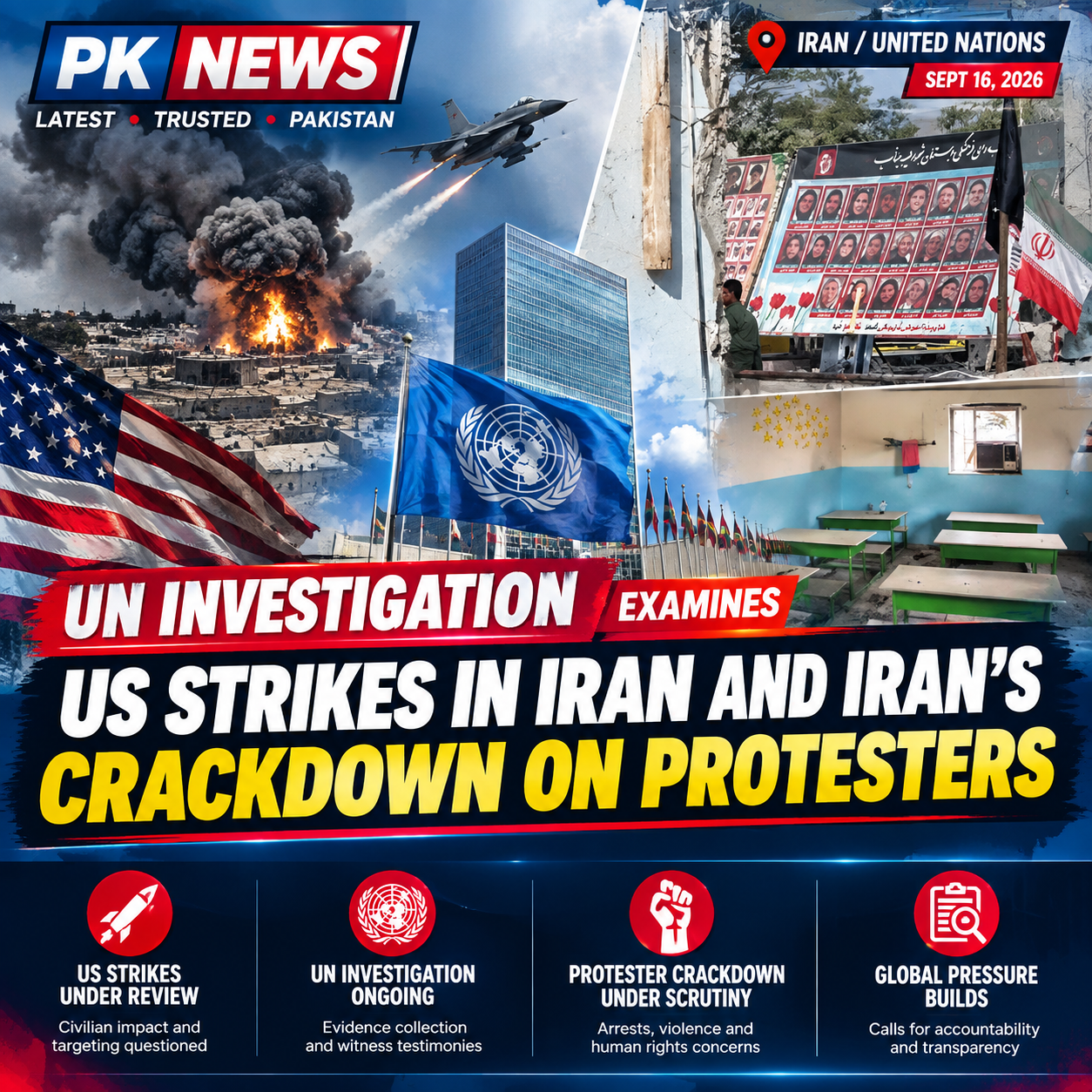
UN Investigation Examines US Strikes in Iran and Iran is Crackdown on Protesters
UN Investigation Examines US Strikes in Iran and Iran’s Crackdown on Protesters A United Nations investigation has released findings examining two major issues linked to the conflict involving the United States and Iran: alleged violations during US military strikes inside Iran and the Iranian authorities’ response to nationwide protests that began last December. The UN fact-finding mission said there were reasonable grounds to believe that the United States committed war crimes in at least two air strikes against civilian locations in Iran in February. One of the strikes hit a school in the southern Iranian city of Minab, where more than 150 people were reportedly killed, most of them children. According to the investigation, there was no evidence that the school was being used for military purposes at the time of the attack. A second strike against a sports facility in Lemur reportedly killed or injured 22 civilians. The findings have added to long-running questions about civilian casualties during the conflict and the circumstances surrounding US military targeting decisions. At the same time, the UN investigation examined the Iranian government's response to protests that spread across the country. The mission concluded that Iranian authorities committed acts that amounted to crimes against humanity, including unlawful killings, torture and persecution. The report therefore presents findings concerning both sides of the conflict, addressing alleged violations by the United States during military operations as well as actions carried out by Iranian authorities during the crackdown on protesters. Questions Over the US Strikes Iranian officials have repeatedly accused the United States of deliberately targeting civilian areas during the war. The UN findings have now increased international attention on two particular incidents, including the attack on the school in Minab. More than 150 people were reportedly killed in the school strike, with children making up the majority of those killed. The UN investigation said it found no evidence that the school was being used for military purposes. The investigation also examined a US strike on a sports center in Lemur, which reportedly killed or injured 22 civilians. The findings do not simply depend on the number of casualties. A central question under international humanitarian law is whether military forces properly distinguished between military targets and civilian locations and whether sufficient precautions were taken before an attack. War crimes lawyer and former prosecutor Reed Brody, who was interviewed about the findings, explained that the UN's use of the term “reasonable grounds” is significant. According to Brody, establishing that a civilian location was struck is not automatically identical to establishing the legal intent required for a war-crimes finding. He argued that international humanitarian law requires military forces to distinguish between military and civilian targets and to take feasible steps to verify that a target remains a legitimate military objective. Brody also referred to the importance of keeping targeting information current. He said the UN mission concluded that outdated targeting information was among the circumstances surrounding the school strike. According to the lawyer, the investigation considered several factors together, including the alleged use of outdated targeting information and concerns about changes in US policies concerning civilian-harm mitigation. The UN mission consequently concluded that the circumstances provided reasonable grounds for believing that the US acted recklessly. The United States, however, has rejected responsibility for deliberately targeting civilians. Washington's Response The US military has not yet publicly released a final report concerning the school strike. US officials have said that the incident remains under investigation. US Central Command has maintained that the civilians were not deliberately targeted. American officials have also said that the United States has complied with the laws governing armed conflict. The issue has nevertheless continued to generate questions for the US administration. According to reporting discussed in the program, President Donald Trump has provided different descriptions of responsibility for the school strike at different points. When asked about the incident in March, Trump initially blamed Iran. Several days later, his position shifted, with the president saying responsibility was uncertain and that the United States was investigating. When the issue was raised again in June, Trump appeared to suggest that the incident may have been accidental and said he did not believe it had been carried out deliberately. The US position therefore remains that the deaths were not the result of an intentional attack on civilians, while the UN investigation has raised serious concerns about the conduct and targeting process surrounding the strike. A Second Part of the UN Investigation The UN report also examined events inside Iran following nationwide protests that began last December. According to the investigation, Iranian authorities committed crimes against humanity during their response to the protests. These findings reportedly include unlawful killings, torture and persecution. Iranian authorities have disputed accounts that portray the state security forces as responsible for the majority of deaths. Iran has reported that more than 3,000 people were killed and around 25,000 injured during the unrest. Iranian officials have argued that many of those killed were civilians and security personnel who were victims of violence carried out by rioters rather than protesters being killed by government forces. The Iranian government has also previously described the protests as having been exploited by armed groups and foreign-backed organizations. Officials argued that security forces intervened because the situation had moved beyond peaceful demonstrations. However, independent human-rights organizations and other sources have reported significantly different casualty estimates. Some figures cited in the discussion range from several thousand deaths to much higher numbers. The program also noted that some estimates were reportedly based on hospital records. Because access to information inside Iran has been restricted and independent verification of individual records has been difficult, the exact number of people killed remains disputed. The UN investigation nevertheless concluded that the Iranian authorities' actions during the crackdown amounted to serious international crimes. Iran's Reaction At the time of the broadcast, Iranian authorities had not issued an immediate public response to the latest UN findings. The report is particularly sensitive for Tehran because it addresses both the conduct of the United States and the conduct of the Iranian government. The portion concerning US military strikes supports longstanding Iranian accusations that civilians were harmed during American attacks. Iranian officials have repeatedly called for international institutions to investigate such incidents and have argued that the international community should recognize what Tehran describes as violations committed during the war. However, the report's findings concerning Iran's own crackdown are likely to be strongly disputed by the Iranian government. The Iranian authorities have consistently presented a different account of the protests, emphasizing violence by armed groups and security threats. The UN investigation, by contrast, reached conclusions concerning unlawful killings, torture and persecution by state authorities. This difference illustrates the continuing dispute over what happened during the protests, how many people were killed and who was responsible for the deaths. The Legal Meaning of “Reasonable Grounds” One of the key points raised in the discussion is the legal meaning of the UN mission's wording. The investigators did not simply state that every allegation had been conclusively proven beyond all possible doubt. Instead, they said there were “reasonable grounds” to believe that war crimes had been committed in the two US strikes. Brody explained that investigations of alleged war crimes involve establishing both the physical circumstances of an attack and the mental element required under international law. For example, a school is generally a civilian object. If a missile strikes a school, investigators must determine whether the location was being used for military purposes, whether the attacker knew or should have known the relevant circumstances, whether the target information was accurate, and whether appropriate precautions were taken. The distinction is important because international humanitarian law does not treat every unintended civilian death as automatically constituting a war crime. The UN mission's concern, according to Brody's explanation, was that the available evidence suggested US forces may have relied on outdated targeting information and failed to take sufficient steps to verify the target. The investigation therefore examined not only the outcome of the strike but also the decision-making process that led to it. Broader Questions About the War The investigation also raises broader questions about the legality of the conflict itself. Brody argued that the UN mission did not fully examine the legality of the war as a whole. He said there was another legal question concerning the use of force by the United States against Iran without authorization from the UN Security Council. According to his interpretation, the issue could involve the UN Charter's restrictions on the use of force and potentially the international crime of aggression. That question is separate from the legality of individual attacks. In international law, there is a distinction between the legality of starting or conducting a war and the legality of individual military operations during a conflict. Even when a state claims that its broader military action is justified, individual attacks remain subject to rules governing civilian protection, military necessity, distinction and proportionality. The UN investigation's focus on specific strikes therefore provides a narrower examination of alleged conduct during the conflict. Neither Side Cooperated Fully Another important element of the investigation is that neither the United States nor Iran fully cooperated with the UN fact-finding mission. According to Brody, neither government responded to the mission's letters. This creates challenges for investigators because governments involved in conflicts often possess information that is not available publicly, including military targeting data, operational records and internal communications. Nevertheless, UN investigators can examine information from other sources, including witnesses, publicly available material, satellite imagery, media reports and documentation from humanitarian and human-rights organizations. The investigators' conclusions therefore represent their assessment of the evidence available to them. The lack of cooperation from the governments involved also means that some questions may remain unresolved until additional evidence becomes available. Civilian Protection Remains Central The central issue running through the UN findings is the protection of civilians during armed conflict. The school strike in Minab has become one of the most significant incidents discussed because of the large number of children reportedly killed. The sports-center strike in Lemur is another example of the civilian casualties being examined by investigators. At the same time, the UN's findings regarding Iran's crackdown highlight the protection of civilians and protesters inside the country. The two parts of the investigation demonstrate that international humanitarian and human-rights law can be applied to different actors and different circumstances. The findings do not resolve every disputed allegation surrounding the war or the protests. Instead, they provide an international assessment of specific incidents and patterns of conduct based on the evidence examined by the investigators. A Report With Findings Against Both Sides The investigation has produced findings concerning both Washington and Tehran. Regarding the United States, the UN mission said there were reasonable grounds to believe that war crimes were committed in at least two attacks on civilian sites in Iran. Regarding Iran, the mission concluded that authorities committed crimes against humanity during the crackdown on nationwide protests, including unlawful killings, torture and persecution. This dual focus makes the report significant because it does not limit its investigation to one party. The findings also demonstrate the difficulty of establishing facts during an ongoing conflict. Governments involved in wars often provide competing accounts, while independent investigators may have limited access to the locations and evidence required to establish exactly what happened. For civilians caught between military forces and governments, however, the consequences are immediate. The deaths of children at a school, injuries at a sports facility and deaths during political protests represent human costs that extend beyond the legal and political disputes surrounding them. The UN investigation now places these incidents into an international legal framework. Whether the United States or Iran accepts the findings remains uncertain. Both governments have previously rejected allegations that conflict with their own accounts of events. The report nevertheless adds another layer of documentation to the international record concerning the war, civilian casualties and the Iranian government's response to protests. For the United States, the findings raise questions about targeting procedures, civilian-harm mitigation and accountability for attacks on civilian locations. For Iran, the findings raise questions about the conduct of security forces during the protest crackdown and the treatment of people involved in or affected by the demonstrations. The broader significance of the investigation will depend on how governments, international organizations and legal institutions respond to its conclusions. For now, the UN findings provide a detailed examination of alleged violations on both sides and reinforce the principle that the laws governing armed conflict and human rights apply regardless of which government or armed force is involved.
4 days ago
UN Investigation Examines US Strikes in Iran and Iran’s Crackdown on Protesters A United Nations investigation has released findings examining two major issues linked to the conflict involving the United States and Iran: alleged violations during US military strikes inside Iran and the Iranian authorities’ response to nationwide protests that began last December. The UN fact-finding mission said there were reasonable grounds to believe that the United States committed war crimes in at least two air strikes against civilian locations in Iran in February. One of the strikes hit a school in the southern Iranian city of Minab, where more than 150 people were reportedly killed, most of them children. According to the investigation, there was no evidence that the school was being used for military purposes at the time of the attack. A second strike against a sports facility in Lemur reportedly killed or injured 22 civilians. The findings have added to long-running questions about civilian casualties during the conflict and the circumstances surrounding US military targeting decisions. At the same time, the UN investigation examined the Iranian government's response to protests that spread across the country. The mission concluded that Iranian authorities committed acts that amounted to crimes against humanity, including unlawful killings, torture and persecution. The report therefore presents findings concerning both sides of the conflict, addressing alleged violations by the United States during military operations as well as actions carried out by Iranian authorities during the crackdown on protesters. Questions Over the US Strikes Iranian officials have repeatedly accused the United States of deliberately targeting civilian areas during the war. The UN findings have now increased international attention on two particular incidents, including the attack on the school in Minab. More than 150 people were reportedly killed in the school strike, with children making up the majority of those killed. The UN investigation said it found no evidence that the school was being used for military purposes. The investigation also examined a US strike on a sports center in Lemur, which reportedly killed or injured 22 civilians. The findings do not simply depend on the number of casualties. A central question under international humanitarian law is whether military forces properly distinguished between military targets and civilian locations and whether sufficient precautions were taken before an attack. War crimes lawyer and former prosecutor Reed Brody, who was interviewed about the findings, explained that the UN's use of the term “reasonable grounds” is significant. According to Brody, establishing that a civilian location was struck is not automatically identical to establishing the legal intent required for a war-crimes finding. He argued that international humanitarian law requires military forces to distinguish between military and civilian targets and to take feasible steps to verify that a target remains a legitimate military objective. Brody also referred to the importance of keeping targeting information current. He said the UN mission concluded that outdated targeting information was among the circumstances surrounding the school strike. According to the lawyer, the investigation considered several factors together, including the alleged use of outdated targeting information and concerns about changes in US policies concerning civilian-harm mitigation. The UN mission consequently concluded that the circumstances provided reasonable grounds for believing that the US acted recklessly. The United States, however, has rejected responsibility for deliberately targeting civilians. Washington's Response The US military has not yet publicly released a final report concerning the school strike. US officials have said that the incident remains under investigation. US Central Command has maintained that the civilians were not deliberately targeted. American officials have also said that the United States has complied with the laws governing armed conflict. The issue has nevertheless continued to generate questions for the US administration. According to reporting discussed in the program, President Donald Trump has provided different descriptions of responsibility for the school strike at different points. When asked about the incident in March, Trump initially blamed Iran. Several days later, his position shifted, with the president saying responsibility was uncertain and that the United States was investigating. When the issue was raised again in June, Trump appeared to suggest that the incident may have been accidental and said he did not believe it had been carried out deliberately. The US position therefore remains that the deaths were not the result of an intentional attack on civilians, while the UN investigation has raised serious concerns about the conduct and targeting process surrounding the strike. A Second Part of the UN Investigation The UN report also examined events inside Iran following nationwide protests that began last December. According to the investigation, Iranian authorities committed crimes against humanity during their response to the protests. These findings reportedly include unlawful killings, torture and persecution. Iranian authorities have disputed accounts that portray the state security forces as responsible for the majority of deaths. Iran has reported that more than 3,000 people were killed and around 25,000 injured during the unrest. Iranian officials have argued that many of those killed were civilians and security personnel who were victims of violence carried out by rioters rather than protesters being killed by government forces. The Iranian government has also previously described the protests as having been exploited by armed groups and foreign-backed organizations. Officials argued that security forces intervened because the situation had moved beyond peaceful demonstrations. However, independent human-rights organizations and other sources have reported significantly different casualty estimates. Some figures cited in the discussion range from several thousand deaths to much higher numbers. The program also noted that some estimates were reportedly based on hospital records. Because access to information inside Iran has been restricted and independent verification of individual records has been difficult, the exact number of people killed remains disputed. The UN investigation nevertheless concluded that the Iranian authorities' actions during the crackdown amounted to serious international crimes. Iran's Reaction At the time of the broadcast, Iranian authorities had not issued an immediate public response to the latest UN findings. The report is particularly sensitive for Tehran because it addresses both the conduct of the United States and the conduct of the Iranian government. The portion concerning US military strikes supports longstanding Iranian accusations that civilians were harmed during American attacks. Iranian officials have repeatedly called for international institutions to investigate such incidents and have argued that the international community should recognize what Tehran describes as violations committed during the war. However, the report's findings concerning Iran's own crackdown are likely to be strongly disputed by the Iranian government. The Iranian authorities have consistently presented a different account of the protests, emphasizing violence by armed groups and security threats. The UN investigation, by contrast, reached conclusions concerning unlawful killings, torture and persecution by state authorities. This difference illustrates the continuing dispute over what happened during the protests, how many people were killed and who was responsible for the deaths. The Legal Meaning of “Reasonable Grounds” One of the key points raised in the discussion is the legal meaning of the UN mission's wording. The investigators did not simply state that every allegation had been conclusively proven beyond all possible doubt. Instead, they said there were “reasonable grounds” to believe that war crimes had been committed in the two US strikes. Brody explained that investigations of alleged war crimes involve establishing both the physical circumstances of an attack and the mental element required under international law. For example, a school is generally a civilian object. If a missile strikes a school, investigators must determine whether the location was being used for military purposes, whether the attacker knew or should have known the relevant circumstances, whether the target information was accurate, and whether appropriate precautions were taken. The distinction is important because international humanitarian law does not treat every unintended civilian death as automatically constituting a war crime. The UN mission's concern, according to Brody's explanation, was that the available evidence suggested US forces may have relied on outdated targeting information and failed to take sufficient steps to verify the target. The investigation therefore examined not only the outcome of the strike but also the decision-making process that led to it. Broader Questions About the War The investigation also raises broader questions about the legality of the conflict itself. Brody argued that the UN mission did not fully examine the legality of the war as a whole. He said there was another legal question concerning the use of force by the United States against Iran without authorization from the UN Security Council. According to his interpretation, the issue could involve the UN Charter's restrictions on the use of force and potentially the international crime of aggression. That question is separate from the legality of individual attacks. In international law, there is a distinction between the legality of starting or conducting a war and the legality of individual military operations during a conflict. Even when a state claims that its broader military action is justified, individual attacks remain subject to rules governing civilian protection, military necessity, distinction and proportionality. The UN investigation's focus on specific strikes therefore provides a narrower examination of alleged conduct during the conflict. Neither Side Cooperated Fully Another important element of the investigation is that neither the United States nor Iran fully cooperated with the UN fact-finding mission. According to Brody, neither government responded to the mission's letters. This creates challenges for investigators because governments involved in conflicts often possess information that is not available publicly, including military targeting data, operational records and internal communications. Nevertheless, UN investigators can examine information from other sources, including witnesses, publicly available material, satellite imagery, media reports and documentation from humanitarian and human-rights organizations. The investigators' conclusions therefore represent their assessment of the evidence available to them. The lack of cooperation from the governments involved also means that some questions may remain unresolved until additional evidence becomes available. Civilian Protection Remains Central The central issue running through the UN findings is the protection of civilians during armed conflict. The school strike in Minab has become one of the most significant incidents discussed because of the large number of children reportedly killed. The sports-center strike in Lemur is another example of the civilian casualties being examined by investigators. At the same time, the UN's findings regarding Iran's crackdown highlight the protection of civilians and protesters inside the country. The two parts of the investigation demonstrate that international humanitarian and human-rights law can be applied to different actors and different circumstances. The findings do not resolve every disputed allegation surrounding the war or the protests. Instead, they provide an international assessment of specific incidents and patterns of conduct based on the evidence examined by the investigators. A Report With Findings Against Both Sides The investigation has produced findings concerning both Washington and Tehran. Regarding the United States, the UN mission said there were reasonable grounds to believe that war crimes were committed in at least two attacks on civilian sites in Iran. Regarding Iran, the mission concluded that authorities committed crimes against humanity during the crackdown on nationwide protests, including unlawful killings, torture and persecution. This dual focus makes the report significant because it does not limit its investigation to one party. The findings also demonstrate the difficulty of establishing facts during an ongoing conflict. Governments involved in wars often provide competing accounts, while independent investigators may have limited access to the locations and evidence required to establish exactly what happened. For civilians caught between military forces and governments, however, the consequences are immediate. The deaths of children at a school, injuries at a sports facility and deaths during political protests represent human costs that extend beyond the legal and political disputes surrounding them. The UN investigation now places these incidents into an international legal framework. Whether the United States or Iran accepts the findings remains uncertain. Both governments have previously rejected allegations that conflict with their own accounts of events. The report nevertheless adds another layer of documentation to the international record concerning the war, civilian casualties and the Iranian government's response to protests. For the United States, the findings raise questions about targeting procedures, civilian-harm mitigation and accountability for attacks on civilian locations. For Iran, the findings raise questions about the conduct of security forces during the protest crackdown and the treatment of people involved in or affected by the demonstrations. The broader significance of the investigation will depend on how governments, international organizations and legal institutions respond to its conclusions. For now, the UN findings provide a detailed examination of alleged violations on both sides and reinforce the principle that the laws governing armed conflict and human rights apply regardless of which government or armed force is involved.
Iran Rejects New Talks as Hormuz Tensions Rise and Houthi Attacks Expand
97
War PK Live News 😔 Negative
Iran Rejects New Talks as Hormuz Tensions Rise and Houthi Attacks Expand
Tensions surrounding Iran and the Strait of Hormuz remain high as Tehran signals that it is not prepared to enter new negotiations until its conditions concerning the strategic waterway are addressed. At the same time, the Houthi movement in Yemen is expanding its military activity, creating addi
5 days ago
Tensions surrounding Iran and the Strait of Hormuz remain high as Tehran signals that it is not prepared to enter new negotiations until its conditions concerning the strategic waterway are addressed. At the same time, the Houthi movement in Yemen is expanding its military activity, creating addi
Houthis Reject Mecca Drone Claim as Yemen Conflict Puts Saudi Oil Exports Under Pressure
8
War PK Live News 😔 Negative
Houthis Reject Mecca Drone Claim as Yemen Conflict Puts Saudi Oil Exports Under Pressure
The Houthis have rejected claims that one of their drones was intercepted while heading toward the holy city of Mecca, calling the reports false. At the same time, the conflict in Yemen is creating increasing pressure on Saudi Arabia's energy infrastructure and raising concerns about the sec
5 days ago
The Houthis have rejected claims that one of their drones was intercepted while heading toward the holy city of Mecca, calling the reports false. At the same time, the conflict in Yemen is creating increasing pressure on Saudi Arabia's energy infrastructure and raising concerns about the sec
Who Are the Houthis Why Yemen is Armed Group Could Threaten Global Oil and Shipping
75
War PK Live News 😔 Negative
Who Are the Houthis Why Yemen is Armed Group Could Threaten Global Oil and Shipping
Who Are the Houthis? Why Yemen’s Armed Group Could Threaten Global Oil and Shipping The Houthis have emerged as one of the most important armed groups in the Middle East, with their growing influence in Yemen creating concerns far beyond the country's borders. Their control of strategic
5 days ago
Who Are the Houthis? Why Yemen’s Armed Group Could Threaten Global Oil and Shipping The Houthis have emerged as one of the most important armed groups in the Middle East, with their growing influence in Yemen creating concerns far beyond the country's borders. Their control of strategic
Iran War Costs Approach $40 Billion as Fuel Prices and Political Pressure Rise in US
185
War PK Live News 😔 Negative
Iran War Costs Approach $40 Billion as Fuel Prices and Political Pressure Rise in US
The financial and economic costs of the US conflict with Iran are becoming increasingly significant, with a new Congressional Budget Office assessment putting direct US military costs at nearly $40 billion through August 1, 2026. The conflict has also contributed to higher energy prices, adding p
6 days ago
The financial and economic costs of the US conflict with Iran are becoming increasingly significant, with a new Congressional Budget Office assessment putting direct US military costs at nearly $40 billion through August 1, 2026. The conflict has also contributed to higher energy prices, adding p
Yemen Conflict Escalates as Houthi Attacks Threaten Saudi Oil Routes and Push Oil Prices Higher
27
War PK Live News 😔 Negative
Yemen Conflict Escalates as Houthi Attacks Threaten Saudi Oil Routes and Push Oil Prices Higher
Fighting in Yemen has intensified as Saudi Arabia and Yemeni forces launch air strikes against Iran-backed Houthi positions, while attacks on energy infrastructure and shipping routes are increasing pressure on regional oil supplies. The renewed violence is also creating a growing humanitarian em
6 days ago
Fighting in Yemen has intensified as Saudi Arabia and Yemeni forces launch air strikes against Iran-backed Houthi positions, while attacks on energy infrastructure and shipping routes are increasing pressure on regional oil supplies. The renewed violence is also creating a growing humanitarian em
China Warns US Against Space Arms Race After Washington Confirms Orbital Weapon
9
War PK Live News 😐 Neutral
China Warns US Against Space Arms Race After Washington Confirms Orbital Weapon
China has called on the United States to avoid turning outer space into another battlefield after Washington confirmed that it has placed a military weapon in orbit. The development has increased concerns over the growing militarization of space, with the United States, China and Russia already acc
6 days ago
China has called on the United States to avoid turning outer space into another battlefield after Washington confirmed that it has placed a military weapon in orbit. The development has increased concerns over the growing militarization of space, with the United States, China and Russia already acc
Saudi Arabia Launches Air Strikes Across Yemen as Houthis Expand Their Offensive
101
War PK Live News 😔 Negative
Saudi Arabia Launches Air Strikes Across Yemen as Houthis Expand Their Offensive
Saudi Arabia has launched a new wave of air strikes across several areas of Yemen as the Iran-backed Houthi movement continues to expand its territorial gains against forces supporting Yemen's internationally recognized government. The strikes reportedly targeted multiple regions, including
6 days ago
Saudi Arabia has launched a new wave of air strikes across several areas of Yemen as the Iran-backed Houthi movement continues to expand its territorial gains against forces supporting Yemen's internationally recognized government. The strikes reportedly targeted multiple regions, including
Spies, strategies and missed opportunities: How the lessons of 9/11 are still being learnt BREAKING
9
War BBC News 😐 Neutral
Spies, strategies and missed opportunities: How the lessons of 9/11 are still being learnt
Twenty-five years on, the attacks have come to define a generation of foreign, security and intelligence policy, the BBC's security correspondent writes.
Sep 11, 2026 at 4:12 PM
Twenty-five years on, the attacks have come to define a generation of foreign, security and intelligence policy, the BBC's security correspondent writes.
/* Related News Sidebar Widget Styles */ .sidebar-widget .card { transition: transform 0.2s ease-in-out, box-shadow 0.2s ease-in-out; } .sidebar-widget .card:hover { transform: translateY(-2px); box-shadow: 0 4px 15px rgba(0,0,0,0.15); } .sidebar-widget .img-fluid { width: 100%; height: auto; object-fit: cover; } .sidebar-widget .video-thumbnail { position: relative; overflow: hidden; } .sidebar-widget .video-play-button { position: absolute; top: 50%; left: 50%; transform: translate(-50%, -50%); width: 30px; height: 30px; background: rgba(0,0,0,0.7); border-radius: 50%; display: flex; align-items: center; justify-content: center; color: white; font-size: 12px; cursor: pointer; transition: all 0.3s ease; } .sidebar-widget .video-play-button:hover { background: rgba(0,0,0,0.9); transform: translate(-50%, -50%) scale(1.1); } .sidebar-widget .card-title { font-size: 0.9rem; font-weight: 600; line-height: 1.3; margin-bottom: 0.5rem; } .sidebar-widget .card-title a { color: #333; text-decoration: none; } .sidebar-widget .card-title a:hover { color: #dc3545; } /* List view styles */ .list-view { display: flex !important; flex-direction: column; gap: 1rem; } .list-view .col-md-6 { width: 100% !important; max-width: 100% !important; flex: 0 0 100% !important; } .list-view .news-card { display: flex; flex-direction: row; height: auto !important; } .list-view .news-card .image-container { width: 300px; height: 200px; flex-shrink: 0; } .list-view .news-card .card-body { flex: 1; display: flex; flex-direction: column; } @media (max-width: 768px) { .list-view .news-card { flex-direction: column; } .list-view .news-card .image-container { width: 100%; height: 200px; } }