19
War
😔 Negative
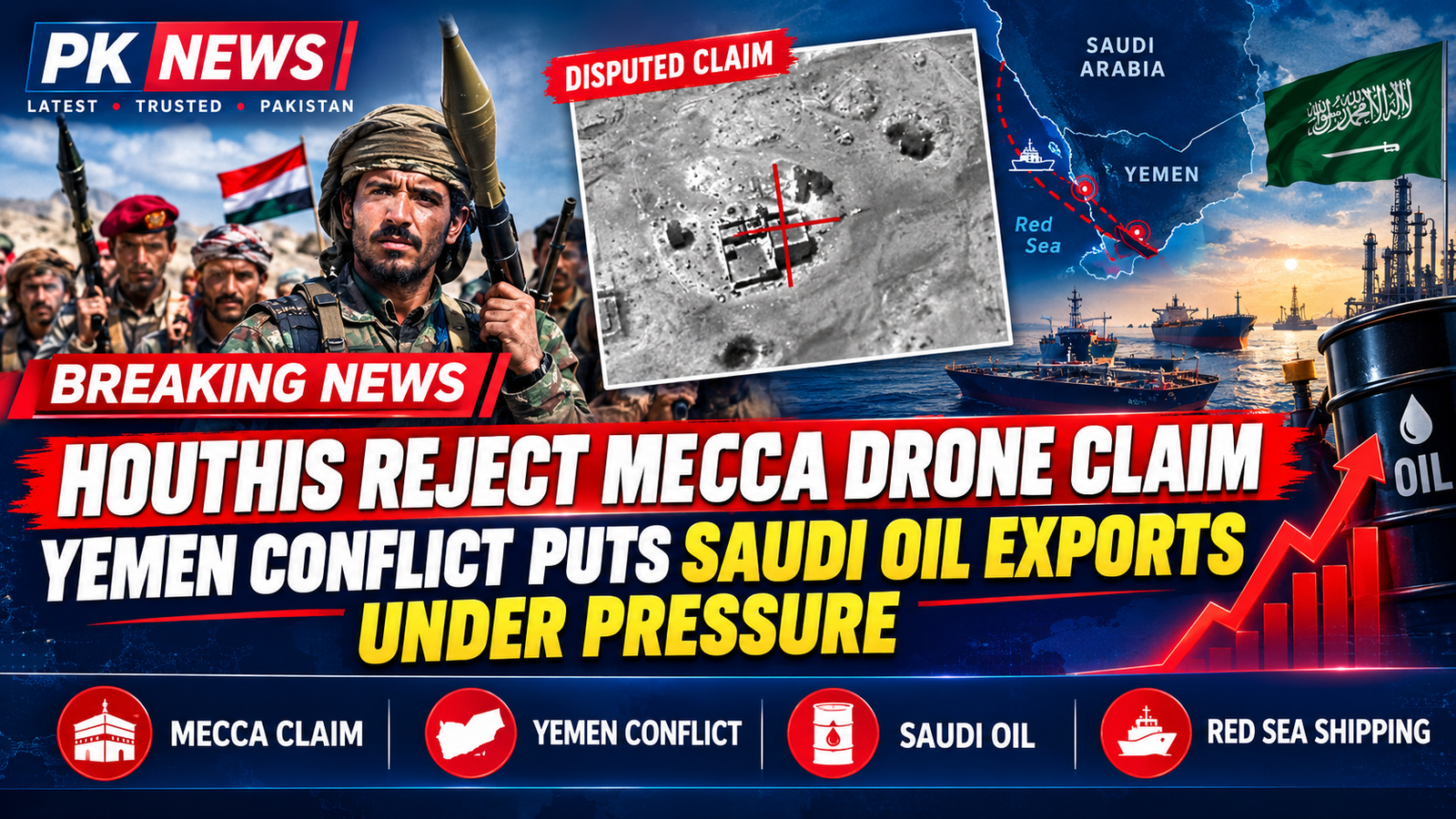
Houthis Reject Mecca Drone Claim as Yemen Conflict Puts Saudi Oil Exports Under Pressure
The Houthis have rejected claims that one of their drones was intercepted while heading toward the holy city of Mecca, calling the reports false.
At the same time, the conflict in Yemen is creating increasing pressure on Saudi Arabia's energy infrastructure and raising concerns about the security of major shipping routes connecting the Middle East with international markets.
The latest developments come as Houthi forces continue to expand their military activity in Yemen and Saudi Arabia faces growing risks to alternative routes used to transport crude oil.
Houthis Deny Alleged Mecca Drone Attack
A Houthi political bureau official rejected reports that the group had attempted to target Mecca with a drone.
The Houthis described the allegation as fabricated and denied that the holy city was the intended target.
The claim has nevertheless added another sensitive dimension to the already tense confrontation between the Houthis and Saudi Arabia.
Any incident involving Mecca would carry significant religious and political implications, making the allegations particularly sensitive across the region.
Saudi Oil Route Hit by Damage
Oil markets have also reacted to reports that tanker loading was suspended at Saudi Arabia's Red Sea port of Yanbu.
The port is connected to Saudi Arabia's East-West pipeline, which provides an alternative route for transporting crude from the country's eastern oil-producing region toward the Red Sea.
The pipeline stretches for roughly 1,200 kilometers across Saudi Arabia.
Recent attacks have reportedly caused substantial damage to sections of the infrastructure, with repairs expected to take several weeks.
Why the East-West Pipeline Matters
Saudi Arabia developed the East-West pipeline partly to reduce its dependence on maritime exports through the Strait of Hormuz.
The system transports crude from the eastern part of the kingdom toward Yanbu on the Red Sea, allowing oil to reach international markets without passing through Hormuz.
In recent weeks, the route has reportedly been capable of handling up to around four million barrels of crude per day.
That represents a significant volume for global energy markets, particularly during a period of heightened disruption in the Persian Gulf and surrounding waterways.
Before the current regional crisis, roughly 20 million barrels of oil and petroleum products passed through the Strait of Hormuz each day, representing about one-fifth of global consumption.
Red Sea Shipping Faces New Risks
Saudi Arabia and Egypt have called for freedom of navigation in the Red Sea as fighting and Houthi military activity increase in Yemen.
The security of the Red Sea is particularly important because the waterway forms part of one of the world's major commercial routes.
Ships using the Suez Canal depend on the Red Sea and the Bab el-Mandeb Strait to travel between Europe and Asia.
Any prolonged disruption could force vessels to use longer routes, increasing transportation costs and extending delivery times.
Saudi Arabia Faces a Difficult Military Challenge
The conflict presents Saudi Arabia with a complicated security problem.
The internationally recognized Yemeni government has struggled with internal divisions, while Houthi forces have maintained strong positions in strategically important areas.
Airstrikes can damage military infrastructure, but they do not necessarily eliminate the Houthis' ability to operate.
The group has demonstrated the ability to use missiles and drones against targets and infrastructure, creating risks that extend beyond the immediate battlefield.
The Houthis' Growing Autonomy
The Houthis are frequently described internationally as an Iran-backed movement, but the interview material emphasizes that their decision-making cannot simply be reduced to instructions from Tehran.
The group has its own domestic political objectives and has developed substantial independent military and administrative capabilities inside Yemen.
Iran is considered to have significant influence and ties with the Houthis, but treating the movement as nothing more than a direct Iranian proxy can overlook its own interests and calculations.
The relationship between Tehran and the Houthis therefore remains an important but complicated part of the regional conflict.
Why Washington's Role Matters
The United States has significant interests in the security of Saudi Arabia, the Red Sea and international energy routes.
However, direct military involvement in Yemen carries its own risks, particularly when Washington is already dealing with a wider confrontation involving Iran.
A broader intervention could potentially widen the conflict and expose additional American and regional infrastructure to retaliation.
The result is a difficult strategic situation in which military pressure, economic risks and diplomatic considerations are closely connected.
Iran, the Gulf and the Strait of Hormuz
The developments in Yemen cannot be viewed separately from the wider situation in the Persian Gulf.
The Strait of Hormuz remains one of the world's most important energy corridors, while the Bab el-Mandeb provides another critical route for global trade.
Pressure on both waterways could significantly affect oil transportation and international shipping.
The current situation demonstrates how disruptions in one part of the region can quickly create consequences elsewhere.
Oil Markets Remain Vulnerable
Damage to Saudi Arabia's alternative export infrastructure comes at a particularly sensitive time for oil markets.
When major export routes become unavailable or difficult to use, traders must account for reduced supply, longer transportation routes and increased security risks.
Those factors can contribute to higher oil prices.
The impact can extend beyond crude oil. Higher energy costs can eventually increase transportation expenses and the prices of products that depend heavily on fuel, including food, industrial goods and manufactured products.
What to Watch Next
The next stage of the conflict will depend on several developments.
Key issues include the condition of Saudi Arabia's East-West pipeline, the ability of Saudi and Yemeni forces to contain Houthi military activity, the security of the Bab el-Mandeb Strait and the possibility of further attacks on energy infrastructure.
The response from Iran and the United States will also remain important because the Yemen conflict is increasingly connected to the broader regional confrontation.
For now, the combination of military escalation in Yemen, pressure on Saudi oil infrastructure and uncertainty around major maritime routes continues to create risks for both the Middle East and the global energy market.
Related Articles You May Like
Related News




Comments (0)
Leave a Comment
No comments yet. Be the first to comment!