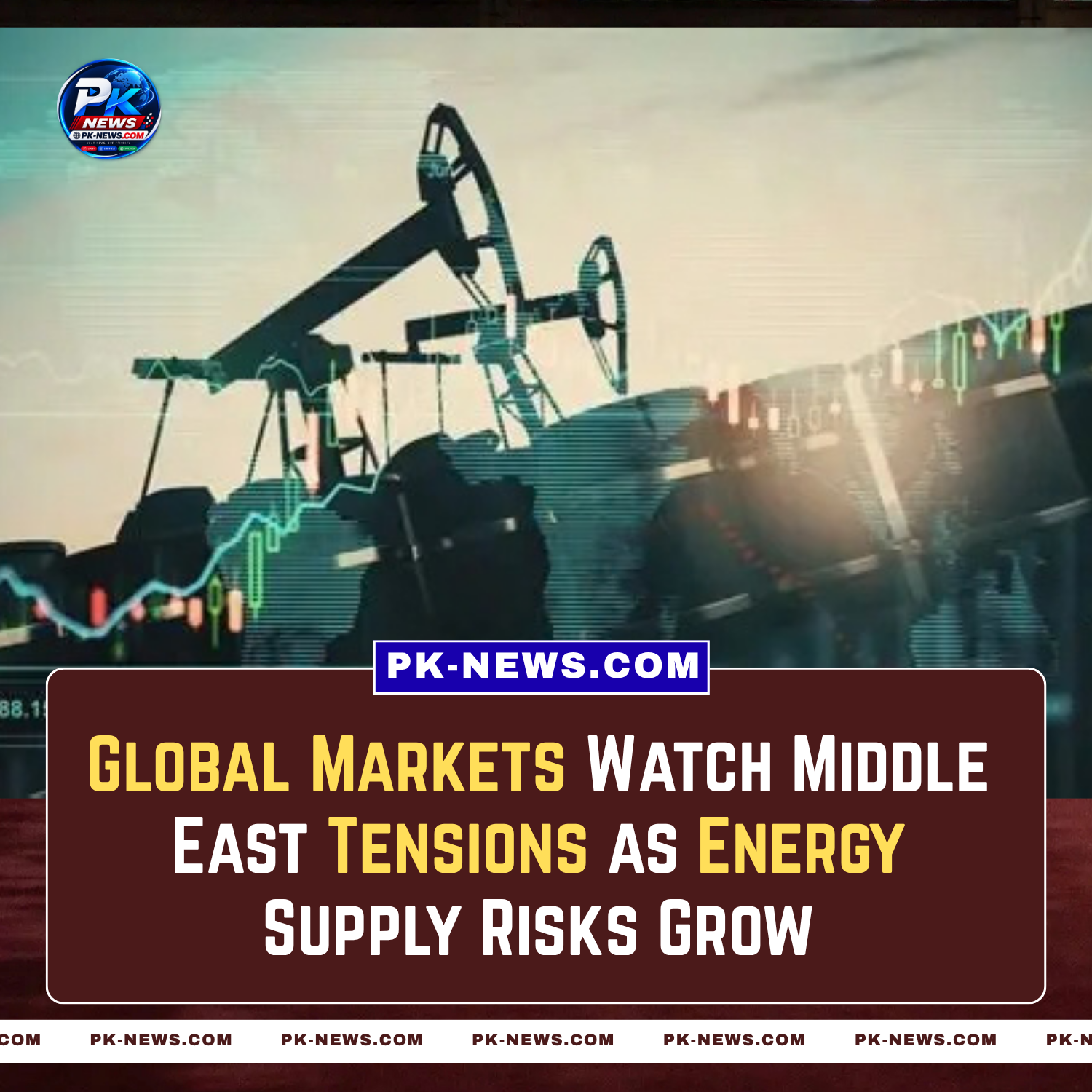
Global markets are closely monitoring developments in the Middle East as continuing regional tensions raise concerns about energy supplies, shipping routes and the wider economic impact of prolonged disruption. Oil prices, international trade and transportation remain key areas to watch as governments and businesses assess the risks.
September 25, 2026 | PK News
Global markets are continuing to monitor developments across the Middle East as heightened regional tensions raise concerns about energy supplies, shipping routes and the potential impact on international trade.
The situation has become particularly important for countries that depend heavily on energy imports and for businesses whose supply chains rely on major maritime routes.
Any prolonged disruption affecting oil production, tanker movements or strategic waterways could have consequences well beyond the region.
At the same time, governments and international organisations are continuing diplomatic efforts aimed at preventing the regional crisis from expanding further.
Energy Markets Remain a Major Concern
Energy supplies are one of the biggest areas of concern for the global economy.
Oil markets are highly sensitive to developments in major producing regions because even temporary disruptions can affect prices, insurance costs and transportation.
The Middle East remains central to global energy markets because a significant proportion of the world's oil and gas production passes through the region.
For consumers, higher energy prices can eventually affect transportation, electricity generation, manufacturing and food costs.
For governments, the challenge is to maintain energy supplies while preparing for possible further disruption.
Shipping Routes Under Pressure
International shipping is another major concern.
Commercial vessels travelling through strategic waterways can face increased security risks during periods of regional conflict.
When shipping companies assess a route as unsafe, they may redirect vessels, increase insurance coverage or delay journeys.
Such changes can increase transportation costs and extend delivery times.
The impact can spread to companies far away from the original conflict because modern supply chains depend on predictable maritime transportation.
Businesses Assess Supply-Chain Risks
Companies are also examining how geopolitical tensions could affect their operations.
Manufacturers that depend on imported components may face delays if shipping routes are disrupted.
Retailers can experience higher freight costs, while energy-intensive industries can face increased production expenses if fuel prices rise.
Smaller businesses may be particularly vulnerable because they generally have fewer options for replacing suppliers or absorbing sudden increases in transportation costs.
Governments Prepare for Different Scenarios
Governments in energy-importing countries are monitoring fuel supplies and international markets.
Some countries maintain strategic petroleum reserves that can be used during major supply disruptions.
Others may seek alternative suppliers or increase purchases from different regions.
The effectiveness of these measures depends on how long a disruption lasts and how extensive it becomes.
A short-lived disruption can often be managed through existing reserves and alternative supply arrangements.
A prolonged disruption could create significantly greater pressure.
Inflation Could Become an Issue
Higher energy and transportation costs can contribute to inflation.
When fuel becomes more expensive, businesses may pass part of those costs to consumers.
Transport costs can affect the prices of food, manufactured goods and other products.
Central banks therefore pay close attention to major geopolitical disruptions involving energy markets.
However, the ultimate economic impact depends on the scale and duration of any supply disruption.
Developing Countries Face Particular Risks
Developing economies can be particularly exposed to higher energy prices.
Countries that import most of their fuel may face increased pressure on foreign-exchange reserves and government budgets.
Higher fuel prices can also increase transportation costs and put additional pressure on household budgets.
For countries already dealing with economic challenges, prolonged energy-price increases could create additional difficulties.
South Asia Watches the Situation
Countries across South Asia are also monitoring developments closely.
Pakistan, India, Bangladesh and Sri Lanka all have significant energy-import requirements.
Any sustained increase in global oil prices could affect their import bills.
Pakistan in particular has historically been sensitive to international oil-price movements because petroleum products play an important role in transportation, industry and electricity generation.
Changes in international energy prices can therefore eventually affect domestic fuel prices and inflation.
Could the Crisis Spread Further?
One of the major international concerns is whether the current regional tensions remain limited or expand to involve additional countries and strategic infrastructure.
A wider conflict could increase risks to shipping, energy facilities and international trade.
Diplomatic efforts are therefore important not only for regional security but also for the global economy.
Countries involved in mediation have an interest in preventing further escalation because the economic consequences could extend across multiple regions.
What International Markets Are Watching
Investors and businesses are closely monitoring several indicators.
Oil Prices
A sustained increase could signal concerns about long-term supply disruption.
Shipping Costs
Higher freight and insurance costs could indicate that companies are facing greater risks along important routes.
Energy Production
Any disruption to major oil or gas facilities could have an immediate effect on markets.
Diplomatic Negotiations
Successful negotiations could reduce uncertainty and help stabilise markets.
Military Developments
Further attacks involving energy infrastructure or commercial shipping could increase economic risks.
The Importance of Maritime Security
Maritime security has become increasingly important as geopolitical tensions affect major shipping corridors.
Commercial vessels require predictable routes to operate efficiently.
When security conditions deteriorate, shipping companies can change routes or temporarily suspend operations.
Even when vessels continue operating, higher insurance premiums can increase the cost of transporting goods.
Those costs may eventually be reflected in prices paid by consumers.
Global Supply Chains Remain Vulnerable
The latest developments also highlight the continuing vulnerability of global supply chains.
The COVID-19 pandemic, the Russia-Ukraine war and previous disruptions in major shipping routes have demonstrated how quickly regional problems can affect international commerce.
Companies have responded by diversifying suppliers, increasing inventories and exploring alternative transportation routes.
However, no supply chain can completely eliminate geopolitical risk.
What Could Happen Next?
Several scenarios remain possible.
A reduction in regional tensions could allow shipping and energy markets to stabilise.
Continued instability could keep oil prices and insurance costs elevated.
A major disruption to energy infrastructure or shipping routes could create much larger consequences for international markets.
Diplomatic agreements could reduce those risks, but negotiations can take time and may not immediately eliminate uncertainty.
PK News Analysis
The economic consequences of Middle East tensions will depend largely on whether disruptions remain temporary or become prolonged.
Energy prices, shipping costs, insurance premiums and supply-chain stability are the main areas to monitor.
For countries that depend heavily on imported fuel, sustained increases in international energy prices could create additional economic pressure.
For consumers, the most visible effects could eventually appear through fuel prices, transportation costs and the prices of imported goods.
However, the eventual impact cannot be determined solely from short-term market movements.
PK-News.com will continue monitoring developments affecting global energy markets, shipping routes, international trade and the wider economic consequences of geopolitical tensions.
1
NEW
Business
😔 Negative
Global Markets Watch Middle East Tensions as Energy Supply Risks Grow
Related Articles You May Like
Related News






Comments (0)
Leave a Comment
No comments yet. Be the first to comment!