33
Business
😔 Negative
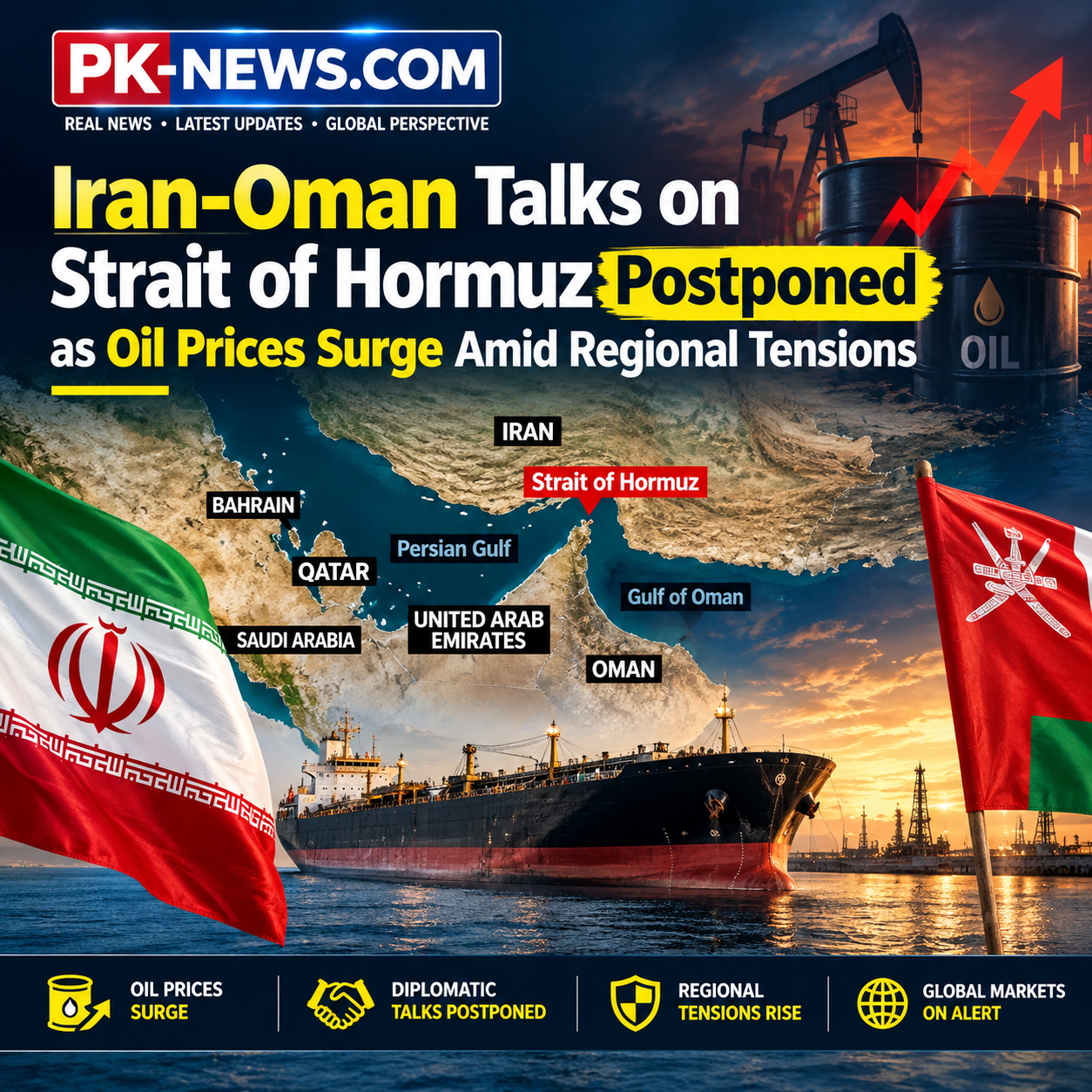
Iran-Oman Talks on Strait of Hormuz Postponed as Oil Prices Surge Amid Regional Tensions
Talks aimed at establishing a new mechanism for traffic through the Strait of Hormuz have been postponed, adding further uncertainty to an already fragile regional energy situation.
Oman had been working to bring together Iran and Gulf countries to discuss arrangements for the movement of commercial vessels through the strategically important waterway. However, the meeting did not take place after concerns emerged over the participation of several Gulf states.
The proposed discussions were expected to focus on how shipping could operate safely through the Strait following the conflict and what long-term arrangements might be required.
New Rules Could Be Needed for Strait of Hormuz
The Strait of Hormuz is one of the world's most important energy routes, and disruption to shipping through the waterway has created significant concerns for global oil markets.
A possible future arrangement could involve designated routes, new safety procedures and potentially additional costs or fees for vessels using the waterway.
The current situation has reportedly relied partly on military escorts to help move oil shipments. However, officials have acknowledged that such measures would be difficult to maintain as a permanent solution.
Oman's proposed mechanism is aimed at creating a more sustainable system for commercial traffic.
The participation of Gulf countries including Saudi Arabia, Qatar, Bahrain and the United Arab Emirates is considered important because their cooperation would be central to any long-term regional arrangement.
Oil Prices Rise as Saudi Pipeline Is Shut
The uncertainty surrounding the Strait has been accompanied by renewed pressure in global energy markets.
A Saudi oil pipeline used as an alternative route to bypass the Strait of Hormuz has been shut down following an attack. The pipeline normally provides a route for Saudi oil toward the Red Sea, allowing shipments to avoid the Strait and reach international markets through alternative maritime routes.
The pipeline has a reported capacity of around 7 million barrels of oil per day, making its disruption significant for global supplies.
The timing of the shutdown has increased concerns about further price increases if repairs take several weeks.
Diesel Prices Reach Record Levels
The disruption is also affecting fuel markets, particularly diesel.
Diesel plays a critical role in the global economy because it powers freight trucks, trains, agricultural machinery, construction equipment and many commercial vessels.
US diesel prices have reached record levels, increasing costs across transportation and other industries.
The pressure is coming from several directions. Damage to Russian oil-refining infrastructure during the Russia-Ukraine war has contributed to tighter supplies, while China's restrictions on fuel exports have added another source of pressure.
The conflict involving Iran and the disruption of oil transportation routes have further intensified concerns in the energy market.
Gasoline and Heating Costs Also Under Pressure
Higher crude oil prices are creating wider consequences for consumers.
Rising fuel costs can increase transportation expenses, which may eventually affect the prices of goods moved by road, rail and sea.
Household energy bills are also facing pressure. Heating costs are expected to rise, with the impact varying depending on the type of fuel used.
Homes relying on heating oil are particularly exposed to price increases, although heating oil accounts for a relatively small share of US households compared with natural gas and electricity.
Gulf States Face Growing Security Concerns
The attacks affecting Saudi Arabia's energy infrastructure have complicated efforts to establish a regional arrangement around the Strait of Hormuz.
Saudi Arabia has sought greater protection for its critical infrastructure as tensions involving Iran and groups backed by Tehran continue to create security concerns.
Attacks linked to the Houthis have previously targeted Saudi interests, while other attacks have reportedly been attributed to Iranian-backed groups in Iraq.
These developments have increased pressure on Riyadh to protect its oil facilities and alternative export routes.
Saudi Arabia's Options
Saudi Arabia faces difficult choices as regional tensions continue.
The kingdom could consider stronger action against groups threatening its infrastructure, but previous efforts to defeat the Houthis have faced significant difficulties.
The prolonged conflict has demonstrated the challenges involved in eliminating the military capabilities of the group.
As a result, Riyadh may need to balance military responses with diplomatic and regional options.
At the same time, continued attacks could increase Saudi Arabia's dependence on security cooperation and intelligence support from the United States.
Why the Strait of Hormuz Matters
Any prolonged disruption in the Strait of Hormuz could have consequences far beyond the Middle East.
The waterway is a crucial link between major oil-producing countries and international energy markets. Reduced shipping through the Strait can increase concerns about supply shortages and push prices higher.
For countries that depend heavily on imported energy, prolonged disruption could raise transportation, electricity and industrial costs.
Businesses and consumers could therefore feel the effects even if they are thousands of kilometres away from the conflict.
A Fragile Path Toward a Long-Term Solution
The postponement of the Iran-Oman discussions highlights how difficult it will be to establish a lasting system for shipping through the Strait.
Oman's diplomatic efforts could provide a possible framework for future negotiations, but agreement among Iran and the Gulf states will be essential.
The recent attacks on energy infrastructure have made the situation more complicated and increased the security concerns of countries involved.
For now, the region remains in a highly fluid situation. The timing of future talks, the security of oil infrastructure and the ability to maintain commercial shipping through the Strait will remain closely watched by global energy markets.
Any prolonged disruption could keep oil and fuel prices under pressure and increase economic risks for consumers and businesses around the world.
Related Articles You May Like
Related News







Comments (0)
Leave a Comment
No comments yet. Be the first to comment!