Germany's debate over support for Ukraine is entering a new phase, with senior political figures arguing that German financial and military assistance should also create economic opportunities for German companies.
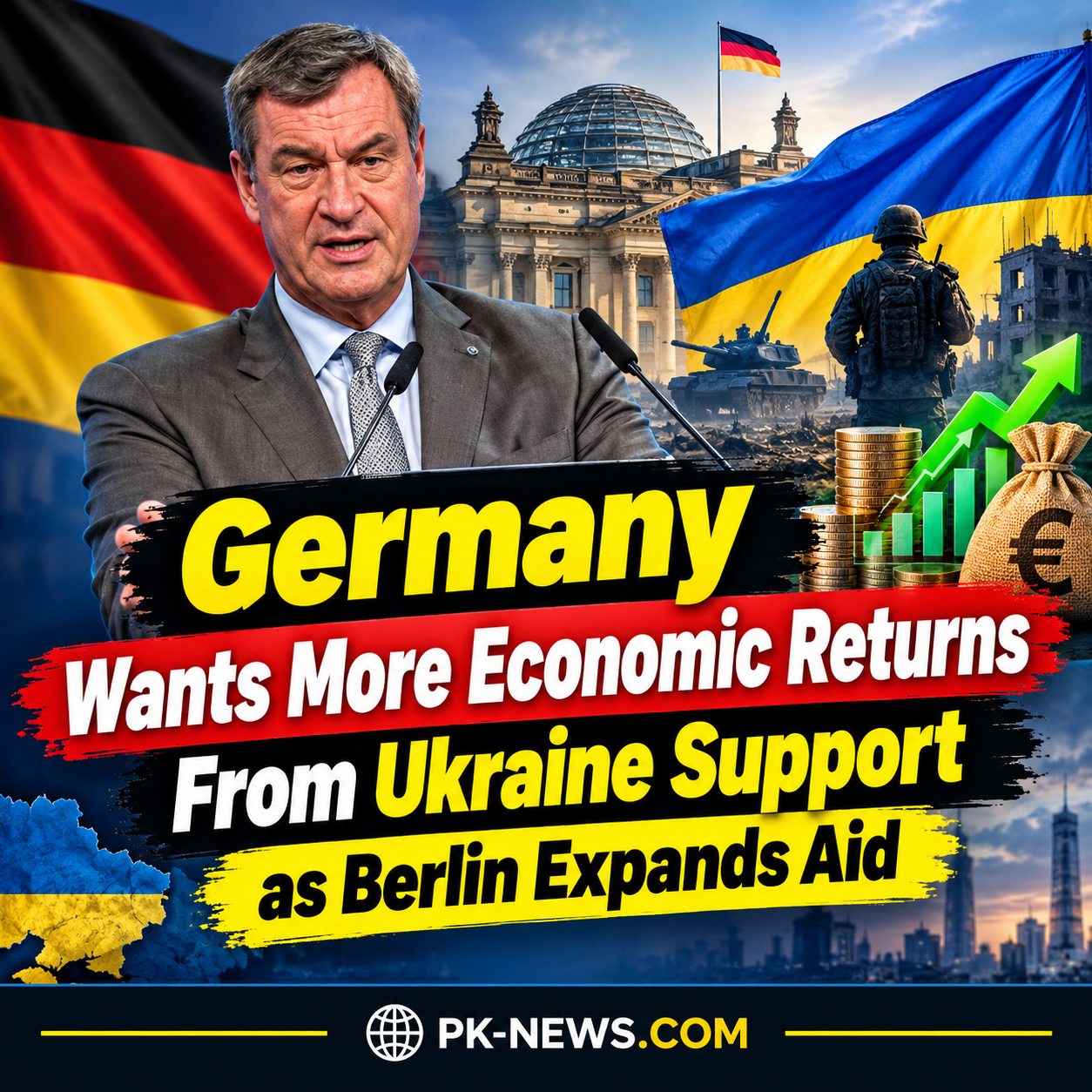
Bavarian Minister-President Markus Söder, a senior figure in the Christian Social Union (CSU), has called for Ukraine to use more of Germany's financial support to purchase German technology and military equipment. He has also suggested that Germany should discuss access to Ukrainian raw materials, including strategically important minerals.
The comments come as Germany continues to provide substantial assistance to Ukraine while simultaneously increasing its own defence spending and military procurement.
Söder's Proposal
Söder argued that Germany should receive greater economic benefits from the large sums it is providing to Ukraine.
His proposal has two major elements: increasing Ukrainian purchases of German technology and defence equipment, and opening discussions about German access to Ukrainian raw materials.
The Bavarian leader said that Ukraine should use some of the German aid it receives to purchase technology from German companies. He also argued that Germany should not leave discussions about critical raw materials solely to the United States.
The issue is particularly important because Ukraine possesses deposits of minerals that are considered strategically significant for modern industry, energy technologies and defence manufacturing.
Defence Industry at the Centre
Söder's comments follow similar remarks from German Foreign Minister Johann Wadephul.
Wadephul has argued that German defence companies should benefit from the country's support for Ukraine. Germany has earmarked approximately €11.5 billion in military assistance for Ukraine for 2026, according to recent reporting.
The discussion comes at a time when Germany is also expanding its own military procurement.
According to figures cited by the Kiel Institute for the World Economy, Germany ordered approximately €85 billion worth of military equipment in 2025, making it a major European defence buyer.
For German manufacturers, continued European defence spending could therefore represent a significant expansion of demand.
Germany's Broader Ukraine Commitment
The German government continues to describe support for Ukraine as an important part of its security policy.
According to the German federal government, Berlin has provided more than €43.3 billion in civilian assistance to Ukraine since Russia's full-scale invasion in February 2022. Germany has also provided or earmarked approximately €57.6 billion in military assistance.
German assistance includes air-defence systems, artillery, armoured vehicles, ammunition, medical equipment and other military supplies.
The German government also says that more than 27,000 Ukrainian soldiers have been trained in Germany since the beginning of the war.
Berlin has repeatedly stated that its support is connected to European security and Ukraine's ability to defend itself.
Why Critical Minerals Matter
Raw materials have become an increasingly important part of international competition.
Rare earth elements and other critical minerals are used in technologies ranging from electronics and renewable-energy equipment to advanced military systems.
Ukraine has significant mineral resources, although developing them requires investment, infrastructure and long-term security.
The United States has already pursued a minerals arrangement with Ukraine, making access to strategic resources an important part of the broader economic relationship between Washington and Kyiv.
Söder's comments suggest that Germany wants to ensure that European countries also participate in the economic opportunities associated with Ukraine's future reconstruction and resource development.
A Shift From Aid to Economic Partnership?
The debate raises a larger question about how international assistance to Ukraine should be structured.
Germany has traditionally presented its support primarily in terms of security, humanitarian assistance and European stability. The new discussion places greater emphasis on the relationship between aid, industrial policy and future economic cooperation.
For German policymakers, encouraging Ukrainian purchases from German companies could help maintain domestic manufacturing capacity while supplying Ukraine with equipment it needs.
However, Ukraine's reconstruction will involve multiple international partners, and any future commercial arrangements will depend on negotiations between governments and private companies.
Domestic Debate Continues
Germany's Ukraine policy is also facing political debate at home.
Chancellor Friedrich Merz has continued to defend German assistance to Ukraine. In a Bundestag debate earlier this month, Merz said Germany would continue supporting Ukraine and linked the country's defence to broader European security.
At the same time, opposition to military assistance has grown among some political groups.
The Alternative for Germany (AfD), for example, has called for a major change in Berlin's Russia and Ukraine policies. The party has argued against continued military support and called for renewed economic relations with Russia.
This means the question of how Germany supports Ukraine is not only an international issue but also an increasingly important domestic political debate.
What Could Happen Next?
The discussion surrounding German aid could increasingly focus on the connection between military assistance, industrial production and Ukraine's future reconstruction.
If more German-funded assistance is directed toward German manufacturers, companies in the defence and technology sectors could receive additional orders.
At the same time, negotiations over Ukrainian raw materials could become an important element of Europe's long-term economic relationship with Kyiv.
The precise structure of any future agreements remains to be determined. Access to mineral resources, however, is likely to remain an important issue as governments seek secure supplies for advanced manufacturing and defence industries.
For Germany, the challenge will be balancing support for Ukraine with domestic economic interests while maintaining its broader European policy.
PK News Analysis: Markus Söder's proposal reflects a growing discussion in Germany about linking support for Ukraine with domestic industrial and economic interests. The comments do not represent a finalized German government policy, and future arrangements would depend on negotiations between Germany, Ukraine and relevant companies.
This article has been independently rewritten and prepared for PK-News.com using recent public reporting and official German government information. It does not reproduce the original source article.
PK News — PK-News.com | World News • Business • Politics • International Affairs
0
NEW
Business
😐 Neutral
Germany Wants More Economic Returns From Ukraine Support as Berlin Expands Aid
Related Articles You May Like
Related News




Comments (0)
Leave a Comment
No comments yet. Be the first to comment!