New Fuel Rates Reflect a Mixed Adjustment as Motorists and Transport Operators Assess the Impact on Household and Business Costs
Developed, Researched & Published by PK-News.com
PK-News Digital News & Research Desk
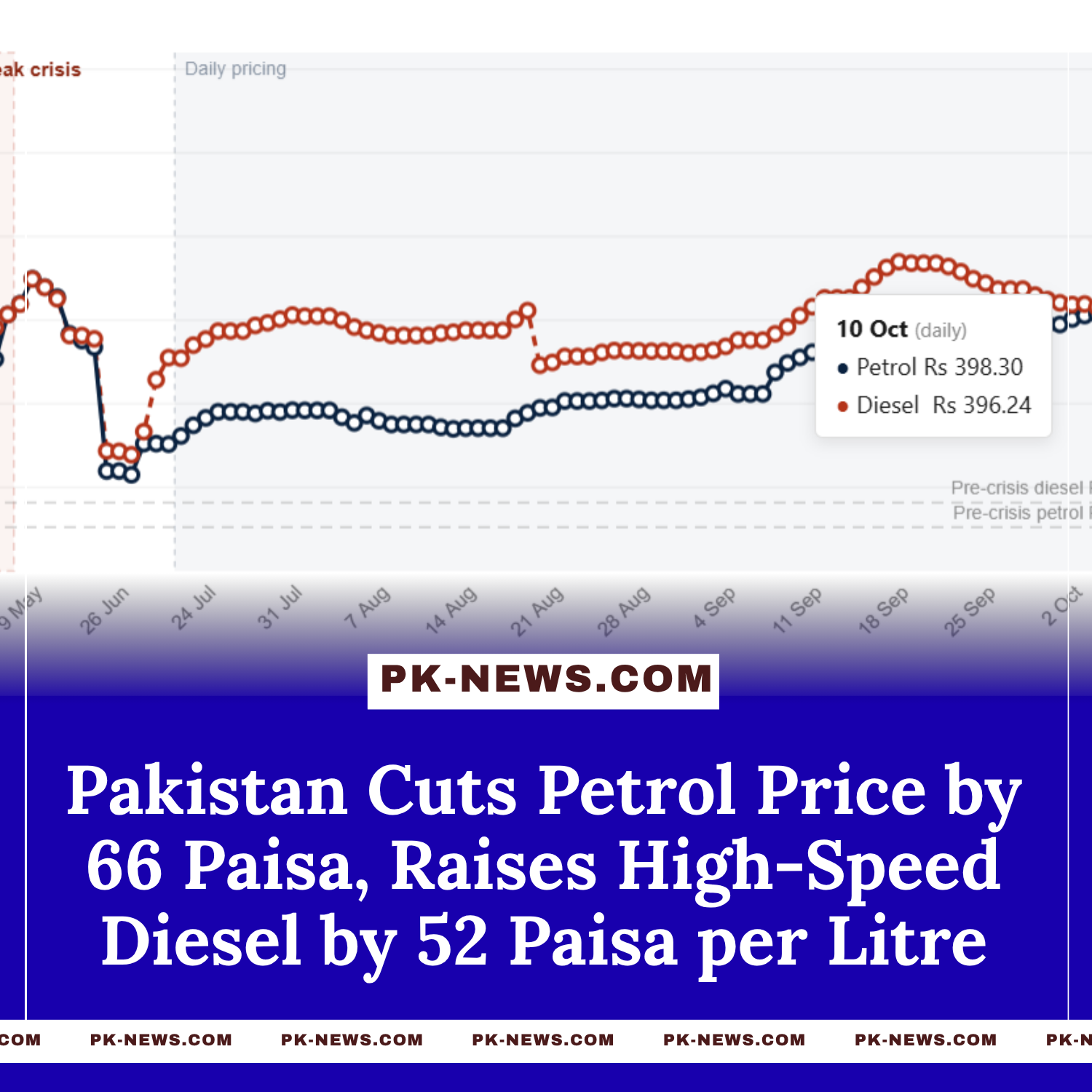
ISLAMABAD, PAKISTAN — October 10, 2026: The federal government has reduced the price of petrol by 66 paisa per litre while increasing the price of high-speed diesel (HSD) by 52 paisa per litre, introducing another mixed adjustment in Pakistan’s petroleum market.
The decision offers a small reduction for petrol consumers but increases costs for diesel users, including transport operators and businesses that depend on diesel-powered vehicles and machinery.
Based on the previous reported prices, petrol is expected to decline from Rs396.65 to Rs395.99 per litre, while high-speed diesel is expected to rise from Rs394.94 to Rs395.46 per litre. These figures reflect the announced adjustments; consumers should consult the official Petroleum Division notification for confirmation of the applicable rates and effective date.
New Petrol and Diesel Prices
The latest revision changes the two main petroleum product prices in opposite directions.
Petroleum product
Previous price
Change per litre
Revised price
Petrol
Rs396.65
−Rs0.66
Rs395.99
High-speed diesel
Rs394.94
+Rs0.52
Rs395.46
The petrol reduction is relatively small, while the diesel increase adds a modest amount to the cost of filling commercial vehicles and other diesel-powered equipment.
The final prices available at filling stations are subject to the official notification and any subsequent government revision.
What the Petrol Reduction Means for Motorists
Petrol is widely used by motorcycles, cars, auto-rickshaws and smaller private vehicles. The reduction of 66 paisa per litre provides a limited saving for consumers.
For example, purchasing 20 litres of petrol at the revised rate would cost approximately Rs13.20 less than at the previous rate.
Although the saving is small, frequent price adjustments can affect household transport budgets, particularly for people who rely on motorcycles and private vehicles for commuting and work.
The overall impact on consumers will also depend on how frequently fuel prices change and whether international petroleum prices remain stable.
Diesel Increase May Affect Transport and Goods
High-speed diesel is essential to Pakistan’s transport and logistics sectors. Trucks, buses, agricultural machinery and many commercial vehicles rely on diesel to operate.
An increase of 52 paisa per litre adds Rs52 to the cost of purchasing 100 litres of diesel. For businesses that purchase fuel in large quantities, even small per-litre changes can accumulate over time.
Transport expenses are also an important component of moving agricultural products, food supplies, industrial materials and other goods across the country.
However, a diesel-price increase does not automatically lead to higher fares or commodity prices. The actual effect depends on fuel consumption, operating expenses, market competition and decisions made by transport companies and businesses.
Why Fuel Prices Continue to Change
Pakistan’s petroleum prices are influenced by international oil-market movements, import costs, exchange-rate fluctuations, petroleum levies, taxes and other pricing components.
Changes in global crude oil prices can affect the cost of imported petroleum products, but domestic prices do not necessarily move by the same amount or in the same direction for every product.
The government has previously linked frequent fuel-price reviews to volatility in international markets amid the wider Middle East conflict and concerns about energy supply disruptions.
The latest adjustment reflects a different movement in petrol and diesel prices, demonstrating why consumers should check the announced rate for each product rather than assuming that both fuels will become cheaper or more expensive together.
Impact on Pakistan’s Economy
Fuel prices influence transportation, agriculture, manufacturing and the distribution of goods. Changes can therefore affect businesses and households beyond the immediate cost of filling a vehicle.
Lower petrol prices can offer a small benefit to private motorists, while higher diesel prices may increase operating costs for commercial transport and other diesel-dependent activities.
For Pakistan, where imported energy can place pressure on foreign-exchange reserves, international petroleum prices and the rupee-dollar exchange rate remain important economic factors.
The broader effect of the latest revision will depend on future changes in global energy markets, domestic pricing decisions and the extent to which businesses absorb or pass on additional costs.
What Consumers Should Know
Motorists should check the latest officially notified fuel prices before refuelling, particularly during periods of frequent adjustments.
Consumers should also remember that a small reduction in petrol does not necessarily mean that all transport costs will decline. Diesel prices, public transport fares, delivery expenses and other operating costs may follow different patterns.
Businesses that rely on fuel can monitor official price notifications and review their operating budgets as rates change.
Conclusion
Pakistan’s latest petroleum-price adjustment reduces petrol by 66 paisa per litre and increases high-speed diesel by 52 paisa per litre.
The change provides limited relief to petrol users while slightly increasing fuel expenses for diesel consumers. Its wider economic effect will depend on subsequent price movements, transport costs and the direction of international oil markets.
PK-News.com will continue to report on Pakistan’s fuel prices, energy markets, inflation and their impact on consumers and businesses.
13
Business
😐 Neutral
Pakistan Cuts Petrol Price by 66 Paisa, Raises High-Speed Diesel by 52 Paisa per Litre
Related Articles You May Like
Related News









Comments (0)
Leave a Comment
No comments yet. Be the first to comment!