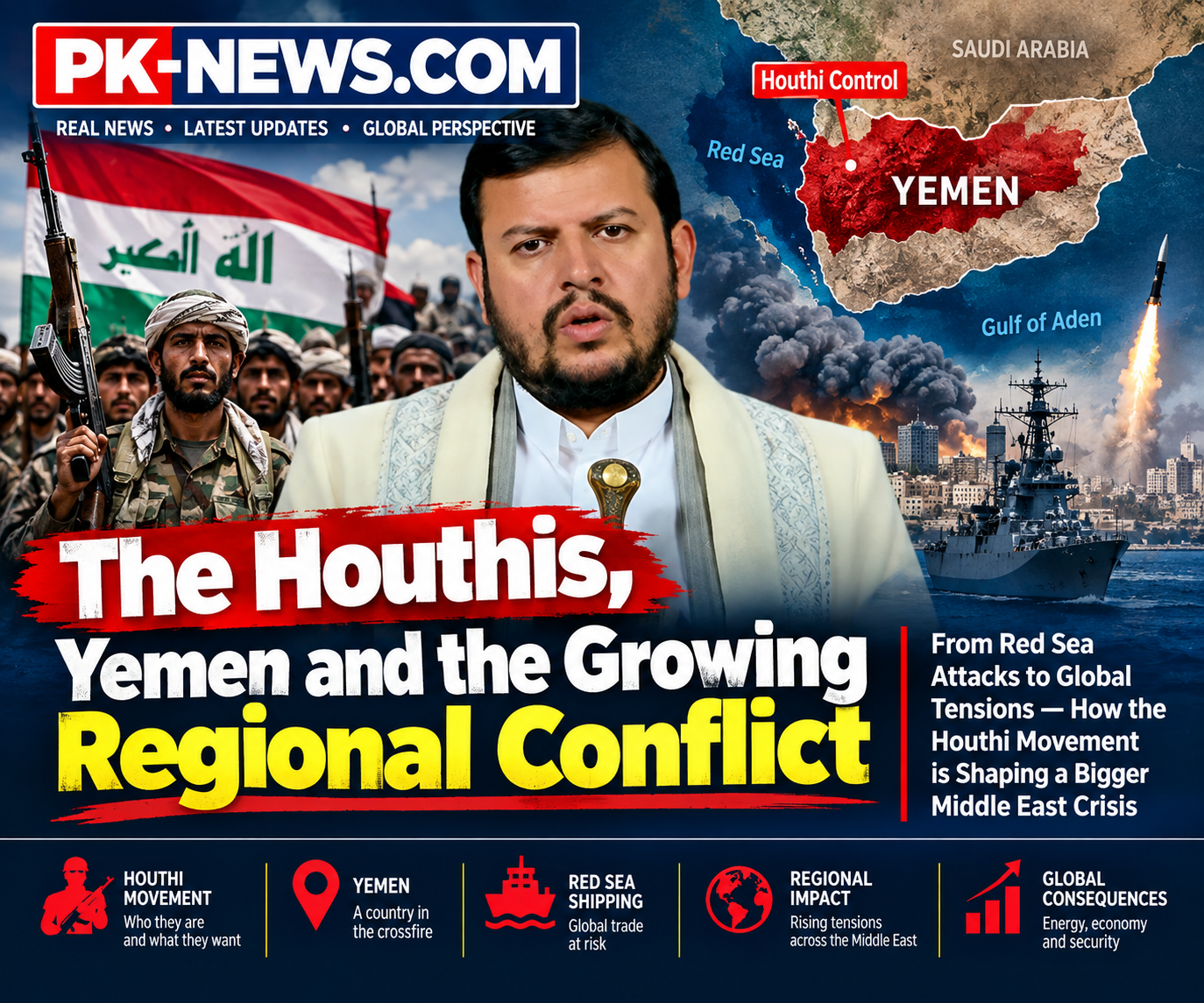
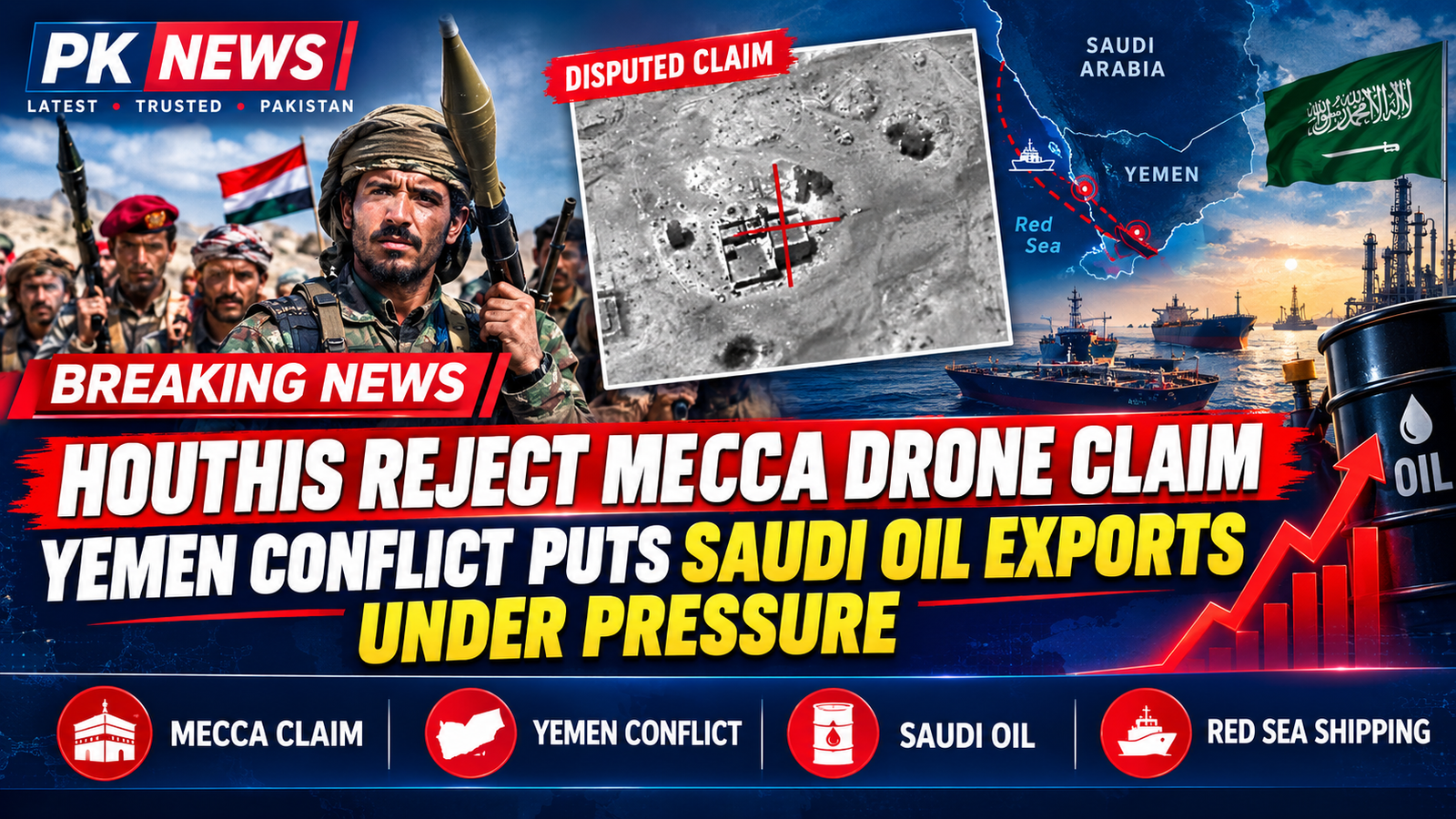
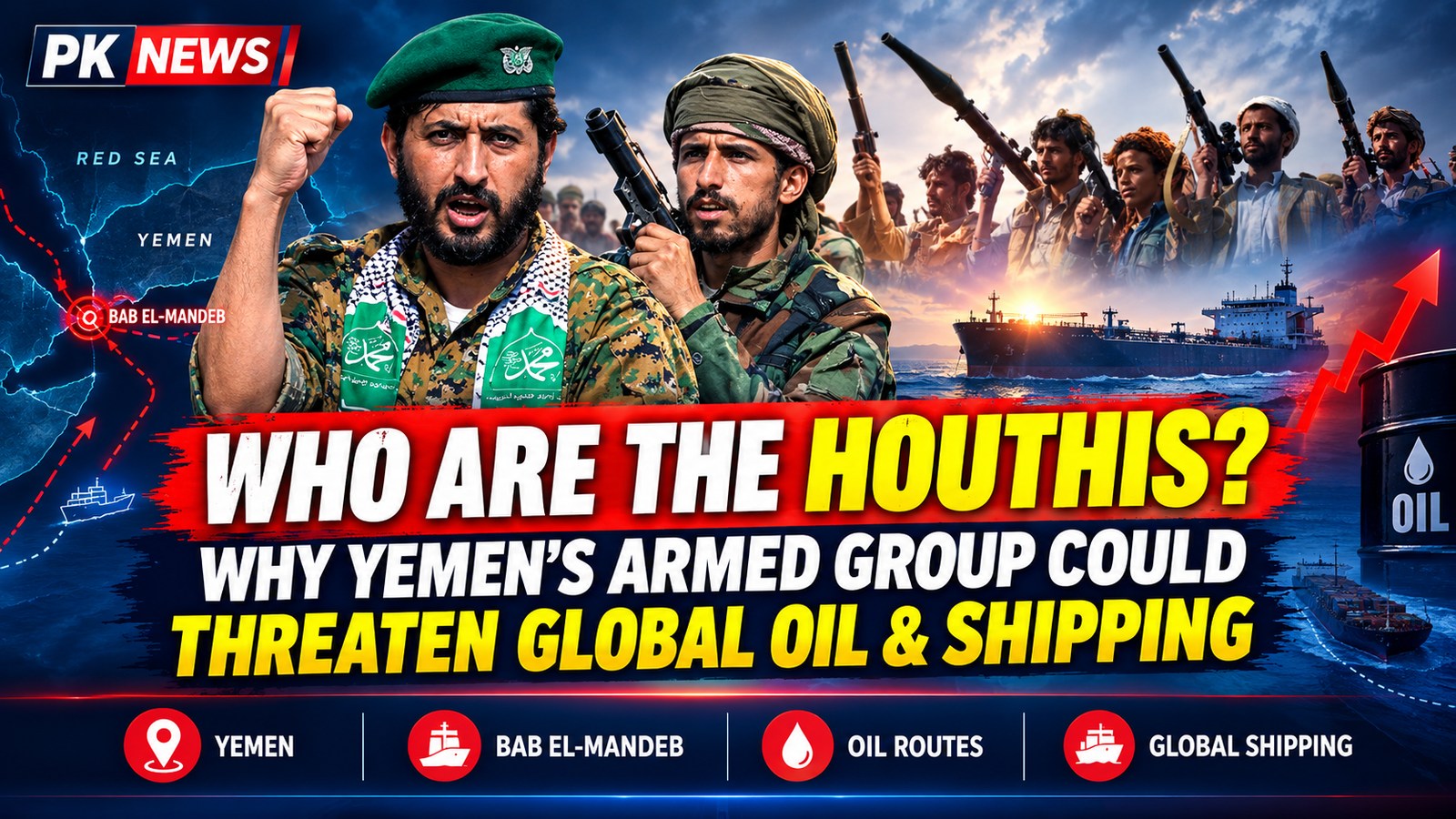
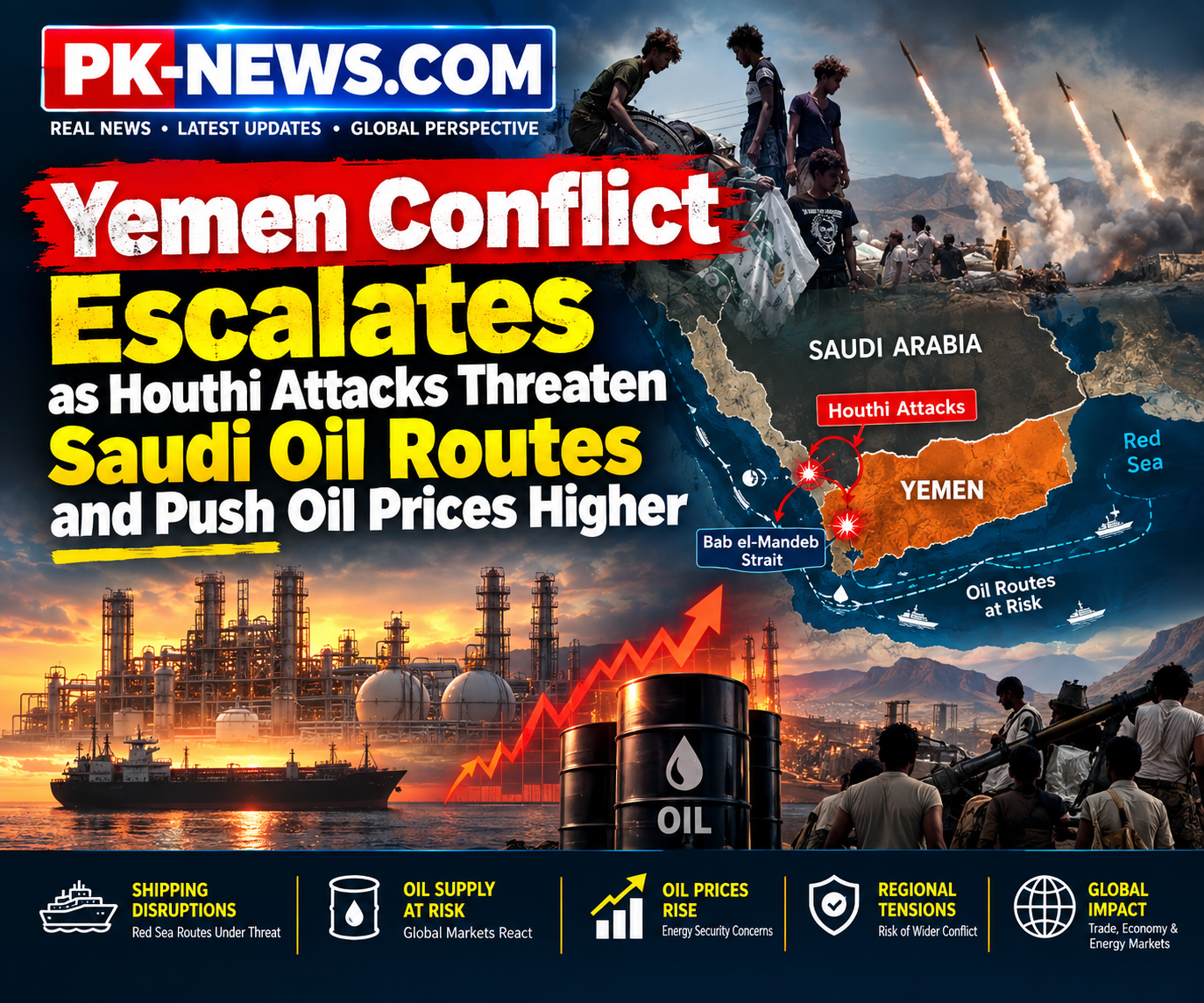
The conflict involving Yemen’s Houthi movement, Saudi Arabia and the wider regional confrontation has entered another tense phase. In a lengthy address, Houthi leader Abdul-Malik al-Houthi discussed the group’s position, its conflict with Saudi Arabia and its response to accusations involving attacks near the holy city of Mecca. His remarks came as fighting and military activity in Yemen were intensifying, while the broader conflict involving Iran and its regional allies continued to create concerns about energy supplies, shipping routes and stability across the Middle East. The Houthi leadership presented the conflict as a struggle for Yemen’s sovereignty, independence and dignity. Saudi Arabia, however, has accused the Houthis of carrying out attacks that threaten its security, including an alleged drone incident near the area of Mecca. The Houthis have denied targeting the holy city and have described the accusation as propaganda intended to generate international and regional support for Saudi military action. Because many of the statements surrounding the conflict are politically and militarily contested, claims made by either side should be understood as positions expressed by the parties involved rather than independently established facts. Houthi Leadership Defends Its Position During his address, Abdul-Malik al-Houthi began by remembering those killed in the conflict and expressing wishes for the recovery of wounded fighters. He described the Houthi movement as defending Yemen against what he characterized as a long-running campaign of military pressure and economic restrictions. According to al-Houthi, the current confrontation cannot be separated from the wider conflict that began in 2015. He argued that the Saudi-led military intervention transformed Yemen’s internal conflict into a broader regional war. The Houthi leader also referred to the period of de-escalation that began in 2022. He argued that the reduction in major fighting did not resolve the underlying political and economic disputes. In his account, Saudi Arabia used the quieter period to strengthen its military and economic pressure on Houthi-controlled areas rather than reaching a permanent political settlement. Al-Houthi said the Houthis wanted relations with neighboring countries to be based on mutual respect and coexistence. He rejected what he described as efforts to weaken or control Yemen and argued that Yemenis should have the ability to determine their own political future. His speech repeatedly emphasized sovereignty, independence and dignity. These themes form a central part of the Houthi movement’s public justification for its military activities. The Roots of the Yemen Conflict The modern Yemen conflict developed from years of political instability, economic difficulties and disputes between different political and armed groups. The Houthis, formally associated with the Ansar Allah movement, became a major force in Yemen during the years of political upheaval following the Arab Spring protests. The group expanded its influence from northern Yemen and eventually seized control of the capital, Sanaa, in 2014. The political transition that followed the removal of longtime president Ali Abdullah Saleh failed to produce a stable national settlement. Rival political factions, military groups and regional powers became increasingly involved. Saudi Arabia viewed the growing influence of the Houthis as a major security concern, particularly because of the group's relationship with Iran. In 2015, Saudi Arabia led a coalition that intervened militarily in Yemen in support of the internationally recognized Yemeni government. The intervention resulted in years of airstrikes and ground fighting. The war caused extensive destruction and contributed to a severe humanitarian crisis. Millions of Yemenis have experienced displacement, food insecurity, limited access to healthcare and damage to essential infrastructure. Although the intensity of the conflict has changed over time, the fundamental political division has remained unresolved. Houthi Claims About Saudi Military Operations A major part of al-Houthi’s speech focused on accusations against Saudi Arabia. He claimed that Saudi military operations had affected civilian areas, homes, marketplaces, roads, hospitals, schools and religious sites. He also accused Saudi forces and their allies of imposing restrictions that affected the movement of people and the delivery of goods into Yemen. Al-Houthi argued that the economic consequences of the conflict were particularly damaging because Yemen relies heavily on imported food, medicine and other essential supplies. He also spoke about the difficulties faced by people requiring medical treatment, including patients suffering from chronic illnesses. According to his account, restrictions on imports and transportation had made access to medicine increasingly difficult. The Houthi leader further argued that Yemen’s natural resources, including oil revenues, should belong to the Yemeni people and accused Saudi Arabia of contributing to restrictions on access to those resources. These allegations represent the Houthi leadership’s interpretation of the conflict. The broader history of the war includes extensive allegations of violations by multiple parties, making independent documentation and international investigations important when assessing individual incidents. The Dispute Over Mecca One of the most politically sensitive issues discussed in the speech was the accusation that the Houthis had launched a drone toward the area of Mecca. Saudi authorities said that a drone had been intercepted in the region and reported that a person was killed by falling debris. Saudi officials linked the incident to the Houthi threat, while the Houthis denied that they had targeted Mecca. Al-Houthi strongly rejected the accusation and described it as a deliberate falsehood. He argued that the Houthi movement understood the religious significance of Mecca and would not intentionally attack the holy city. He also accused Saudi Arabia of using the religious importance of Mecca to strengthen public support for military action against the Houthis. The issue is particularly sensitive because Mecca is Islam’s holiest city and is central to the religious identity of Muslims around the world. Any allegation involving an attack on the city therefore has the potential to generate strong political and public reactions across Muslim-majority countries. The Houthi leadership attempted to use its denial to emphasize its own religious identity and to reject the accusation as politically motivated. Iran’s Relationship With the Houthis Another important element of the Yemen conflict is the relationship between the Houthis and Iran. The Houthi movement has received political and military support from Iran, although the exact nature and extent of Iranian involvement have been subjects of continuing debate. In the material provided, the Houthi leadership presents the movement as an independent Yemeni force defending its interests. At the same time, outside reporting and regional governments have repeatedly focused on Iran’s support for the group. This relationship has made Yemen part of a much larger regional confrontation involving Iran, Saudi Arabia, Israel and the United States. The strategic importance of Yemen goes beyond its borders. The country sits beside the Red Sea and the Bab el-Mandeb Strait, a major maritime passage connecting the Red Sea with the Gulf of Aden and the wider Indian Ocean. Any major disruption in this area can affect international shipping, energy transportation and global supply chains. The Bab el-Mandeb and Global Shipping The Bab el-Mandeb Strait is one of the world's important maritime chokepoints. Ships traveling between Europe and Asia through the Suez Canal generally pass through the Red Sea and then through the Bab el-Mandeb. This makes Yemen strategically important far beyond the immediate battlefield. Houthi attacks or threats against commercial shipping have previously raised concerns among governments and international businesses. Shipping companies may respond to increased security risks by changing routes, increasing insurance costs or sending vessels around the southern tip of Africa. Longer shipping routes can increase transportation expenses and contribute to higher prices for goods. The possibility of attacks against oil infrastructure or tankers creates an additional concern because energy markets are highly sensitive to geopolitical instability. The significance of Yemen therefore extends beyond the Yemeni population. Events in the country can have consequences for international trade, fuel prices and regional security. Saudi Arabia’s Security Concerns From Saudi Arabia’s perspective, the Houthi movement represents a serious security challenge. Yemen shares a long border with Saudi Arabia, and Houthi missile and drone capabilities have allowed the group to threaten targets inside Saudi territory. Saudi officials have therefore argued that military action is necessary to protect the kingdom and prevent armed groups supported by Iran from establishing a stronger position along its southern border. The Saudi government’s position contrasts sharply with the Houthi description of the conflict. While Houthi leaders describe their actions as resistance and self-defense, Saudi authorities have emphasized national security and the threat posed by missile and drone attacks. These competing narratives are central to understanding why the conflict has been so difficult to resolve. Humanitarian Consequences Regardless of the competing political narratives, Yemen has suffered enormous humanitarian consequences from years of conflict. The country entered the war with significant economic and development challenges. Years of fighting further damaged infrastructure and weakened public institutions. Hospitals and medical facilities have faced shortages of resources, while millions of people have experienced food insecurity and displacement. The material provided also describes renewed displacement as fighting increases. People living in affected areas have been forced to leave their homes, sometimes traveling through difficult terrain to find safer locations. Humanitarian organizations face significant challenges in delivering food, medicine and other essential supplies. The situation is especially difficult because the conflict is not simply a domestic struggle. Regional military intervention, international political interests and the involvement of armed groups with outside relationships have all complicated efforts to achieve a lasting settlement. Houthi Military Strategy Al-Houthi also attempted to explain the Houthi movement’s military strategy. He argued that Houthi operations were primarily directed toward military facilities and economic infrastructure connected to the Saudi war effort. He described attacks on oil infrastructure as a way of applying pressure to Saudi Arabia. Saudi Arabia and its allies, however, view attacks against energy facilities and other targets as serious threats to national and regional security. The dispute illustrates the wider problem of asymmetric warfare. The Houthis do not possess the same conventional military capabilities as a major regional power such as Saudi Arabia, but missiles, drones and maritime threats can provide them with ways to impose costs on a stronger opponent. This capability has helped transform Yemen from a local civil conflict into a factor in regional security calculations. The Role of the United States The United States has also been closely connected to the Yemen conflict because of its long-standing security relationship with Saudi Arabia. Al-Houthi accused Washington of supporting Saudi military operations and claimed that American personnel were involved in coordinating military activities. Such statements should be distinguished from independently verified information about the precise role and number of American personnel involved at any particular time. The broader relationship between the United States and Saudi Arabia has included arms sales, military cooperation and security assistance. Washington has also faced political pressure over the humanitarian consequences of the Yemen war and the extent of American involvement. The American role is therefore an important part of the larger geopolitical picture surrounding Yemen. A Conflict With Regional Consequences The Yemen war has increasingly become connected to wider Middle Eastern tensions. The Houthis' relationship with Iran places them within a regional network of actors associated with Tehran. Saudi Arabia, meanwhile, remains a major regional power with close relationships with the United States and other countries. As tensions involving Iran increase, the possibility of additional activity in Yemen creates concerns about the conflict spreading across multiple fronts. The Red Sea is particularly important because military activity there can affect international commerce. The combination of missile threats, drone warfare, maritime attacks and political confrontation has created a complex security environment that extends well beyond Yemen itself. What Happens Next? The future of Yemen remains uncertain. A lasting solution would require more than a temporary reduction in fighting. It would require political negotiations addressing the competing claims of the Houthis, the internationally recognized Yemeni government and other political and regional actors. Economic issues would also need to be addressed, including control of natural resources, public-sector salaries, access to ports and airports, and the movement of food and medicine. Security guarantees would be another major challenge. Saudi Arabia wants protection from missile and drone attacks, while the Houthis demand recognition of Yemen's sovereignty and political independence. The humanitarian situation adds urgency to the search for a political solution. The speech by Abdul-Malik al-Houthi demonstrates how deeply divided the competing narratives remain. The Houthi leadership describes the movement as defending Yemen against foreign aggression and economic pressure. Saudi Arabia and its allies describe the Houthis as a security threat connected to Iran. Between these competing positions are millions of Yemeni civilians who have experienced years of war, displacement and economic hardship. The conflict is therefore not only a military confrontation. It is also a struggle over political legitimacy, regional influence, economic resources and Yemen's future. As fighting continues and tensions across the Middle East remain high, developments in Yemen could have consequences far beyond the country's borders. The security of the Bab el-Mandeb Strait, international shipping, energy markets and regional stability are all connected to what happens next. For Yemen, however, the most immediate issue remains the same: whether years of conflict can eventually give way to a political settlement that reduces violence and allows ordinary people to rebuild their lives.
23
NEW
BREAKING
War
😔 Negative
The Houthis, Yemen and the Growing Regional Conflict
Related Articles You May Like
Related News




Comments (0)
Leave a Comment
No comments yet. Be the first to comment!