Politics
PK Live News
😔 Negative
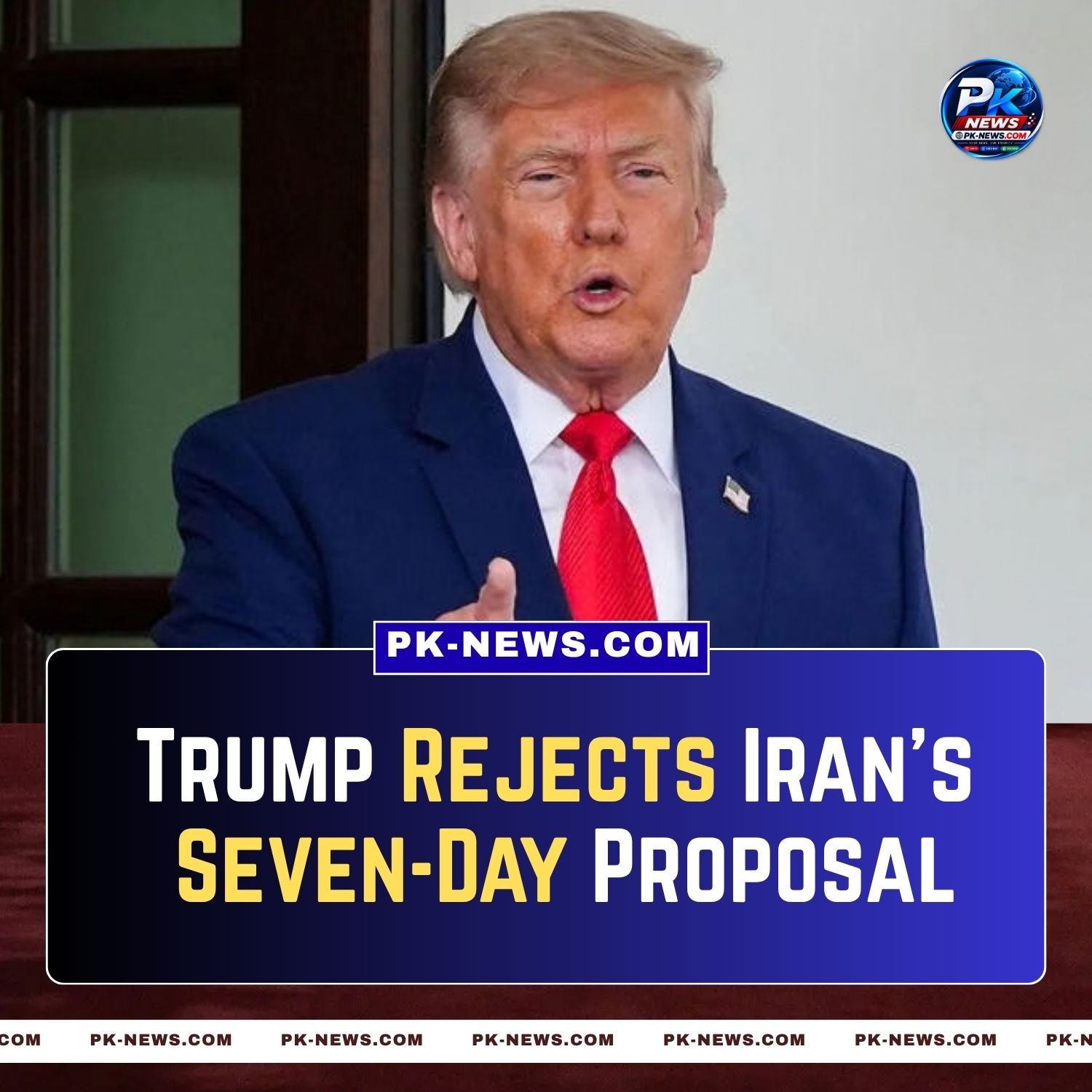
Iran has proposed a seven-day plan to reopen the strategically important Strait of Hormuz and halt fighting across the wider Middle East, but U.S. President Donald Trump said on September 26 that he had rejected the proposal. Iran is awaiting a formal U.S. response as diplomatic efforts continue through intermediaries, while the ongoing conflict continues to disrupt regional security and global energy routes.
According to PK-News.com | September 26, 2026
A new diplomatic development has emerged in the ongoing Middle East conflict after Iran proposed a seven-day process to reopen the Strait of Hormuz and halt fighting across the region, while U.S. President Donald Trump said he had rejected Tehran's proposal.
Iran's initiative was presented during the United Nations General Assembly in New York and was transmitted to Washington through Qatari mediators, according to Iranian officials. Tehran said the plan could restore normal maritime passage through the strategic waterway within seven days if Washington accepted the required conditions.
The development has created a new diplomatic uncertainty over the future of the conflict, with Iran waiting for the U.S. position while reports indicate that Trump remains skeptical about Tehran's willingness to meet American demands.
What Did Iran Propose?
Iranian Foreign Minister Abbas Araghchi told reporters at the United Nations on September 25 that Tehran had submitted what he described as a concrete seven-day plan.
Under the proposal, Iran said the Strait of Hormuz could be reopened within seven days and wider negotiations with the United States could subsequently begin.
Araghchi said the initial measures would take several days, with the waterway potentially reopening on the sixth day and broader talks beginning on the seventh.
The proposal was not simply about reopening the waterway.
According to Reuters reporting, Tehran's conditions included an end to the U.S. blockade of Iranian ports, the release of frozen Iranian funds and the waiving of U.S. oil sanctions. Iran also proposed a halt to hostilities across the region, including Lebanon.
The Iranian government has also indicated that future discussions could include its nuclear programme.
Trump Says He Rejected the Proposal
President Donald Trump said on September 26 that he had rejected Iran's proposal.
Reuters reported that Trump said Iran urgently wanted the Strait of Hormuz reopened because of economic pressure, while The Wall Street Journal reported that Trump remained skeptical that Tehran would satisfy his demands.
However, the situation remains fluid.
Reuters reported that a U.S. official had previously characterized indirect discussions between Washington and Tehran as “positive and constructive.” Reuters also said it could not immediately independently confirm the Wall Street Journal's reporting concerning Trump's expectations about future military action.
This means that reports concerning possible future military operations should be treated as reported expectations rather than confirmed future events.
Why Is the Strait of Hormuz So Important?
The Strait of Hormuz is one of the world's most strategically important maritime passages.
It connects the Persian Gulf with the Gulf of Oman and the wider Arabian Sea. Large quantities of energy products normally move through the waterway, making any prolonged disruption potentially significant for international energy markets and global trade.
The current conflict has already disrupted oil flows through the region.
Reuters reported that the continuing conflict has affected one of the world's most important shipping routes and created wider economic consequences.
Any reopening of the waterway could therefore have consequences beyond the Middle East, particularly for shipping companies, energy markets and countries dependent on imported oil and gas.
Iran's Position
Iranian officials have presented the seven-day proposal as an opportunity to return to diplomacy.
Foreign Minister Araghchi said that if Washington demonstrated seriousness about reaching an agreement and reopening the Strait of Hormuz, the necessary arrangements were prepared.
Iranian President Masoud Pezeshkian has also said Tehran is prepared to discuss its nuclear programme and other issues but would not accept what he described as coercion or pressure.
Iran's position regarding its nuclear programme remains a major part of the dispute.
According to Reuters, Iranian officials have indicated that Tehran does not intend to give up what it considers its rights, including uranium enrichment, even if negotiations with Washington resume.
What Does the United States Want?
The United States has maintained strong demands concerning Iran's nuclear programme and regional activities.
Trump has repeatedly said that Iran must not acquire a nuclear weapon.
The disagreement over the nuclear programme is therefore closely connected with the broader dispute over sanctions, military pressure and the Strait of Hormuz.
The latest Iranian proposal attempts to connect these issues within one diplomatic framework: reopening the waterway, stopping hostilities and returning to negotiations.
Trump's rejection indicates that the conditions required by Washington and Tehran remain substantially different.
Regional Conflict Continues
The diplomatic developments are occurring while fighting and security tensions continue elsewhere in the region.
Reuters reported that Iran and groups aligned with Tehran have continued to be involved in regional confrontations.
The Houthis in Yemen have targeted Saudi interests, while Iran-backed Hezbollah has been involved in fighting with Israeli forces in Lebanon. Iranian-aligned militias in Iraq have also been blamed for an attack affecting Saudi oil supplies.
Saudi Arabia has also faced attacks involving missiles and drones.
The Saudi-led coalition said on September 26 that it intercepted two drones launched toward Riyadh and a ballistic missile launched toward Khamis Mushait.
These developments demonstrate that the consequences of the conflict extend beyond the direct confrontation between Washington and Tehran.
Saudi Arabia Becomes Increasingly Important
Iranian officials have also communicated with Saudi Arabia regarding the Strait of Hormuz.
According to Reuters, Araghchi briefed Saudi Foreign Minister Prince Faisal bin Farhan about an understanding between Iran and Oman concerning safe shipping routes through the Strait.
Saudi Arabia is particularly important because the kingdom is one of the world's major oil producers and has significant interests in maintaining secure energy export routes.
At the same time, Saudi Arabia is facing attacks from the Iran-linked Houthis in Yemen.
The situation has therefore created overlapping security and economic pressures across the Gulf region.
Pakistan and Turkey Also Watch the Situation
The regional consequences have also drawn attention from Pakistan and Turkey.
Reuters reported that defense officials from Turkey and Pakistan met in Riyadh with Saudi counterparts to discuss the security situation, intelligence cooperation and military coordination. The meetings took place after Saudi, Pakistani and Turkish foreign ministers met under the framework of the Mecca Joint Defense Agreement.
For Pakistan, developments around the Gulf are particularly important because of its geographical proximity to the Middle East and its economic and security relationships with Gulf countries.
Any prolonged disruption to regional shipping and energy supplies could also have wider economic effects across South Asia.
What Happens Next?
The immediate question is whether Washington and Tehran will continue indirect negotiations despite Trump's rejection of the Iranian proposal.
Iran has presented its seven-day plan as a possible pathway toward reopening the Strait and restarting wider negotiations.
The United States, meanwhile, has not accepted the conditions proposed by Tehran.
Reuters reported that Iran was still awaiting an official U.S. response after reports that Trump had rejected the plan.
The coming days could therefore be important for determining whether diplomatic discussions continue or whether the military confrontation intensifies.
However, reports about possible future attacks or renewed bombing should not be treated as confirmed events unless and until governments officially announce such actions.
Global Economic Concerns
The dispute has consequences far beyond the Middle East.
The Strait of Hormuz is a major energy shipping route, and disruption can affect oil transportation, insurance costs, shipping schedules and energy prices.
A prolonged closure or severe restriction could place additional pressure on countries that depend heavily on imported energy.
Conversely, a stable reopening of the waterway could reduce some of the pressure created by the conflict.
For international markets, uncertainty itself can be significant because companies and governments must plan around possible disruptions.
A New Diplomatic Test
Iran's seven-day proposal represents another attempt to create a diplomatic pathway during a highly unstable period.
The proposal includes several interconnected issues: the Strait of Hormuz, U.S. sanctions, Iranian oil exports, the nuclear programme and regional fighting.
Washington and Tehran have different positions on each of these issues.
Trump's reported rejection therefore does not necessarily mean that all diplomatic communication has ended. Reuters reported that indirect discussions through mediators had previously been described by a U.S. official as positive and constructive.
The next stage will depend on whether both sides can find terms acceptable enough to keep negotiations alive.
Conclusion
The latest Iran-U.S. development has placed the Strait of Hormuz at the centre of renewed international attention.
Iran has proposed a seven-day process to reopen the strategic waterway and halt regional fighting, while President Donald Trump has said he rejected the proposal. Tehran is awaiting the next official U.S. position as indirect diplomatic contacts continue.
The dispute remains closely connected to Iran's nuclear programme, U.S. sanctions, regional military activity and the security of international shipping.
For the global economy, the Strait of Hormuz remains particularly important because of its role in energy transportation.
For the Middle East, meanwhile, the key question is whether the latest diplomatic initiative can lead to further negotiations or whether tensions will continue to escalate.
PK-News.com will continue tracking verified developments from Washington, Tehran, Riyadh and other regional capitals as the situation develops.
Sep 26, 2026 at 9:39 PM
Iran has proposed a seven-day plan to reopen the strategically important Strait of Hormuz and halt fighting across the wider Middle East, but U.S. President Donald Trump said on September 26 that he had rejected the proposal. Iran is awaiting a formal U.S. response as diplomatic efforts continue through intermediaries, while the ongoing conflict continues to disrupt regional security and global energy routes.
According to PK-News.com | September 26, 2026
A new diplomatic development has emerged in the ongoing Middle East conflict after Iran proposed a seven-day process to reopen the Strait of Hormuz and halt fighting across the region, while U.S. President Donald Trump said he had rejected Tehran's proposal.
Iran's initiative was presented during the United Nations General Assembly in New York and was transmitted to Washington through Qatari mediators, according to Iranian officials. Tehran said the plan could restore normal maritime passage through the strategic waterway within seven days if Washington accepted the required conditions.
The development has created a new diplomatic uncertainty over the future of the conflict, with Iran waiting for the U.S. position while reports indicate that Trump remains skeptical about Tehran's willingness to meet American demands.
What Did Iran Propose?
Iranian Foreign Minister Abbas Araghchi told reporters at the United Nations on September 25 that Tehran had submitted what he described as a concrete seven-day plan.
Under the proposal, Iran said the Strait of Hormuz could be reopened within seven days and wider negotiations with the United States could subsequently begin.
Araghchi said the initial measures would take several days, with the waterway potentially reopening on the sixth day and broader talks beginning on the seventh.
The proposal was not simply about reopening the waterway.
According to Reuters reporting, Tehran's conditions included an end to the U.S. blockade of Iranian ports, the release of frozen Iranian funds and the waiving of U.S. oil sanctions. Iran also proposed a halt to hostilities across the region, including Lebanon.
The Iranian government has also indicated that future discussions could include its nuclear programme.
Trump Says He Rejected the Proposal
President Donald Trump said on September 26 that he had rejected Iran's proposal.
Reuters reported that Trump said Iran urgently wanted the Strait of Hormuz reopened because of economic pressure, while The Wall Street Journal reported that Trump remained skeptical that Tehran would satisfy his demands.
However, the situation remains fluid.
Reuters reported that a U.S. official had previously characterized indirect discussions between Washington and Tehran as “positive and constructive.” Reuters also said it could not immediately independently confirm the Wall Street Journal's reporting concerning Trump's expectations about future military action.
This means that reports concerning possible future military operations should be treated as reported expectations rather than confirmed future events.
Why Is the Strait of Hormuz So Important?
The Strait of Hormuz is one of the world's most strategically important maritime passages.
It connects the Persian Gulf with the Gulf of Oman and the wider Arabian Sea. Large quantities of energy products normally move through the waterway, making any prolonged disruption potentially significant for international energy markets and global trade.
The current conflict has already disrupted oil flows through the region.
Reuters reported that the continuing conflict has affected one of the world's most important shipping routes and created wider economic consequences.
Any reopening of the waterway could therefore have consequences beyond the Middle East, particularly for shipping companies, energy markets and countries dependent on imported oil and gas.
Iran's Position
Iranian officials have presented the seven-day proposal as an opportunity to return to diplomacy.
Foreign Minister Araghchi said that if Washington demonstrated seriousness about reaching an agreement and reopening the Strait of Hormuz, the necessary arrangements were prepared.
Iranian President Masoud Pezeshkian has also said Tehran is prepared to discuss its nuclear programme and other issues but would not accept what he described as coercion or pressure.
Iran's position regarding its nuclear programme remains a major part of the dispute.
According to Reuters, Iranian officials have indicated that Tehran does not intend to give up what it considers its rights, including uranium enrichment, even if negotiations with Washington resume.
What Does the United States Want?
The United States has maintained strong demands concerning Iran's nuclear programme and regional activities.
Trump has repeatedly said that Iran must not acquire a nuclear weapon.
The disagreement over the nuclear programme is therefore closely connected with the broader dispute over sanctions, military pressure and the Strait of Hormuz.
The latest Iranian proposal attempts to connect these issues within one diplomatic framework: reopening the waterway, stopping hostilities and returning to negotiations.
Trump's rejection indicates that the conditions required by Washington and Tehran remain substantially different.
Regional Conflict Continues
The diplomatic developments are occurring while fighting and security tensions continue elsewhere in the region.
Reuters reported that Iran and groups aligned with Tehran have continued to be involved in regional confrontations.
The Houthis in Yemen have targeted Saudi interests, while Iran-backed Hezbollah has been involved in fighting with Israeli forces in Lebanon. Iranian-aligned militias in Iraq have also been blamed for an attack affecting Saudi oil supplies.
Saudi Arabia has also faced attacks involving missiles and drones.
The Saudi-led coalition said on September 26 that it intercepted two drones launched toward Riyadh and a ballistic missile launched toward Khamis Mushait.
These developments demonstrate that the consequences of the conflict extend beyond the direct confrontation between Washington and Tehran.
Saudi Arabia Becomes Increasingly Important
Iranian officials have also communicated with Saudi Arabia regarding the Strait of Hormuz.
According to Reuters, Araghchi briefed Saudi Foreign Minister Prince Faisal bin Farhan about an understanding between Iran and Oman concerning safe shipping routes through the Strait.
Saudi Arabia is particularly important because the kingdom is one of the world's major oil producers and has significant interests in maintaining secure energy export routes.
At the same time, Saudi Arabia is facing attacks from the Iran-linked Houthis in Yemen.
The situation has therefore created overlapping security and economic pressures across the Gulf region.
Pakistan and Turkey Also Watch the Situation
The regional consequences have also drawn attention from Pakistan and Turkey.
Reuters reported that defense officials from Turkey and Pakistan met in Riyadh with Saudi counterparts to discuss the security situation, intelligence cooperation and military coordination. The meetings took place after Saudi, Pakistani and Turkish foreign ministers met under the framework of the Mecca Joint Defense Agreement.
For Pakistan, developments around the Gulf are particularly important because of its geographical proximity to the Middle East and its economic and security relationships with Gulf countries.
Any prolonged disruption to regional shipping and energy supplies could also have wider economic effects across South Asia.
What Happens Next?
The immediate question is whether Washington and Tehran will continue indirect negotiations despite Trump's rejection of the Iranian proposal.
Iran has presented its seven-day plan as a possible pathway toward reopening the Strait and restarting wider negotiations.
The United States, meanwhile, has not accepted the conditions proposed by Tehran.
Reuters reported that Iran was still awaiting an official U.S. response after reports that Trump had rejected the plan.
The coming days could therefore be important for determining whether diplomatic discussions continue or whether the military confrontation intensifies.
However, reports about possible future attacks or renewed bombing should not be treated as confirmed events unless and until governments officially announce such actions.
Global Economic Concerns
The dispute has consequences far beyond the Middle East.
The Strait of Hormuz is a major energy shipping route, and disruption can affect oil transportation, insurance costs, shipping schedules and energy prices.
A prolonged closure or severe restriction could place additional pressure on countries that depend heavily on imported energy.
Conversely, a stable reopening of the waterway could reduce some of the pressure created by the conflict.
For international markets, uncertainty itself can be significant because companies and governments must plan around possible disruptions.
A New Diplomatic Test
Iran's seven-day proposal represents another attempt to create a diplomatic pathway during a highly unstable period.
The proposal includes several interconnected issues: the Strait of Hormuz, U.S. sanctions, Iranian oil exports, the nuclear programme and regional fighting.
Washington and Tehran have different positions on each of these issues.
Trump's reported rejection therefore does not necessarily mean that all diplomatic communication has ended. Reuters reported that indirect discussions through mediators had previously been described by a U.S. official as positive and constructive.
The next stage will depend on whether both sides can find terms acceptable enough to keep negotiations alive.
Conclusion
The latest Iran-U.S. development has placed the Strait of Hormuz at the centre of renewed international attention.
Iran has proposed a seven-day process to reopen the strategic waterway and halt regional fighting, while President Donald Trump has said he rejected the proposal. Tehran is awaiting the next official U.S. position as indirect diplomatic contacts continue.
The dispute remains closely connected to Iran's nuclear programme, U.S. sanctions, regional military activity and the security of international shipping.
For the global economy, the Strait of Hormuz remains particularly important because of its role in energy transportation.
For the Middle East, meanwhile, the key question is whether the latest diplomatic initiative can lead to further negotiations or whether tensions will continue to escalate.
PK-News.com will continue tracking verified developments from Washington, Tehran, Riyadh and other regional capitals as the situation develops.