BREAKING
Advertisement

Recent Category Articles

Latest Category News

1
Politics PK Live News
Treasuries head for best week since February as AI jitters halt bond rout
Borrowing costs fall back from highest levels in decades as investors seek safety in government debt
3 days ago
Borrowing costs fall back from highest levels in decades as investors seek safety in government debt
4
Politics PK Live News
Bets on Fed rate hold in October strengthen after Warsh comments
US central bank chair says economy has broadly conformed with our expectations since rate increase in September
3 days ago
US central bank chair says economy has broadly conformed with our expectations since rate increase in September
Pakistan Reduces Petrol Price by Rs2.71 per Litre, Diesel by 3 Paisa
10
Politics PK Live News 😐 Neutral
Pakistan Reduces Petrol Price by Rs2.71 per Litre, Diesel by 3 Paisa
New Fuel Rates Take Effect from October 14 as Government Continues to Adjust Prices Amid Global Oil Market Volatility Developed, Researched & Published by PK-News.com | PK-News Digital News & Research Desk ISLAMABAD, PAKISTAN — October 13, 2026: The federal government has reduced the price of petrol by Rs2.71 per litre and high-speed diesel (HSD) by 3 paisa per litre, according to a notification issued by the Petroleum Division. The revised rates will take effect from Wednesday, October 14, offering a modest reduction in fuel costs for consumers and businesses across Pakistan. Following the adjustment, petrol will be available at Rs392.66 per litre, while high-speed diesel will cost Rs396.82 per litre. The latest revision comes amid continued fluctuations in international oil markets and concerns about energy supplies linked to the ongoing conflict in the Middle East. New Petrol and Diesel Prices Under the revised rates, petrol has become cheaper by Rs2.71 per litre, while the price of high-speed diesel has declined by just Rs0.03 per litre. The small reduction in diesel prices means that transport operators and businesses heavily dependent on diesel may see little immediate financial relief. The government continues to collect taxes and duties of Rs114 per litre on petrol and Rs100 per litre on high-speed diesel, according to the report. Impact on Consumers Petrol is widely used by motorcycles, private cars, rickshaws and small vehicles, making changes in its price particularly important for households and daily commuters. A reduction may slightly lower fuel expenses for motorists, although the actual savings will depend on individual consumption. Diesel, meanwhile, is a major fuel for heavy transport, agricultural machinery, power plants and large generators. Since the reduction in diesel is minimal, freight operators and other diesel-dependent sectors are unlikely to experience substantial relief from this adjustment alone. Global Oil Market and Pakistan’s Fuel Policy Pakistan has been adjusting domestic petroleum prices in response to movements in international oil markets and the risk of supply disruptions. Dawn reported that high-speed diesel had reached Rs520.35 per litre on April 3, while petrol peaked at Rs458.41 per litre on the same date. Both fuels had experienced sharp increases following the outbreak of the US-Iran war on February 28. The government has also introduced fuel-conservation measures, including reduced fuel allocations for official vehicles and restrictions requiring markets to close by 9pm. These measures reflect efforts to manage fuel consumption and respond to pressure from global energy prices. Daily Price Reviews The government previously announced that the Oil and Gas Regulatory Authority (OGRA) would determine fuel prices daily in response to changes in international market conditions. This replaced the weekly price revisions that had been used since early March. The daily review mechanism is intended to allow domestic fuel rates to reflect global market movements more quickly, although the final prices paid by consumers remain affected by taxes, duties and other components of the pricing structure. Conclusion The latest adjustment brings petrol down to Rs392.66 per litre and high-speed diesel to Rs396.82 per litre from October 14. While the petrol reduction provides some relief to motorists, the 3-paisa cut in diesel is unlikely to significantly reduce transport and operating costs. Consumers and businesses will continue to monitor future price announcements as international oil markets and regional developments influence Pakistan’s fuel outlook.
5 days ago
New Fuel Rates Take Effect from October 14 as Government Continues to Adjust Prices Amid Global Oil Market Volatility Developed, Researched & Published by PK-News.com | PK-News Digital News & Research Desk ISLAMABAD, PAKISTAN — October 13, 2026: The federal government has reduced the price of petrol by Rs2.71 per litre and high-speed diesel (HSD) by 3 paisa per litre, according to a notification issued by the Petroleum Division. The revised rates will take effect from Wednesday, October 14, offering a modest reduction in fuel costs for consumers and businesses across Pakistan. Following the adjustment, petrol will be available at Rs392.66 per litre, while high-speed diesel will cost Rs396.82 per litre. The latest revision comes amid continued fluctuations in international oil markets and concerns about energy supplies linked to the ongoing conflict in the Middle East. New Petrol and Diesel Prices Under the revised rates, petrol has become cheaper by Rs2.71 per litre, while the price of high-speed diesel has declined by just Rs0.03 per litre. The small reduction in diesel prices means that transport operators and businesses heavily dependent on diesel may see little immediate financial relief. The government continues to collect taxes and duties of Rs114 per litre on petrol and Rs100 per litre on high-speed diesel, according to the report. Impact on Consumers Petrol is widely used by motorcycles, private cars, rickshaws and small vehicles, making changes in its price particularly important for households and daily commuters. A reduction may slightly lower fuel expenses for motorists, although the actual savings will depend on individual consumption. Diesel, meanwhile, is a major fuel for heavy transport, agricultural machinery, power plants and large generators. Since the reduction in diesel is minimal, freight operators and other diesel-dependent sectors are unlikely to experience substantial relief from this adjustment alone. Global Oil Market and Pakistan’s Fuel Policy Pakistan has been adjusting domestic petroleum prices in response to movements in international oil markets and the risk of supply disruptions. Dawn reported that high-speed diesel had reached Rs520.35 per litre on April 3, while petrol peaked at Rs458.41 per litre on the same date. Both fuels had experienced sharp increases following the outbreak of the US-Iran war on February 28. The government has also introduced fuel-conservation measures, including reduced fuel allocations for official vehicles and restrictions requiring markets to close by 9pm. These measures reflect efforts to manage fuel consumption and respond to pressure from global energy prices. Daily Price Reviews The government previously announced that the Oil and Gas Regulatory Authority (OGRA) would determine fuel prices daily in response to changes in international market conditions. This replaced the weekly price revisions that had been used since early March. The daily review mechanism is intended to allow domestic fuel rates to reflect global market movements more quickly, although the final prices paid by consumers remain affected by taxes, duties and other components of the pricing structure. Conclusion The latest adjustment brings petrol down to Rs392.66 per litre and high-speed diesel to Rs396.82 per litre from October 14. While the petrol reduction provides some relief to motorists, the 3-paisa cut in diesel is unlikely to significantly reduce transport and operating costs. Consumers and businesses will continue to monitor future price announcements as international oil markets and regional developments influence Pakistan’s fuel outlook.
6
Politics PK Live News
Top economies heading for biggest budget deficits since Covid, IMF warns
At its annual meeting, the fund calls for urgent action to rebuild public finances
6 days ago
At its annual meeting, the fund calls for urgent action to rebuild public finances
Pakistan Government and PTI Exchange Accusations Over Khyber Pakhtunkhwa Governance and Security
12
Politics PK Live News 😔 Negative
Pakistan Government and PTI Exchange Accusations Over Khyber Pakhtunkhwa Governance and Security
ISLAMABAD, PAKISTAN — October 9, 2026: Pakistan’s federal government and Pakistan Tehreek-e-Insaf (PTI) have exchanged accusations over governance and the worsening security situation in Khyber Pakhtunkhwa (KP), with both sides disputing responsibility for the province’s challenges amid continuing political tensions. Federal ministers have criticised the PTI-led provincial government over its response to terrorism, arguing that the province’s leadership should prioritise security and public services instead of concentrating on political demonstrations. PTI, meanwhile, has rejected the criticism, accusing the federal government of shifting blame for problems it says are connected to flawed federal policies. The dispute comes as PTI continues its long march towards Islamabad, led by Khyber Pakhtunkhwa Chief Minister Sohail Afridi, while political negotiations between the government and opposition remain under strain. PTI Says Government Statements Are Undermining Dialogue PTI Information Secretary Sheikh Waqas Akram said the federal government could not credibly call for negotiations while allowing ministers and other government representatives to issue repeated statements against the party’s leadership and the KP government. He argued that daily press conferences and what PTI described as provocative political rhetoric were increasing confrontation and weakening the prospects of meaningful dialogue. Akram called on the government to rein in its ministers and demonstrate its willingness to negotiate by addressing PTI’s demands. He also rejected attempts to hold the KP government or Chief Minister Sohail Afridi responsible for the province’s wider terrorism problem. PTI’s position is that political negotiations require a less confrontational atmosphere and that the federal government should avoid statements that could further widen the divide between the two sides. Federal Minister Raises Concerns Over Terrorism Minister of State for Finance Bilal Azhar Kayani expressed concern over the reported increase in terrorist incidents in Khyber Pakhtunkhwa. According to the Associated Press of Pakistan report cited by Dawn, Kayani argued that the province was increasingly resembling a war zone and alleged that the provincial government was not fulfilling its responsibilities in combating terrorism. His comments reflected the federal government’s criticism that provincial authorities should devote greater attention to security challenges while militant violence continues. However, the accusations remain part of an ongoing political dispute. The competing statements do not, by themselves, establish the extent of responsibility held by either level of government for the security situation. Amir Muqam Urges KP Government to Focus on Public Issues Kashmir Affairs Minister Amir Muqam also criticised the provincial leadership, urging it to concentrate on resolving public problems instead of pursuing the protest march. Muqam said terrorist attacks were continuing in the province while its political leadership was occupied with demonstrations and mobilisation. He also raised concerns about the changing route of the PTI march, arguing that road closures were creating difficulties for residents. The comments highlight a wider debate over the responsibilities of elected provincial leaders during a period of political agitation and security concerns. The federal government maintains that governance and counterterrorism should remain central priorities, while PTI argues that its political campaign and demands should not be used to divert attention from the causes of the province’s difficulties. PTI Long March Adds to Political Tensions The latest exchange comes as PTI’s long march continues under Chief Minister Sohail Afridi. The protest began from Gandi Chowk in Lakki Marwat on October 4, 2026, after government-opposition talks failed to produce an agreement. PTI’s wider political demands include the release of former prime minister and party founder Imran Khan. The march has drawn supporters from different parts of Khyber Pakhtunkhwa, while its route and progress have become subjects of political debate. Government representatives have criticised the provincial leadership for focusing on the march during a period of heightened security concerns. PTI, on the other hand, has presented the protest as part of its political struggle and has called for its demands to be addressed through negotiations. The standoff illustrates the difficulty of separating political mobilisation from the wider governance and security debate in the province. Security and Governance Remain Key Challenges Khyber Pakhtunkhwa faces significant security and administrative challenges, and the latest dispute has renewed questions about how federal and provincial authorities should coordinate their response. Counterterrorism involves security operations, intelligence cooperation, law enforcement, local administration and broader efforts to protect communities affected by violence. Effective coordination between the federal and provincial governments is therefore important regardless of their political differences. At the same time, residents need access to essential public services, functioning transport routes and effective local administration. Political confrontation can complicate cooperation when public safety requires coordination between different levels of government. The current exchange of accusations has not resolved the underlying questions about policy, responsibility or the best way to improve security. Can the Government and PTI Return to Negotiations? PTI has urged the federal government to reduce public criticism and create conditions for substantive talks. The government has also expressed interest in dialogue, but disagreements over political demands, the long march and the province’s counterterrorism responsibilities continue to complicate the process. For negotiations to make progress, both sides will need to clarify their positions and identify areas where agreement is possible. Security cooperation and the delivery of public services could remain important issues even as the parties continue to disagree over the broader political situation. No breakthrough was reported in the October 9 account. The prospects for renewed dialogue remain dependent on subsequent political decisions and the willingness of the parties to engage. Conclusion The latest dispute between the federal government and PTI reflects the continuing political divide over Khyber Pakhtunkhwa’s governance, terrorism and the ongoing long march. Federal ministers say the provincial government should give greater priority to security and public issues, while PTI argues that the Centre is unfairly assigning blame and undermining negotiations through confrontational statements. The debate remains unresolved. Beyond the political exchange, the central challenge is how federal and provincial authorities can improve public safety, maintain essential services and establish a workable path towards political dialogue. PK-News.com will continue to follow developments involving PTI, the federal government, Khyber Pakhtunkhwa’s security situation and the future of political negotiations in Pakistan.
Oct 9, 2026 at 9:04 AM
ISLAMABAD, PAKISTAN — October 9, 2026: Pakistan’s federal government and Pakistan Tehreek-e-Insaf (PTI) have exchanged accusations over governance and the worsening security situation in Khyber Pakhtunkhwa (KP), with both sides disputing responsibility for the province’s challenges amid continuing political tensions. Federal ministers have criticised the PTI-led provincial government over its response to terrorism, arguing that the province’s leadership should prioritise security and public services instead of concentrating on political demonstrations. PTI, meanwhile, has rejected the criticism, accusing the federal government of shifting blame for problems it says are connected to flawed federal policies. The dispute comes as PTI continues its long march towards Islamabad, led by Khyber Pakhtunkhwa Chief Minister Sohail Afridi, while political negotiations between the government and opposition remain under strain. PTI Says Government Statements Are Undermining Dialogue PTI Information Secretary Sheikh Waqas Akram said the federal government could not credibly call for negotiations while allowing ministers and other government representatives to issue repeated statements against the party’s leadership and the KP government. He argued that daily press conferences and what PTI described as provocative political rhetoric were increasing confrontation and weakening the prospects of meaningful dialogue. Akram called on the government to rein in its ministers and demonstrate its willingness to negotiate by addressing PTI’s demands. He also rejected attempts to hold the KP government or Chief Minister Sohail Afridi responsible for the province’s wider terrorism problem. PTI’s position is that political negotiations require a less confrontational atmosphere and that the federal government should avoid statements that could further widen the divide between the two sides. Federal Minister Raises Concerns Over Terrorism Minister of State for Finance Bilal Azhar Kayani expressed concern over the reported increase in terrorist incidents in Khyber Pakhtunkhwa. According to the Associated Press of Pakistan report cited by Dawn, Kayani argued that the province was increasingly resembling a war zone and alleged that the provincial government was not fulfilling its responsibilities in combating terrorism. His comments reflected the federal government’s criticism that provincial authorities should devote greater attention to security challenges while militant violence continues. However, the accusations remain part of an ongoing political dispute. The competing statements do not, by themselves, establish the extent of responsibility held by either level of government for the security situation. Amir Muqam Urges KP Government to Focus on Public Issues Kashmir Affairs Minister Amir Muqam also criticised the provincial leadership, urging it to concentrate on resolving public problems instead of pursuing the protest march. Muqam said terrorist attacks were continuing in the province while its political leadership was occupied with demonstrations and mobilisation. He also raised concerns about the changing route of the PTI march, arguing that road closures were creating difficulties for residents. The comments highlight a wider debate over the responsibilities of elected provincial leaders during a period of political agitation and security concerns. The federal government maintains that governance and counterterrorism should remain central priorities, while PTI argues that its political campaign and demands should not be used to divert attention from the causes of the province’s difficulties. PTI Long March Adds to Political Tensions The latest exchange comes as PTI’s long march continues under Chief Minister Sohail Afridi. The protest began from Gandi Chowk in Lakki Marwat on October 4, 2026, after government-opposition talks failed to produce an agreement. PTI’s wider political demands include the release of former prime minister and party founder Imran Khan. The march has drawn supporters from different parts of Khyber Pakhtunkhwa, while its route and progress have become subjects of political debate. Government representatives have criticised the provincial leadership for focusing on the march during a period of heightened security concerns. PTI, on the other hand, has presented the protest as part of its political struggle and has called for its demands to be addressed through negotiations. The standoff illustrates the difficulty of separating political mobilisation from the wider governance and security debate in the province. Security and Governance Remain Key Challenges Khyber Pakhtunkhwa faces significant security and administrative challenges, and the latest dispute has renewed questions about how federal and provincial authorities should coordinate their response. Counterterrorism involves security operations, intelligence cooperation, law enforcement, local administration and broader efforts to protect communities affected by violence. Effective coordination between the federal and provincial governments is therefore important regardless of their political differences. At the same time, residents need access to essential public services, functioning transport routes and effective local administration. Political confrontation can complicate cooperation when public safety requires coordination between different levels of government. The current exchange of accusations has not resolved the underlying questions about policy, responsibility or the best way to improve security. Can the Government and PTI Return to Negotiations? PTI has urged the federal government to reduce public criticism and create conditions for substantive talks. The government has also expressed interest in dialogue, but disagreements over political demands, the long march and the province’s counterterrorism responsibilities continue to complicate the process. For negotiations to make progress, both sides will need to clarify their positions and identify areas where agreement is possible. Security cooperation and the delivery of public services could remain important issues even as the parties continue to disagree over the broader political situation. No breakthrough was reported in the October 9 account. The prospects for renewed dialogue remain dependent on subsequent political decisions and the willingness of the parties to engage. Conclusion The latest dispute between the federal government and PTI reflects the continuing political divide over Khyber Pakhtunkhwa’s governance, terrorism and the ongoing long march. Federal ministers say the provincial government should give greater priority to security and public issues, while PTI argues that the Centre is unfairly assigning blame and undermining negotiations through confrontational statements. The debate remains unresolved. Beyond the political exchange, the central challenge is how federal and provincial authorities can improve public safety, maintain essential services and establish a workable path towards political dialogue. PK-News.com will continue to follow developments involving PTI, the federal government, Khyber Pakhtunkhwa’s security situation and the future of political negotiations in Pakistan.
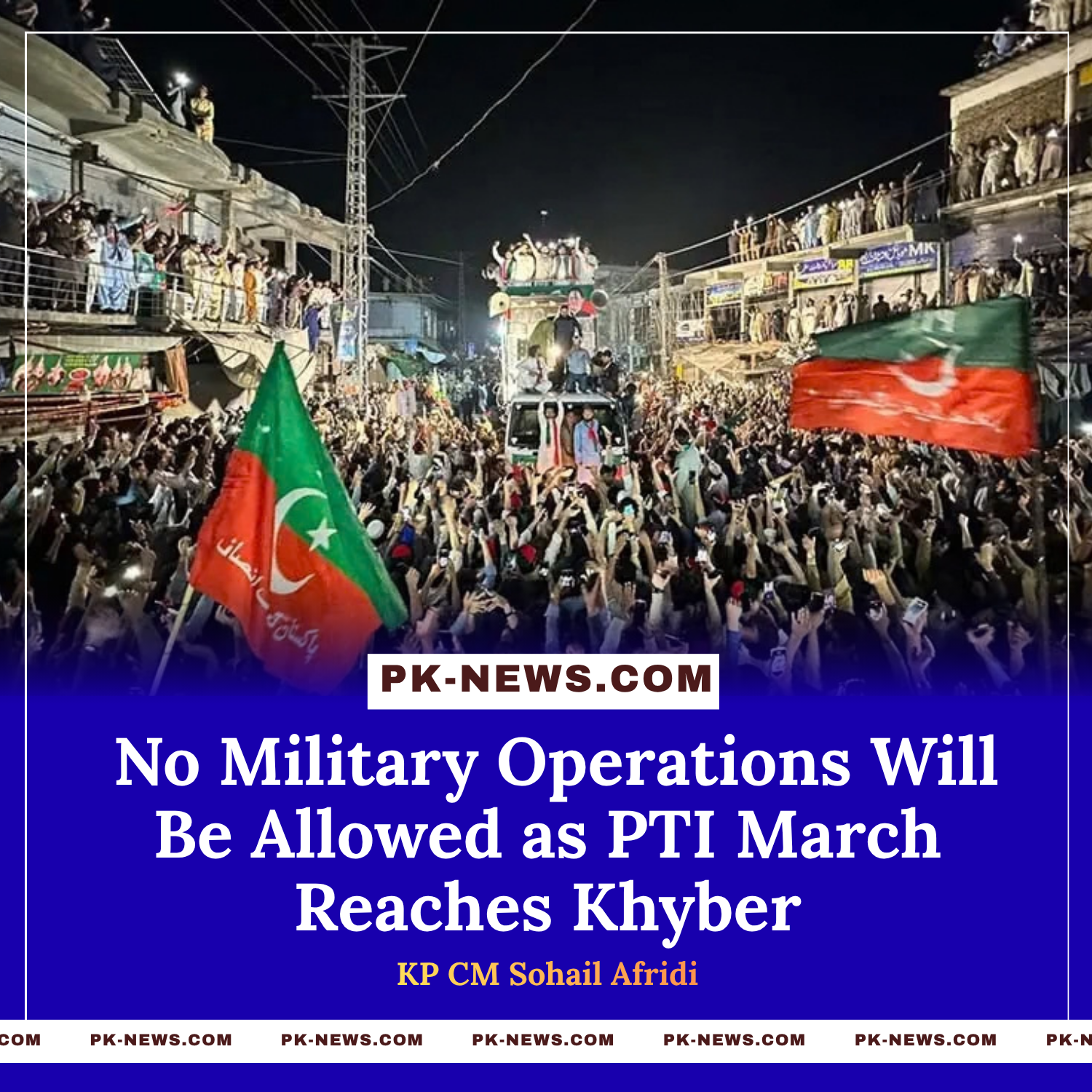
KP CM Sohail Afridi Says No Military Operations Will Be Allowed as PTI March Reaches Khyber
9
Politics PK Live News 😐 Neutral
KP CM Sohail Afridi Says No Military Operations Will Be Allowed as PTI March Reaches Khyber
Afridi Addresses PTI Supporters in Khyber as Long March Enters Fourth Day KHYBER, KHYBER PAKHTUNKHWA — October 7, 2026: Khyber Pakhtunkhwa Chief Minister Sohail Afridi has told participants of the Pakistan Tehreek-e-Insaf (PTI) long march that his provincial government would not allow military operations in the province, as the convoy continued its journey through Khyber district. Afridi made the remarks while addressing march participants during the latest stage of the PTI's ongoing political mobilisation. The chief minister's statement comes as the convoy, which began its journey from Lakki Marwat on October 4, continues to move through Khyber Pakhtunkhwa with the eventual aim of reaching the Khairabad and Attock area. Afridi Opposes Military Operations Addressing supporters, Sohail Afridi reiterated his opposition to military operations in Khyber Pakhtunkhwa. He said his government would not permit military action in the province and argued that the people of KP should be consulted on decisions affecting their security and future. The chief minister has previously criticised the federal government's approach to counterterrorism and security operations, making the issue an important part of his political messaging during the march. Afridi's latest comments further underline the growing political disagreement between the provincial and federal governments over security policy. PTI March Reaches Khyber The PTI convoy reached Bara Bazaar in Khyber district on the fourth day of the march. A large number of PTI workers and supporters gathered along the route, according to party supporters and organisers. The atmosphere was marked by PTI flags, slogans and speeches by political leaders. Supporters described the gathering as a major show of public enthusiasm for the march and its political demands. Independent figures for the size of the crowd were not immediately available. Imran Khan's Release Remains a Major Demand The release of PTI founder and former prime minister Imran Khan remains at the centre of the party's political campaign. PTI supporters participating in the march have repeatedly raised slogans in Khan's support and described the mobilisation as a struggle for political rights and freedom. The march follows continuing political tensions between PTI and the federal government. PTI leadership has maintained that the party's demands should be addressed through political and constitutional means. Security Policy Becomes a Major Political Issue The question of military operations has become increasingly important in Khyber Pakhtunkhwa amid continuing concerns about terrorism and security. The provincial government has repeatedly called for greater consultation with local communities and political leadership regarding security measures. Afridi's opposition to military operations places the issue directly within the political debate surrounding the PTI march. The federal government, meanwhile, has its own security responsibilities and has maintained that counterterrorism measures are necessary to protect citizens and national security. Tensions Between Federal and Provincial Authorities Afridi's statement adds another layer to the existing tensions between the KP government and the federal authorities. The two sides have frequently disagreed over security policy, governance and the handling of political protests. The PTI march has brought many of these disagreements into public view. By addressing supporters in Khyber, Afridi has again linked the march to broader questions concerning the province's security and political autonomy. Strong Response From Supporters PTI supporters in Khyber responded enthusiastically to Afridi's address. Participants raised slogans in support of the chief minister and Imran Khan while displaying PTI flags around the convoy. Supporters have described the march as a demonstration of political strength and public participation. The emotional atmosphere has also generated considerable activity on social media, with videos from the convoy being shared by PTI supporters. From Lakki Marwat to Khyber The march began at Gandi Chowk in Lakki Marwat on October 4. Since then, the convoy has travelled through several districts of Khyber Pakhtunkhwa. The march passed through Karak and Kohat, continued toward the Peshawar region and subsequently moved toward Khyber district. The staged route has allowed supporters from different areas to join the convoy along the way. Khairabad and Attock Await The next major political focus is expected to be Khairabad, near the Indus River and the boundary between Khyber Pakhtunkhwa and Punjab. PTI has indicated that the gathering at Khairabad could determine the next phase of the political campaign. The march's eventual movement toward Attock could therefore create a new political and administrative challenge, particularly if large numbers of participants gather at the provincial boundary. Calls for a Peaceful Political Movement PTI leadership has continued to portray the march as a political and constitutional movement. Afridi and other party figures have urged supporters to remain organised and peaceful. At the same time, the presence of large crowds along major roads and near sensitive locations requires authorities to maintain careful traffic and security arrangements. How the authorities and PTI leadership manage the next stages will be closely watched. A Defining Moment for Sohail Afridi The march has also placed Sohail Afridi under significant political pressure. By personally leading the convoy, the KP chief minister has taken direct responsibility for the mobilisation and its political outcome. His statements on security operations, Imran Khan's release and the province's political future have made him one of the central figures in the current PTI campaign. The response at Khairabad could prove particularly important for determining the next direction of the movement. PK-News.com Coverage PK-News.com is continuing to monitor the PTI long march, including developments in Khyber, Bara Bazaar, Peshawar, Khairabad and Attock. Our coverage includes political statements, public participation, security developments and the movement of the convoy. This article has been developed and researched by the PK-News.com Digital News & Research Desk based on the reported statement and publicly available information. Developed, Researched & Published by PK-News.com Muhammad Ibraheem — Founder & Lead Architect PK-News.com Pakistan & World News • Breaking News • Live TV • Blogs • Products • Digital Technology
Oct 7, 2026 at 10:47 PM
Afridi Addresses PTI Supporters in Khyber as Long March Enters Fourth Day KHYBER, KHYBER PAKHTUNKHWA — October 7, 2026: Khyber Pakhtunkhwa Chief Minister Sohail Afridi has told participants of the Pakistan Tehreek-e-Insaf (PTI) long march that his provincial government would not allow military operations in the province, as the convoy continued its journey through Khyber district. Afridi made the remarks while addressing march participants during the latest stage of the PTI's ongoing political mobilisation. The chief minister's statement comes as the convoy, which began its journey from Lakki Marwat on October 4, continues to move through Khyber Pakhtunkhwa with the eventual aim of reaching the Khairabad and Attock area. Afridi Opposes Military Operations Addressing supporters, Sohail Afridi reiterated his opposition to military operations in Khyber Pakhtunkhwa. He said his government would not permit military action in the province and argued that the people of KP should be consulted on decisions affecting their security and future. The chief minister has previously criticised the federal government's approach to counterterrorism and security operations, making the issue an important part of his political messaging during the march. Afridi's latest comments further underline the growing political disagreement between the provincial and federal governments over security policy. PTI March Reaches Khyber The PTI convoy reached Bara Bazaar in Khyber district on the fourth day of the march. A large number of PTI workers and supporters gathered along the route, according to party supporters and organisers. The atmosphere was marked by PTI flags, slogans and speeches by political leaders. Supporters described the gathering as a major show of public enthusiasm for the march and its political demands. Independent figures for the size of the crowd were not immediately available. Imran Khan's Release Remains a Major Demand The release of PTI founder and former prime minister Imran Khan remains at the centre of the party's political campaign. PTI supporters participating in the march have repeatedly raised slogans in Khan's support and described the mobilisation as a struggle for political rights and freedom. The march follows continuing political tensions between PTI and the federal government. PTI leadership has maintained that the party's demands should be addressed through political and constitutional means. Security Policy Becomes a Major Political Issue The question of military operations has become increasingly important in Khyber Pakhtunkhwa amid continuing concerns about terrorism and security. The provincial government has repeatedly called for greater consultation with local communities and political leadership regarding security measures. Afridi's opposition to military operations places the issue directly within the political debate surrounding the PTI march. The federal government, meanwhile, has its own security responsibilities and has maintained that counterterrorism measures are necessary to protect citizens and national security. Tensions Between Federal and Provincial Authorities Afridi's statement adds another layer to the existing tensions between the KP government and the federal authorities. The two sides have frequently disagreed over security policy, governance and the handling of political protests. The PTI march has brought many of these disagreements into public view. By addressing supporters in Khyber, Afridi has again linked the march to broader questions concerning the province's security and political autonomy. Strong Response From Supporters PTI supporters in Khyber responded enthusiastically to Afridi's address. Participants raised slogans in support of the chief minister and Imran Khan while displaying PTI flags around the convoy. Supporters have described the march as a demonstration of political strength and public participation. The emotional atmosphere has also generated considerable activity on social media, with videos from the convoy being shared by PTI supporters. From Lakki Marwat to Khyber The march began at Gandi Chowk in Lakki Marwat on October 4. Since then, the convoy has travelled through several districts of Khyber Pakhtunkhwa. The march passed through Karak and Kohat, continued toward the Peshawar region and subsequently moved toward Khyber district. The staged route has allowed supporters from different areas to join the convoy along the way. Khairabad and Attock Await The next major political focus is expected to be Khairabad, near the Indus River and the boundary between Khyber Pakhtunkhwa and Punjab. PTI has indicated that the gathering at Khairabad could determine the next phase of the political campaign. The march's eventual movement toward Attock could therefore create a new political and administrative challenge, particularly if large numbers of participants gather at the provincial boundary. Calls for a Peaceful Political Movement PTI leadership has continued to portray the march as a political and constitutional movement. Afridi and other party figures have urged supporters to remain organised and peaceful. At the same time, the presence of large crowds along major roads and near sensitive locations requires authorities to maintain careful traffic and security arrangements. How the authorities and PTI leadership manage the next stages will be closely watched. A Defining Moment for Sohail Afridi The march has also placed Sohail Afridi under significant political pressure. By personally leading the convoy, the KP chief minister has taken direct responsibility for the mobilisation and its political outcome. His statements on security operations, Imran Khan's release and the province's political future have made him one of the central figures in the current PTI campaign. The response at Khairabad could prove particularly important for determining the next direction of the movement. PK-News.com Coverage PK-News.com is continuing to monitor the PTI long march, including developments in Khyber, Bara Bazaar, Peshawar, Khairabad and Attock. Our coverage includes political statements, public participation, security developments and the movement of the convoy. This article has been developed and researched by the PK-News.com Digital News & Research Desk based on the reported statement and publicly available information. Developed, Researched & Published by PK-News.com Muhammad Ibraheem — Founder & Lead Architect PK-News.com Pakistan & World News • Breaking News • Live TV • Blogs • Products • Digital Technology
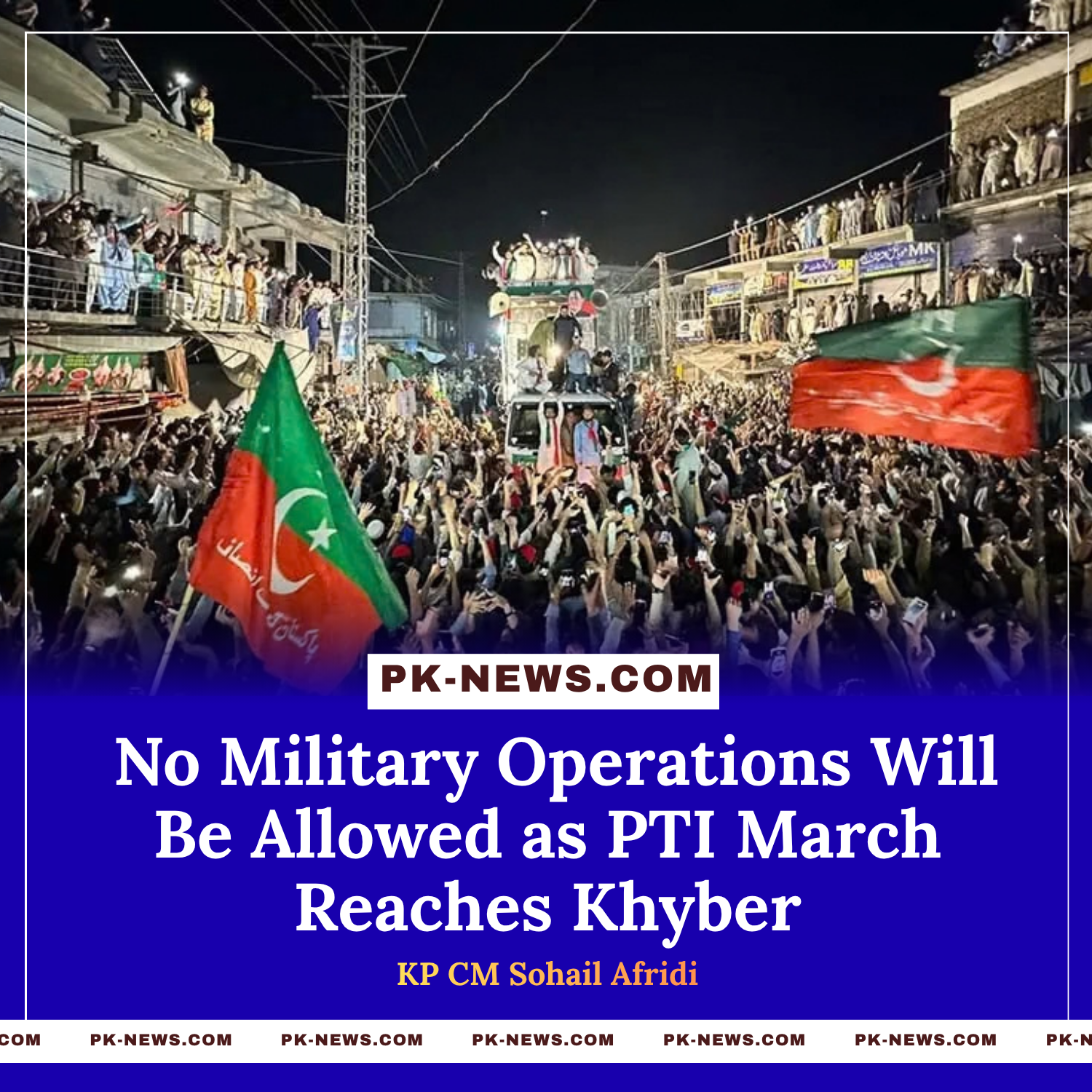
KP CM Sohail Afridi Says No Military Operations Will Be Allowed as PTI March Reaches Khyber
12
Politics PK Live News 😐 Neutral
KP CM Sohail Afridi Says No Military Operations Will Be Allowed as PTI March Reaches Khyber
Afridi Addresses PTI Supporters in Khyber as Long March Enters Fourth Day KHYBER, KHYBER PAKHTUNKHWA — October 7, 2026: Khyber Pakhtunkhwa Chief Minister Sohail Afridi has told participants of the Pakistan Tehreek-e-Insaf (PTI) long march that his provincial government would not allow military operations in the province, as the convoy continued its journey through Khyber district. Afridi made the remarks while addressing march participants during the latest stage of the PTI's ongoing political mobilisation. The chief minister's statement comes as the convoy, which began its journey from Lakki Marwat on October 4, continues to move through Khyber Pakhtunkhwa with the eventual aim of reaching the Khairabad and Attock area. Afridi Opposes Military Operations Addressing supporters, Sohail Afridi reiterated his opposition to military operations in Khyber Pakhtunkhwa. He said his government would not permit military action in the province and argued that the people of KP should be consulted on decisions affecting their security and future. The chief minister has previously criticised the federal government's approach to counterterrorism and security operations, making the issue an important part of his political messaging during the march. Afridi's latest comments further underline the growing political disagreement between the provincial and federal governments over security policy. PTI March Reaches Khyber The PTI convoy reached Bara Bazaar in Khyber district on the fourth day of the march. A large number of PTI workers and supporters gathered along the route, according to party supporters and organisers. The atmosphere was marked by PTI flags, slogans and speeches by political leaders. Supporters described the gathering as a major show of public enthusiasm for the march and its political demands. Independent figures for the size of the crowd were not immediately available. Imran Khan's Release Remains a Major Demand The release of PTI founder and former prime minister Imran Khan remains at the centre of the party's political campaign. PTI supporters participating in the march have repeatedly raised slogans in Khan's support and described the mobilisation as a struggle for political rights and freedom. The march follows continuing political tensions between PTI and the federal government. PTI leadership has maintained that the party's demands should be addressed through political and constitutional means. Security Policy Becomes a Major Political Issue The question of military operations has become increasingly important in Khyber Pakhtunkhwa amid continuing concerns about terrorism and security. The provincial government has repeatedly called for greater consultation with local communities and political leadership regarding security measures. Afridi's opposition to military operations places the issue directly within the political debate surrounding the PTI march. The federal government, meanwhile, has its own security responsibilities and has maintained that counterterrorism measures are necessary to protect citizens and national security. Tensions Between Federal and Provincial Authorities Afridi's statement adds another layer to the existing tensions between the KP government and the federal authorities. The two sides have frequently disagreed over security policy, governance and the handling of political protests. The PTI march has brought many of these disagreements into public view. By addressing supporters in Khyber, Afridi has again linked the march to broader questions concerning the province's security and political autonomy. Strong Response From Supporters PTI supporters in Khyber responded enthusiastically to Afridi's address. Participants raised slogans in support of the chief minister and Imran Khan while displaying PTI flags around the convoy. Supporters have described the march as a demonstration of political strength and public participation. The emotional atmosphere has also generated considerable activity on social media, with videos from the convoy being shared by PTI supporters. From Lakki Marwat to Khyber The march began at Gandi Chowk in Lakki Marwat on October 4. Since then, the convoy has travelled through several districts of Khyber Pakhtunkhwa. The march passed through Karak and Kohat, continued toward the Peshawar region and subsequently moved toward Khyber district. The staged route has allowed supporters from different areas to join the convoy along the way. Khairabad and Attock Await The next major political focus is expected to be Khairabad, near the Indus River and the boundary between Khyber Pakhtunkhwa and Punjab. PTI has indicated that the gathering at Khairabad could determine the next phase of the political campaign. The march's eventual movement toward Attock could therefore create a new political and administrative challenge, particularly if large numbers of participants gather at the provincial boundary. Calls for a Peaceful Political Movement PTI leadership has continued to portray the march as a political and constitutional movement. Afridi and other party figures have urged supporters to remain organised and peaceful. At the same time, the presence of large crowds along major roads and near sensitive locations requires authorities to maintain careful traffic and security arrangements. How the authorities and PTI leadership manage the next stages will be closely watched. A Defining Moment for Sohail Afridi The march has also placed Sohail Afridi under significant political pressure. By personally leading the convoy, the KP chief minister has taken direct responsibility for the mobilisation and its political outcome. His statements on security operations, Imran Khan's release and the province's political future have made him one of the central figures in the current PTI campaign. The response at Khairabad could prove particularly important for determining the next direction of the movement. PK-News.com Coverage PK-News.com is continuing to monitor the PTI long march, including developments in Khyber, Bara Bazaar, Peshawar, Khairabad and Attock. Our coverage includes political statements, public participation, security developments and the movement of the convoy. This article has been developed and researched by the PK-News.com Digital News & Research Desk based on the reported statement and publicly available information. Developed, Researched & Published by PK-News.com Muhammad Ibraheem — Founder & Lead Architect PK-News.com Pakistan & World News • Breaking News • Live TV • Blogs • Products • Digital Technology
Oct 7, 2026 at 10:46 PM
Afridi Addresses PTI Supporters in Khyber as Long March Enters Fourth Day KHYBER, KHYBER PAKHTUNKHWA — October 7, 2026: Khyber Pakhtunkhwa Chief Minister Sohail Afridi has told participants of the Pakistan Tehreek-e-Insaf (PTI) long march that his provincial government would not allow military operations in the province, as the convoy continued its journey through Khyber district. Afridi made the remarks while addressing march participants during the latest stage of the PTI's ongoing political mobilisation. The chief minister's statement comes as the convoy, which began its journey from Lakki Marwat on October 4, continues to move through Khyber Pakhtunkhwa with the eventual aim of reaching the Khairabad and Attock area. Afridi Opposes Military Operations Addressing supporters, Sohail Afridi reiterated his opposition to military operations in Khyber Pakhtunkhwa. He said his government would not permit military action in the province and argued that the people of KP should be consulted on decisions affecting their security and future. The chief minister has previously criticised the federal government's approach to counterterrorism and security operations, making the issue an important part of his political messaging during the march. Afridi's latest comments further underline the growing political disagreement between the provincial and federal governments over security policy. PTI March Reaches Khyber The PTI convoy reached Bara Bazaar in Khyber district on the fourth day of the march. A large number of PTI workers and supporters gathered along the route, according to party supporters and organisers. The atmosphere was marked by PTI flags, slogans and speeches by political leaders. Supporters described the gathering as a major show of public enthusiasm for the march and its political demands. Independent figures for the size of the crowd were not immediately available. Imran Khan's Release Remains a Major Demand The release of PTI founder and former prime minister Imran Khan remains at the centre of the party's political campaign. PTI supporters participating in the march have repeatedly raised slogans in Khan's support and described the mobilisation as a struggle for political rights and freedom. The march follows continuing political tensions between PTI and the federal government. PTI leadership has maintained that the party's demands should be addressed through political and constitutional means. Security Policy Becomes a Major Political Issue The question of military operations has become increasingly important in Khyber Pakhtunkhwa amid continuing concerns about terrorism and security. The provincial government has repeatedly called for greater consultation with local communities and political leadership regarding security measures. Afridi's opposition to military operations places the issue directly within the political debate surrounding the PTI march. The federal government, meanwhile, has its own security responsibilities and has maintained that counterterrorism measures are necessary to protect citizens and national security. Tensions Between Federal and Provincial Authorities Afridi's statement adds another layer to the existing tensions between the KP government and the federal authorities. The two sides have frequently disagreed over security policy, governance and the handling of political protests. The PTI march has brought many of these disagreements into public view. By addressing supporters in Khyber, Afridi has again linked the march to broader questions concerning the province's security and political autonomy. Strong Response From Supporters PTI supporters in Khyber responded enthusiastically to Afridi's address. Participants raised slogans in support of the chief minister and Imran Khan while displaying PTI flags around the convoy. Supporters have described the march as a demonstration of political strength and public participation. The emotional atmosphere has also generated considerable activity on social media, with videos from the convoy being shared by PTI supporters. From Lakki Marwat to Khyber The march began at Gandi Chowk in Lakki Marwat on October 4. Since then, the convoy has travelled through several districts of Khyber Pakhtunkhwa. The march passed through Karak and Kohat, continued toward the Peshawar region and subsequently moved toward Khyber district. The staged route has allowed supporters from different areas to join the convoy along the way. Khairabad and Attock Await The next major political focus is expected to be Khairabad, near the Indus River and the boundary between Khyber Pakhtunkhwa and Punjab. PTI has indicated that the gathering at Khairabad could determine the next phase of the political campaign. The march's eventual movement toward Attock could therefore create a new political and administrative challenge, particularly if large numbers of participants gather at the provincial boundary. Calls for a Peaceful Political Movement PTI leadership has continued to portray the march as a political and constitutional movement. Afridi and other party figures have urged supporters to remain organised and peaceful. At the same time, the presence of large crowds along major roads and near sensitive locations requires authorities to maintain careful traffic and security arrangements. How the authorities and PTI leadership manage the next stages will be closely watched. A Defining Moment for Sohail Afridi The march has also placed Sohail Afridi under significant political pressure. By personally leading the convoy, the KP chief minister has taken direct responsibility for the mobilisation and its political outcome. His statements on security operations, Imran Khan's release and the province's political future have made him one of the central figures in the current PTI campaign. The response at Khairabad could prove particularly important for determining the next direction of the movement. PK-News.com Coverage PK-News.com is continuing to monitor the PTI long march, including developments in Khyber, Bara Bazaar, Peshawar, Khairabad and Attock. Our coverage includes political statements, public participation, security developments and the movement of the convoy. This article has been developed and researched by the PK-News.com Digital News & Research Desk based on the reported statement and publicly available information. Developed, Researched & Published by PK-News.com Muhammad Ibraheem — Founder & Lead Architect PK-News.com Pakistan & World News • Breaking News • Live TV • Blogs • Products • Digital Technology
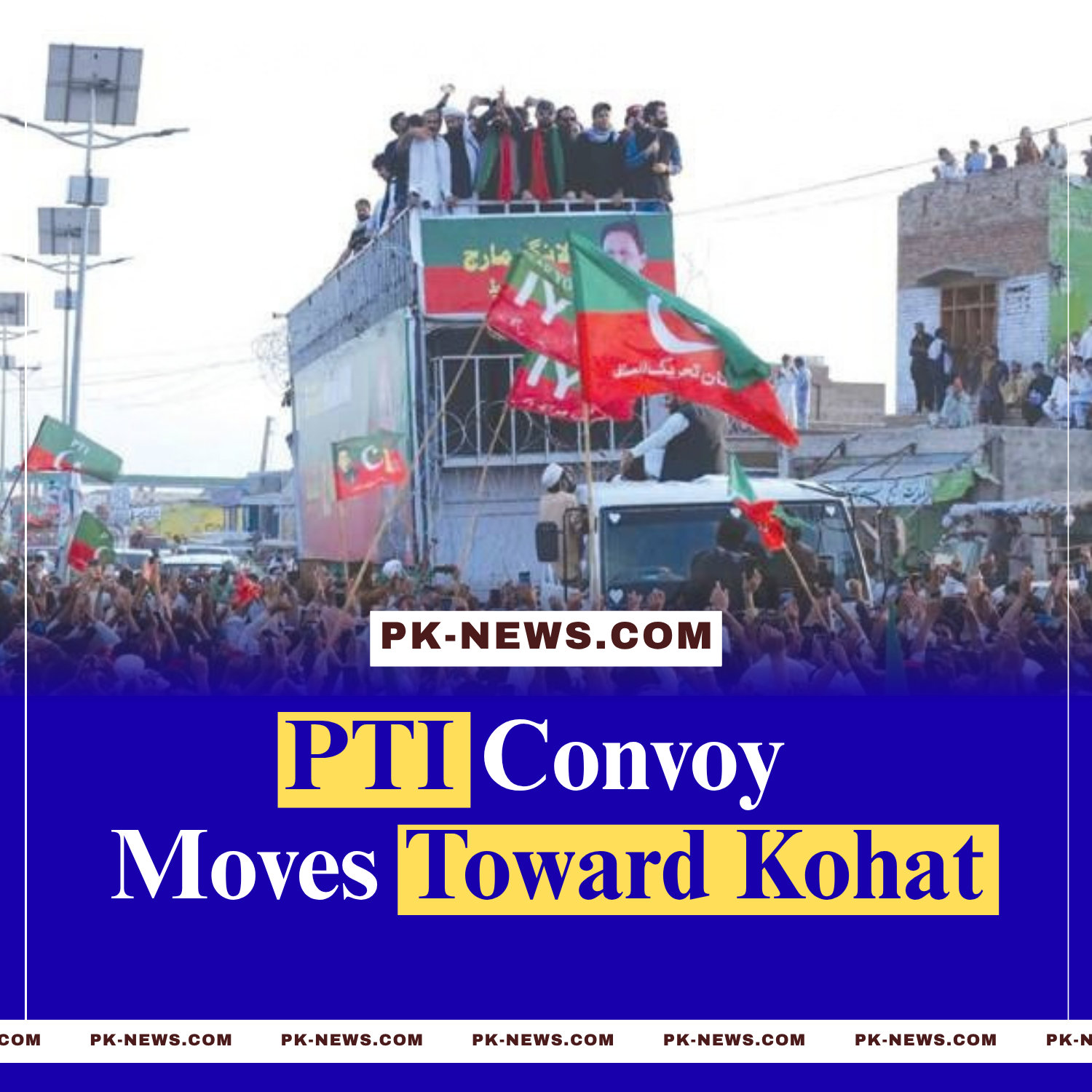
PTI Long March Enters Next Phase as Sohail Afridi Leads Convoy Toward Kohat
7
Politics PK Live News 😔 Negative
PTI Long March Enters Next Phase as Sohail Afridi Leads Convoy Toward Kohat
PTI March Continues Toward Islamabad ISLAMABAD — Pakistan Tehreek-e-Insaf (PTI)'s long march toward Islamabad entered its next phase on October 5, 2026, as Khyber Pakhtunkhwa Chief Minister Sohail Afridi resumed the procession from Karak and led the main convoy toward Kohat. The march began a day earlier from Gandi Chowk in Lakki Marwat after government-opposition negotiations failed to produce an agreement. PTI says the protest is primarily aimed at demanding the release of party founder and former prime minister Imran Khan. Sohail Afridi Addresses Supporters in Karak Sohail Afridi addressed PTI supporters in Karak on October 5 before resuming the journey toward Kohat. Speaking to participants, the KP chief minister called for sustained mobilisation and told supporters that the movement should be approached as a long political struggle rather than a short campaign. He also urged people from the region to participate in large numbers. Convoy Reaches Kohat After leaving Karak, the PTI convoy moved toward Kohat, reaching the Lachi area where participants halted for the night. According to the announced schedule, the convoy is expected to resume its journey toward Peshawar on October 6. The march is being conducted in stages, with additional supporters expected to join at different points along the route. PTI's Main Demand Is Imran Khan's Release The release of Imran Khan remains the central demand of the PTI protest. Khan, who has been imprisoned since 2023 in cases that he and his party describe as politically motivated, remains the central figure around whom PTI has organised its political campaign. The party has also raised concerns about access to him and his ability to communicate with political and legal representatives. Government-PTI Talks End in Deadlock The long march followed the breakdown of negotiations between PTI and the federal government. The two sides failed to bridge their differences during talks, with disagreements particularly involving the security and counterterrorism situation in Khyber Pakhtunkhwa. PTI proceeded with the march after the negotiations failed to produce a compromise. Government and PTI Blame Each Other Both sides have blamed the other for the failure of negotiations. PTI leaders have argued that the government did not adequately address their political demands, while government officials have criticised the KP leadership over security and counterterrorism issues. Interior Minister Mohsin Naqvi has also blamed Sohail Afridi for contributing to the collapse of talks. PTI Has Announced a Multi-Day Route The PTI leadership has announced a staged route for the procession through Khyber Pakhtunkhwa. After Lakki Marwat and Karak, the convoy moved to Kohat and is scheduled to proceed toward Peshawar. From there, the planned route includes the Charsadda area before the procession reaches Khairabad on October 8. Peshawar Is the Next Major Stop The convoy is scheduled to leave Kohat and move toward Peshawar on October 6. Supporters from Kohat, Hangu, Kurram and Orakzai are expected to join the procession as it moves through the region. The convoy is then expected to spend the night around the Mattani area before continuing its journey. Charsadda and Khairabad Plan On October 7, the convoy is scheduled to move from Budh Bair in Peshawar toward the Charsadda area. According to the announced schedule, supporters from Charsadda and Mohmand are expected to join the procession before it moves toward Khairabad on October 8. The PTI leadership has not publicly detailed the final route from Khairabad into Islamabad. October 8 Could Be a Major Turning Point The October 8 gathering at Khairabad is expected to be an important moment in the PTI campaign. Sohail Afridi has said that the next phase of the movement will be announced at Khairabad. This means the final strategy for the procession toward Islamabad remains subject to decisions by the PTI leadership after the gathering. Separate Gandapur Convoy Faces Roadblocks A separate PTI convoy led by former KP chief minister Ali Amin Gandapur also attempted to join the mobilisation from Dera Ismail Khan. The convoy reportedly turned back near Yarik after encountering roadblocks and security restrictions. Gandapur told workers that Section 144 was in force in the area and urged supporters not to damage public property or worsen the law-and-order situation. Government Tightens Security The federal government has increased security measures in anticipation of the PTI march reaching Islamabad. Authorities have deployed containers and barriers at various points and have warned that gatherings in the capital will not be permitted if they threaten public order. The government has also maintained a strong security presence around sensitive areas of Islamabad. Islamabad Faces Potential Disruption The planned arrival of a large political procession could affect traffic and routine activity in Islamabad and surrounding areas. The government has indicated that it will prevent protesters from entering sensitive parts of the capital, while PTI has continued to announce its mobilisation plans. The competing positions have raised concerns about possible confrontation if the march reaches the capital's entry points. Section 144 Imposed in Parts of KP Authorities have imposed restrictions under Section 144 in several districts of Khyber Pakhtunkhwa in connection with the security situation and the planned political activity. The restrictions have affected movement in parts of the province and have contributed to roadblocks encountered by some PTI supporters. PTI leaders have criticised such measures while the authorities have defended them on security grounds. Government Warns Against Disorder Federal officials have repeatedly warned that protesters will not be allowed to create disorder or damage public property. The government has also linked its concerns to the wider security situation in Khyber Pakhtunkhwa, where militant attacks have increased. Officials say the province requires greater attention to counterterrorism rather than political confrontation. PTI Calls for Peaceful Political Protest PTI leaders have maintained that their movement is political and that supporters should avoid violence and damage to public property. Sohail Afridi has described the right to peaceful protest as constitutionally protected and has continued to call on PTI supporters to participate in the movement. Political Tensions Continue The march has intensified the political confrontation between the PTI-led provincial government and the federal government. The situation is particularly sensitive because PTI controls the provincial government in Khyber Pakhtunkhwa, while the federal government has accused the provincial administration of failing to cooperate sufficiently on counterterrorism matters. PTI rejects the government's characterisation and says its political rights must be respected. Possibility of Renewed Negotiations Despite the failure of the latest talks, another round of political dialogue cannot be completely ruled out. The continuation of the march and the government's warnings have created pressure on both sides. If the political leadership finds common ground, negotiations could potentially resume. However, PTI's decision to continue its mobilisation shows that there is currently no agreed political settlement. What Happens Next? The next immediate stage will be the convoy's movement from Kohat toward Peshawar on October 6. The procession is then expected to move through Peshawar and the Charsadda area before reaching Khairabad on October 8. The PTI leadership is expected to announce its next strategy there, making the coming days important for determining whether the movement continues toward Islamabad or takes another direction. Current PTI Situation As of October 5, 2026, the PTI long march has moved beyond its initial Lakki Marwat stage and continued through Karak toward Kohat, with the main convoy halting in Kohat overnight. The movement remains focused on Imran Khan's release and other PTI political demands, while the federal government has maintained that it will not allow disruption or violence in Islamabad. PK-News.com Analysis The PTI long march has entered a crucial stage following the breakdown of government-opposition negotiations. Sohail Afridi's decision to continue leading the convoy demonstrates that PTI intends to maintain pressure through street mobilisation rather than immediately return to negotiations. However, the final outcome remains uncertain. The government's security preparations, the size of the crowds joining the convoy, the situation on major roads and the possibility of renewed political dialogue will all influence what happens next. The October 8 Khairabad gathering could become the most important point so far because PTI leadership has not yet publicly revealed the complete final strategy for the Islamabad phase. PK-News.com Latest Update PTI's long march is continuing toward Islamabad after government-opposition talks ended without an agreement. On October 5, KP Chief Minister Sohail Afridi addressed supporters in Karak before leading the convoy toward Kohat, where the protesters halted for the night. The convoy is scheduled to continue toward Peshawar on October 6 and later move toward the Charsadda and Khairabad areas. The PTI leadership has said the next phase of the movement will be announced at Khairabad on October 8, while the federal government continues to maintain heightened security and warns against disruption in Islamabad. This article was developed and researched by PK-News.com based on reports from Dawn, Reuters, Associated Press and other verified sources available on October 5, 2026. Key Points Party: Pakistan Tehreek-e-Insaf (PTI) March launched: October 4, 2026 Starting point: Gandi Chowk, Lakki Marwat Leader: KP Chief Minister Sohail Afridi Main demand: Release of Imran Khan October 5: Afridi addressed supporters in Karak Current stage: Convoy reached Kohat October 6: Planned movement toward Peshawar October 7: Planned movement toward Charsadda October 8: Planned gathering at Khairabad Next strategy: Expected to be announced at Khairabad Government: Heightened security around Islamabad Talks: Government-PTI negotiations remain deadlocked
Oct 5, 2026 at 11:30 PM
PTI March Continues Toward Islamabad ISLAMABAD — Pakistan Tehreek-e-Insaf (PTI)'s long march toward Islamabad entered its next phase on October 5, 2026, as Khyber Pakhtunkhwa Chief Minister Sohail Afridi resumed the procession from Karak and led the main convoy toward Kohat. The march began a day earlier from Gandi Chowk in Lakki Marwat after government-opposition negotiations failed to produce an agreement. PTI says the protest is primarily aimed at demanding the release of party founder and former prime minister Imran Khan. Sohail Afridi Addresses Supporters in Karak Sohail Afridi addressed PTI supporters in Karak on October 5 before resuming the journey toward Kohat. Speaking to participants, the KP chief minister called for sustained mobilisation and told supporters that the movement should be approached as a long political struggle rather than a short campaign. He also urged people from the region to participate in large numbers. Convoy Reaches Kohat After leaving Karak, the PTI convoy moved toward Kohat, reaching the Lachi area where participants halted for the night. According to the announced schedule, the convoy is expected to resume its journey toward Peshawar on October 6. The march is being conducted in stages, with additional supporters expected to join at different points along the route. PTI's Main Demand Is Imran Khan's Release The release of Imran Khan remains the central demand of the PTI protest. Khan, who has been imprisoned since 2023 in cases that he and his party describe as politically motivated, remains the central figure around whom PTI has organised its political campaign. The party has also raised concerns about access to him and his ability to communicate with political and legal representatives. Government-PTI Talks End in Deadlock The long march followed the breakdown of negotiations between PTI and the federal government. The two sides failed to bridge their differences during talks, with disagreements particularly involving the security and counterterrorism situation in Khyber Pakhtunkhwa. PTI proceeded with the march after the negotiations failed to produce a compromise. Government and PTI Blame Each Other Both sides have blamed the other for the failure of negotiations. PTI leaders have argued that the government did not adequately address their political demands, while government officials have criticised the KP leadership over security and counterterrorism issues. Interior Minister Mohsin Naqvi has also blamed Sohail Afridi for contributing to the collapse of talks. PTI Has Announced a Multi-Day Route The PTI leadership has announced a staged route for the procession through Khyber Pakhtunkhwa. After Lakki Marwat and Karak, the convoy moved to Kohat and is scheduled to proceed toward Peshawar. From there, the planned route includes the Charsadda area before the procession reaches Khairabad on October 8. Peshawar Is the Next Major Stop The convoy is scheduled to leave Kohat and move toward Peshawar on October 6. Supporters from Kohat, Hangu, Kurram and Orakzai are expected to join the procession as it moves through the region. The convoy is then expected to spend the night around the Mattani area before continuing its journey. Charsadda and Khairabad Plan On October 7, the convoy is scheduled to move from Budh Bair in Peshawar toward the Charsadda area. According to the announced schedule, supporters from Charsadda and Mohmand are expected to join the procession before it moves toward Khairabad on October 8. The PTI leadership has not publicly detailed the final route from Khairabad into Islamabad. October 8 Could Be a Major Turning Point The October 8 gathering at Khairabad is expected to be an important moment in the PTI campaign. Sohail Afridi has said that the next phase of the movement will be announced at Khairabad. This means the final strategy for the procession toward Islamabad remains subject to decisions by the PTI leadership after the gathering. Separate Gandapur Convoy Faces Roadblocks A separate PTI convoy led by former KP chief minister Ali Amin Gandapur also attempted to join the mobilisation from Dera Ismail Khan. The convoy reportedly turned back near Yarik after encountering roadblocks and security restrictions. Gandapur told workers that Section 144 was in force in the area and urged supporters not to damage public property or worsen the law-and-order situation. Government Tightens Security The federal government has increased security measures in anticipation of the PTI march reaching Islamabad. Authorities have deployed containers and barriers at various points and have warned that gatherings in the capital will not be permitted if they threaten public order. The government has also maintained a strong security presence around sensitive areas of Islamabad. Islamabad Faces Potential Disruption The planned arrival of a large political procession could affect traffic and routine activity in Islamabad and surrounding areas. The government has indicated that it will prevent protesters from entering sensitive parts of the capital, while PTI has continued to announce its mobilisation plans. The competing positions have raised concerns about possible confrontation if the march reaches the capital's entry points. Section 144 Imposed in Parts of KP Authorities have imposed restrictions under Section 144 in several districts of Khyber Pakhtunkhwa in connection with the security situation and the planned political activity. The restrictions have affected movement in parts of the province and have contributed to roadblocks encountered by some PTI supporters. PTI leaders have criticised such measures while the authorities have defended them on security grounds. Government Warns Against Disorder Federal officials have repeatedly warned that protesters will not be allowed to create disorder or damage public property. The government has also linked its concerns to the wider security situation in Khyber Pakhtunkhwa, where militant attacks have increased. Officials say the province requires greater attention to counterterrorism rather than political confrontation. PTI Calls for Peaceful Political Protest PTI leaders have maintained that their movement is political and that supporters should avoid violence and damage to public property. Sohail Afridi has described the right to peaceful protest as constitutionally protected and has continued to call on PTI supporters to participate in the movement. Political Tensions Continue The march has intensified the political confrontation between the PTI-led provincial government and the federal government. The situation is particularly sensitive because PTI controls the provincial government in Khyber Pakhtunkhwa, while the federal government has accused the provincial administration of failing to cooperate sufficiently on counterterrorism matters. PTI rejects the government's characterisation and says its political rights must be respected. Possibility of Renewed Negotiations Despite the failure of the latest talks, another round of political dialogue cannot be completely ruled out. The continuation of the march and the government's warnings have created pressure on both sides. If the political leadership finds common ground, negotiations could potentially resume. However, PTI's decision to continue its mobilisation shows that there is currently no agreed political settlement. What Happens Next? The next immediate stage will be the convoy's movement from Kohat toward Peshawar on October 6. The procession is then expected to move through Peshawar and the Charsadda area before reaching Khairabad on October 8. The PTI leadership is expected to announce its next strategy there, making the coming days important for determining whether the movement continues toward Islamabad or takes another direction. Current PTI Situation As of October 5, 2026, the PTI long march has moved beyond its initial Lakki Marwat stage and continued through Karak toward Kohat, with the main convoy halting in Kohat overnight. The movement remains focused on Imran Khan's release and other PTI political demands, while the federal government has maintained that it will not allow disruption or violence in Islamabad. PK-News.com Analysis The PTI long march has entered a crucial stage following the breakdown of government-opposition negotiations. Sohail Afridi's decision to continue leading the convoy demonstrates that PTI intends to maintain pressure through street mobilisation rather than immediately return to negotiations. However, the final outcome remains uncertain. The government's security preparations, the size of the crowds joining the convoy, the situation on major roads and the possibility of renewed political dialogue will all influence what happens next. The October 8 Khairabad gathering could become the most important point so far because PTI leadership has not yet publicly revealed the complete final strategy for the Islamabad phase. PK-News.com Latest Update PTI's long march is continuing toward Islamabad after government-opposition talks ended without an agreement. On October 5, KP Chief Minister Sohail Afridi addressed supporters in Karak before leading the convoy toward Kohat, where the protesters halted for the night. The convoy is scheduled to continue toward Peshawar on October 6 and later move toward the Charsadda and Khairabad areas. The PTI leadership has said the next phase of the movement will be announced at Khairabad on October 8, while the federal government continues to maintain heightened security and warns against disruption in Islamabad. This article was developed and researched by PK-News.com based on reports from Dawn, Reuters, Associated Press and other verified sources available on October 5, 2026. Key Points Party: Pakistan Tehreek-e-Insaf (PTI) March launched: October 4, 2026 Starting point: Gandi Chowk, Lakki Marwat Leader: KP Chief Minister Sohail Afridi Main demand: Release of Imran Khan October 5: Afridi addressed supporters in Karak Current stage: Convoy reached Kohat October 6: Planned movement toward Peshawar October 7: Planned movement toward Charsadda October 8: Planned gathering at Khairabad Next strategy: Expected to be announced at Khairabad Government: Heightened security around Islamabad Talks: Government-PTI negotiations remain deadlocked
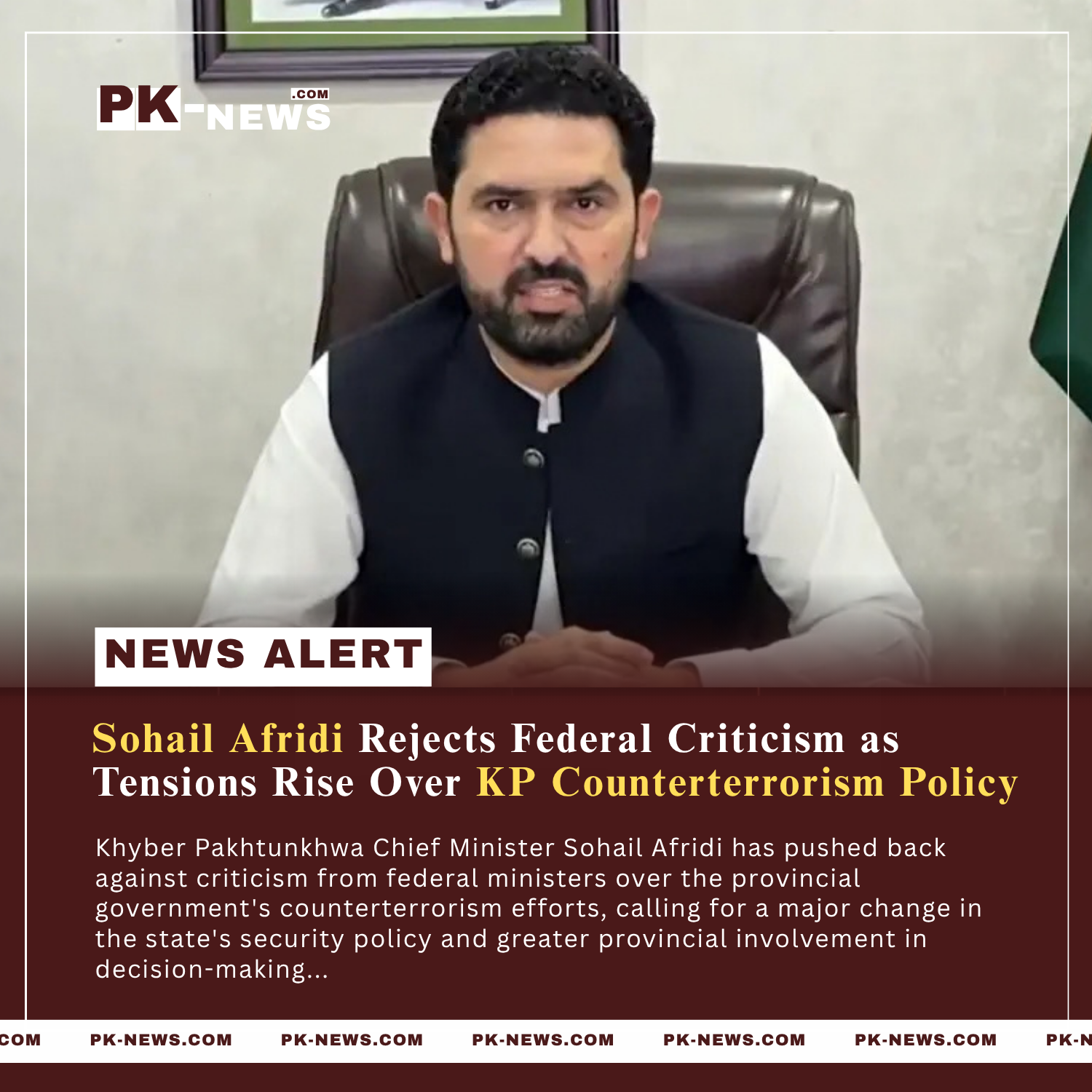
Sohail Afridi Rejects Federal Criticism as Tensions Rise Over KP Counterterrorism Policy
13
Politics PK Live News 😔 Negative
Sohail Afridi Rejects Federal Criticism as Tensions Rise Over KP Counterterrorism Policy
Khyber Pakhtunkhwa Chief Minister Sohail Afridi has pushed back against criticism from federal ministers over the provincial government's counterterrorism efforts, calling for a major change in the state's security policy and greater provincial involvement in decision-making. The exchange comes amid renewed security concerns in KP and growing political tensions between the federal and provincial governments. By PK-News.com September 28, 2026 Khyber Pakhtunkhwa Chief Minister Sohail Afridi has adopted a firm position in response to criticism from federal ministers over his government's handling of terrorism and security in the province. PK-News.com has searched and reviewed the latest available reports, official statements and developments surrounding the dispute. The latest situation shows a widening disagreement between the federal and KP governments over counterterrorism policy, allocation of security resources and the role of the provincial administration in decisions concerning peace and security. The dispute intensified on Monday after federal ministers Attaullah Tarar and Talal Chaudhry criticized the PTI-led KP government, while Afridi defended his administration and again called for a change in the state's approach to counterterrorism. Afridi Calls for a Policy Change Speaking during a law-and-order meeting in Peshawar, CM Sohail Afridi argued that Pakistan's existing counterterrorism policy needs to be reconsidered. Afridi said his government had repeatedly warned about the deteriorating security situation and maintained that policies affecting KP should not be formulated without consulting the province. He called for a new counterterrorism strategy involving the provincial government, administration and police, arguing that those directly dealing with the security situation on the ground should have a role in policymaking. The chief minister also argued that simply providing additional resources to police would not resolve the problem without a broader change in policy. Afridi said his government had consistently opposed what he described as a long-running approach to counterterrorism and maintained that the people of KP had suffered heavily from violence. Federal Ministers Criticize KP Government Federal ministers presented a substantially different assessment. Minister of State for Interior Talal Chaudhry criticized the KP government's leadership, resources and use of its authority in the fight against terrorism. He argued that provincial leadership had responsibilities in providing resources and direction to security forces. Chaudhry also raised questions about the availability of equipment and infrastructure for KP's police and counterterrorism institutions, including bulletproof vehicles, protective equipment, training, the Counter-Terrorism Department and forensic facilities. The federal minister also criticized the provincial government's approach toward Afghanistan and questioned why KP authorities had not more openly condemned what Islamabad considers the source of cross-border militant threats. These statements represent the federal government's position and were strongly disputed by the KP leadership. Attaullah Tarar Raises Further Allegations Information Minister Attaullah Tarar also criticized the PTI-led provincial government during the federal briefing. According to the latest reporting, Tarar accused PTI of failing to take ownership of the fight against terrorism and made allegations concerning the party's approach toward militant groups. Those allegations are political claims from the federal government and have been disputed by PTI leadership. The exchange reflects the increasingly sharp political disagreement between Islamabad and the PTI-led provincial administration in KP. Afridi Defends KP Government's Security Spending Afridi has also pointed to steps taken by his administration to strengthen the police. According to the chief minister, the KP government diverted Rs35 billion from its development budget to the police, effectively doubling the allocation. He said the provincial government was also working to strengthen the Special Branch and provide modern weapons and other essential equipment to police personnel. The figures and claims regarding provincial spending were presented by Afridi as part of his defence of the government's security record. Federal ministers, however, have questioned whether the available resources are being used effectively. D.I. Khan Attack Adds Pressure The political dispute comes shortly after a deadly attack in Dera Ismail Khan's Darazinda area. Afridi visited injured people following the attack and called for greater cooperation between the federal and provincial governments. The chief minister said the security situation required closer coordination and argued that KP should be consulted before major decisions concerning peace and security are made. He also called for the federal government to provide armoured personnel carriers to the province and said families of people killed in terrorist attacks would receive martyr packages. The attack has intensified attention on security arrangements in KP and increased pressure on both federal and provincial authorities to address the continuing threat. Dispute Over Afghanistan Afghanistan has also become an important part of the disagreement. Federal officials have criticized the KP government's position on Afghanistan and questioned whether the provincial administration has been sufficiently direct in condemning militant activity linked to Afghan territory. Afridi, meanwhile, has argued for a broader policy approach and greater involvement of KP stakeholders in decisions concerning the western border and security. Pakistan's federal government has repeatedly raised concerns about militant groups operating from Afghanistan, while Afghan authorities have rejected various Pakistani allegations. The issue remains one of the major sources of tension between Islamabad and Kabul. Governor's Rule Debate Adds Political Pressure The counterterrorism dispute is unfolding alongside a separate political confrontation over the future of the KP government. There has been recent discussion in political circles about the possibility of governor's rule or emergency measures in the province, while PTI leaders have strongly opposed such a move. KP Governor Faisal Karim Kundi has warned the provincial government over the worsening security situation and has urged PTI to reconsider its planned October 4 march. The governor has also called for political stakeholders to focus on the security situation and discuss ways to restore peace. These developments have added another layer to the already tense relationship between the federal government and the PTI-led KP administration. October 4 PTI Protest Remains a Major Political Issue The dispute is also taking place only days before PTI's planned October 4 protest and march. PTI has maintained its plan for the mobilisation, while government officials have raised concerns about political activity taking place amid serious security problems in KP. The combination of the security situation, the dispute over counterterrorism policy and the upcoming protest has made the coming days politically significant. However, the exact security arrangements and political developments before October 4 remain subject to change. What the Two Sides Are Saying The current dispute can broadly be divided into two positions: KP government position: Counterterrorism policy needs to change. KP should be included in security decision-making. The province requires greater federal resources. Policies should reflect conditions on the ground. The provincial government says it has increased police funding and equipment. Federal government position: The KP government has not done enough to combat terrorism. Provincial leadership should provide stronger direction and resources to security forces. Federal officials have questioned KP's approach toward Afghanistan and militant threats. Ministers have also criticized the provincial government's overall security performance. These are competing political positions, and PK-News.com has not independently verified the allegations made by either side. PK-News.com Monitoring the Situation PK-News.com has searched and reviewed the latest available reports and statements concerning the growing dispute between the federal government and the KP administration. The latest development is that CM Sohail Afridi is maintaining a firm position on changing counterterrorism policy, while federal ministers are publicly criticizing the KP government's handling of security and counterterrorism. The disagreement comes amid a serious security situation in KP, recent terrorist attacks, tensions over Afghanistan and preparations for PTI's October 4 political mobilisation. Further statements from the federal government, KP administration, security authorities and political parties are expected in the coming days. PK-News.com will continue monitoring the situation and update this report as verified developments emerge.
Sep 28, 2026 at 10:33 PM
Khyber Pakhtunkhwa Chief Minister Sohail Afridi has pushed back against criticism from federal ministers over the provincial government's counterterrorism efforts, calling for a major change in the state's security policy and greater provincial involvement in decision-making. The exchange comes amid renewed security concerns in KP and growing political tensions between the federal and provincial governments. By PK-News.com September 28, 2026 Khyber Pakhtunkhwa Chief Minister Sohail Afridi has adopted a firm position in response to criticism from federal ministers over his government's handling of terrorism and security in the province. PK-News.com has searched and reviewed the latest available reports, official statements and developments surrounding the dispute. The latest situation shows a widening disagreement between the federal and KP governments over counterterrorism policy, allocation of security resources and the role of the provincial administration in decisions concerning peace and security. The dispute intensified on Monday after federal ministers Attaullah Tarar and Talal Chaudhry criticized the PTI-led KP government, while Afridi defended his administration and again called for a change in the state's approach to counterterrorism. Afridi Calls for a Policy Change Speaking during a law-and-order meeting in Peshawar, CM Sohail Afridi argued that Pakistan's existing counterterrorism policy needs to be reconsidered. Afridi said his government had repeatedly warned about the deteriorating security situation and maintained that policies affecting KP should not be formulated without consulting the province. He called for a new counterterrorism strategy involving the provincial government, administration and police, arguing that those directly dealing with the security situation on the ground should have a role in policymaking. The chief minister also argued that simply providing additional resources to police would not resolve the problem without a broader change in policy. Afridi said his government had consistently opposed what he described as a long-running approach to counterterrorism and maintained that the people of KP had suffered heavily from violence. Federal Ministers Criticize KP Government Federal ministers presented a substantially different assessment. Minister of State for Interior Talal Chaudhry criticized the KP government's leadership, resources and use of its authority in the fight against terrorism. He argued that provincial leadership had responsibilities in providing resources and direction to security forces. Chaudhry also raised questions about the availability of equipment and infrastructure for KP's police and counterterrorism institutions, including bulletproof vehicles, protective equipment, training, the Counter-Terrorism Department and forensic facilities. The federal minister also criticized the provincial government's approach toward Afghanistan and questioned why KP authorities had not more openly condemned what Islamabad considers the source of cross-border militant threats. These statements represent the federal government's position and were strongly disputed by the KP leadership. Attaullah Tarar Raises Further Allegations Information Minister Attaullah Tarar also criticized the PTI-led provincial government during the federal briefing. According to the latest reporting, Tarar accused PTI of failing to take ownership of the fight against terrorism and made allegations concerning the party's approach toward militant groups. Those allegations are political claims from the federal government and have been disputed by PTI leadership. The exchange reflects the increasingly sharp political disagreement between Islamabad and the PTI-led provincial administration in KP. Afridi Defends KP Government's Security Spending Afridi has also pointed to steps taken by his administration to strengthen the police. According to the chief minister, the KP government diverted Rs35 billion from its development budget to the police, effectively doubling the allocation. He said the provincial government was also working to strengthen the Special Branch and provide modern weapons and other essential equipment to police personnel. The figures and claims regarding provincial spending were presented by Afridi as part of his defence of the government's security record. Federal ministers, however, have questioned whether the available resources are being used effectively. D.I. Khan Attack Adds Pressure The political dispute comes shortly after a deadly attack in Dera Ismail Khan's Darazinda area. Afridi visited injured people following the attack and called for greater cooperation between the federal and provincial governments. The chief minister said the security situation required closer coordination and argued that KP should be consulted before major decisions concerning peace and security are made. He also called for the federal government to provide armoured personnel carriers to the province and said families of people killed in terrorist attacks would receive martyr packages. The attack has intensified attention on security arrangements in KP and increased pressure on both federal and provincial authorities to address the continuing threat. Dispute Over Afghanistan Afghanistan has also become an important part of the disagreement. Federal officials have criticized the KP government's position on Afghanistan and questioned whether the provincial administration has been sufficiently direct in condemning militant activity linked to Afghan territory. Afridi, meanwhile, has argued for a broader policy approach and greater involvement of KP stakeholders in decisions concerning the western border and security. Pakistan's federal government has repeatedly raised concerns about militant groups operating from Afghanistan, while Afghan authorities have rejected various Pakistani allegations. The issue remains one of the major sources of tension between Islamabad and Kabul. Governor's Rule Debate Adds Political Pressure The counterterrorism dispute is unfolding alongside a separate political confrontation over the future of the KP government. There has been recent discussion in political circles about the possibility of governor's rule or emergency measures in the province, while PTI leaders have strongly opposed such a move. KP Governor Faisal Karim Kundi has warned the provincial government over the worsening security situation and has urged PTI to reconsider its planned October 4 march. The governor has also called for political stakeholders to focus on the security situation and discuss ways to restore peace. These developments have added another layer to the already tense relationship between the federal government and the PTI-led KP administration. October 4 PTI Protest Remains a Major Political Issue The dispute is also taking place only days before PTI's planned October 4 protest and march. PTI has maintained its plan for the mobilisation, while government officials have raised concerns about political activity taking place amid serious security problems in KP. The combination of the security situation, the dispute over counterterrorism policy and the upcoming protest has made the coming days politically significant. However, the exact security arrangements and political developments before October 4 remain subject to change. What the Two Sides Are Saying The current dispute can broadly be divided into two positions: KP government position: Counterterrorism policy needs to change. KP should be included in security decision-making. The province requires greater federal resources. Policies should reflect conditions on the ground. The provincial government says it has increased police funding and equipment. Federal government position: The KP government has not done enough to combat terrorism. Provincial leadership should provide stronger direction and resources to security forces. Federal officials have questioned KP's approach toward Afghanistan and militant threats. Ministers have also criticized the provincial government's overall security performance. These are competing political positions, and PK-News.com has not independently verified the allegations made by either side. PK-News.com Monitoring the Situation PK-News.com has searched and reviewed the latest available reports and statements concerning the growing dispute between the federal government and the KP administration. The latest development is that CM Sohail Afridi is maintaining a firm position on changing counterterrorism policy, while federal ministers are publicly criticizing the KP government's handling of security and counterterrorism. The disagreement comes amid a serious security situation in KP, recent terrorist attacks, tensions over Afghanistan and preparations for PTI's October 4 political mobilisation. Further statements from the federal government, KP administration, security authorities and political parties are expected in the coming days. PK-News.com will continue monitoring the situation and update this report as verified developments emerge.
TTAP Announces Full Participation in PTI’s October 4 Protest
14
Politics PK Live News 😊 Positive
TTAP Announces Full Participation in PTI’s October 4 Protest
The Tehreek-i-Tahafuz Aain-i-Pakistan (TTAP) has announced that it will fully participate in the Pakistan Tehreek-i-Insaf’s October 4 protest and long march towards Islamabad. The announcement follows PTI’s decision to postpone its September 27 protest, with opposition leaders now preparing for the revised date. By PK-News.com September 28, 2026 The opposition alliance Tehreek-i-Tahafuz Aain-i-Pakistan (TTAP) has announced that it will fully participate in the Pakistan Tehreek-i-Insaf (PTI) protest scheduled for October 4, adding a new development to the political mobilisation surrounding the planned march towards Islamabad. PK-News.com has searched and reviewed the latest available reports and statements regarding the October 4 protest. The latest development confirms that TTAP, an opposition alliance that includes PTI, has decided to participate in the revised protest after the original September 27 date was postponed. The announcement was made through a statement by TTAP spokesperson Akhunzada Hussain Ahmad Yousafzai on September 28. According to the statement, the alliance would fully participate in the October 4 protest. PTI's Protest Rescheduled PTI had originally planned its nationwide protest and march towards Islamabad for September 27. However, on September 25, Khyber Pakhtunkhwa Chief Minister Sohail Afridi announced that the PTI political committee had unanimously decided to postpone the march until October 4. According to PTI, the revised plan is for the march to begin from Peshawar on October 4. The postponement came after extensive political and security preparations surrounding the September 27 mobilisation. PTI leaders said the decision was part of the party's political strategy, while reports also described disagreements and coordination issues among opposition groups regarding the change of date. TTAP Now Confirms Participation The latest statement from TTAP removes uncertainty over whether the opposition alliance would participate in the rescheduled protest. TTAP spokesperson Akhunzada Hussain Ahmad Yousafzai said the alliance would fully participate in the October 4 protest. He recalled that the September 27 protest call had originally been declared a joint call of the opposition alliance during a TTAP meeting. According to the spokesperson, the alliance had already developed a strategy for protests in Sindh and Balochistan and had held consultations with KP Chief Minister Sohail Afridi and PTI leadership. Earlier Differences Over the Date The decision to postpone the September 27 protest had initially created uncertainty within the opposition alliance. Reports published after PTI announced the postponement said some TTAP leaders had not initially endorsed the change. According to reporting, TTAP leadership had concerns about the decision because the original September 27 date had been agreed upon through the broader opposition alliance. PTI leadership subsequently communicated the revised decision to opposition leaders, including TTAP chief Mahmood Khan Achakzai and Senate opposition leader Allama Raja Nasir Abbas. The latest TTAP statement indicates that, despite those earlier differences, the alliance has now decided to participate in the October 4 mobilisation. October 4 Becomes Key Date The October 4 protest is expected to become a major focus of Pakistani politics over the coming days. PTI has said that the march will begin from Peshawar and proceed towards Islamabad. KP Chief Minister Sohail Afridi has continued to publicly reaffirm the October 4 plan. In remarks reported on September 28, Afridi said PTI workers would travel towards Islamabad even on motorcycles or on foot if transportation became unavailable. He also linked the October 4 mobilisation to events planned around PTI founder Imran Khan's birthday on October 5. Afridi has also continued to call for dialogue with the federal government while maintaining that PTI intends to proceed with the October 4 march. TTAP Says Political Situation Remains Important In its latest statement, TTAP said the current political situation was important for the country's democratic process, constitutional framework and political rights. The alliance has previously described the protest movement as a peaceful and constitutional political struggle. TTAP's latest announcement therefore places the alliance alongside PTI as preparations continue for October 4. The exact scale and participation level of individual opposition parties will become clearer as the date approaches. What to Expect Before October 4 Several developments could shape the political situation before the planned march. These include: Further negotiations between PTI and the federal government Security arrangements around Islamabad Movement of PTI workers from different provinces Opposition alliance coordination Statements from Mahmood Khan Achakzai and other opposition leaders Developments involving PTI founder Imran Khan Possible changes to routes and transportation arrangements Further announcements from the KP government The federal government and provincial authorities may also announce additional security or traffic measures as October 4 approaches. PTI and TTAP Coordination The latest announcement is significant because it indicates that PTI and TTAP are continuing coordination despite disagreements over the postponement of the original date. TTAP had previously supported PTI's September 27 protest and had discussed strategies for demonstrations in different parts of the country. With the revised October 4 date now confirmed by PTI and supported by TTAP, attention is expected to shift towards mobilisation and preparations during the remaining days. PK-News.com Monitoring October 4 Developments PK-News.com has searched the latest available reports and official statements and will continue monitoring developments surrounding the PTI October 4 protest. The latest confirmed development is that TTAP has announced it will fully participate in PTI's October 4 protest, following the postponement of the original September 27 mobilisation. PTI has announced October 4 as the new date for its march from Peshawar towards Islamabad, while TTAP has now confirmed its participation. Further developments regarding negotiations, security arrangements, political mobilisation and the final protest strategy are expected before October 4. PK-News.com will continue updating this story as new verified information becomes available.
Sep 28, 2026 at 10:25 PM
The Tehreek-i-Tahafuz Aain-i-Pakistan (TTAP) has announced that it will fully participate in the Pakistan Tehreek-i-Insaf’s October 4 protest and long march towards Islamabad. The announcement follows PTI’s decision to postpone its September 27 protest, with opposition leaders now preparing for the revised date. By PK-News.com September 28, 2026 The opposition alliance Tehreek-i-Tahafuz Aain-i-Pakistan (TTAP) has announced that it will fully participate in the Pakistan Tehreek-i-Insaf (PTI) protest scheduled for October 4, adding a new development to the political mobilisation surrounding the planned march towards Islamabad. PK-News.com has searched and reviewed the latest available reports and statements regarding the October 4 protest. The latest development confirms that TTAP, an opposition alliance that includes PTI, has decided to participate in the revised protest after the original September 27 date was postponed. The announcement was made through a statement by TTAP spokesperson Akhunzada Hussain Ahmad Yousafzai on September 28. According to the statement, the alliance would fully participate in the October 4 protest. PTI's Protest Rescheduled PTI had originally planned its nationwide protest and march towards Islamabad for September 27. However, on September 25, Khyber Pakhtunkhwa Chief Minister Sohail Afridi announced that the PTI political committee had unanimously decided to postpone the march until October 4. According to PTI, the revised plan is for the march to begin from Peshawar on October 4. The postponement came after extensive political and security preparations surrounding the September 27 mobilisation. PTI leaders said the decision was part of the party's political strategy, while reports also described disagreements and coordination issues among opposition groups regarding the change of date. TTAP Now Confirms Participation The latest statement from TTAP removes uncertainty over whether the opposition alliance would participate in the rescheduled protest. TTAP spokesperson Akhunzada Hussain Ahmad Yousafzai said the alliance would fully participate in the October 4 protest. He recalled that the September 27 protest call had originally been declared a joint call of the opposition alliance during a TTAP meeting. According to the spokesperson, the alliance had already developed a strategy for protests in Sindh and Balochistan and had held consultations with KP Chief Minister Sohail Afridi and PTI leadership. Earlier Differences Over the Date The decision to postpone the September 27 protest had initially created uncertainty within the opposition alliance. Reports published after PTI announced the postponement said some TTAP leaders had not initially endorsed the change. According to reporting, TTAP leadership had concerns about the decision because the original September 27 date had been agreed upon through the broader opposition alliance. PTI leadership subsequently communicated the revised decision to opposition leaders, including TTAP chief Mahmood Khan Achakzai and Senate opposition leader Allama Raja Nasir Abbas. The latest TTAP statement indicates that, despite those earlier differences, the alliance has now decided to participate in the October 4 mobilisation. October 4 Becomes Key Date The October 4 protest is expected to become a major focus of Pakistani politics over the coming days. PTI has said that the march will begin from Peshawar and proceed towards Islamabad. KP Chief Minister Sohail Afridi has continued to publicly reaffirm the October 4 plan. In remarks reported on September 28, Afridi said PTI workers would travel towards Islamabad even on motorcycles or on foot if transportation became unavailable. He also linked the October 4 mobilisation to events planned around PTI founder Imran Khan's birthday on October 5. Afridi has also continued to call for dialogue with the federal government while maintaining that PTI intends to proceed with the October 4 march. TTAP Says Political Situation Remains Important In its latest statement, TTAP said the current political situation was important for the country's democratic process, constitutional framework and political rights. The alliance has previously described the protest movement as a peaceful and constitutional political struggle. TTAP's latest announcement therefore places the alliance alongside PTI as preparations continue for October 4. The exact scale and participation level of individual opposition parties will become clearer as the date approaches. What to Expect Before October 4 Several developments could shape the political situation before the planned march. These include: Further negotiations between PTI and the federal government Security arrangements around Islamabad Movement of PTI workers from different provinces Opposition alliance coordination Statements from Mahmood Khan Achakzai and other opposition leaders Developments involving PTI founder Imran Khan Possible changes to routes and transportation arrangements Further announcements from the KP government The federal government and provincial authorities may also announce additional security or traffic measures as October 4 approaches. PTI and TTAP Coordination The latest announcement is significant because it indicates that PTI and TTAP are continuing coordination despite disagreements over the postponement of the original date. TTAP had previously supported PTI's September 27 protest and had discussed strategies for demonstrations in different parts of the country. With the revised October 4 date now confirmed by PTI and supported by TTAP, attention is expected to shift towards mobilisation and preparations during the remaining days. PK-News.com Monitoring October 4 Developments PK-News.com has searched the latest available reports and official statements and will continue monitoring developments surrounding the PTI October 4 protest. The latest confirmed development is that TTAP has announced it will fully participate in PTI's October 4 protest, following the postponement of the original September 27 mobilisation. PTI has announced October 4 as the new date for its march from Peshawar towards Islamabad, while TTAP has now confirmed its participation. Further developments regarding negotiations, security arrangements, political mobilisation and the final protest strategy are expected before October 4. PK-News.com will continue updating this story as new verified information becomes available.
PM Shehbaz Invites Mahmood Khan Achakzai for Direct Talks Amid Pakistan’s Political Tensions
176
Politics PK Live News 😊 Positive
PM Shehbaz Invites Mahmood Khan Achakzai for Direct Talks Amid Pakistan’s Political Tensions
Prime Minister Shehbaz Sharif has invited National Assembly Opposition Leader Mahmood Khan Achakzai for direct talks as Pakistan faces heightened political activity surrounding PTI’s planned Islamabad march. The invitation comes as the government and opposition remain divided over political and institutional issues, including the appointment of members of the Election Commission of Pakistan. According to PK-News.com | September 26, 2026 Pakistan’s political situation has entered another phase of dialogue after Prime Minister Shehbaz Sharif invited National Assembly Opposition Leader Mahmood Khan Achakzai for direct talks. The invitation was extended shortly after the opposition announced that its planned Islamabad long march had been postponed from September 27 to October 4. According to Dawn, a source close to the prime minister confirmed that Shehbaz Sharif had invited Achakzai for dialogue, while a PTI spokesperson confirmed that the opposition leader had received the invitation. The development comes at a sensitive moment in Pakistan’s political environment, with PTI preparing for its revised October 4 protest schedule while the government continues security preparations in and around the capital. PM Seeks Direct Meeting According to reporting by Dawn, Prime Minister Shehbaz Sharif extended the invitation to Achakzai for direct talks in an apparent effort to open a channel of communication with the opposition. No response had been received from Achakzai at the time of Dawn’s report. Business Recorder reported that the prime minister had sent another letter to Achakzai and invited him to meet and discuss issues raised by the opposition, including matters requiring consultation between the government and opposition benches. The reported outreach is taking place while Prime Minister Shehbaz Sharif is in the United States for the United Nations General Assembly. Election Commission Appointments Also on the Agenda The proposed meeting is not limited to the current political dispute. A major institutional issue requiring consultation is the appointment of a new Chief Election Commissioner (CEC) and members of the Election Commission of Pakistan. Under Article 213 of Pakistan’s Constitution, the prime minister is required to consult the opposition leader when initiating the process for appointing the Chief Election Commissioner. The terms of the existing Election Commission leadership expired in January 2025, although the officials have continued to remain in office. The process therefore requires cooperation between the government and opposition leadership. Business Recorder reported that the latest invitation specifically included discussion of appointments to the Election Commission. PTI March Moves to October 4 The invitation comes immediately after a major development involving PTI. Khyber Pakhtunkhwa Chief Minister Sohail Afridi announced that PTI’s planned Islamabad long march, originally scheduled for September 27, would instead begin from Peshawar on October 4. According to reports, the decision was taken during a meeting of PTI’s political committee. The postponement changes the immediate political timetable. The party had previously been preparing for a September 27 mobilisation, while authorities had introduced extensive security arrangements around Islamabad and other routes leading toward the capital. The new October 4 date provides additional time for both political discussions and preparations. Opposition Position The opposition’s response to the government's invitation remains an important part of the developing story. Dawn reported that Achakzai had received the invitation but that no response had been communicated at the time of publication. The News reported that the opposition leader had received another letter from the prime minister proposing a meeting at the Prime Minister House concerning three key appointments involving the Election Commission. The opposition has previously expressed reservations about the government's approach to dialogue. Therefore, receiving an invitation does not by itself establish that formal negotiations have begun. The next important development will be whether Achakzai accepts the proposed meeting and what agenda is agreed upon. Why Mahmood Khan Achakzai Is Important in the Current Situation Achakzai currently serves as Leader of the Opposition in the National Assembly. His position gives him a formal constitutional role in certain consultations with the prime minister, particularly concerning the appointment of the Chief Election Commissioner. His political role has also become significant in the current opposition mobilisation. The recent PTI decision to postpone the Islamabad march was discussed with opposition figures, according to reports. Daily Times reported that Sohail Afridi had spoken with Achakzai while seeking guidance regarding the march timetable. This places Achakzai at the intersection of the opposition's parliamentary role and the wider political negotiations surrounding the current situation. Government Faces Multiple Political Issues The government's latest invitation comes while several political issues remain under discussion. These include: Appointment of new Election Commission officials PTI's planned October 4 mobilisation The government's approach to opposition dialogue Security arrangements around Islamabad Political demands raised by PTI Broader questions concerning political stability Each issue involves different constitutional, political and administrative considerations. The proposed meeting between Shehbaz Sharif and Achakzai could therefore involve more than one subject. Islamabad Security Situation The political developments are also occurring alongside heightened security preparations in Islamabad. Authorities have taken measures to protect important infrastructure and control access around sensitive locations. On September 26, President Asif Ali Zardari approved an ordinance concerning protection of Islamabad's Safe City cameras and surveillance infrastructure. Under the ordinance, damage to a Safe City camera or related infrastructure can result in a fine of up to Rs2 million. If damage occurs during a protest, procession, sit-in, strike or public gathering, organisers may also face responsibility for the resulting damage under the ordinance. The ordinance comes after authorities cited damage to Safe City cameras during the 2024 PTI protest. This development adds another legal and administrative dimension to the security preparations surrounding future demonstrations. The October 4 Timeline With PTI's march now scheduled for October 4, the coming days could be important for political discussions. The government has an opportunity to communicate directly with opposition representatives, while the opposition has its own demands and political objectives. However, the outcome of any proposed meeting cannot yet be known. For now, the confirmed development is that Prime Minister Shehbaz Sharif has extended another invitation to Mahmood Khan Achakzai for talks. Whether the invitation results in a face-to-face meeting, broader negotiations or further political exchanges remains to be seen. Election Commission Issue Could Become Central The appointment of the Election Commission leadership is particularly important because of its constitutional role in Pakistan's electoral system. Consultation between the prime minister and opposition leader is required as part of the appointment procedure. Dawn reported that Shehbaz Sharif had already invited Achakzai on September 11 for mandatory consultation regarding the appointment of a new Chief Election Commissioner. The latest invitation therefore represents a renewed effort to establish direct communication. The two sides may need to reach an understanding before the formal parliamentary process can proceed. What Happens Next? The next major development will likely be Achakzai's response to the invitation. If the meeting takes place, discussions could cover the Election Commission appointments as well as broader political issues. At the same time, PTI's October 4 mobilisation remains an important part of the political calendar. Authorities may also continue reviewing security arrangements and road-management plans around Islamabad. The situation could therefore develop through several parallel channels: parliamentary consultation, government-opposition dialogue, PTI's political mobilisation and administrative preparations. Conclusion Prime Minister Shehbaz Sharif has invited Opposition Leader Mahmood Khan Achakzai for direct talks at a time when Pakistan's political environment remains active. The invitation follows PTI's decision to postpone its Islamabad long march from September 27 to October 4 and comes amid discussions over the appointment of new Election Commission officials. Achakzai has received the invitation, but as of the latest reporting, a formal response confirming the proposed meeting had not been reported. The coming days will show whether the latest outreach develops into a direct government-opposition meeting and whether discussions can address the institutional and political issues currently facing the country. For now, the key developments to watch are Achakzai's response, the Election Commission consultation process, PTI's October 4 plan and Islamabad's security preparations. PK-News.com will continue following verified developments in Pakistan's political situation and provide updates as new information becomes available.
Sep 26, 2026 at 10:22 PM
Prime Minister Shehbaz Sharif has invited National Assembly Opposition Leader Mahmood Khan Achakzai for direct talks as Pakistan faces heightened political activity surrounding PTI’s planned Islamabad march. The invitation comes as the government and opposition remain divided over political and institutional issues, including the appointment of members of the Election Commission of Pakistan. According to PK-News.com | September 26, 2026 Pakistan’s political situation has entered another phase of dialogue after Prime Minister Shehbaz Sharif invited National Assembly Opposition Leader Mahmood Khan Achakzai for direct talks. The invitation was extended shortly after the opposition announced that its planned Islamabad long march had been postponed from September 27 to October 4. According to Dawn, a source close to the prime minister confirmed that Shehbaz Sharif had invited Achakzai for dialogue, while a PTI spokesperson confirmed that the opposition leader had received the invitation. The development comes at a sensitive moment in Pakistan’s political environment, with PTI preparing for its revised October 4 protest schedule while the government continues security preparations in and around the capital. PM Seeks Direct Meeting According to reporting by Dawn, Prime Minister Shehbaz Sharif extended the invitation to Achakzai for direct talks in an apparent effort to open a channel of communication with the opposition. No response had been received from Achakzai at the time of Dawn’s report. Business Recorder reported that the prime minister had sent another letter to Achakzai and invited him to meet and discuss issues raised by the opposition, including matters requiring consultation between the government and opposition benches. The reported outreach is taking place while Prime Minister Shehbaz Sharif is in the United States for the United Nations General Assembly. Election Commission Appointments Also on the Agenda The proposed meeting is not limited to the current political dispute. A major institutional issue requiring consultation is the appointment of a new Chief Election Commissioner (CEC) and members of the Election Commission of Pakistan. Under Article 213 of Pakistan’s Constitution, the prime minister is required to consult the opposition leader when initiating the process for appointing the Chief Election Commissioner. The terms of the existing Election Commission leadership expired in January 2025, although the officials have continued to remain in office. The process therefore requires cooperation between the government and opposition leadership. Business Recorder reported that the latest invitation specifically included discussion of appointments to the Election Commission. PTI March Moves to October 4 The invitation comes immediately after a major development involving PTI. Khyber Pakhtunkhwa Chief Minister Sohail Afridi announced that PTI’s planned Islamabad long march, originally scheduled for September 27, would instead begin from Peshawar on October 4. According to reports, the decision was taken during a meeting of PTI’s political committee. The postponement changes the immediate political timetable. The party had previously been preparing for a September 27 mobilisation, while authorities had introduced extensive security arrangements around Islamabad and other routes leading toward the capital. The new October 4 date provides additional time for both political discussions and preparations. Opposition Position The opposition’s response to the government's invitation remains an important part of the developing story. Dawn reported that Achakzai had received the invitation but that no response had been communicated at the time of publication. The News reported that the opposition leader had received another letter from the prime minister proposing a meeting at the Prime Minister House concerning three key appointments involving the Election Commission. The opposition has previously expressed reservations about the government's approach to dialogue. Therefore, receiving an invitation does not by itself establish that formal negotiations have begun. The next important development will be whether Achakzai accepts the proposed meeting and what agenda is agreed upon. Why Mahmood Khan Achakzai Is Important in the Current Situation Achakzai currently serves as Leader of the Opposition in the National Assembly. His position gives him a formal constitutional role in certain consultations with the prime minister, particularly concerning the appointment of the Chief Election Commissioner. His political role has also become significant in the current opposition mobilisation. The recent PTI decision to postpone the Islamabad march was discussed with opposition figures, according to reports. Daily Times reported that Sohail Afridi had spoken with Achakzai while seeking guidance regarding the march timetable. This places Achakzai at the intersection of the opposition's parliamentary role and the wider political negotiations surrounding the current situation. Government Faces Multiple Political Issues The government's latest invitation comes while several political issues remain under discussion. These include: Appointment of new Election Commission officials PTI's planned October 4 mobilisation The government's approach to opposition dialogue Security arrangements around Islamabad Political demands raised by PTI Broader questions concerning political stability Each issue involves different constitutional, political and administrative considerations. The proposed meeting between Shehbaz Sharif and Achakzai could therefore involve more than one subject. Islamabad Security Situation The political developments are also occurring alongside heightened security preparations in Islamabad. Authorities have taken measures to protect important infrastructure and control access around sensitive locations. On September 26, President Asif Ali Zardari approved an ordinance concerning protection of Islamabad's Safe City cameras and surveillance infrastructure. Under the ordinance, damage to a Safe City camera or related infrastructure can result in a fine of up to Rs2 million. If damage occurs during a protest, procession, sit-in, strike or public gathering, organisers may also face responsibility for the resulting damage under the ordinance. The ordinance comes after authorities cited damage to Safe City cameras during the 2024 PTI protest. This development adds another legal and administrative dimension to the security preparations surrounding future demonstrations. The October 4 Timeline With PTI's march now scheduled for October 4, the coming days could be important for political discussions. The government has an opportunity to communicate directly with opposition representatives, while the opposition has its own demands and political objectives. However, the outcome of any proposed meeting cannot yet be known. For now, the confirmed development is that Prime Minister Shehbaz Sharif has extended another invitation to Mahmood Khan Achakzai for talks. Whether the invitation results in a face-to-face meeting, broader negotiations or further political exchanges remains to be seen. Election Commission Issue Could Become Central The appointment of the Election Commission leadership is particularly important because of its constitutional role in Pakistan's electoral system. Consultation between the prime minister and opposition leader is required as part of the appointment procedure. Dawn reported that Shehbaz Sharif had already invited Achakzai on September 11 for mandatory consultation regarding the appointment of a new Chief Election Commissioner. The latest invitation therefore represents a renewed effort to establish direct communication. The two sides may need to reach an understanding before the formal parliamentary process can proceed. What Happens Next? The next major development will likely be Achakzai's response to the invitation. If the meeting takes place, discussions could cover the Election Commission appointments as well as broader political issues. At the same time, PTI's October 4 mobilisation remains an important part of the political calendar. Authorities may also continue reviewing security arrangements and road-management plans around Islamabad. The situation could therefore develop through several parallel channels: parliamentary consultation, government-opposition dialogue, PTI's political mobilisation and administrative preparations. Conclusion Prime Minister Shehbaz Sharif has invited Opposition Leader Mahmood Khan Achakzai for direct talks at a time when Pakistan's political environment remains active. The invitation follows PTI's decision to postpone its Islamabad long march from September 27 to October 4 and comes amid discussions over the appointment of new Election Commission officials. Achakzai has received the invitation, but as of the latest reporting, a formal response confirming the proposed meeting had not been reported. The coming days will show whether the latest outreach develops into a direct government-opposition meeting and whether discussions can address the institutional and political issues currently facing the country. For now, the key developments to watch are Achakzai's response, the Election Commission consultation process, PTI's October 4 plan and Islamabad's security preparations. PK-News.com will continue following verified developments in Pakistan's political situation and provide updates as new information becomes available.
Trump Rejects Iran’s Seven-Day Proposal to Reopen Strait of Hormuz as Diplomatic Crisis Deepens
16
Politics PK Live News 😔 Negative
Trump Rejects Iran’s Seven-Day Proposal to Reopen Strait of Hormuz as Diplomatic Crisis Deepens
Iran has proposed a seven-day plan to reopen the strategically important Strait of Hormuz and halt fighting across the wider Middle East, but U.S. President Donald Trump said on September 26 that he had rejected the proposal. Iran is awaiting a formal U.S. response as diplomatic efforts continue through intermediaries, while the ongoing conflict continues to disrupt regional security and global energy routes. According to PK-News.com | September 26, 2026 A new diplomatic development has emerged in the ongoing Middle East conflict after Iran proposed a seven-day process to reopen the Strait of Hormuz and halt fighting across the region, while U.S. President Donald Trump said he had rejected Tehran's proposal. Iran's initiative was presented during the United Nations General Assembly in New York and was transmitted to Washington through Qatari mediators, according to Iranian officials. Tehran said the plan could restore normal maritime passage through the strategic waterway within seven days if Washington accepted the required conditions. The development has created a new diplomatic uncertainty over the future of the conflict, with Iran waiting for the U.S. position while reports indicate that Trump remains skeptical about Tehran's willingness to meet American demands. What Did Iran Propose? Iranian Foreign Minister Abbas Araghchi told reporters at the United Nations on September 25 that Tehran had submitted what he described as a concrete seven-day plan. Under the proposal, Iran said the Strait of Hormuz could be reopened within seven days and wider negotiations with the United States could subsequently begin. Araghchi said the initial measures would take several days, with the waterway potentially reopening on the sixth day and broader talks beginning on the seventh. The proposal was not simply about reopening the waterway. According to Reuters reporting, Tehran's conditions included an end to the U.S. blockade of Iranian ports, the release of frozen Iranian funds and the waiving of U.S. oil sanctions. Iran also proposed a halt to hostilities across the region, including Lebanon. The Iranian government has also indicated that future discussions could include its nuclear programme. Trump Says He Rejected the Proposal President Donald Trump said on September 26 that he had rejected Iran's proposal. Reuters reported that Trump said Iran urgently wanted the Strait of Hormuz reopened because of economic pressure, while The Wall Street Journal reported that Trump remained skeptical that Tehran would satisfy his demands. However, the situation remains fluid. Reuters reported that a U.S. official had previously characterized indirect discussions between Washington and Tehran as “positive and constructive.” Reuters also said it could not immediately independently confirm the Wall Street Journal's reporting concerning Trump's expectations about future military action. This means that reports concerning possible future military operations should be treated as reported expectations rather than confirmed future events. Why Is the Strait of Hormuz So Important? The Strait of Hormuz is one of the world's most strategically important maritime passages. It connects the Persian Gulf with the Gulf of Oman and the wider Arabian Sea. Large quantities of energy products normally move through the waterway, making any prolonged disruption potentially significant for international energy markets and global trade. The current conflict has already disrupted oil flows through the region. Reuters reported that the continuing conflict has affected one of the world's most important shipping routes and created wider economic consequences. Any reopening of the waterway could therefore have consequences beyond the Middle East, particularly for shipping companies, energy markets and countries dependent on imported oil and gas. Iran's Position Iranian officials have presented the seven-day proposal as an opportunity to return to diplomacy. Foreign Minister Araghchi said that if Washington demonstrated seriousness about reaching an agreement and reopening the Strait of Hormuz, the necessary arrangements were prepared. Iranian President Masoud Pezeshkian has also said Tehran is prepared to discuss its nuclear programme and other issues but would not accept what he described as coercion or pressure. Iran's position regarding its nuclear programme remains a major part of the dispute. According to Reuters, Iranian officials have indicated that Tehran does not intend to give up what it considers its rights, including uranium enrichment, even if negotiations with Washington resume. What Does the United States Want? The United States has maintained strong demands concerning Iran's nuclear programme and regional activities. Trump has repeatedly said that Iran must not acquire a nuclear weapon. The disagreement over the nuclear programme is therefore closely connected with the broader dispute over sanctions, military pressure and the Strait of Hormuz. The latest Iranian proposal attempts to connect these issues within one diplomatic framework: reopening the waterway, stopping hostilities and returning to negotiations. Trump's rejection indicates that the conditions required by Washington and Tehran remain substantially different. Regional Conflict Continues The diplomatic developments are occurring while fighting and security tensions continue elsewhere in the region. Reuters reported that Iran and groups aligned with Tehran have continued to be involved in regional confrontations. The Houthis in Yemen have targeted Saudi interests, while Iran-backed Hezbollah has been involved in fighting with Israeli forces in Lebanon. Iranian-aligned militias in Iraq have also been blamed for an attack affecting Saudi oil supplies. Saudi Arabia has also faced attacks involving missiles and drones. The Saudi-led coalition said on September 26 that it intercepted two drones launched toward Riyadh and a ballistic missile launched toward Khamis Mushait. These developments demonstrate that the consequences of the conflict extend beyond the direct confrontation between Washington and Tehran. Saudi Arabia Becomes Increasingly Important Iranian officials have also communicated with Saudi Arabia regarding the Strait of Hormuz. According to Reuters, Araghchi briefed Saudi Foreign Minister Prince Faisal bin Farhan about an understanding between Iran and Oman concerning safe shipping routes through the Strait. Saudi Arabia is particularly important because the kingdom is one of the world's major oil producers and has significant interests in maintaining secure energy export routes. At the same time, Saudi Arabia is facing attacks from the Iran-linked Houthis in Yemen. The situation has therefore created overlapping security and economic pressures across the Gulf region. Pakistan and Turkey Also Watch the Situation The regional consequences have also drawn attention from Pakistan and Turkey. Reuters reported that defense officials from Turkey and Pakistan met in Riyadh with Saudi counterparts to discuss the security situation, intelligence cooperation and military coordination. The meetings took place after Saudi, Pakistani and Turkish foreign ministers met under the framework of the Mecca Joint Defense Agreement. For Pakistan, developments around the Gulf are particularly important because of its geographical proximity to the Middle East and its economic and security relationships with Gulf countries. Any prolonged disruption to regional shipping and energy supplies could also have wider economic effects across South Asia. What Happens Next? The immediate question is whether Washington and Tehran will continue indirect negotiations despite Trump's rejection of the Iranian proposal. Iran has presented its seven-day plan as a possible pathway toward reopening the Strait and restarting wider negotiations. The United States, meanwhile, has not accepted the conditions proposed by Tehran. Reuters reported that Iran was still awaiting an official U.S. response after reports that Trump had rejected the plan. The coming days could therefore be important for determining whether diplomatic discussions continue or whether the military confrontation intensifies. However, reports about possible future attacks or renewed bombing should not be treated as confirmed events unless and until governments officially announce such actions. Global Economic Concerns The dispute has consequences far beyond the Middle East. The Strait of Hormuz is a major energy shipping route, and disruption can affect oil transportation, insurance costs, shipping schedules and energy prices. A prolonged closure or severe restriction could place additional pressure on countries that depend heavily on imported energy. Conversely, a stable reopening of the waterway could reduce some of the pressure created by the conflict. For international markets, uncertainty itself can be significant because companies and governments must plan around possible disruptions. A New Diplomatic Test Iran's seven-day proposal represents another attempt to create a diplomatic pathway during a highly unstable period. The proposal includes several interconnected issues: the Strait of Hormuz, U.S. sanctions, Iranian oil exports, the nuclear programme and regional fighting. Washington and Tehran have different positions on each of these issues. Trump's reported rejection therefore does not necessarily mean that all diplomatic communication has ended. Reuters reported that indirect discussions through mediators had previously been described by a U.S. official as positive and constructive. The next stage will depend on whether both sides can find terms acceptable enough to keep negotiations alive. Conclusion The latest Iran-U.S. development has placed the Strait of Hormuz at the centre of renewed international attention. Iran has proposed a seven-day process to reopen the strategic waterway and halt regional fighting, while President Donald Trump has said he rejected the proposal. Tehran is awaiting the next official U.S. position as indirect diplomatic contacts continue. The dispute remains closely connected to Iran's nuclear programme, U.S. sanctions, regional military activity and the security of international shipping. For the global economy, the Strait of Hormuz remains particularly important because of its role in energy transportation. For the Middle East, meanwhile, the key question is whether the latest diplomatic initiative can lead to further negotiations or whether tensions will continue to escalate. PK-News.com will continue tracking verified developments from Washington, Tehran, Riyadh and other regional capitals as the situation develops.
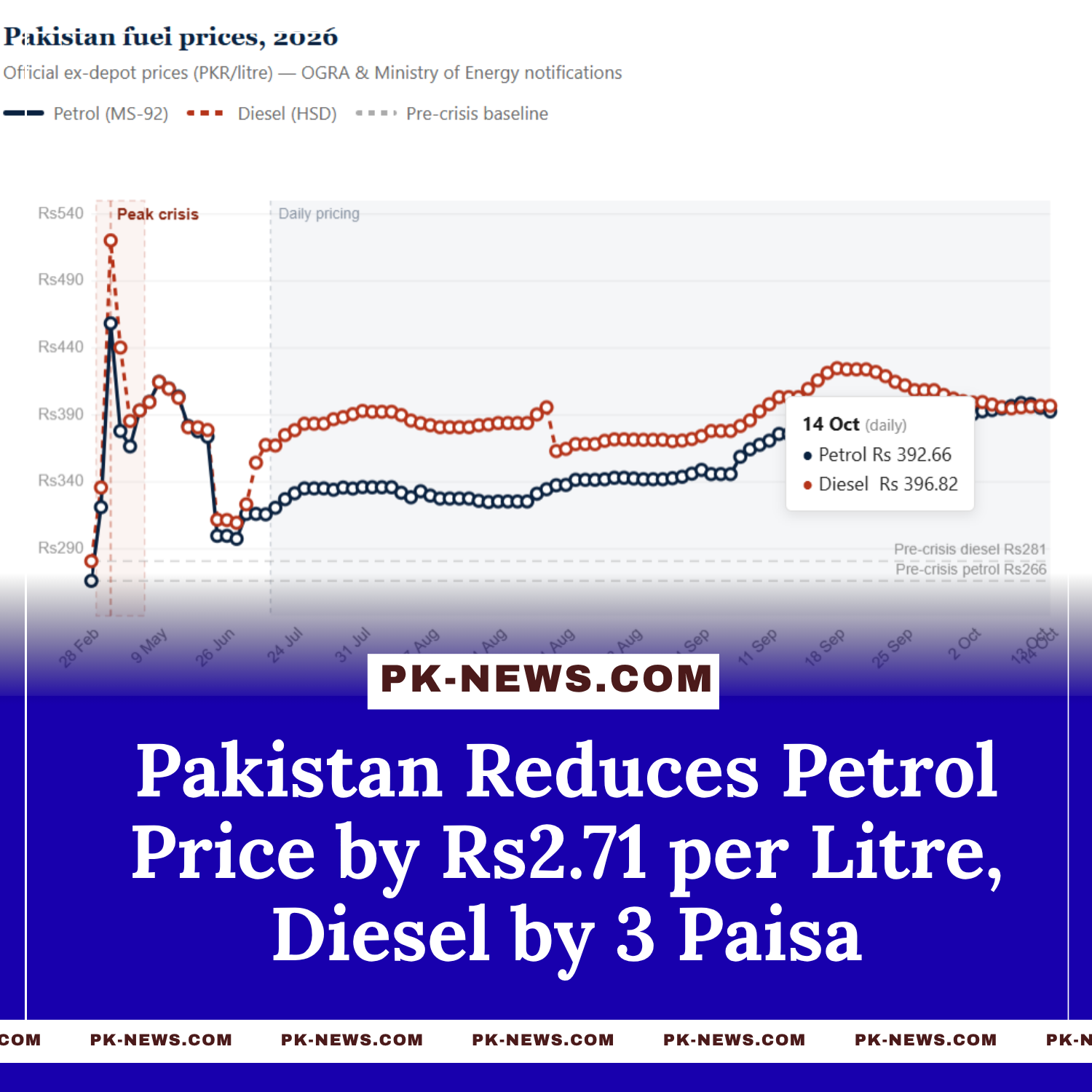
Sep 26, 2026 at 9:39 PM
Iran has proposed a seven-day plan to reopen the strategically important Strait of Hormuz and halt fighting across the wider Middle East, but U.S. President Donald Trump said on September 26 that he had rejected the proposal. Iran is awaiting a formal U.S. response as diplomatic efforts continue through intermediaries, while the ongoing conflict continues to disrupt regional security and global energy routes. According to PK-News.com | September 26, 2026 A new diplomatic development has emerged in the ongoing Middle East conflict after Iran proposed a seven-day process to reopen the Strait of Hormuz and halt fighting across the region, while U.S. President Donald Trump said he had rejected Tehran's proposal. Iran's initiative was presented during the United Nations General Assembly in New York and was transmitted to Washington through Qatari mediators, according to Iranian officials. Tehran said the plan could restore normal maritime passage through the strategic waterway within seven days if Washington accepted the required conditions. The development has created a new diplomatic uncertainty over the future of the conflict, with Iran waiting for the U.S. position while reports indicate that Trump remains skeptical about Tehran's willingness to meet American demands. What Did Iran Propose? Iranian Foreign Minister Abbas Araghchi told reporters at the United Nations on September 25 that Tehran had submitted what he described as a concrete seven-day plan. Under the proposal, Iran said the Strait of Hormuz could be reopened within seven days and wider negotiations with the United States could subsequently begin. Araghchi said the initial measures would take several days, with the waterway potentially reopening on the sixth day and broader talks beginning on the seventh. The proposal was not simply about reopening the waterway. According to Reuters reporting, Tehran's conditions included an end to the U.S. blockade of Iranian ports, the release of frozen Iranian funds and the waiving of U.S. oil sanctions. Iran also proposed a halt to hostilities across the region, including Lebanon. The Iranian government has also indicated that future discussions could include its nuclear programme. Trump Says He Rejected the Proposal President Donald Trump said on September 26 that he had rejected Iran's proposal. Reuters reported that Trump said Iran urgently wanted the Strait of Hormuz reopened because of economic pressure, while The Wall Street Journal reported that Trump remained skeptical that Tehran would satisfy his demands. However, the situation remains fluid. Reuters reported that a U.S. official had previously characterized indirect discussions between Washington and Tehran as “positive and constructive.” Reuters also said it could not immediately independently confirm the Wall Street Journal's reporting concerning Trump's expectations about future military action. This means that reports concerning possible future military operations should be treated as reported expectations rather than confirmed future events. Why Is the Strait of Hormuz So Important? The Strait of Hormuz is one of the world's most strategically important maritime passages. It connects the Persian Gulf with the Gulf of Oman and the wider Arabian Sea. Large quantities of energy products normally move through the waterway, making any prolonged disruption potentially significant for international energy markets and global trade. The current conflict has already disrupted oil flows through the region. Reuters reported that the continuing conflict has affected one of the world's most important shipping routes and created wider economic consequences. Any reopening of the waterway could therefore have consequences beyond the Middle East, particularly for shipping companies, energy markets and countries dependent on imported oil and gas. Iran's Position Iranian officials have presented the seven-day proposal as an opportunity to return to diplomacy. Foreign Minister Araghchi said that if Washington demonstrated seriousness about reaching an agreement and reopening the Strait of Hormuz, the necessary arrangements were prepared. Iranian President Masoud Pezeshkian has also said Tehran is prepared to discuss its nuclear programme and other issues but would not accept what he described as coercion or pressure. Iran's position regarding its nuclear programme remains a major part of the dispute. According to Reuters, Iranian officials have indicated that Tehran does not intend to give up what it considers its rights, including uranium enrichment, even if negotiations with Washington resume. What Does the United States Want? The United States has maintained strong demands concerning Iran's nuclear programme and regional activities. Trump has repeatedly said that Iran must not acquire a nuclear weapon. The disagreement over the nuclear programme is therefore closely connected with the broader dispute over sanctions, military pressure and the Strait of Hormuz. The latest Iranian proposal attempts to connect these issues within one diplomatic framework: reopening the waterway, stopping hostilities and returning to negotiations. Trump's rejection indicates that the conditions required by Washington and Tehran remain substantially different. Regional Conflict Continues The diplomatic developments are occurring while fighting and security tensions continue elsewhere in the region. Reuters reported that Iran and groups aligned with Tehran have continued to be involved in regional confrontations. The Houthis in Yemen have targeted Saudi interests, while Iran-backed Hezbollah has been involved in fighting with Israeli forces in Lebanon. Iranian-aligned militias in Iraq have also been blamed for an attack affecting Saudi oil supplies. Saudi Arabia has also faced attacks involving missiles and drones. The Saudi-led coalition said on September 26 that it intercepted two drones launched toward Riyadh and a ballistic missile launched toward Khamis Mushait. These developments demonstrate that the consequences of the conflict extend beyond the direct confrontation between Washington and Tehran. Saudi Arabia Becomes Increasingly Important Iranian officials have also communicated with Saudi Arabia regarding the Strait of Hormuz. According to Reuters, Araghchi briefed Saudi Foreign Minister Prince Faisal bin Farhan about an understanding between Iran and Oman concerning safe shipping routes through the Strait. Saudi Arabia is particularly important because the kingdom is one of the world's major oil producers and has significant interests in maintaining secure energy export routes. At the same time, Saudi Arabia is facing attacks from the Iran-linked Houthis in Yemen. The situation has therefore created overlapping security and economic pressures across the Gulf region. Pakistan and Turkey Also Watch the Situation The regional consequences have also drawn attention from Pakistan and Turkey. Reuters reported that defense officials from Turkey and Pakistan met in Riyadh with Saudi counterparts to discuss the security situation, intelligence cooperation and military coordination. The meetings took place after Saudi, Pakistani and Turkish foreign ministers met under the framework of the Mecca Joint Defense Agreement. For Pakistan, developments around the Gulf are particularly important because of its geographical proximity to the Middle East and its economic and security relationships with Gulf countries. Any prolonged disruption to regional shipping and energy supplies could also have wider economic effects across South Asia. What Happens Next? The immediate question is whether Washington and Tehran will continue indirect negotiations despite Trump's rejection of the Iranian proposal. Iran has presented its seven-day plan as a possible pathway toward reopening the Strait and restarting wider negotiations. The United States, meanwhile, has not accepted the conditions proposed by Tehran. Reuters reported that Iran was still awaiting an official U.S. response after reports that Trump had rejected the plan. The coming days could therefore be important for determining whether diplomatic discussions continue or whether the military confrontation intensifies. However, reports about possible future attacks or renewed bombing should not be treated as confirmed events unless and until governments officially announce such actions. Global Economic Concerns The dispute has consequences far beyond the Middle East. The Strait of Hormuz is a major energy shipping route, and disruption can affect oil transportation, insurance costs, shipping schedules and energy prices. A prolonged closure or severe restriction could place additional pressure on countries that depend heavily on imported energy. Conversely, a stable reopening of the waterway could reduce some of the pressure created by the conflict. For international markets, uncertainty itself can be significant because companies and governments must plan around possible disruptions. A New Diplomatic Test Iran's seven-day proposal represents another attempt to create a diplomatic pathway during a highly unstable period. The proposal includes several interconnected issues: the Strait of Hormuz, U.S. sanctions, Iranian oil exports, the nuclear programme and regional fighting. Washington and Tehran have different positions on each of these issues. Trump's reported rejection therefore does not necessarily mean that all diplomatic communication has ended. Reuters reported that indirect discussions through mediators had previously been described by a U.S. official as positive and constructive. The next stage will depend on whether both sides can find terms acceptable enough to keep negotiations alive. Conclusion The latest Iran-U.S. development has placed the Strait of Hormuz at the centre of renewed international attention. Iran has proposed a seven-day process to reopen the strategic waterway and halt regional fighting, while President Donald Trump has said he rejected the proposal. Tehran is awaiting the next official U.S. position as indirect diplomatic contacts continue. The dispute remains closely connected to Iran's nuclear programme, U.S. sanctions, regional military activity and the security of international shipping. For the global economy, the Strait of Hormuz remains particularly important because of its role in energy transportation. For the Middle East, meanwhile, the key question is whether the latest diplomatic initiative can lead to further negotiations or whether tensions will continue to escalate. PK-News.com will continue tracking verified developments from Washington, Tehran, Riyadh and other regional capitals as the situation develops.
/* Related News Sidebar Widget Styles */ .sidebar-widget .card { transition: transform 0.2s ease-in-out, box-shadow 0.2s ease-in-out; } .sidebar-widget .card:hover { transform: translateY(-2px); box-shadow: 0 4px 15px rgba(0,0,0,0.15); } .sidebar-widget .img-fluid { width: 100%; height: auto; object-fit: cover; } .sidebar-widget .video-thumbnail { position: relative; overflow: hidden; } .sidebar-widget .video-play-button { position: absolute; top: 50%; left: 50%; transform: translate(-50%, -50%); width: 30px; height: 30px; background: rgba(0,0,0,0.7); border-radius: 50%; display: flex; align-items: center; justify-content: center; color: white; font-size: 12px; cursor: pointer; transition: all 0.3s ease; } .sidebar-widget .video-play-button:hover { background: rgba(0,0,0,0.9); transform: translate(-50%, -50%) scale(1.1); } .sidebar-widget .card-title { font-size: 0.9rem; font-weight: 600; line-height: 1.3; margin-bottom: 0.5rem; } .sidebar-widget .card-title a { color: #333; text-decoration: none; } .sidebar-widget .card-title a:hover { color: #dc3545; } /* List view styles */ .list-view { display: flex !important; flex-direction: column; gap: 1rem; } .list-view .col-md-6 { width: 100% !important; max-width: 100% !important; flex: 0 0 100% !important; } .list-view .news-card { display: flex; flex-direction: row; height: auto !important; } .list-view .news-card .image-container { width: 300px; height: 200px; flex-shrink: 0; } .list-view .news-card .card-body { flex: 1; display: flex; flex-direction: column; } @media (max-width: 768px) { .list-view .news-card { flex-direction: column; } .list-view .news-card .image-container { width: 100%; height: 200px; } }