7
NEW
International
😔 Negative
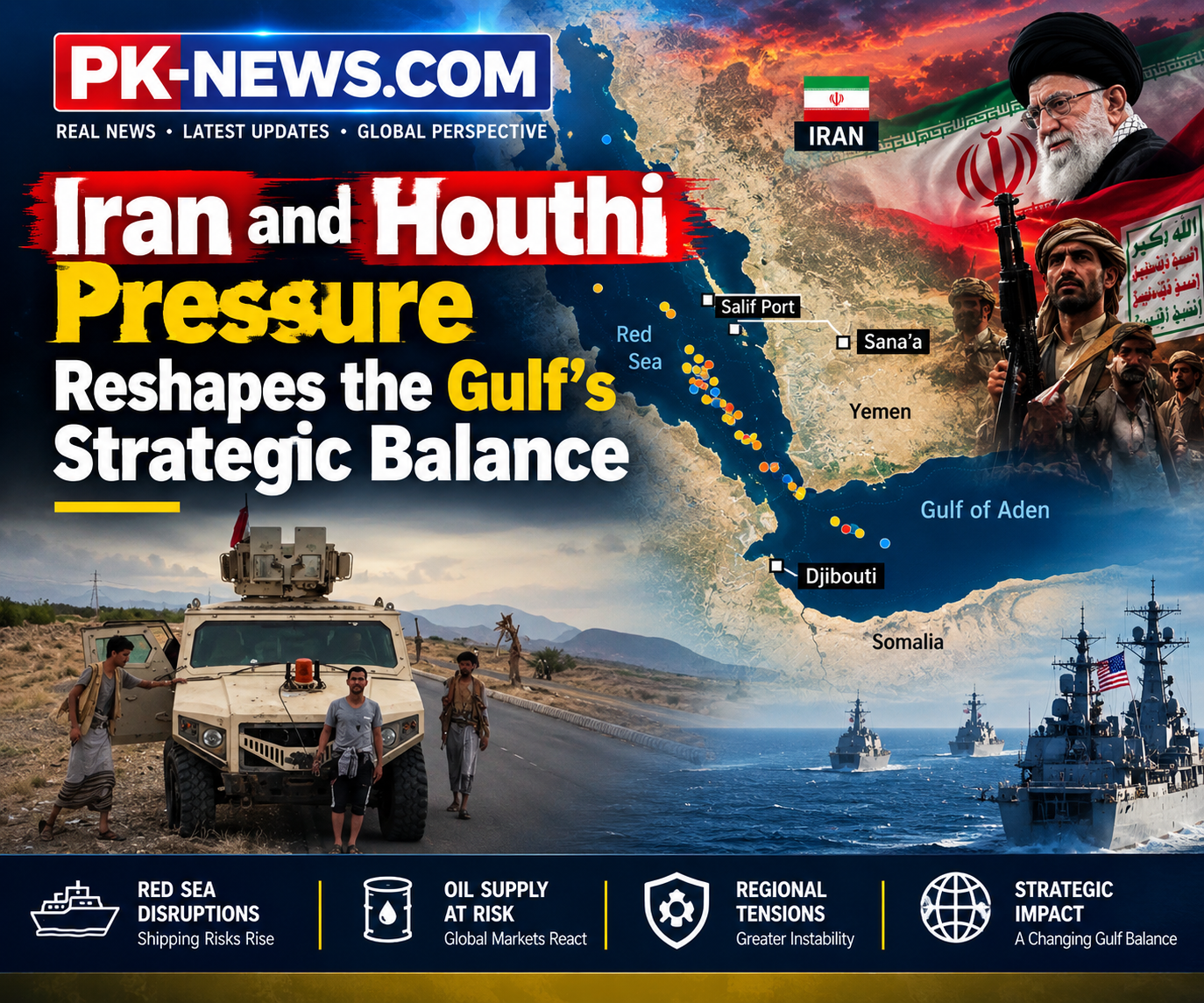
Iran and Houthi Pressure Reshapes the Gulfs Strategic Balance
Iran and its regional allies are seeking to demonstrate that the security future of the Gulf and surrounding waterways cannot be determined without taking their interests into account, as tensions continue to affect major regional trade and energy routes.
The growing pressure involving the Houthis in Yemen, attacks affecting Saudi Arabia and uncertainty around the Strait of Hormuz have raised broader questions about the balance of power across the region.
Iran Seeks Strategic Influence Without Direct Territorial Control
Iran and its allies may not need to control large areas of territory to increase their strategic influence.
Instead, their ability to disrupt or deny access to important routes can provide leverage against stronger military powers.
The strategic importance of this approach lies in the ability to impose costs on opponents and influence negotiations without necessarily achieving a conventional military victory.
The Strait of Hormuz and the Bab el-Mandeb are particularly important in this context because disruption around either waterway could have consequences for international trade and energy supplies.
Houthi Capabilities Remain a Major Factor
The conflict in Yemen demonstrates the difficulty of achieving a decisive military solution.
Saudi Arabia and forces supporting Yemen's internationally backed government have been involved in the conflict for years, but the Houthis have maintained control over strategically important areas.
Despite military operations and air strikes, the Houthis have continued to demonstrate the ability to threaten infrastructure and transportation routes.
This means that military superiority alone has not been sufficient to completely remove their influence.
Attacks Increase Pressure on Saudi Arabia
Saudi Arabia faces growing security and economic challenges as attacks have affected cities and critical energy infrastructure.
The kingdom has attempted to use alternative routes to reduce its dependence on the Strait of Hormuz, including the East-West oil pipeline.
However, attacks affecting this infrastructure have demonstrated the vulnerability of alternative export routes as well.
This creates a difficult situation for Riyadh: even when it attempts to bypass a major maritime chokepoint, other parts of its energy infrastructure can remain exposed to regional attacks.
Military Power Alone May Not Determine the Outcome
The wider regional conflict highlights an important strategic reality: superior military strength does not necessarily guarantee control over the political outcome.
Iran and the Houthis have demonstrated that asymmetric capabilities can create significant pressure even when facing opponents with greater conventional military resources.
Strategic depth, negotiation capabilities and the ability to impose costs can become just as important as battlefield strength.
This approach can make it difficult for outside powers to establish a stable regional order through military action alone.
Gulf States Face Increasing Pressure
The Gulf Cooperation Council states are facing their own economic and security pressures as the wider conflict continues.
Saudi Arabia in particular has a major interest in restoring reliable energy exports and protecting critical infrastructure.
As uncertainty grows around regional shipping routes, Gulf countries may have stronger incentives to engage directly with Iran on arrangements affecting regional security.
Such discussions could take place separately from the broader confrontation between Tehran and Washington, particularly if Gulf governments believe that their immediate economic interests require a direct regional solution.
A Changing Balance Across the Gulf
The situation suggests that the regional balance of power may be shifting, although not necessarily in the form of a straightforward military victory for any one side.
Iran and its allies have shown that they can create strategic complications for larger military powers by targeting vulnerabilities rather than attempting to dominate the entire region.
The continuing importance of the Houthis, combined with uncertainty around major waterways and attacks against Saudi infrastructure, means that regional governments must consider more than conventional military strength.
Diplomacy, strategic positioning and negotiations are becoming increasingly important components of the competition.
The Need for a Regional Arrangement
The pressure on energy exports and maritime trade could encourage Gulf states to seek a regional arrangement aimed at reducing immediate risks.
For Saudi Arabia and its neighbours, maintaining stable energy exports is an economic priority. For Iran and its allies, demonstrating that regional security cannot be organized without their participation remains a key strategic objective.
The result could be increased pressure for direct dialogue between Gulf states and Iran, even while the larger conflict between Iran and the United States continues.
For now, the situation remains fluid. But the developments across Yemen, Saudi Arabia and the region's major waterways demonstrate that the future security balance of the Gulf may depend as much on negotiation and strategic leverage as on military power.
Related Articles You May Like
Related News







Comments (0)
Leave a Comment
No comments yet. Be the first to comment!