Global
PK Live News
😐 Neutral
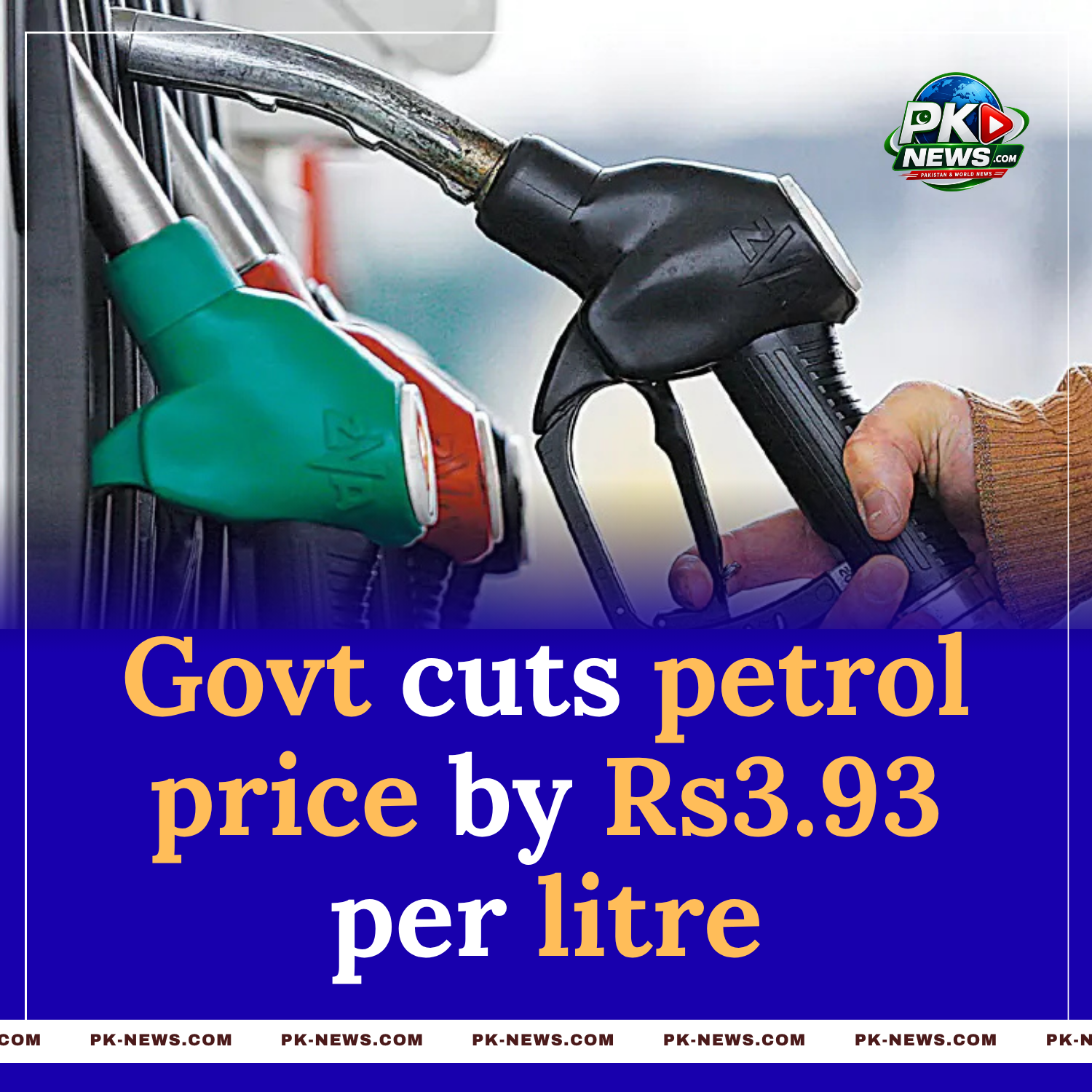
ISLAMABAD, PAKISTAN — October 16, 2026: The federal government has reduced the price of petrol by Rs3.93 per litre, providing some relief to motorists and other consumers amid continued fluctuations in international energy markets. The revised price will bring petrol down to Rs386.30 per litre, while the price of high-speed diesel (HSD) will remain unchanged at Rs396.96 per litre.
According to the latest petroleum price revision announced by the Petroleum Division, the new rates will take effect from October 17 and remain applicable until October 19, 2026. The adjustment covers the three-day weekend period and reflects changes under the government’s petroleum pricing mechanism.
The latest reduction follows another petrol price cut earlier in the week. On October 16, petrol was priced at Rs390.23 per litre, while high-speed diesel was being sold at Rs396.96 per litre. The new revision lowers the petrol rate further, although diesel consumers will not receive an additional reduction during the same period.
New Petrol and Diesel Prices in Pakistan
Under the latest revision, petrol will cost Rs386.30 per litre, down Rs3.93 from the previous rate. High-speed diesel will continue to cost Rs396.96 per litre.
The revised rates are expected to affect millions of people who depend on petrol-powered motorcycles, cars, rickshaws and other forms of private and commercial transport. Diesel prices are particularly important for freight operators, public transport services, agricultural machinery and businesses that rely on heavy vehicles.
Although the petrol reduction offers a measure of relief, its overall impact on household expenses will depend on fuel consumption, travel requirements and whether transport operators adjust their fares in response to the new rate.
Why Has the Government Reduced Petrol Prices?
The latest adjustment has been attributed to changes in international market conditions, including movements in benchmark petroleum rates, premiums and other associated costs. Pakistan relies substantially on imported energy supplies, meaning international oil prices and import-related expenses can influence the domestic cost of petroleum products.
The government’s pricing mechanism allows changes in international market indicators to be reflected in domestic fuel prices. When relevant costs decline, consumers may receive a reduction. When international prices or other components increase, the domestic rates can also rise.
However, a reduction in petrol prices does not necessarily mean that all petroleum products will become cheaper at the same time. Petrol and high-speed diesel have different pricing components and market conditions, which can lead to different adjustments during the same review period.
The latest decision illustrates this difference: petrol has become cheaper, but the diesel rate remains unchanged.
Relief for Motorists and Motorcycle Owners
Petrol is widely used by motorcycle owners, private car users, rickshaw drivers and small businesses across Pakistan. For many households, fuel is a regular expense that directly affects monthly budgets, particularly for people who commute to work, educational institutions and commercial centres.
The Rs3.93-per-litre reduction means that motorists will pay less for the same quantity of petrol compared with the previous rate. For example, purchasing 10 litres at the new price will cost Rs3,863, compared with Rs3,902.30 at the previous rate of Rs390.23 per litre. This represents a saving of Rs39.30 on a 10-litre purchase.
For a consumer purchasing 20 litres, the reduction represents a saving of Rs78.60 compared with the previous price. The actual benefit for individual motorists will depend on how much fuel they buy during the period in which the revised rate applies.
While these savings may appear modest, even small changes can matter to households that regularly purchase petrol and already face pressure from food, electricity, transport and other living expenses.
Diesel Prices Remain a Concern for Transport and Agriculture
Unlike petrol, the price of high-speed diesel has not changed in the latest announcement. The fuel remains priced at Rs396.96 per litre, leaving transport operators and other diesel users facing the same direct fuel cost as before.
Diesel plays a significant role in Pakistan’s transport and logistics sectors. Heavy trucks, buses, goods vehicles and various forms of agricultural machinery depend on diesel to operate. As a result, changes in diesel prices can influence the cost of moving goods, providing transport services and carrying out agricultural activities.
When diesel costs rise, transport companies may face increased operating expenses. These costs can place pressure on fares and the prices of goods transported over long distances. However, the relationship between fuel prices and retail prices is not automatic: other factors, including competition, wages, road charges and demand, also influence final costs.
With diesel remaining unchanged, the latest revision provides no additional direct reduction in fuel expenses for diesel-dependent businesses. Their costs will continue to depend on the existing rate and other operating conditions.
Impact on Inflation and the Cost of Living
Fuel prices are an important part of Pakistan’s wider economic picture because they influence transportation and the movement of goods. Changes in petrol prices can affect personal travel expenses, while diesel prices can influence freight and commercial transport costs.
A reduction in petrol prices may help consumers manage some of their travel expenses. It can also ease a portion of the direct cost pressure faced by drivers and small businesses. Nevertheless, one price cut alone cannot guarantee a broader decline in inflation or lower prices across the economy.
Food prices, electricity tariffs, exchange-rate movements, taxes, import costs and supply conditions all contribute to the cost of living. For this reason, the full economic impact of the latest petroleum revision will depend on several factors beyond the petrol rate.
Consumers may benefit most when lower fuel costs are sustained and when reductions in transport expenses are reflected in the prices charged for goods and services. Whether that happens will depend on market conditions and the decisions of businesses.
International Oil Markets Continue to Influence Local Rates
Pakistan’s petroleum prices remain sensitive to international energy-market developments. Global crude oil prices can be influenced by geopolitical tensions, production decisions, supply disruptions, shipping risks and changes in demand.
Developments in the Middle East are particularly relevant to international energy transportation because the region is a major source of oil and gas supplies. Any disruption to important shipping routes or energy infrastructure can create uncertainty in global markets and influence import costs.
At the same time, international benchmark prices are only one part of the domestic calculation. Import premiums, exchange rates, taxes, levies and other pricing components can also affect the final rate paid by consumers in Pakistan.
The latest petrol reduction reflects the current pricing decision, but it does not guarantee that prices will continue to fall in subsequent reviews. Future adjustments will depend on the applicable pricing mechanism and market conditions.
How Long Will the New Rates Remain Effective?
The newly announced petrol price of Rs386.30 per litre and diesel price of Rs396.96 per litre are scheduled to apply from October 17 through October 19, 2026. Consumers should therefore distinguish these rates from prices announced for earlier periods.
As petroleum prices can be revised frequently under the current mechanism, motorists should check the latest official announcement before relying on these figures for later dates. The rates may change when a subsequent revision takes effect.
For now, the main development is a Rs3.93 reduction in petrol prices, while diesel remains unchanged. The decision provides limited direct relief to petrol users but leaves diesel-dependent transport and agricultural sectors facing the same fuel price.
Conclusion
The federal government’s latest decision lowers petrol to Rs386.30 per litre and keeps high-speed diesel at Rs396.96 per litre for October 17–19, 2026. The reduction offers a modest saving for motorists, motorcycle owners and other petrol consumers, although its wider effect on inflation and transport costs remains dependent on market conditions.
PK-News.com will continue covering Pakistan’s fuel prices, economic developments, government announcements and other major national and international news.
Developed, Researched & Published by PK-News.com
PK-News Digital News & Research Desk
Pakistan & World News | Breaking News | Economy | Fuel Prices | Live TV | Digital Media & Technology
Founder & Lead Architect: Muhammad Ibraheem | PK-News.com
Oct 16, 2026 at 11:30 PM
ISLAMABAD, PAKISTAN — October 16, 2026: The federal government has reduced the price of petrol by Rs3.93 per litre, providing some relief to motorists and other consumers amid continued fluctuations in international energy markets. The revised price will bring petrol down to Rs386.30 per litre, while the price of high-speed diesel (HSD) will remain unchanged at Rs396.96 per litre.
According to the latest petroleum price revision announced by the Petroleum Division, the new rates will take effect from October 17 and remain applicable until October 19, 2026. The adjustment covers the three-day weekend period and reflects changes under the government’s petroleum pricing mechanism.
The latest reduction follows another petrol price cut earlier in the week. On October 16, petrol was priced at Rs390.23 per litre, while high-speed diesel was being sold at Rs396.96 per litre. The new revision lowers the petrol rate further, although diesel consumers will not receive an additional reduction during the same period.
New Petrol and Diesel Prices in Pakistan
Under the latest revision, petrol will cost Rs386.30 per litre, down Rs3.93 from the previous rate. High-speed diesel will continue to cost Rs396.96 per litre.
The revised rates are expected to affect millions of people who depend on petrol-powered motorcycles, cars, rickshaws and other forms of private and commercial transport. Diesel prices are particularly important for freight operators, public transport services, agricultural machinery and businesses that rely on heavy vehicles.
Although the petrol reduction offers a measure of relief, its overall impact on household expenses will depend on fuel consumption, travel requirements and whether transport operators adjust their fares in response to the new rate.
Why Has the Government Reduced Petrol Prices?
The latest adjustment has been attributed to changes in international market conditions, including movements in benchmark petroleum rates, premiums and other associated costs. Pakistan relies substantially on imported energy supplies, meaning international oil prices and import-related expenses can influence the domestic cost of petroleum products.
The government’s pricing mechanism allows changes in international market indicators to be reflected in domestic fuel prices. When relevant costs decline, consumers may receive a reduction. When international prices or other components increase, the domestic rates can also rise.
However, a reduction in petrol prices does not necessarily mean that all petroleum products will become cheaper at the same time. Petrol and high-speed diesel have different pricing components and market conditions, which can lead to different adjustments during the same review period.
The latest decision illustrates this difference: petrol has become cheaper, but the diesel rate remains unchanged.
Relief for Motorists and Motorcycle Owners
Petrol is widely used by motorcycle owners, private car users, rickshaw drivers and small businesses across Pakistan. For many households, fuel is a regular expense that directly affects monthly budgets, particularly for people who commute to work, educational institutions and commercial centres.
The Rs3.93-per-litre reduction means that motorists will pay less for the same quantity of petrol compared with the previous rate. For example, purchasing 10 litres at the new price will cost Rs3,863, compared with Rs3,902.30 at the previous rate of Rs390.23 per litre. This represents a saving of Rs39.30 on a 10-litre purchase.
For a consumer purchasing 20 litres, the reduction represents a saving of Rs78.60 compared with the previous price. The actual benefit for individual motorists will depend on how much fuel they buy during the period in which the revised rate applies.
While these savings may appear modest, even small changes can matter to households that regularly purchase petrol and already face pressure from food, electricity, transport and other living expenses.
Diesel Prices Remain a Concern for Transport and Agriculture
Unlike petrol, the price of high-speed diesel has not changed in the latest announcement. The fuel remains priced at Rs396.96 per litre, leaving transport operators and other diesel users facing the same direct fuel cost as before.
Diesel plays a significant role in Pakistan’s transport and logistics sectors. Heavy trucks, buses, goods vehicles and various forms of agricultural machinery depend on diesel to operate. As a result, changes in diesel prices can influence the cost of moving goods, providing transport services and carrying out agricultural activities.
When diesel costs rise, transport companies may face increased operating expenses. These costs can place pressure on fares and the prices of goods transported over long distances. However, the relationship between fuel prices and retail prices is not automatic: other factors, including competition, wages, road charges and demand, also influence final costs.
With diesel remaining unchanged, the latest revision provides no additional direct reduction in fuel expenses for diesel-dependent businesses. Their costs will continue to depend on the existing rate and other operating conditions.
Impact on Inflation and the Cost of Living
Fuel prices are an important part of Pakistan’s wider economic picture because they influence transportation and the movement of goods. Changes in petrol prices can affect personal travel expenses, while diesel prices can influence freight and commercial transport costs.
A reduction in petrol prices may help consumers manage some of their travel expenses. It can also ease a portion of the direct cost pressure faced by drivers and small businesses. Nevertheless, one price cut alone cannot guarantee a broader decline in inflation or lower prices across the economy.
Food prices, electricity tariffs, exchange-rate movements, taxes, import costs and supply conditions all contribute to the cost of living. For this reason, the full economic impact of the latest petroleum revision will depend on several factors beyond the petrol rate.
Consumers may benefit most when lower fuel costs are sustained and when reductions in transport expenses are reflected in the prices charged for goods and services. Whether that happens will depend on market conditions and the decisions of businesses.
International Oil Markets Continue to Influence Local Rates
Pakistan’s petroleum prices remain sensitive to international energy-market developments. Global crude oil prices can be influenced by geopolitical tensions, production decisions, supply disruptions, shipping risks and changes in demand.
Developments in the Middle East are particularly relevant to international energy transportation because the region is a major source of oil and gas supplies. Any disruption to important shipping routes or energy infrastructure can create uncertainty in global markets and influence import costs.
At the same time, international benchmark prices are only one part of the domestic calculation. Import premiums, exchange rates, taxes, levies and other pricing components can also affect the final rate paid by consumers in Pakistan.
The latest petrol reduction reflects the current pricing decision, but it does not guarantee that prices will continue to fall in subsequent reviews. Future adjustments will depend on the applicable pricing mechanism and market conditions.
How Long Will the New Rates Remain Effective?
The newly announced petrol price of Rs386.30 per litre and diesel price of Rs396.96 per litre are scheduled to apply from October 17 through October 19, 2026. Consumers should therefore distinguish these rates from prices announced for earlier periods.
As petroleum prices can be revised frequently under the current mechanism, motorists should check the latest official announcement before relying on these figures for later dates. The rates may change when a subsequent revision takes effect.
For now, the main development is a Rs3.93 reduction in petrol prices, while diesel remains unchanged. The decision provides limited direct relief to petrol users but leaves diesel-dependent transport and agricultural sectors facing the same fuel price.
Conclusion
The federal government’s latest decision lowers petrol to Rs386.30 per litre and keeps high-speed diesel at Rs396.96 per litre for October 17–19, 2026. The reduction offers a modest saving for motorists, motorcycle owners and other petrol consumers, although its wider effect on inflation and transport costs remains dependent on market conditions.
PK-News.com will continue covering Pakistan’s fuel prices, economic developments, government announcements and other major national and international news.
Developed, Researched & Published by PK-News.com
PK-News Digital News & Research Desk
Pakistan & World News | Breaking News | Economy | Fuel Prices | Live TV | Digital Media & Technology
Founder & Lead Architect: Muhammad Ibraheem | PK-News.com