Islamabad — September 22, 2026 | PK News
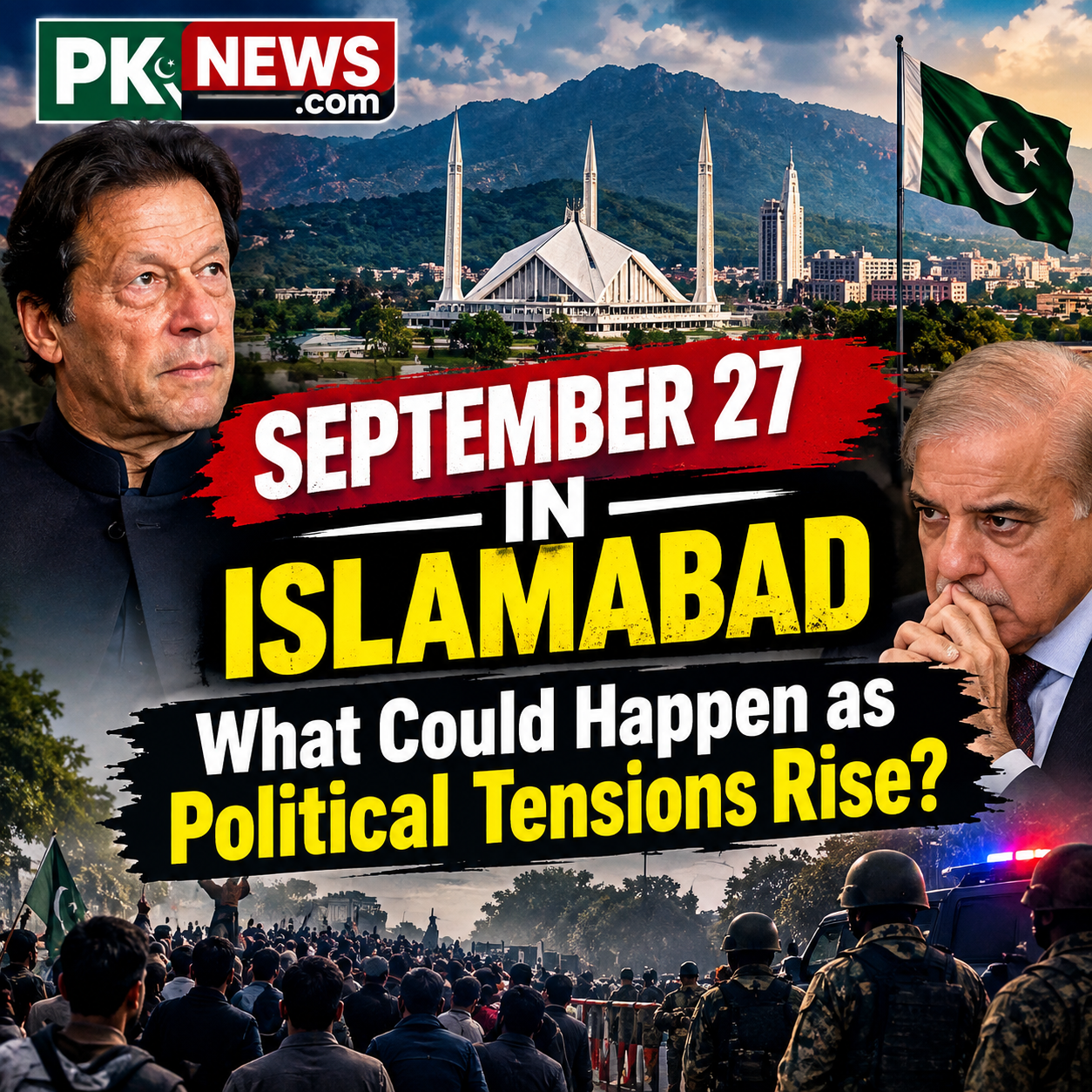
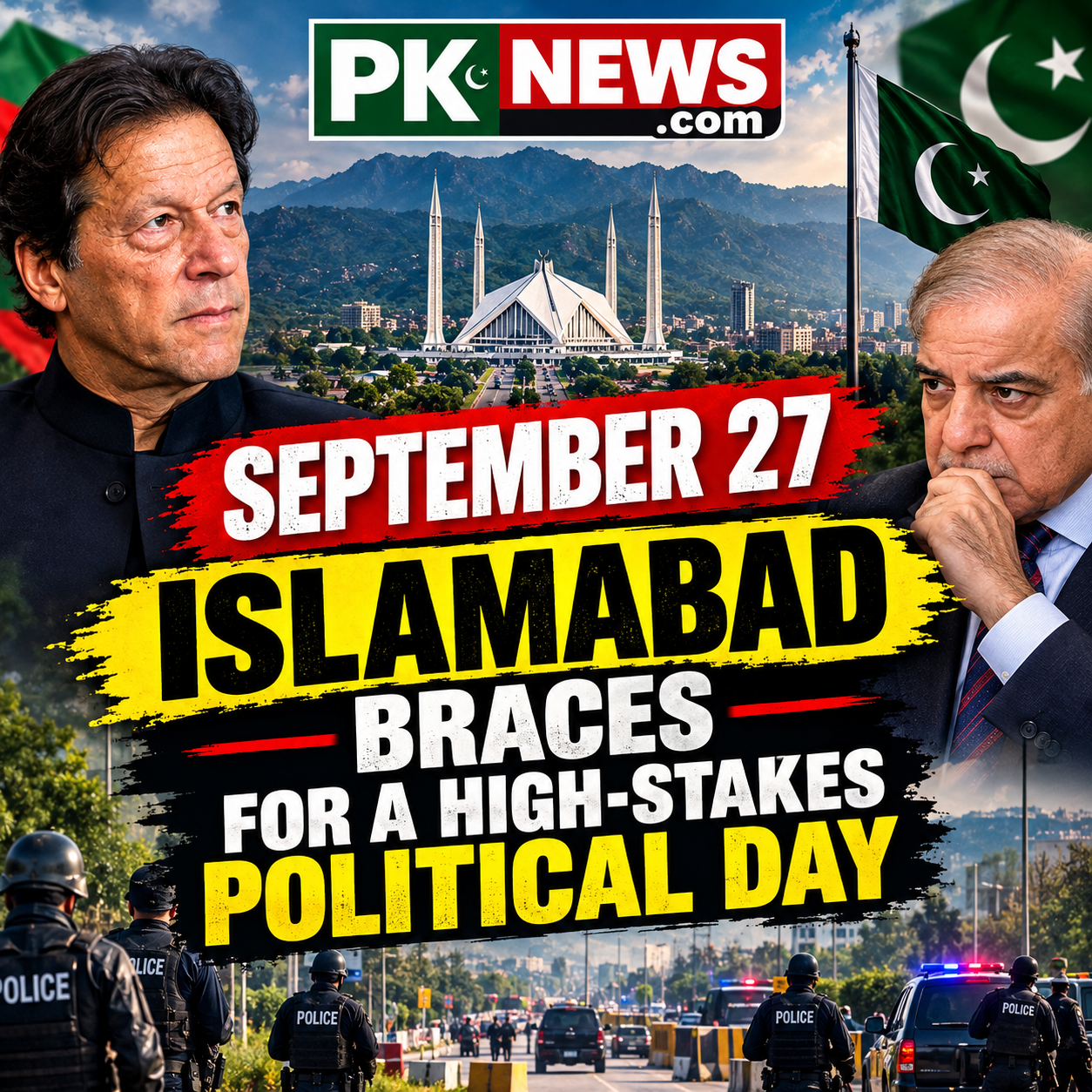
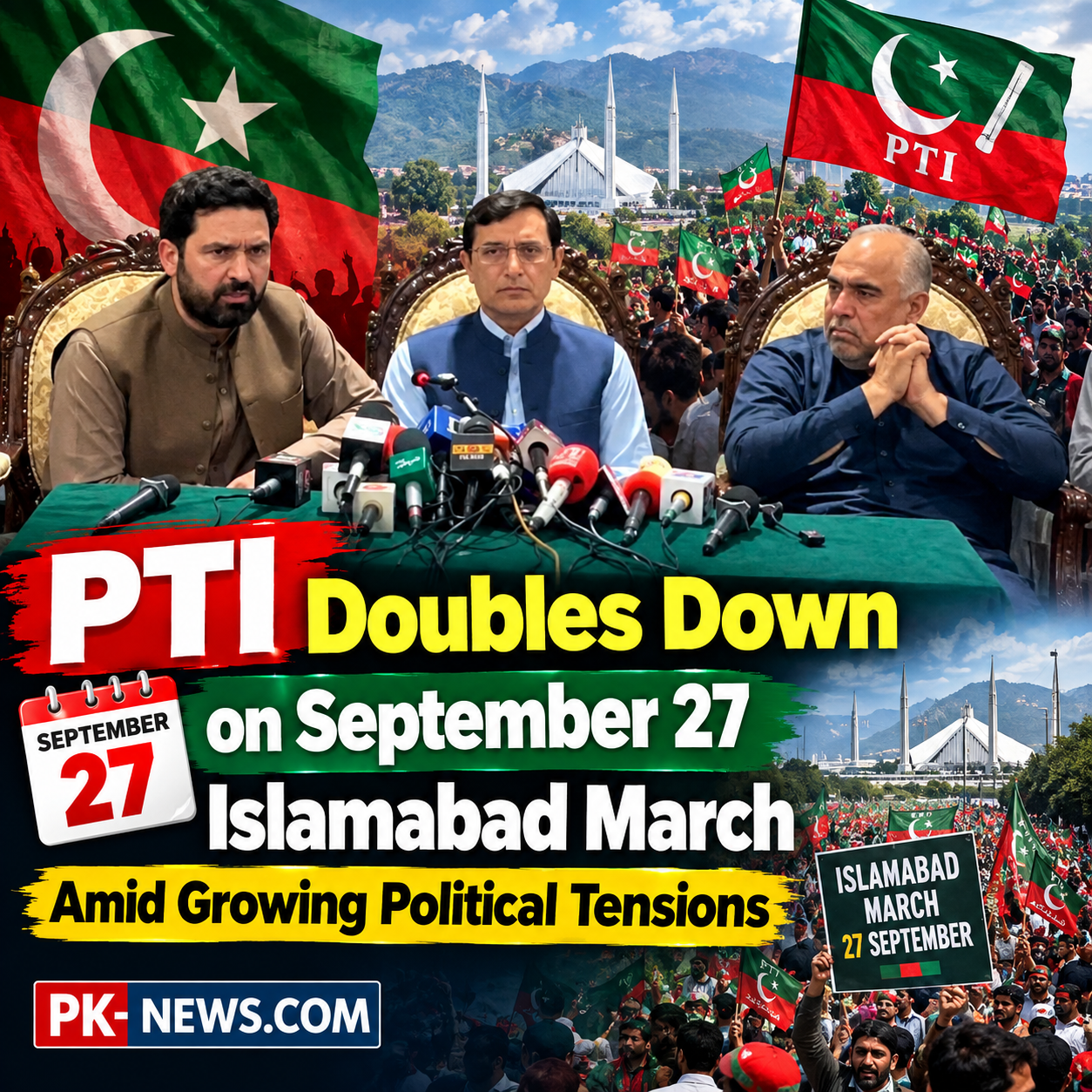
September 27 is emerging as one of the most closely watched political dates in Pakistan, with Islamabad preparing for a planned Pakistan Tehreek-e-Insaf (PTI) protest and march while authorities increase security across the federal capital and surrounding areas.
According to the latest information reviewed by PK News (PK-News.com), the situation remains fluid. The PTI continues to call for mobilisation toward Islamabad, while the government has announced extensive security measures intended to prevent disruption, protect sensitive locations and maintain public order.
The exact situation on September 27 cannot be known in advance. Several different developments remain possible, ranging from a large but peaceful political gathering to major restrictions on movement, arrests, clashes or negotiations that could change the course of events.
Why September 27 Matters
The PTI has announced the September 27 mobilisation as a political protest focused principally on the release of party founder Imran Khan and broader demands concerning constitutional rights, political representation and justice.
The party has also sought support from other opposition groups. Recent political contacts have included discussions with Jamiat Ulema-e-Islam-Fazl (JUI-F) and other opposition figures regarding cooperation and a broader political strategy.
At the same time, the government has made clear that it does not intend to allow a march to proceed in a manner that blocks major roads or disrupts Islamabad's normal functioning. Interior Minister Mohsin Naqvi has said the government will prevent the march from entering the capital.
This creates a fundamental point of tension: the PTI is preparing for political mobilisation, while the authorities are preparing to restrict access and prevent a large-scale occupation or blockade of the capital.
Islamabad Is Already Preparing
The scale of the security preparations indicates that authorities are treating September 27 as a serious public-order challenge.
According to Aaj English TV's report on September 22, authorities have planned the deployment of approximately 25,000 additional security personnel in Islamabad. The reported plan includes personnel from Punjab, Sindh and Azad Jammu and Kashmir. More than 1,000 containers are also being positioned around major roads and sensitive areas, including the Red Zone and D-Chowk.
Authorities are also preparing restrictions around numerous entry and exit points in the Islamabad-Rawalpindi area. Hospitals have reportedly been placed on high alert, with preparations including additional beds, blood supplies and ambulances.
These preparations do not establish what will happen on September 27, but they demonstrate that the authorities are preparing for the possibility of a substantial mobilisation.
What the Islamabad High Court Has Said
The legal dimension could become one of the most important factors on September 27.
The Islamabad High Court recently addressed the conflict between the right to political assembly and the rights of other citizens. The court recognized the right to peaceful political protest but emphasized that such activity remains subject to the Constitution and law.
The court also directed that political parties, political leaders, provincial governments and public office holders could not occupy roads, highways, interchanges, toll plazas or other public places in a way that obstructs free movement or prevents access to businesses, hospitals, educational institutions and workplaces.
The court further directed provincial authorities to ensure that government resources are not used to facilitate a march toward Islamabad.
This means September 27 is not simply a political confrontation. It is also likely to involve questions about how authorities interpret and enforce existing legal restrictions while protesters seek to exercise their political rights.
Scenario One: A Large but Peaceful Protest
One possible outcome is that a large number of PTI supporters reach designated areas and conduct a peaceful demonstration without prolonged road blockades or major confrontation with law-enforcement agencies.
Such an outcome would depend on several factors, including crowd management, communication between political leadership and authorities, the locations chosen for gatherings and whether participants follow restrictions imposed under the law.
The PTI has publicly described its mobilisation as political and peaceful, while the authorities have emphasized maintaining public order.
If both sides avoid direct confrontation, September 27 could pass primarily as a major political demonstration rather than a prolonged security crisis.
Scenario Two: Major Restrictions and Limited Access to Islamabad
Another possible development is extensive restriction of movement.
With containers already being positioned and security personnel being deployed, roads connecting Rawalpindi and Islamabad could face significant disruption depending on the situation.
Entry points, major highways and routes toward sensitive government areas could become heavily controlled.
This could affect not only political workers but also ordinary residents, employees, students, businesses, patients and travellers.
The government's stated objective is to prevent disruption, but extensive restrictions themselves could create difficulties for daily life in the capital and surrounding areas.
Scenario Three: Confrontation Between Protesters and Police
A more serious possibility would involve confrontations if protesters attempt to cross barriers or security personnel attempt to prevent large groups from entering restricted areas.
The current environment contains several factors that could increase tension: political mobilisation, arrests of activists, strong statements from both sides, road blockades and a significant security deployment.
Recent reporting indicates that Islamabad police have already taken several PTI activists into custody ahead of the planned protest.
If confrontation occurs, the immediate consequences could include injuries, further arrests, temporary road closures and additional restrictions.
However, it would be premature to state that violence will occur. The available information only demonstrates that authorities are preparing for the possibility of disorder.
Scenario Four: Political Negotiations Before September 27
Another possibility is that political negotiations produce some form of understanding before the planned mobilisation.
Reporting on September 22 indicated that contacts between the PTI and authorities had taken place, although no breakthrough had been reported. According to sources cited by Geo News, discussions reportedly included possible concessions and conditions for de-escalation.
If negotiations continue, the scale or character of the September 27 mobilisation could change.
A political agreement does not necessarily require one side to abandon its broader position. It could instead involve arrangements concerning protest locations, security guarantees, access, legal issues or future political dialogue.
Scenario Five: A Wider Opposition Mobilisation
September 27 could also become more significant if other opposition groups participate.
PTI representatives have been contacting opposition parties, while JUI-F and other political actors have been involved in discussions about broader opposition cooperation.
If several political groups participate simultaneously, the political message could become broader than the PTI's original demands.
However, the involvement of multiple groups could also make crowd management and political negotiations more complicated.
The Role of Khyber Pakhtunkhwa
Khyber Pakhtunkhwa could have an important role because PTI's organisational strength in the province is relevant to the planned mobilisation.
Recent reporting says the party has been preparing a central convoy from Khyber Pakhtunkhwa, while the provincial government and opposition figures have discussed the planned protest.
At the same time, the KP police leadership has instructed officers not to facilitate a march toward Islamabad using government resources.
This creates another potential area of political and administrative tension.
What Could Happen to Islamabad's Daily Life?
The impact may extend far beyond political workers.
If major roads are blocked or security checkpoints become extensive, residents could experience delays in transportation, difficulties reaching workplaces and interruptions to normal commercial activity.
Schools and educational institutions could also be affected. Aaj English TV reported that 24 educational institutions in Islamabad were expected to remain closed temporarily because their premises were being prepared to accommodate security personnel.
Hospitals are also preparing for possible emergencies.
For ordinary citizens, the most immediate issue may therefore be mobility rather than politics: whether people can travel normally between Islamabad and Rawalpindi and whether essential services remain accessible.
Why September 27 Could Become a Major Political Test
The importance of September 27 goes beyond one protest.
It tests how Pakistan's political system manages a conflict between the right to political mobilisation and the state's responsibility to maintain public order.
The Islamabad High Court has explicitly highlighted the need to balance peaceful assembly with the rights of other citizens.
For the PTI, the mobilisation represents an opportunity to demonstrate political support for its demands.
For the government, preventing disruption while maintaining public safety represents a major administrative challenge.
For the public, the central concern is whether political disagreement can remain within peaceful and constitutional boundaries.
What Should People Watch on September 27?
Several developments will be particularly important:
1. The size of the mobilisation:
How many protesters actually attempt to reach Islamabad will determine the scale of the security challenge.
2. The protest location:
Whether demonstrators remain in permitted areas or attempt to move toward restricted zones could significantly affect the situation.
3. Police response:
The way security forces handle crowds could influence whether the day remains peaceful or becomes confrontational.
4. Political negotiations:
Any last-minute discussions between political leaders and authorities could change the situation considerably.
5. Road closures:
The level and duration of restrictions around Islamabad and Rawalpindi will directly affect ordinary citizens.
6. Opposition participation:
The involvement of additional political parties could expand the political significance of the mobilisation.
7. Statements from PTI leadership and the government:
Instructions given to supporters and security personnel may play an important role in determining how events develop.
PK News Assessment
According to PK News, September 27 should be viewed as a highly uncertain political and security event rather than a predetermined confrontation.
The available evidence shows that the PTI remains committed to its planned mobilisation, while the government has prepared a substantial security operation to control access to Islamabad. The Islamabad High Court has also established legal limits concerning obstruction of roads and interference with the fundamental rights of other citizens.
The most important question is therefore not simply whether protesters will appear in Islamabad. It is how political leaders, protesters, police and government authorities respond to each other once the mobilisation begins.
A peaceful demonstration, negotiated arrangements, severe restrictions, mass arrests or confrontation are all scenarios that remain possible based on the current situation. None should be presented as certain before September 27.
For Pakistan, the larger issue will be whether political disagreement can be managed through peaceful protest, dialogue and constitutional processes without causing serious disruption to the lives and rights of ordinary citizens.
PK News will continue monitoring developments surrounding September 27 and will provide updates as new information becomes available.
PK-News.com — Reporting Pakistan and the World.
2
NEW
Politics
😊 Positive
September 27 in Islamabad: What Could Happen as Political Tensions Rise?
Related Articles You May Like
Related News







Comments (0)
Leave a Comment
No comments yet. Be the first to comment!