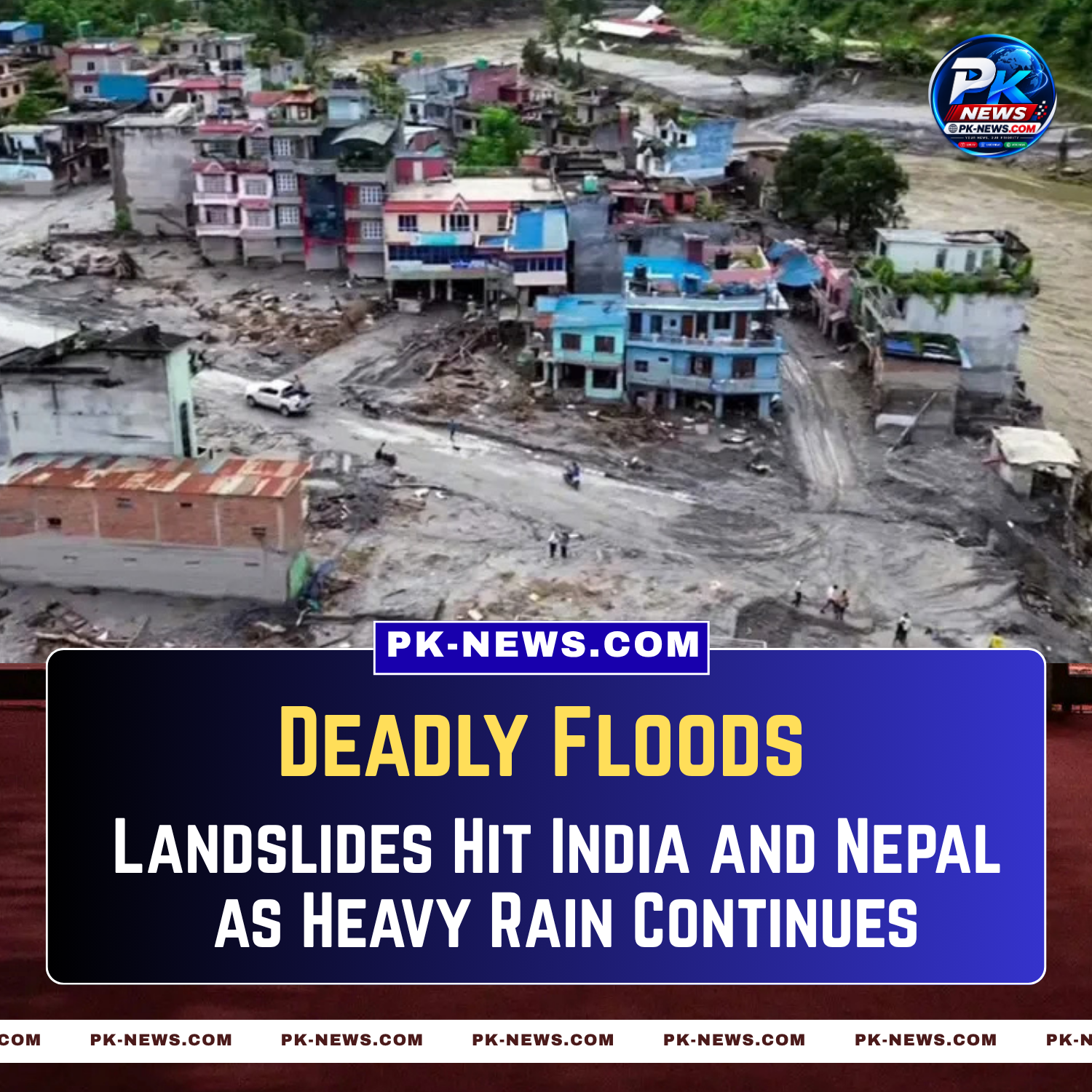
Heavy rain and powerful storms have triggered floods and landslides across northern India and Nepal, causing dozens of deaths, damaging homes and infrastructure, and forcing authorities to warn communities about additional flash-flood risks. Several major rivers have risen above danger levels as emergency teams continue monitoring vulnerable areas.
By PK-News.com | September 27, 2026
Heavy rainfall and storms have triggered a new wave of flooding and landslides across parts of northern India and neighboring Nepal, leaving dozens of people dead and creating renewed concerns about additional flooding as rivers continue to rise.
According to the latest reports available on September 27, authorities in India and Nepal have recorded a rapidly increasing number of casualties. Reuters reported that 56 people had died in India's Uttar Pradesh state, while Nepal had reported 14 deaths and another 11 people missing in the latest situation.
The disaster has affected communities already dealing with severe flooding and landslides in recent weeks, particularly in Nepal, where authorities remain concerned about the possibility of further flash floods.
Heavy Rain Hits Northern India
India's northern state of Uttar Pradesh has been among the worst-affected areas.
Authorities reported that heavy rain and storms affected dozens of districts, with significant rainfall recorded over a short period.
The extreme rainfall has caused flooding, landslides and damage to homes and infrastructure.
Reports indicate that more than 1,000 houses have been damaged in Uttar Pradesh during the latest period of severe weather, while dozens of people have lost their lives.
The situation remains particularly serious because rivers in several parts of northern India have continued to rise.
India's Central Water Commission has reported severe conditions at multiple river-monitoring stations across several states.
Major rivers, including the Ganga, Gandak, Kosi, Bagmati and Narmada, have been reported above danger levels at monitoring locations.
This has increased concerns about additional flooding in low-lying communities.
Nepal Faces New Flood and Landslide Threat
Nepal is also facing renewed flooding and landslide risks after days of heavy rain.
Authorities have warned that flash floods remain possible across a large number of districts.
Reuters reported that Nepalese authorities had warned of possible flash floods in 49 of the country's 77 districts, with more than half of the country facing elevated flood or flash-flood risks as water levels continue to rise.
The warning comes only weeks after Nepal suffered one of its most devastating natural disasters in recent history.
Communities in several regions remain vulnerable because roads, bridges, power infrastructure and communications networks have already been damaged by previous flooding.
Landslide Kills Family in Nepal
One of the latest tragedies occurred in Baglung district, where a landslide buried a house while people were sleeping.
Four people, including three children and a woman, were reported killed in the landslide in Nishi Khola village.
The incident highlights the danger posed by landslides in Nepal's mountainous terrain, where prolonged rainfall can quickly destabilize slopes.
Authorities continue to monitor vulnerable communities as rain persists.
Workers Missing After Avalanche
The severe weather has also created danger in Nepal's high-altitude mountain regions.
Ten Nepali workers were reported missing after an avalanche buried a base camp at Himlung Himal, a mountain rising more than 7,100 metres in northern Nepal.
The workers had reportedly been preparing tents for foreign climbers when the avalanche occurred. The foreign climbers were not present when the incident happened, according to Reuters.
Search and rescue operations face major challenges because of the mountainous terrain and continuing adverse weather.
Rivers Continue Rising
The growing river levels are one of the biggest concerns for authorities.
In India, several monitoring stations have recorded water levels approaching or exceeding dangerous levels.
In Nepal, authorities are also watching major rivers closely.
Recent flooding has already forced evacuations in some communities.
India Today reported that fresh rain in Nepal has caused additional flooding and landslides, with authorities evacuating residents from vulnerable areas as rivers crossed danger levels.
The situation remains fluid, with water levels changing rapidly depending on rainfall.
Roads and Communications Disrupted
Flooding and landslides have also affected transportation.
Several roads in Nepal have been blocked by mudslides and landslides, disrupting movement between communities.
Damage to telecommunications infrastructure has also been reported.
According to Reuters, flooding and landslides damaged optical-fibre networks and power supplies in parts of Nepal, affecting communications.
For remote communities, the loss of road and communication links can make rescue operations significantly more difficult.
Authorities Warn Residents to Stay Alert
Emergency authorities in both countries are urging residents in vulnerable areas to remain alert.
People living close to rivers, streams and unstable hillsides face particular risks as heavy rain continues.
Authorities are monitoring river levels and issuing warnings where necessary.
In Nepal, the warning covers a large portion of the country because of the possibility of sudden flash flooding.
Residents have been advised to move toward safer areas when officials issue evacuation warnings.
Nepal Still Recovering From Previous Disaster
The latest rainfall comes at an especially difficult time for Nepal.
The country is still recovering from a catastrophic flooding disaster that struck last month.
India Today reported that the previous disaster had resulted in more than 1,450 deaths, with thousands still reported missing.
That earlier disaster caused extensive destruction to communities, roads and hydropower infrastructure.
The arrival of another period of heavy rainfall is therefore raising fears that already vulnerable communities could face additional damage.
Why the Situation Is Important for the Region
The latest floods are not only a local humanitarian crisis.
India and Nepal are connected by major river systems, and heavy rainfall in mountainous areas can rapidly affect downstream communities.
Flooding can also disrupt transportation, electricity generation, telecommunications, agriculture and regional trade.
For millions of people living near major rivers, changing water levels can create serious risks within a short period.
The situation is therefore being closely monitored by disaster-management agencies.
What Happens Next?
The immediate priority is the protection of communities facing flooding and landslide risks.
Authorities are expected to continue monitoring rivers, evacuating residents where necessary and conducting rescue operations in affected areas.
Weather conditions will remain a key factor.
If heavy rain continues, additional flooding and landslides could occur, particularly in mountainous and low-lying areas.
The situation remains developing, and casualty figures may change as rescue teams reach isolated communities and authorities receive additional reports.
PK-News.com Monitoring the Situation
The floods and landslides across India and Nepal have become one of the major developing weather disasters in South Asia.
With rivers rising, roads damaged and authorities warning of further flash floods, emergency agencies are continuing to monitor the situation.
PK-News.com will continue following developments and provide updates as authorities release verified information about casualties, evacuations, infrastructure damage and weather conditions.
Developed by PK-News.com
0
NEW
Global
😔 Negative
Deadly Floods and Landslides Hit India and Nepal as Heavy Rain Continues
Related Articles You May Like
Related News








Comments (0)
Leave a Comment
No comments yet. Be the first to comment!