A Relationship Marked by Changing Phases
The relationship between Pakistan and Afghanistan has passed through numerous phases since Pakistan's independence. Despite geographical, cultural and economic connections between the two countries, bilateral ties have frequently been affected by disagreements over security, borders, political influence and regional interests.
At different points, cooperation has existed alongside serious tensions, creating a relationship that has repeatedly shifted between engagement and confrontation.
Deep-Rooted Mistrust
One of the most persistent features of Pakistan-Afghanistan relations has been a lack of trust between political and security institutions on both sides.
Islamabad has repeatedly raised concerns about militant groups operating from Afghan territory and carrying out attacks inside Pakistan. Afghan authorities, meanwhile, have frequently rejected Pakistani allegations and raised their own concerns about Pakistan's policies toward Afghanistan.
These competing narratives have made it difficult to establish a stable basis for long-term cooperation.
The Border Dispute
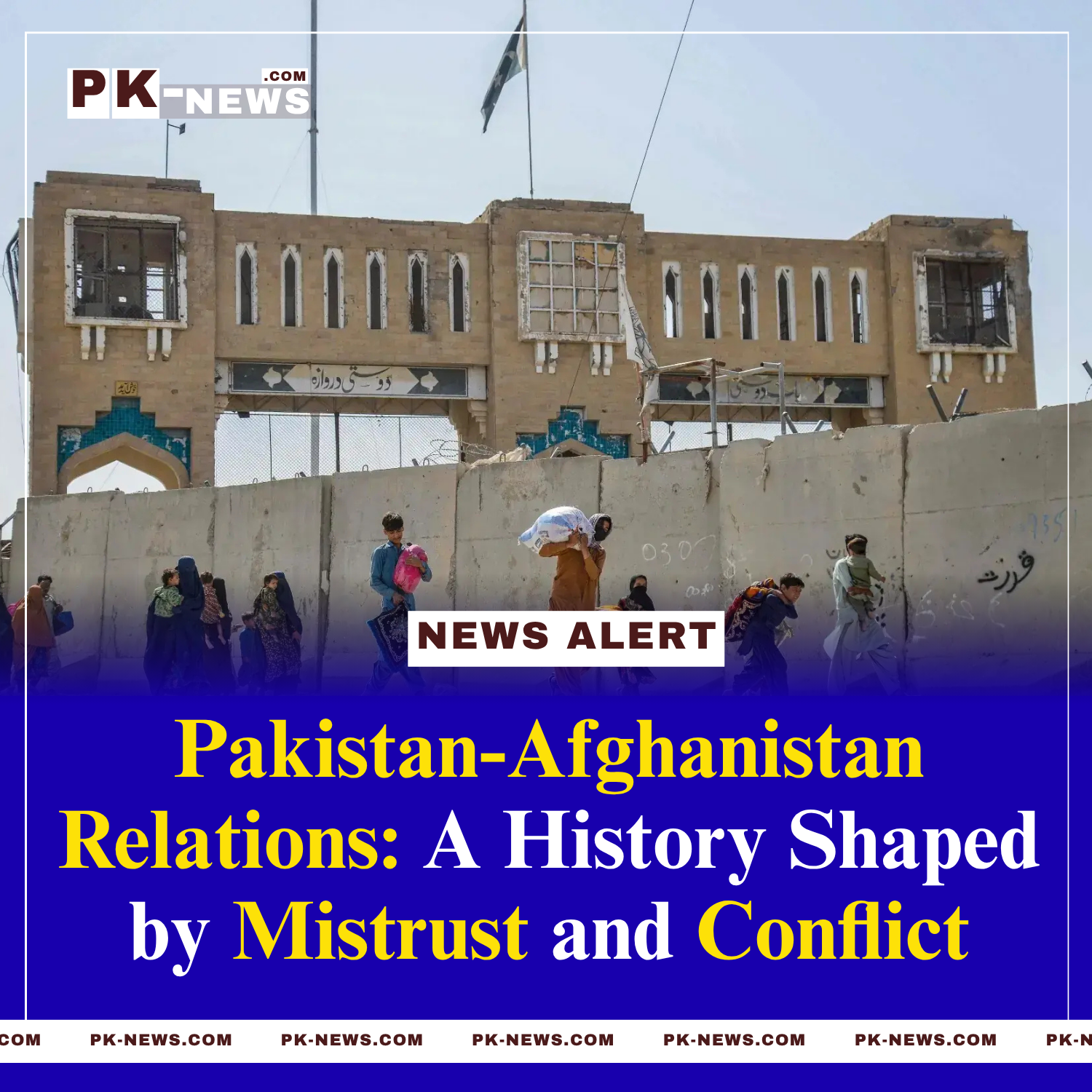
The Durand Line has remained one of the most sensitive issues between Pakistan and Afghanistan.
Pakistan regards the Durand Line as its internationally recognized border, while successive Afghan governments have historically disputed aspects of the frontier's status. Border crossings, fencing and movement restrictions have periodically generated tensions between the two countries.
The issue is closely connected with security, trade and the movement of people living on both sides of the border.
Security and Militancy
Security concerns have become increasingly important in the bilateral relationship. Pakistan has repeatedly accused militant organizations, particularly the Tehreek-i-Taliban Pakistan (TTP), of using Afghan territory to plan or support attacks against Pakistan.
Islamabad has called on authorities in Kabul to prevent Afghan soil from being used against Pakistan. Afghan authorities have disputed Pakistani accusations and have also called for dialogue and cooperation on security matters.
The disagreement over militancy remains one of the biggest obstacles to improving bilateral relations.
Political Changes in Afghanistan
Major political changes in Afghanistan have repeatedly affected relations with Pakistan.
The Soviet invasion, the Afghan civil war, the rise of the Taliban, the US-led intervention after 2001 and the Taliban's return to power in 2021 each created new challenges for Pakistan's foreign and security policy.
Pakistan has maintained diplomatic engagement with Afghanistan while simultaneously facing security concerns arising from developments inside the neighboring country.
External Powers and Regional Competition
Relations between Pakistan and Afghanistan have also been influenced by wider regional and international politics.
The United States, China, Russia, Iran, India and other regional actors have maintained interests in Afghanistan at different times. Their involvement has sometimes affected the strategic calculations of both Islamabad and Kabul.
Afghanistan's location between South Asia, Central Asia and the Middle East has made it an important part of wider regional security and economic discussions.
Propaganda and Competing Narratives
Public discourse surrounding Pakistan-Afghanistan relations has often been shaped by competing political narratives.
Both sides have accused the other of supporting destabilizing activities or failing to address security concerns. Social media has further accelerated the spread of unverified claims, political accusations and conflicting interpretations of events.
For this reason, information concerning border incidents, militant attacks and military operations requires careful verification and attribution to avoid presenting disputed claims as established facts.
Trade and Economic Interests
Despite political disagreements, Pakistan and Afghanistan have significant economic connections.
The two countries share important trade routes and border crossings, while Pakistan has historically served as a major transit route for Afghan trade. Cross-border commerce provides livelihoods for communities on both sides.
However, security incidents and border closures have periodically disrupted trade, creating economic pressure for businesses and traders.
Human and Cross-Border Connections
Millions of people have personal, family, cultural and commercial connections across the Pakistan-Afghanistan border.
Afghan refugees have also lived in Pakistan for decades, creating another important dimension of bilateral relations. Issues involving documentation, repatriation, border management and humanitarian assistance have periodically become sources of political debate.
These human connections mean that developments between the two governments can have direct consequences for ordinary people.
The Need for Communication
The continuing disagreements demonstrate the importance of sustained communication between Islamabad and Kabul.
Security concerns cannot be separated from broader questions involving border management, trade, refugees and political relations. A durable improvement in ties would require mechanisms through which both sides can raise concerns, verify allegations and address disputes through diplomatic channels.
Regional countries can also play a role in supporting dialogue where both governments agree that outside facilitation would be useful.
A Difficult but Important Relationship
Pakistan and Afghanistan remain closely connected by geography and history, even when political relations are strained.
The relationship has repeatedly experienced periods of cooperation followed by renewed tensions. Security incidents, border disputes and competing political narratives continue to influence public and governmental perceptions.
Understanding this complex history requires looking beyond individual incidents and examining the broader political, security, economic and regional factors that have shaped relations over decades.
PK-News.com Perspective
The Pakistan-Afghanistan relationship remains one of the most consequential bilateral relationships for Pakistan's national security and regional stability. Its history includes cooperation, disagreement, diplomatic engagement, border tensions and repeated security crises.
The current challenges cannot be understood through a single event or one political narrative. Developments involving terrorism, border management, trade, refugees and regional diplomacy all contribute to the wider relationship.
PK-News.com will continue to follow developments between Pakistan and Afghanistan, presenting major statements and developments with clear attribution and context.
12
NEW
Global
😔 Negative
Pakistan-Afghanistan Relations: A History Shaped by Mistrust and Conflict
Related Articles You May Like
Related News




Comments (0)
Leave a Comment
No comments yet. Be the first to comment!