Washington — September 22, 2026 | PK News
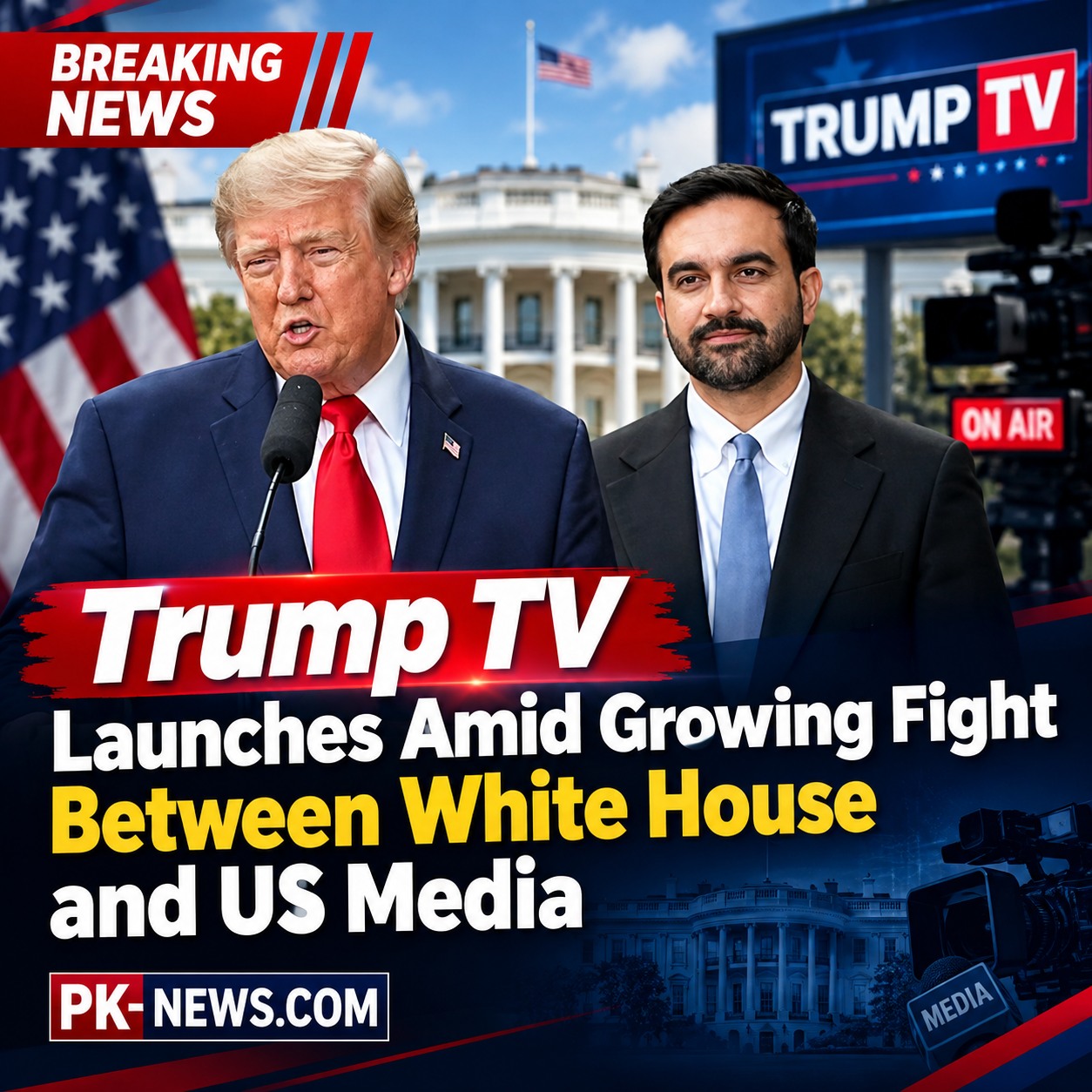
The White House has launched a new online video channel branded “Trump TV” as a growing dispute between President Donald Trump and several major American news organizations disrupts the traditional system used to televise presidential events.
The launch came shortly after the White House barred CNN, MS NOW and Politico from its grounds. The three organizations have challenged the decision in federal court, arguing that the administration's action violates constitutional protections for the press.
The dispute has also prompted the major television networks that normally share responsibility for filming presidential events to suspend their White House pool coverage.
What Is Trump TV?
The new online service provides video coverage of Trump administration events directly to viewers.
The initiative gives the White House a way to distribute footage without depending entirely on the traditional television networks that normally operate the presidential television pool.
The system became particularly important after CNN was removed from its scheduled role in the rotating pool.
ABC, CBS, Fox and NBC subsequently joined CNN in suspending the normal pool arrangement rather than replacing CNN with another network. The television pool normally allows the participating networks to share the costs of sending crews to presidential events and distribute the resulting footage to other media organizations.
First Trump TV Broadcast Faces Technical Problems
The first major test of the White House's new system produced technical difficulties.
During a White House ribbon-cutting event, Trump spoke while Marine One was operating nearby. The helicopter's noise made his remarks difficult to hear, while the absence of the normal television pool meant that major networks did not provide their usual live coverage.
Reports said viewers were left without a clear audio feed of Trump's comments from the event.
The episode highlighted the practical role traditionally played by the White House television pool.
The pool is not simply a political arrangement. It provides cameras, audio, crews and technical infrastructure that allow broadcasters around the country and internationally to receive presidential footage quickly.
Why Did Trump Ban CNN, MS NOW and Politico?
Trump announced the restrictions on September 18, accusing CNN, MS NOW and Politico of producing what he described as false and unfavorable coverage.
The president has argued that media organizations should report fairly and has said that outlets he considers unreliable should not receive access to the White House.
The administration has defended the decision by arguing that access to the White House is a privilege rather than an unrestricted right.
The three organizations strongly dispute the administration's reasoning.
CNN, MS NOW and Politico filed a federal lawsuit seeking restoration of their access. Their legal challenge argues that the government cannot selectively restrict journalists because officials object to the content of their reporting.
Court Battle Begins
The dispute is now before a federal court in Washington.
The news organizations are seeking emergency relief that would restore their access to the White House while the broader legal case proceeds.
The case has been assigned to US District Judge Timothy Kelly, who previously handled a dispute involving CNN reporter Jim Acosta during Trump's first administration.
The current case could therefore become an important test of how much control a presidential administration has over access for journalists covering the executive branch.
The administration, meanwhile, maintains that White House access can be regulated and that its decision was based on the outlets' conduct and coverage.
Television Pool System Disrupted
The conflict has created an unusual situation for presidential coverage.
Five major television networks — ABC, CBS, CNN, Fox and NBC — traditionally rotate responsibility for operating the White House television pool.
The designated network provides the primary camera and distributes the signal to other news organizations.
CNN had been scheduled for pool duties when the White House excluded it from the premises.
Rather than simply assigning the job to another network, the participating broadcasters collectively suspended the arrangement.
That means presidential events may receive less conventional television coverage from inside the White House.
Other forms of reporting have continued, including print, radio, wire-service reporting and coverage from locations outside the White House.
Trump Defends His Decision
Trump has continued to defend the restrictions.
He has said that media organizations have an obligation to be fair and has repeatedly used the phrase “fake news” when criticizing coverage he believes is inaccurate or hostile toward his administration.
The president has also suggested that additional media organizations could potentially face restrictions.
The administration says the policy is intended to prevent what it considers inaccurate or harmful reporting rather than to suppress legitimate journalism.
Critics of the policy argue that government officials should not determine which news organizations receive access based on whether they approve of their coverage.
Broader Debate Over Press Freedom
The dispute has quickly moved beyond a disagreement between Trump and individual media organizations.
Press organizations and First Amendment advocates have raised concerns about the consequences of allowing a government administration to selectively determine which journalists can enter the White House.
The White House Correspondents' Association has called for the banned journalists' access to be restored, emphasizing the importance of independent reporting on the government.
The organizations involved in the lawsuit say the decision could affect the public's ability to receive independent information about the president.
The administration disputes that interpretation and says journalists remain free to report from outside the White House.
Immigration Policy Adds Another Political Dimension
The media dispute is developing alongside intense political debate over Trump's immigration enforcement policies.
The administration has significantly expanded immigration enforcement, while critics have raised concerns about the use of force and the treatment of people during enforcement operations.
Recent incidents involving immigration authorities have generated additional political attention and renewed debate over the limits of federal enforcement powers.
Trump and his supporters argue that stronger enforcement is necessary to address illegal immigration and public safety.
Opponents have focused on specific incidents involving injuries, shootings and the treatment of migrants and other individuals during enforcement operations.
Those disagreements have also become part of the broader media battle, with competing interpretations of how Trump's policies should be reported.
A New Information Model?
Trump TV could represent a significant change in how the administration communicates with the public if it develops beyond its initial launch.
Instead of relying exclusively on traditional television networks to distribute presidential footage, the White House can now publish video directly through its own digital channels.
That gives the administration greater control over the timing and presentation of official events.
Traditional media organizations, however, provide independent reporting, verification and editorial context alongside the raw footage.
The current conflict therefore raises a broader question about whether government-produced video can replace the role traditionally played by independent news organizations.
What Happens Next?
The immediate focus is on Wednesday's federal court hearing concerning the media-access dispute.
The court could determine whether CNN, MS NOW and Politico regain access while their lawsuit proceeds.
Meanwhile, the television networks must decide how long they will continue suspending their traditional White House pool coverage.
The White House is also likely to continue developing its direct-to-public video operation.
For the American public, the dispute could affect how easily viewers receive live images and information from presidential events.
PK News Analysis
The launch of Trump TV follows a major breakdown in the traditional White House media-access system.
The White House says it acted because it believes CNN, MS NOW and Politico have repeatedly published inaccurate or unfair coverage.
The three media organizations say the restrictions are retaliation for their reporting and have challenged the decision in federal court.
Major television networks have responded by suspending their shared White House television pool rather than replacing CNN after the network was removed from its scheduled duties.
The legal question remains unresolved. The upcoming court proceedings will help determine whether the administration's restrictions can remain in place while the case continues.
For now, Trump TV provides the White House with a direct method of distributing presidential video, while the traditional media organizations continue covering the administration through other reporting channels.
This article has been independently rewritten and prepared for publication by PK-News.com using the supplied transcript and current reporting from established news organizations. It does not reproduce the original broadcast.
PK News — PK-News.com | World News • US Politics • Media • International Affairs
2
NEW
Global
😔 Negative
Trump TV Launches Amid Growing Fight Between White House and US Media
Related Articles You May Like
Related News






Comments (0)
Leave a Comment
No comments yet. Be the first to comment!