Islamabad | September 22, 2026 | PK News
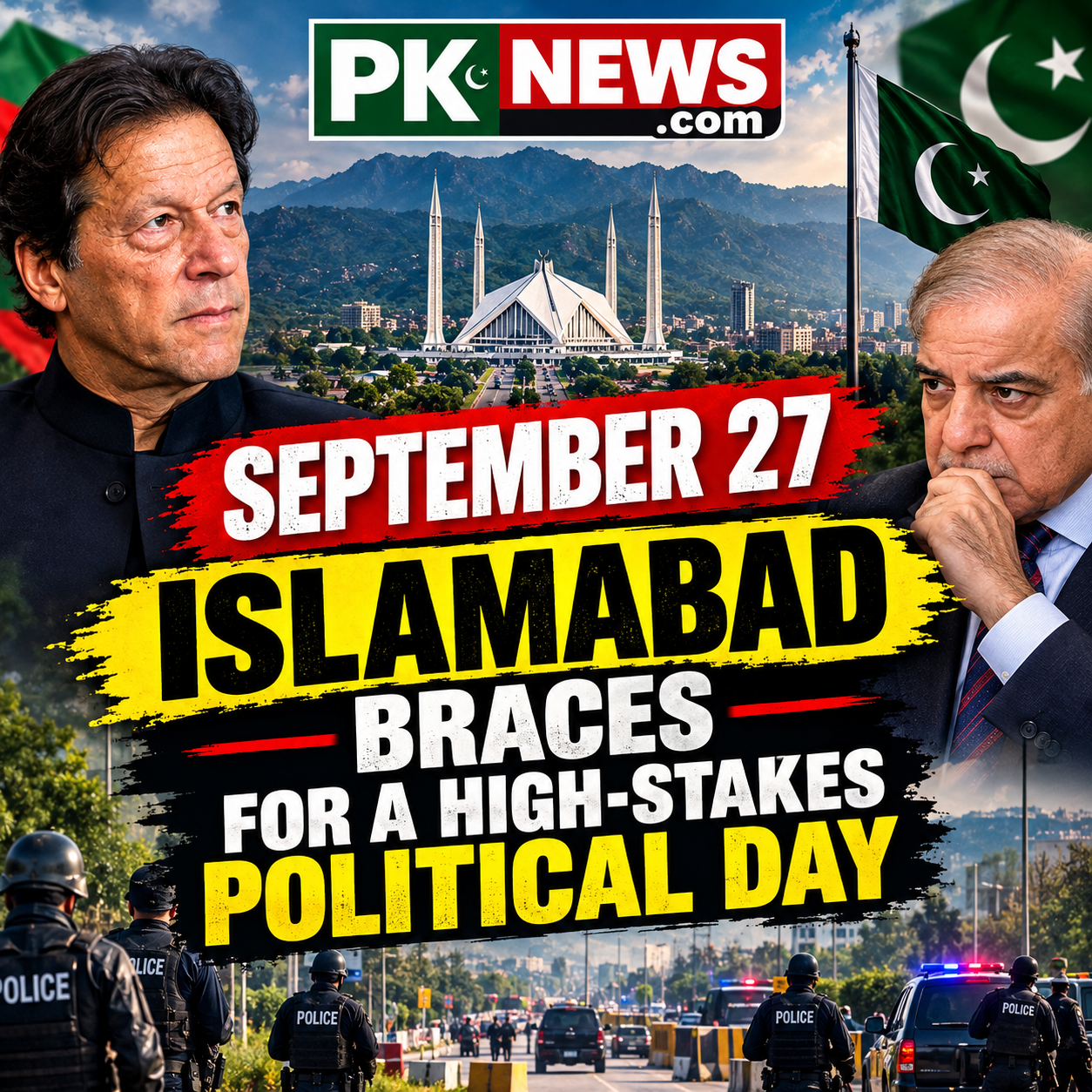
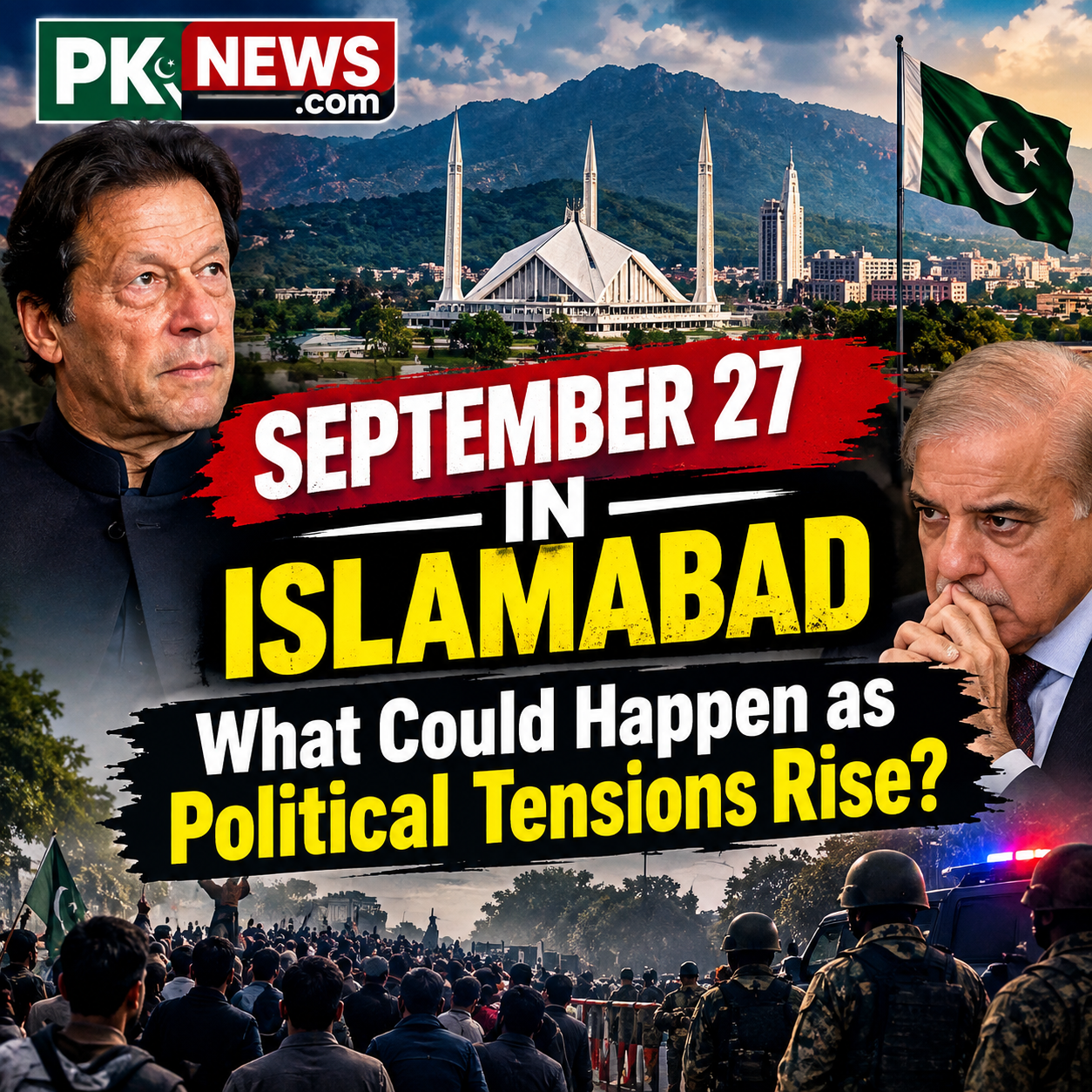
Islamabad is heading toward September 27 under growing political pressure, with a planned PTI mobilisation expected to bring thousands of supporters toward the federal capital while authorities prepare extensive security measures.
For Pakistan, the significance of September 27 goes beyond a single protest. The day could become an important test of political mobilisation, law enforcement, public movement, negotiations and the ability of opposing sides to manage tensions without allowing events to spiral into violence.
At this stage, however, no one can say with certainty exactly what Islamabad will look like on September 27.
The situation could change quickly depending on negotiations, the size of the gathering, government decisions, court orders, police deployment and the instructions issued by political leadership.
THE BIG QUESTION
The central question is simple:
Will September 27 remain a political protest, or could it develop into a wider confrontation between protesters and authorities?
There are several possible paths.
The PTI could hold a large demonstration while remaining within designated areas.
Authorities could impose strict movement restrictions around the capital.
Political negotiations could produce an arrangement before the protest reaches its peak.
Or tensions could rise if protesters attempt to cross security barriers or move toward restricted areas.
The final outcome will depend heavily on what happens during the hours before and during the mobilisation.
WHAT WE KNOW SO FAR
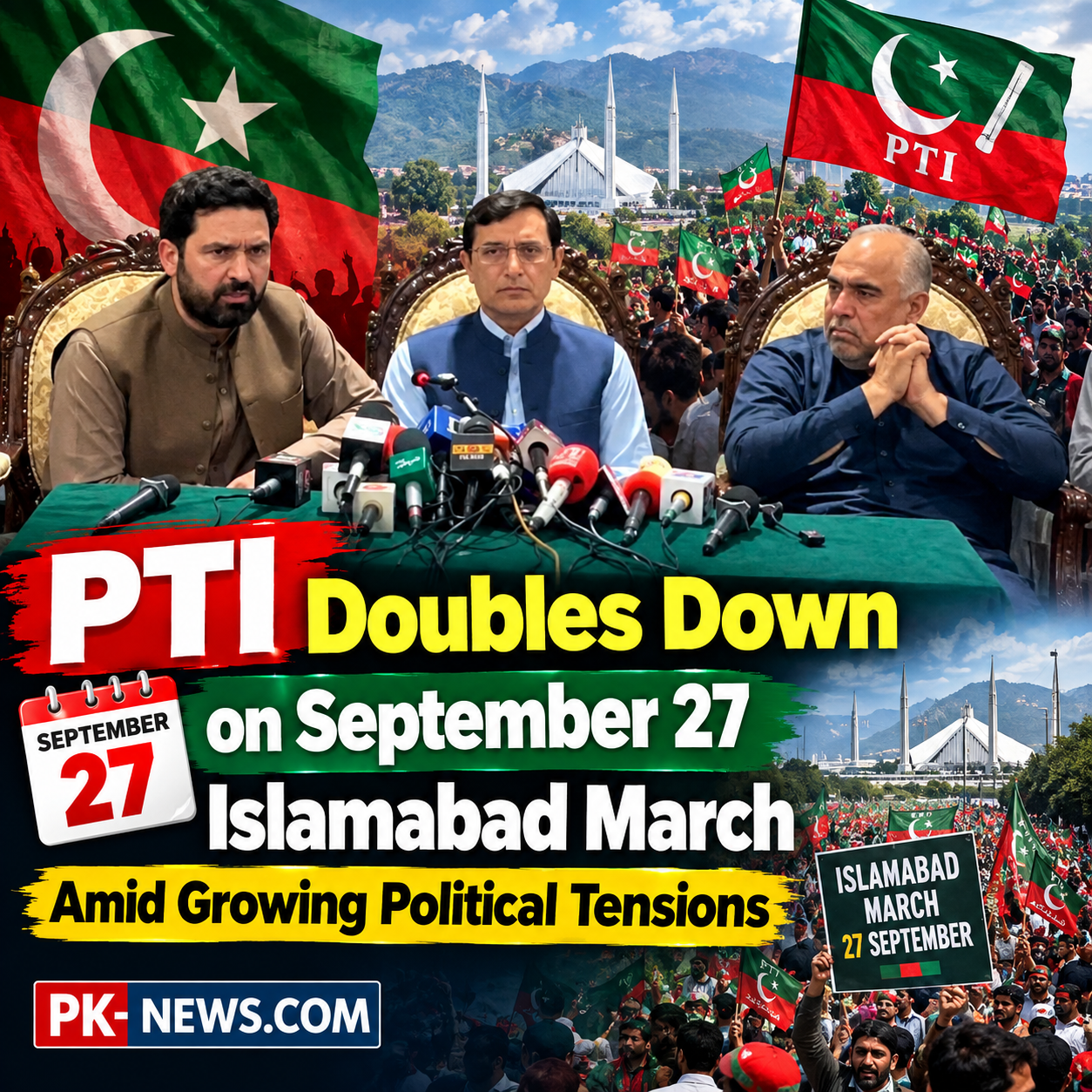
The PTI has announced a September 27 mobilisation and has been preparing its supporters for political activity in Islamabad.
The party's demands include political and legal issues surrounding its leadership and imprisoned party founder Imran Khan, along with wider concerns about political rights.
Meanwhile, government authorities have been preparing security arrangements across Islamabad and surrounding routes.
Reports indicate that thousands of additional security personnel are being prepared for deployment, while containers and barriers are being positioned at important locations.
These preparations suggest that authorities are treating the planned mobilisation as a major security and public-order challenge.
But security preparations themselves do not prove that violence will occur.
They indicate preparation for different possible situations.
SCENARIO 1 — A LARGE BUT PEACEFUL PROTEST
The first possibility is a major turnout without serious confrontation.
Under this scenario, PTI supporters would gather in designated areas, political leaders would address the crowd and the demonstration would remain largely peaceful.
This would allow the PTI to demonstrate its organisational strength while allowing authorities to maintain control of sensitive government areas.
The success of this scenario would depend on crowd discipline, police behaviour, communication between both sides and whether protesters respect restrictions imposed by authorities.
If the protest remains peaceful, September 27 could become primarily a major political event rather than a security crisis.
SCENARIO 2 — ISLAMABAD UNDER HEAVY RESTRICTIONS
Another possibility is that Islamabad experiences extensive security restrictions.
Major roads could be blocked or partially restricted.
Entry points could face heavy checking.
Containers and barriers could limit access to sensitive areas.
Movement between Islamabad and Rawalpindi could become difficult.
For ordinary residents, this could be one of the biggest consequences of the mobilisation.
People travelling to work, hospitals, schools, universities, markets and government offices could face delays.
In this situation, the political protest would affect daily life even for people who are not participating.
SCENARIO 3 — PROTESTERS AND POLICE COME FACE TO FACE
The most sensitive scenario would involve direct confrontation.
A confrontation could occur if large groups attempt to move into areas where authorities have imposed restrictions.
Police could attempt to stop the movement, while protesters could resist those restrictions.
The situation could then develop rapidly.
Possible consequences could include:
Arrests of political workers
Temporary road closures
Injuries
Additional deployment of security forces
Internet or communications concerns
Further political statements from both sides
New negotiations after tensions increase
However, this is a possible scenario, not a prediction.
There is no reliable basis for claiming in advance that violence will definitely happen.
SCENARIO 4 — LAST-MINUTE NEGOTIATIONS
Politics can change quickly.
One of the most important possibilities before September 27 is renewed dialogue.
If the government and PTI establish an acceptable arrangement concerning the location, timing and conditions of the protest, the level of tension could change significantly.
Negotiations could focus on:
• Protest location
• Security arrangements
• Access to Islamabad
• Arrests and legal cases
• Political demands
• Future dialogue
Even if the two sides remain far apart on major political questions, an agreement over the management of the protest could reduce the immediate risk of confrontation.
SCENARIO 5 — A BROADER OPPOSITION MOBILISATION
September 27 could become politically more significant if other opposition groups participate.
PTI has been seeking political cooperation with other parties.
If additional groups join the mobilisation, the event could develop from a PTI-specific protest into a broader opposition demonstration.
That could increase the political visibility of the event while also creating additional challenges for authorities responsible for crowd management.
At the same time, different political parties may have different objectives, meaning that cooperation cannot automatically be assumed.
THE ROLE OF RAWALPINDI
Rawalpindi could become particularly important.
Because Islamabad and Rawalpindi are closely connected, restrictions in one city can quickly affect the other.
If large numbers of protesters travel toward Islamabad, authorities may monitor major connecting routes closely.
This means the situation on September 27 may not be limited to Islamabad's administrative boundaries.
Transport routes, highways and surrounding areas could become important parts of the day's developments.
THE ROLE OF KH YBER PAKHTUNKHWA
Khyber Pakhtunkhwa is another important factor.
PTI has a significant political and organisational presence in the province, and mobilisation from KP could contribute to the overall size of the demonstration.
At the same time, questions surrounding the use of provincial government resources and police personnel could become part of the political and legal debate.
How many people actually travel from KP—and whether they reach Islamabad—could therefore be one of the key indicators to watch.
WHAT ABOUT ORDINARY CITIZENS?
For many Islamabad residents, September 27 will not be about political speeches.
It will be about getting to work.
Getting home.
Reaching hospitals.
Attending school or university.
Running businesses.
Travelling between Islamabad and Rawalpindi.
This is why the legal debate surrounding public protest is important.
Political parties have the right to engage in political activity within the constitutional and legal framework, while ordinary citizens also have rights to movement, education, employment, healthcare and access to public spaces.
The challenge for authorities is therefore not simply controlling a protest.
It is maintaining public order while respecting lawful political activity and the rights of the wider population.
WHAT COULD CHANGE BEFORE SEPTEMBER 27?
Several developments could completely change the situation before the planned date.
1. A Political Agreement
A last-minute agreement could reduce the size or intensity of the mobilisation.
2. A New Court Order
A judicial decision could change the legal framework governing the protest.
3. Changes in PTI Strategy
The party could alter the location, timing or structure of its mobilisation.
4. Government Security Decisions
Authorities could increase or reduce restrictions depending on intelligence and negotiations.
5. Opposition Cooperation
Participation by additional political groups could change the scale of the event.
6. Public Response
The actual turnout may be very different from expectations.
SEPTEMBER 27 TIMELINE TO WATCH
BEFORE THE DAY
Political negotiations, court decisions, government announcements and PTI mobilisation plans will be closely watched.
EARLY MORNING
Security deployment and road restrictions could determine how easily people can enter or leave the capital.
DAYTIME
The size and location of gatherings will become clearer.
AFTERNOON
Political speeches, crowd movement and police positioning could become major developments.
EVENING
The most important question could be whether protesters disperse peacefully, remain in place or attempt further movement.
AFTER THE EVENT
Arrests, injuries, political statements, negotiations and legal developments could determine the longer-term consequences.
WHAT SHOULD PEOPLE WATCH?
On September 27, several indicators could provide a clearer picture of where the situation is heading.
Crowd size:
A larger-than-expected turnout could increase pressure on authorities.
Police positioning:
The location and behaviour of security forces could indicate where restrictions are being enforced.
Political speeches:
Instructions from PTI leadership could influence the behaviour of supporters.
Government announcements:
Authorities may change restrictions depending on developments.
Road access:
The status of major routes will determine the impact on ordinary citizens.
Negotiations:
Even during the protest, political communication could alter the situation.
PK NEWS ANALYSIS
According to PK News (PK-News.com), September 27 should be understood as an uncertain and potentially significant political day, not as an event whose outcome can already be determined.
The current information points toward three major forces operating simultaneously:
Political mobilisation.
Government security preparations.
Legal and constitutional restrictions.
How these three factors interact will determine the character of the day.
A peaceful demonstration remains possible.
Heavy restrictions remain possible.
Negotiations remain possible.
Confrontation is also a possibility if protesters and authorities come into direct conflict.
But none of these outcomes should be treated as certain before events actually unfold.
The most important issue may ultimately be whether political disagreements can be managed without causing serious harm to ordinary citizens or creating a wider cycle of confrontation.
For Pakistan's political system, September 27 could therefore become less about who can bring the biggest crowd and more about how political disagreement is managed under pressure.
PK News will continue following developments and will update this analysis as verified information becomes available.
pk-news.com
Independent Digital News & Analysis
Reporting Pakistan. Reporting the World.
4
NEW
Politics
😐 Neutral
September 27: Islamabad Braces for a High-Stakes Political Day
Related Articles You May Like
Related News







Comments (0)
Leave a Comment
No comments yet. Be the first to comment!