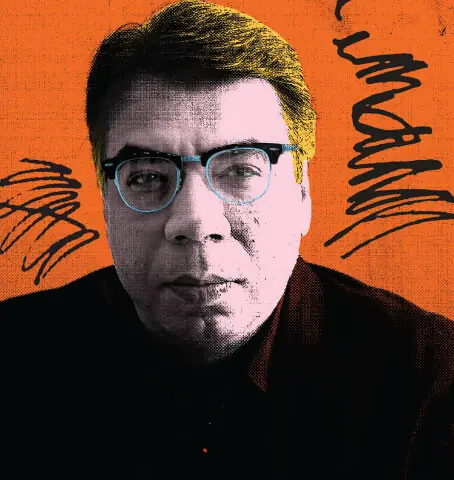
Indian Prime Minister Narendra Modi will not fall, but he clearly wears a shell-shocked expression these days, as widespread anti-Modi protests by the Cockroach Janta Party (CJP) appear to have unnerved him.
The CJP operates outside conventional politics as a movement driven primarily by young Indians. Naturally, following regional trends, where commentators labelled recent anti-government uprisings in Sri Lanka, Nepal and Bangladesh as Gen-Z uprisings, the Indian movement is receiving the same description.
In truth, this term is intellectually lazy. Global student protests against governments in the late 1960s were never termed Boomer uprisings, nor were violent anti-corporate demonstrations in the 1990s described as Gen-X uprisings. Revolutions in places such as Ukraine and erstwhile Czechoslovakia received colour-coded names such as the Orange Revolution, Velvet Revolution etc. Western media delights in such terminology. This silly practice ultimately collapsed alongside the disastrous unravelling of the so-called Arab Spring, which no one labelled a Millennial uprising.
How did the term ‘Gen Z revolution’ originate? Back in 2017, as the Black Lives Matter (BLM) movement peaked in the United States, Pepsi attempted to capitalise on the momentum. A television commercial featured a well-known female model walking into a fictionalised BLM protest carrying a can of Pepsi, which she offered as a peace offering to the cops and the young protesters.
From Nepal and Sri Lanka to Bangladesh and India, youth-led protests have become a regional phenomenon. But reducing them to generational branding obscures the political and economic forces driving them
What the brand’s marketing team believed would be a stroke of corporate co-optation badly misfired. Young Americans took to social media to lambast Pepsi for trivialising the movement. The backlash proved so intense that Pepsi was forced to issue a public apology.
Until 2017, most corporate brands remained oblivious to the fact that Millennials had already entered the workforce and were no longer the sole dominant youth demographic. A new generation was steadily replacing them: Generation-Z. Shaped by distinct circumstances, this cohort embraced markedly different values. Now every youth uproar is lazily labelled as a ‘Gen-Z uprising.’
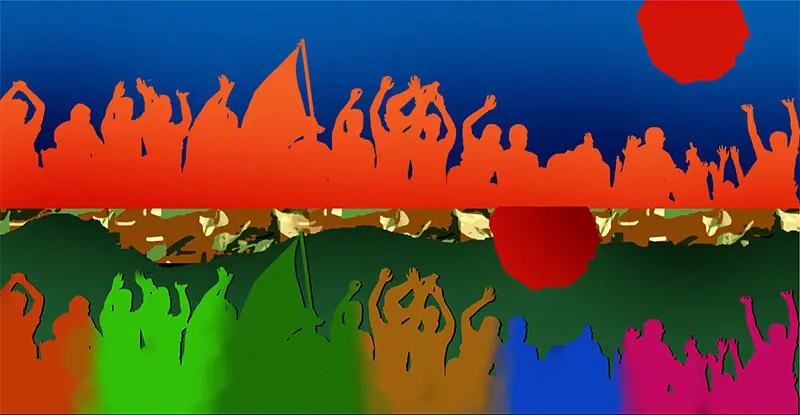
Nepal witnessed youth-led uprisings driven by frustration with government corruption, nepotism and restrictions on civil liberties. Bangladesh experienced student protests initially sparked by anger over discriminatory civil service job quotas, which quickly broadened into a wider rebellion against authoritarian rule and youth unemployment. Sri Lanka’s upheaval was ignited by a severe economic crisis featuring shortages of fuel, food and medicine, alongside hyperinflation. India’s youth movement emerged in response to economic anxieties surrounding unemployment, and perceived threats to democratic norms.
But here are three interesting bits about the uprising in India which haven’t been discussed in much detail.
Political analysis and sociological studies by organisations such as Centre for the Study of Developing Societies-Lokniti (CSDS-Lokniti) show that Modi has historically enjoyed strong backing from young middle-class Indians. Therefore, the current youth protests in India against governance issues such as unemployment or exam irregularities mostly involve individuals or households that previously supported him, reflecting a move from optimistic aspiration to economic disillusionment.
As the Pakistani political commentator Najam Sethi observed, this change implies that a significant segment of young Modi supporters is now open to engagement by anti-Modi parties.
Secondly, the movement is horizontal, lacking a disciplined party structure and a central leader. This was also the case in Nepal, Bangladesh and Sri Lanka. Horizontal movements fail to achieve any significant structural transformation. A despised individual may fall, but the underlying apparatus remains intact.
This dynamic was also visible in the Arab Spring. However, horizontal movements have the potential to inadvertently unleash grave dangers as well. Consider a rubber-band. Stretched to its utmost limit, it either snaps back to its original shape upon release or, if pulled too far, breaks entirely. The 2018 youth uprising in Sudan successfully ousted a hated dictator, but the rubber-band broke rather than returning to its previous form. The country plunged into a brutal civil war that persists today.
Historically, enduring revolutions capable of delivering structural change have required an organised outfit and a strong central leadership. They have a consensual hierarchy. Horizontal uprisings, on the other hand, generally achieve little beyond removing a head of state or government while preserving the ruling order, or risk fracturing the state into civil conflict.
In India, the removal of Narendra Modi is not yet on the horizon, nor is there any likelihood of severe civil strife. What is visible, however, is an outpouring of frustration, directed at a once-revered figure by a youth demographic that includes many who previously idolised him and bought into his promises of economic miracles. This discontent was further compounded when he faltered in the 2025 conflict against arch-rival Pakistan. And this is important because it leads directly into the third interesting bit.
Over the past few years, youth have risen up in almost every South Asian country, including Sri Lanka, Nepal, Bangladesh, the Maldives to a certain extent, and now India. Pakistan, however, has experienced nothing of the sort on a national scale. While protests have occurred, they remain ethnically localised, such as the canal protests exclusive to Sindh or the missing persons demonstrations confined to Balochistan.
One might posit that the May 9, 2023 protests led by the Pakistan Tehreek-i-Insaf (PTI) served as the nation’s Gen-Z uprising moment, but this characterisation misses the mark. The youth movements elsewhere in the region were organically driven by socio-economic grievances, whereas the May 9 mobilisation was a top-down, party-engineered response, cantered entirely around the personality and arrest of a single political leader, Imran Khan.
Rather than representing an autonomous youth uprising confronting institutional failure, it was a partisan reaction executed by loyal party cadres defending a specific political figure, lacking the broad, non-partisan defiance that defines contemporary youth uprisings across the region. It signified little more than the uncritical adoration of a single leader.
It is striking that major youth uprisings have erupted across South Asian nations that have historically experienced significant Indian economic and political influence, often leaving them feeling pressured to align with New Delhi’s regional preferences. This dynamic helps explain why anti-establishment sentiment in those countries frequently carried an explicit anti-India undertone.
Pakistan stood apart as the sole nation in the region with a strictly anti-India posture. This altered its political ecosystem. While other South Asian states faced domestic movements targeting leadership perceived as compliant with India, Pakistan’s national narrative has long been anchored in hostility toward India.
Therefore, ever since the late 1960s, anti-establishment anger in Pakistan tends to be channelled through ethnic-nationalist and partisan paradigms rather than through a broad, organic youth uprising.
Published in Dawn, EOS, August 2nd, 2026





Comments (0)
Leave a Comment
No comments yet. Be the first to comment!