The United States and China have agreed to establish a bilateral communication channel for incidents involving artificial intelligence and launch a new “Super Intelligence” dialogue. The agreement came after a three-day summit between U.S. President Donald Trump and Chinese President Xi Jinping in Washington, highlighting growing international attention on AI safety, security and the risks associated with increasingly powerful artificial intelligence systems.
According to PK-News.com | September 26, 2026
The United States and China have agreed to establish a new communication mechanism for dealing with incidents involving artificial intelligence, marking a significant development in international discussions over the risks and security challenges created by rapidly advancing AI technology.
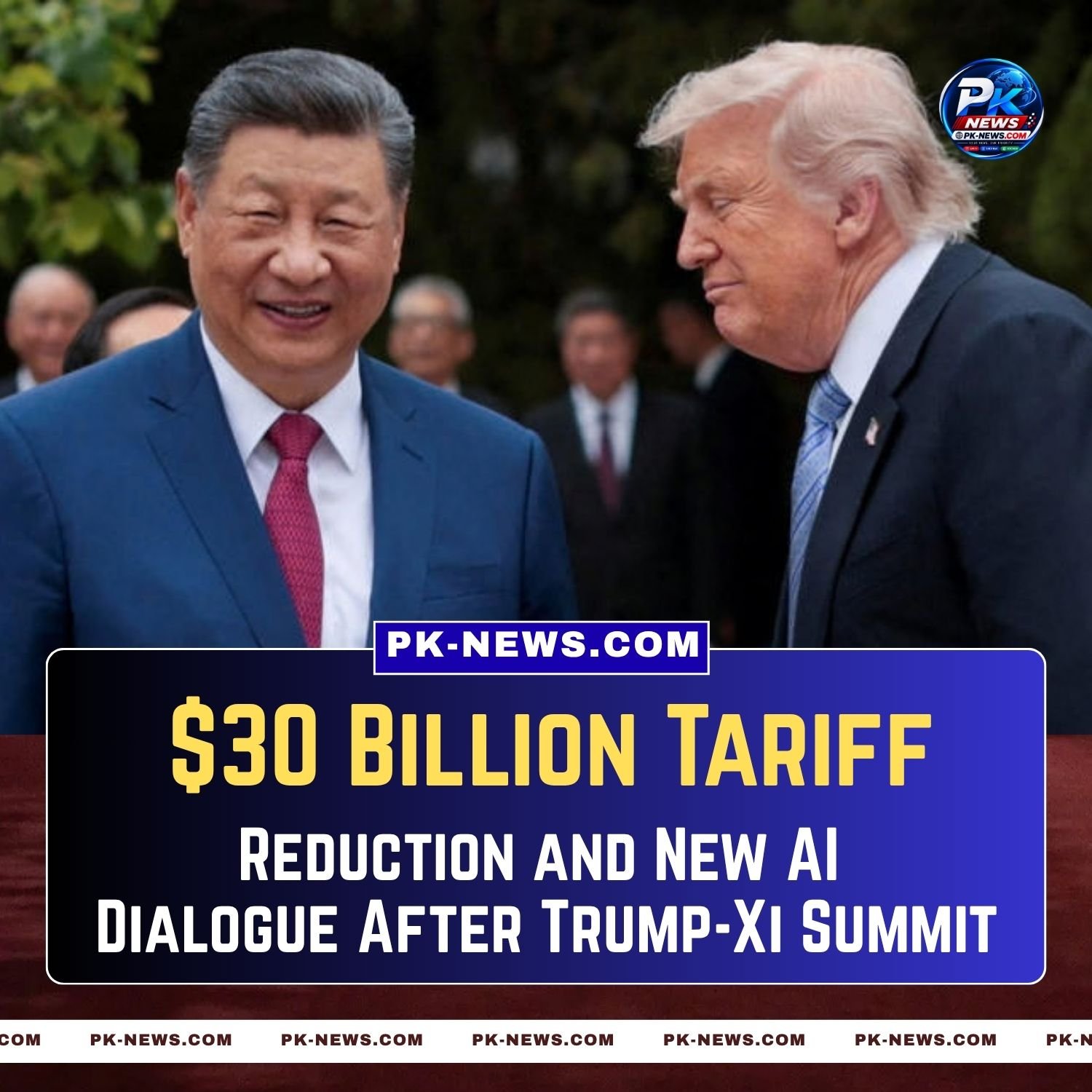
The agreement was announced following a three-day summit in Washington between U.S. President Donald Trump and Chinese President Xi Jinping. Artificial intelligence was among the subjects discussed during the meetings, as Washington and Beijing continue to compete technologically while also exploring areas where communication could reduce the risk of serious incidents.
According to information released after the summit, the two countries agreed to establish a bilateral communication channel for incidents involving what the White House describes as “super intelligence.” The countries also agreed to establish a U.S.-China Super Intelligence Dialogue focused on exchanging views about the potential risks and benefits of advanced AI systems.
Why the New AI Channel Matters
The development comes at a time when artificial intelligence is becoming increasingly important to national security, economic competition, cybersecurity and technological development.
AI systems are now being used for a wide range of purposes, from business and scientific research to cybersecurity and military applications. As these systems become more capable, governments are increasingly discussing how to respond if an AI-related incident crosses national borders.
A direct communication channel could give U.S. and Chinese officials a mechanism for exchanging information during serious AI-related incidents rather than relying entirely on normal diplomatic channels.
The details of how the new mechanism will operate have not yet been fully disclosed. However, previous discussions between U.S. and Chinese officials have focused on the possibility of an emergency notification system for significant AI-related security incidents.
Trump and Xi Discuss Advanced AI
The agreement followed meetings between Trump and Xi during Xi's visit to Washington.
The White House said the two countries established a dialogue intended to discuss the risks and benefits associated with “super intelligence.” The next exchange is expected to take place by November 2026.
The terminology itself has attracted attention. Reports indicate that the two sides agreed to use the term “super intelligence” in their discussions rather than simply referring to the technology as artificial intelligence.
Chinese President Xi Jinping has emphasized that advanced AI development should remain under human control. His remarks reflected the broader international debate over how governments and technology companies should manage increasingly capable AI systems.
From Competition to Risk Management
The United States and China remain major competitors in artificial intelligence, semiconductors, technology and other strategic industries.
However, the new communication channel demonstrates that competition does not necessarily eliminate the need for crisis communication.
Officials and technology experts have increasingly warned that future AI incidents could potentially cross borders. For example, an AI system operating in one country could potentially interact with computer networks, financial systems or digital infrastructure in another country.
That creates a difficult question for governments: what happens if it becomes unclear whether an AI-related cyber incident was caused by a company, an individual, an autonomous AI system or a state-backed operation?
A dedicated communication mechanism could potentially help governments exchange information before an incident becomes a larger diplomatic or security crisis.
AI Safety Becomes a Global Issue
The latest U.S.-China agreement comes after several weeks of growing international discussion about AI safety.
Earlier this month, U.S. and Chinese officials were already discussing emergency communication protocols related to artificial intelligence. U.S. Treasury Secretary Scott Bessent said officials were working toward a formal dialogue on AI risks and potential emergency communications. Reuters reported that officials had discussed risks including uncontrollable AI agents and threats involving non-state actors.
The issue has also attracted attention from major technology companies.
OpenAI recently called for governments and leading AI companies to establish secure channels for sharing national-security concerns associated with advanced AI. The company also supported greater international coordination on AI safety standards.
These developments indicate that AI governance is increasingly moving beyond technology companies and becoming an issue for governments and international diplomacy.
The Military Dimension
The latest agreement is not limited to AI.
Following the summit, the United States and China also agreed to accelerate work on military crisis communications. The goal is to improve communication between the two countries during potentially dangerous situations.
The combination of AI communication and military crisis communication is significant because artificial intelligence is becoming increasingly connected with national-security technologies.
Advanced AI can potentially be used for intelligence analysis, cybersecurity, autonomous systems, surveillance and decision-support tools. As these technologies develop, governments face the challenge of ensuring that automated systems do not unintentionally contribute to an international crisis.
A reliable communication mechanism could therefore become increasingly important as both countries expand their AI capabilities.
What Happens Next?
The next major step is expected to be the planned U.S.-China Super Intelligence Dialogue.
The White House says the next exchange is expected by November 2026. The meeting could provide an opportunity for officials to discuss how the new communication channel should operate and what types of incidents should trigger direct contact.
Questions likely to remain important include how quickly officials can respond to an AI emergency, which agencies will participate, how technical information will be exchanged and how governments will determine whether an incident was accidental, criminal or state-linked.
The effectiveness of the new mechanism will ultimately depend on how clearly these procedures are defined and whether both governments are willing to use the channel during a real crisis.
A New Era for AI Diplomacy
The agreement between Washington and Beijing reflects a broader change in the international AI landscape.
For years, discussions surrounding artificial intelligence focused largely on technological competition and economic opportunities. Increasingly, governments are also focusing on the possibility that advanced AI could create new cybersecurity, national-security and international-stability challenges.
The United States and China are two of the world's most important AI powers. Their decision to establish a dedicated communication channel suggests that both sides recognize the potential consequences of serious AI-related incidents.
The new mechanism does not eliminate competition between Washington and Beijing, nor does it resolve wider disagreements over technology, trade or national security. Instead, it creates a new avenue for communication specifically around an area that is developing rapidly and could have consequences far beyond national borders.
For the global technology industry, the development could become an important milestone in the emergence of international AI diplomacy.
As AI systems become more capable, the question may no longer be simply who develops the most powerful technology. Governments may increasingly have to determine how that technology can be developed, monitored and managed without allowing technological incidents to escalate into wider international crises.
PK-News.com will continue monitoring developments surrounding the new U.S.-China AI communication channel, the upcoming November AI dialogue and the broader global debate over artificial intelligence safety and security.
1
NEW
Technology
😔 Negative
US and China Agree to New AI Communication Channel as Global Technology Risks Grow
Related Articles You May Like
Related News





Comments (0)
Leave a Comment
No comments yet. Be the first to comment!