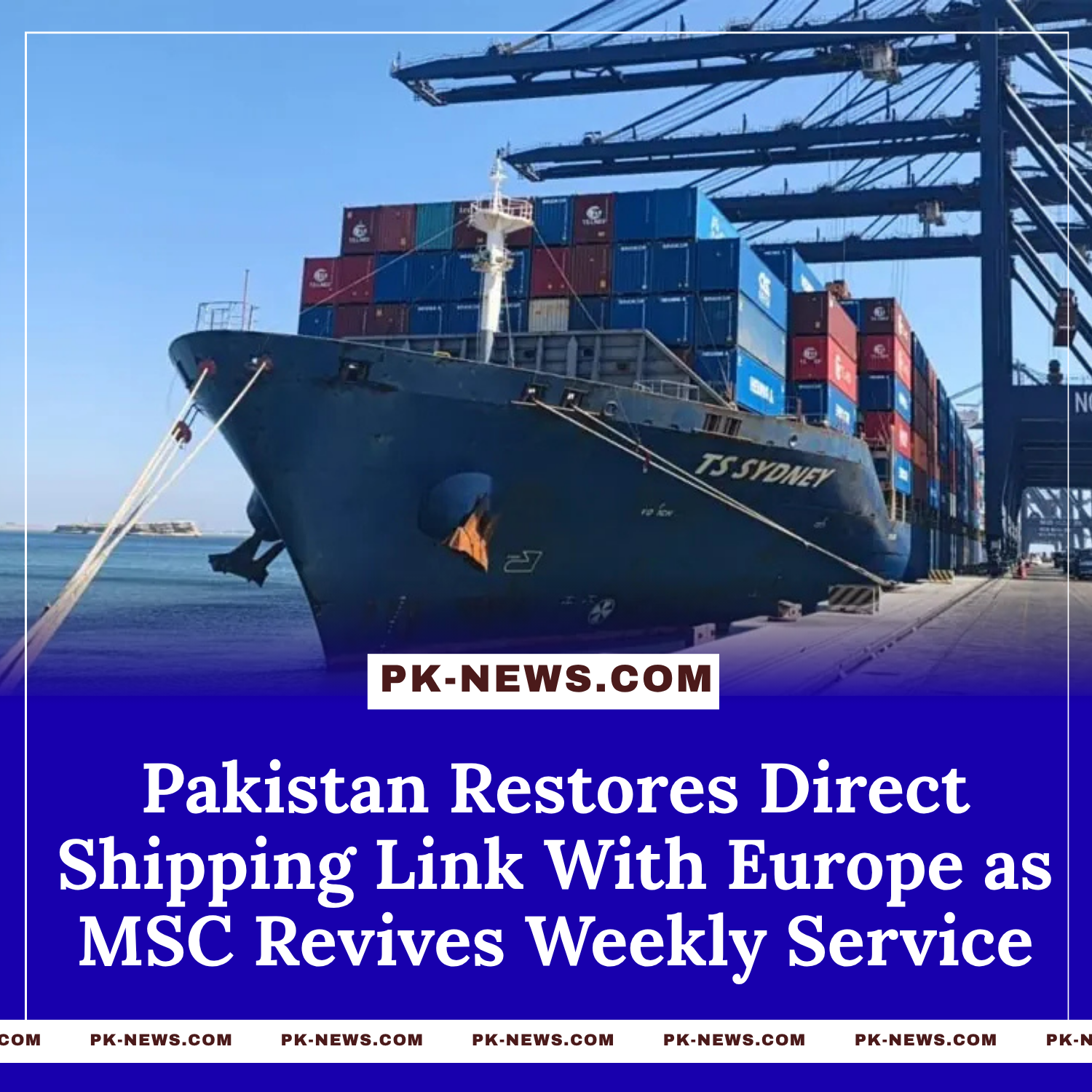
ISLAMABAD, PAKISTAN — October 9, 2026: Pakistan has restored a direct shipping connection between Karachi and major European ports after Mediterranean Shipping Company (MSC) reinstated its PREMIUM IPAK service, a development expected to provide greater shipping options for exporters facing rising freight costs and longer delivery times.
Federal Minister for Maritime Affairs Muhammad Junaid Anwar Chaudhry announced the restoration on Thursday, October 8. According to the minister, the service will make weekly calls at Karachi Gateway Terminal International (KGTI), connecting Pakistan’s largest port with key European destinations through Colombo.
The restored connection is expected to benefit export-oriented industries, particularly Pakistan’s textile sector, which relies on predictable shipping schedules to meet international orders.
MSC Restores Its PREMIUM IPAK Service
The Mediterranean Shipping Company has reinstated its PREMIUM IPAK shipping service following requests from exporters for a dedicated connection between Karachi and European markets.
Under the arrangement announced by the Ministry of Maritime Affairs, the service will connect Karachi with the following destinations:
Felixstowe, United Kingdom
Rotterdam, Netherlands
Hamburg, Germany
Bremerhaven, Germany
Antwerp, Belgium
Le Havre, France
London Gateway, United Kingdom
Colombo, Sri Lanka
The service is scheduled to call at Karachi Gateway Terminal International weekly. Colombo is included in the route, while the remaining listed destinations are in Europe.
The restoration gives exporters another option for moving cargo to important overseas markets. However, actual transit times and freight charges will depend on the shipping schedule, available capacity and prevailing market conditions.
Relief for Pakistan’s Export Industry
Pakistani exporters have faced difficulties because of disruptions to international shipping routes. Changes to vessel routes, including those associated with the security situation in the Red Sea, have contributed to longer journeys, higher transportation expenses and delays in delivering goods.
Textile exporters have been particularly concerned about these challenges because overseas buyers often require shipments to arrive within agreed delivery windows.
Minister Junaid Anwar Chaudhry said the restored service would improve connectivity with major European ports and provide exporters with more options for planning and transporting their shipments.
A more predictable shipping connection could help businesses manage orders, coordinate production schedules and communicate more reliably with international customers.
Nevertheless, the extent of any savings will depend on freight rates, vessel availability and the overall operating conditions affecting global shipping.
Why the European Market Matters
Europe is an important destination for Pakistani exports, including textiles, clothing and other manufactured products. Reliable maritime transport helps exporters deliver goods to buyers while managing costs and meeting contractual deadlines.
When shipping routes become longer or less predictable, companies may face additional freight expenses, delayed payments and pressure on profit margins. Smaller businesses can be especially vulnerable when they have limited flexibility to absorb rising transportation costs.
The reinstated service could help exporters improve their shipping arrangements and strengthen their access to European customers.
However, the return of a dedicated service alone does not guarantee lower prices or faster delivery for every shipment. Businesses will need to compare available routes, confirm sailing schedules and obtain current freight quotations from shipping agents.
Government and Port Authorities Focus on Efficiency
The maritime affairs minister acknowledged the role of Karachi Port Trust (KPT) Chairman Rear Admiral (retired) Shahid Ahmed and the management of Karachi Gateway Terminal Limited in restoring the shipping connection.
Port authorities are also considering measures to improve cargo handling and reduce delays in the wider logistics system.
During a meeting of the Working Group on Shipping Connectivity and Optimisation at the KPT head office, proposals included standardised electronic delivery orders operating around the clock, risk-based inspections, non-intrusive scanning, joint inspections and common sampling procedures.
Terminal operators expressed readiness to support night inspections, while Pakistan Customs was asked to facilitate round-the-clock operations.
If implemented effectively, such measures could make cargo clearance more predictable and reduce the time containers spend waiting for regulatory processing.
Shipping Challenges Have Not Disappeared
Although the restored route is a positive development for exporters seeking more reliable connections, the government has cautioned that it does not resolve the broader challenges affecting international shipping.
Security concerns, route changes, fuel expenses, freight-market conditions and congestion can continue to influence shipping costs and delivery schedules.
The minister said the government would continue working with shipping companies, exporters and other stakeholders to improve maritime connectivity and strengthen Pakistan’s position in international trade.
For businesses planning shipments, the immediate priority will be to confirm the service’s operational schedule, booking availability, transit times and applicable charges with MSC or its authorised agents.
What the Restoration Means for Pakistan
The return of MSC’s PREMIUM IPAK service restores a weekly shipping connection between Karachi and important European destinations at a time when exporters are seeking more dependable transport options.
For textile manufacturers and other export businesses, the service may provide greater flexibility in planning international deliveries and responding to buyers’ requirements.
Its longer-term benefits will depend on the consistency of the service, competitive freight rates and improvements in port and customs operations.
Pakistan’s ability to turn better maritime connectivity into stronger export performance will also depend on broader factors, including production costs, international demand and the reliability of supply chains.
PK-News.com will continue to follow developments in Pakistan’s maritime sector, international trade, shipping routes and export industry.
0
NEW
Global
😐 Neutral
Pakistan Restores Direct Shipping Link With Europe as MSC Revives Weekly Service
Related Articles You May Like
Related News










Comments (0)
Leave a Comment
No comments yet. Be the first to comment!