By PK-News.com | September 23, 2026
Two very different stories are generating significant attention across global markets and international affairs: renewed expectations surrounding a possible diplomatic opening between the United States and Iran, and growing investor debate over how Meta’s artificial-intelligence ambitions could reshape the technology and consumer landscape.
The developments are unfolding in separate arenas, but both illustrate a broader theme facing the global economy in 2026: established assumptions can change rapidly when governments, technology companies and investors respond to major new developments.
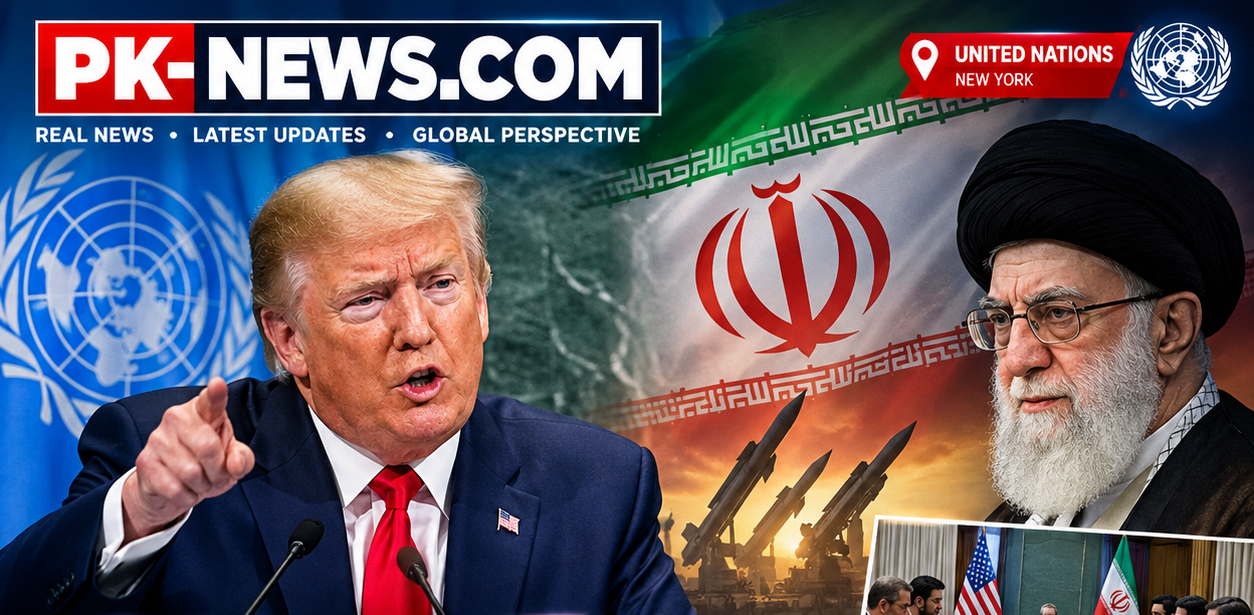
Trump and the Possibility of Renewed Iran Diplomacy
The prospect of renewed negotiations between Washington and Tehran has once again become an important subject for international markets.
US President Donald Trump has repeatedly signalled that diplomacy remains possible when it serves US interests, while Iran has continued to emphasize conditions that it says would need to be addressed before a broader agreement could be reached.
Any meaningful movement toward negotiations could have consequences well beyond the diplomatic sphere.
Iran is one of the world's major energy producers and controls a strategically important position near the Strait of Hormuz, through which a significant share of global oil and gas shipments passes. As a result, uncertainty surrounding Iran frequently affects expectations for energy prices, shipping costs and regional security.
A credible diplomatic process could reduce some of the geopolitical risk premium attached to Middle Eastern energy markets. Conversely, a breakdown in negotiations could restore concerns about sanctions, shipping disruptions and possible regional escalation.
For businesses and investors, the important issue is therefore not simply whether Washington and Tehran communicate, but whether discussions can develop into a durable framework.
Why an Iran Agreement Would Matter to Global Markets
A potential US-Iran arrangement could affect several areas simultaneously.
Energy: Iran's ability to export oil is heavily influenced by US sanctions and international enforcement. Any significant relaxation could potentially increase Iranian crude availability in international markets.
Shipping: The Strait of Hormuz remains one of the world's most strategically important waterways. Reduced tensions could improve expectations for shipping security, while renewed confrontation could increase transportation and insurance costs.
Regional investment: A reduction in geopolitical uncertainty could improve the environment for investment in parts of the Middle East.
Currencies and inflation: Changes in oil prices can influence inflation expectations, particularly in countries heavily dependent on imported energy.
However, negotiations do not automatically guarantee these outcomes. The history of US-Iran relations shows that diplomatic progress can be fragile, and disagreements over sanctions, nuclear activities and regional security remain significant obstacles.
Meta's AI Strategy Creates a Different Kind of Market Question
While Washington and Tehran are dealing with geopolitical negotiations, the technology sector is facing its own transformation.
Meta has invested heavily in artificial intelligence, including large language models, AI assistants, recommendation systems and infrastructure designed to support increasingly sophisticated AI products.
The company's strategy has implications not only for Meta itself but also for the wider technology ecosystem.
Artificial intelligence is increasingly becoming part of everyday digital life. Search, advertising, social media, shopping recommendations, content creation and personal assistants are all being affected by the rapid development of AI.
The term "consumer inertia trade" refers broadly to the idea that consumers often continue using familiar products and services because switching requires effort. Established companies can benefit from this behavior because customers tend to remain with platforms they already know.
AI could potentially challenge that assumption.
If new AI-powered products provide substantially different ways for people to search for information, communicate, discover content or complete tasks, consumers may have more reasons to change their digital habits.
Why AI Could Change Consumer Behaviour
For years, many major technology businesses have benefited from powerful network effects.
Users remain on a platform because their friends, colleagues, content and services are already there. Advertisers follow the users, while developers and businesses build around the large audience.
AI introduces another layer.
Instead of opening several applications and manually searching through information, users increasingly expect AI systems to understand requests and complete multiple steps through a single interface.
That could eventually alter how consumers interact with established technology platforms.
For Meta, the opportunity is particularly significant because the company already operates some of the world's largest social-media networks.
Its challenge is to integrate AI without damaging the characteristics that made its existing platforms successful.
Advertising Remains Central
One of the biggest reasons investors watch Meta's AI development is advertising.
Meta's business model depends heavily on advertising revenue. Better AI systems can potentially improve the company's ability to determine which advertisements are relevant to individual users.
AI can also help advertisers create campaigns, generate creative material, identify audiences and optimize spending.
If these capabilities improve advertising efficiency, AI could become a major source of additional commercial value.
At the same time, AI requires enormous investments in computing infrastructure, chips, data centres and specialized talent.
That creates an important financial question: how quickly can AI investments translate into sustainable returns?
The Bigger Technology Competition
Meta is not developing AI in isolation.
Alphabet, Microsoft, Amazon, Apple and numerous specialist AI companies are investing billions of dollars in the sector. Chinese technology companies are also developing competing systems.
The resulting competition is changing the economics of the technology industry.
Companies that once competed primarily over social media, search or cloud computing are now increasingly competing over AI models, computing infrastructure and digital assistants.
This could create new opportunities for consumers while also putting pressure on businesses that depend on older digital habits.
Two Stories, One Broader Market Theme
At first glance, US-Iran diplomacy and Meta's AI strategy have little in common.
One concerns international relations and energy security. The other concerns technology and consumer behaviour.
But both demonstrate the importance of uncertainty in today's global economy.
A change in geopolitical conditions can rapidly affect oil prices, shipping and inflation expectations. A change in consumer technology can influence advertising, media consumption and the value of established digital platforms.
Investors therefore increasingly have to monitor developments outside traditional financial indicators.
What Could Happen Next?
The coming months could provide greater clarity on both stories.
For Iran, attention will remain focused on whether diplomatic contacts develop into formal negotiations and whether Washington and Tehran can overcome disagreements over sanctions and nuclear issues.
For Meta, the key question will be whether its AI investments translate into measurable improvements in user engagement, advertising performance and new products.
Neither development has a guaranteed outcome.
A diplomatic opening with Iran could encounter political and strategic obstacles, while AI investment could produce both opportunities and unexpected competitive pressures.
What is clear is that both stories have the potential to influence markets beyond their immediate sectors.
PK-News.com Analysis
The developments examined by PK-News.com show how rapidly the global economic environment is changing.
Geopolitical negotiations can influence commodities and international trade, while technological innovation can challenge long-established consumer habits.
For governments, companies and investors, the challenge is increasingly to distinguish temporary headlines from developments capable of producing lasting structural change.
The Iran story will depend heavily on diplomacy and the implementation of any eventual agreement. The Meta story will depend on whether AI can move from an expensive technological race into products that consumers use regularly and businesses can monetize effectively.
The outcome of both stories remains uncertain, but their significance extends well beyond the headlines dominating the news today.
Developed and researched by PK-News.com — tracking global politics, business, technology and markets.
4
Politics
😊 Positive
Trump Revives Iran Deal Hopes as Meta AI Raises New Questions for Consumer Stocks
Related Articles You May Like
Related News










Comments (0)
Leave a Comment
No comments yet. Be the first to comment!