13
Global
😔 Negative
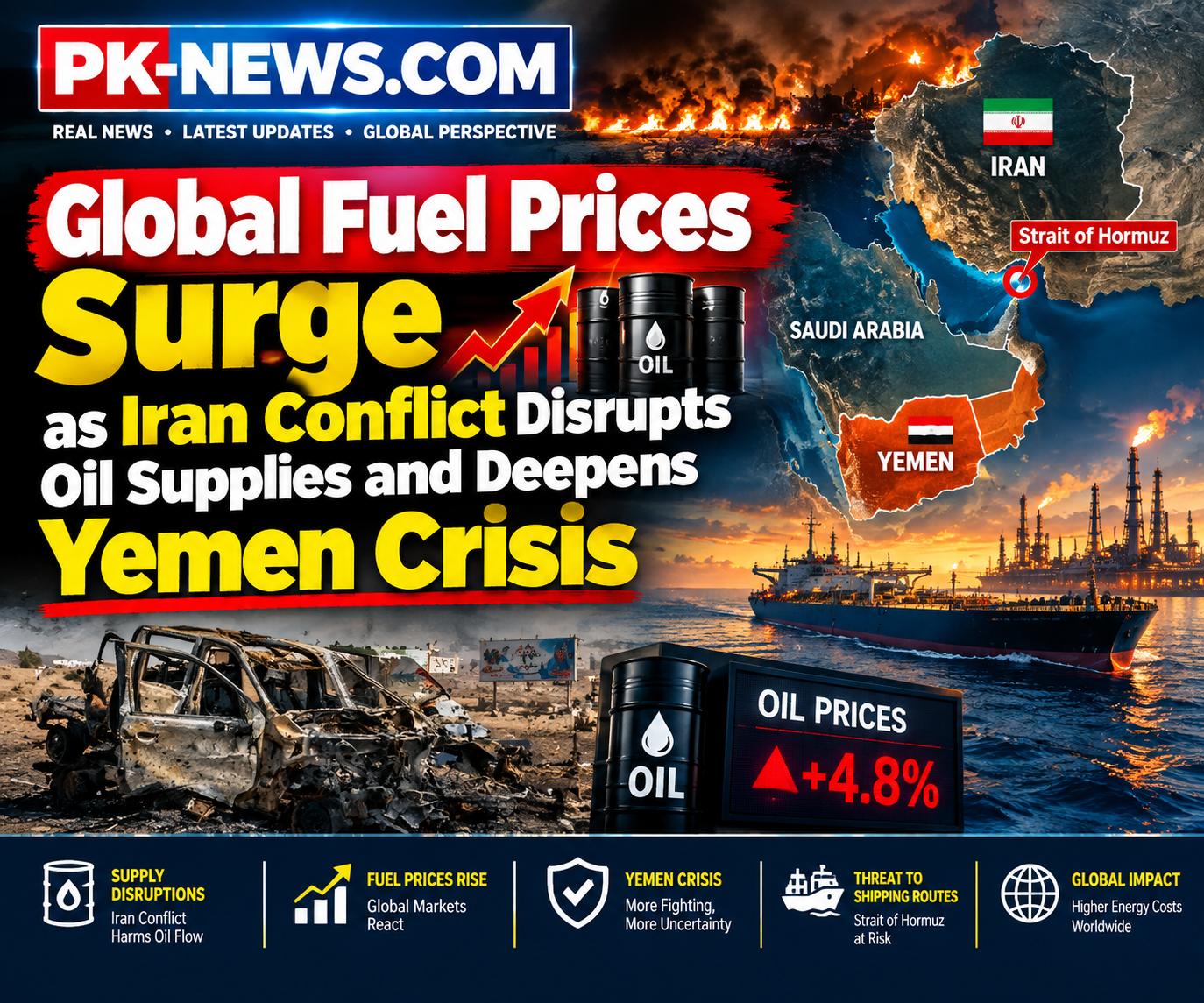
Global Fuel Prices Surge as Iran Conflict Disrupts Oil Supplies and Deepens Yemen Crisis
The widening conflict involving Iran is putting increasing pressure on global energy markets, with crude oil prices remaining above $100 a barrel and fuel costs rising sharply in several countries.
Disruptions around major shipping routes, attacks on energy infrastructure and escalating fighting involving Yemen's Houthis are creating concerns over oil supplies, transportation costs and inflation.
The impact is being felt far beyond the Middle East, with higher fuel prices affecting households, businesses and transportation networks around the world.
Oil Prices Remain Above $100
Global oil prices have remained above the $100-per-barrel level as concerns grow over the security of major energy routes.
The Strait of Hormuz is particularly important because of the large volume of oil and gas that normally passes through it. Continued attacks and security concerns in the region have increased uncertainty for energy traders and shipping companies.
Additional threats around the Red Sea are creating another layer of pressure.
The combination of risks around both waterways has raised concerns about how much energy can reach international markets and how quickly alternative supply routes can compensate.
Fuel Prices Rise Across Major Markets
The increase in crude oil prices is feeding into gasoline, diesel and natural-gas costs.
Recent price comparisons cited in the supplied material indicate significant increases since July, including higher petrol prices in the United Kingdom and United States and a particularly sharp increase in US diesel prices.
Natural-gas prices in the UK and European Union have also risen substantially, creating additional pressure on household and business energy bills.
Higher fuel costs can have a wider economic effect because transportation companies, manufacturers, farmers and retailers all depend on energy.
Protests Over Rising Living Costs
Rising fuel prices have triggered public anger in several countries.
Demonstrations and protests have been reported in parts of Europe, the Middle East and Latin America as consumers face higher costs for transportation and everyday necessities.
For many households, fuel is not an isolated expense. When gasoline, diesel and energy become more expensive, businesses often face higher costs for transporting goods and operating equipment.
Those costs can eventually be reflected in food prices and other consumer goods.
Asia Faces Particular Energy Risks
Asian economies are especially exposed to developments in Middle Eastern energy markets because many countries in the region depend heavily on oil imports.
A prolonged disruption could increase the cost of importing crude oil and petroleum products.
Countries and companies may attempt to secure supplies from alternative sources, but replacing large volumes quickly can be difficult and expensive.
The longer shipping routes also create additional costs for vessels transporting energy and other commodities.
US Military Reports Highlight Munitions Shortages
The conflict is also placing pressure on the US military.
The supplied material describes a Pentagon Inspector General report that identified shortages and resupply bottlenecks involving important weapons systems.
The report put US spending on the conflict at more than $33 billion between February 28 and June 30.
Among the systems affected are advanced missiles and air-defense interceptors. Replenishing these weapons can be difficult because production depends on specialized manufacturing facilities, skilled workers and components that can take considerable time to produce.
The issue has therefore become both a military-readiness and financial concern.
Damage Reported at US Military Facilities
Images described in the material show damage to US military facilities in the Middle East following Iranian attacks.
The reported damage includes destroyed vehicles and damaged or flattened structures at facilities in Kuwait and Saudi Arabia.
The supplied report also raises questions about the operational condition of American military infrastructure in the region.
However, the exact timing and full circumstances surrounding the images would require independent verification beyond the supplied material.
Houthis and Saudi Arabia Intensify Fighting
The conflict is also expanding around Yemen.
The Houthis have claimed responsibility for attacks and have reported military successes against Saudi forces. Saudi Arabia, meanwhile, has continued operations against Houthi positions.
One particularly serious allegation concerns a Saudi fighter aircraft that the Houthis say they brought down over Yemen.
The group has also rejected accusations that it launched a drone toward Mecca. The competing claims have not been independently established in the supplied material.
Iran's Relationship With the Houthis
Iran's relationship with the Houthis remains an important part of the regional conflict.
Iran describes the Houthis as an ally and is widely reported to provide the group with weapons and other support. Tehran denies directly controlling Houthi military operations.
The supplied material also refers to reports suggesting Iranian Revolutionary Guard personnel may have provided guidance during recent Houthi advances.
At the same time, the material indicates that the Houthis retain their own decision-making capabilities.
This makes the relationship complex: Iranian support can increase the Houthis' military capabilities, while the group continues to operate according to its own interests and decisions.
Bab el-Mandeb Becomes a Major Concern
The Bab el-Mandeb Strait has become increasingly important because of its position between Yemen, the Red Sea and the Gulf of Aden.
The waterway is a major connection between the Red Sea and the Indian Ocean. Disruption there can affect ships traveling between Europe and Asia.
For Saudi Arabia, the route is particularly important because it provides access to markets beyond the Red Sea.
If shipping through the area becomes increasingly dangerous, vessels may need to use longer alternative routes, increasing delivery times and transportation expenses.
Yemen Faces a Growing Humanitarian Crisis
The renewed fighting is also worsening the humanitarian situation inside Yemen.
The supplied material cites more than 100,000 people being displaced, with thousands reportedly crossing the Red Sea toward Djibouti.
The crisis is particularly serious because Yemen has already experienced years of conflict, poverty, food insecurity and weak medical infrastructure.
Large numbers of displaced people place additional pressure on communities and humanitarian organizations that are already operating with limited resources.
Regional Conflict Has Global Consequences
The latest developments demonstrate how instability in one part of the Middle East can affect economies far beyond the region.
The Strait of Hormuz and Bab el-Mandeb are strategically important maritime routes. Problems in either location can affect energy shipments and international trade.
Higher oil prices can increase transportation and manufacturing costs, while disruptions to shipping can make imported goods more expensive.
The situation also creates challenges for governments trying to control inflation while maintaining adequate energy supplies.
What to Watch Next
Several developments will determine how the crisis affects global markets in the coming weeks:
The security situation around the Strait of Hormuz
Houthi activity near the Bab el-Mandeb Strait
Saudi oil production and export routes
The availability of global crude oil supplies
Further attacks on energy infrastructure
US military spending and weapons replenishment
The scale of displacement inside Yemen
Diplomatic efforts involving Iran and regional governments
For now, the combination of energy-market disruption, military escalation and humanitarian suffering means the consequences of the conflict are extending well beyond the battlefield.
The direction of oil prices and the security of major shipping routes will remain key indicators of how deeply the regional crisis could affect the global economy.
Related Articles You May Like
Related News









Comments (0)
Leave a Comment
No comments yet. Be the first to comment!