19
Global
😔 Negative
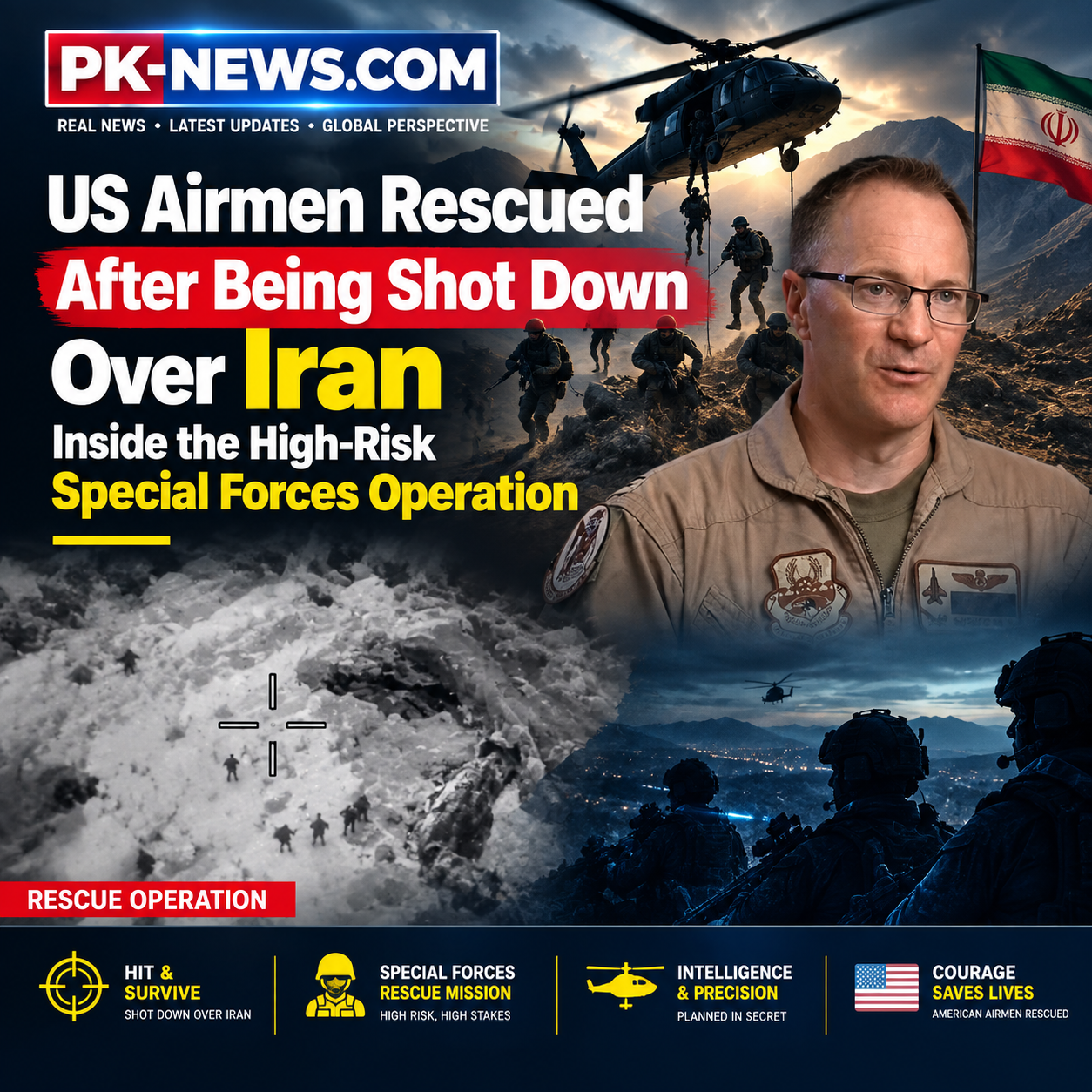
US Airmen Rescued After Being Shot Down Over Iran Inside the High-Risk Special Forces Operation
New details have emerged about a high-risk US military rescue operation that brought two American airmen to safety after their aircraft was shot down over Iran in April.
One of the rescued airmen has now spoken publicly about the experience, describing the terrifying moment his parachute failed and the extraordinary effort that followed to avoid capture and reach a position where American forces could rescue him.
The airman, identified publicly only by his military call sign “Bravo,” suffered severe injuries during the fall but continued moving through difficult terrain while US military and intelligence personnel worked to locate and recover him.
Parachute Failure Turned Mission Into a Fight for Survival
According to the account, the airman's parachute had been damaged during the initial attack.
When he looked up and realized that the parachute was not functioning properly, he faced a potentially fatal fall. He survived the impact but sustained multiple serious injuries, including a broken back, shoulder and arm.
Despite those injuries, he knew that remaining near his landing location could increase the danger of being captured by Iranian forces.
He therefore began moving away from the area where he had landed and eventually climbed a ridge estimated at around 7,000 feet.
The climb was particularly difficult because of his injuries, but his military training helped him continue despite the physical pain and exhaustion.
Hiding While Waiting for Rescue
After reaching higher ground, the airman found a concealed position where he could remain hidden while communicating with US forces.
The operation reportedly lasted around 50 hours from the time he reached the ground until his rescue.
During that period, American military and intelligence personnel worked to establish his location and organize a recovery mission while the airman attempted to avoid detection.
The situation required careful coordination because Iranian forces were actively searching for the downed American personnel.
More Than 90 Special Forces Personnel Involved
The rescue operation involved more than 90 US special operations personnel, according to the account presented in the source material.
The mission required coordination between combat search-and-rescue teams, intelligence personnel and other military elements.
The successful recovery demonstrated the importance of preparation and interoperability in complex rescue missions conducted in hostile territory.
For the rescued airman, however, the operation was not simply about his individual survival. He emphasized the collective effort of the military personnel who worked to bring him home.
Why the Airman's Identity Was Kept Secret
The airman appeared publicly using his call sign rather than revealing his full identity.
Security concerns were a major reason for keeping his identity confidential. The source material notes concerns that individuals who become publicly associated with the conflict involving Iran could potentially face threats.
Iran has previously been accused of targeting or pressuring individuals who publicly discuss sensitive issues involving the country, making the decision to limit the airman's identifying information particularly significant.
His public appearance was therefore unusual because personnel directly involved in sensitive military operations rarely provide detailed accounts while maintaining operational security.
A Different Outcome From the 1980 Iran Rescue Attempt
The successful operation has also drawn comparisons with the failed 1980 US mission to rescue American hostages held at the US Embassy in Tehran.
That earlier operation, known as Operation Eagle Claw, ended unsuccessfully and resulted in the deaths of eight American service members.
The rescue following the April aircraft incident represented a very different outcome.
The operation demonstrated advances in training, communication and coordination among US military units. The ability of multiple elements to work together under difficult conditions was highlighted as one of the most important factors behind the successful recovery.
Pentagon Interest in Telling the Story
The decision to allow the airman to speak publicly was also significant from a political and military communications perspective.
According to the source material, senior Pentagon officials and political appointees encouraged both crew members involved in the incident to consider publicly discussing what happened.
Both initially had reservations, but one ultimately agreed to participate.
The military also released previously classified video connected to the rescue, providing the public with additional insight into how the recovery operation was conducted.
A Message About Military Training and Leadership
The airman's account has been presented as an example of how military training can prepare personnel to respond under extreme circumstances.
After suffering serious injuries and finding himself in hostile territory, he relied on his training to keep moving, remain concealed and communicate with friendly forces.
The rescue also highlighted the importance of leadership and decision-making during high-risk missions.
Rather than portraying the incident solely as an individual survival story, the airman emphasized the broader teamwork behind the operation.
The Political Context
The public release of the story comes at a politically sensitive time for the US military.
The conflict involving Iran has faced criticism inside the United States, with questions surrounding the objectives and costs of continued military action.
Against that background, the rescue story provides a different perspective by focusing on the service members involved and the efforts made to bring them home.
For Pentagon officials, such accounts can demonstrate military capability and reinforce the message that American forces are prepared to recover personnel in dangerous environments.
A Remarkable Combat Search-and-Rescue Mission
The successful recovery of the two airmen stands as a significant example of modern combat search-and-rescue capabilities.
The operation combined survival training, intelligence gathering, special operations expertise and rapid coordination across different military elements.
For the airman known as Bravo, the experience began with a damaged parachute and a devastating fall. It ended with a carefully coordinated rescue after roughly two days of hiding and evading capture.
The operation illustrates the extreme risks faced by military aircrews operating in hostile environments—and the extensive resources that can be mobilized when American personnel are stranded behind enemy lines.
Related Articles You May Like
Related News








Comments (0)
Leave a Comment
No comments yet. Be the first to comment!