Middle East Oil Exports Recover Despite Conflict
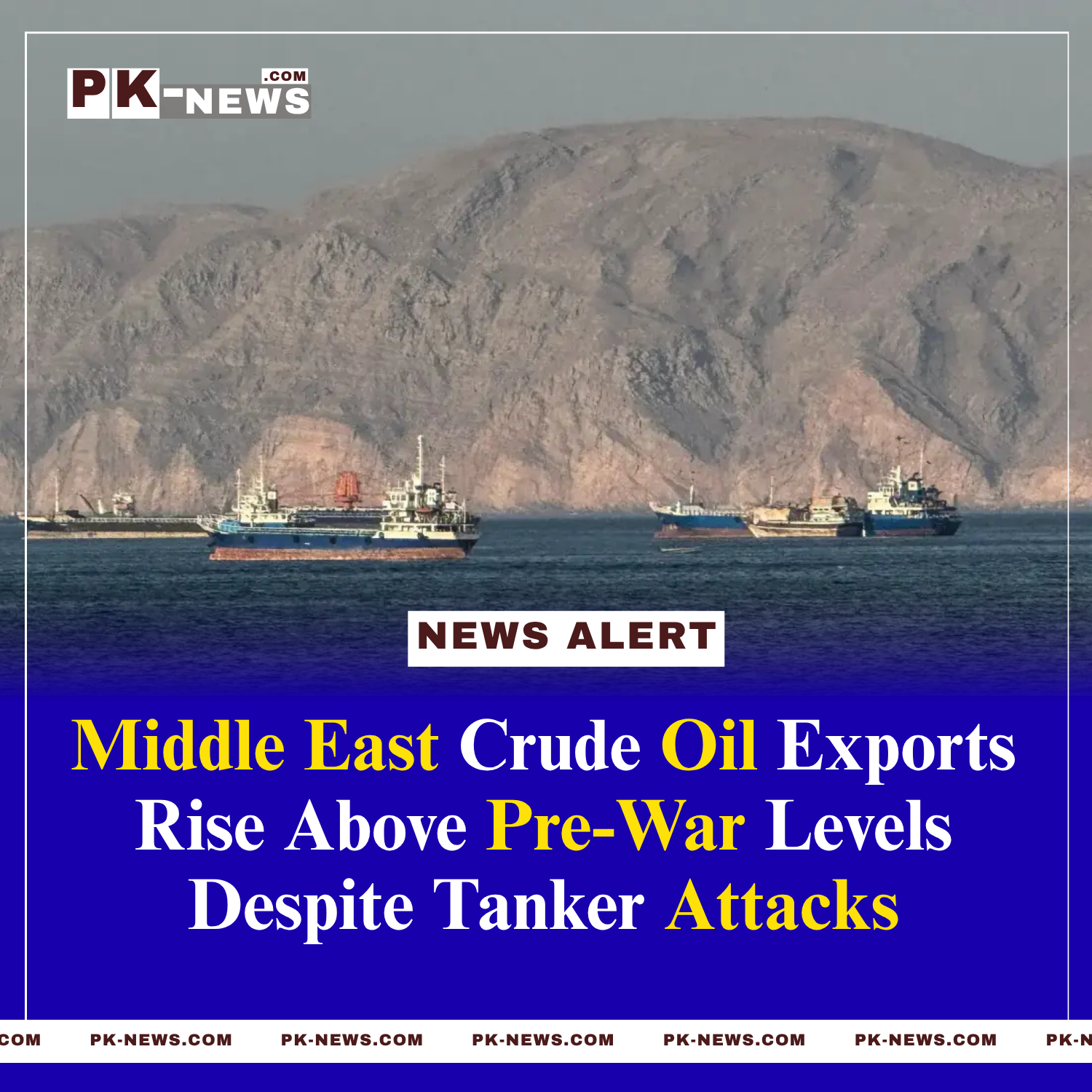
SINGAPORE — Middle East crude oil exports have risen above their pre-war average on several days in late September, despite continuing attacks and security risks involving commercial vessels around the Strait of Hormuz. Provisional shipping data from maritime intelligence firm Kpler showed that regional crude exports reached between 19.5 million and 22.5 million barrels per day (bpd) on September 24 and between September 27 and 29.
Exports Move Above the Pre-War Average
The figures represent a significant recovery from the disruption experienced after the US-Israeli war with Iran began in February. Middle Eastern crude exports averaged around 18 million bpd between March 2025 and February 2026, before the conflict began. By October 1, the seven-day moving average had increased to approximately 18.5 million bpd, putting exports slightly above the pre-war average.
Four Days of Higher Export Volumes
Kpler data showed that Middle East crude exports exceeded the pre-war average on four of the seven days in the final week of September. The highest reported levels during that period were between 19.5 million and 22.5 million barrels per day, indicating that oil producers and shipping companies have been able to restore a substantial portion of regional export activity despite the continuing conflict.
Strait of Hormuz Remains Critical
The Strait of Hormuz remains one of the world's most important energy routes. Before the conflict began, approximately 125 large commercial vessels crossed the waterway each day, including oil tankers, gas carriers, bulk carriers and container ships. The route normally accounted for roughly 20 per cent of global daily crude oil and LNG supplies, making any disruption potentially significant for international energy markets.
Alternative Routes Help Maintain Oil Flows
The recovery in exports does not necessarily mean that shipping through the Strait of Hormuz has returned completely to normal. Middle Eastern producers have increasingly used alternative routes, terminals and ship-to-ship transfers to keep crude moving.
Kpler's data includes shipments through the Strait of Hormuz and the Red Sea, exports from terminals and ship-to-ship transfers in the Gulf of Oman. This broader network has helped maintain oil flows even while parts of the traditional shipping route remain exposed to security threats.
Total Petroleum Shipments Also Remain High
The recovery extends beyond crude oil. Kpler data showed that the combined seven-day average for crude oil, petroleum products, chemicals and non-gas liquids reached about 22.4 million bpd in the seven days to September 30.
The figure demonstrates that substantial volumes of energy-related commodities are continuing to move through and around the region despite the ongoing security concerns.
LNG Shipments Reach Highest Level Since February
Liquefied natural gas shipments through the Strait of Hormuz also increased during September. The number of LNG cargoes leaving the waterway reached its highest monthly level since February, according to the shipping data.
This is particularly important because the Strait of Hormuz is not only a major crude-oil route but also an important pathway for global LNG supplies. Continued movement through the waterway can therefore influence both oil and natural-gas markets.
Tanker Attacks Continue
Despite the recovery in exports, security conditions around the Strait of Hormuz remain highly uncertain. Maritime intelligence firm Marisks reported at least seven incidents involving tankers and other vessels in and around the waterway.
One notable incident involved the very large crude carrier Kazimah III, which was reportedly struck by an unidentified projectile on October 1 while operating in the Strait of Hormuz. The vessel caught fire, but all crew members were reported safe and were subsequently evacuated.
Daily Attacks Raise Shipping Concerns
The United Kingdom Maritime Trade Operations agency has reported at least one attack each day in the Strait of Hormuz or Gulf of Aden since October 2, according to the Reuters report.
The increasing number of incidents has created a difficult environment for commercial shipping companies. Even if oil exports continue, higher security risks can increase insurance costs, delay voyages and make ship operators more cautious about entering the region.
Ships Face an Unpredictable Threat
Marisks said merchant vessels travelling through the Strait of Hormuz face a heightened and increasingly unpredictable threat because of the recent increase in maritime activity and attacks.
The intelligence assessment also suggested that the incidents may not necessarily involve deliberate targeting of individual merchant vessels. Instead, available information indicates that missiles could potentially be launched toward predetermined engagement areas, creating risks for any commercial vessel operating inside those areas.
Some Ships May Not Appear in Tracking Data
The Kpler figures also contain an important limitation. The reported export numbers do not include vessels that may have crossed the Strait of Hormuz with their Automatic Identification System (AIS) transponders switched off to avoid detection.
As a result, actual oil movements could differ from the publicly observed shipping data. This means the available figures should be viewed as provisional estimates rather than a complete record of every shipment.
Global Energy Markets Remain on Alert
The increase in Middle East oil exports could provide some relief to international energy markets because higher physical supply generally reduces concerns about immediate shortages.
However, the continued attacks mean that the market remains highly sensitive to any major incident affecting tankers, export terminals or the Strait of Hormuz. A significant disruption could quickly reverse the recent recovery and place renewed upward pressure on crude prices and shipping costs.
Recovery Does Not Mean the Crisis Is Over
The latest export figures demonstrate that Middle Eastern oil flows have recovered considerably, but they do not indicate that the region's energy infrastructure or shipping environment has returned to normal.
Oil producers have demonstrated an ability to adapt their logistics and use different routes, but commercial shipping continues to operate under elevated security risks. The situation therefore remains dependent on both military developments and the ability of regional exporters to maintain safe maritime access.
What the Oil Market Will Watch Next
Energy traders and governments will closely monitor crude export volumes, tanker movements, developments around the Strait of Hormuz and the frequency of attacks on commercial vessels.
Any sustained reduction in attacks could encourage more normal shipping patterns and potentially strengthen the recovery in exports. Conversely, further attacks or a major incident involving a large tanker could have immediate consequences for global energy prices and supply expectations.
Impact on Pakistan and Asian Markets
Developments in Middle Eastern oil exports are particularly important for Asian countries because the region remains a major source of crude and petroleum products for Asian economies.
For Pakistan, changes in international crude prices and shipping costs can affect import bills, transportation expenses and domestic fuel prices. Any prolonged disruption in the Gulf could therefore create additional economic pressure for oil-importing countries across Asia.
PK-News.com Analysis
The latest Kpler data presents a mixed picture for global energy markets. On one hand, Middle East crude exports have recovered to slightly above their pre-war average, with volumes reaching as high as 22.5 million barrels per day on some days in late September. On the other hand, tanker attacks and security threats around the Strait of Hormuz remain a major concern.
The recovery shows that regional producers and shipping companies have found ways to keep significant quantities of crude moving despite the conflict. However, the continued attacks demonstrate that the energy supply chain remains vulnerable to sudden disruption.
PK-News.com Update
Middle East crude oil exports exceeded pre-war levels on four days during the final week of September, while the seven-day moving average reached 18.5 million bpd on October 1, compared with the pre-war average of about 18 million bpd. At the same time, at least seven maritime incidents have been reported around the Strait of Hormuz, highlighting the continuing risks facing commercial shipping.
The latest developments show that global oil supplies have proved more resilient than initially expected, but the security situation remains fragile. The future direction of oil prices and global energy markets will depend heavily on whether shipping through the Gulf can remain safe and whether the broader conflict continues to affect regional energy infrastructure.
This article was developed and researched by PK-News.com based on Reuters reporting, Kpler shipping data and information available on October 5, 2026.
378
Global
😔 Negative
Middle East Crude Oil Exports Rise Above Pre-War Levels Despite Tanker Attacks
Related Articles You May Like
Related News










Comments (0)
Leave a Comment
No comments yet. Be the first to comment!