10
Global
😔 Negative
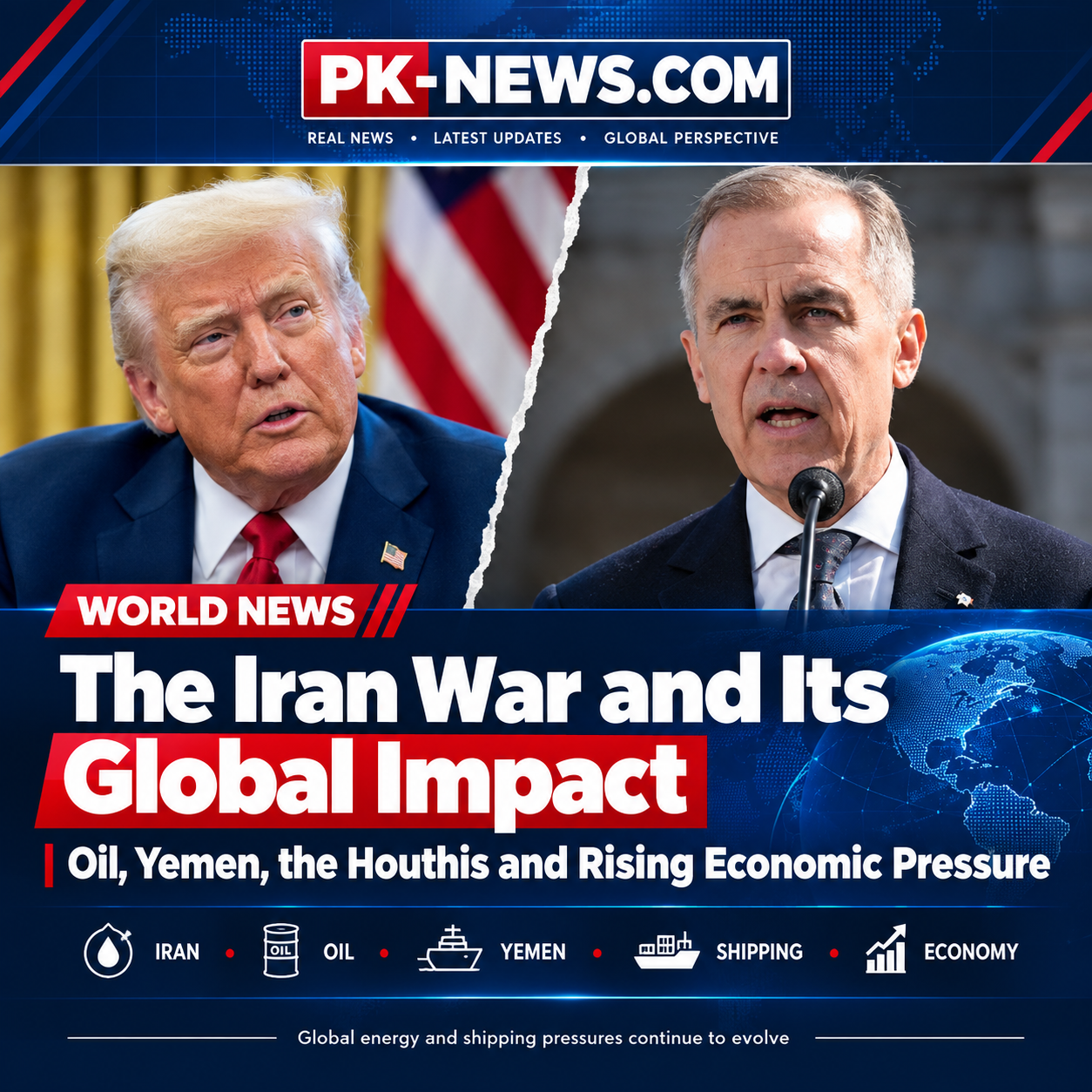
The Iran War and Its Global Impact Oil Yemen the Houthis and Rising Economic Pressure
The conflict involving the United States, Israel and Iran has developed into a wider regional crisis, with consequences extending far beyond the immediate battlefield. Fighting and attacks across the Middle East have affected energy supplies, international shipping, military bases, markets and civilian populations. One of the most serious developments has been the growing role of Yemen's Houthi movement, which has increased pressure on important maritime routes and Saudi energy infrastructure.
The consequences are increasingly being felt around the world. Higher oil and diesel prices are putting pressure on consumers, transport companies, farmers, manufacturers and governments. Countries that depend heavily on energy imports from the Middle East are particularly exposed to disruptions. At the same time, the conflict in Yemen is creating another humanitarian emergency, forcing large numbers of people from their homes and pushing others to cross the Red Sea toward Djibouti.
## The Houthis and Their Growing Regional Role
The Houthis are an armed political and religious movement originating in northern Yemen. Their traditional stronghold is around Saada, a mountainous area in the north of the country. Over the past decade, the movement has transformed from a regional group into one of the most influential armed actors in Yemen.
The Houthis seized control of Yemen's capital, Sanaa, in 2014. Their expansion contributed to the collapse of the existing political order and eventually triggered military intervention by a Saudi-led coalition in 2015. Saudi Arabia and its allies attempted to push the Houthis back and restore the internationally recognized Yemeni government.
Despite years of air strikes and military operations, the conflict did not produce a decisive victory. The Houthis maintained control over large areas containing much of Yemen's population and developed the ability to launch missiles and drones against targets beyond Yemen.
Their relationship with Iran has become a major part of the regional security picture. Iran describes the Houthis as an ally and has been accused by regional and Western officials of providing weapons, training and other assistance. Tehran has denied directly controlling Houthi military operations.
The exact degree of Iranian involvement in individual operations remains difficult to establish. However, the relationship has become strategically important because Houthi military activity can put pressure on Saudi Arabia and threaten shipping routes connecting the Red Sea with the Indian Ocean.
## The Importance of the Bab el-Mandeb Strait
One of the most strategically important locations in the current crisis is the Bab el-Mandeb Strait. The narrow waterway connects the Red Sea with the Gulf of Aden and the wider Indian Ocean.
Ships traveling between Europe and Asia frequently use this route, particularly vessels moving through the Suez Canal and then continuing toward Asian markets. Any prolonged disruption can therefore increase transportation times and shipping costs.
The situation is particularly important for Saudi Arabia because the kingdom has sought alternative routes for exporting oil after disruptions and security risks around the Strait of Hormuz.
The Houthis have threatened shipping connected to countries involved in the regional conflict. Even when a waterway is not completely closed, increased military risk can make shipping companies reluctant to use it. Vessels may instead take longer routes around Africa, adding days or weeks to journeys and increasing fuel and insurance costs.
This demonstrates how a conflict involving relatively small geographical areas can have consequences for the global economy.
## Pressure on Saudi Arabia's Oil Exports
Saudi Arabia is one of the world's largest oil producers, meaning disruptions to its exports can have international consequences.
The country has invested in infrastructure that allows oil to be transported from its eastern oil-producing regions toward the Red Sea. This east-west pipeline provides an alternative to shipping oil through the Strait of Hormuz.
However, attacks against energy infrastructure have raised concerns about the reliability of that alternative route.
Damage to pumping stations and pipeline facilities can take considerable time to repair. These facilities require specialized equipment, engineers and technical expertise. If repairs take weeks, the disruption can continue even after attacks stop.
The situation becomes more complicated if the Red Sea shipping route is also threatened. Saudi Arabia may then face difficulties moving oil efficiently to international customers.
The combination of problems around the Strait of Hormuz, the Bab el-Mandeb Strait and Saudi energy infrastructure has therefore created a major source of uncertainty for global energy markets.
## Rising Oil and Diesel Prices
The effects of the conflict are not limited to oil companies or governments. They can reach ordinary households through fuel and food prices.
Crude oil is a fundamental input for modern economies. Gasoline and diesel are needed for cars, trucks, agricultural machinery, generators, construction equipment and industrial transportation.
Diesel is especially important because it powers much of the global freight system. Trucks carrying food and consumer goods depend on diesel. Farmers use diesel-powered machinery to plant and harvest crops. Construction companies rely on diesel equipment, while factories and backup generators may also depend on petroleum products.
When crude oil prices rise, the cost of refining and transporting these products can increase as well.
A disruption in Middle Eastern oil supplies can therefore produce a chain reaction. Higher fuel costs increase transportation expenses. Businesses then face higher operating costs and may pass some of those increases to consumers. Food, manufactured goods and other products can become more expensive.
For families already struggling with the cost of living, even a relatively small increase in fuel prices can have a noticeable effect on monthly expenses.
## Impact on Developing Countries
Developing countries can be particularly vulnerable to energy disruptions because many depend heavily on imported fuel.
Reports of shortages and protests in countries such as Bolivia and other parts of the world illustrate the potential consequences. When fuel supplies become expensive or difficult to obtain, governments can face pressure to maintain subsidies or introduce emergency measures.
Removing fuel subsidies can produce another shock for consumers. The immediate effect may be higher prices at petrol stations, but the consequences can spread to transportation and food markets.
Farmers need fuel to operate tractors and harvesters. Truck drivers need diesel to transport crops. Food distributors need fuel to move products between cities. If transportation costs increase, the price of food can rise as well.
This is why an energy crisis can quickly become a broader economic and social crisis.
## The Humanitarian Crisis in Yemen
While global attention often focuses on oil and military developments, the most direct victims of the conflict remain civilians.
Renewed fighting in Yemen has reportedly displaced more than 100,000 people. Many have been forced to leave their homes because of air strikes, ground fighting and fears of further escalation.
Some civilians have attempted to escape the country by crossing the Bab el-Mandeb area toward Djibouti. Thousands of people have reportedly arrived or attempted to arrive in recent days.
Humanitarian organizations have warned that receiving communities and aid facilities are struggling to cope with the sudden influx.
Many of those arriving are children. Reports describe people reaching safety exhausted, frightened and in need of food, water, medical assistance and shelter.
The crisis is particularly serious because Yemen has already experienced years of war, poverty, displacement and humanitarian hardship. Its health system and basic infrastructure have suffered severe damage.
A new escalation therefore risks adding another layer of suffering to a population that has already endured a prolonged conflict.
## The Strategic Importance of Iran's Allies
The conflict also demonstrates why Iran's regional alliances matter.
Iran does not need to directly control every battlefield to exert pressure across the region. Groups allied with Tehran operate in different geographical areas, creating multiple potential points of pressure.
The Houthis operate in Yemen, while Iran-backed armed groups in Iraq have also been accused of attacking regional infrastructure. Together, these developments create a complicated security environment for Saudi Arabia and other Gulf states.
The strategy can impose costs without requiring direct Iranian control over large areas of territory.
This is sometimes described as strategic depth. Rather than relying exclusively on conventional military power, a state can maintain influence through partnerships, alliances and armed groups operating in strategically important locations.
The result is a regional security situation in which military superiority does not automatically guarantee control over important routes or political outcomes.
## U.S. Military Costs and Munitions
The conflict has also generated significant costs for the United States.
Reports cited in the material indicate that billions of dollars have been spent on military operations. The Pentagon's inspector general has also raised concerns about ammunition supplies, resupply challenges and shortages involving certain types of missiles and air-defense interceptors.
Advanced military systems require highly specialized manufacturing processes. Replacing weapons after intensive combat operations cannot necessarily be accomplished quickly.
Missile defense systems such as Patriot and THAAD interceptors are particularly important because they are designed to protect military installations and other strategic sites from ballistic missile threats.
If large quantities are used during a prolonged conflict, rebuilding inventories can become a significant logistical challenge.
The United States also has military installations across the Middle East that could face attacks. Damage to bases can affect operational capacity and require substantial reconstruction.
These costs are separate from the wider economic impact of higher energy prices.
## Damage to U.S. Bases
Reports have described damage to U.S. military facilities in parts of the Gulf following Iranian attacks.
Images reportedly obtained by CBS News showed damaged buildings and vehicles at American facilities in the region. The reported damage has generated questions about the effectiveness and availability of air-defense systems.
U.S. officials have emphasized the country's extensive defensive capabilities, while critics have pointed to damage sustained by some facilities.
The full strategic consequences depend on how much damage was caused, how quickly damaged facilities can be repaired and whether further attacks occur.
The condition of U.S. military infrastructure is particularly important because American forces depend on regional bases for logistics, air operations, naval activities and regional security missions.
## The Wider Economic Chain Reaction
The most important feature of the crisis may be its interconnected nature.
A missile or drone attack in the Middle East can affect an oil facility. Damage to an oil facility can reduce exports. Reduced exports can increase international oil prices. Higher oil prices can raise transportation costs. Higher transportation costs can contribute to higher food prices and inflation.
At the same time, shipping companies may reroute vessels away from dangerous waterways. Longer journeys require more fuel and increase insurance costs. Those expenses can eventually reach consumers.
Financial markets also respond to uncertainty. Investors may shift money between stocks, bonds, commodities and other assets as they assess the potential economic consequences of the conflict.
Higher energy prices can contribute to inflation, which may influence interest-rate expectations and borrowing costs.
The effects therefore extend from military planners in Washington and Tehran to truck drivers, farmers, factory workers and households thousands of kilometers away.
## What Happens Next?
The future course of the crisis remains uncertain.
Several factors will determine whether the economic and security pressure increases or begins to ease. These include the duration of fighting between the United States and Iran, the level of Houthi military activity, the security of the Strait of Hormuz and Bab el-Mandeb, the condition of Saudi energy infrastructure and the possibility of diplomatic negotiations.
The Gulf states also face difficult choices. They have strong economic and security relationships with the United States, but prolonged regional instability threatens their energy exports, trade routes and economic development.
Saudi Arabia in particular has an interest in preventing the Yemen conflict from developing into another prolonged war.
At the same time, Iran and its allies have demonstrated that regional military power is not determined only by the size of conventional armies. Control or disruption of strategic waterways, energy infrastructure and transportation routes can create enormous economic pressure.
## Conclusion
The Iran conflict has evolved into a crisis with consequences reaching far beyond Iran's borders. The growing role of Yemen's Houthis, threats to maritime routes and attacks on energy infrastructure have added new risks to an already unstable Middle East.
The Strait of Hormuz and Bab el-Mandeb are particularly important because they connect major energy-producing regions with global markets. Disruptions in these waterways can increase oil prices, shipping costs and insurance expenses, creating economic pressure worldwide.
For ordinary people, the consequences can appear in familiar places: higher fuel prices, more expensive food, increased transportation costs and greater household expenses.
For Yemenis, however, the consequences are even more immediate. Displacement, shortages and insecurity are adding to years of humanitarian suffering.
The United States also faces substantial military and financial costs, including the consumption of expensive munitions and the challenge of repairing damaged infrastructure.
The central lesson of the crisis is that modern economies are deeply interconnected. A conflict in one region can rapidly influence energy markets, shipping networks, food prices and financial markets across the globe.
As long as the fighting continues and key waterways remain vulnerable, governments, businesses and consumers will continue to face uncertainty. Whether the crisis expands further or moves toward negotiations will ultimately determine how long these pressures remain in place.
Related Articles You May Like
Related News







Comments (0)
Leave a Comment
No comments yet. Be the first to comment!