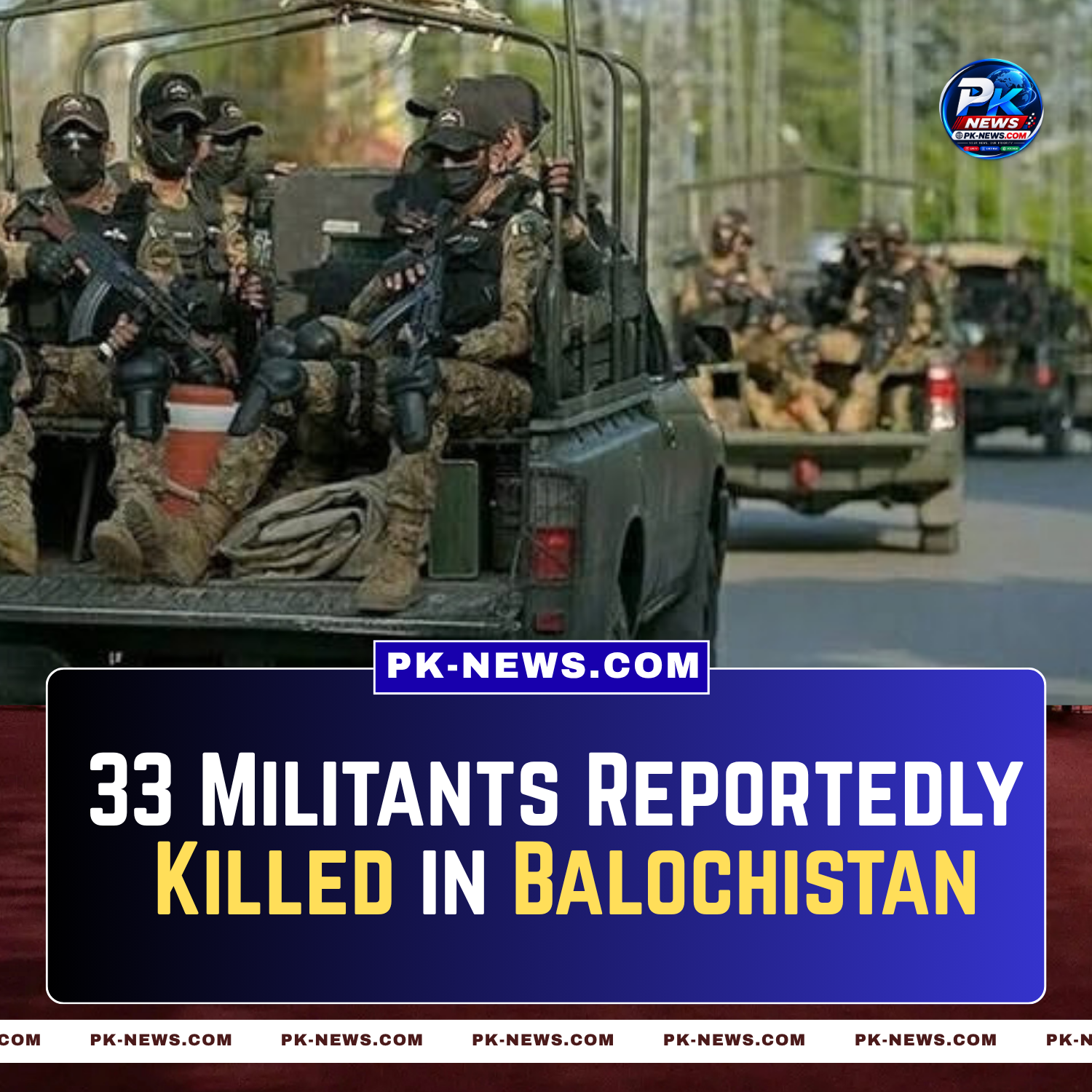
Pakistan's military says security forces have killed 33 militants in a series of counterterrorism operations across Balochistan since September 21. The reported deaths include 22 militants killed during the ongoing Operation Shaban and another 11 during an intelligence-based operation in Nushki on September 25. Weapons, ammunition and explosives were also reportedly recovered. The operations come amid a recent increase in militant violence in Balochistan and growing security concerns across the province.
Security operations intensify across Balochistan
Pakistan's security forces have intensified counterterrorism operations across Balochistan, with the military reporting that 33 militants have been killed since September 21.
The figures were released by the Inter-Services Public Relations (ISPR), the media wing of Pakistan's military, on September 25.
According to ISPR, the operations targeted groups that the Pakistani state describes as Fitna al-Khawarij and Fitna al-Hindustan. The military said the operations were conducted in different areas of Balochistan as part of an ongoing campaign against militant networks.
The latest announcement follows several days of military activity in the province, including operations in Shaban and Nushki.
Because the casualty figures come from the military, the number of militants killed should be understood as an ISPR-reported figure unless independently verified.
22 militants reported killed in Operation Shaban
One of the main operations has been taking place in the Shaban area of Quetta district.
According to ISPR, security forces continued Operation Shaban on September 24 and targeted additional militant hideouts.
The military said that an intense exchange of fire took place after the hideouts were identified and that five militants were killed.
The latest deaths brought the reported number killed during Operation Shaban to 22.
ISPR also said that weapons, ammunition and explosives were recovered from the locations targeted during the operation.
The military said the clearance operation would continue until what it described as the threat in the area was completely neutralised.
11 more reported killed in Nushki
A separate operation took place in Nushki district on September 25.
According to ISPR, security forces conducted an intelligence-based operation after receiving information about a militant hideout.
The military said troops engaged the hideout and that an intense exchange of fire followed.
ISPR reported that 11 militants were killed during the operation.
With the five reported deaths in Shaban and 11 in Nushki, the military said the latest operations brought the total number of militants killed in Balochistan since September 21 to 33.
Weapons and explosives reportedly recovered
The military said security forces recovered weapons, ammunition and explosives from militant hideouts during the operations.
The recovery of such material is significant from a security perspective because authorities frequently examine weapons and explosive materials recovered during counterterrorism operations to determine the capabilities and possible plans of militant networks.
ISPR said the clearance operation in the Shaban area would continue.
The military also said Pakistan's broader counterterrorism campaign would continue under the Azm-i-Istehkam framework.
Balochistan facing increased militant violence
The latest operations come at a time when Balochistan has experienced an increase in militant attacks.
According to data cited by Dawn from the Pakistan Institute for Conflict and Security Studies, the number of terrorist attacks recorded in the province increased from 83 in July to 89 in August, representing a reported seven-percent increase.
The increase has placed additional pressure on Pakistani security forces operating across the province.
Balochistan's geography presents particular challenges for security agencies. The province is Pakistan's largest by area and includes long, remote stretches of terrain as well as a strategically important border with Afghanistan and Iran.
Previous operations in September
The latest 33 reported deaths follow several other security operations conducted across Balochistan earlier this month.
On September 22, security forces reportedly killed six militants and arrested nine suspected individuals during an intelligence-based operation in the Saran Tangi area.
Weapons and ammunition were also reportedly recovered.
On the same day, four additional militants were reported killed during operations in Panjgur district.
Officials said those operations followed intelligence reports about the presence of armed militants in the Koh-Prom and Aphan areas.
The continuing operations indicate that Pakistani authorities are maintaining a high operational tempo in Balochistan.
Earlier operation resulted in 19 reported deaths
The military also announced another significant development on September 24.
According to ISPR, security forces killed 19 militants during separate intelligence-based operations in Shaban, Kech and Quetta West.
A Pakistani soldier was also reported killed during those operations.
The military said the operations were launched after intelligence agencies received information about militant hideouts.
These developments form part of a wider campaign that authorities say is intended to prevent militant groups from establishing or maintaining operational bases in the province.
Government praises security forces
President Asif Ali Zardari praised the security forces following the latest announcement.
According to the Presidency, Zardari described the reported killing of 33 militants as an achievement for the country's security forces.
He also praised the recovery of weapons and ammunition and said Pakistan would continue efforts against what the government describes as foreign-backed militant activity.
The government's statements indicate that counterterrorism operations in Balochistan are expected to continue.
Pakistan's allegations of foreign support
The Pakistani military has described the militants targeted in the latest operations as foreign-sponsored.
In its statement, ISPR used terminology referring to what the Pakistani state describes as Indian-backed militant networks.
Such allegations are politically and diplomatically sensitive.
Pakistan has repeatedly accused India of supporting militant activity inside Pakistan, while India has rejected such accusations.
For that reason, claims about foreign sponsorship should be attributed to Pakistani authorities rather than presented as independently established facts.
The wider security challenge
The latest Balochistan operations are taking place against the backdrop of a broader security challenge in Pakistan.
Militant violence has increased in several parts of the country, including Balochistan and Khyber Pakhtunkhwa.
Pakistan has also been dealing with growing tensions along its border with Afghanistan.
In recent days, Islamabad has accused militant groups operating from Afghan territory of involvement in attacks against Pakistan. Afghanistan rejects those accusations.
The simultaneous security pressures in Balochistan and along the Afghanistan border have made counterterrorism a major national-security issue.
Why Balochistan remains strategically important
Balochistan has enormous strategic importance for Pakistan.
The province borders Afghanistan and Iran and contains the country's coastline along the Arabian Sea.
It is also home to major infrastructure and economic projects, including routes associated with the China-Pakistan Economic Corridor.
Gwadar Port is located in the province, while important highways and energy infrastructure also cross Balochistan.
Security incidents can therefore have implications beyond the immediate areas where fighting occurs.
Any sustained increase in militant activity could affect transportation, investment, development projects and the movement of people and goods.
What happens next?
The immediate question is whether the counterterrorism operations will continue at the same pace.
ISPR has indicated that clearance operations will continue in areas where security forces believe militant threats remain.
The military has also said that its wider campaign under Azm-i-Istehkam will continue.
For residents of affected districts, the coming days could therefore bring additional security operations and restrictions.
Authorities will also be monitoring whether militant groups attempt retaliatory attacks following the reported losses.
Need for continued verification
The reported figure of 33 militants killed is significant, but it is important to distinguish between official claims and independently verified information.
The figure was announced by ISPR and has been reported by Pakistani media organisations including Dawn, The Express Tribune, Business Recorder and Radio Pakistan.
There is currently limited independent information publicly available that verifies every casualty or provides a separate account from the militant groups involved.
For this reason, PK-News.com should use phrases such as “according to ISPR,” “the military said,” and “security officials reported” when describing the casualty figures.
A significant security development
The reported killing of 33 militants since September 21 marks one of the more significant counterterrorism developments recently announced in Balochistan.
The operations cover several locations and include the continuing Operation Shaban as well as the latest intelligence-based operation in Nushki.
The military says weapons, ammunition and explosives were recovered and that clearance operations will continue.
At the same time, the rise in militant attacks in Balochistan demonstrates that the security challenge remains active.
The coming days will show whether the latest operations lead to a reduction in militant activity or whether further attacks and security operations follow.
For Pakistan, the developments are another indication that Balochistan remains a major focus of the country's counterterrorism campaign.
PK-News.com will continue monitoring developments in Balochistan, official ISPR statements, security operations and any further information regarding the reported militant casualties.
24
Global
😔 Negative
33 Militants Reportedly Killed in Balochistan Operations as Security Forces Intensify Counterterrorism Campaign
Related Articles You May Like
Related News










Comments (0)
Leave a Comment
No comments yet. Be the first to comment!