143
Global
😔 Negative
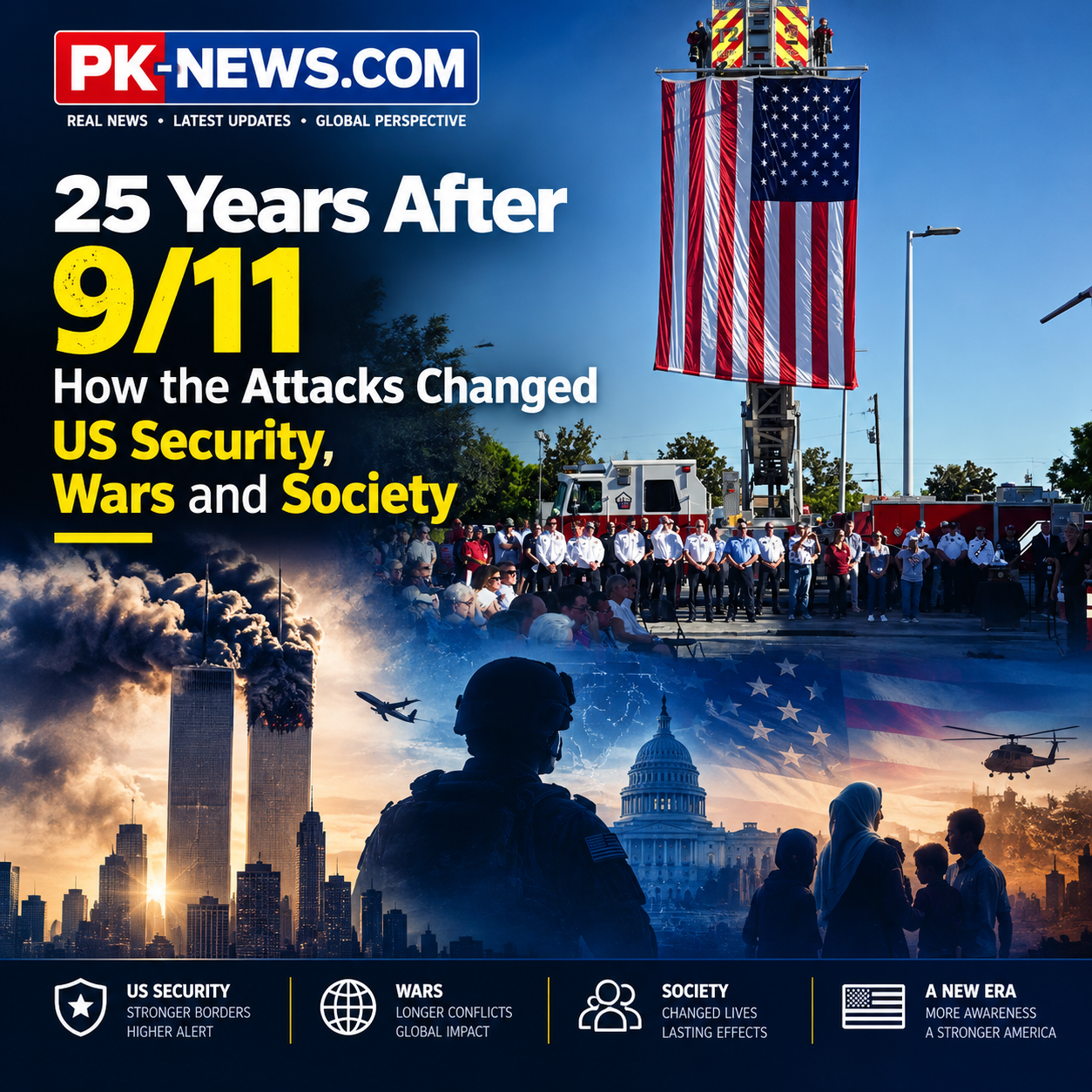
25 Years After 9/11 How the Attacks Changed US Security Wars and Society
Twenty-five years after the September 11 attacks, the United States continues to live with consequences that have shaped its national security, foreign policy and society.
The attacks fundamentally changed how Americans viewed security and altered Washington’s approach to international conflicts. The wars that followed in Afghanistan and Iraq became defining features of the post-9/11 era, while changing technologies and emerging threats have continued to reshape the security landscape.
Today, the terrorism threat is considered more diverse than it was in 2001. Rather than focusing on a single major extremist organisation, US authorities have had to contend with threats linked to different ideologies, groups and individuals, including forms of domestic extremism.
A Different Security Environment
The period following 9/11 brought a major expansion of US counterterrorism efforts and changed the way Washington approached threats from abroad.
Over the following two decades, Afghanistan and Iraq became central to US military policy. The conflicts were intended to address security threats and prevent extremist organisations from establishing safe havens, but they developed into prolonged wars with significant political, military and humanitarian consequences.
The experience also influenced the American debate over military intervention and nation-building.
The withdrawal from Afghanistan after more than two decades of conflict became another major moment in the post-9/11 story. The return of the Taliban demonstrated the difficulty of achieving long-term political transformation through military power.
Terrorism Threats Have Evolved
The nature of terrorism has changed considerably since 2001.
US security agencies initially concentrated heavily on al-Qaeda and organisations inspired by its ideology. Over time, however, the threat landscape expanded to include groups associated with different extremist ideologies as well as individuals operating within the United States.
Technological advances have added another dimension. Drones, encrypted communications, social media and other digital tools have changed the capabilities available to both governments and non-state actors.
At the same time, US intelligence and military organisations are now required to monitor a wider range of potential threats rather than concentrating on one particular form of terrorism.
The Social Impact of 9/11
The legacy of the attacks has not been limited to foreign policy and national security.
Muslim communities in the United States experienced discrimination, hostility and suspicion in the years following the attacks. Although there were also efforts by political and community leaders to promote understanding and reject anti-Muslim prejudice, debates over Islam and national security have remained highly sensitive.
Over the years, political rhetoric surrounding Muslims has continued to generate controversy.
Research cited in discussions about the 25-year legacy of 9/11 indicates that attitudes toward Muslims have become increasingly divided along political lines. The issue has also appeared in political campaigns and debates involving Muslim candidates and elected officials.
At the same time, the number of Muslim Americans holding elected office has increased, reflecting greater participation in the country's political system.
A More Polarised Political Environment
Another lasting effect of the post-9/11 period has been the increasingly polarised nature of political debate.
Issues involving national security, immigration, religion and foreign policy can produce sharply different reactions among Americans. Social media has further accelerated the spread of political arguments, allowing controversial claims to reach large audiences almost instantly.
The debate surrounding Islamophobia illustrates this division. While many Americans reject discrimination against Muslims, political rhetoric can still create tensions between communities and deepen existing political disagreements.
The Enduring Legacy of the “War on Terror”
The phrase “war on terror” became closely associated with US policy after 9/11.
Military operations, intelligence programmes and counterterrorism campaigns expanded significantly. The United States also developed closer security relationships with governments around the world as it sought to prevent future attacks.
However, the long-term results remain debated.
Extremist movements have continued to operate in different parts of the world, even as some organisations have been weakened or dismantled. The persistence of these groups has raised questions about whether military force alone can eliminate the conditions that allow extremist ideologies to survive.
The experience has encouraged greater attention to diplomacy, intelligence cooperation, economic development and political stability alongside military responses.
A New Generation Growing Up After 9/11
One of the most significant changes is generational.
Millions of young Americans were born after the September 11 attacks and have no personal memory of that day. For them, 9/11 is a historical event rather than a direct childhood experience.
Yet its consequences have shaped the world in which they grew up.
US foreign policy, airport security, counterterrorism measures, military deployments and political debates about national security have all been influenced by the post-9/11 era.
The challenge for the next generation is understanding both the tragedy of the attacks and the complex consequences that followed.
How 9/11 Changed America’s Role in the World
The attacks permanently changed the way the United States viewed its position in global affairs.
Washington became deeply involved in conflicts and security operations across the Middle East and other regions. The experience of Afghanistan and Iraq also contributed to a growing reluctance to pursue large-scale nation-building projects.
The United States increasingly faces a world where threats are not limited to traditional military opponents. Terrorist organisations, domestic extremists, cyber threats, drones and rapidly changing technologies all create new security challenges.
Twenty-five years after 9/11, the central question is therefore no longer simply whether America is safer than it was before the attacks.
It is how the country has adapted to a world that was permanently changed by them.
The legacy of September 11 can be seen in America's security policies, military strategy, political debates and social divisions. It also remains a reminder of the importance of balancing national security with civil liberties, community relations and responsible foreign policy.
As memories of the attacks pass from those who experienced them to generations who know them through history, the lessons of the post-9/11 era will continue to influence the United States and its role in the world.
Related Articles You May Like
Related News








Comments (0)
Leave a Comment
No comments yet. Be the first to comment!